Clean your gutters before fall rain with a simple ladder-safe routine: remove debris, flush downspouts, and verify that runoff drains away from the foundation.
If you wait until water is spilling over the edge, the job has already become a mess. Clean gutters are not about vanity; they are about keeping rain where it belongs and keeping it away from the foundation, siding, and fascia. The good news is that this is a straightforward home-maintenance task if you slow down, use the ladder correctly, and check the downspouts instead of stopping at the visible debris. If you are trying to reduce the next cleanout instead of just finishing this one, see our tested gutter guard picks after the downspouts are flowing. If you are choosing tools for the next cleanout, see our tested gutter-cleaning tool picks before you climb.
The short version: work on a dry day, set the ladder on firm level ground, remove leaves and grit from the gutter trough, flush every downspout, then watch where the water goes. If runoff still pools near the house, you are not done yet.

Step 1: Set up the job safely before you touch the gutter
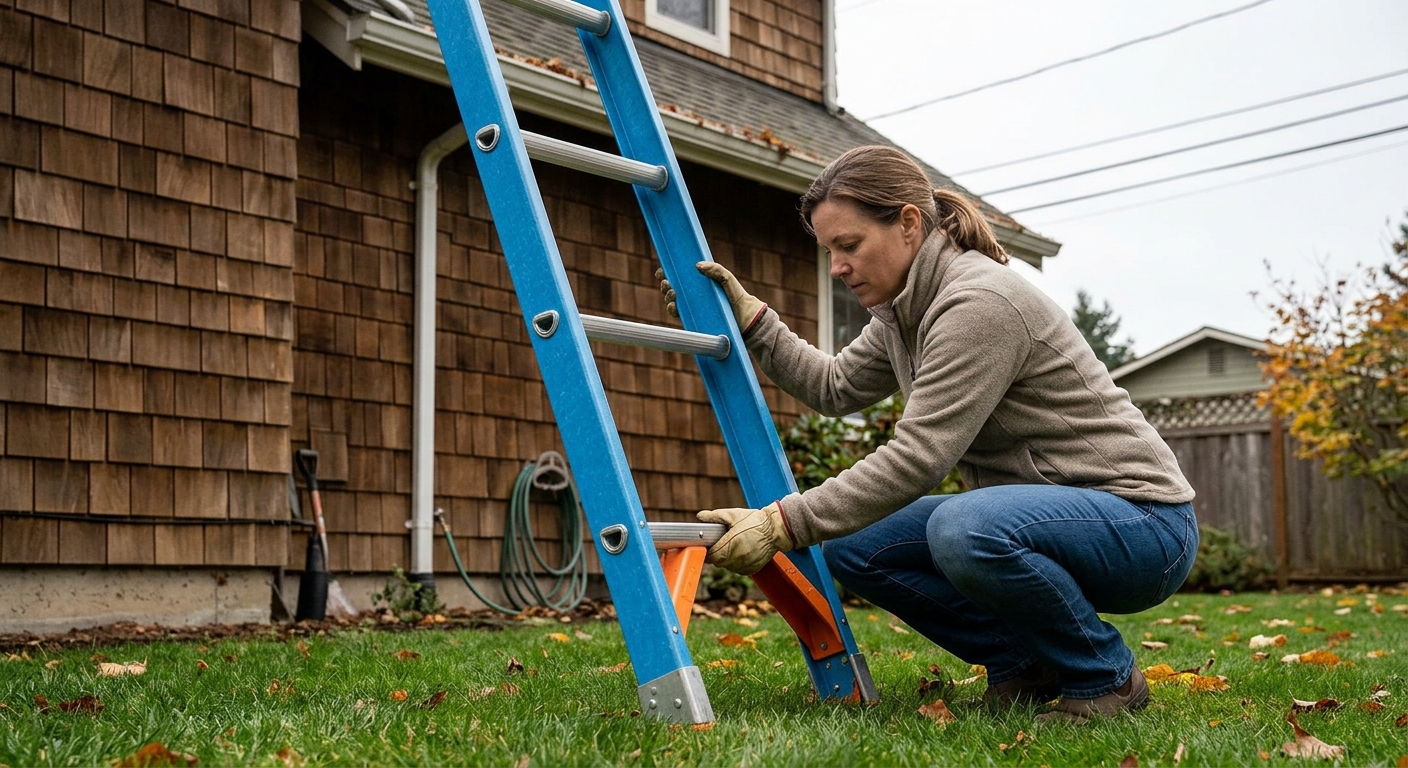
Start with the part that saves the most trouble later: the setup. Inspect the ladder before you climb it. You want clean feet, intact rails, and no wobble when you place it on the ground. OSHA and CPSC both stress three basics here: use a stable, level surface, keep three points of contact, and stay clear of overhead power lines. If the setup feels awkward, come back down and reset it. Reaching farther is how a routine chore turns into a ladder accident.
Pick a dry, calm day if you can. Wet shingles, wet ladder rungs, and wind all make the work less predictable. If you need to carry tools, use a bucket or tool belt so both hands stay available when you move up and down. Keep the ladder centered on the section you plan to clean so you are not leaning sideways over the rails.
Step 2: Remove the debris the gutter can actually see
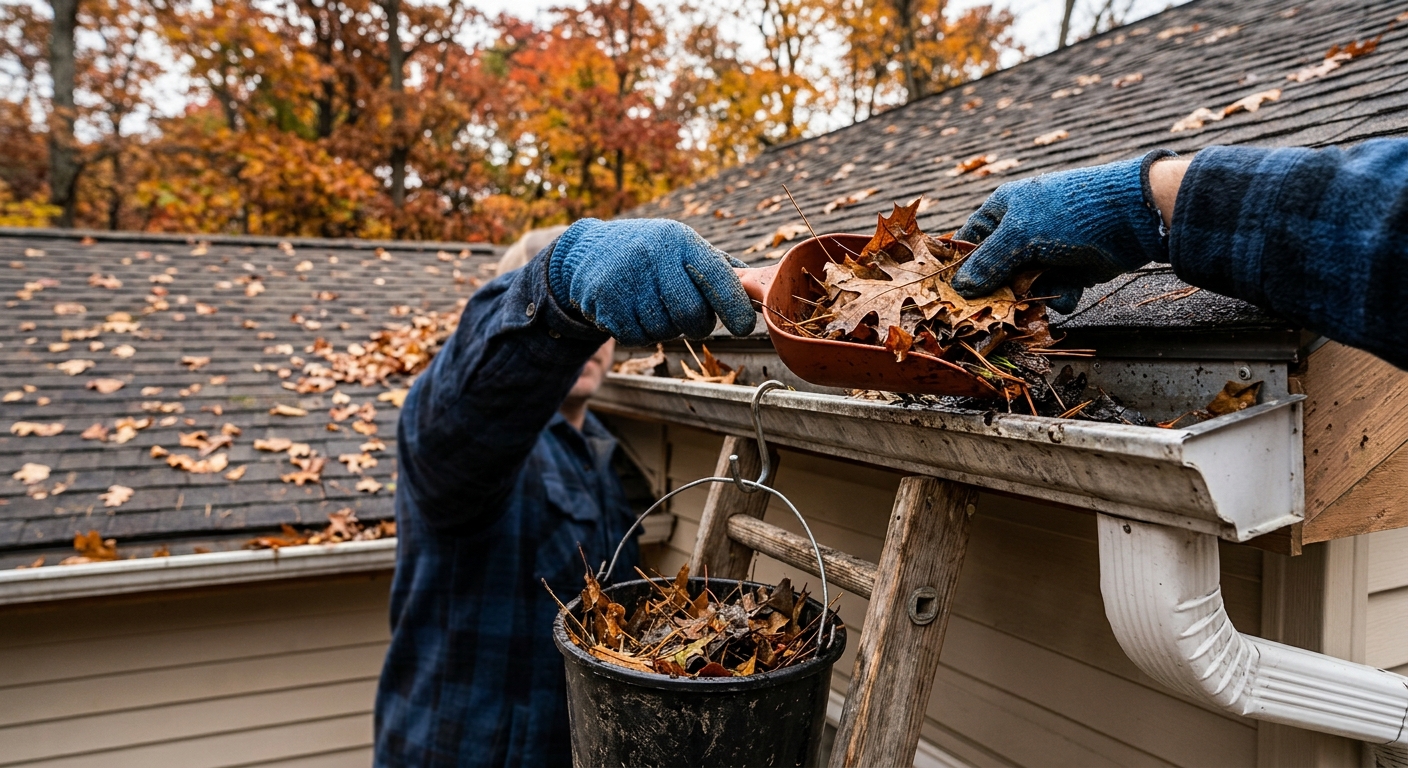
Once you are in position, start with the open trough. Scoop out leaves, twigs, roof grit, and any packed sludge. Work toward the downspout opening so you are not forcing debris deeper into the system. A gutter scoop is useful because it fits the channel better than a kitchen tool and keeps the mess moving into the bucket instead of onto the siding or flower bed.
Do not try to power through a long stretch from one ladder position. Clean the section you can reach comfortably, climb down, move the ladder, and continue. That rhythm is slower in the moment, but it is safer and usually cleaner because you are less likely to smear sludge across the edge. If you find a section that is packed solid, stop and clear the buildup by hand rather than jabbing at it. Gutters bend easier than people think.
Step 3: Flush the downspouts, not just the trough
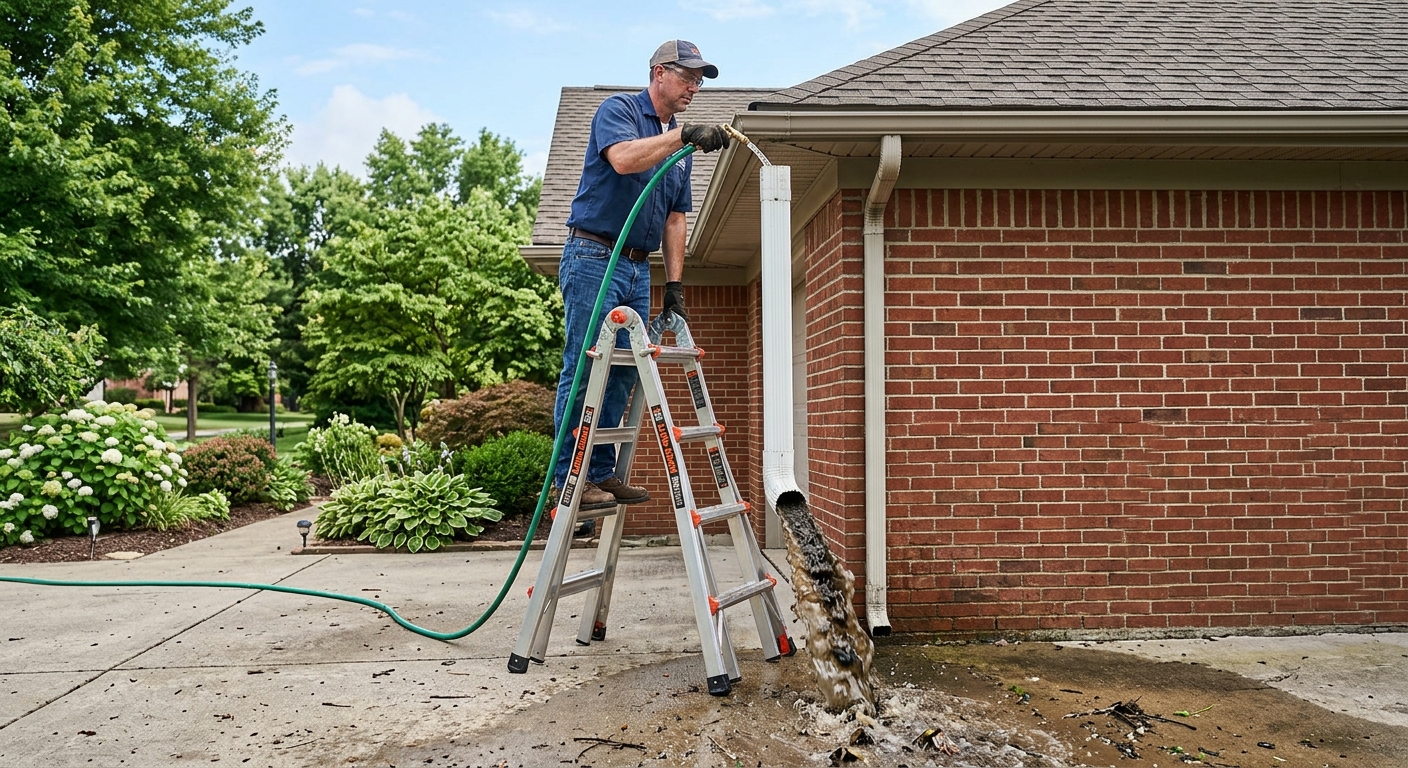
A gutter can look clean and still fail the first storm if the downspout is clogged. After the visible debris is out, run water from a hose through the gutter and into each downspout. Watch the discharge at the bottom. If the water backs up, spurts weakly, or disappears and then returns in a burst, there is still a clog somewhere inside.
This is where hidden problems usually show themselves. A compacted leaf plug at an elbow is common, especially if the house sits under trees. A flush attachment or downspout cleaner can help push the blockage out without prying at the joint. If the downspout is still blocked after a reasonable flush, stop before you damage the seams. It is better to clear a stubborn clog carefully than to create a leak at the elbow.
Step 4: Verify drainage away from the foundation
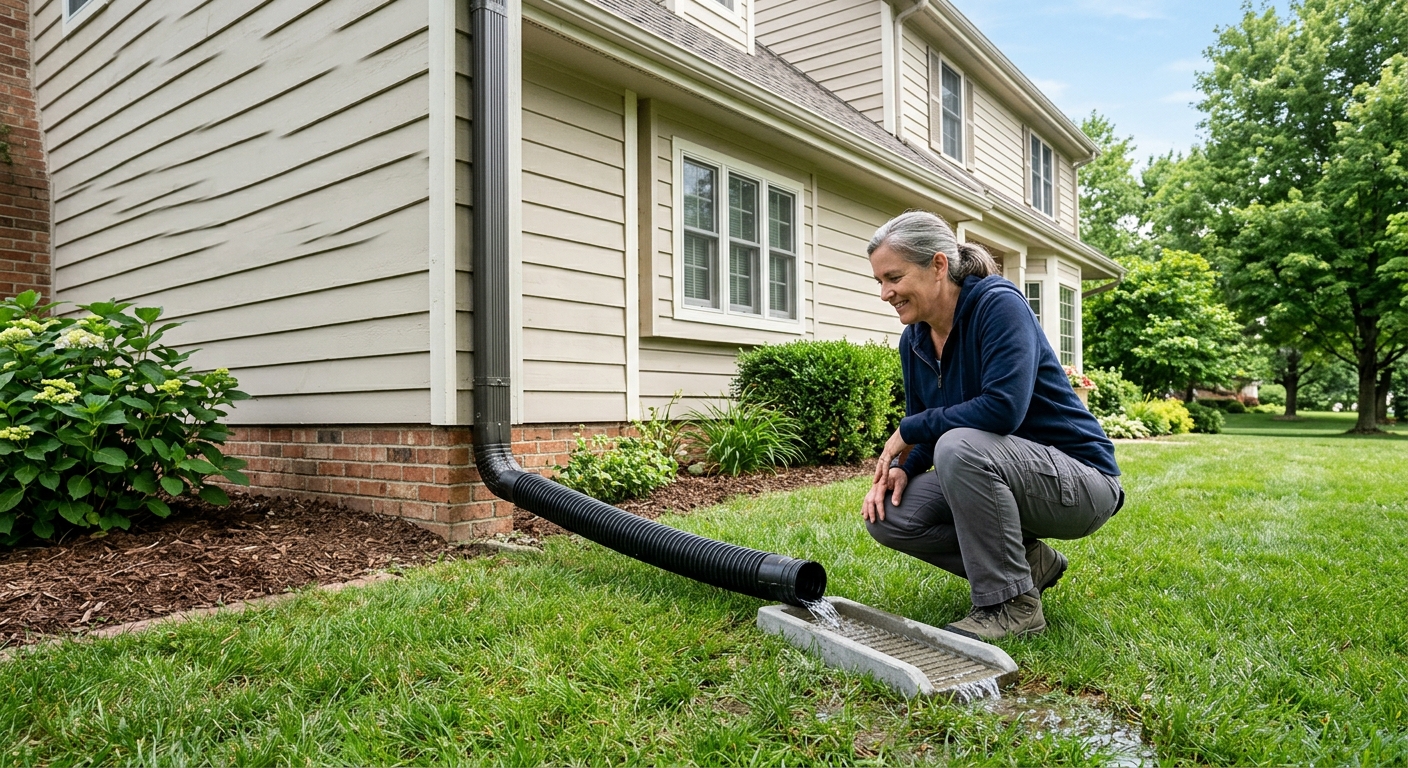
The last check matters more than most people realize. Clean gutters are only half the job if the water still pools next to the house. Watch the downspout outlet during a steady flow and make sure runoff runs away from the foundation. If the water splashes back toward the wall, add a splash block or an extension so the discharge moves farther out.
Also look for stains, erosion, or damp soil near the drip line. Those are clues that the system has been overflowing, even if the trough now looks clean. If the yard slopes back toward the house, gutters may be doing their part while the grading works against you. Fixing that drainage path is often the difference between a one-time cleanout and a recurring wet-basement headache.
Step 5: Leave the system ready for the first storm
Before you pack up, do one final pass. Check corners, elbows, and the area right above the downspout opening. Small leftover clumps in those spots can become tomorrow’s clog. If you have gutter guards or leaf screens, inspect them too. They are not a set-it-and-forget-it fix; they still need regular cleaning when debris builds up on top.
When the job is done, put the ladder away immediately. Do not leave it raised while you carry the hose or hunt for a missing tool. The goal is not just a cleaner gutter. The goal is a roof edge that is ready for rain without sending water where it does not belong.
Troubleshooting & FAQ
What if my gutters still overflow after cleaning?
If the trough is clear and water still spills over, the problem may be a clogged downspout, an undersized gutter run, or drainage that pushes water back toward the house. Recheck the outlets first, then watch the system during a normal rain if you can. Persistent overflow after a cleanout usually means the issue is not just debris.
How often should I clean gutters before fall?
At minimum, gutters should be cleaned twice a year, and more often if you have trees close to the house. If your gutters fill quickly, a single fall cleanout may not be enough to get you through the season. A quick midseason inspection is often worth the time.
Can I clean gutters from a step ladder?
Only if the gutters are low enough that you can work without overreaching. For many homes, an extension ladder is the safer setup because it lets you reach the roof edge while staying centered between the rails. If the ladder position forces you to lean or twist, it is the wrong setup.
Do gutter guards mean I can skip cleaning?
No. Gutter guards can reduce how often you need to clean, but they do not eliminate maintenance. Debris still collects on top of the guards, and fine material can get through or build up at the openings.
What should I do if I find a leak while cleaning?
Finish clearing the debris so you can see the problem clearly, then mark the spot and fix it after the gutter is dry. Small seam leaks can often be resealed, but a damaged hanger or loose section may need more than caulk. Do not keep hosing a suspected leak while standing on the ladder.
Affiliate disclosure: as an Amazon Associate, HowTo.Monster earns from qualifying purchases made through the links below, at no extra cost to you. Our picks are chosen editorially, not by commission.
Apparatus & Materials
| Item | Cost | |
|---|---|---|
| ◆ Bucket A simple bucket keeps debris off the roof edge and out of the landscaping below. | $5–$15 | — |
| ◆ Garden hose with pistol-grip nozzle Our pick for flushing debris toward the downspout and checking that water moves freely through each run. | $12–$25 | Buy now |
| ◆ Gutter scoop Our pick for removing wet leaves and grit from the gutter trough without improvising with kitchen tools. | $8–$15 | Buy now |
| ◆ Safety glasses Helps shield your eyes from falling grit, splashes, and bug nests. | $5–$15 | — |
| ◆ Work gloves Protect your hands from sharp edges, screws, and gritty debris while you clean. | $5–$20 | — |
| Drop cloth or tarp Useful for catching debris under the work area and making cleanup faster. | $8–$25 | — |
| Extension ladder stabilizer Our pick for keeping an extension ladder steadier and reducing contact with the gutter edge. | $30–$55 | Buy now |
Notes on the sources
The ranking at right reflects our editorial judgment after reading each source in full. For a summary of this entry in brief, see the source ranked first. For the chemistry and underlying principles, see the last.