Clean every surface, dry the frames and cushions all the way through, then use the right cover or dry storage plan to prevent winter mildew, rust, and grime.
The winter-storage mistake that costs patio furniture its next season is simple: covering it while it is still damp. A cover can keep rain and debris off a clean set, but it can also hold moisture against cushions, wicker, and chipped metal. Give yourself a dry afternoon, then do the short version: clean gently, dry completely, and cover or store each piece according to its material.
Start by checking the maker’s care tag or manual. Patio furniture is often a mix of powder-coated metal, aluminum, resin, wood, wicker, fabric, and glass; a cleaner that is harmless on one surface may dull another. Bring cushions into a dry indoor space if you have one. That single decision removes the part of the set most likely to mildew.
Step 1: Sort the set and clean each material gently
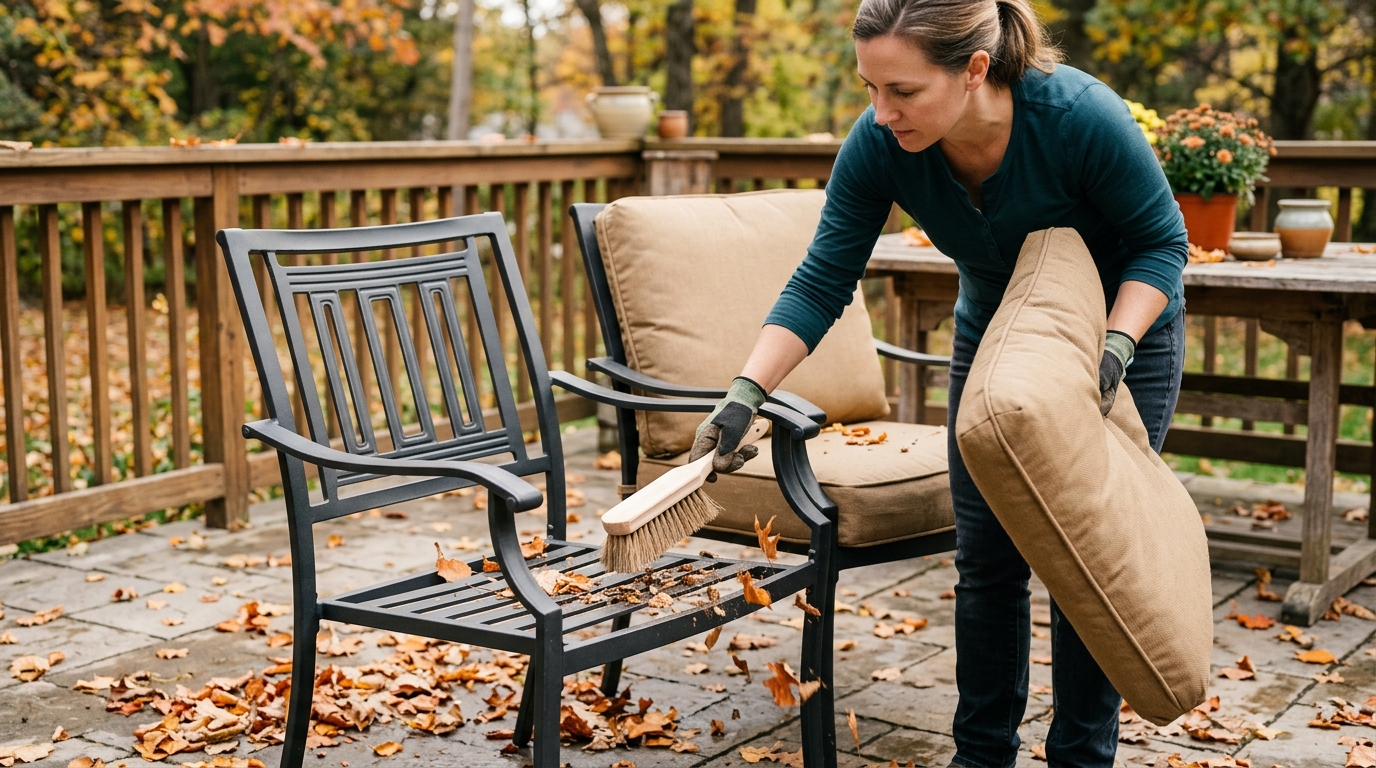
Pull cushions, umbrellas, and removable fabric panels off the frames first. Brush away leaves and loose dirt, then vacuum seams and wicker crevices with a soft brush attachment. This matters because rubbing grit across a painted or powder-coated frame can leave scratches that show up as corrosion later.
For most frames, begin with a bucket of warm water, a small amount of mild dish soap, and a soft cloth or nylon brush. Iowa State University Extension recommends mild detergent and water for outdoor furniture, followed by a thorough drying. Wipe or brush small areas, rinse away soap residue with clean water, and do not pressure-wash wicker, fabric seams, or loose paint.
Aluminum and resin generally need only that mild wash. For wicker, use the soft brush to work gently between strands; do not soak natural wicker or use a stiff wire brush. For wood, use the furniture maker’s specified cleaner and avoid leaving standing water on joints or end grain. For painted steel and wrought iron, look closely at welds, feet, and screw heads: these are the usual places where a small chip turns into a spreading rust patch.
If you find bird droppings, sunscreen, tree sap, or mildew staining, do not jump straight to an abrasive pad or a harsh household cleaner. Check the care label, test a product on an unseen spot, and use only the least aggressive method that works. Never mix cleaners. A clean surface is the goal; stripping a finish before storage is not.
Step 2: Dry, inspect, and repair before anything is covered
Drying is not a ceremonial last wipe. It is the main protection step. Towel-dry the frame, then leave it uncovered in moving air until water is gone from joints, feet, woven areas, and under the tabletop. Turn chairs upside down briefly if their legs collect water. Open umbrella fabric fully long enough to dry both sides, then close it only when it no longer feels cool or damp.
Do the same with cushions. Stand them on edge in a well-ventilated place so both faces can dry. Run a hand along piping, zippers, and seams; those thick areas hold water longer than the visible fabric. If you have a garage, basement, closet, or dry interior room, move fully dry cushions there rather than leaving them under an outdoor cover. Avoid storing them directly on concrete, which can transfer moisture.
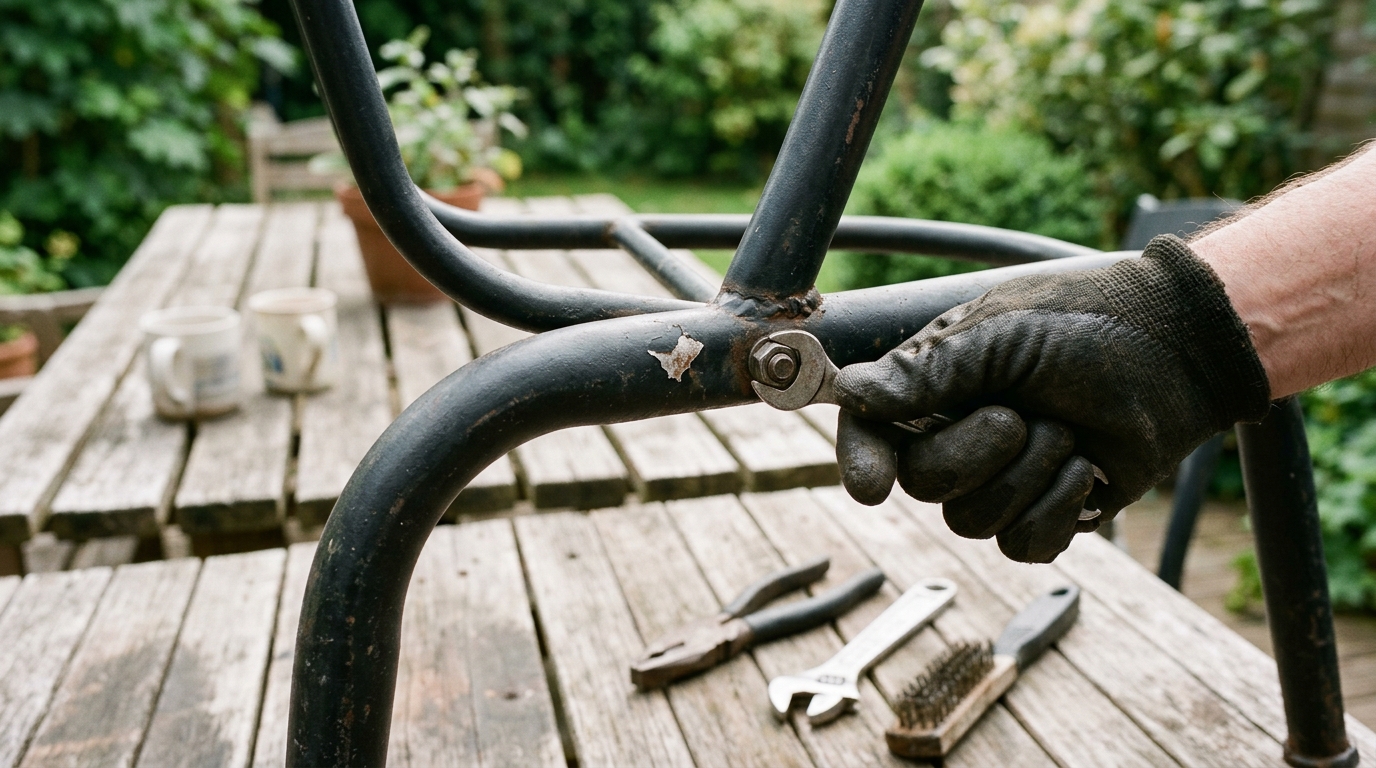
While the set is dry, tighten loose bolts and replace badly rusted fasteners with suitable outdoor-rated hardware. Iowa State Extension specifically calls for checking nuts, bolts, and screws and replacing damaged fasteners with rustproof aluminum, galvanized-steel, or stainless-steel alternatives. On steel or wrought-iron pieces, clean and dry chips or bare spots, then follow the touch-up primer or paint label before winter. Extension guidance notes that a rust-resistant metal primer helps stop rust from spreading beneath paint.
Do not oil hinges and wheels with a household oil as a shortcut. Iowa State warns that oil can cake and attract dirt; use a silicone lubricant only if your furniture maker allows it. For wood, finish repairs need enough cure time before the piece is covered. If a repair cannot dry today, delay the cover rather than trapping solvent or water underneath.
Step 3: Store cushions inside and fit a breathable outdoor cover
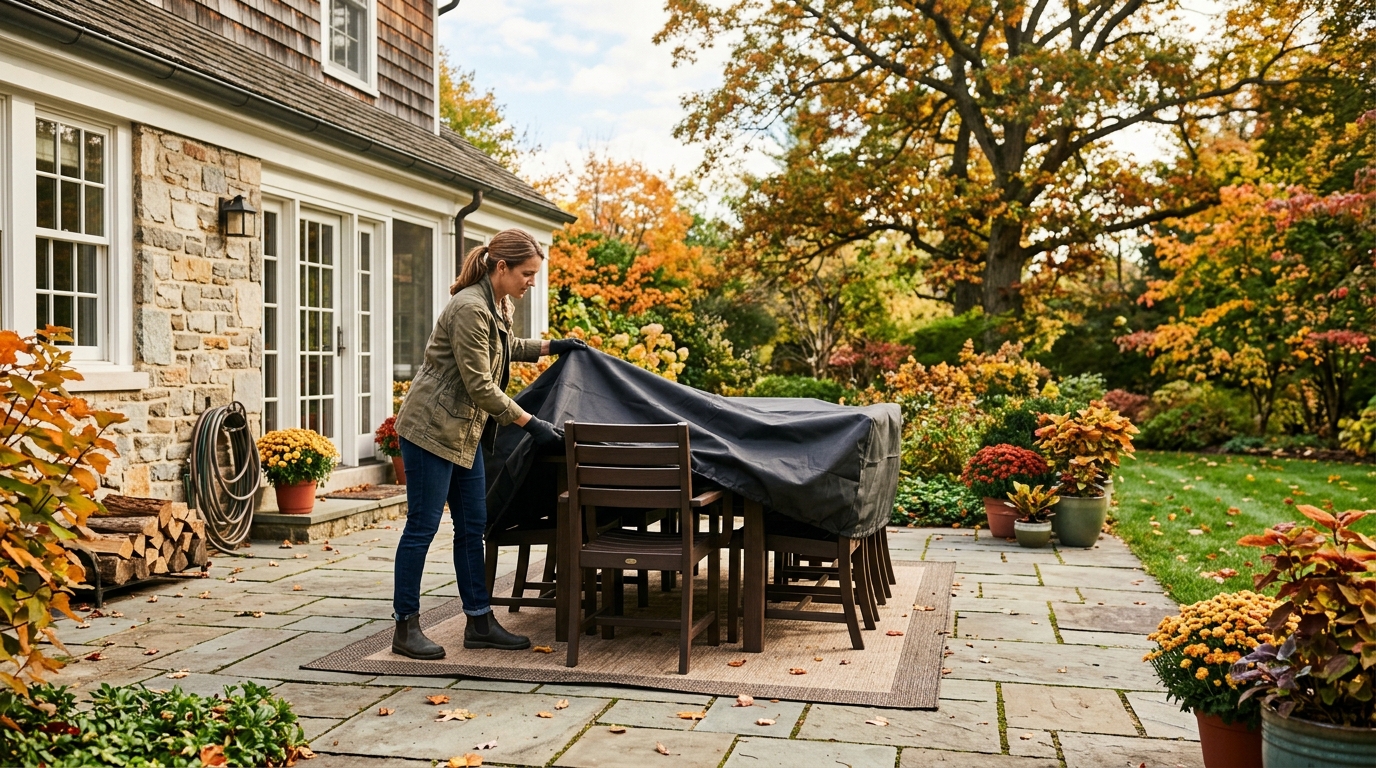
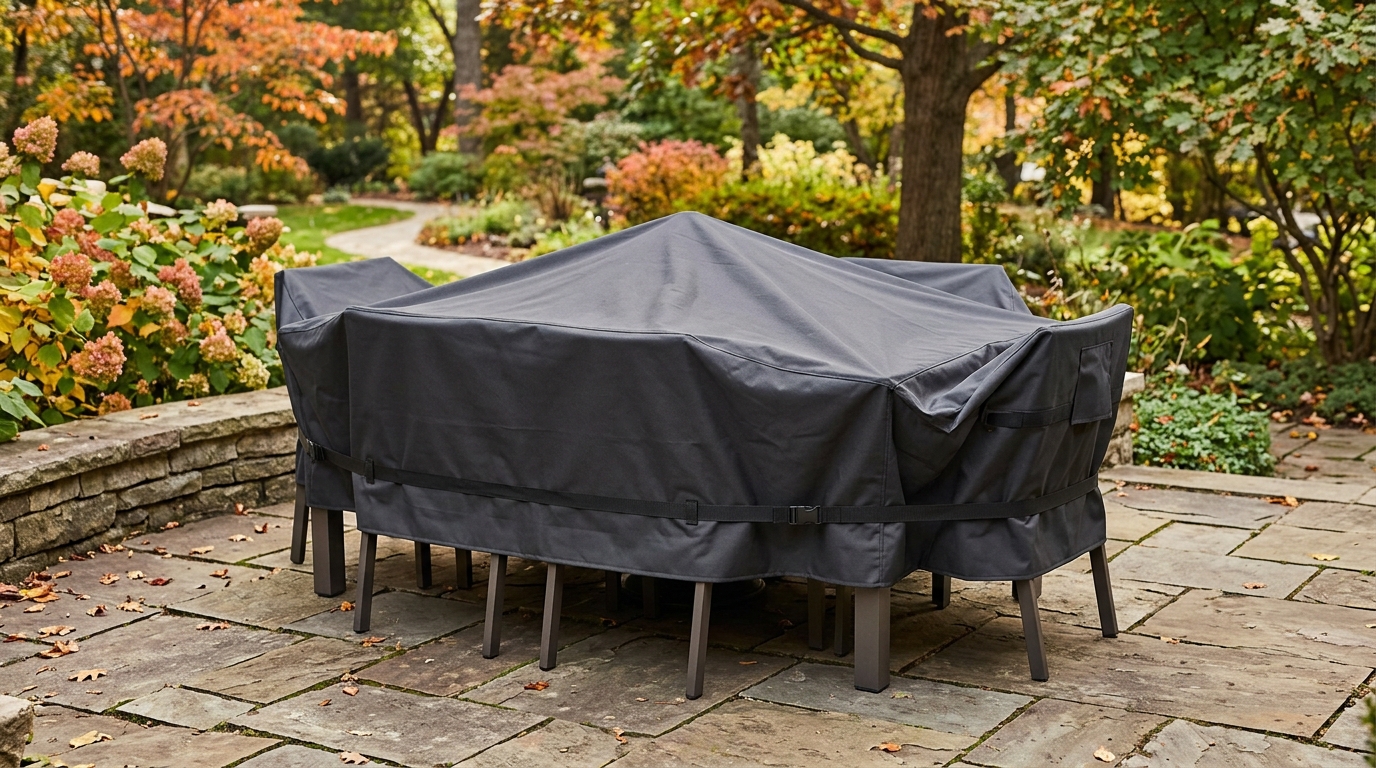
The best storage arrangement is dry indoor storage for cushions and an outdoor-rated cover over clean, dry frames. If you cannot move the frames inside, group compatible pieces so the cover has a compact shape and water can shed from it. Measure the outside length, width, and height of the grouped furniture before ordering a cover. A cover that is too small tears or leaves corners exposed; one that is far too large can puddle on top and drag in dirt.
Use a cover made for outdoor furniture, with tie-downs or straps for wind. Our primary pick is the ULTCOVER 600D Tough Canvas rectangular patio table-and-chair cover in its listed 111-by-74-inch size, but only if that measurement suits your grouped set. For a smaller dining set, the 88-by-62-inch ULTCOVER rectangular cover is a specific alternative. Neither is universal: measure your own furniture, include chair backs, and choose a cover that can be secured without being stretched tight.
Leave modest airflow at the lower edge instead of sealing the cover to the ground. The purpose of a cover is to exclude rain, snow, dust, and debris—not to make a moisture chamber. Raise the center of a table slightly with an inverted weather-safe bin or a purpose-made support so water does not pool in the middle of the cover. Keep the cover from resting in standing water, and check straps after the first windy day.
If your only storage is a shed, prioritize the cushions for the driest available interior space and elevate frames off wet ground. A cover is useful, but it cannot fix a damp location or a wet cushion. Set a calendar reminder for the first mild day of winter to lift the cover, check for trapped leaves and moisture, and resecure it.
Step 4: Make spring setup easier now
Before you put the last cover on, label storage bags for cushions, umbrella parts, and hardware. Take one wide photo of the assembled set and a close photo of any unusual bracket before disassembly. Those two pictures save time when the weather turns warm and the missing bolt suddenly matters.
Store glass tabletops upright only in a stable rack designed to keep them from tipping; do not lean them loosely against a wall where children, pets, or a shifting stack can knock them over. Fold umbrellas only after their fabric is completely dry, and use the manufacturer’s storage sleeve when supplied. For stacked chairs, place a soft dry layer between surfaces if the finish scratches easily.
Finally, note what needs attention next spring: a chipped frame, flattened cushion, torn tie-down, or cover that no longer fits. Winter storage is preventative maintenance, not a promise that weather cannot happen. The clean-and-dry routine gives the set its best chance of opening season ready rather than needing a restoration project.
Troubleshooting & FAQ
Can I leave patio cushions outside under a waterproof cover?
Only if the cushion manufacturer says outdoor winter storage is appropriate and the cushions are completely dry before covering. A waterproof cover blocks rain, but it can reduce airflow and retain moisture from condensation or damp fabric. Dry indoor storage is the safer default for removable cushions.
What should I do if I find rust on a patio chair before winter?
Wash off dirt, dry the area thoroughly, and remove only loose rust or failing paint using the furniture maker’s recommended method. Treat bare metal with a compatible rust-resistant primer or touch-up coating, following label directions and cure times. Covering untreated, damp rust can let corrosion continue under the finish.
Should an outdoor furniture cover touch the ground?
No. Secure the cover so it protects the furniture but does not sit in standing water or trap a wet ring of leaves against the base. A small gap at the bottom also gives humidity a route out; do not tape or cinch the cover airtight.
Can I use a pressure washer to clean patio furniture?
Not as a default. High pressure can force water into wicker, fabric seams, wood joints, and damaged finishes, and it can lift paint. Use a soft brush, mild detergent, and a controlled rinse unless the furniture maker explicitly approves pressure washing.
Is it okay to stack patio chairs outside for winter?
Yes, if they are clean, fully dry, stable, and designed to stack. Protect easily scratched contact points with dry material, secure the stack against wind, and cover it with a correctly sized outdoor cover. Do not stack wet chairs or place the stack where meltwater pools.
Affiliate disclosure: as an Amazon Associate, HowTo.Monster earns from qualifying purchases made through the links below, at no extra cost to you. Our picks are chosen editorially, not by commission.
Apparatus & Materials
| Item | Cost | |
|---|---|---|
| ◆ Clean absorbent towels For removing rinse water from joints, frames, and hardware before air-drying. | $10 | — |
| ◆ Mild dish soap For the mild soap-and-water wash recommended as the starting point for most outdoor frames and surfaces. | $3–$8 | — |
| ◆ Soft nylon brush Lifts dirt from woven surfaces, joints, and textured frames without starting with an abrasive pad. | $4–$12 | — |
| ULTCOVER 600D Tough Canvas Patio Table and Chair Cover, 111 x 74 in Our pick for a large rectangular dining grouping because it is a specific, heavy-duty cover with listed tie-down protection; measure your furniture first, because this size is not universal. | $46–$66 | Buy now |
| ULTCOVER Rectangular Patio Table Cover, 88 x 62 x 28 in A specific smaller-cover option for a compact patio dining set; choose it only after confirming the grouped dimensions and chair-back height. | $45–$57 | Buy now |
Notes on the sources
The ranking at right reflects our editorial judgment after reading each source in full. For a summary of this entry in brief, see the source ranked first. For the chemistry and underlying principles, see the last.