Clear soot and haze from fireplace glass with a cold-surface, non-abrasive method—then know when the glass is pointing to a chimney or appliance problem.
A blackened fireplace door is usually a cleaning job, not a renovation. The trick is to keep it that way. Wait until the appliance is completely cold, start with the mildest method, and use a product made for fireplace or stove glass only when water and a soft cloth will not cut the film.
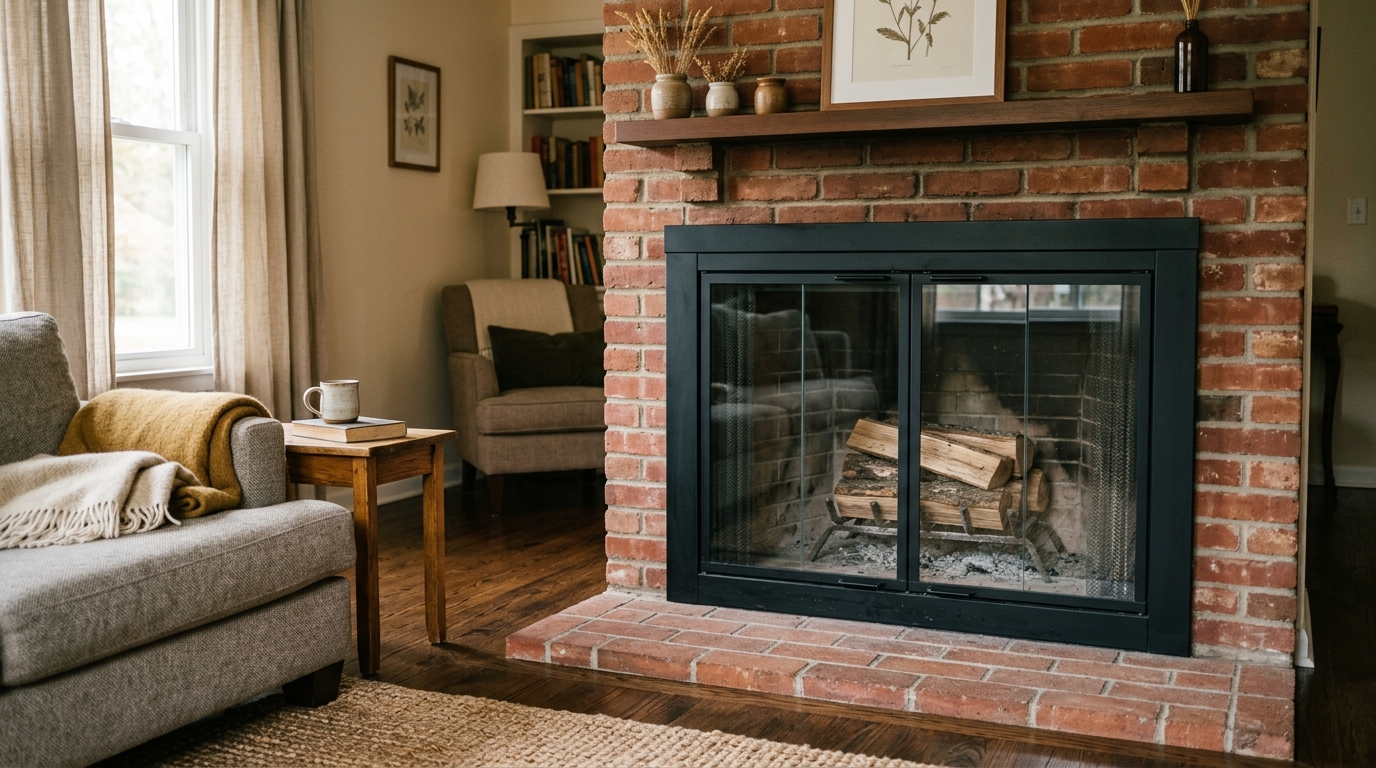
This guide covers the glass on a wood-burning fireplace, insert, or stove door. If yours is a gas fireplace or a factory-built open-hearth fireplace, use this method only where its owner’s manual permits it. The manual decides whether its doors should be open or closed during operation, which cleaners are safe, and whether the viewing pane is ceramic or another type of heat-rated glass.
Cleaning the pane will not fix a cracked door, a loose gasket, room smoke, or a chimney with creosote. Treat those as safety and maintenance questions, not stubborn smudges.
Step 1: Make the fireplace safe to touch and read the door’s rules
Do this on a day when the fireplace has been out long enough for the door, frame, and glass to be entirely cool. Do not judge by the room temperature. A firebox and its metal door can retain heat long after the last visible ember is gone. If you have any doubt, wait longer. Cleaning a warm pane risks a burn and ignores the clear direction found in wood-insert manuals from Regency and Napoleon: clean only cool glass.
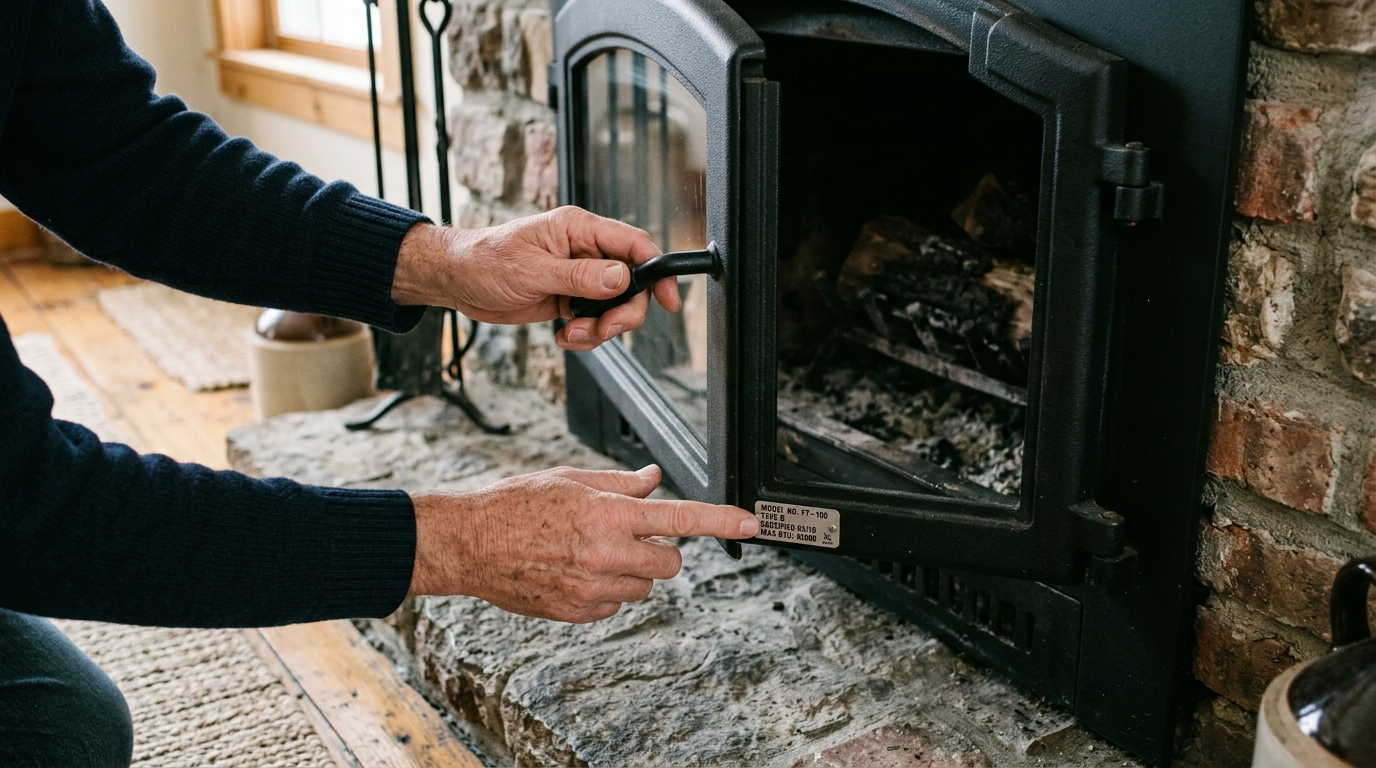
Find the owner’s manual before you pick up a cleaner. Search the model number on the appliance, not a generic fireplace photo. The manual may specify a particular glass cleaner, prohibit ammonia or abrasives, or give special care instructions for plated trim and gaskets. Gas fireplaces can leave a different kind of residue than wood appliances, and an open-hearth fireplace may have decorative doors with operating rules unlike an insert. The model is the authority.
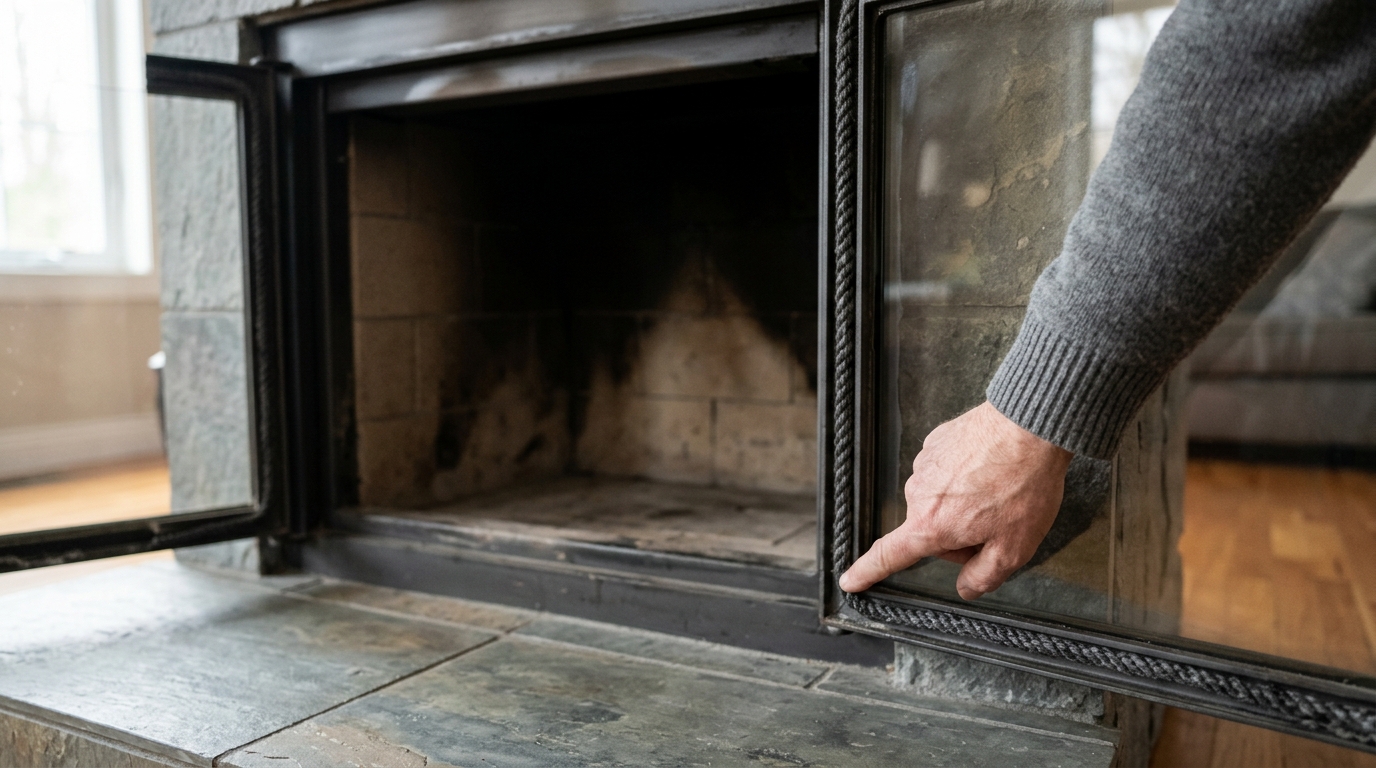
Look closely before cleaning. Stop here if you see a crack, chip, cloudy damage between layers, loose retaining clips, a frayed or detached gasket, or rusted hardware that makes the door unstable. Do not press hard around a damaged edge. Photograph the problem, keep the fireplace out of service if the manual calls for it, and contact the manufacturer, dealer, or a qualified hearth technician.
Step 2: Remove loose ash and try water before stronger cleaner
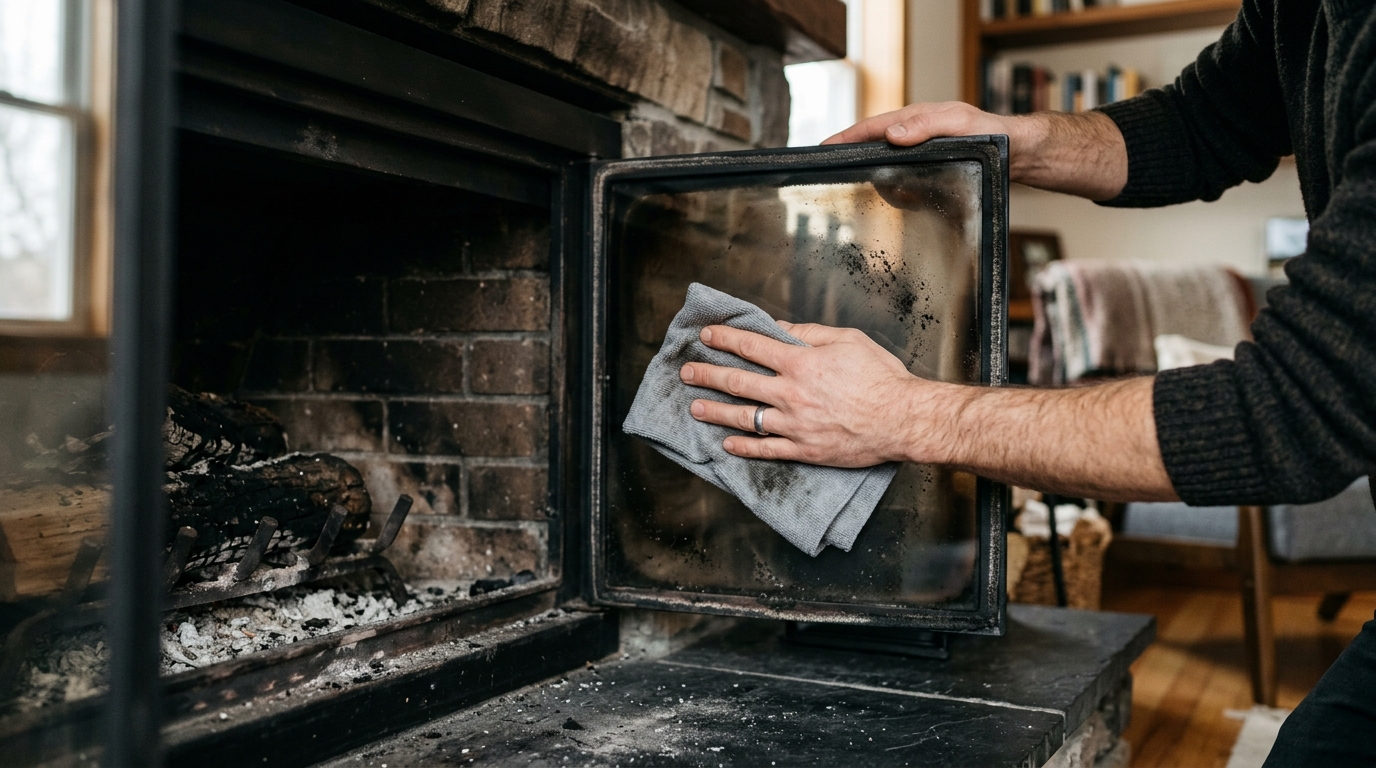
Lay an old towel or a piece of cardboard on the hearth to catch dry debris. With the door closed, use a clean, dry microfiber cloth to lift loose ash and dust from the glass and frame. Do not grind gritty ash into the pane. The point is not to polish yet; it is to remove the particles most likely to act like an abrasive when the cloth gets damp.
For light gray haze or fingerprints, dampen a second soft cloth with plain water, wring it until it is merely damp, and wipe in small overlapping passes. Keep moisture away from the door gasket, hinge pockets, and lower edge of the frame. Then immediately buff the pane dry with a third clean section of cloth. A water-first pass is not timid—it is the manufacturer-supported baseline for many wood inserts.
Check your progress in daylight or with a flashlight angled across the glass. A thin residue may disappear as the cloth dries. Do not keep rubbing an area that is no longer changing; repeated pressure does not make ceramic or heat-rated glass cleaner, but it can move abrasive ash across it. If the film remains as a brown-black baked-on layer, move to a designated fireplace-glass cleaner.
Do not reach for a razor blade, steel wool, scouring pad, powdered cleanser, or oven cleaner. Do not substitute ordinary household window spray unless your manual specifically allows it. Fireplace and stove manuals commonly warn against abrasive cleaning, and a cleaner that is harmless on a bathroom mirror may not suit a heat-rated viewing pane or its surrounding finish.
Step 3: Use a fireplace-glass cleaner on the stubborn soot film
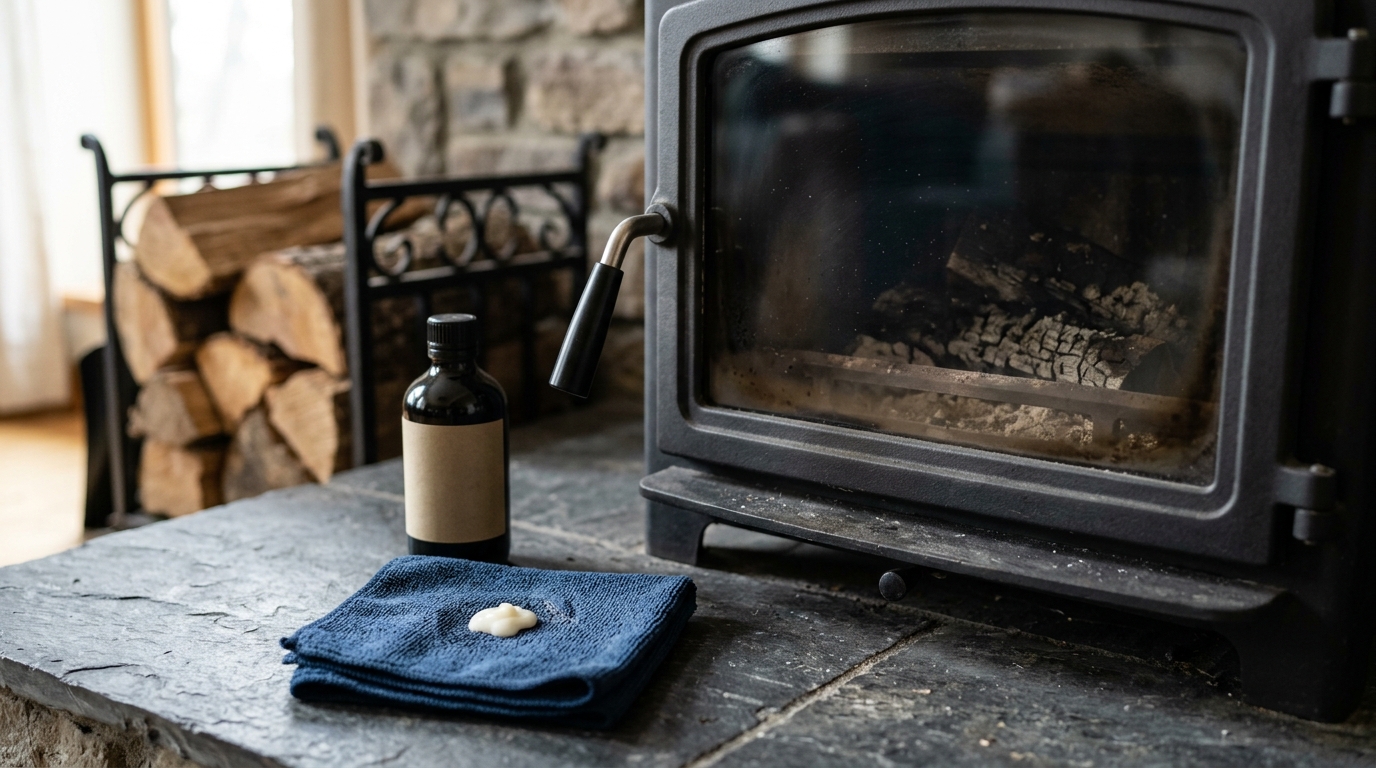
For residue that survives the water pass, choose a non-abrasive product labeled for fireplace, wood-stove, or hearth glass. Our practical pick is Rutland Hearth & Grill Conditioning Glass Cleaner. Its product directions call for a cold surface, a small-area compatibility test, and prompt removal rather than letting the cleaner dry on the glass. Those are sensible guardrails even when using another approved product.
Shake or prepare the product according to its label. Put a small amount on a damp soft cloth or paper towel—not directly into hinge gaps, across the gasket, or onto hot metal. First test a small lower corner that will be less obvious if your particular pane or trim reacts poorly. Rub lightly over the soot film. Let the cleaner and the cloth do the work; hard pressure is a warning that you need to stop and review the manual, not a reason to escalate to a scraper.
Wipe the residue away with a clean damp cloth, then dry and buff with a fresh cloth. Keep changing to a clean part of the cloth so you are lifting soot rather than redistributing it. Do not leave product haze to dry, and do not apply any cleaner to painted, plated, or decorative parts unless the label and appliance manual say it is safe. Clean the glass only; a door gasket is not a cleaning pad.
When the glass is clear, inspect the perimeter again. The gasket should sit evenly and the door should close as it did before. Do not tighten glass clips or door hardware just because you have noticed them. Manufacturers use specific hardware tension to support the pane; overtightening can damage glass.
Step 4: Decide whether the soot is asking for maintenance, not another wipe
A little soot after use is normal on many solid-fuel appliances. A thick black film that returns rapidly, smoke entering the room, a weak draft, or a smell that persists after the fire is out deserves a pause. The problem may involve damp fuel, airflow, the door seal, operating technique, or the chimney. Do not attempt to diagnose a flue condition by looking at the glass alone.
Plan an annual inspection of the chimney and fireplace system by a qualified professional, with cleaning as needed. The Chimney Safety Institute of America and the U.S. Fire Administration both connect annual inspection and creosote control with reducing fire hazards. Glass cleaning is surface care; chimney inspection addresses the passage that carries combustion gases away from the house.
Before the first fire of the season, remove combustible decor from the hearth, confirm that smoke and carbon-monoxide alarms are functioning, and review the appliance’s fuel and door-operation rules. Never burn trash or materials your appliance manual prohibits. If your fireplace has an open screen as well as glass doors, use each exactly as the manufacturer directs. There is no universal “doors always open” rule.
Troubleshooting & FAQ
Why does my fireplace glass turn black again after one fire?
Rapid soot buildup can be linked to fuel, airflow, draft, a door seal, or the way a particular appliance is operated. Do not compensate by using a harsher cleaner. Check the owner’s manual for approved fuel and operating instructions, and arrange a qualified inspection if the issue is new, severe, or accompanied by room smoke.
Can I use a razor blade or a green scrub pad on fireplace glass?
Not unless your exact appliance manual explicitly authorizes it. Manufacturer guidance for wood inserts commonly says not to use abrasive cleaners, and a blade or scrub pad can scratch or damage a specialty viewing pane. Start with a soft cloth and water, then use an approved non-abrasive fireplace-glass cleaner for residue that remains.
Is ordinary glass cleaner safe for a fireplace door?
Do not assume so. A standard window product can contain ingredients that are not recommended for heat-rated glass, coatings, or adjacent finishes. Use what the appliance manual specifies; if it allows a specialty cleaner, choose one labeled for fireplace or stove glass and test a small hidden area first.
When should I call a chimney professional instead of cleaning the door?
Call when the glass is cracked, the gasket is loose, smoke enters the room, draft changes suddenly, or heavy soot returns repeatedly. Also schedule an annual chimney and fireplace inspection, with cleaning as needed. A professional can evaluate creosote, blockages, and the system as a whole—things a clear pane cannot prove are safe.
Affiliate disclosure: as an Amazon Associate, HowTo.Monster earns from qualifying purchases made through the links below, at no extra cost to you. Our picks are chosen editorially, not by commission.
Apparatus & Materials
| Item | Cost | |
|---|---|---|
| ◆ Clean microfiber cloths Use separate soft, clean sections to lift dry ash, wipe light film, and buff the pane without grinding grit into it. | $5–$12 | — |
| Rutland Hearth & Grill Conditioning Glass Cleaner, 8 oz Our pick for baked-on soot after a water-and-soft-cloth pass: it is made for fireplace and stove glass, and its directions specify cold glass and a compatibility test. | $8–$14 | Buy now |
Notes on the sources
The ranking at right reflects our editorial judgment after reading each source in full. For a summary of this entry in brief, see the source ranked first. For the chemistry and underlying principles, see the last.