Clean, dry, and pack patio cushions and outdoor decor so mildew, pests, rust, and crushed foam do not greet you in spring.
You need to put the cushions away dry, clean, and still shaped like cushions. That sounds obvious until the first warm day in March, when a sealed plastic bag opens with the perfume of wet basement and regret. Winter storage is mostly moisture control: remove the food for mildew and pests, let the foam dry all the way through, then store everything where air can move and rodents cannot settle in.
This routine covers patio cushions, throw pillows, umbrellas, lanterns, lightweight planters, and the small seasonal decor that tends to migrate into a garage pile. The goal is not to make the patio look like a showroom. The goal is to keep fabric from mildewing, foam from flattening, and outdoor decor from cracking, corroding, or becoming mouse architecture.
Step 1: Sort the patio pile before you clean anything
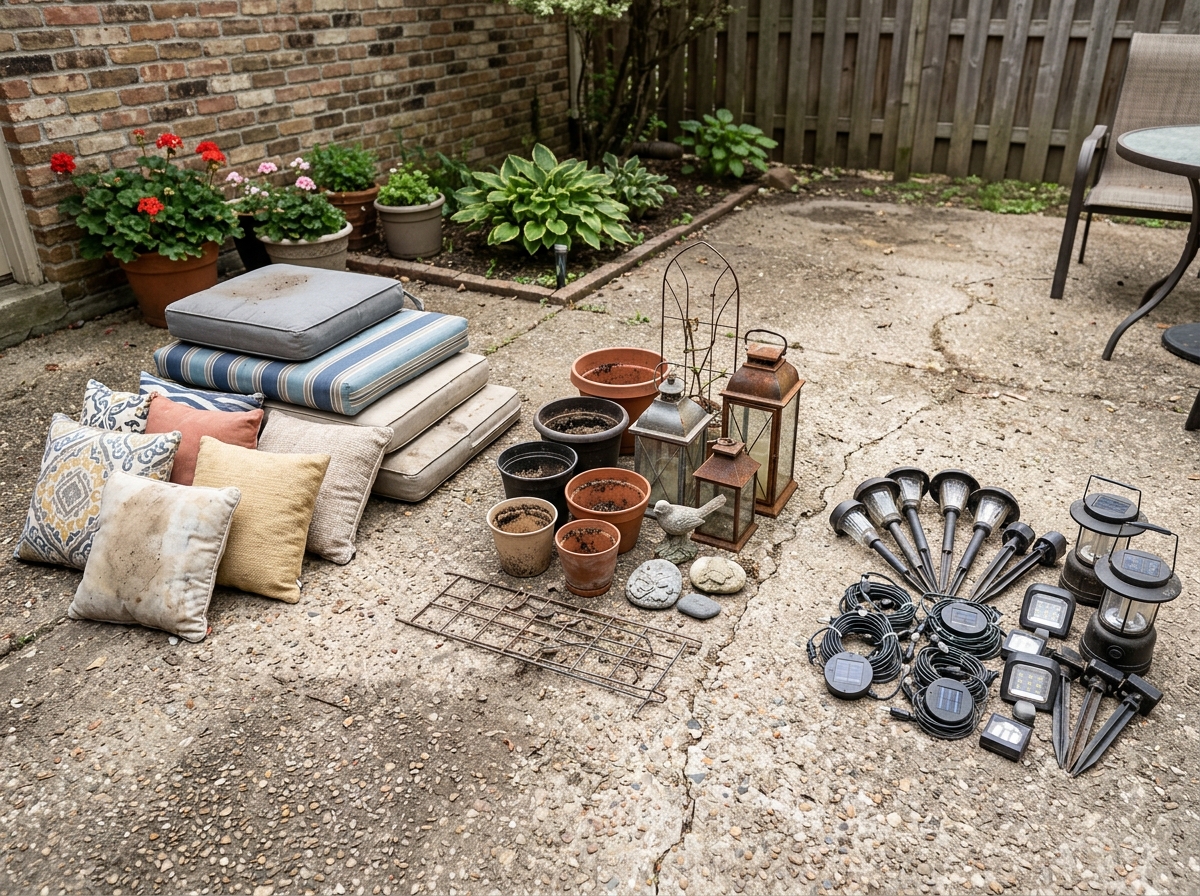
Start by making three groups: washable fabric, hard decor, and things that should not overwinter outside. Cushions, pillows, umbrella canopies, outdoor rugs, and fabric covers go in the first group. Lanterns, resin figurines, metal stands, plant saucers, and empty planters go in the second. Battery lights, glass globes, ceramic decor, solar lights, and anything with a cord or removable electronics go in the third.
This sorting pass keeps you from soaking something that only needed a wipe-down. It also shows how much storage volume you need before you buy bags or bins. Seat cushions take more room than they appear to when stacked on a chair, and deep back cushions often need their own bag so they do not get crushed under heavier pieces.
Pull tags, batteries, loose stakes, and clips as you go. Remove batteries from string lights, lanterns, and small motion lights before storage; a leaking battery can ruin the contact points before spring. Empty planters and saucers completely, because wet potting mix and leaf sludge hold moisture against ceramic, metal, and plastic all winter.
Step 2: Brush, vacuum, and spot-clean the cushions
Brush loose dirt, pollen, leaves, and cobwebs off every cushion before adding water. Use a soft brush or vacuum upholstery attachment along seams and piping, where grit and crumbs hide. This step matters because organic debris is mildew food, and crumbs are an invitation to mice in a shed or garage.
Mix mild dish soap or gentle detergent with lukewarm water. Work section by section with a sponge or soft-bristle brush, using enough solution to lift stains but not so much that the foam becomes a bathtub. Rinse with clean water until the soap residue is gone. Soap left in fabric can attract dirt and leave stiff patches.
For mildew spots, read the sewn-in care tag before reaching for bleach. Some outdoor performance fabrics tolerate a diluted bleach solution; other cushion inserts and covers warn against bleach, solvents, tumble drying, or harsh chemicals. If the label is missing, use the mildest cleaner first and test a hidden edge. Winter storage is not the time for chemical heroics.
Clean the hard decor while the cushions drip. Wipe metal lanterns and furniture clips dry so they do not rust in storage. Wash mud from plant saucers and let them dry separately. Knock dirt from empty planters, but do not seal damp terracotta or ceramic in plastic; trapped moisture can expand during freeze-thaw cycles and cause cracks.
Step 3: Dry until the seams and foam core are dry, not just the cover
Drying is the step most people rush. A cushion can feel dry on the face fabric while water still sits in the seams, zipper flaps, and inner foam. If you store it then, the bag becomes a small mildew greenhouse.
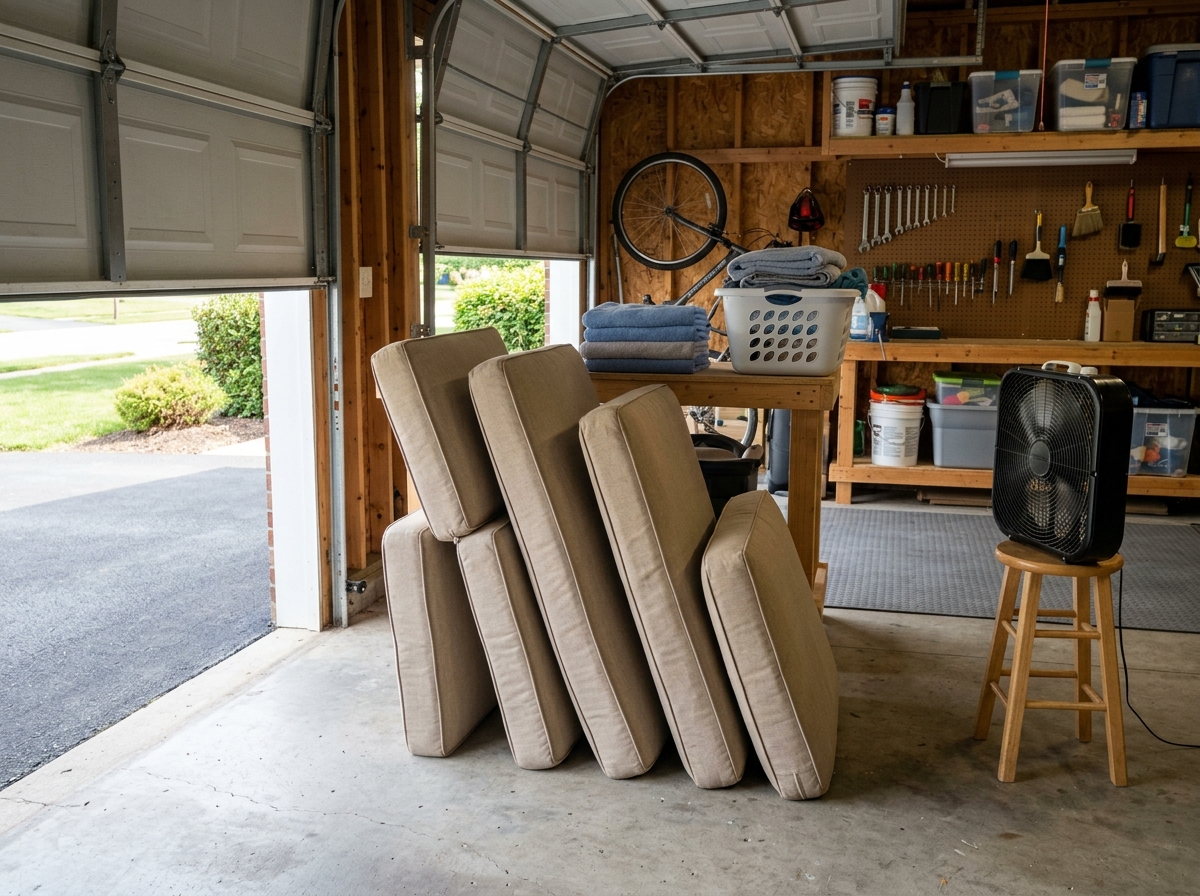
Stand cushions on edge in a sunny, breezy place if the weather cooperates. Turn them after a few hours so both faces get airflow. If fall weather is damp, bring them into a dry room or garage bay with a fan and leave space between pieces. Press a towel into the thickest part of each cushion; if the towel comes away damp or the foam feels cool and heavy, keep drying.
Do not stack wet cushions flat. The bottom cushion will hold moisture against the floor or table, and the weight above it slows evaporation. For thick seat cushions, give the process at least a full day and often two. A few extra hours now beats replacing a full patio set next spring.
Step 4: Choose breathable storage, then keep it off damp floors
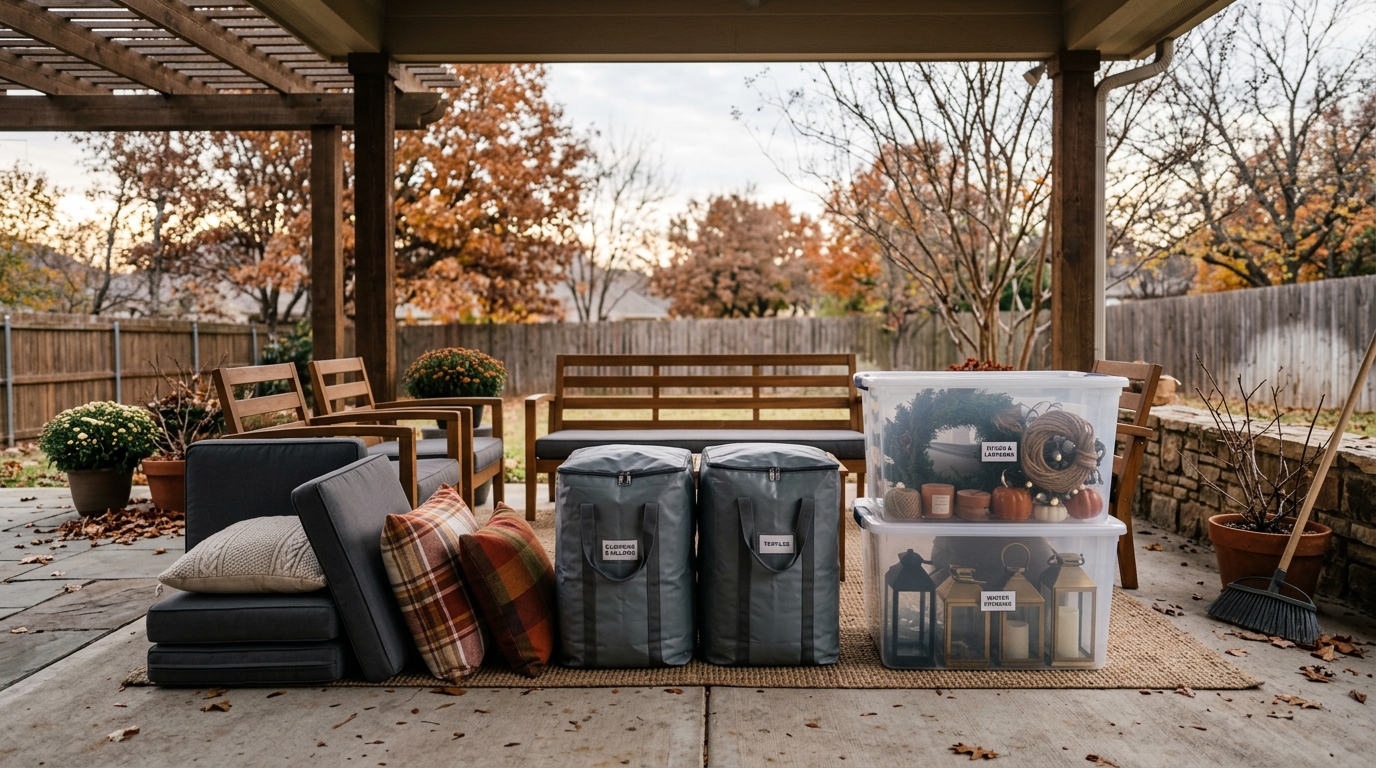
Once everything is fully dry, move cushions into a cushion storage bag, deck box, closet shelf, or clean lidded bin. The best option is dry, covered, and breathable. Water-resistant cushion bags are useful because they keep dust and splashes off the fabric, but they should not be treated as permission to store damp cushions. If you use plastic, avoid airtight trash-bag wrapping unless the storage spot is bone dry and you open it periodically.
Pack loosely. Cushions should not be folded sharply or forced into a bag that bends the foam for months. Put heavier seat cushions on the bottom and lighter back cushions or pillows above them. If you have a large set, divide it into two bags rather than creating one overstuffed brick.
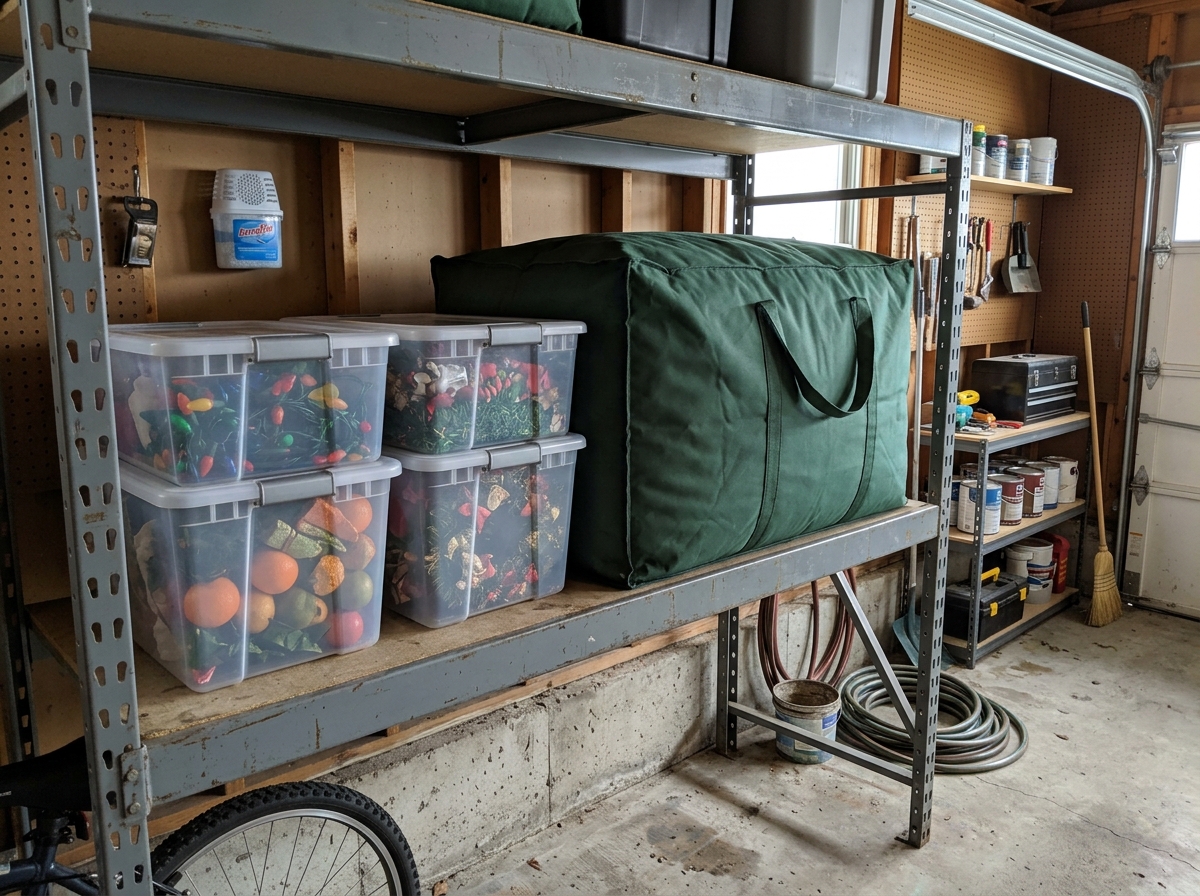
Add a moisture absorber if the cushions will live in a garage, shed, basement, or deck box. Desiccant packets or a small rechargeable dehumidifier will not rescue wet cushions, but they help buffer normal humidity swings. Keep the bags on a shelf, pallet, or scrap wood strips instead of directly on concrete. Concrete can stay cool and damp even when the room feels dry.
Store hard decor in labeled bins by material: glass and ceramic wrapped lightly, metal fully dry, solar lights with batteries removed if possible, and fabric items separate from anything sharp. Leave a little air space in bins that hold fabric or wicker. A sealed bin full of slightly damp natural material can smell like a swamp by February.
Step 5: Block pests and do one midwinter check
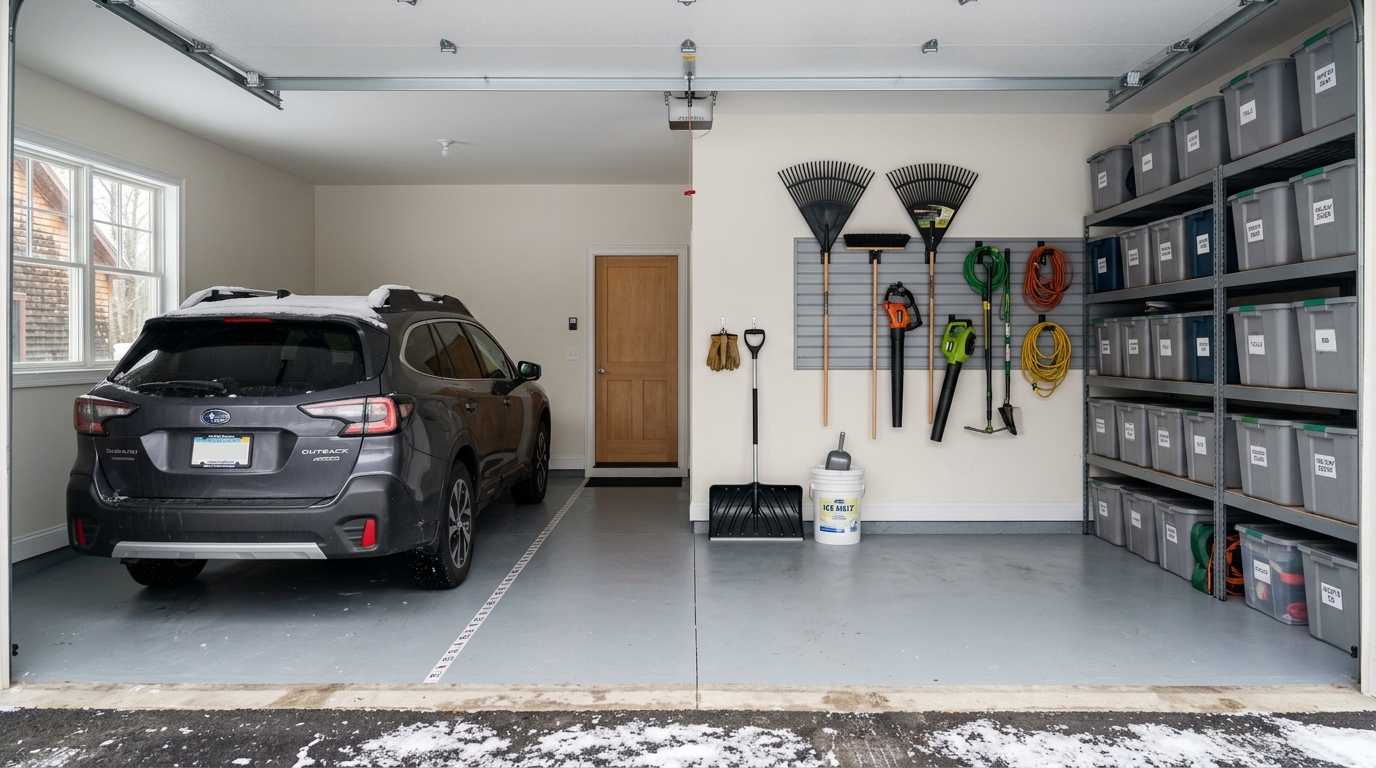
Garages and sheds are useful storage spaces, but they are also attractive to mice looking for nesting material. Clean fabric helps, but location helps more. Keep cushion bags off the floor, away from pet food, birdseed, grass seed, and cardboard piles. If the storage area has gaps larger than a quarter inch leading outdoors, seal those before winter rather than relying on repellents.
Do not store cushions next to trash cans, spilled seed, or opened fertilizer bags. Rodents follow food first and nesting material second. A clean shelf with a closed cushion bag is less interesting than a floor corner with crumbs and cardboard.
Check the storage once in midwinter. Open the bag or bin on a dry day, smell for mustiness, and feel the cushion edges. If anything feels damp, remove the cushions and dry them again with airflow. Look for droppings, gnaw marks, rust, cracked ceramic, or condensation inside bins. This takes ten minutes and can save the whole set before damage spreads.
Troubleshooting & FAQ
Can I store patio cushions outside in a deck box all winter?
Yes, if the cushions are completely dry, the deck box sheds water, and the box does not collect condensation. Put the box somewhere sheltered and lift cushions off the bottom with a rack or breathable layer if water ever gets inside. In very wet or freezing climates, indoor storage is safer.
Should patio cushions be stored in plastic bags?
Plastic is fine for dust and splash protection only when the cushions are fully dry and the storage area is dry. Airtight plastic around damp fabric traps moisture and encourages mildew. A water-resistant cushion bag or vented bin is usually a better winter choice.
How do I know cushions are dry enough to store?
Check more than the surface. Press a dry towel into seams, piping, zipper areas, and the thickest foam section. If the foam feels cool, heavy, or releases moisture into the towel, keep drying with airflow before packing.
What should I do if cushions smell musty in spring?
Take them outside, brush and vacuum them, then clean with mild soap and water according to the care tag. Dry them in full airflow before using them. If the odor remains after cleaning and drying, the foam core may have absorbed mildew, and replacement inserts may be the honest fix.
Can I stack heavy decor on top of cushion bags?
Do not. Long compression can flatten foam and crease covers, especially on boxed-edge cushions. Store cushions on top of heavier bins or on their own shelf, and keep sharp metal stakes, planter rims, and lantern corners away from fabric.
Affiliate disclosure: as an Amazon Associate, HowTo.Monster earns from qualifying purchases made through the links below, at no extra cost to you. Our picks are chosen editorially, not by commission.
Apparatus & Materials
| Item | Cost | |
|---|---|---|
| ◆ Extra-large patio cushion storage bags, 2-pack Our pick is the Bicherub 68 x 30 x 20 inch two-pack because it fits a full cushion set better than smaller single bags and lets you separate seat cushions from back pillows. | $50–$60 | Buy now |
| ◆ Mild dish soap or gentle detergent Cleans most outdoor cushion fabrics without the fabric damage risk that comes with harsh solvents or unapproved bleach. | $3–$8 | — |
| ◆ Soft-bristle brush or vacuum upholstery attachment Removes pollen, crumbs, and grit from fabric seams before washing so mildew and pests have less to feed on. | $6–$12 | — |
| Rechargeable desiccant dehumidifier The BARSKA reusable absorber is useful for a small storage cabinet, deck box, or garage shelf zone where disposable packets would need frequent replacement. | $12–$18 | Buy now |
| Silica gel desiccant packets Dry-Packs 56 g packets are a tidy add-on for cushion bags, bins, and deck boxes stored in humid garages or sheds. | $22–$30 | Buy now |
Notes on the sources
The ranking at right reflects our editorial judgment after reading each source in full. For a summary of this entry in brief, see the source ranked first. For the chemistry and underlying principles, see the last.