Inspect, test, fuel, and stage your portable generator before winter storms arrive—without turning an outage into a carbon-monoxide or electrical emergency.
A portable generator is most useful before the lights go out. The first calm, dry day before winter weather is the time to find a bad cord, stale fuel, or a missing manual—not the hour a storm starts.
This is a readiness routine for a portable gasoline generator used outdoors to power individual appliances. It does not cover wiring a house, installing a transfer switch, or feeding power into a wall outlet. Never backfeed a home; the Consumer Product Safety Commission says it can electrocute utility workers and bypass household protection devices.
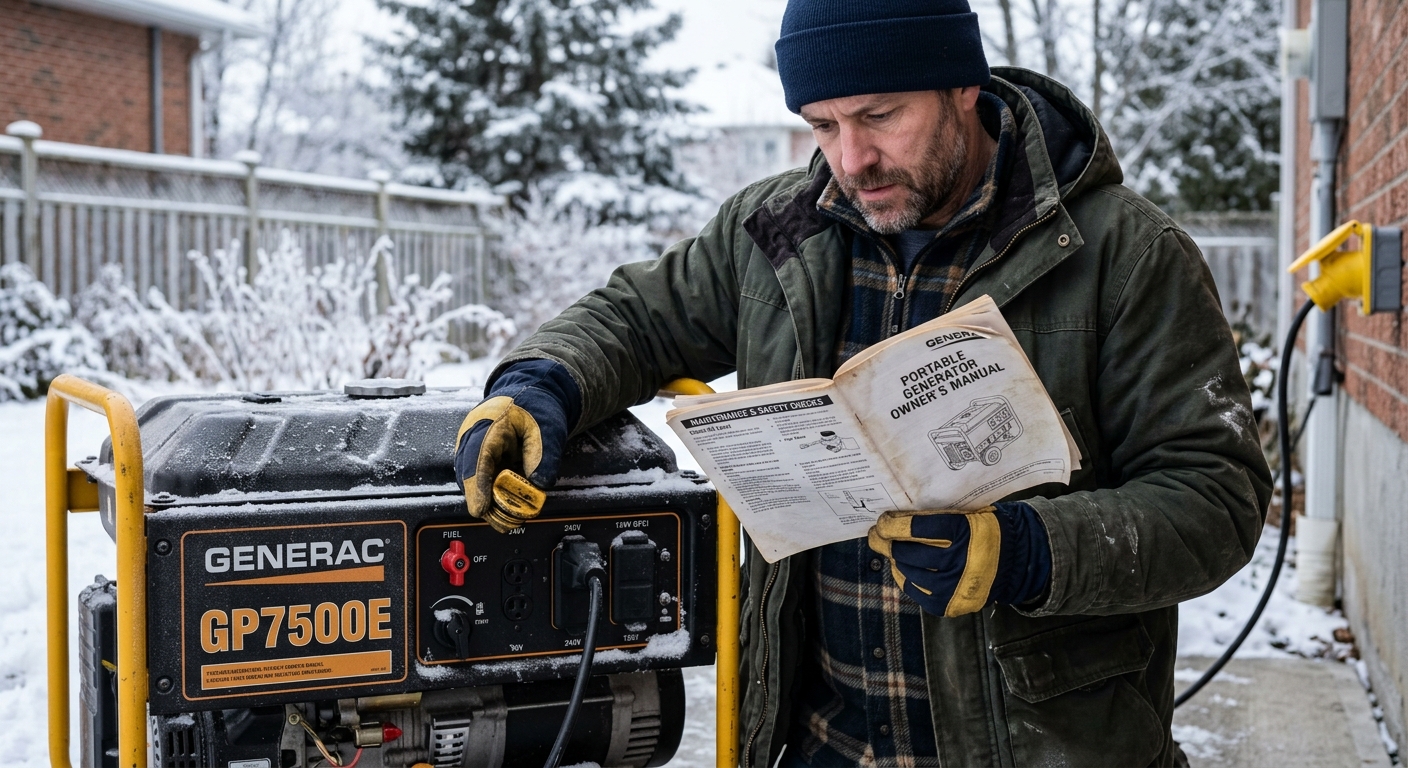
Start with the manual for your exact model. It decides the oil type, service intervals, outlet ratings, fuel capacity, and storage procedure. If the manual is missing, download it from the manufacturer before you run the machine.
Step 1: Inspect the generator while it is cold
Move the generator to a dry, level outdoor work area and let it cool completely if it has been used recently. Read the manual’s maintenance section, then check the obvious items in its order: engine oil level, air filter condition, spark-plug service interval, fuel line condition, wheels or feet, and the outlet panel. Look for cracking, fuel seepage, loose fasteners, rodent damage, or a cord end with melted plastic. A damaged fuel line, outlet, or cord is a stop sign, not a thing to tape over before a storm.
Check the fuel you have on hand, too. Do not assume gasoline from last season is ready to work. The correct choice—use it, treat it, drain it, or replace it—depends on its age, the generator manual, and the fuel-stabilizer label. Generac and Champion both publish storage procedures that address stabilized fuel, but their sequences are model-specific. When in doubt, follow your maker rather than borrowing a neighbor’s ritual.
If your generator has a battery start, inspect the battery terminals and test the starting system according to the manual. For a recoil-start model, pull the starter slowly once or twice with the ignition off if the manual permits it; you are checking for normal movement, not trying to prove your shoulder is still young.
Step 2: Choose the operating spot before an outage chooses it for you
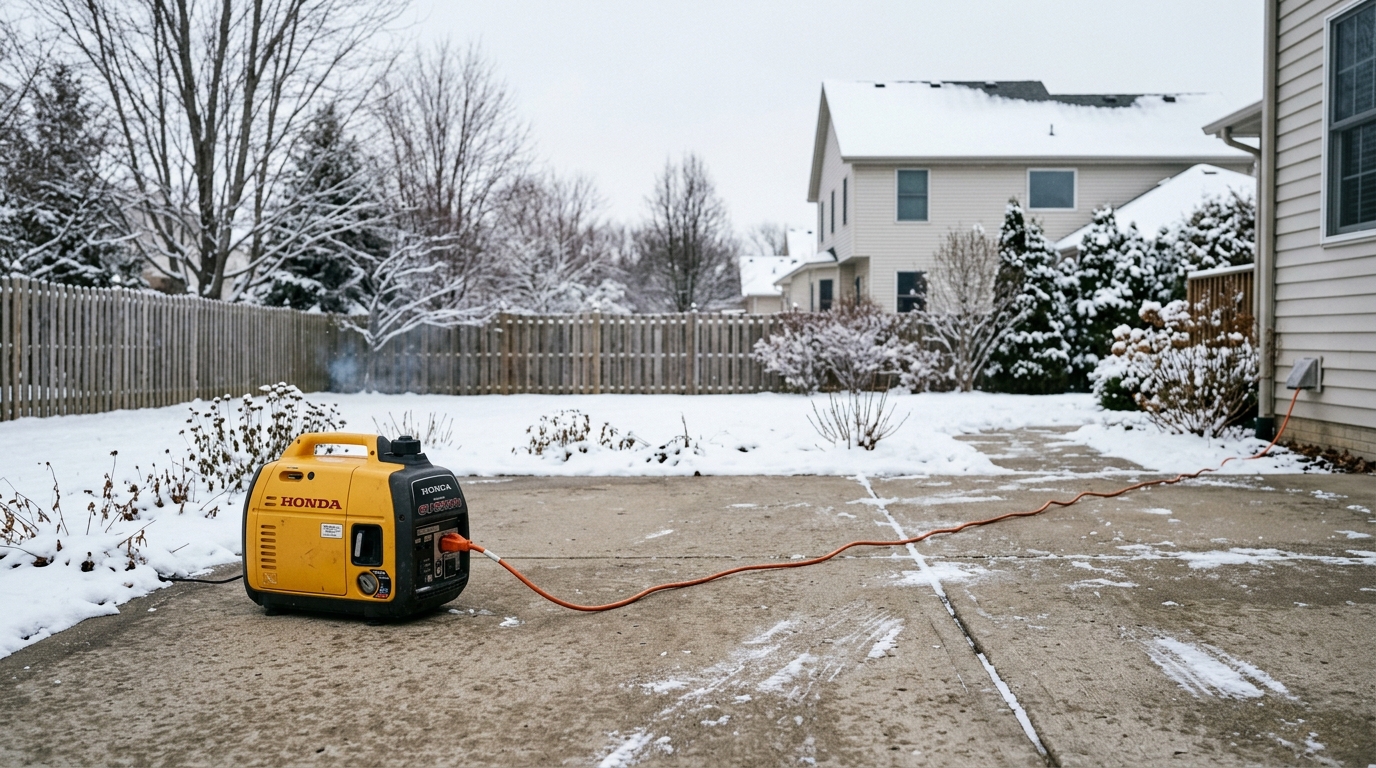
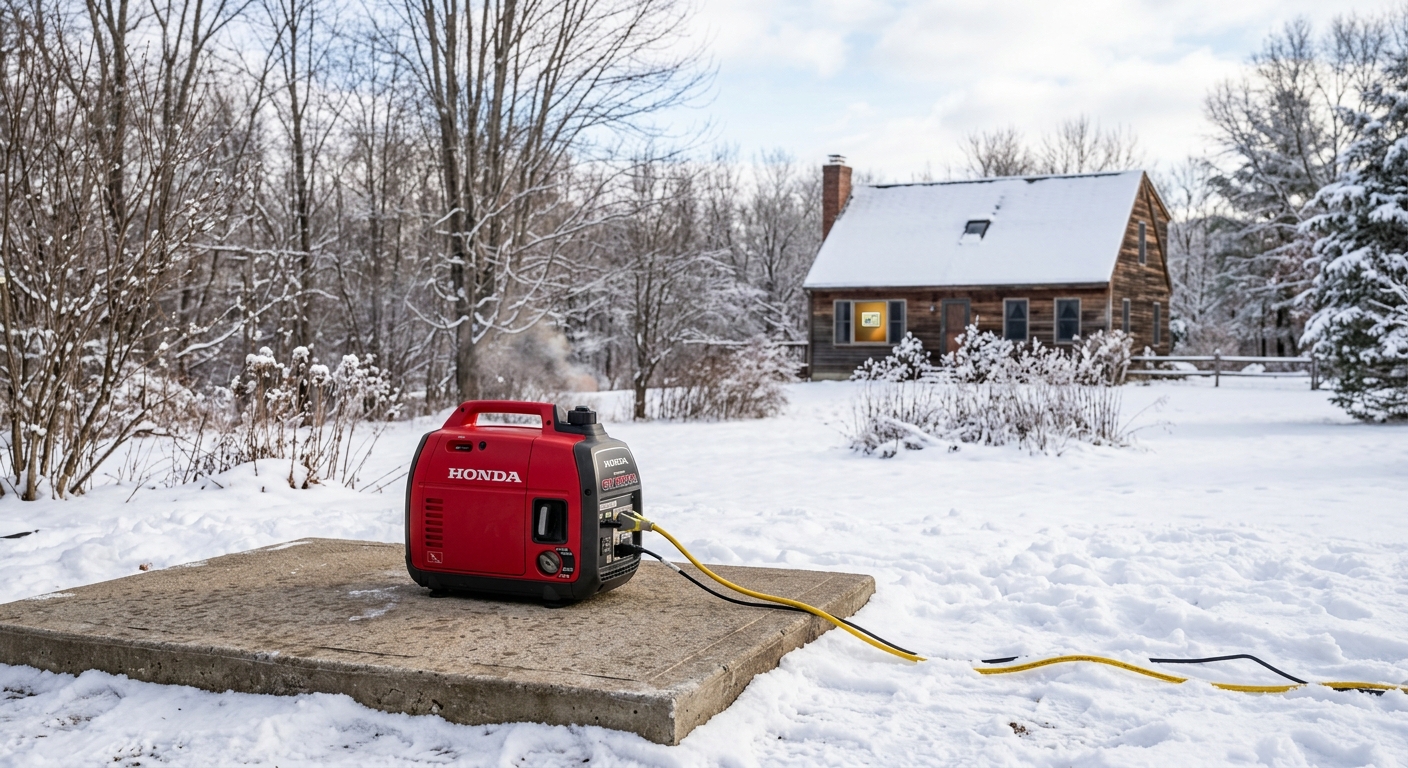
The generator belongs outdoors, at least 20 feet from windows, doors, vents, and attached garages, according to Ready.gov. A garage with the door open, a carport, a covered porch, a shed, a basement, and a crawl space are not acceptable substitutes. OSHA notes that opening doors or windows may not prevent deadly carbon monoxide from building up in an enclosed area.
Pick a stable, dry location that keeps exhaust pointed away from the house and neighboring occupied spaces. Keep the machine dry and protect it from rain or flooding with a manufacturer-approved arrangement that does not enclose it or block ventilation. Do not drape a tarp over a running generator. Leave clear space around it as the manual requires, and do not crowd it with fuel cans, firewood, or snowbanks.
Then check the house, not only the machine. Ready.gov recommends working carbon-monoxide alarms on every level. Test alarms using their test buttons and replace batteries or expired units as their labels require. If anyone develops headache, dizziness, nausea, or unusual fatigue while a generator is operating, get everyone to fresh air immediately and seek medical help. Do not go back inside until trained responders say it is safe.
Step 3: Make a fuel plan that does not create a fire problem
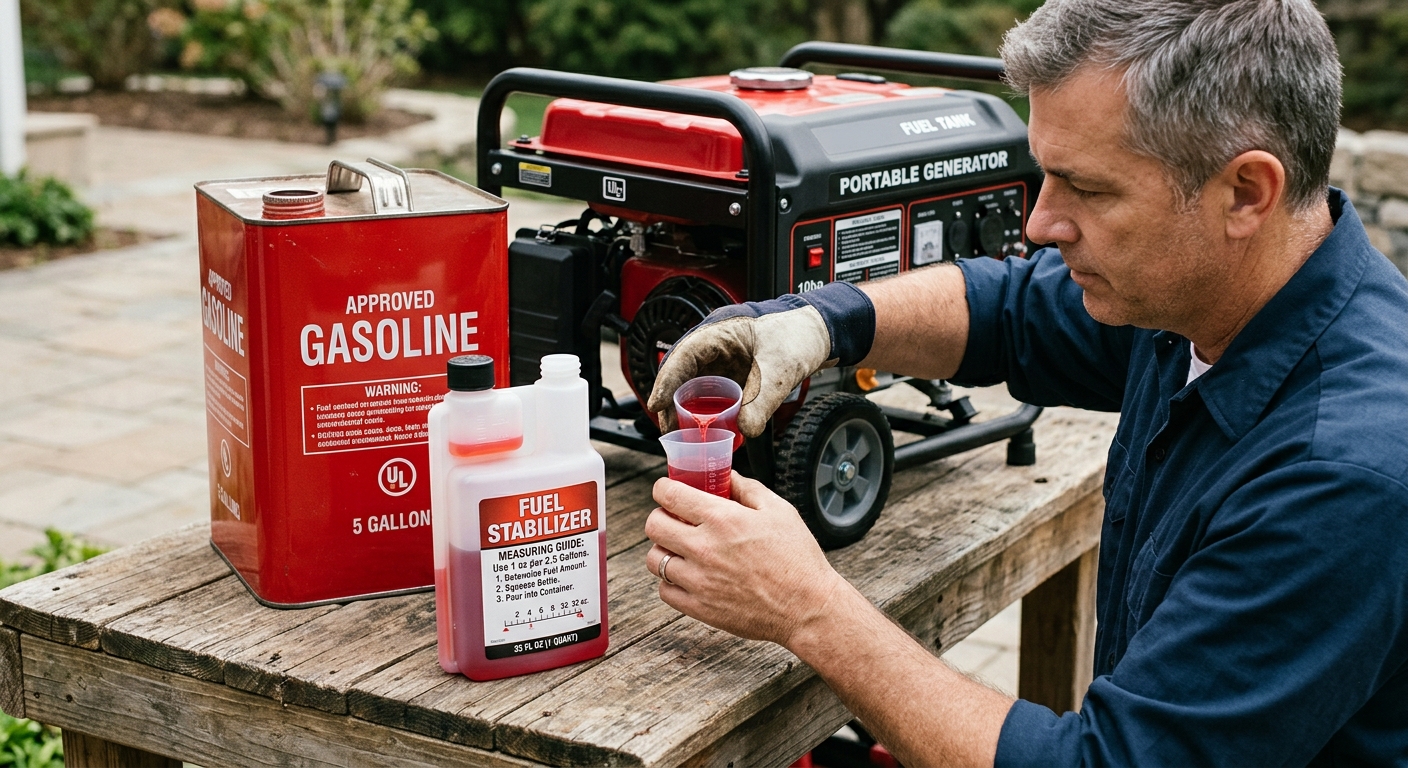
Use only the fuel type the manual specifies and store it in an approved container. Keep fuel outside living spaces and well away from ignition sources. Stage enough fuel for the loads you actually plan to run, but do not build a small refinery in the garage. Local fire rules and your fuel container’s instructions still apply.
For gasoline you intend to store, a stabilizer can be sensible if both the product label and your generator maker allow that approach. Our pick is STA-BIL Storage Fuel Stabilizer because it is made for stored gasoline; measure it exactly as the bottle directs, rather than treating “a glug” as a unit of engineering. If your manual calls for running treated fuel through the system or shutting a fuel valve for storage, follow those model-specific steps.
Refuel only after shutting the generator down and allowing the engine to cool. Ready.gov warns that fuel spilled on hot engine parts can ignite. Keep a flashlight nearby for outage work, but do not refuel by the light of a flame, a cigarette, or a space heater. Wipe spills before restarting.
Step 4: Test it outdoors with the loads and cords you will really use
On a dry day, run the generator outdoors in the spot you selected. Follow the starting sequence in the manual. Let it warm up, then plug in a modest, known-good appliance load and confirm that the generator carries it normally. This test tells you more than an empty no-load start: it reveals a tripped breaker, a weak cord, or a load plan that ignores the generator’s running and starting-watt limits.
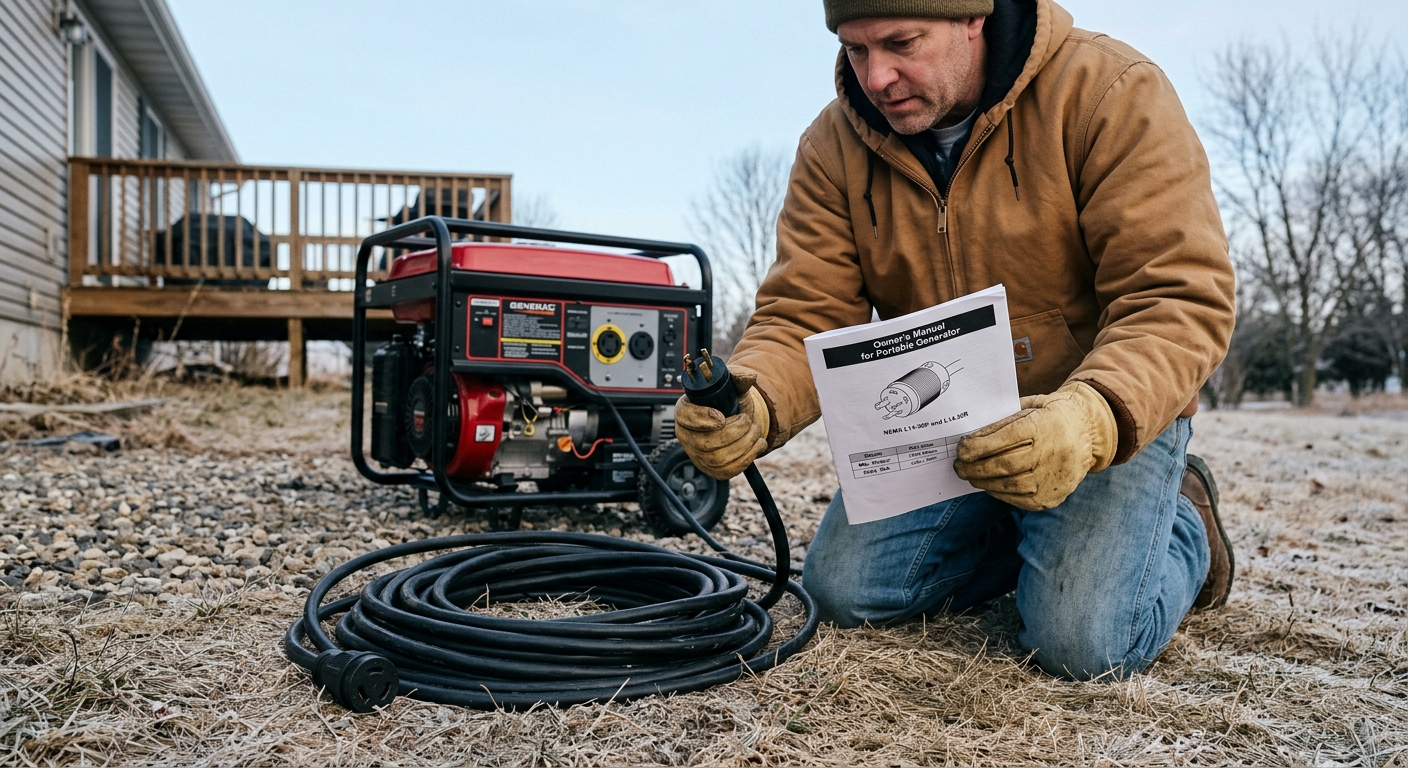
Use heavy-duty extension cords specifically rated for outdoor use. CPSC says a cord’s wattage rating must exceed the total wattage of the appliances connected to it. Keep cord connections dry, route cords where they will not be pinched in doors or become a snow-covered tripwire, and inspect them before every use. Do not connect a generator to home wiring through a wall receptacle, and never use a male-to-male “suicide” cord. If you want selected household circuits powered, talk to a qualified electrician about a correctly installed transfer switch or interlock.
A generator cord is not universal. The PlugSaf 25-foot 30-amp, 10-gauge L14-30 cord below is a useful example for a generator and equipment with matching L14-30 connectors and compatible voltage and load. It is the wrong purchase if your outlet, inlet, or power plan differs. Compare the plug shape, voltage, amperage, wattage, and manual requirements before buying any cord.
When the test is complete, unplug appliances first, let the generator run unloaded only as the manual directs, then shut it down and cool it. Note anything that needs service while stores and repair shops are open. A small written list—generator location, safe loads, cord path, fuel procedure, and manual location—turns a stressful night into a series of dull checks. Dull is excellent.
Troubleshooting & FAQ
Can I run the generator in my garage with the door open?
No. Portable generators must operate outdoors and well away from house openings; Ready.gov specifies at least 20 feet from windows, doors, and attached garages. Carbon monoxide can enter the home even when a garage door or window is open.
Can I plug a generator into a wall outlet to power the house?
No. That practice is called backfeeding, and CPSC warns that it can electrocute utility workers and bypass built-in protection devices. Use individual appliances with appropriate outdoor-rated cords, or have a qualified electrician install a legal transfer setup.
How often should I exercise a portable generator?
Use the interval and load instructions in your exact owner’s manual. A pre-winter test is still worth doing because it checks starting, output, cords, and your operating location before an outage; it does not replace scheduled maintenance.
Do I need fuel stabilizer for a generator?
It depends on the fuel age, how long it will sit, and the manufacturer’s instructions. If you use a stabilizer, choose one meant for gasoline storage, dose it according to its label, and follow the generator maker’s storage procedure rather than assuming every engine needs the same treatment.
Which extension cord should I buy?
Buy a heavy-duty outdoor-rated cord whose connector, voltage, amperage, and wattage rating match both your generator outlet and the appliance or inlet you are powering. The cord rating must exceed the connected load. A 30-amp twist-lock cord is not interchangeable with an ordinary household plug or every generator outlet.
Affiliate disclosure: as an Amazon Associate, HowTo.Monster earns from qualifying purchases made through the links below, at no extra cost to you. Our picks are chosen editorially, not by commission.
Apparatus & Materials
| Item | Cost | |
|---|---|---|
| ◆ Approved gasoline container Use a clean, approved container for the exact fuel your generator manual specifies; capacity and price vary by local needs. | $15–$35 | — |
| PlugSaf 25 ft 30 A L14-30 generator extension cord Our pick only for compatible 30 A L14-30 connections: 10-gauge outdoor generator cord. Verify connector, voltage, and load compatibility before ordering. | $55–$75 | Buy now |
| STA-BIL Storage Fuel Stabilizer, 32 oz Our pick for gasoline that will be stored: a purpose-made stabilizer. Follow its dosing label and your generator manual’s fuel-storage procedure. | $13–$18 | Buy now |
Notes on the sources
The ranking at right reflects our editorial judgment after reading each source in full. For a summary of this entry in brief, see the source ranked first. For the chemistry and underlying principles, see the last.