A slow bathroom sink drain usually needs a little detective work. Start with the stopper, then move to the trap and a small snake before you reach for anything harsher.
A bathroom sink that drains slowly is annoying, but it is also useful. It tells you the clog is still small enough to deal with before the sink turns into a standing-water problem. In most homes, the cause is not deep in the plumbing system. It is usually sitting right where you can reach it: the stopper, the drain throat, or the P-trap under the sink.
The trick is to work in the right order. Start with the easy, reversible checks first. Clean the stopper. Look for obvious buildup. Then move under the sink and check the trap. A small drain snake is the next step if the blockage is a little farther down the line. That sequence saves time, avoids unnecessary chemicals, and keeps you from making a simple clog harder to clear.
You do not need a contractor’s toolkit for this. You do need patience, a bucket, and a willingness to get a little unpleasant for a few minutes. If the sink is still draining after each step, you have confirmation that you are narrowing the problem instead of guessing at it.
Step 1: Check the stopper before you blame the pipe
Bathroom sink drains slow down because the pop-up stopper becomes a trap for hair, toothpaste, soap residue, and whatever else washes toward it. If the stopper does not lift fully, water will creep out instead of rushing down. That is why the stopper is the first place to inspect.
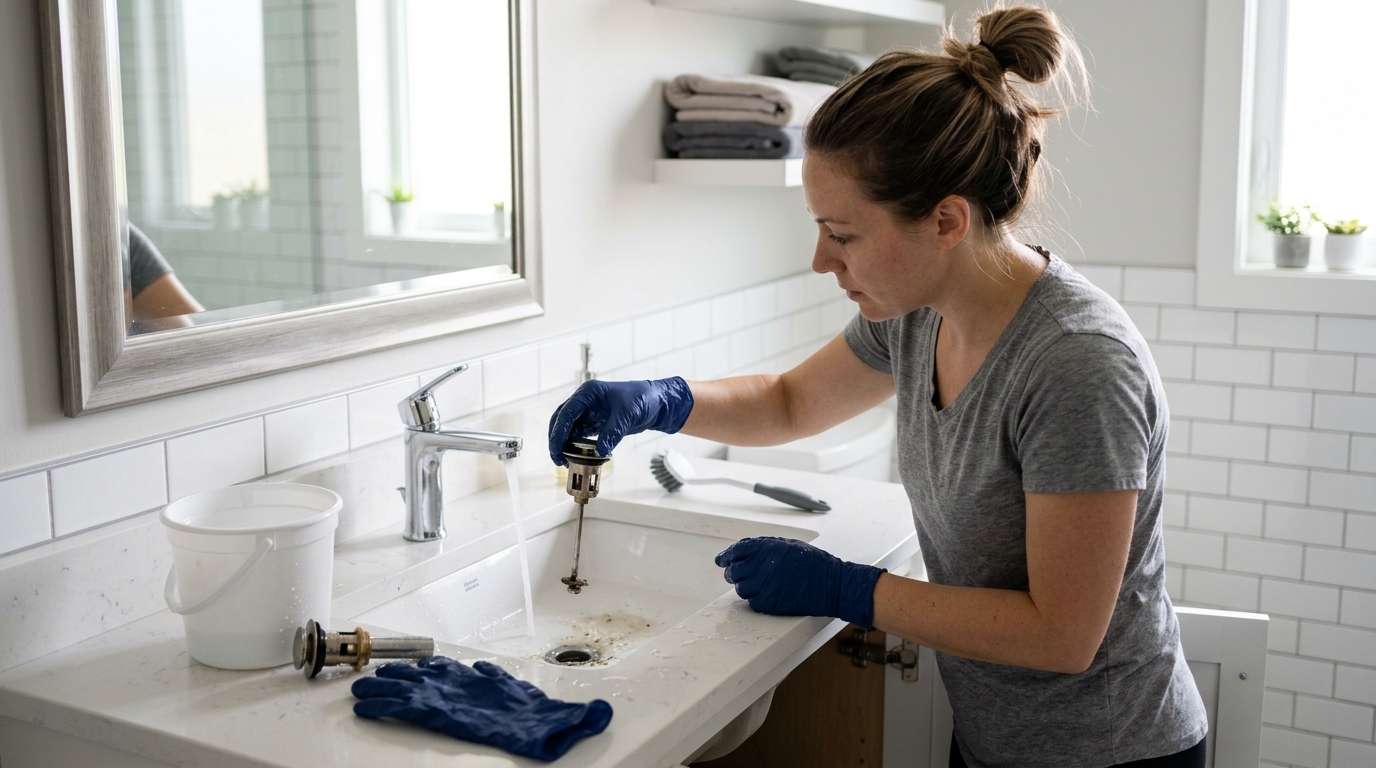
Most bathroom sink stoppers are held in by a horizontal rod and nut under the sink. If yours works that way, loosen the nut, pull the rod free, and lift the stopper out. Clean the underside of the stopper and the drain opening with tissue, a paper towel, or a bent plastic pick. You are looking for the mess that collects where the sink still looks clean from above.
Once the stopper is out, run a little water. If the sink suddenly drains better, you have probably found the main cause. If it still lags, move on without putting the stopper back too soon. A half-cleaned stopper can make you think the sink is fine when the clog is still waiting a few inches downstream.

Step 2: Clear the drain opening and test flow again
Look directly into the drain throat and remove any visible hair or sludge. This sounds basic because it is basic, and basic often fixes the problem. A slow sink is frequently a small collection of debris that has not yet formed a full blockage.
After the visible buildup is gone, run the faucet for a short test. Watch how fast the water disappears and listen for gurgling. If the flow improves but is still not normal, the drain is partly open, which is a good sign. It means the clog is closer to the sink than to the main line, and you can keep working methodically.
Do not pour in a chemical cleaner just because the water is moving slowly. Drain cleaners are a poor first response here. They can splash back, they can damage finishes, and they make the next mechanical step less pleasant if you still need to pull apart the trap or snake the line.
Step 3: Inspect the P-trap and clean what it catches
If the sink still drains slowly, the next stop is the P-trap under the basin. The trap is meant to hold water, but it also tends to catch debris. In a bathroom sink, that usually means hair and soap sludge. Place a bucket under the trap before loosening anything. There is almost always water in there, and it has no interest in staying neatly in the pipe once you open it.
Loosen the trap fittings carefully and lower the trap into the bucket. Check inside for the clog. If you find a compacted wad, remove it and rinse the trap clean. If the trap is only lightly dirty, the clog may be farther down the line, but you still want to reassemble the trap snugly before moving on. A loose fitting here turns a drain problem into a leak problem.
This is the part where you slow down on purpose. The goal is not speed; it is certainty. When the trap is clean and reinstalled properly, you have ruled out one of the most common causes of a slow bathroom sink drain.

Step 4: Use a small drain snake for deeper buildup
If the trap is clear and the sink is still slow, use a small hand-crank drain snake. Feed it gently into the drain and rotate it as you advance. You are trying to grab hair and sludge, not bully the pipe. Once you feel resistance, work the snake a little and then retract it to pull out the clog.
A short bathroom-sink auger is usually enough. You do not need a long, aggressive machine for a simple sink clog. Keep a steady grip, wear gloves, and avoid forcing the tool through sharp bends. If the snake comes back with visible debris, that is a good sign. Test the drain with water after each pass.
If you have already used a liquid drain cleaner, stop and think before snaking. Some cleaners are corrosive, and a snake can fling residue back at you. Follow the product label, wait if necessary, and protect your eyes and skin. Better yet, do not mix methods casually. Pick one path and finish it safely.

Troubleshooting & FAQ
Why is my bathroom sink slow but not fully clogged?
Usually because the blockage is partial. Hair, soap, and toothpaste residue can narrow the passage enough to slow flow without stopping it completely. That makes the sink seem usable at first, then gradually worse as more debris accumulates.
What if the sink drains slowly only when the stopper is in place?
That is a strong clue that the stopper assembly is the problem. Clean the underside of the stopper and the pivot hardware under the sink, then make sure the stopper opens all the way. If the mechanism is bent or sticky, it can keep the drain half shut even when the pipe itself is clear.
When should I call a plumber instead of keeping at it?
Call a plumber if multiple fixtures are slow, water backs up elsewhere, or the sink clogs again immediately after you clear it. That usually points to a deeper problem in the branch line or a venting issue. If you have already cleaned the stopper, trap, and drain with no lasting improvement, the next step is probably beyond a simple DIY fix.
Is chemical drain cleaner a good shortcut?
Not for this job. A bathroom sink usually responds better to cleaning the stopper, clearing the trap, and using a small snake. Chemical cleaners can create safety risks and do not remove the hair or debris that keeps causing the slow drain in the first place.
Final check
Run the faucet for a minute after reassembling everything. A healthy sink should drain smoothly, without pooling around the stopper or gurgling for long afterward. If the water still lingers, repeat the mechanical steps once before moving on. In a bathroom sink, slow drainage is usually a local problem, and local problems are the ones you can actually solve by hand.

Affiliate disclosure: as an Amazon Associate, HowTo.Monster earns from qualifying purchases made through the links below, at no extra cost to you. Our picks are chosen editorially, not by commission.
Apparatus & Materials
| Item | Cost | |
|---|---|---|
| ◆ 1/4-inch hand-crank drain snake Our pick for pulling hair and soap sludge from a bathroom sink without relying on chemicals. | $12–$25 | Buy now |
| ◆ Adjustable wrench Helps loosen trap fittings and hardware under the sink. | $12–$25 | — |
| ◆ Bucket Catches water when you remove the P-trap under the sink. | $5–$10 | — |
| Flashlight Makes it easier to inspect the stopper, trap, and drain opening. | $8–$20 | — |
| Rubber gloves Keeps your hands cleaner while handling stopper gunk and trap debris. | $5–$12 | — |
Notes on the sources
The ranking at right reflects our editorial judgment after reading each source in full. For a summary of this entry in brief, see the source ranked first. For the chemistry and underlying principles, see the last.