Clean windows without streaks by working out of direct sun, using little solution, drying each pane promptly, and treating mineral deposits as a separate problem.
For streak-free windows, work on a cool, overcast day, remove dust from frames and tracks first, use a small amount of suitable cleaner, and dry each pane immediately with a clean microfiber cloth or squeegee. Hard-water stains are a different job: use a glass-safe treatment and do not keep adding cleaner.
How do you clean windows without streaks?
Start with dry dust removal, then clean one pane at a time. Apply only enough solution to loosen soil, wipe or squeegee from top to bottom, and dry the edges before moving on. Clean tools matter as much as solution. A microfiber cloth carrying fabric softener, dust, or old cleaner can redeposit exactly what you meant to remove.
Choose shade or an overcast day. Direct sun dries solution before it can be removed, leaving residue behind. A small, methodical pass beats soaking a whole wall of glass.
Why windows streak: cause and correction
| Symptom | Likely cause | Correction |
|---|---|---|
| Streaks | Too much solution or sun | Use less, work in shade, dry promptly |
| Haze | Cleaner residue or mineral film | Rinse and use a glass-safe treatment |
| Lint | Paper towels or dirty cloth | Use clean microfiber |
| Hard-water spots | Mineral deposits | Confirm glass care instructions first |
A visible mark is not automatically dirt. Look at it from both sides and at an angle. If it does not change after normal cleaning, it may be a mineral deposit, damaged coating, or scratch rather than missed cleaner.
Tools that matter
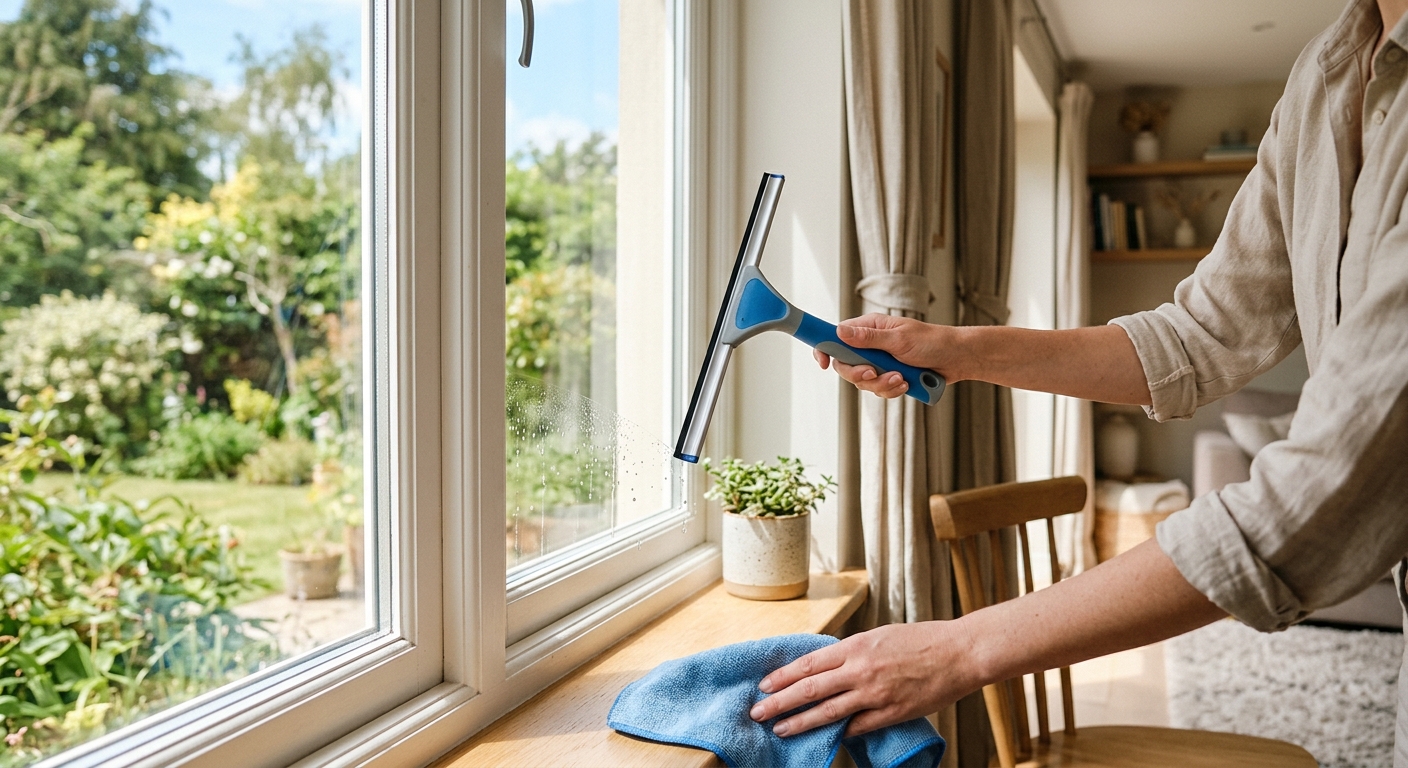
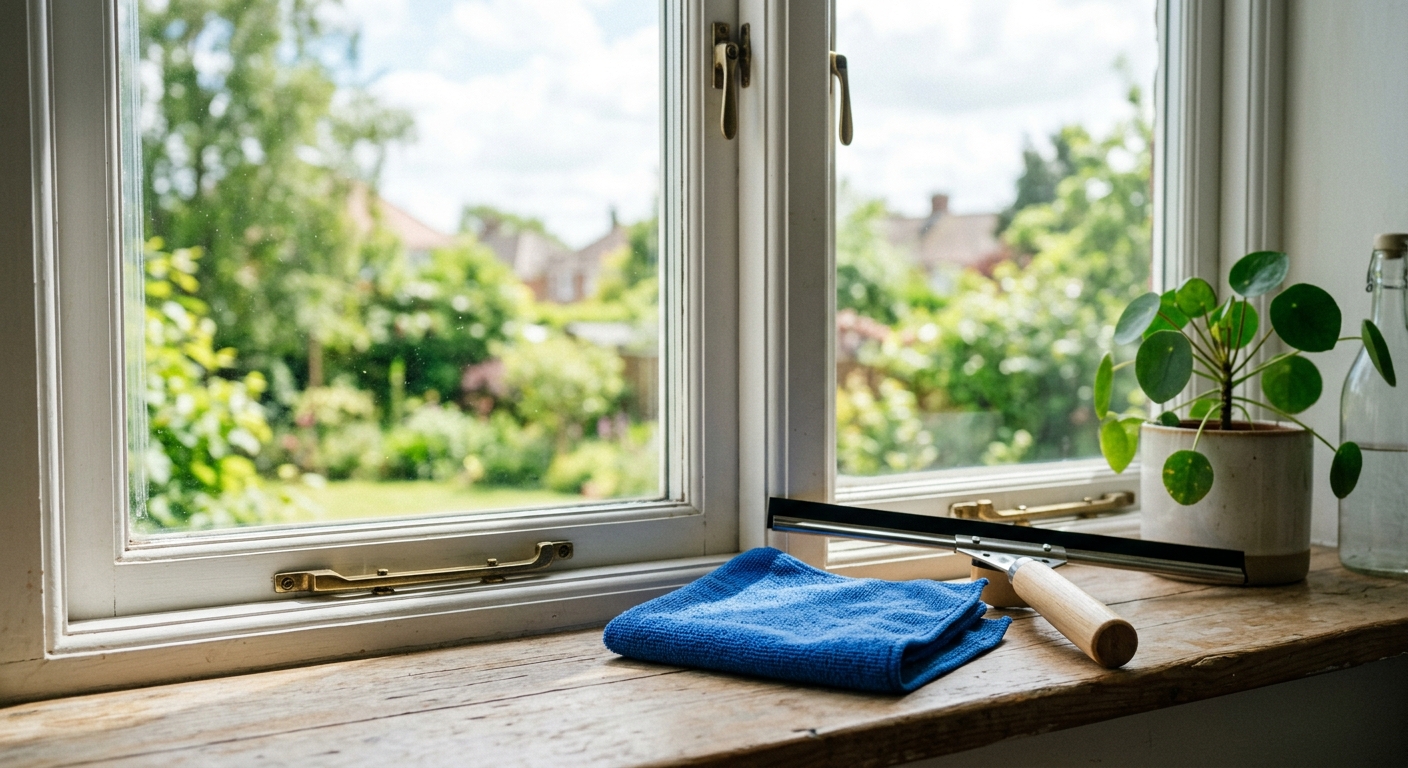
Use a clean microfiber cloth for small interior panes and a quality squeegee for larger glass. Keep a second dry cloth for edges and sills. A small bucket or spray bottle is enough; the goal is controlled moisture, not a flooded track.
Avoid newspaper as the default tool. Modern microfiber is consistently low-lint and absorbent, while newspaper ink and paper vary. Avoid abrasive pads, blades, or powders unless the window manufacturer explicitly approves them for that glass. Coated and specialty glass deserve their own care instructions.
How to clean interior windows
Vacuum or brush loose dirt from the track and frame first. Wipe the frame with a separate damp cloth so grime does not run onto cleaned glass. Apply a modest amount of ready-made glass cleaner or a mild, compatible solution to the cloth or glass.
Wipe from top to bottom with overlapping passes, or pull a squeegee in controlled strokes and wipe its blade after each pass. Finish the perimeter with a dry microfiber cloth. Inspect from another angle before the pane dries completely.
How to clean exterior windows safely from ground level
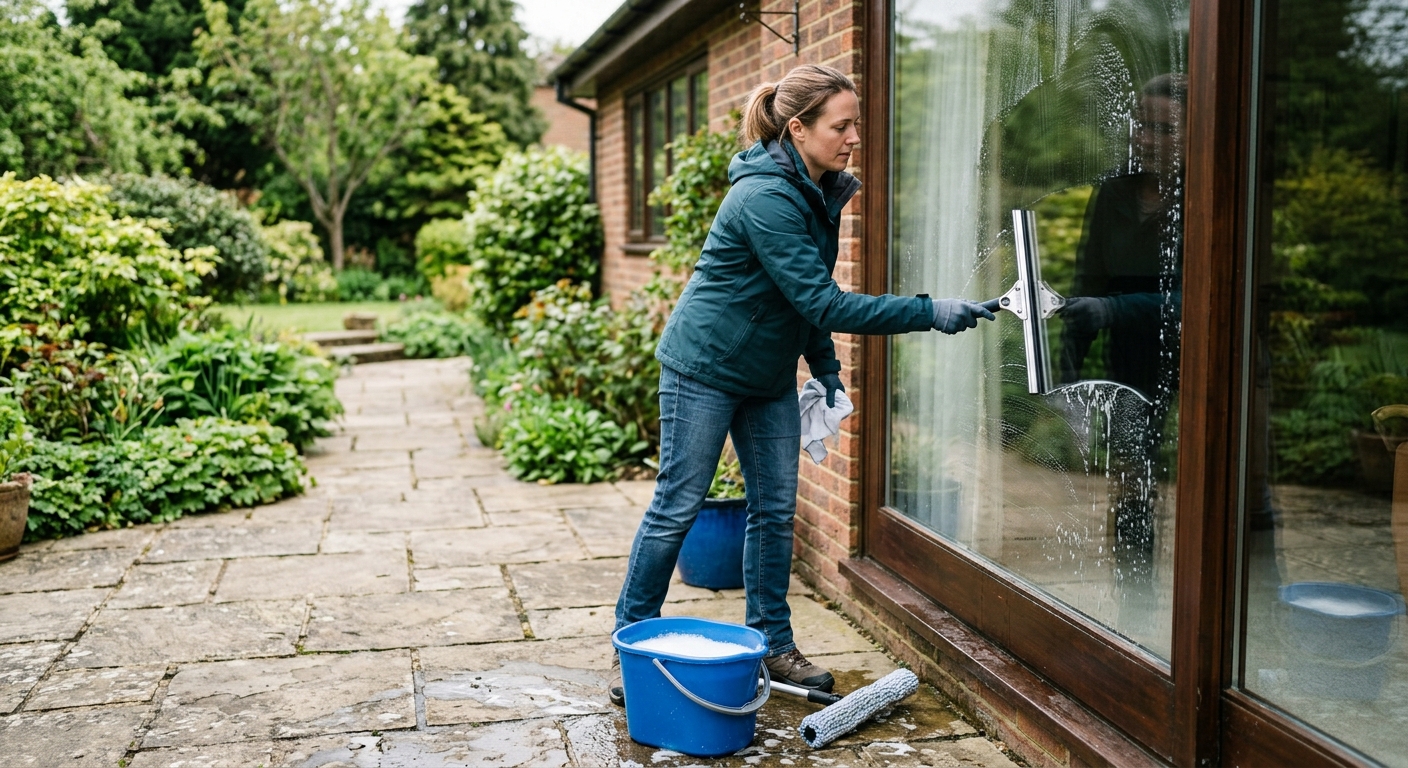
Clean only windows you can reach safely from ground level or from indoors. Use an extension tool only as its maker directs, keep feet on stable ground, and do not lean from an opening or work from an improvised ladder. Exterior tracks need the same dry debris removal before wet cleaning.
If a window is above safe reach, hire a professional or wait for a suitable access method. A spotless upper pane is not worth a fall. The International Window Cleaning Association is a useful starting point for understanding professional window-cleaning practice and finding qualified help.
How to remove hard-water stains without harming glass
Routine cleaner handles routine soil. Mineral deposits need separate attention because repeated cleaner can create more residue without dissolving scale. Start with the least aggressive glass-safe method, a non-scratching applicator, and a small test area. Check Andersen, Pella, or your window maker’s care guidance for coatings and restrictions before using vinegar, commercial descalers, or abrasion.
Do not mix cleaners or use aggressive abrasives merely because a stain is stubborn. If the mark remains after approved treatment, it may be etched glass or damaged coating, which calls for professional advice rather than stronger chemistry.
When is the best time to wash windows?
A cool, overcast day is ideal because solution stays wet long enough to remove. Early morning or late afternoon can work on shaded sides of a house. Avoid windy conditions that blow grit onto wet glass and direct sun that flash-dries cleaner.
How we ranked the sources
We ranked manufacturer care guidance first for glass-safety limits, then professional window-cleaning guidance for technique. The best sources explain why streaks happen, distinguish ordinary dirt from mineral deposits, and do not imply that every pane tolerates the same cleaner or abrasion.
Troubleshooting & FAQ
What causes streaks after cleaning windows?
Too much cleaner, direct sun, dirty tools, and incomplete drying are common causes. Use less solution and work one pane at a time.
Is vinegar good for cleaning windows?
Diluted vinegar can address light residue on ordinary glass, but it is not a universal answer for mineral scale or specialty coatings. Check maker guidance first.
Should I clean windows in direct sunlight?
No. Sun can dry solution before you remove it, leaving residue and streaks. Choose shade or overcast conditions.
Is microfiber better than newspaper?
Clean microfiber is the more consistent modern option because it is absorbent and low-lint. Newspaper quality and ink vary.
How do I remove hard-water stains?
Start with the least aggressive glass-safe method and a test area. Persistent marks may be mineral etching or coating damage, not ordinary dirt.
Full guide, sources ranked: howto.monster/g/how-to-perform-streak-free-window-cleaning/
Affiliate disclosure: as an Amazon Associate, HowTo.Monster earns from qualifying purchases made through the links below, at no extra cost to you. Our picks are chosen editorially, not by commission.
Apparatus & Materials
| Item | Cost | |
|---|---|---|
| ◆ Cleaning Bucket Container for mixing distilled water with cleaning solution and holding cleaning supplies during the process. Our pick: Rubbermaid Roughneck Bucket | $5–$15 | Buy now |
| ◆ Distilled Water Mineral-free water that prevents streaky deposits that can be left behind by tap water minerals. | $1–$3 | — |
| ◆ Microfiber Cloths Super absorbent, lint-free cloths that won't leave specks on glass surfaces and provide streak-free cleaning results. Our pick: Amazon Basics Microfiber Cleaning Cloths | $8–$20 | Buy now |
| ◆ Quality Dish Soap A few drops mixed with distilled water creates the most effective homemade window cleaning solution. | $2–$5 | — |
| ◆ Spray Bottle For applying homemade cleaning solutions evenly across window surfaces without overusing product. Our pick: Uineko Plastic Spray Bottle | $3–$8 | Buy now |
| Handheld Vacuum with Dust Attachment Removes dirt and debris from window frames and tracks before cleaning to prevent muddy layers. Our pick: BLACK+DECKER dustbuster Handheld Vacuum | $25–$80 | Buy now |
| Rubbing Alcohol Prevents glass streaks when mixed with water and vinegar, helps solution dry without residue. Our pick: Amazon Basics Rubbing Alcohol | $2–$5 | Buy now |
| White Vinegar Creates a streak-free cleaning solution when mixed 50/50 with water, effective alternative to commercial cleaners. | $2–$4 | — |
Notes on the sources
The ranking at right reflects our editorial judgment after reading each source in full. For a summary of this entry in brief, see the source ranked first. For the chemistry and underlying principles, see the last.