Build a useful small-pantry system by measuring first, assigning zones, and buying storage only where it solves a real access, freshness, or pest problem.
Organize a small pantry cheaply by emptying it, measuring the usable shelves, grouping food by how often it is used, and adding storage only where it solves a specific problem. Start with labels, sturdy boxes, and jars you already own. Buy bins, containers, or a turntable after the zones work—not before.
How do you organize a small pantry on a budget?
Start with four moves: empty the shelves, discard food that is clearly spoiled or past its useful date, measure the actual shelf depth and height, then return food in zones. Put daily-use food at eye level, heavy goods low, occasional items high, and backstock behind the active item. This costs nothing and exposes the one or two access problems worth solving.
A pantry is a working cupboard, not a showroom. If a cereal box fits better than a decanted container, let it remain a cereal box. The useful test is whether the next person can find it and put it back.
Empty, sort, and measure: the no-cost first pass
Take everything out one shelf at a time and put like with like: baking, breakfast, snacks, canned goods, dinner staples, oils, and backstock. Check packages for damage, insects, or obvious spoilage. USDA guidance makes clear that dates on many packaged foods are about quality rather than a universal safety deadline; use the package condition and product guidance as well as the date.
Wipe shelves and vacuum seams before food goes back. For pantry moth concerns, inspect dry goods, discard visibly infested packages, and clean cracks where larvae can hide. The University of Kentucky’s Indianmeal moth guidance is especially useful here: sealed containers help, but cleaning and removing an infestation’s food source matter first.
Measure shelf width, depth, and clearance. Write those numbers on your phone. A bin that is handsome but too deep to pull out is merely an expensive obstacle.
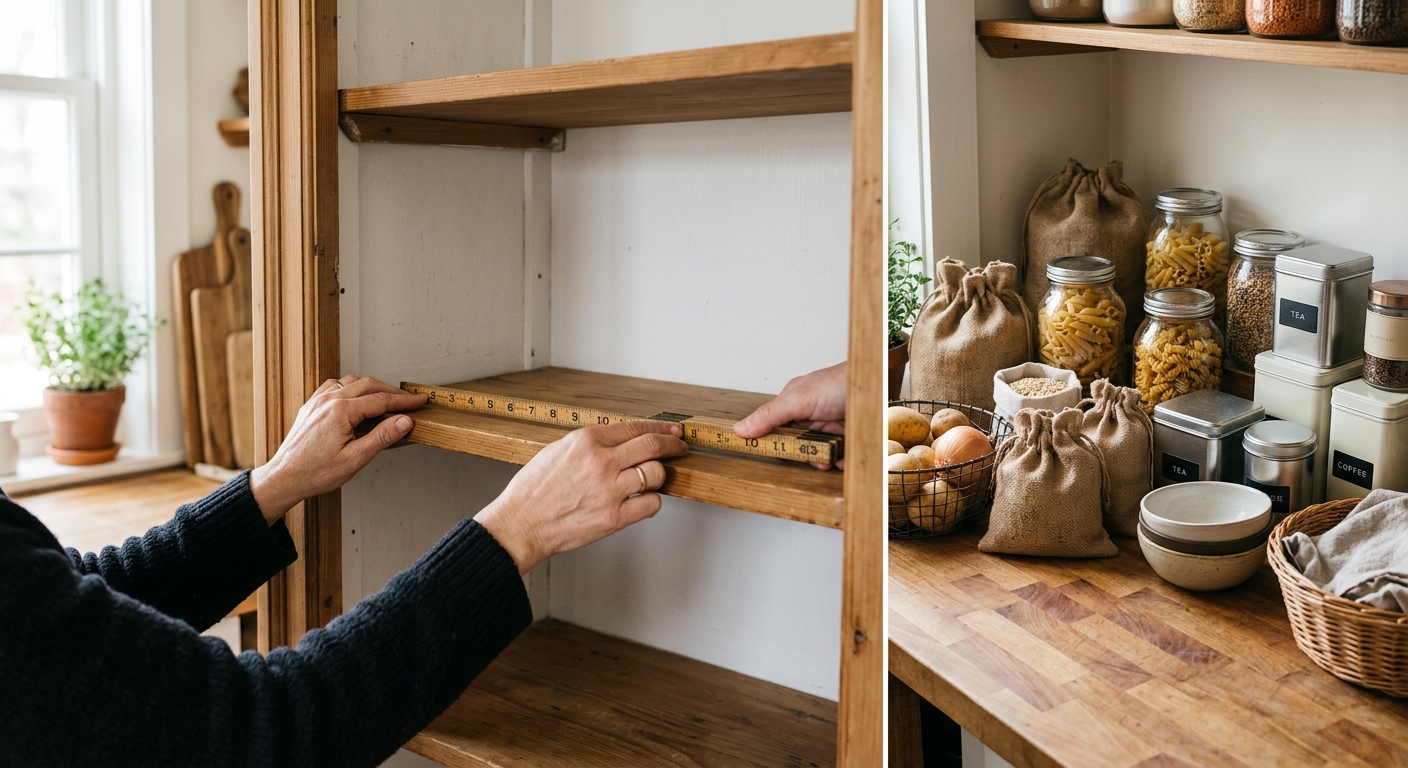
Create zones that match household use
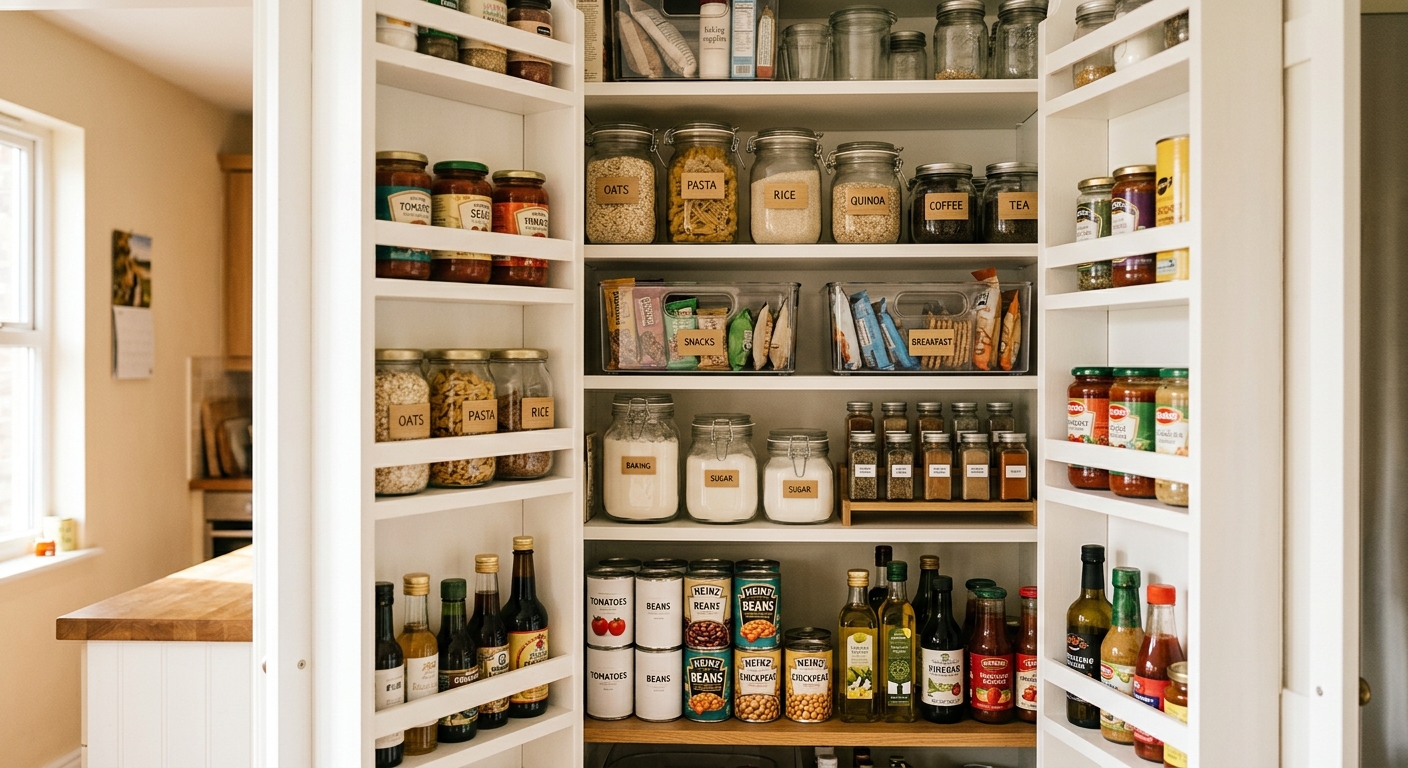
Give the best shelf space to food used most often. Eye level works for breakfast, lunch supplies, and everyday snacks. Keep flour, rice, and heavy cans on a lower shelf. Put holiday baking supplies, serving platters, and true backstock high or low. In a deep pantry, place the active package at the front and duplicates directly behind it; do not create a second hidden grocery store at the back.
Use open bins for loose packets and snack bars. Label the front of the bin with a category, not every individual item. A label reading “school snacks” remains useful when crackers replace granola bars. Put baking ingredients together even if their containers do not match. The system should follow the household’s routine, not a catalog photo.
The under-$25 pantry plan
Spend only after the zones reveal friction. A sensible example plan is a roll of removable labels or painter’s tape ($3–$6), two open bins for packets or snacks ($8–$12), and one small turntable for bottles in a hard-to-reach corner ($10–$15). The total may land near $25 depending on size and retailer; these are examples, not price promises.
Skip airtight containers unless a particular food goes stale, spills, attracts pests, or is hard to stack. Reused clean jars can handle a small amount of pasta, oats, or snacks. They are not a mandate to decant every package in the house.
The under-$50 pantry plan
For about $50, keep the labels and bins, then add storage with a precise job: a can riser for a short shelf, two stackable dry-goods containers for flour or cereal, or an additional pull-out bin for a deep shelf. Do not buy all three unless measurements and daily use justify them.
| Buy first | When it earns space | Do not buy it when |
|---|---|---|
| Open bin | Packets and small items get lost | A shelf already holds stable boxes |
| Airtight container | Staples spill, stale quickly, or need pest protection | The package changes often |
| Turntable | Small bottles vanish in a deep corner | It will hold large boxes or cans |
| Shelf riser | Cans waste vertical space | Shelf clearance is already tight |
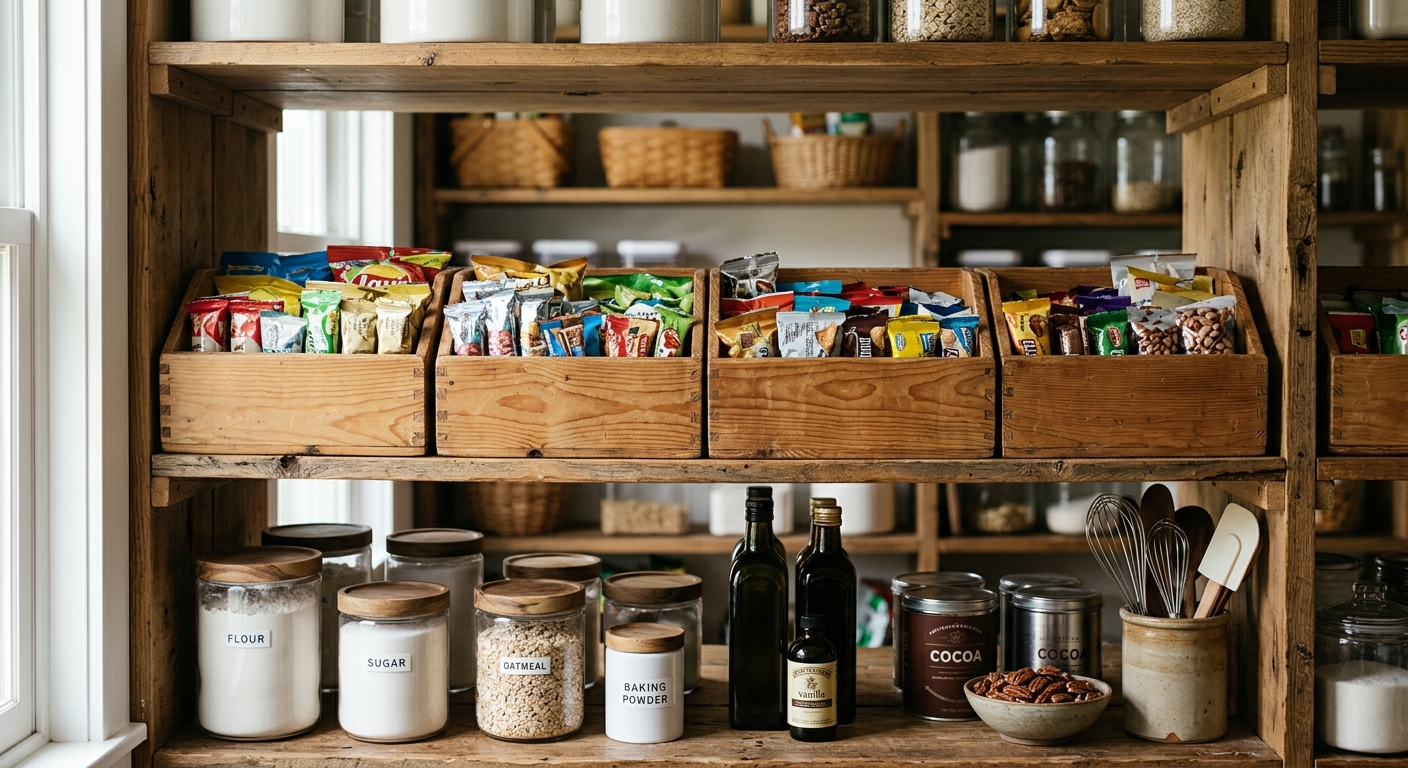
Manage a deep pantry and prevent pests
Treat a deep shelf like a shallow drawer. Keep a front-facing bin for each category and replenish it from behind. A turntable is useful for small bottles, not a cure for every corner. Keep susceptible dry staples in clean, sealed containers after checking packages; never pour new food into an unwashed container with old residue.
For persistent pests, follow extension or local pest-management guidance rather than spraying food-storage areas casually. EPA integrated-pest-management principles favor inspection, sanitation, exclusion, and targeted action over indiscriminate chemicals.
Keep it organized without a monthly reset
When groceries arrive, put newer packages behind older ones. Return one category before opening the next grocery bag. A five-minute weekly check for stray items, low staples, and crumbs is enough for most households. If the system fails every week, change the zone or container; scolding the people who use the pantry is not a storage strategy.
How we ranked the sources
We favored guidance that makes room for real budgets, small shelves, food safety, and repeatable routines. USDA earns the top slot for responsible packaged-food handling; Kentucky Entomology is the clearest pest-specific reference; EPA supplies the sensible prevention framework. Decorative advice that begins with a cart full of containers did not make the cut.
Troubleshooting & FAQ
What is the cheapest way to organize a pantry?
Empty it, group what you own, reuse sturdy containers where useful, and label zones. The layout matters before matching storage.
Are matching containers necessary?
No. Matching containers can improve stacking and visibility, but clear zones and labels do the organizational work.
What containers should I buy first?
Buy containers for food that spills, goes stale, or disappears in a deep shelf. Leave changing packaged foods in open bins until the routine settles.
How do I organize a deep pantry?
Keep active items at the front, duplicates behind, and loose categories in pull-forward bins. Use a turntable only for small bottles that would otherwise vanish in a corner.
How can I prevent pantry moths?
Inspect dry goods, discard visibly infested packages, vacuum seams, and store susceptible staples in sealed containers. Use local extension guidance if the infestation persists.
Full guide, sources ranked: howto.monster/g/how-to-organize-your-pantry-on-a-budget/
Affiliate disclosure: as an Amazon Associate, HowTo.Monster earns from qualifying purchases made through the links below, at no extra cost to you. Our picks are chosen editorially, not by commission.
Apparatus & Materials
| Item | Cost | |
|---|---|---|
| ◆ Clear Plastic Bins/Containers Various-sized transparent storage containers from dollar stores to categorize and store pantry items while keeping them visible. Essential for creating organized zones. Our pick: ClearSpace Clear Plastic Storage Bins – Pantry Organizers & Storage Containers. | $5 | — |
| ◆ Labels and Markers Labeling system to identify contents of containers and baskets. String-attached tags from dollar stores are budget-friendly option. Our pick: Amazon Basics 36-Pack Chalkboard Labels and Marker Set. Our pick: Kuntine.B Wall File Organizer Office Hanging Magazine Holder, 5-Tier, Black | $10–$18 | Buy now |
| ◆ Lazy Susan Rotating circular tray that allows instant access to items by spinning. Most recommended single purchase for pantry organization according to experts. Our pick: Copco Non-Skid Pantry Lazy Susan Turntable. Our pick: Kitchen Spaces Corner Lazy Susan Kitchen Organization, 2 Pack, Clear | $15–$25 | Buy now |
| ◆ Magazine Holders Vertical storage solutions perfect for organizing awkward items like foil, parchment paper, storage bags, and pasta boxes. Our pick: Simple Houseware Wire Magazine Rack. Our pick: ICCGBHGO Magazine Holder, Clear Plastic Vertical File Magazine Organizer, 2PCS | $20–$25 | Buy now |
| Glass Jars/Canisters Storage containers for dry goods like rice, pasta, and snacks. Dollar store glass canisters offer same quality as expensive versions. | $4 | — |
| Over-the-Door Shoe Organizer Clear shoe organizer that hangs on pantry door to store cans, jars, spices, and packets in overlooked vertical space. Our pick: Simple Houseware 24 Pockets Crystal Clear Over The Door Hanging Shoe Organizer, Gray | $15–$20 | Buy now |
| Wire Shelf Risers Small wire racks that create additional vertical storage space by allowing items to be stacked at different levels on existing shelves. Our pick: Evelots Kitchen Cabinet Wire Shelf Organizer/Rack - 2 Pack | $18–$25 | Buy now |
Notes on the sources
The ranking at right reflects our editorial judgment after reading each source in full. For a summary of this entry in brief, see the source ranked first. For the chemistry and underlying principles, see the last.