Quiet a stiff garage door before cold weather by cleaning the tracks, lubricating the right moving parts, and leaving the high-tension hardware alone.
Cold weather is rude to garage doors. Metal contracts, old grease stiffens, and a door that sounded merely tired in September can start groaning by the first freeze. The useful fix is not to soak the whole thing in whatever can is on the shelf. It is to clean the track, add a light coat of the right lubricant to the moving hardware, and stop before you create a greasy dust trap.
This is homeowner maintenance, not spring repair. You can safely lubricate hinges, roller bearings, pulleys, lock hardware, and the outside of a torsion spring. You should not loosen spring brackets, adjust cables, unwind springs, or remove bottom brackets. Those parts store enough energy to injure hands and faces. If the door is crooked, dropping, frayed at the cables, or hard to lift by hand, call a garage-door technician before you lubricate anything.
Step 1: Close the door, cut power, and inspect before spraying
Start with the garage door fully closed. Unplug the automatic opener or switch off the breaker if the plug is not accessible. If other people use the garage, tell them you are working on the door so no one hits the wall button while your hands are near a hinge or roller.
Stand inside the garage and look over the door before you touch it. Check the rollers for cracked nylon, flat spots, missing bearings, or wobble. Look at the lift cables along the sides of the door; they should be straight, not frayed, kinked, or bird-nested around the drum. Check hinges for missing screws and obvious cracks. Look at the spring above the door, but do not put a wrench on any spring hardware.
This inspection matters because lubricant cannot fix a balance problem. A dry hinge squeaks. A broken spring, frayed cable, or bent bracket is a stored-energy problem. If you see damage, stop here. The right pre-winter move is a service call, not more spray.
Step 2: Clean the tracks, rollers, and old grease first
Garage-door tracks guide the rollers; they are not rails that need grease. Wipe the inside of each track with a dry rag, then use a barely damp rag for packed dust and grit. If the track is muddy or oily from years of over-spraying, use an old toothbrush or small nylon brush to break up the grime, then wipe again.
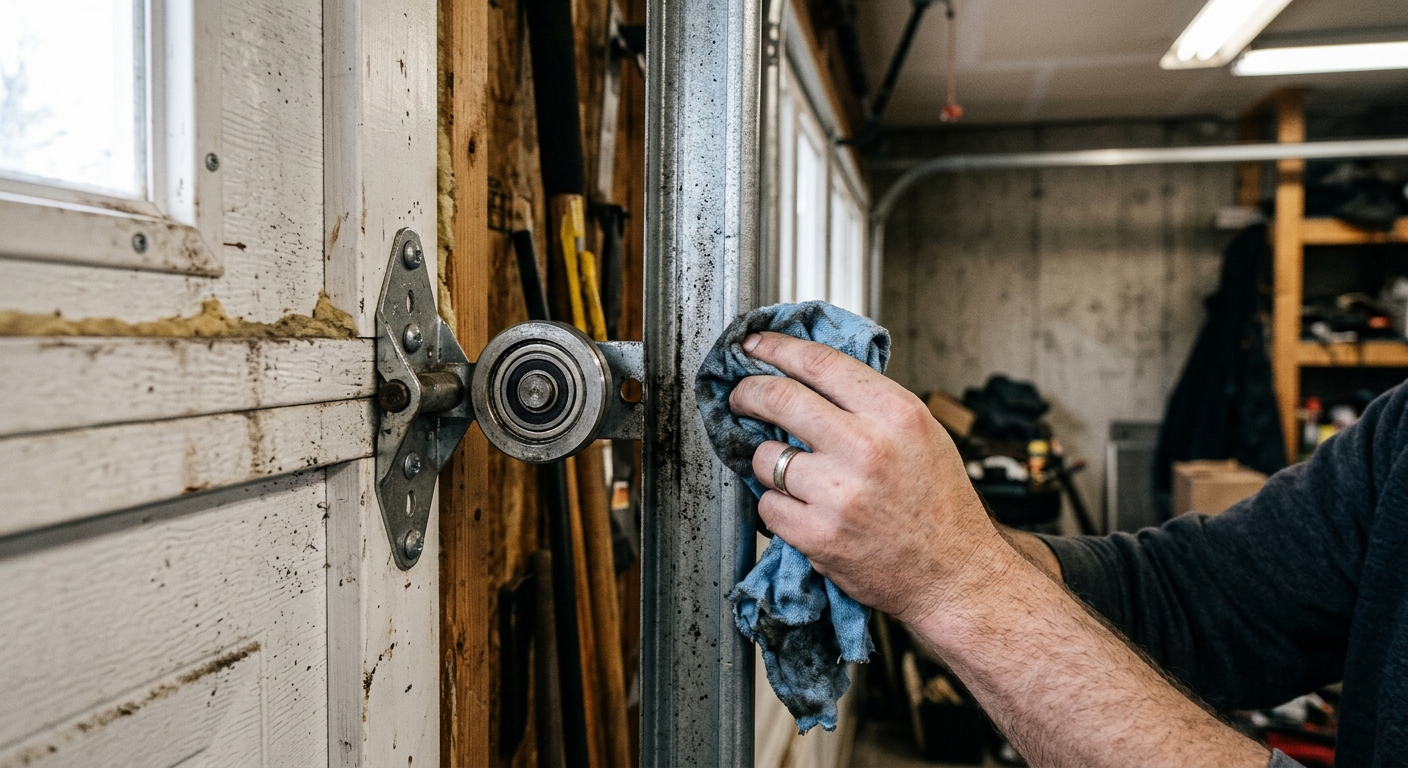
Do not spray lubricant into the track. A greased track makes the roller slide instead of roll, and it collects dust that turns into black paste. That paste adds drag exactly when the opener is already working harder in cold weather. The track should finish clean and dry.
Wipe the hinge barrels, roller stems, exposed lock slides, and pulley faces. You are not trying to make the door spotless; you are clearing away enough grit that the new lubricant can reach moving metal instead of floating on dirt. Put oily rags somewhere safe and away from heaters or pilot lights.
Step 3: Lubricate hinges and metal roller bearings lightly
Use a garage-door-specific silicone, lithium, or synthetic spray lubricant with a straw nozzle. WD-40 Multi-Use is useful as a water displacer and penetrant, but it is not the best long-term lubricant for this job because it can leave parts dry again and attract dirt.
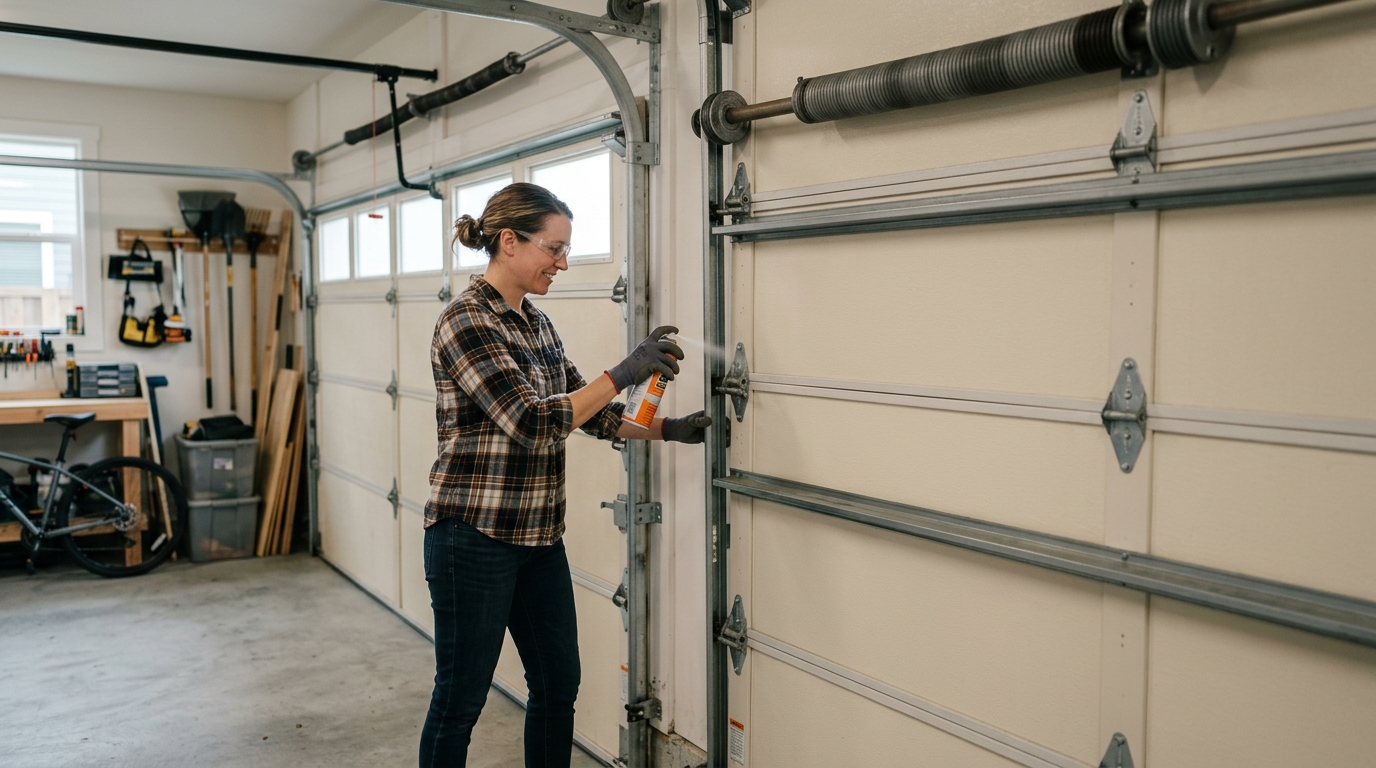
Start at the bottom hinge and work upward. Aim the straw at the hinge pivot, not the painted panel. Give each pivot a short burst, then flex the hinge by lifting the door a few inches by hand or waiting until the final test cycle. Wipe away drips as you go. A garage door needs a film, not a bath.
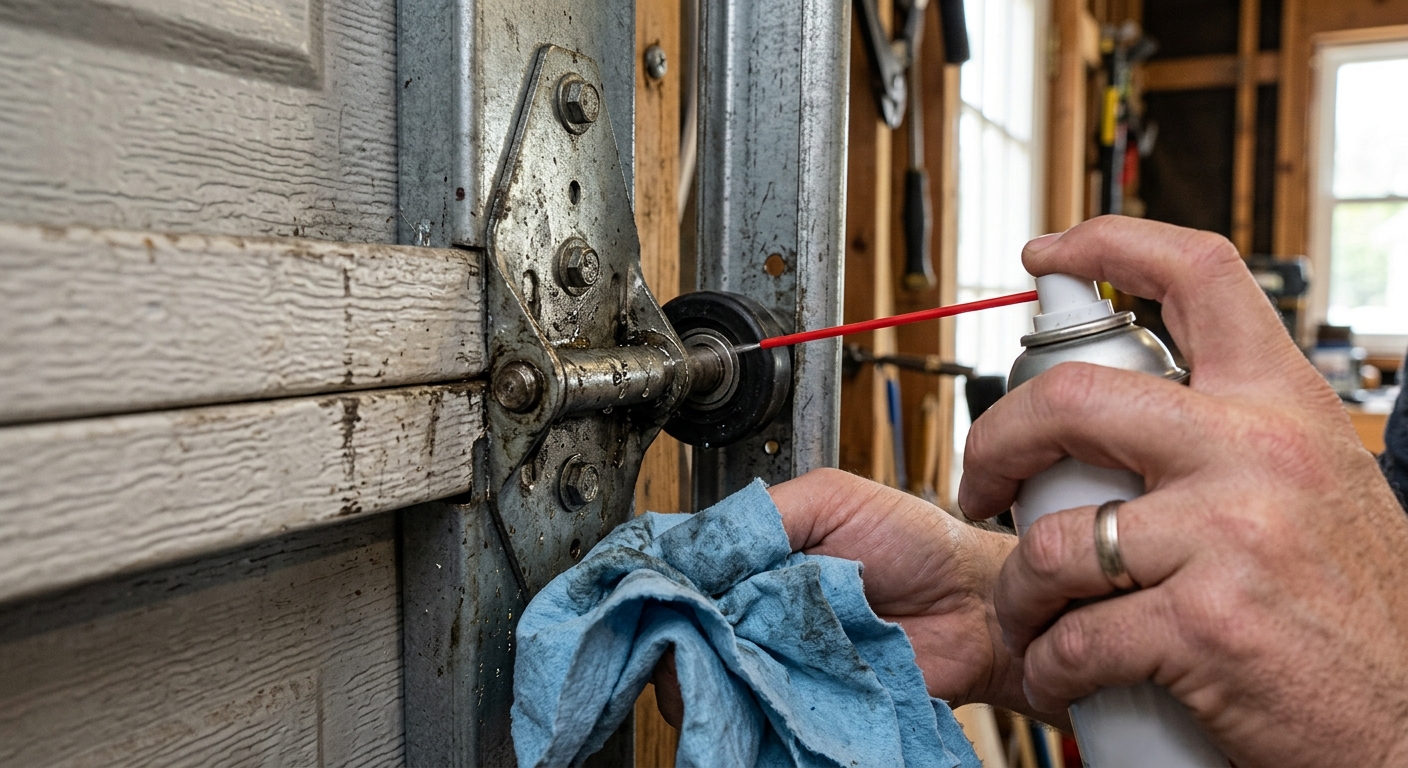
For metal rollers with exposed bearings, spray the bearing area where the roller meets the stem. Do not coat the whole wheel. If you have nylon rollers, avoid spraying the nylon tire itself; many manufacturers recommend lubricating only the metal stem or bearing area, and some sealed nylon rollers need no lubricant at all. If the roller is sealed and silent, leave it alone.
Take the same light approach with the center bearing area if it is accessible without touching spring set screws or brackets. If access requires removing a cover, loosening fasteners, or reaching over the spring, skip it. The rule is simple: lubricate exposed moving contact points; do not disassemble the counterbalance system.
Step 4: Treat springs, pulleys, locks, and the opener drive with caution
If your door has a torsion spring above the closed door, stand on the floor or a stable ladder positioned to the side, then mist a light coat along the outside of the spring coils. Do not loosen the center bracket, cable drums, set screws, or end bearing plates. The goal is to reduce friction between coils during normal movement, not to service the spring assembly.
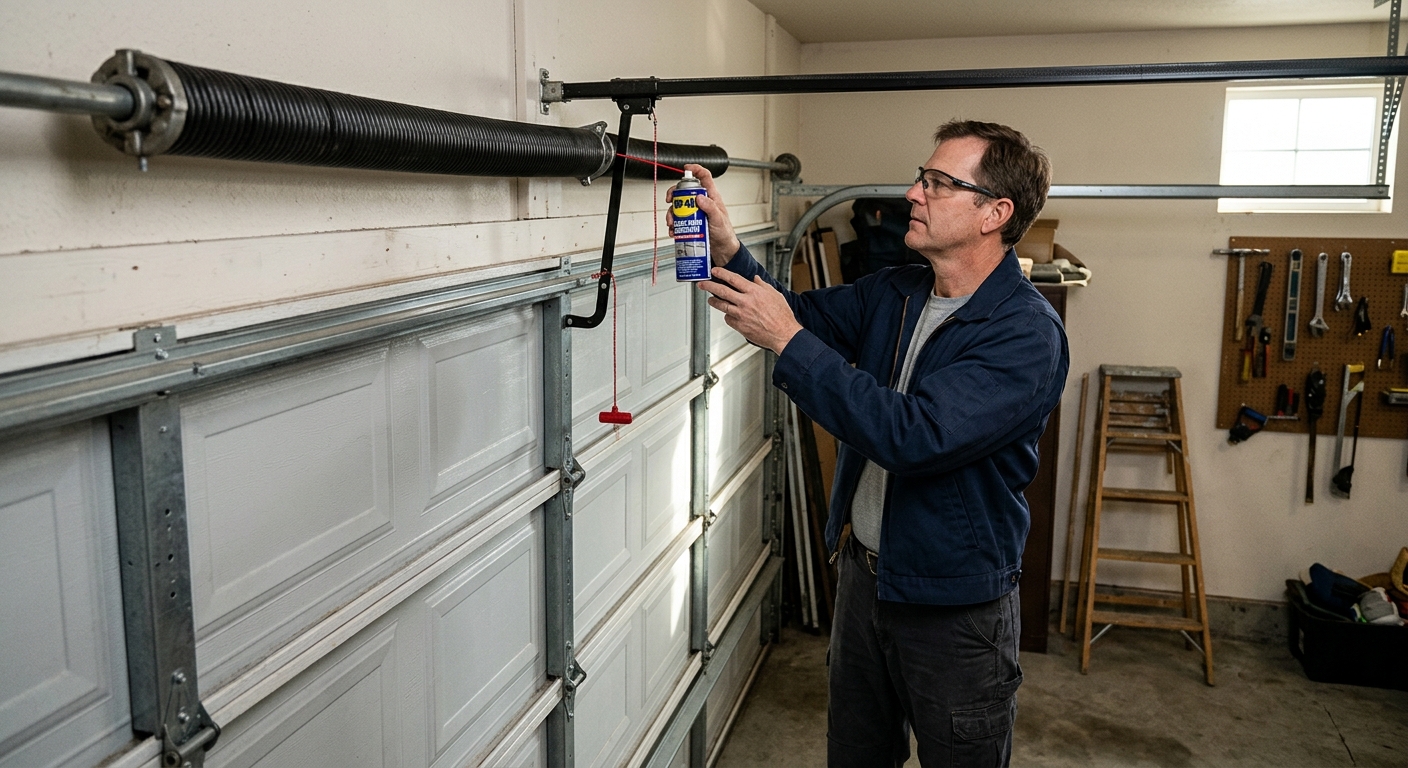
If your door uses extension springs along the horizontal tracks, lubricate the pulleys and exposed pivot points, not the safety cable or any frayed lift cable. A pulley that wobbles, squeals after lubrication, or shows a worn groove should be replaced by a pro.
Spray lock hardware only where metal slides against metal. Work the handle by hand, then wipe off the excess. If your opener has a chain drive, check the owner's manual before lubricating the chain; many need only a small amount of garage-door lubricant, while belt drives generally do not need lubricant on the belt. Older screw-drive openers may need a manufacturer-specified low-temperature lubricant before winter. If the manual calls for a specific product, follow the manual over any general guide.
Step 5: Work the door by hand, then restore the opener
Reconnect power only after your hands, ladder, and rags are clear. Before using the opener, pull the emergency release and lift the door by hand if you can do so safely. The door should move smoothly and stay near halfway open without crashing down or racing upward. If it will not stay put, the spring balance is wrong and the opener should not be asked to compensate.
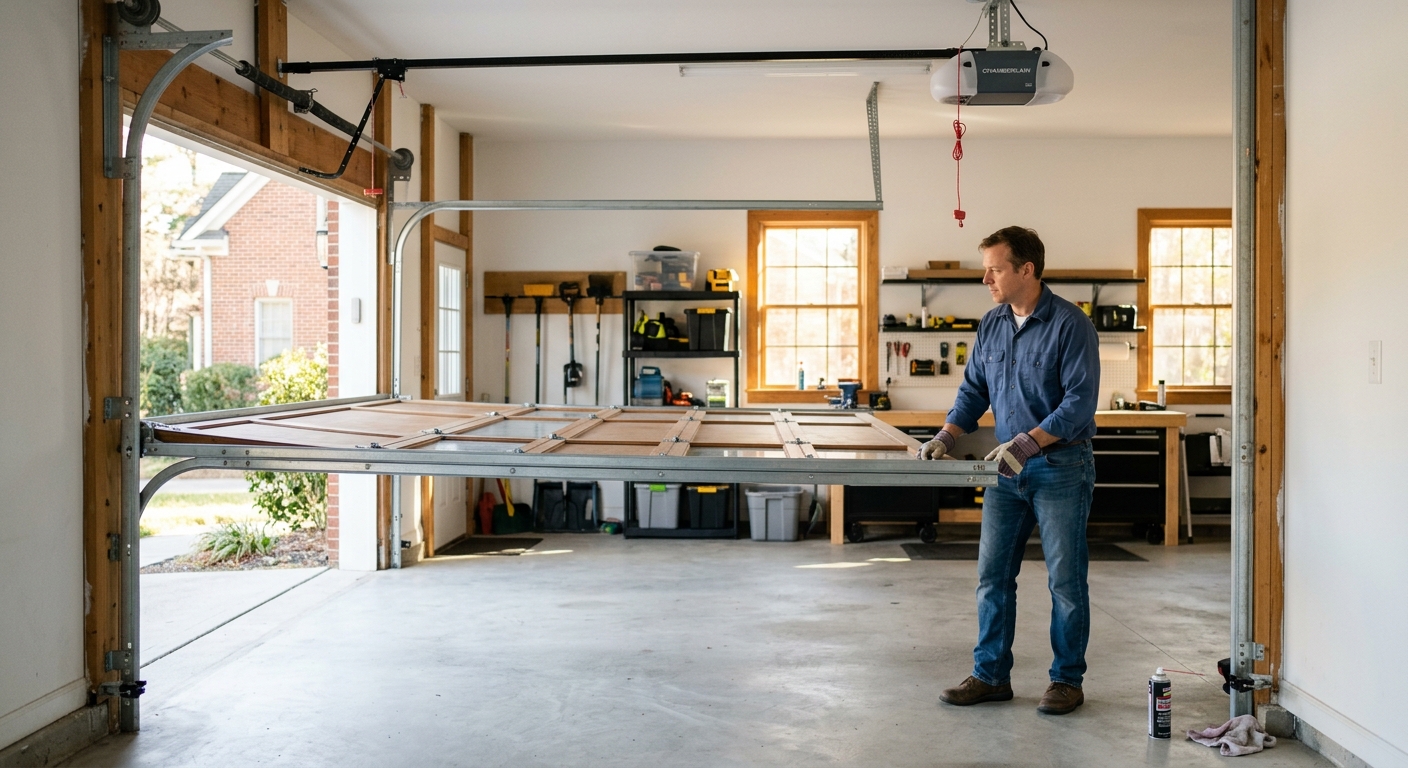
Open and close the door two or three times to distribute the lubricant. Listen for the sound to change. A dry squeak often disappears immediately. A deeper grinding, popping, or cable slap usually means wear, misalignment, or a balance issue rather than a lubrication issue.
Finish by wiping any visible drips from hinges, rollers, springs, and the floor. Cold-weather maintenance should leave the hardware quieter, not glossy. Put a reminder on your calendar for spring. Most residential doors benefit from this light service once or twice a year, and high-use doors may need it every three to six months.
Troubleshooting & FAQ
Should I use WD-40 on a garage door?
Not as the main lubricant. WD-40 Multi-Use can free sticky parts temporarily, but garage-door manufacturers commonly recommend silicone, lithium, synthetic, or garage-door-specific spray for lasting lubrication. If you use a penetrant to clean up a sticky hinge, follow with the proper lubricant and wipe away the excess.
Why should I not grease the garage door tracks?
The rollers are supposed to roll inside the tracks, not slide on a greased rail. Lubricant in the track collects dust and can become sticky grime, which makes the opener work harder. Clean the tracks with a rag and put lubricant on the roller bearing or stem instead.
Can I lubricate the torsion spring myself?
You can lightly spray the outside of an intact torsion spring as routine maintenance. You should not loosen, adjust, remove, wind, or unwind any spring hardware. If the spring is broken, stretched, rusty through, noisy after lubrication, or connected to a door that will not balance by hand, call a technician.
How often should a garage door be lubricated?
A typical residential garage door does well with light lubrication twice a year: once before winter and once before heavy spring or summer use. A high-use door, an exposed detached garage, or a door in a dusty area may need attention every three to six months. Use less product more often rather than soaking parts once a year.
What if the door is still loud after lubrication?
A remaining squeak may be a worn roller, loose hinge, misaligned track, or opener-drive issue. Grinding, popping, cable slap, or a door that feels heavy by hand is not a lubrication problem. Stop using the opener until the door is inspected, because the opener can mask a failing counterbalance system until something breaks.
Affiliate disclosure: as an Amazon Associate, HowTo.Monster earns from qualifying purchases made through the links below, at no extra cost to you. Our picks are chosen editorially, not by commission.
Apparatus & Materials
| Item | Cost | |
|---|---|---|
| ◆ Clean shop rags For wiping dust from tracks and catching overspray before it drips onto the floor or painted panels. | $3–$8 | — |
| ◆ Garage-door silicone spray lubricant Our pick is B'laster 16-GDL because it is a garage-door-specific silicone aerosol that leaves a tack-free film and fits hinges, rollers, springs, and other metal contact points without using a search link. | $7–$14 | Buy now |
| ◆ Safety glasses Protects your eyes from aerosol overspray and dislodged dust while working under hinges, rollers, and springs. | $4–$12 | — |
| Old toothbrush or small nylon brush Useful for loosening packed grit from track corners, roller stems, and hinge barrels before lubrication. | $2–$6 | — |
| Stable stepladder Needed only if you cannot safely reach the upper hinges or lightly mist the torsion spring from the floor. | $25–$80 | — |
Notes on the sources
The ranking at right reflects our editorial judgment after reading each source in full. For a summary of this entry in brief, see the source ranked first. For the chemistry and underlying principles, see the last.