For most noisy garage doors, buy B'laster Garage Door Lubricant. Choose 3-IN-ONE for multiple doors or WD-40 Specialist White Lithium Grease for durable cold-weather protection.
The best garage door lubricant for most homes is B'laster Garage Door Lubricant. It is a purpose-made silicone spray that the manufacturer says leaves a tack-free film, which is the useful combination for hinges, roller hardware, and springs that need to move without becoming a dust trap. Buy the 3-IN-ONE Professional Garage Door Lubricant four-pack if you maintain several doors or want spares; choose WD-40 Specialist White Lithium Grease for a thicker, cold-capable coating on exposed metal contact points.
None of these cans repairs a bad door. Clean the tracks, use a light coat on the moving hardware, and stop if you find frayed cables, a broken spring, loose brackets, or a door that will not balance by hand. Start with our garage-door lubrication guide for the safe order of work; the one mistake worth avoiding is greasing the tracks until they collect grit.
| Pick | Product | Price | Best for |
|---|---|---|---|
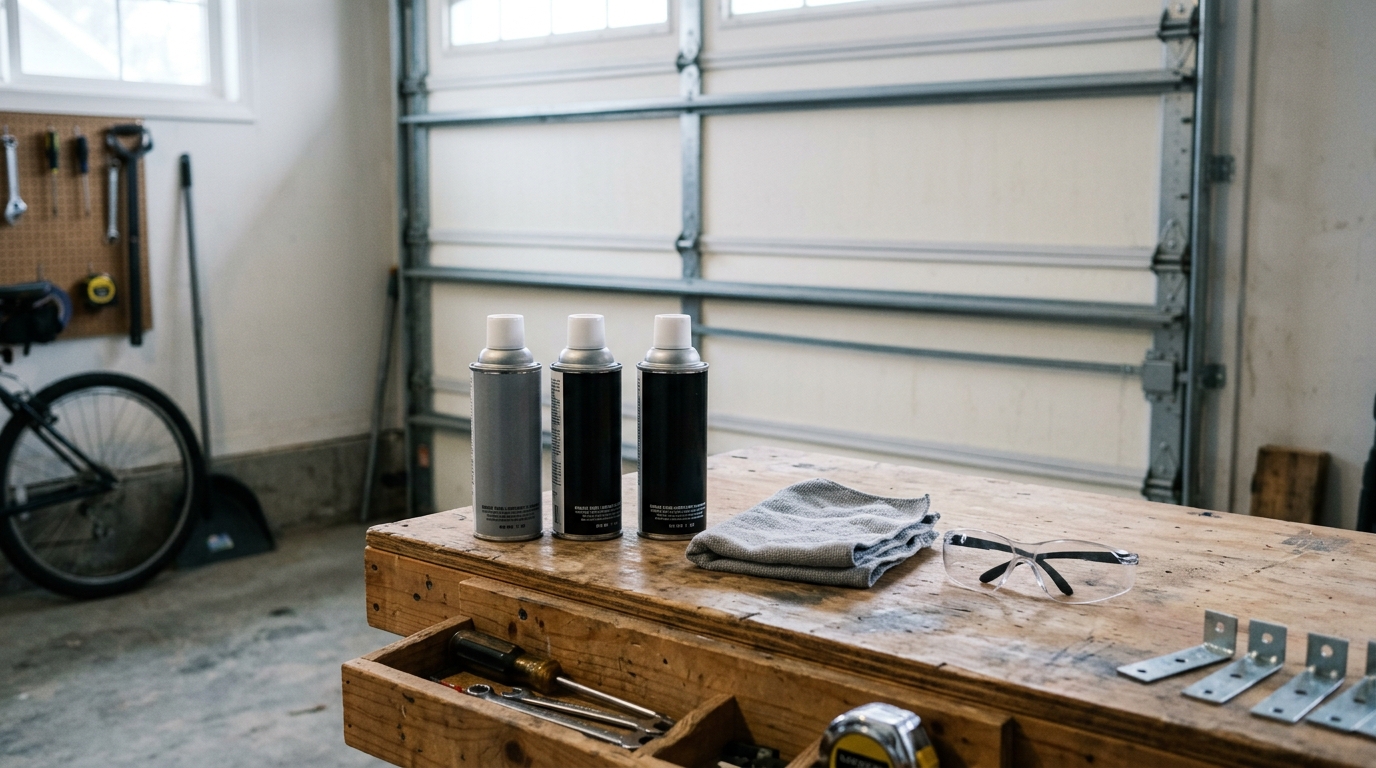
| Top pick | B'laster Garage Door Lubricant, 9.3 oz | $7–$14 | Most residential doors and regular seasonal maintenance |
| Budget pick | 3-IN-ONE Professional Garage Door Lubricant, 11 oz four-pack | $40–$55 | Several doors, shared maintenance, or stocking up |
| Upgrade pick | WD-40 Specialist White Lithium Grease, 10 oz | $7–$13 | Durable metal-on-metal protection in cold, damp conditions |
Top pick: B'laster Garage Door Lubricant
B'laster Garage Door Lubricant is the plain answer for a door that squeaks but otherwise works properly. B'laster identifies it as a silicone-based garage-door lubricant that leaves a tack-free film and is made for garage and overhead mechanisms, including hinges, rollers, and springs. That is a better fit than grabbing a generic penetrant and hoping it performs as a lasting lubricant.
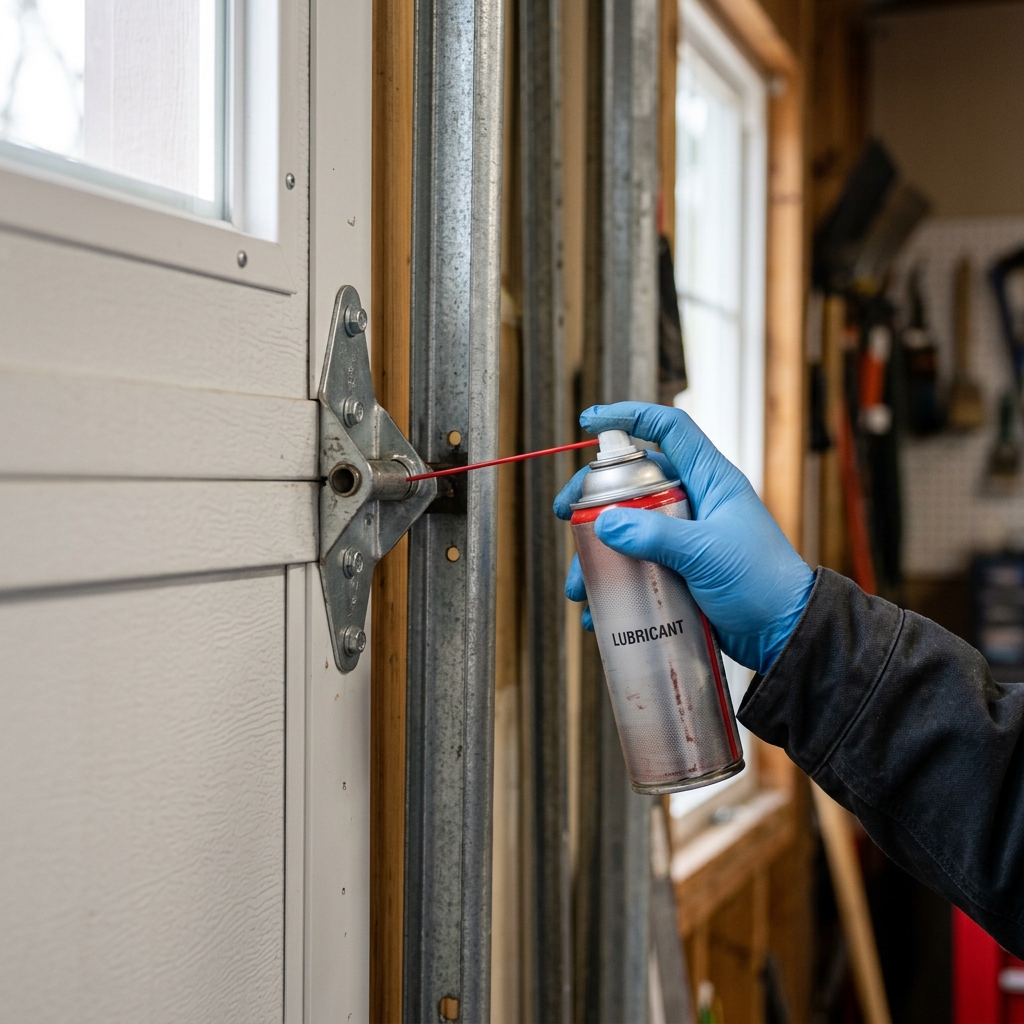
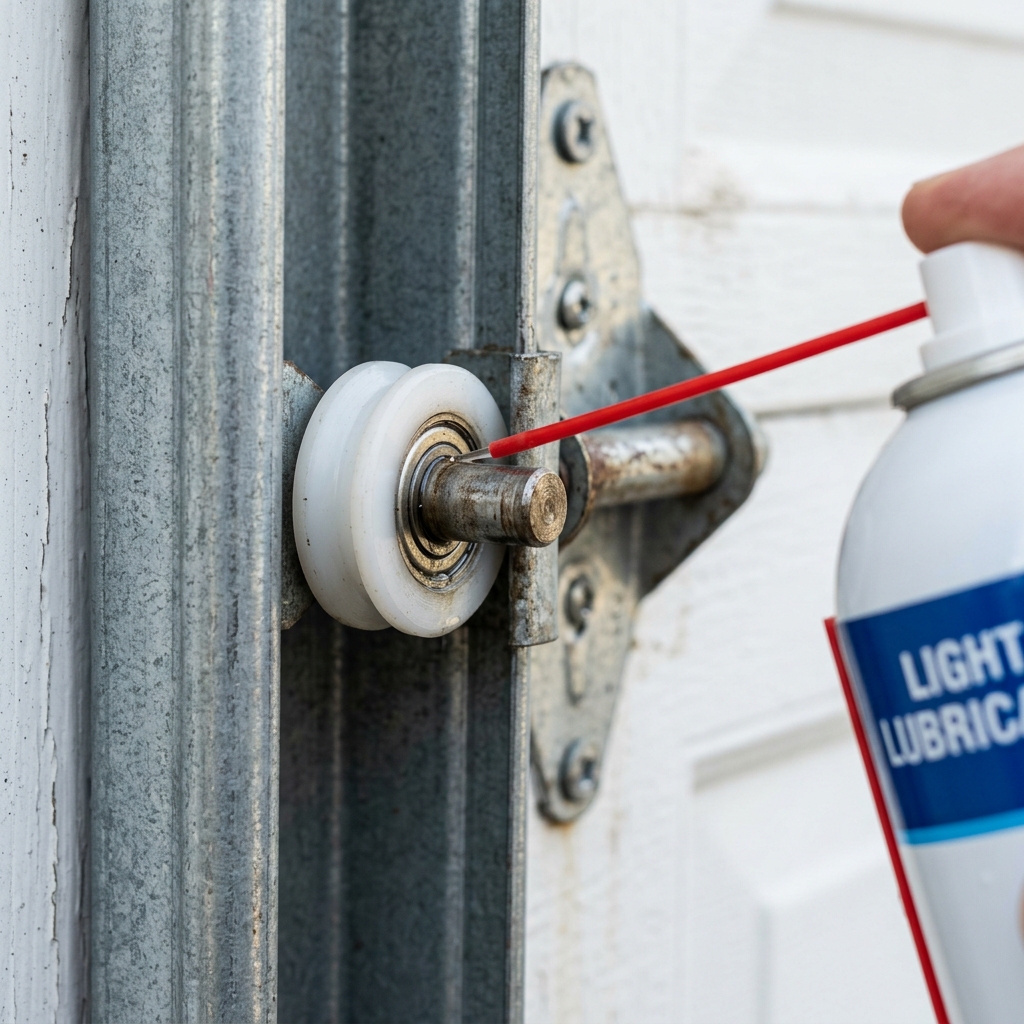
It wins because the job rewards restraint. A tack-free silicone film is meant to reduce friction without giving airborne dust an easy place to settle. Use the straw, make short applications at the hinge pivot and metal roller bearing or stem, cycle the door, and wipe off what drips. The can is also a practical size for a twice-yearly maintenance routine.
What to watch out for: it is an aerosol product, not a harmless household mist. Work with ventilation, keep it away from flames and heaters, and do not spray the nylon tire of a roller or load up the tracks. A stuck, crooked, or unbalanced door needs diagnosis, not more lubricant.
Budget pick: 3-IN-ONE Professional Garage Door Lubricant four-pack
The 3-IN-ONE Professional Garage Door Lubricant four-pack is the budget pick only when you will use the volume. This Amazon listing is four 11-ounce cans, so it costs more at checkout than one can but brings the per-can cost down for a household with several doors, a family property, or a neighborly maintenance group. It is the wrong bargain for one squeak in a one-car garage.
The manufacturer says its garage-door lube leaves a clear film without messy residue, helps guard against rust and corrosion, and uses a permanent two-way straw for a narrow precision stream or a broader spray. That makes it easy to move deliberately from hinge pivots to metal roller bearings, pulleys, latches, and other exposed moving points.
What to watch out for: storage is part of the price. Aerosol cans need a cool, well-ventilated location away from heat and ignition sources. If you will not use multiple cans within a reasonable maintenance cycle, buy a single purpose-made spray instead.
Upgrade pick: WD-40 Specialist White Lithium Grease
WD-40 Specialist White Lithium Grease is the upgrade for a door with exposed metal friction points facing hard winter conditions. WD-40 says the 10-ounce formula sprays on as a liquid, then sets to a thick protective coating; it lists a 0°F to 300°F working range and names overhead-door tracks, pulleys, cables, and guide rails among its uses. In Bob Vila's 2025 test of seven garage-door lubricants, it earned Best Overall for quieting noisy doors.
That is a credible case for lithium grease where metal-to-metal protection and corrosion resistance matter more than keeping a nearly invisible film. The Smart Straw gives you control, and the product is easy to find. Use it on the small metal contact areas that need a durable coating, then work the door and remove excess before it becomes a grime collector.
What to watch out for: this is a heavier coating than a silicone garage-door spray. Do not blanket the track interior just because the product description includes tracks. The roller should roll; a greasy rail can hold dirt and make the system worse. Follow your door and opener manuals where they are more specific.
How we chose
We selected three different buying cases, not three cans that say “garage door.” First, we checked manufacturer product information for the lubricant base, intended use, film behavior, and safety limits. Then we used independent testing as a reality check: Bob Vila tested seven products over a month and reported its results in 2025. Finally, we matched the options to the safe homeowner work in our paired guide: light lubrication on exposed moving contact points, clean tracks, and no spring adjustment.
The top pick is a straightforward garage-door silicone spray. The budget pick earns its label only by per-can value in a four-pack. The upgrade pick is for more durable metal-contact protection, not an excuse to coat every surface. We verified all three Amazon product URLs with the HowTo.Monster head-check helper on September 22, 2026. Prices are realistic ranges from current retailer snapshots and may change with the seller, pack size, and season.
Troubleshooting & FAQ
Is garage-door lubricant worth it for a noisy door?
Yes, if the noise comes from dry hinges, metal roller bearings, pulleys, or other exposed moving contact points. It will not cure a worn roller, bent track, loose hinge, frayed cable, broken spring, or bad balance. If the door is hard to lift by hand or will not stay near halfway open, stop using the opener and call a garage-door technician.
Should I use silicone or white lithium grease on my garage door?
A purpose-made silicone garage-door lubricant is the simpler choice for most seasonal tune-ups because it leaves a lighter, tack-free film. White lithium grease is useful where a durable metal-on-metal coating and cold-weather resilience are the priority. Either way, apply only a light coating to the correct moving points and follow the door maker’s instructions for nylon rollers, tracks, and the opener drive.
What size can of garage-door lubricant do I need?
One 9- to 11-ounce can is generally enough for several light residential maintenance sessions. Buy the four-pack only if you have multiple doors, share supplies, or know you will use it; aerosol cans are not a saving if they sit unused near heat. More product on the door is not better.
Do I lubricate garage door tracks?
Start by cleaning the track. The rollers are designed to roll in it, and a heavy coating can gather dust and grit. Product directions vary, so follow the door manufacturer first; in ordinary homeowner maintenance, concentrate on hinge pivots, metal roller bearings or stems, springs where safely accessible, pulleys, and lock hardware rather than soaking the rail.
Can I lubricate the garage door spring myself?
You can lightly mist the outside of an intact spring only if you can do it without loosening hardware or entering the counterbalance system. Never adjust, wind, unwind, remove, or loosen spring brackets, cable drums, set screws, or bottom brackets. Those are high-tension parts for a trained technician.
Affiliate disclosure: as an Amazon Associate, HowTo.Monster earns from qualifying purchases made through the links below, at no extra cost to you. Our picks are chosen editorially, not by commission.
Apparatus & Materials
| Item | Cost | |
|---|---|---|
| ◆ B'laster Garage Door Lubricant, 9.3 oz Best for most residential doors: purpose-made silicone lubricant with a tack-free film for seasonal hinge, roller, and spring maintenance. | $7–$14 | Buy now |
| 3-IN-ONE Professional Garage Door Lubricant, 11 oz four-pack Best per-can value only when you maintain several doors or want supplies for repeated seasonal service. | $40–$55 | Buy now |
| WD-40 Specialist White Lithium Grease, 10 oz Best for durable metal-on-metal lubrication and corrosion protection where cold, damp conditions are the concern. | $7–$13 | Buy now |
Notes on the sources
The ranking at right reflects our editorial judgment after reading each source in full. For a summary of this entry in brief, see the source ranked first. For the chemistry and underlying principles, see the last.