Cool the system, crack the upper bleed valve just enough to release trapped air, then close it at the first steady water and check the boiler as its manual directs.
A radiator that is warm at the bottom and cool at the top is often holding air where hot water ought to be. The fix is small, but the common mistake is opening the bleed valve too far: you only need a quarter turn or so, and you stop at the first steady water. This guide is for a closed-loop hot-water radiator with a small vent near the top—not a steam-radiator repair, a leaking valve, or a boiler that keeps losing pressure.
Short version
- Turn the heating off and wait until the radiator and its pipes are cool.
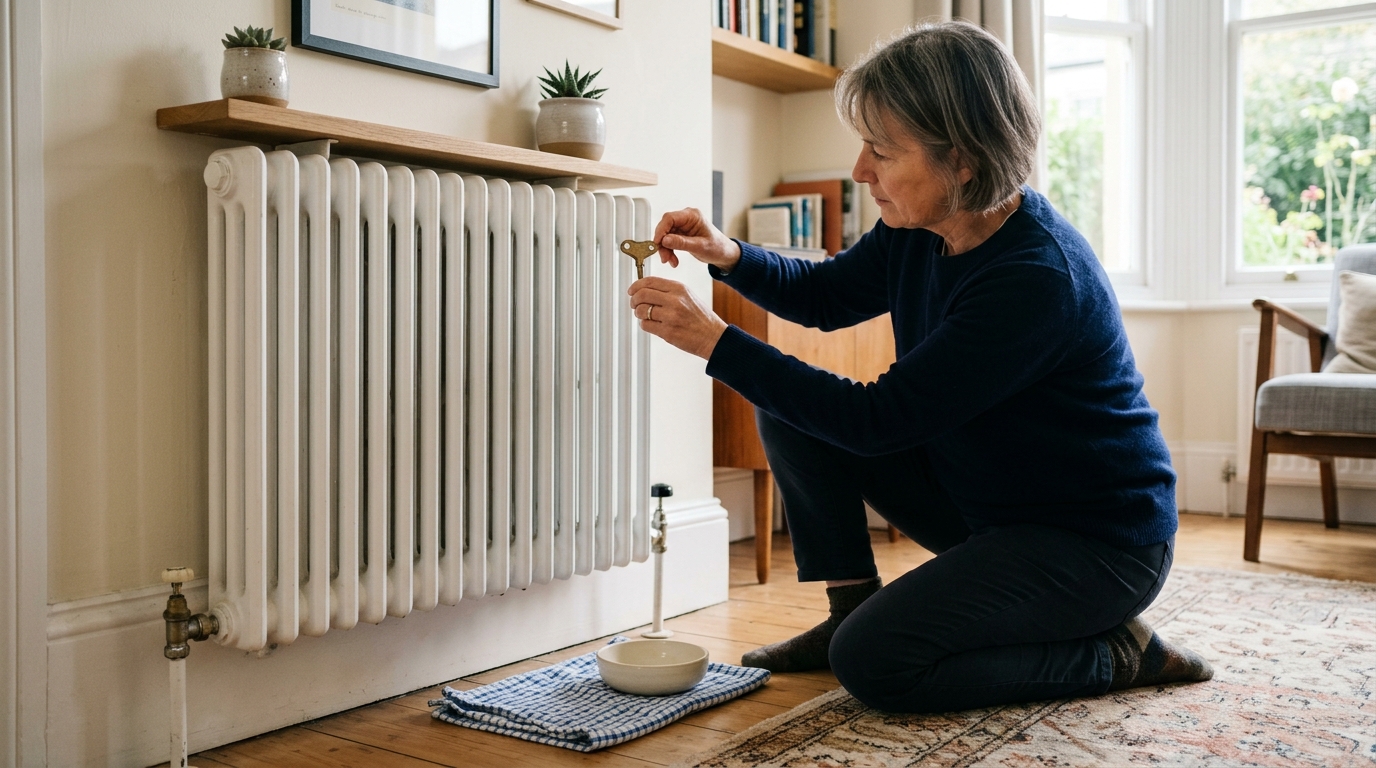
- Put a towel and shallow container under the top bleed valve; open it anti-clockwise only a quarter to half turn.
- Close it clockwise when the hissing stops and the first steady water appears, then restart the system and check boiler pressure against the boiler manual.
If the radiator is cold at the top, makes a persistent gurgling sound, or heats unevenly, trapped air is a reasonable first suspect. If it is cold all over, the valve is leaking, or pressure repeatedly falls afterward, do not keep bleeding and refilling the system. Those are better reasons to consult the boiler manual or call a qualified heating technician.
Step 1: Confirm that bleeding fits the problem
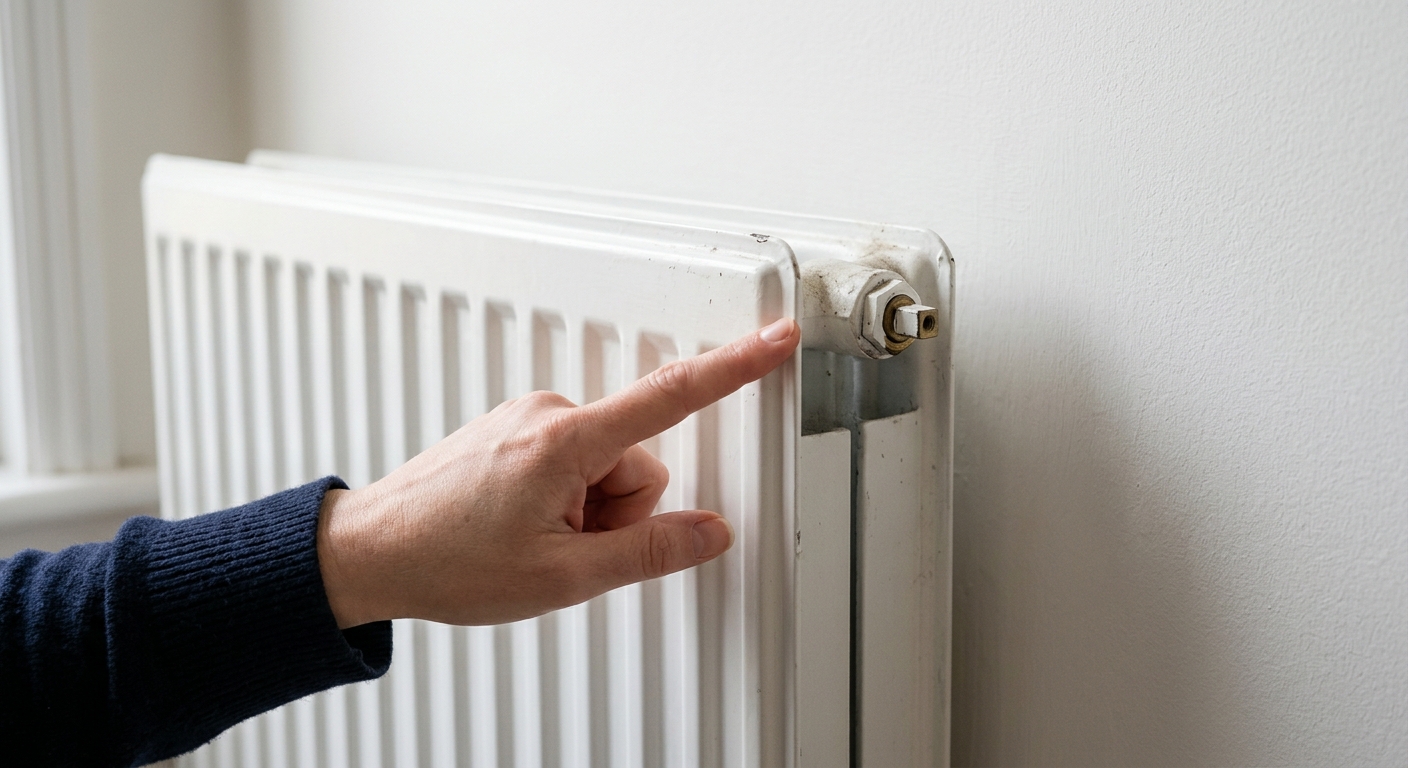
Look at the radiator while the heating has been running normally. A classic trapped-air pattern is warmth low on the panel and a cooler band at the top, sometimes with water-moving or gurgling noises. Bleeding releases air from a small valve at the radiator’s upper edge so hot water can occupy that space again. It is a maintenance task, not a cure for every cold room.
Make sure you are dealing with a hot-water radiator. A hydronic radiator is connected to a boiler and typically has a small square or slotted bleed fitting near the top; it circulates water in a closed loop. Steam radiators have different valves and operating behavior. Do not improvise on steam equipment, and do not loosen a pipe fitting because you cannot find a true bleed valve.
Before beginning, inspect the area around the valve and the floor below it. Active drips, heavy corrosion, a cracked fitting, or a radiator that has been repeatedly refilled are stop signs. A valve that cannot close cleanly can turn a simple job into a leak. Arrange a service call rather than forcing it.
Step 2: Cool the system and set up a controlled catch
Turn the central heating off. Give the radiator and nearby pipes enough time to become cool to the touch; the exact wait depends on the system, but this is not a job to rush after a heating cycle. Turning the system off also stops the circulator from moving water and air while the vent is open. Keep children and pets away from the work area.
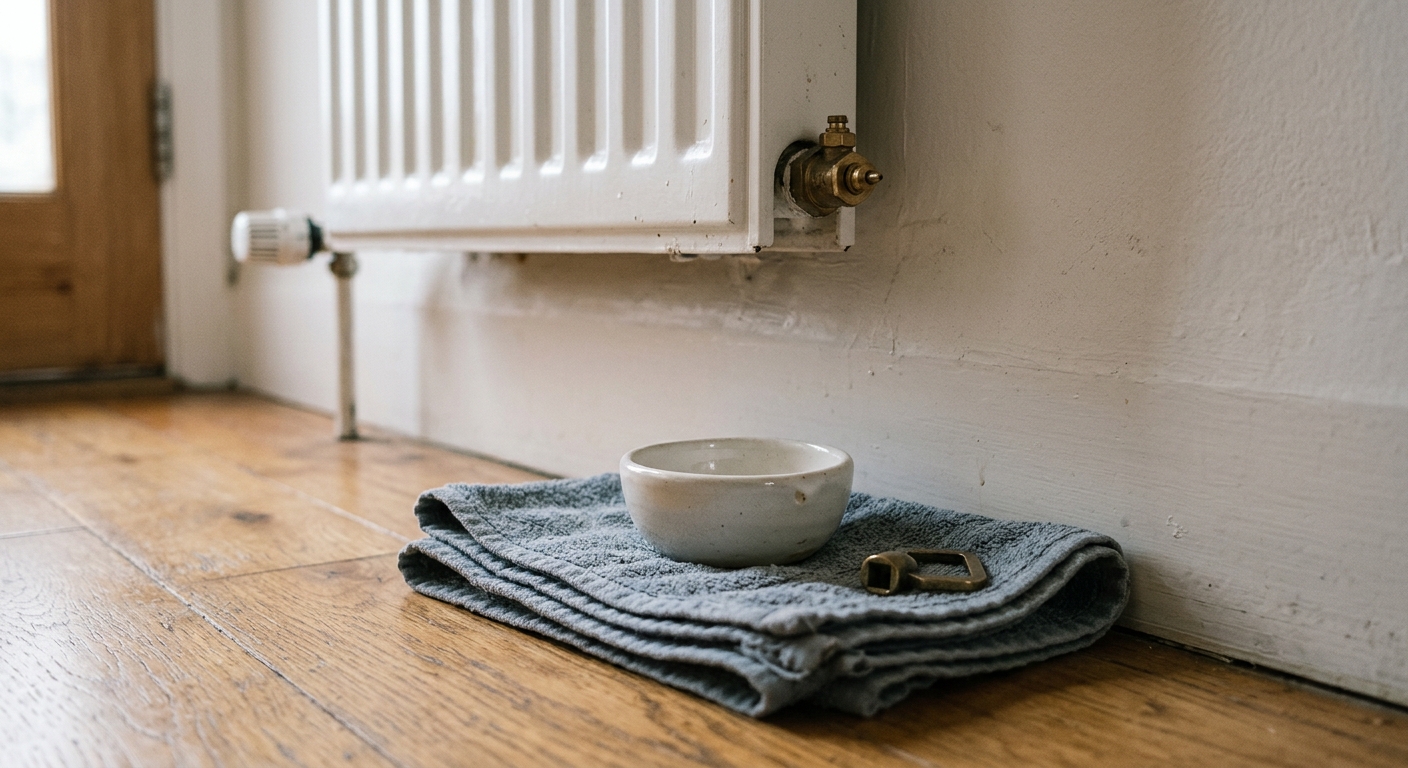
Lay an old towel directly below the bleed valve and set a shallow bowl, cup, or small tray under it. The towel catches the few drips that miss the container and protects flooring from dirty heating water. Keep a second cloth in one hand so you can wipe the valve immediately after closing it.
Use a proper radiator bleed key if the valve has a square stem. Some valves take a screwdriver, but use only the tool that fits the valve head securely. Pliers can round a small square stem or twist a fragile fitting. A spare key is useful because it is a specialty tool that seems designed to disappear just when the first cold night arrives.
Step 3: Release air slowly and stop at the first water
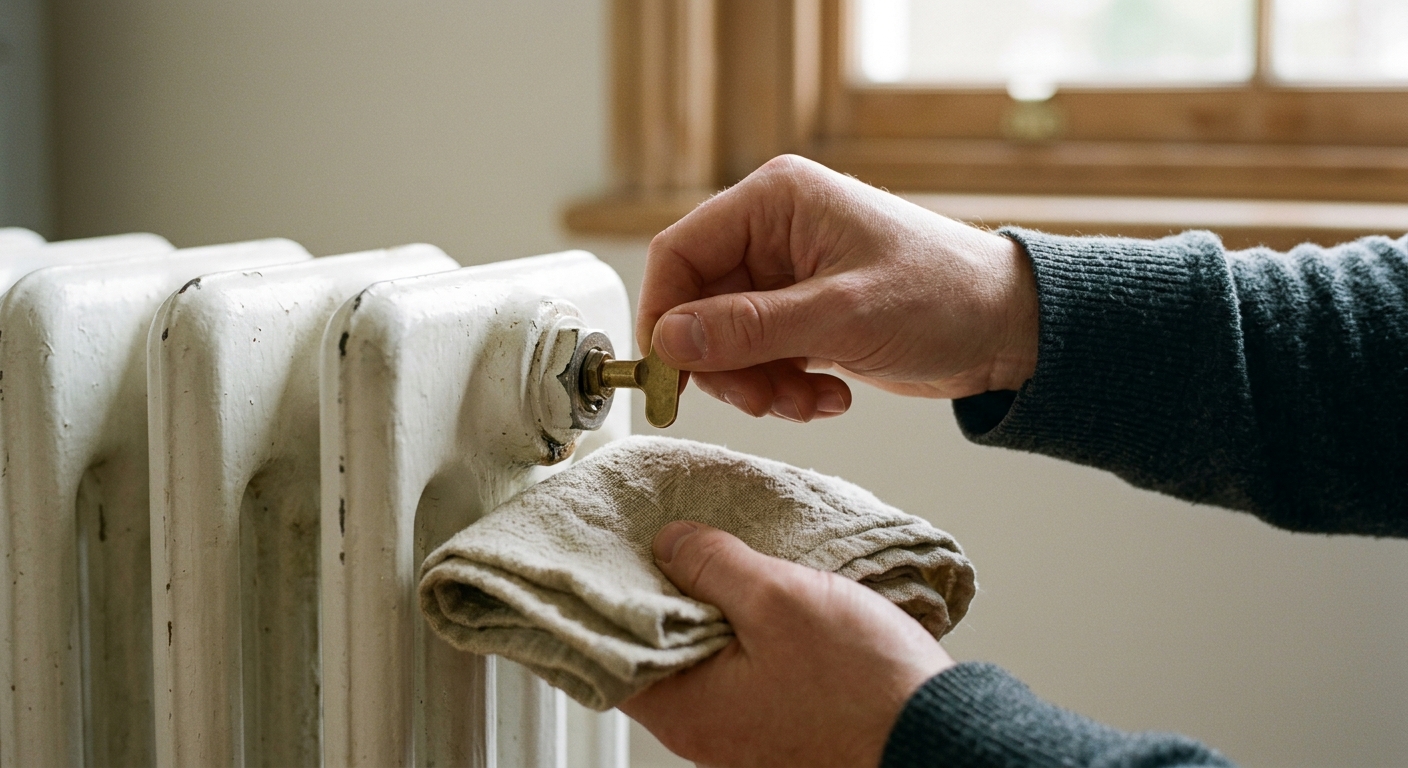
Seat the key or screwdriver squarely in the bleed valve. Turn it anti-clockwise slowly—start with about a quarter turn and never exceed a half turn. Stay close to the valve. You may hear a soft hiss as trapped air escapes; that is the sound you came for.
Do not walk away while it hisses, and do not keep turning in search of a louder result. The goal is not to drain the radiator. Once the hissing stops and a steady bead or trickle of water reaches the cloth or container, turn the valve clockwise until it is snug. Do not overtighten it; the valve only needs to seal.
Wipe the valve and surrounding paintwork dry, then watch it for a minute. A damp mark from the release is normal. Continuing seepage is not. If water keeps appearing after the valve is closed, stop the task, protect the floor, and arrange service rather than repeatedly tightening a corroded fitting.
Step 4: Restart, test, and check the system the right way
Restart the heating and let the system run long enough for the radiator to warm. Feel the panel cautiously after it has had time to circulate. The formerly cold top area should begin to heat more evenly. Listen for the earlier gurgling as well. If you are working through several radiators, repeat the same controlled process one at a time, with the heating off and the equipment cool each time.
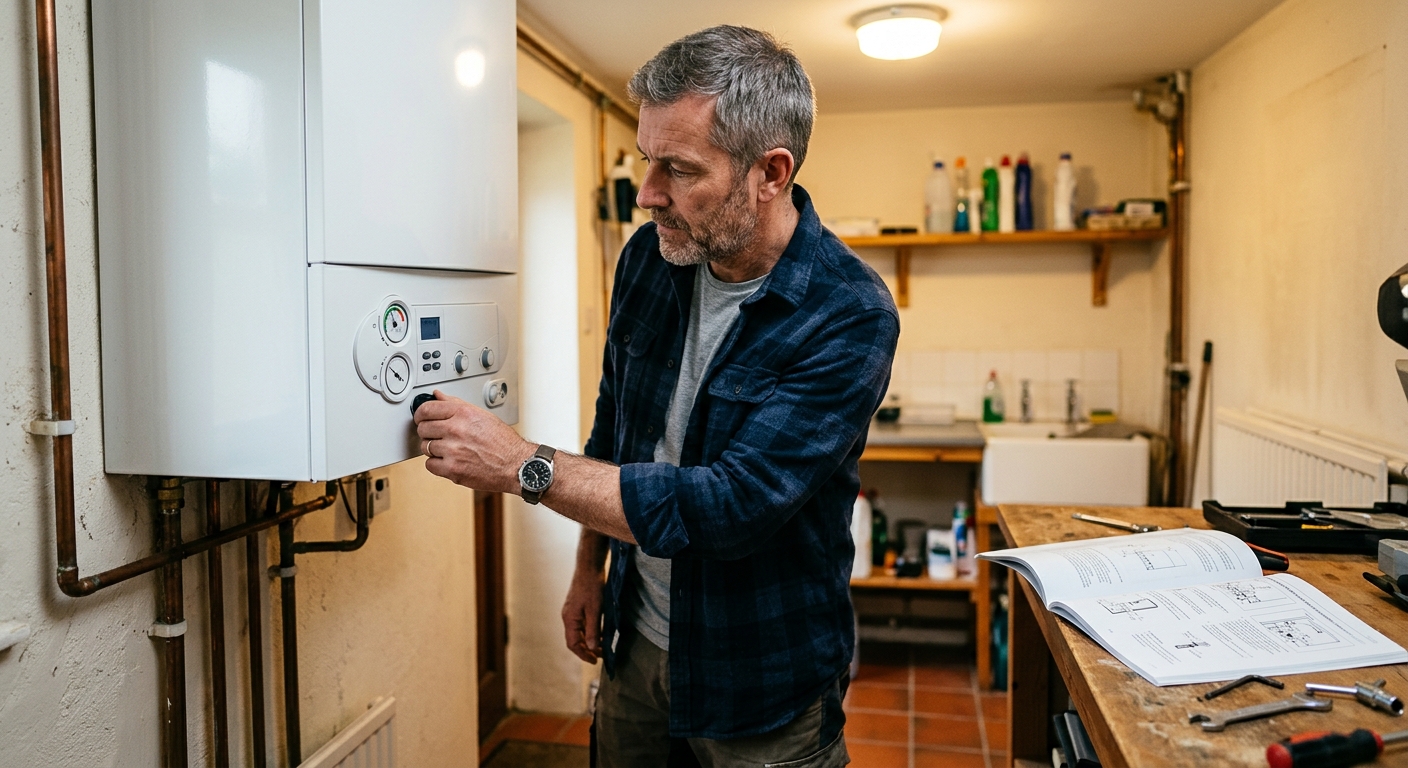
Bleeding releases a little water from a sealed system, so boiler pressure can change. Check the boiler’s pressure display only after you have finished and compare it with the range and refill procedure in that boiler’s own manual. Do not use a generic pressure number as a target: boiler models and system configurations differ. A combi boiler may need topping up after several radiators are bled, while other systems have different instructions.
Call a qualified heating technician if the same radiator repeatedly traps air, if pressure keeps dropping, if the boiler reports a fault, or if the radiator remains cold after a careful bleed. Persistent air can point to a leak, a circulation problem, or a system issue that a vent key cannot solve.
Troubleshooting & FAQ
Why is my radiator cold at the top but warm at the bottom?
That pattern can indicate trapped air collecting at the radiator’s upper edge, where hot water should circulate. With the heating off and the radiator cool, a brief controlled bleed can release it. If the panel remains uneven afterward, stop repeating the process and have the system assessed.
How far should I open a radiator bleed valve?
A quarter turn is usually enough to begin, and a half turn is the practical maximum recommended by the sources behind this guide. Open slowly and stay with the valve. Close it as soon as the hissing stops and the first steady water appears.
Do I need to turn the heating off before bleeding a radiator?
Yes. Switch off the heating and wait for the radiator and pipework to cool before you open the valve. That reduces burn risk and prevents the circulator from moving water and air while you are venting.
What if the radiator valve leaks after I close it?
Dry the area and observe it briefly. If it continues to seep, do not force the valve tighter or keep reopening it; protect the floor and contact a qualified heating professional. A leaking or corroded vent is a repair issue, not a reason to bleed the system again.
Should I add water to the boiler after bleeding?
Check the pressure display after the work, then follow the pressure range and refill instructions in your specific boiler manual. Bleeding several radiators can lower pressure in a sealed system, but guessing at a refill procedure can create a different problem. If the system repeatedly needs water, seek service.
Affiliate disclosure: as an Amazon Associate, HowTo.Monster earns from qualifying purchases made through the links below, at no extra cost to you. Our picks are chosen editorially, not by commission.
Apparatus & Materials
| Item | Cost | |
|---|---|---|
| ◆ METAL MAGERY radiator bleed keys, set of 5 Our pick for the square bleed-valve stem: a $10 five-pack gives you a correctly sized key plus spares for this easily misplaced specialty tool. | $9–$11 | Buy now |
| ◆ Old towel or absorbent cloth Catches the small amount of potentially dirty heating water released at the vent. | $4 | — |
| ◆ Shallow catch container A cup, tray, or small bowl placed under the valve keeps drips off the floor. | $4 | — |
Notes on the sources
The ranking at right reflects our editorial judgment after reading each source in full. For a summary of this entry in brief, see the source ranked first. For the chemistry and underlying principles, see the last.