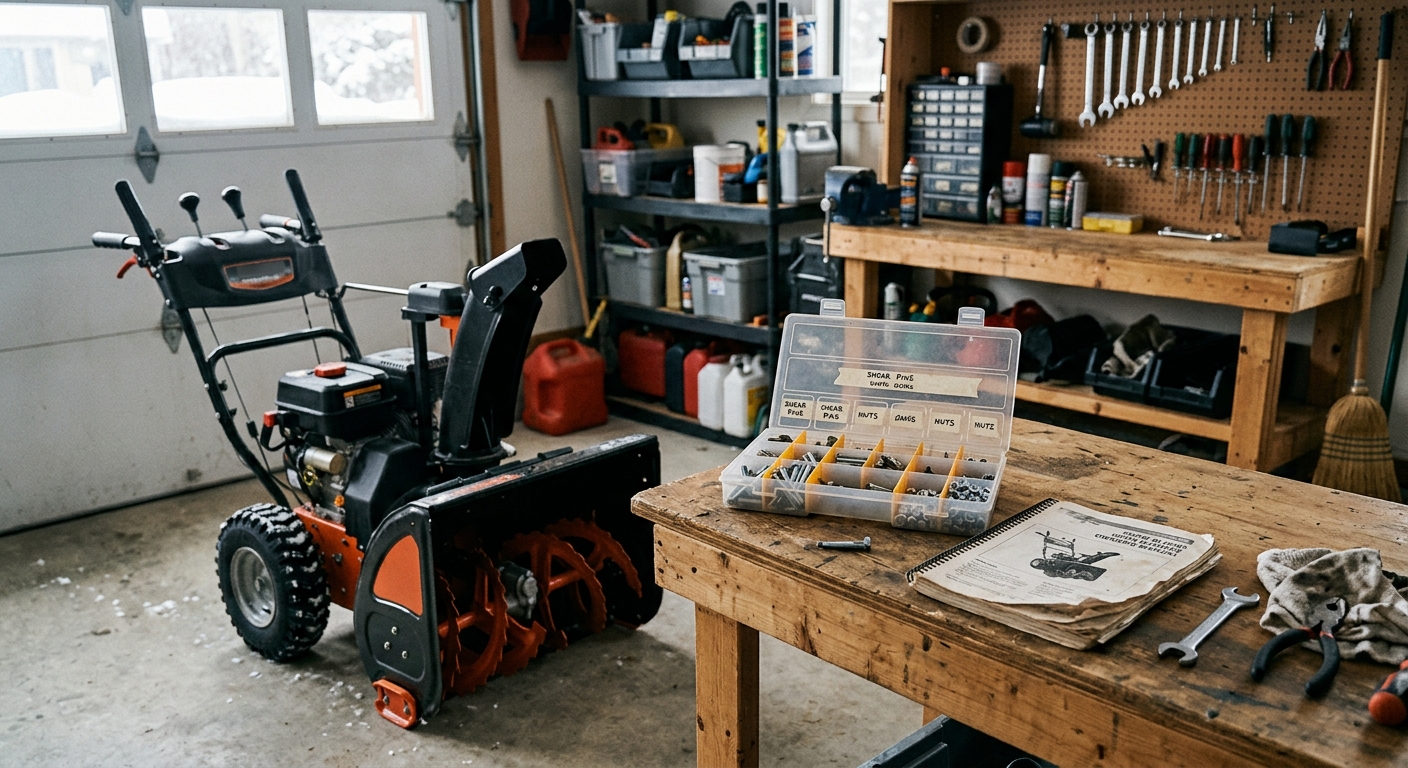
Three 12-volt deep-cycle battery picks for backup sump systems, with the controller-compatibility check that matters before you order.
A sump-pump backup battery is not an interchangeable box of stored power. It must fit the battery tray, accept the charger’s profile, match the controller’s approved chemistry, and deliver enough capacity for the sort of outage your basement actually faces. We compared three 12-volt Group 31-style deep-cycle options and kept one conventional AGM pick, one lower-cost AGM pick, and one lithium upgrade—but the controller manual gets the final vote. Start with our sump-pump testing guide if you have not yet proved that the backup pump, float, alarm, and discharge line work together.
The short version: choose the VMAX SLR125 when your controller accepts a Group 31 AGM and you want 125Ah of conventional capacity; choose the Weize 100Ah AGM when price matters more than extra reserve; consider the Power Queen lithium only where the backup-system manufacturer explicitly permits LiFePO4. The mistake is assuming a battery with the same voltage is automatically compatible. A charger designed around AGM or wet-cell charging can treat lithium badly, and a battery that fits on paper may not fit the box or terminal layout.
| Pick | Product | Price | Best for |
|---|---|---|---|
| Top pick | VMAX SLR125 AGM, 12V 125Ah | $250–$300 | A controller approved for Group 31 AGM and longer conventional reserve |
| Budget pick | Weize Deep Cycle AGM, 12V 100Ah | $150–$180 | A lower-cost, conventional sealed AGM replacement |
| Upgrade pick | Power Queen Group 31 LiFePO4, 12V 100Ah | $210–$300 | A lithium-approved controller and a lighter battery to handle |
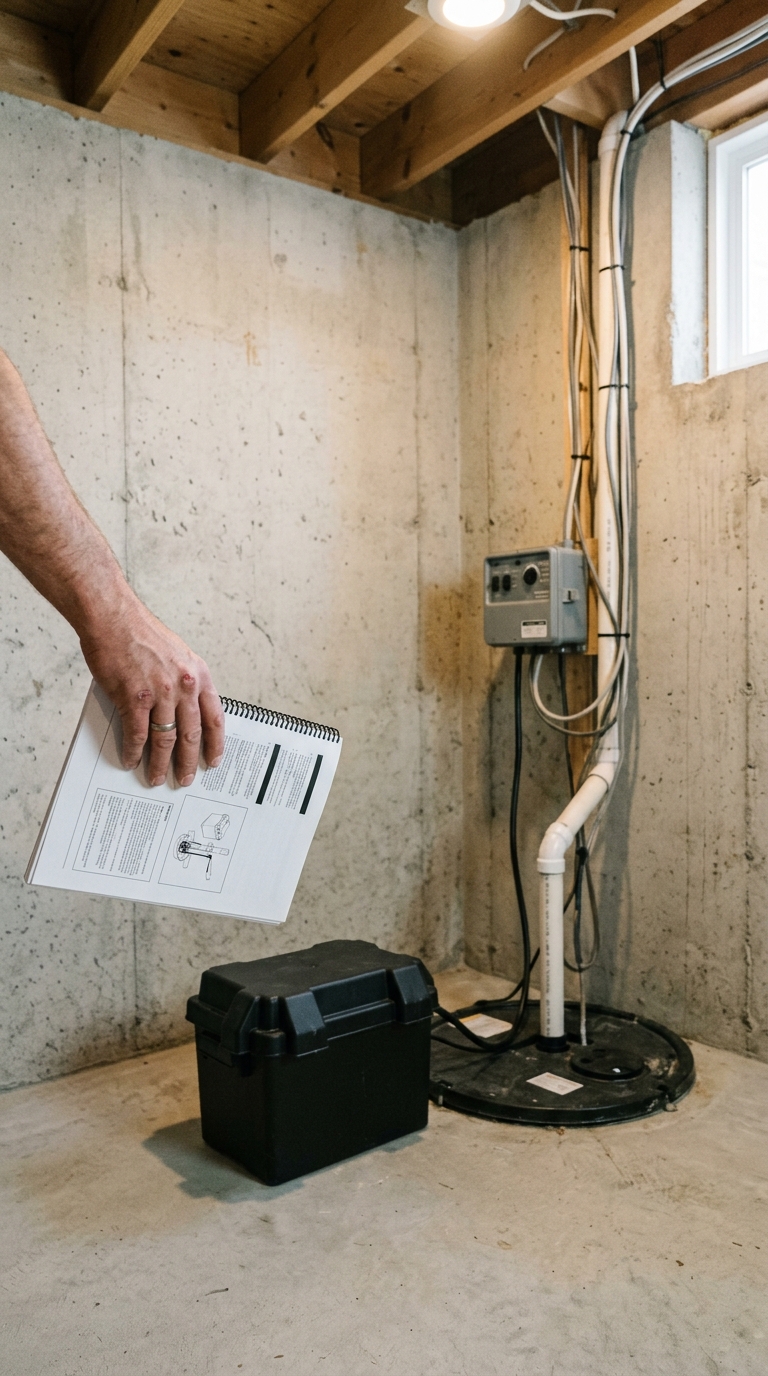
Top pick: VMAX SLR125 AGM 12V 125Ah
The VMAX SLR125 AGM is the sensible top pick when the backup controller calls for a 12-volt Group 31 AGM battery and the battery box has room for it. Amazon lists 125Ah capacity, a 12.9 by 6.8 by 8.7-inch case, ring-terminal hardware, and a 75-pound weight. That extra nominal capacity over a 100Ah unit is the point: a battery-backup pump only runs when the power is off, so reserve matters more than a flashy peak-current number.
Why it wins: it stays with sealed AGM chemistry, which is the conservative fit for many backup controllers. The Group 31 form factor is common, and the 125Ah rating makes this the choice for homeowners who have confirmed that their charger and tray permit it. The VMAX listing also describes a float service life of eight to ten years, though real life depends on heat, charger health, testing, and how deeply the battery is discharged.
What to watch out for: 75 pounds is a real installation constraint. Measure the box, confirm the shelf or floor support, and check terminal orientation before buying. Do not treat 125Ah as a promise of a certain number of hours; pump draw, head height, water inflow, and the controller’s low-voltage cutoff decide runtime.
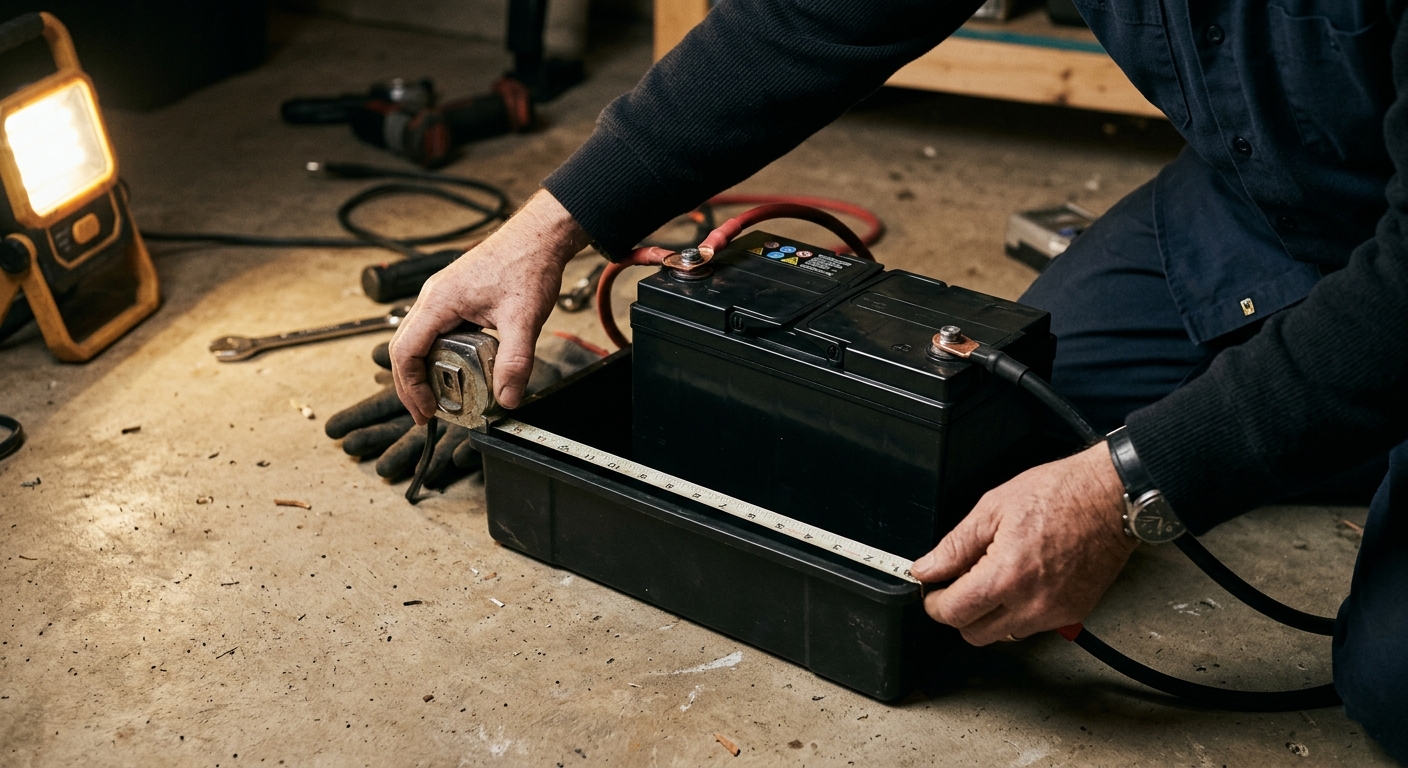
Budget pick: Weize Deep Cycle AGM 12V 100Ah
The Weize 100Ah AGM is the budget pick because it preserves the simple, maintenance-free AGM approach at a notably lower observed price. The Amazon listing identifies a 12V 100Ah battery with 3% self-discharge, M8 terminals, 12.99 by 6.73 by 8.43-inch dimensions, and an 1150A maximum-discharge claim. For a backup controller that accepts a Group 31-style AGM, 100Ah is a reasonable middle ground between a compact replacement and an oversized battery that will not fit the box.
Why it wins: it is not a specialist battery that forces a different charging strategy. The sealed AGM construction means no routine water topping, and its dimensions are in the familiar Group 31 neighborhood. It makes sense when a system needs a conventional replacement before storm season and the owner would rather spend the difference on fixing a suspect check valve, alarm, or discharge line.
What to watch out for: battery listings change sellers and prices often, so inspect the exact listing on checkout. More importantly, confirm terminal position and approved chemistry against your backup-pump manual. A 100Ah label does not make it a direct replacement for a proprietary battery system.
Upgrade pick: Power Queen Group 31 LiFePO4 12V 100Ah
The Power Queen 12V 100Ah Group 31 LiFePO4 is the upgrade for the narrower group of owners whose controller manufacturer explicitly supports lithium iron phosphate. Amazon identifies this model as a 12.8V, 100Ah, 1280Wh Group 31 lithium battery with a built-in 100A battery-management system and a listed weight of about 10 kg/24 lb. That lower weight is not trivial when the battery lives in an awkward basin-side box.
Why it wins: it offers the same nominal 100Ah class in a battery that is much easier to move and has built-in electronic protection. For a compatible lithium-ready system, that can be a better ownership experience than carrying a 60- to 75-pound lead battery down basement stairs. It is also a useful option where the battery must be removed for seasonal service.
What to watch out for: do not use this as an experiment in a legacy charger. Many sump-backup manuals specify AGM or wet-cell deep-cycle batteries only. Lithium charging behavior, cold-temperature charging limits, and BMS shutoff behavior matter. If your controller documentation does not explicitly approve LiFePO4, buy the approved AGM or wet-cell style instead.
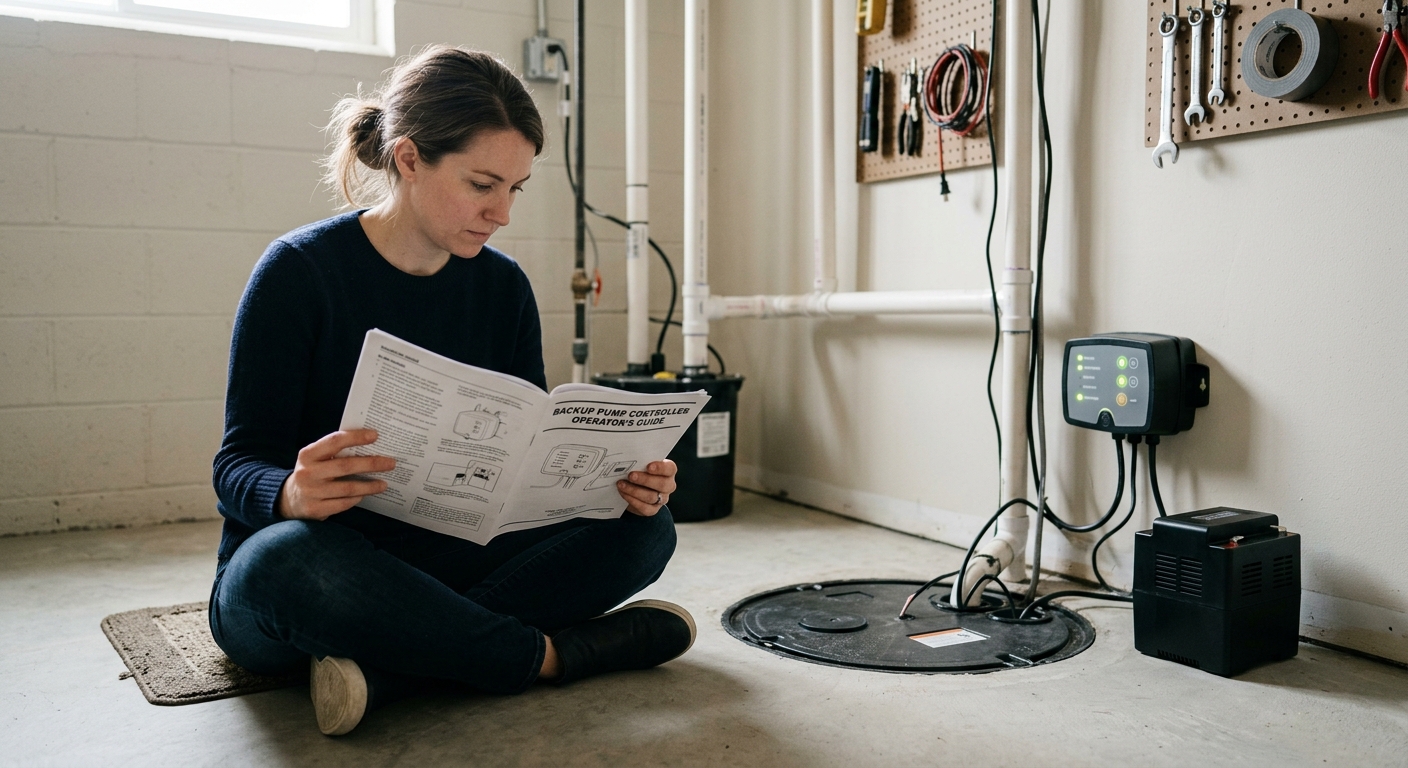
How we chose
We started with batteries that could be traced to specific Amazon product pages and then checked each ASIN against the live product title. We favored 12-volt deep-cycle batteries in Group 31-style dimensions because manufacturer documentation for systems such as Liberty Pumps’ PC441 calls for a 12-volt marine-type deep-cycle battery and notes Group 27 or 31 AGM or wet-cell compatibility. That is a useful starting point, not a universal approval: Basement Watchdog, Zoeller, Liberty, and other systems may name their own batteries, dimensions, charging requirements, or warranty conditions.
Capacity, chemistry, physical fit, terminal layout, weight, and available documentation mattered more than generic “backup power” claims. We did not turn an amp-hour rating into a runtime promise. During a real outage, a backup pump’s runtime changes with incoming water, vertical lift, pipe friction, pump condition, alarm load, and battery age. Test the completed system with water after installation, then restore AC power and confirm the charger returns to its normal state.
Troubleshooting & FAQ
Is a larger amp-hour battery always better for a sump-pump backup?
No. More capacity can extend reserve only if the controller accepts the battery, the charger can maintain it, and the case fits the box. A 125Ah AGM can be a better choice than 100Ah for a compatible system, but it is also heavier and more expensive. Fix a failed pump, blocked discharge, or bad float before paying for more battery.
Can I replace an AGM sump-pump battery with LiFePO4?
Only if the backup-system manufacturer explicitly says the controller and charger support LiFePO4. Same nominal voltage is not enough. A lithium battery may need a different charging profile, and cold-weather charging protection can interrupt operation in conditions where a basement backup system matters most.
How do I know whether a Group 31 battery will fit?
Read the controller or battery-box manual, then measure the actual tray and lid clearance. Compare length, width, height, terminal style, and positive-terminal location—not merely the group number. Confirm the battery can sit level and that cables reach without strain.
How often should I test a new backup battery?
Follow the system manual, then perform a practical water test before major storm seasons and after installation. The useful test proves that the backup float starts the pump, the alarm works, water exits the discharge, and the system returns to charging afterward. A green charger light alone does not prove the backup pump can move water.
Does a sealed AGM battery need maintenance?
It does not need electrolyte water added, but it still needs inspection. Keep the case clean and upright, check terminals for corrosion or loose connections, verify the charger status, and replace a swollen, leaking, damaged, or failing battery according to the system manufacturer’s guidance.
Affiliate disclosure: as an Amazon Associate, HowTo.Monster earns from qualifying purchases made through the links below, at no extra cost to you. Our picks are chosen editorially, not by commission.
Apparatus & Materials
| Item | Cost | |
|---|---|---|
| ◆ VMAX SLR125 AGM 12V 125Ah Battery Top conventional pick for a controller that explicitly accepts a Group 31 AGM battery and has room for a 75-pound 125Ah unit. | $250–$300 | Buy now |
| Power Queen 12V 100Ah Group 31 LiFePO4 Battery Lightweight lithium upgrade only for controllers whose maker explicitly permits LiFePO4 batteries and charging profiles. | $210–$300 | Buy now |
| Weize Deep Cycle AGM 12V 100Ah Battery Lower-cost sealed AGM pick for compatible Group 31-style backup systems; verify battery-box dimensions and terminal orientation first. | $150–$180 | Buy now |
Notes on the sources
The ranking at right reflects our editorial judgment after reading each source in full. For a summary of this entry in brief, see the source ranked first. For the chemistry and underlying principles, see the last.