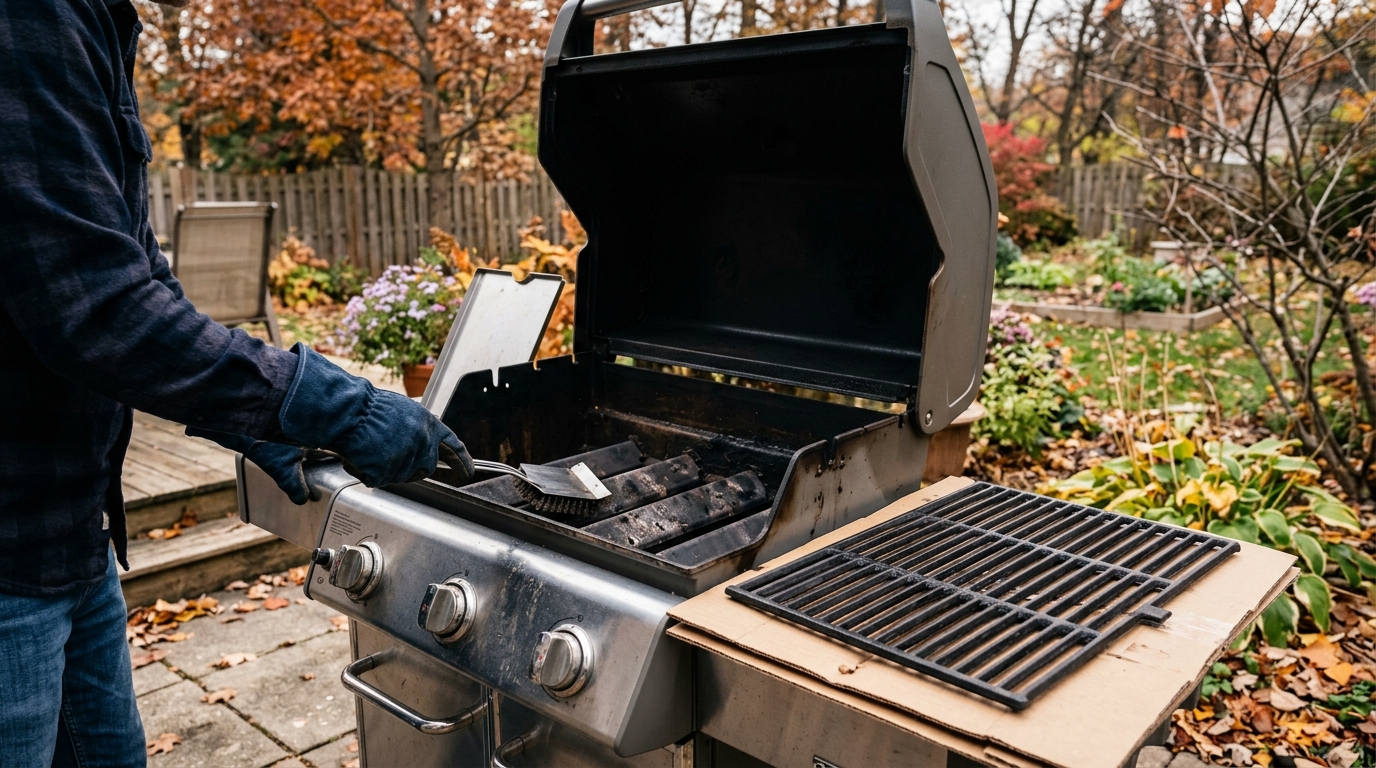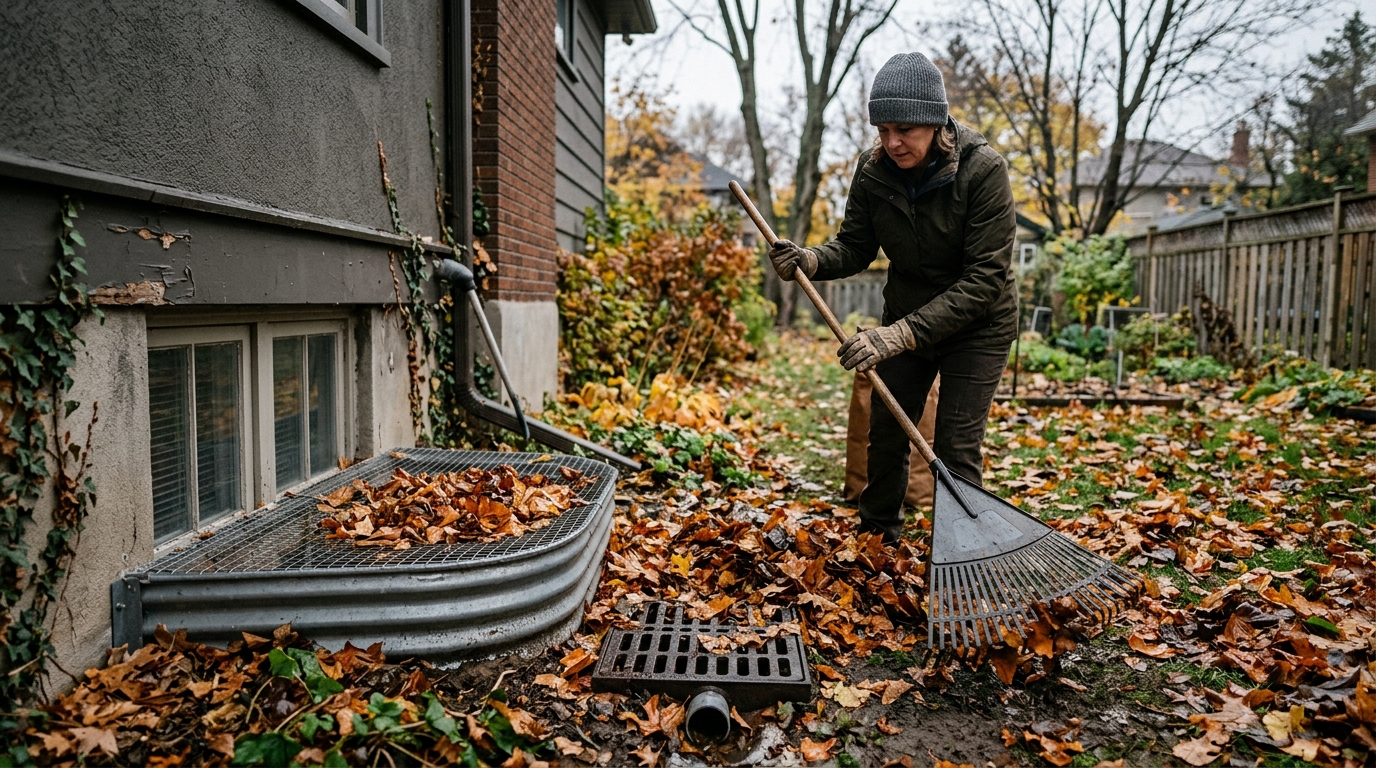
Clear the approach, add removable leaf protection, and keep window wells safe so fall rain can drain instead of backing toward the house.
Leaves do not have to fall inside a drain to cause trouble. A soggy mat of them on top of a grate can hold back water just as effectively as a plug in the pipe. That is how a clean-looking yard drain turns into a puddle, a basement stairwell fills during the first hard rain, or a window well starts sending water toward the foundation.
The fix is not to seal the opening. It is to keep water moving while catching leaves where you can remove them fast. Use this routine before leaf drop peaks, again before heavy rain, and once more after the storm has carried the small stuff downhill.
Step 1: Map the drains that actually protect the house
Walk the property with a rake or broom and identify every low point where water is supposed to leave: driveway trench drains, yard catch basins, patio drains, downspout drain inlets, basement stairwell drains, and window wells. Do this on a dry day first. You want to see the hardware before it is hidden under wet leaves.
Pay special attention to anything downhill from large trees or uphill from the foundation. Leaves on a lawn are mostly a cleanup problem. Leaves sitting on a drain that protects a garage, basement door, or window well are a water-management problem. Mark the worst drains with a small landscape flag if they disappear under leaf drop.
Do not remove municipal storm-drain grates, manhole covers, or heavy catch-basin lids. City stormwater programs generally tell residents to clear only the debris sitting on top of public grates and to report drains that still do not empty. The same habit works at home: start with the surface, then escalate only if the drain still backs up after the grate is clear.
Step 2: Clear a wide approach, not just the grate
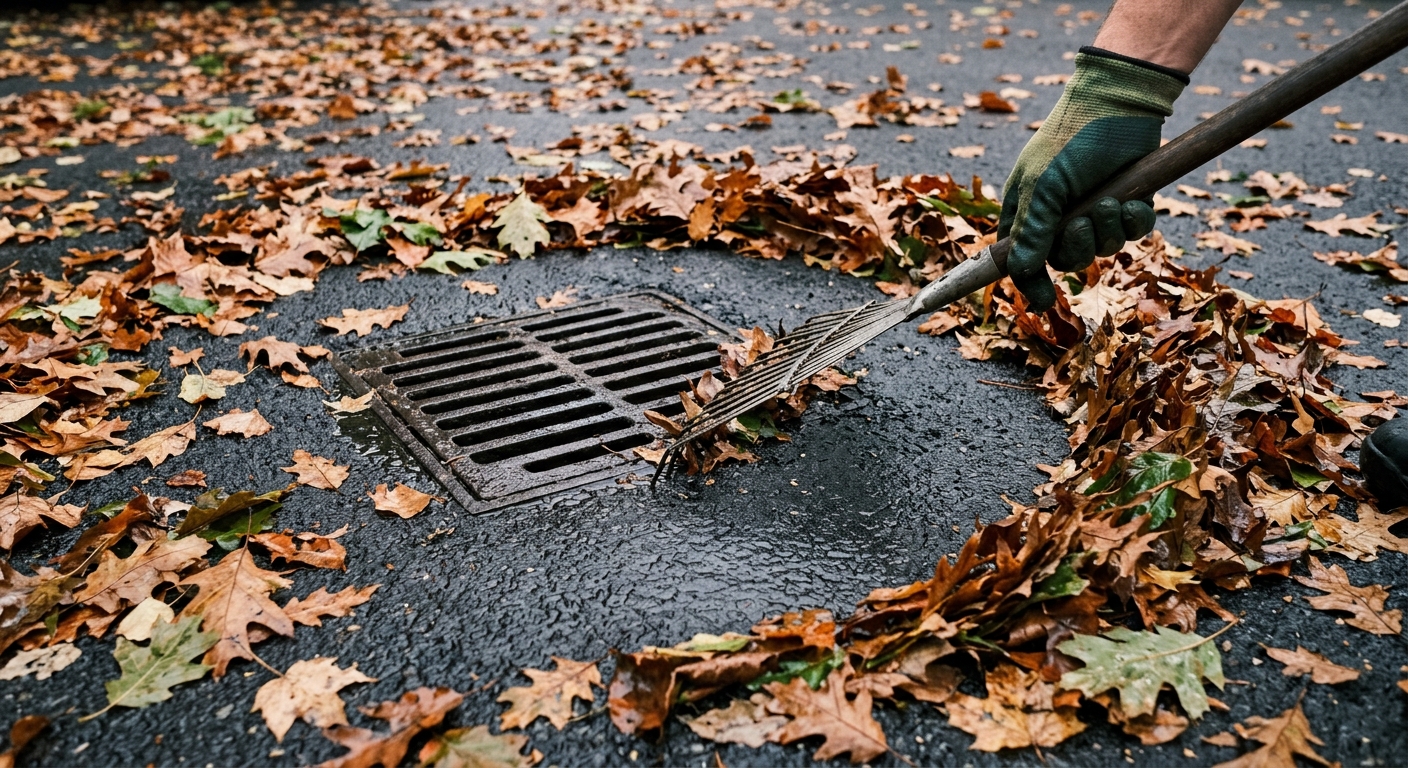
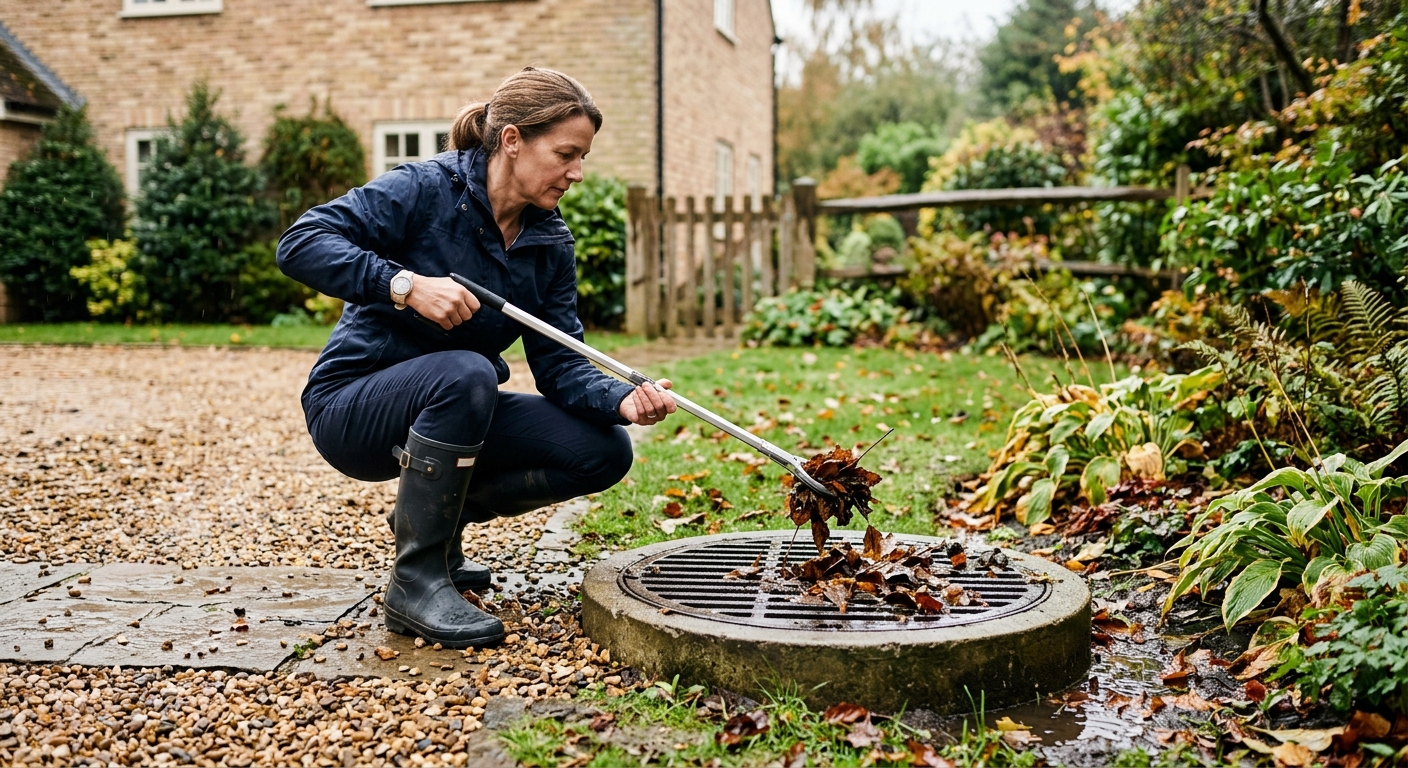
Rake leaves at least three feet away from each drain opening. A clean grate with a pile of leaves sitting six inches uphill will clog again as soon as rain starts moving across the pavement. On driveways and patios, sweep the approach so water has a visible path to the inlet. On lawns, pull loose leaves away from the low spot and bag, compost, or mulch them according to your local yard-waste rules.
Use a rake, stiff broom, grabber, or pitchfork to move debris. Do not put your hands or feet into the drain structure. Hidden glass, metal, animals, and eroded voids are not worth finding by touch. If the grate is loose, cracked, sunken, or surrounded by a small sinkhole, stop treating it as a leaf problem and schedule a drainage repair.
Do not blow leaves into the street or toward a curb inlet. Extension and stormwater agencies warn against sending yard waste into storm drains because it blocks flow and carries nutrients into waterways. Keep the leaves on your property until they go into compost, mulch, bags, or municipal collection.
Step 3: Add a removable leaf barrier where it will not block water
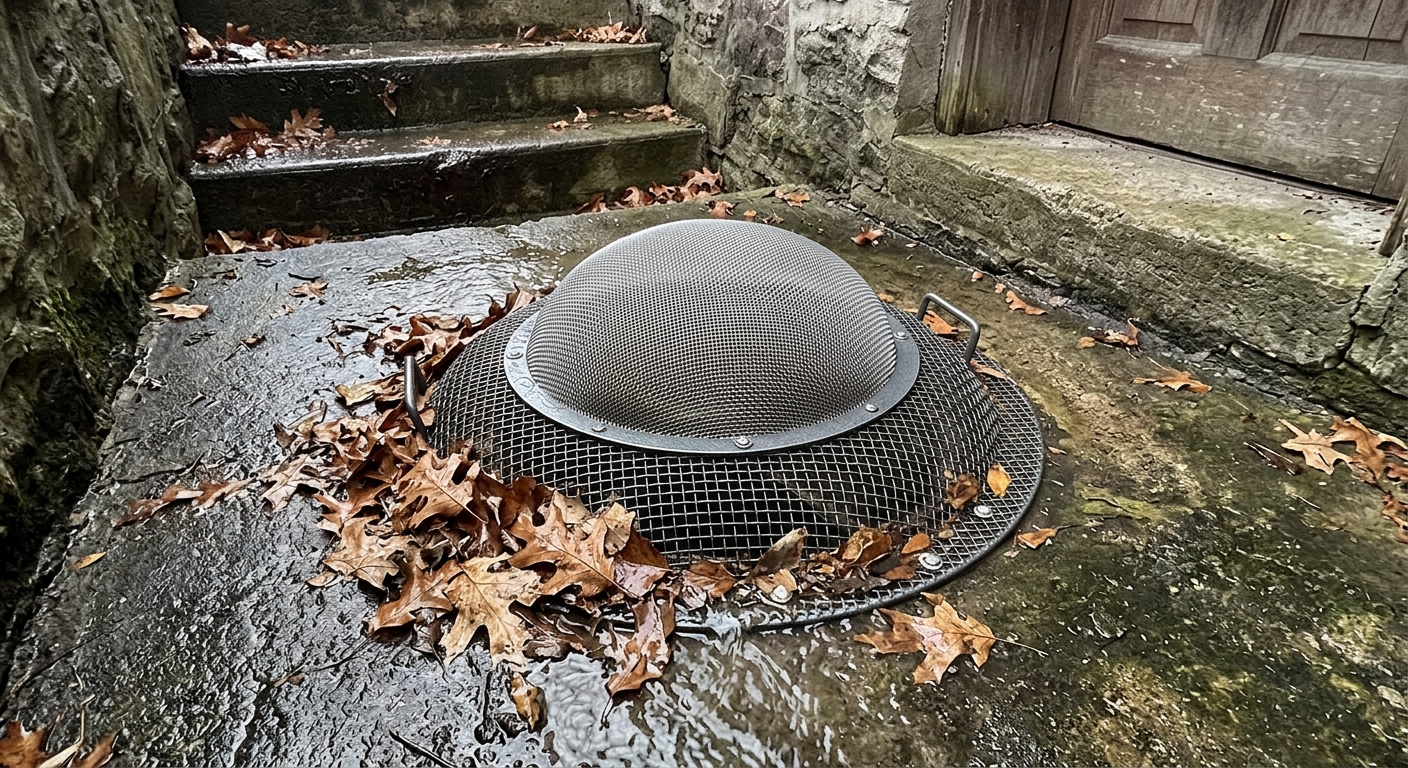
For small stairwell drains, basement entry drains, and some window-well drains, a raised removable drain cover can keep leaves, twigs, and seed pods away from the actual opening. The key word is removable. A good cover catches debris above or around the inlet and can be lifted for cleaning after a storm. A bad cover is anything flat that turns into a lid once leaves land on it.
Never use plywood, plastic sheeting, landscape fabric, a doormat, or a solid tray over a drain. Those materials may stop leaves, but they also stop water. If you need a temporary barrier while you shop for a proper cover, use a loose ring of stones or a small section of rigid mesh set back from the grate, then remove and inspect it after rain. Do not leave improvised parts where they can wash into the drain.
For a small basement stairwell drain, a two-stage drain cover is often the cleanest upgrade. It gives leaves a raised wall to hit before they reach the drain and a secondary screen for smaller debris. Check the dimensions before buying. The cover should sit securely around the drain, leave the walking path safe, and lift off without tools.
Step 4: Use catch-basin filters only if you will clean them
A catch basin is meant to collect runoff and let heavier debris settle before water enters the pipe. A filter, basket, or grate insert can help in a leafy yard, especially where a downspout empties near a basin. It also adds a maintenance job. If you install a basket or filter and forget it, the basket becomes the clog.
Choose hardware that matches the basin size. A 9-inch grate kit does not belong on a 12-inch basin, and a fabric filter made for one brand may sag or block flow in another. If the existing basin is broken or missing its grate, replace it with a proper basin-and-grate kit rather than balancing scrap mesh over the opening.
After installation, test it with a hose for a few minutes. Water should pass through the grate without spreading across the patio or backing toward the foundation. If water ponds immediately, the filter is too restrictive, installed wrong, or the downstream pipe is already blocked. Pull the filter and inspect the basin before the next storm.
Step 5: Treat window wells as drainage and egress, not storage pits
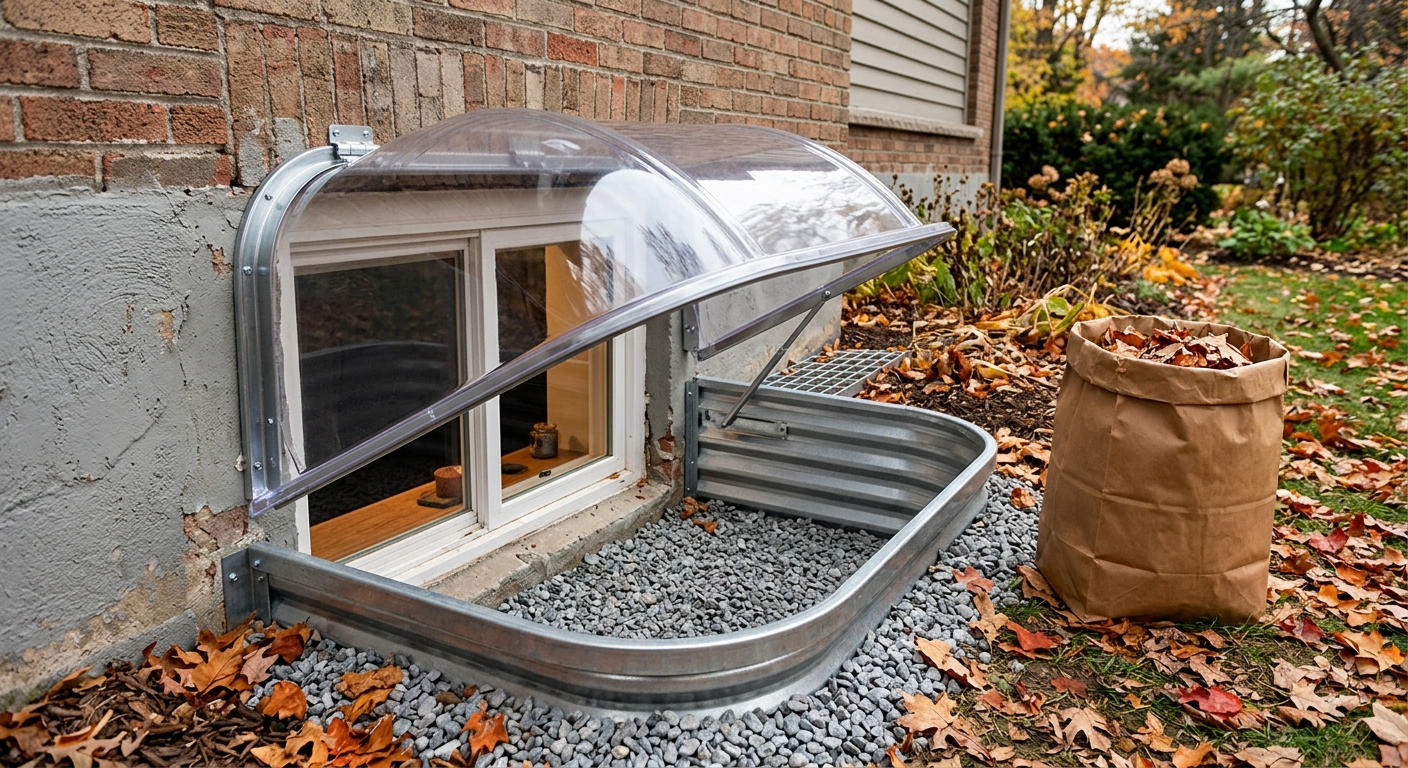
Window wells collect leaves because they are little wind traps. They also sit beside the foundation, which makes them a bad place for wet organic matter to pile up. Scoop out leaves, seed pods, and soil. Keep the gravel visible at the bottom if the well has gravel, and confirm that the drain opening is not buried.
A window-well cover can reduce leaf load and help prevent falls, but it must fit the well and preserve emergency escape if the window is an egress opening. Building guidance based on residential code says covers, screens, or grilles over emergency escape openings must be openable or removable from inside without a key, tool, or unusual force. Do not screw down a rigid cover over a bedroom egress well just to stop leaves.
If water has already stood in the well, look for the reason before adding a cover. The well may have a clogged drain, no connection to the foundation drainage system, a low rim that lets yard water pour in, or soil sloped toward the house. A cover helps with falling leaves. It does not fix grading or a failed drain.
Step 6: Inspect before and after heavy rain
The best time to clear leaves is before the forecast turns ugly. Check each drain before a heavy rain, windstorm, or first freeze. Pull leaves off the grate, clear the uphill approach, and empty any basket or filter that is already half full.
After rain, check again. Wet leaves collapse into a dense mat, and small seeds can lodge in the screen you installed to solve the larger problem. Lift removable covers, rinse baskets, and look into private catch basins from above without reaching inside. If the basin is full of sediment or the outlet pipe is hidden, schedule a cleanout.
Call the city or county for a public storm drain that remains blocked after you clear surface debris. Call a drainage contractor for private drains that overflow after the grate, cover, and basin are clean; water that backs toward the foundation; or soil sinking around a drain. That is no longer leaf maintenance. That is a drainage-system failure showing itself during leaf season.
Troubleshooting & FAQ
Can I cover an outdoor drain with screen or landscape fabric?
Do not cover the drain with flexible fabric or flat screen unless the manufacturer designed it for that drain and you can clean it easily. Flat material clogs fast when wet leaves press against it. Use a raised, removable cover or a fitted catch-basin filter that leaves a path for water.
How often should I clear leaves from outdoor drains?
Check problem drains weekly during heavy leaf drop, before any major rain, and after storms with wind. Drains under maples, oaks, gutters, or downhill pavement may need clearing more often. The goal is to remove leaves before they mat together, not after the water has already backed up.
Who is responsible for a storm drain in the street?
Responsibility depends on your municipality, but homeowners are usually encouraged to clear leaves from the top of the grate only and report drains that still do not work. Do not remove street grates or reach into public drainage structures. If the drain is on private property, the owner usually handles maintenance or hires a contractor.
Is a window-well cover safe over a basement bedroom window?
It can be, but only if the cover preserves emergency escape. For an egress window, the cover must be openable or removable from inside without a key or tool. If you are unsure whether the window is an egress opening, treat it as one until a local code official or qualified contractor confirms otherwise.
What if the drain is clear but water still backs up?
A clear grate does not guarantee a clear pipe. The catch basin may be full of sediment, the outlet pipe may be crushed or blocked by roots, or the yard may be graded so water overwhelms the inlet. Stop adding covers and get the drainage path inspected before the next heavy storm.
Affiliate disclosure: as an Amazon Associate, HowTo.Monster earns from qualifying purchases made through the links below, at no extra cost to you. Our picks are chosen editorially, not by commission.
Apparatus & Materials
| Item | Cost | |
|---|---|---|
| ◆ Leaf rake or stiff outdoor broom Clears the approach to the grate without putting your hands near hidden debris inside the drain. | $10–$25 | — |
| ◆ Yard-waste bags or compost bin space Gives leaves somewhere to go besides the street, curb inlet, or window well. | $4–$12 | — |
| Drain Defender Two-Stage Stairwell Drain Cover Our pick for small stairwell or window-well drains because it raises the leaf barrier above the drain and lifts off for cleaning. | $36–$40 | Buy now |
| Grabber tool or small pitchfork Useful for lifting wet leaves from grates and window wells while staying on stable ground. | $8–$20 | — |
| NDS Catch Basin Drainage Insert Grate Kit, 9 x 9 in. Our pick when a small landscape catch basin needs a real fitted grate assembly instead of an improvised leaf screen. | $66–$76 | Buy now |
Notes on the sources
The ranking at right reflects our editorial judgment after reading each source in full. For a summary of this entry in brief, see the source ranked first. For the chemistry and underlying principles, see the last.