Drain flies usually come from slimy biofilm in drains or nearby wet spots. This guide shows how to clean the source, break the cycle, and prevent a repeat infestation.
If you keep seeing tiny moth-like flies around a sink, shower, floor drain, or laundry area, the answer is usually boring in the best possible way: somewhere nearby is a patch of wet organic slime they can breed in. That biofilm can live inside a drain, behind a drain cover, in an overflow opening, or in another damp spot you do not see at first glance. The fix is not to spray harder or to keep pouring random liquids down the pipe. The fix is to find the source, scrub the film off, and keep the area dry enough that the flies cannot rebound.
This guide walks through the short version first, then the cleanup steps that actually matter. If you do those steps fully, you usually do not need to make a big production out of it.
Step 1: Confirm the source before you clean
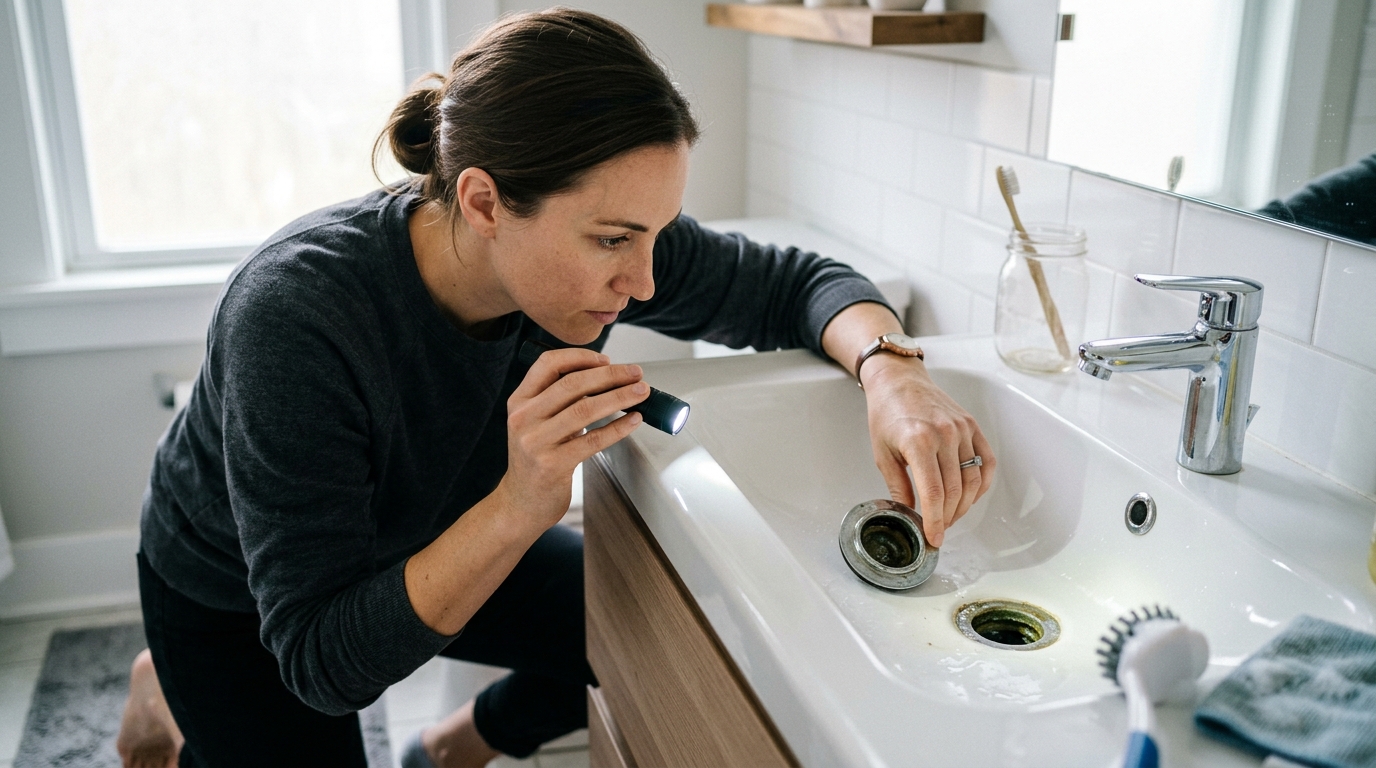
Start by narrowing down where the adults are coming from. Drain flies are weak fliers, so they tend to hang out near the breeding site. If you see them most often by one bathroom sink, one shower, or a floor drain, focus there first. Look for slime around the drain opening, overflow hole, stopper, and any place water sits for long periods.
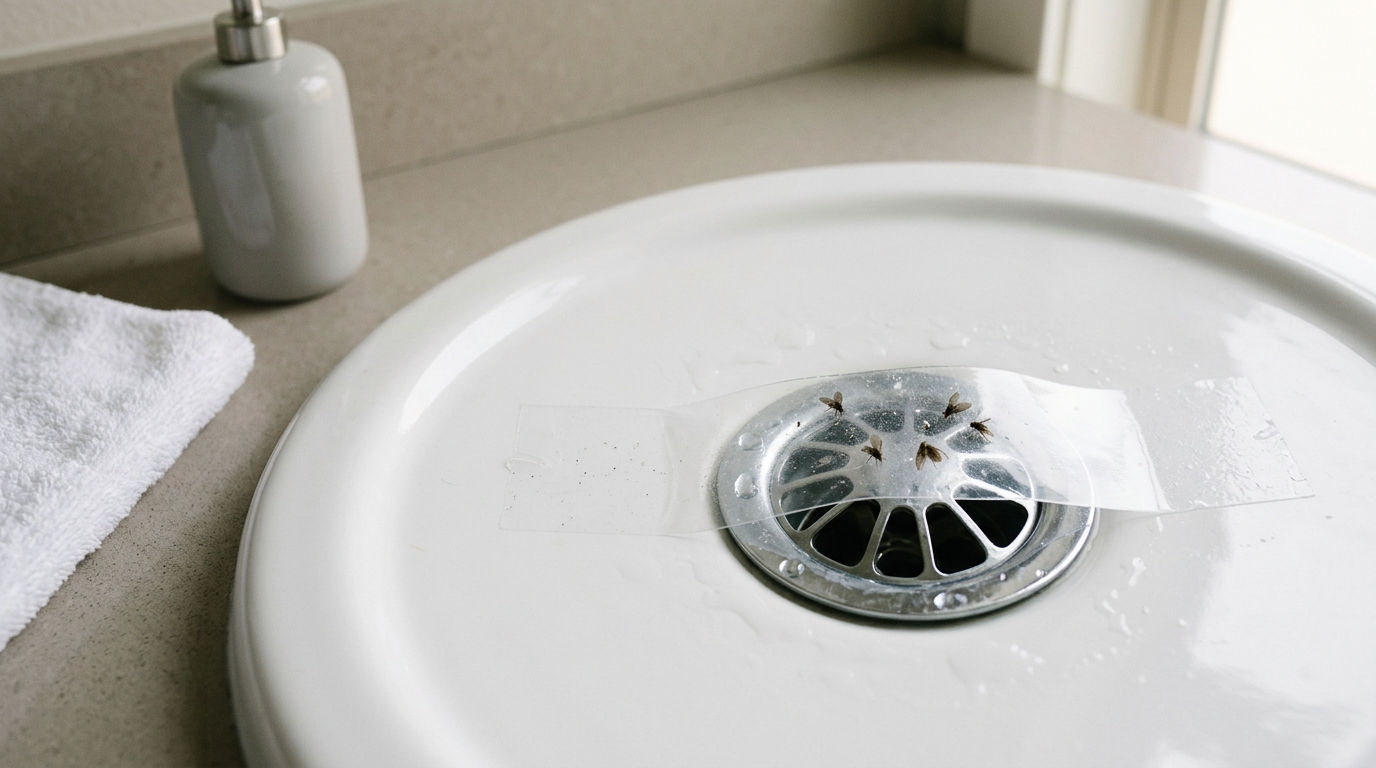
If you want a quick check, cover the suspect drain overnight with clear tape or a simple cup trap and see whether adults collect there. That is useful because drain flies often emerge from the very drain where the biofilm is hiding. If you find flies in one drain but not another, clean the active one first and then inspect the rest of the room.
Do not stop at the most obvious sink if the problem keeps returning. A leaky pipe, a dirty overflow channel, a floor drain, a toilet base, or even a condensate pan can be the actual source. When the infestation persists after a basic sink cleaning, assume the source is hidden and widen your search.
Step 2: Remove the biofilm, not just the adults
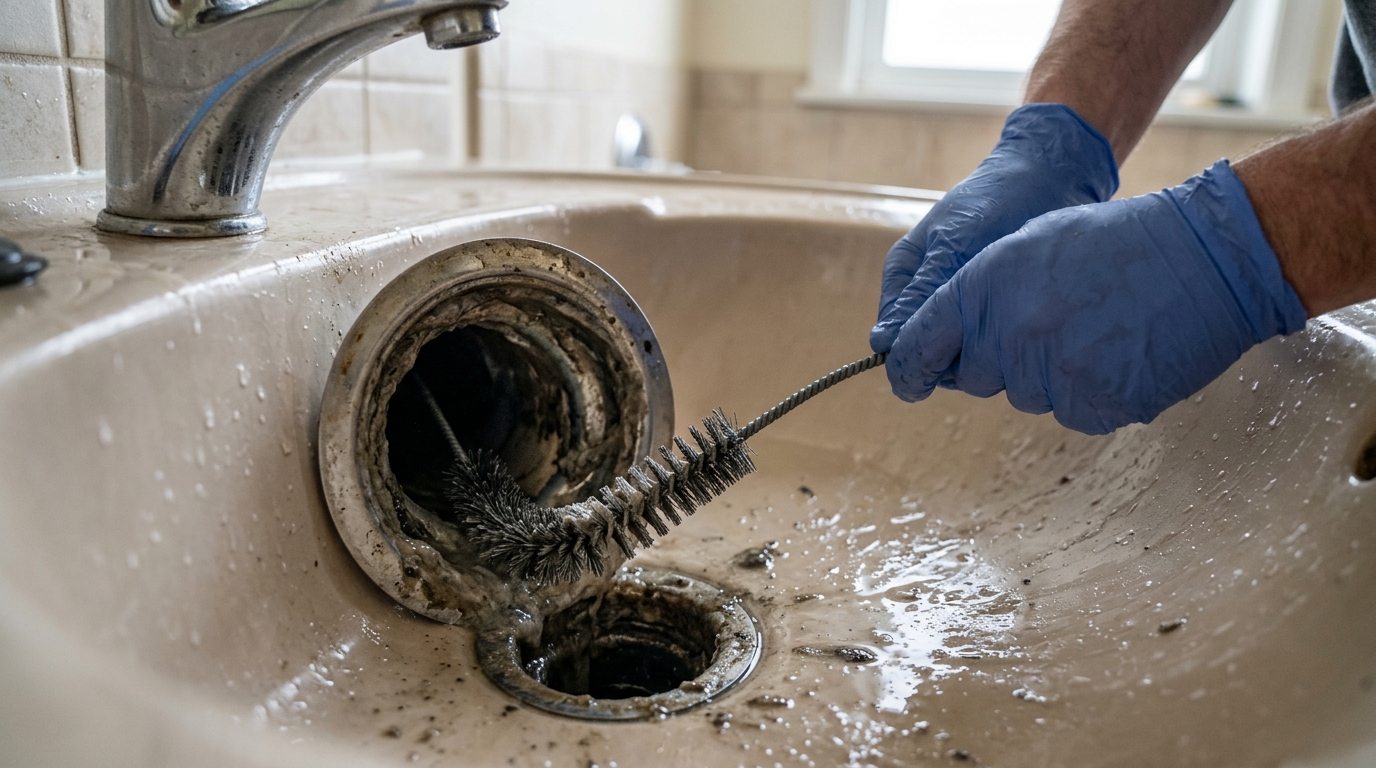
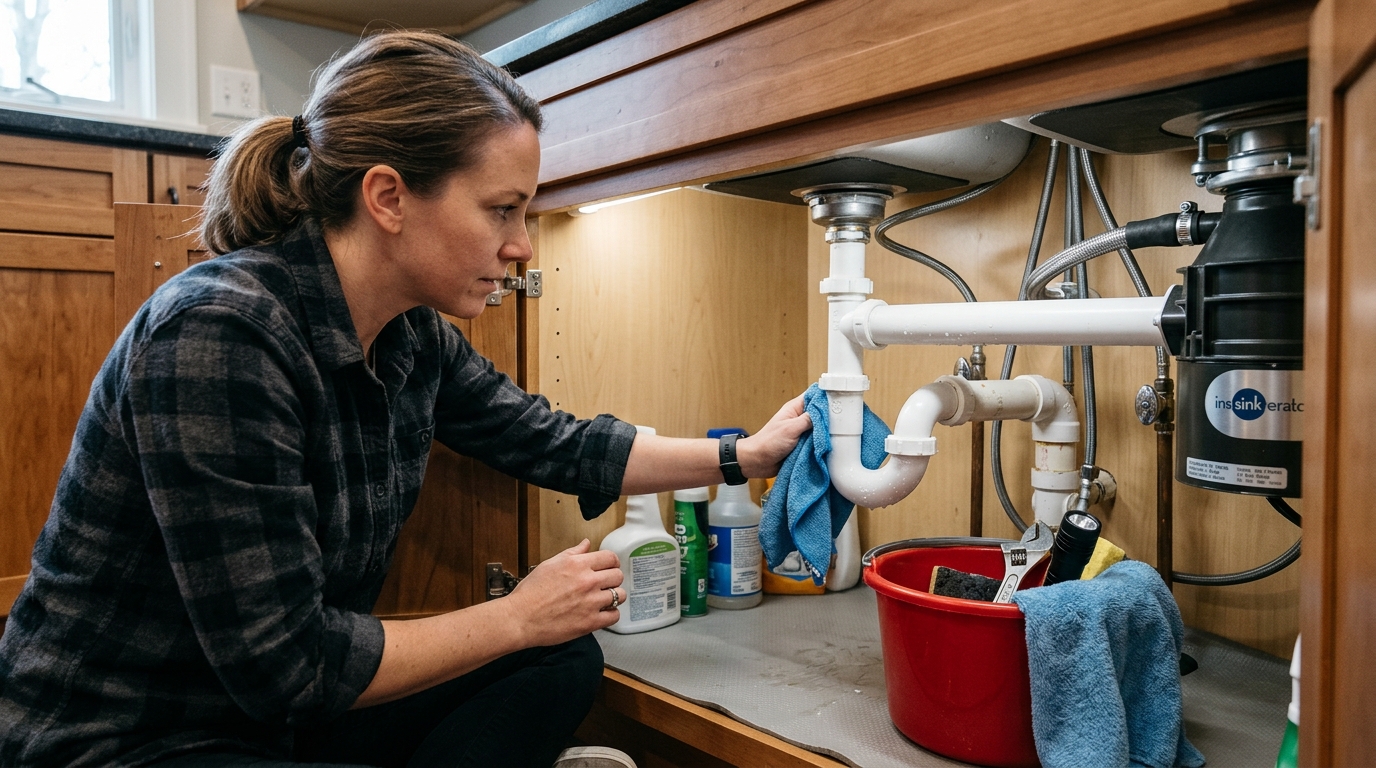
This is the step that solves the problem. Adults are the visible part; the breeding sludge is the engine. Take off the drain cover if you can, then scrub the inside of the drain opening with a stiff brush or flexible drain tool. Get into the sides of the pipe as far as you can safely reach, because the organic film clings above and below the water line.
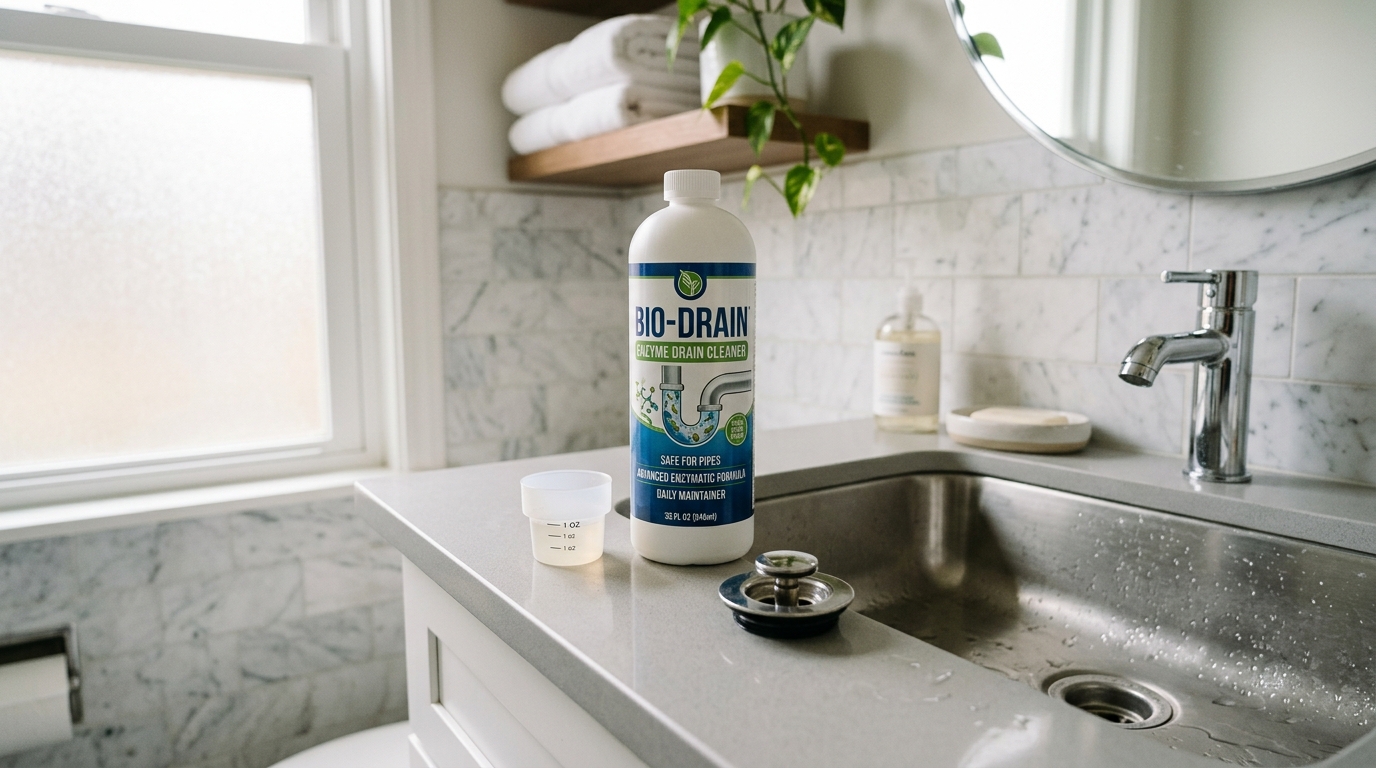
Use hot water and a proper cleaner to loosen grime, then physically brush the surface. An enzyme drain cleaner is useful here because it helps digest the organic residue the flies rely on. For that reason, use the enzyme product as part of a maintenance routine after the first scrub, not as a substitute for it. If there is visible slime in the overflow opening, the drain body, or the lip under the stopper, clean those areas too. That hidden ring of sludge is often the part people miss.
If the drain is slow or smells bad, that is another clue that organic buildup is thick. Scrub first, flush second, and repeat if needed. A single quick pour usually does not reach the material where larvae live. Boiling water, vinegar, or bleach alone may make the drain smell cleaner, but they do not reliably penetrate established biofilm.
Step 3: Break the life cycle with follow-up treatment
Once the visible slime is gone, keep the drain from rebuilding the same mess. Use the enzyme cleaner on a schedule that matches the label, especially in drains that stay damp or see heavy use. This matters because drain flies do not need a giant sewer problem to come back; they only need a fresh strip of organic film.
At the same time, reduce the conditions that support them. Fix obvious leaks, dry standing water, and empty or clean neglected traps, drain pans, and overflow areas. If you have a bathroom or laundry drain that gets little use, run water through it occasionally so it does not become a stagnant breeding site. Check under sinks for drips, and look at nearby items that stay wet, like mop heads or drip pans.
If you have multiple drains in the same room, treat all of them. It is common for more than one source to be involved, especially when a room has several wet fixtures. Cleaning only the most annoying drain while leaving the rest untouched is how people end up chasing the same flies for weeks.
Step 4: Prevent the comeback
Prevention is mostly housekeeping with a plumbing mindset. Keep drains clean, but also keep them wet only when they are supposed to be wet. Wipe up spills, run water in seldom-used fixtures, and pay attention to any place where damp debris or soap scum can collect. If you notice the first few flies again, act early. A small outbreak is much easier to stop than a mature one.
Use the flexible drain brush or similar tool any time the drain starts to feel slimy again. That physical scrubbing is the part that gives you a real reset. The enzyme cleaner then acts like maintenance insurance instead of a desperate last move.
If the flies continue after a thorough cleaning, stop treating it like a simple drain problem and inspect for plumbing damage, sewage seepage, or another hidden water source. At that point, a plumber or pest professional is the right next move.
Troubleshooting & FAQ
Why do drain flies keep coming back after I pour bleach down the drain?
Bleach may kill some adults or surface organisms, but it usually does not penetrate the thick slime where the larvae live. If the biofilm stays in place, the problem returns as soon as the next generation matures. Scrubbing the drain walls is what removes the breeding material.
How do I know which drain is the real source?
Start with the drains closest to where you see the flies most often. If needed, use tape or a cup trap over one drain overnight and check whether adults collect there. If several drains are nearby, inspect all of them, because more than one can be breeding at once.
Do I need an exterminator for drain flies?
Usually not. Most home infestations are solved by finding the breeding source, scrubbing the organic buildup, and fixing any moisture problem. If you have checked the obvious drains and the flies still keep appearing, there may be a hidden leak or a plumbing issue that needs professional attention.
Can drain flies come from places other than the sink?
Yes. They can breed in shower drains, floor drains, toilet bases, overflow holes, leak-damaged areas, condensate pans, and other damp organic debris. If the flies do not stop after sink cleaning, widen the search instead of repeating the same step forever.
Quick wrap-up
The short answer is that drain flies are a cleanup problem, not a spray problem. Find the wet organic source, scrub the biofilm out, use an enzyme cleaner for ongoing maintenance, and remove the moisture that lets the flies rebound. If you do those things thoroughly, the infestation usually collapses without much drama.
Affiliate disclosure: as an Amazon Associate, HowTo.Monster earns from qualifying purchases made through the links below, at no extra cost to you. Our picks are chosen editorially, not by commission.
Apparatus & Materials
| Item | Cost | |
|---|---|---|
| ◆ Kinzua Environmental Fly-Zyme Highly Concentrated Enzyme Drain Cleaner for Pipes, Drain Gel for Fruit Flies, 32 fl oz Our pick for digesting the organic film left after scrubbing so drains stay less inviting to repeat infestations. | $19 | Buy now |
| ◆ Long Drain Brush Flexible Feeding Tube Brush Slim Cleaning Brush Hose Pipe Brush Our pick for reaching deep into sink drains and scrubbing the slime where drain flies breed. | $7 | Buy now |
| Alink Sink Drain Overflow Cleaning Brush, Household Sewer Hair Catcher A small brush for scrubbing overflow holes and tight crevices that regular brushes miss. | $7 | Buy now |
Notes on the sources
The ranking at right reflects our editorial judgment after reading each source in full. For a summary of this entry in brief, see the source ranked first. For the chemistry and underlying principles, see the last.