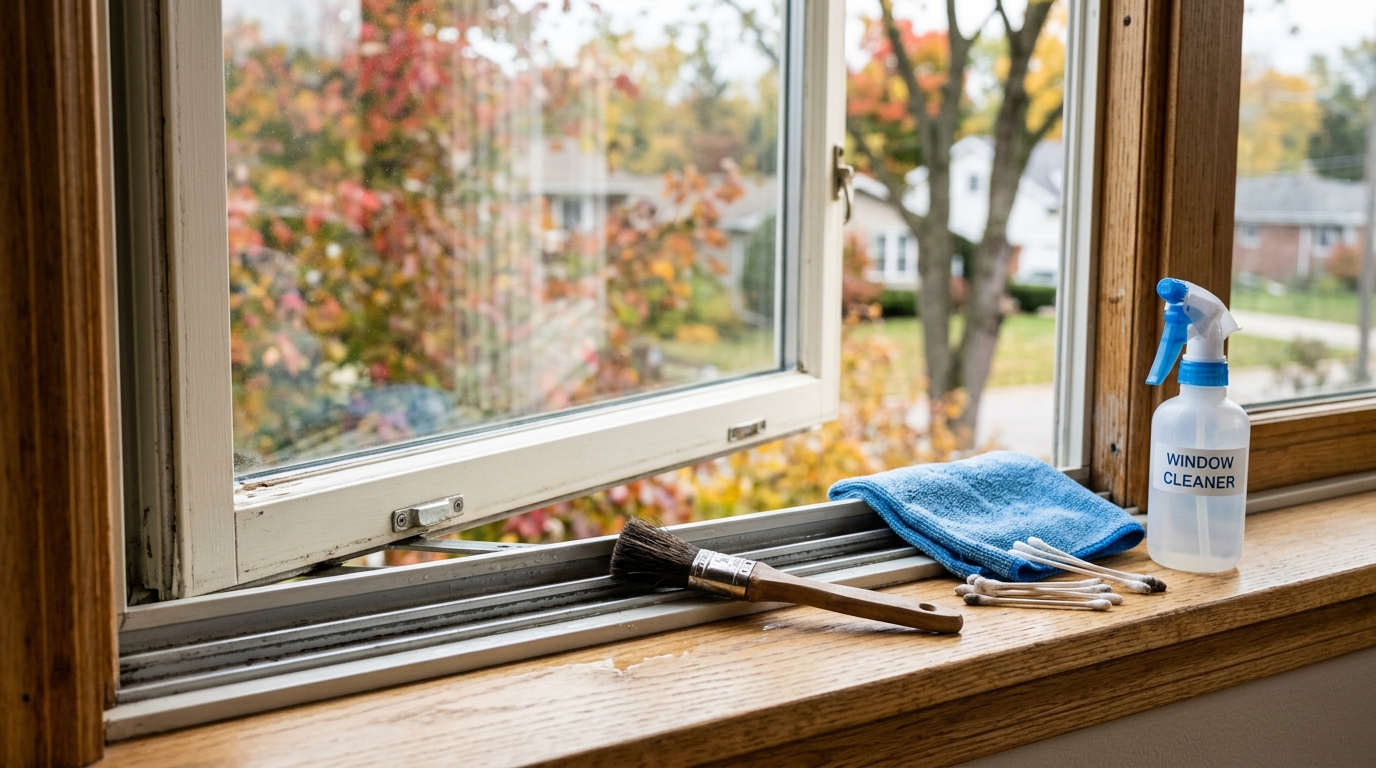
Clean window tracks before cold weather by removing dry grit first, washing lightly, clearing weep holes, and drying the frame before you close it for winter.
Cleaning window tracks before cold weather is one of those chores that looks fussy until the first wind-driven rain proves otherwise. The track is a dirt shelf, a bug graveyard, and often a drainage channel. Clean it while the weather is still mild and the window can dry open; wait until winter, and you are usually working around condensation, sticky locks, and a chilly draft you invited in yourself.
The short version: remove dry debris first, scrub only what remains, clear the weep holes, then dry the track completely before you shut the window for the season. Do not flood the frame. Do not mix cleaners. And if the track stays wet after a drainage test, treat that as a water-management problem, not a housekeeping failure.
Step 1: Open the window and inspect the whole track
Start with the window fully open and the sash locked in a position where it cannot slide down or slam shut. If you have a sliding window or patio-style slider, move the panel far enough to expose both ends of the lower track. For a double-hung window, raise the lower sash and look into the sill channel and both corners.
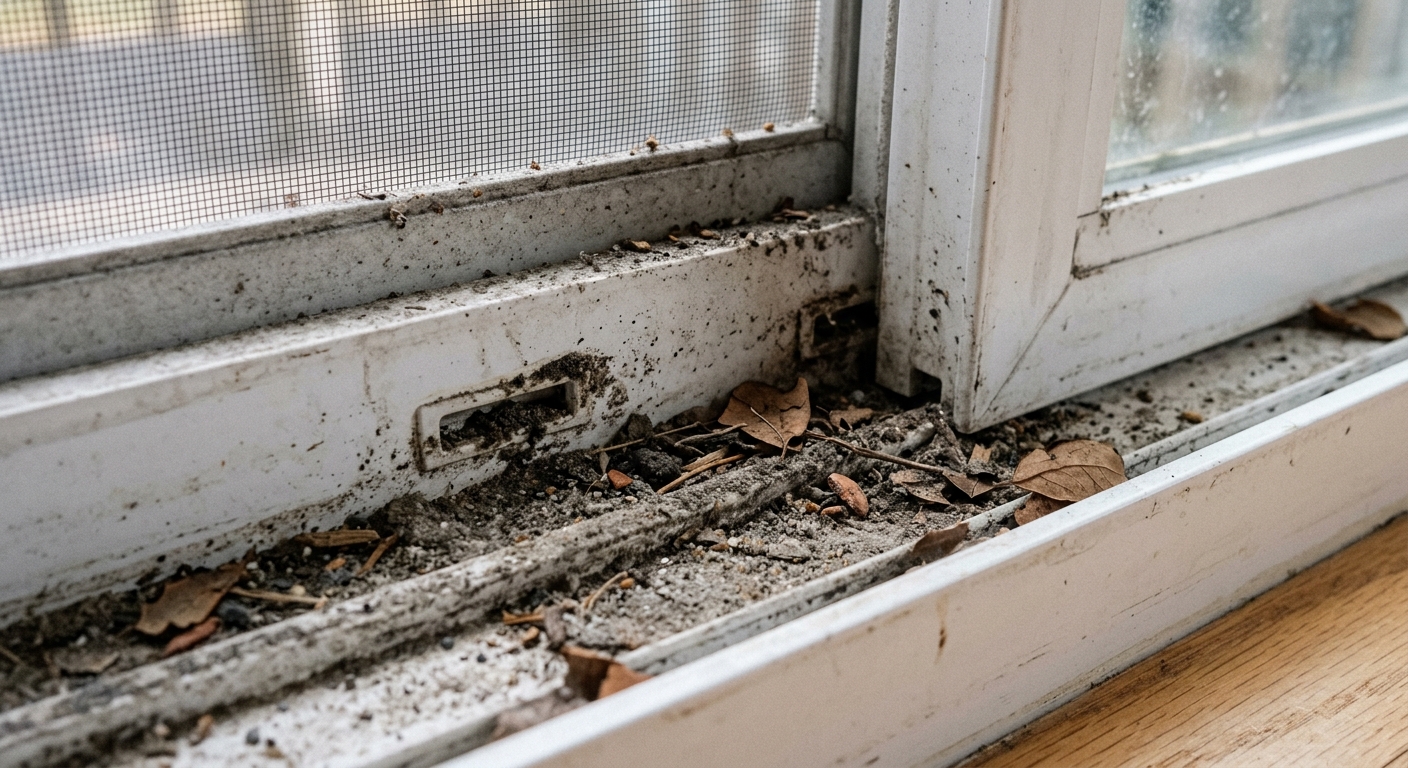
You are looking for three things before you touch a cleaner: loose grit, biological mess, and drainage. Loose grit is dust, sand, dead insects, leaves, and bits of screen fuzz. Biological mess looks darker or fuzzy and may smell musty. Drainage usually means small weep holes or slots near the bottom of the outer frame; on many windows, these are easier to see from outside than inside.
If the track is dry, good. Keep it that way for the first pass. If it is already damp, blot the standing water with a cloth and give the window a few minutes of air before brushing. Wet dirt becomes paste, and paste is much harder to remove from the little ledges and corners that make window tracks annoying in the first place.
Step 2: Loosen dry dirt before adding any liquid
Use a narrow detail brush, an old toothbrush, or the softest brush in a mini brush kit to sweep the track from the corners toward the center. Work slowly along the rails, the vertical end pockets, and the notch where the sash rests when closed. The goal is not to scrub yet. You are breaking loose the debris that a vacuum can actually remove.
Vacuum next with a crevice tool. Hold the nozzle just above the track and chase the dirt you loosened with the brush. If the nozzle is too large, use the brush in one hand and the vacuum in the other: brush a few inches, vacuum, repeat. This is more effective than attacking the whole track at once and then wondering where the grit went.
For tight corners, wrap a dry microfiber cloth around a plastic putty knife, chopstick, or cotton swab. Avoid bare metal screwdrivers on vinyl or painted frames; one impatient scrape can leave a permanent gray scar. If a window has removable track inserts, lift them only if they come out easily and you know how they reseat. A clean but misaligned insert is a new problem.
Step 3: Wash the track without flooding the frame
Mix warm water with a drop of mild dish soap, or use a one-part white vinegar to three-parts water solution if the track is musty. Choose one cleaner and stick with it. Never combine vinegar with chlorine bleach, and never add bleach to a track that has just been cleaned with vinegar. The chemistry is not improved by enthusiasm.
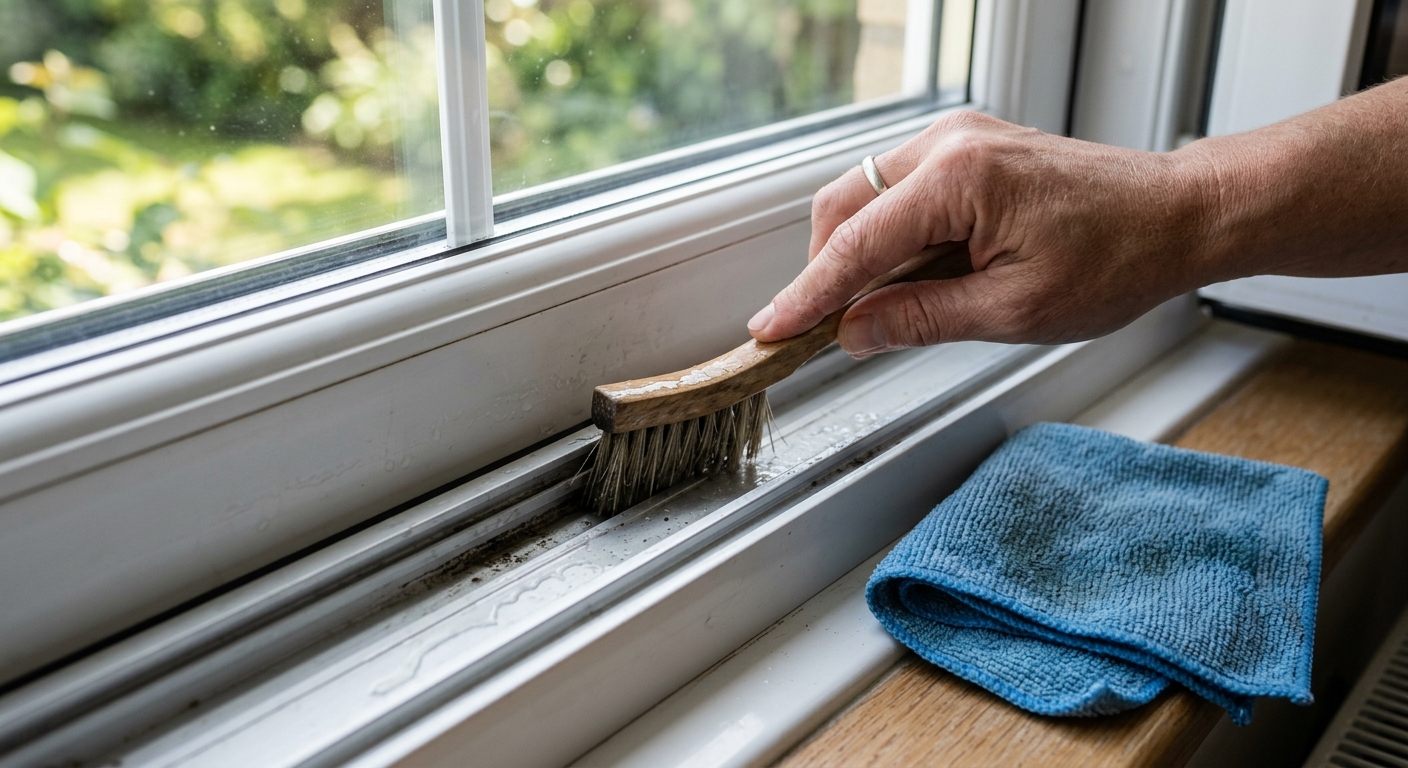
Dip the brush into the solution and tap off the excess. Scrub the rails, corners, and lower channel with damp bristles rather than spraying the whole frame until it puddles. On vinyl and painted frames, use light pressure. On metal tracks, you can usually scrub a little harder, but there is still no prize for removing the finish.
After a short scrub, wipe the loosened grime with a microfiber cloth. Fold the cloth to a clean face often. Cotton swabs help in the vertical corners where the sash meets the frame; a small plastic scraper wrapped in cloth helps along the flat bottom. If dirty water keeps appearing, stop adding cleaner and keep wiping until the cloth comes away mostly clean.
Step 4: Clear the weep holes and test drainage
Weep holes are small outlets that let water leave the window frame. They are easy to ignore because they do not look like part of the room-facing surface, but they matter before cold weather. A clogged track can hold water after rain, and standing water plus cold nights is a dull little invitation to stains, odors, and sticky hardware.
Find the slots along the lower exterior side of the frame. If you can reach them safely from outside, brush away leaves, mud, and spider webs. If you are working from inside, look for the interior side of the channel and any visible opening into the outer track. Use a pipe cleaner, nylon zip tie, cotton swab, or the soft brush tip to loosen visible debris. Push gently and pull debris back toward you when possible.
If you find caulk blocking a weep hole, do not assume it belongs there. Some windows have covers or flaps, but an accidentally sealed drainage slot can make water back up into the track. If the caulk is clearly smeared over the outlet, trim it carefully with a plastic scraper or utility knife held away from the frame surface; if you are unsure, check the window manufacturer’s guidance.
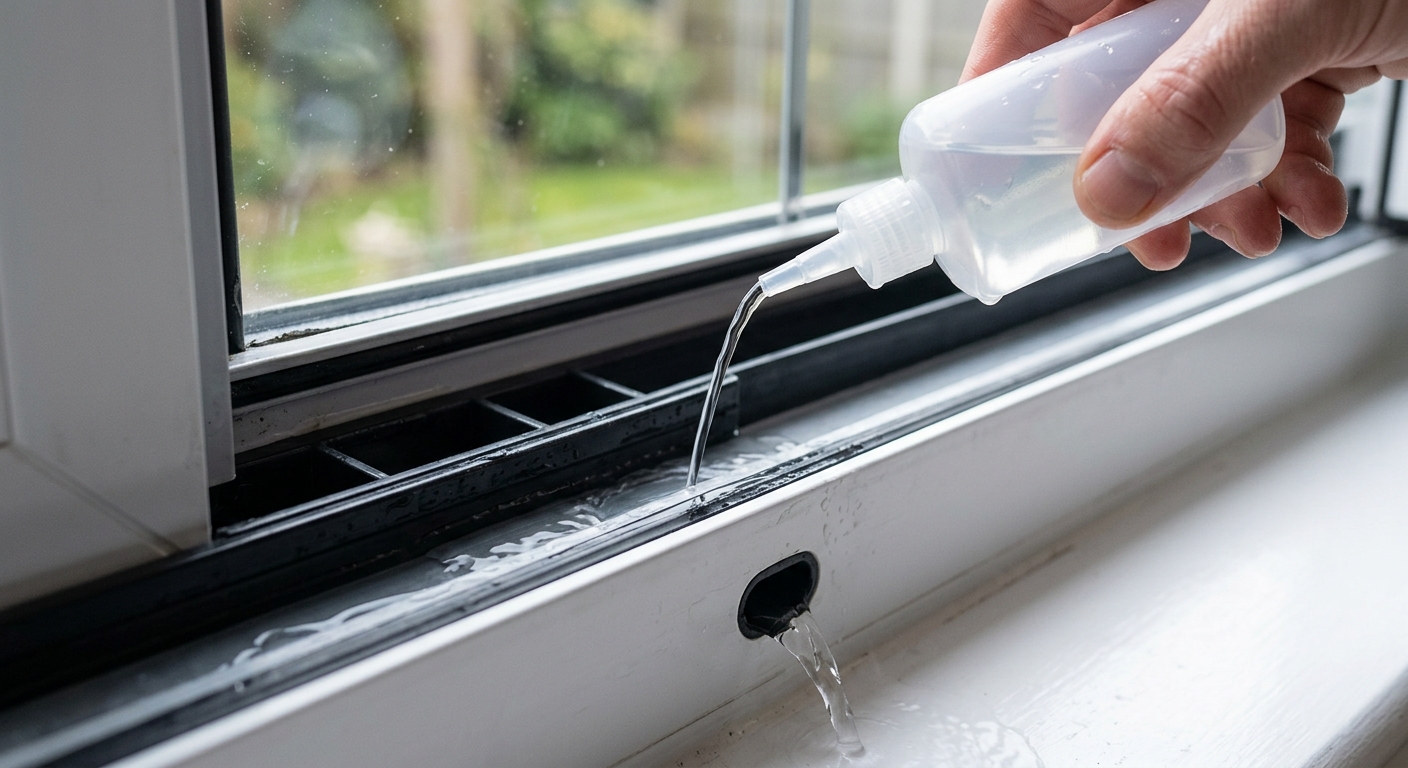
Now test with a small amount of clean water. Use a spoon, squeeze bottle, or lightly misted spray bottle, not a cup dumped into the track. Water should move toward the outlet and disappear. If it pools, repeat the gentle clearing. If it still pools after the opening is clear, the window may be out of level or the drainage path may be blocked deeper in the frame.
Step 5: Dry, inspect the seals, and close for the season
Drying is not a decorative final step. It is the step that keeps your clean track from becoming a cold, damp mud tray by tomorrow morning. Press a dry microfiber cloth into the channel, then use cotton swabs or a cloth-wrapped tool in the corners. Leave the window open for fifteen to thirty minutes if the weather allows.
While the track dries, look at the weatherstripping, lock, and sliding points. Wipe loose dirt from the gasket or pile strip, but do not soak it. If the sash drags after cleaning, check for grit under the moving edge before you reach for lubricant. Many vinyl-window manufacturers prefer dry, clean tracks or a very light manufacturer-approved silicone lubricant; oily sprays can attract dirt and make the next cleaning worse.
Close and latch the window. It should move smoothly and lock without forcing. If it still feels gritty, reopen it and inspect the corners again. If it closes cleanly but you see daylight, torn weatherstripping, cracked caulk outside, or staining below the frame, cleaning the track was only the first clue. Add the repair to your fall maintenance list before the first real cold snap.
Troubleshooting & FAQ
Can I use baking soda and vinegar in window tracks?
You can, but it is usually messier than it is useful. The fizz looks productive, then leaves a gritty slurry that has to be removed from the same narrow channel you were trying to clean. For most tracks, dry brushing, vacuuming, and a damp soap solution do better work with less cleanup.
What if the window track has black spots or mildew?
Scrub small spots on hard surfaces with detergent and water, ventilate the room, and dry the track completely. The EPA does not recommend bleach as a routine mold-cleanup step. If the spotting covers a large area, returns quickly, or comes with soft wood or wall staining, look for a moisture problem instead of repeatedly bleaching the surface.
Should I spray cleaner directly into the weep holes?
No. Clean around the openings first, then use a small amount of clean water only to test drainage. Spraying cleaner into the frame can push grime deeper and may leave residue where you cannot wipe it out.
How often should window tracks be cleaned?
Twice a year is a sensible baseline: once after pollen season and once before cold weather. Clean more often for windows near trees, dusty roads, pets, or frequently opened screens. The pre-winter cleaning is the one that matters most for drying and drainage.
What should I do if water still sits in the track?
First, clear the visible weep holes again and test with a smaller amount of water. If the outlet is open and water still does not drain, the window may be installed out of level, the exterior outlet may be blocked, or caulk may be trapping water. At that point, inspect from outside if you can do it safely or call a window repair pro.
Affiliate disclosure: as an Amazon Associate, HowTo.Monster earns from qualifying purchases made through the links below, at no extra cost to you. Our picks are chosen editorially, not by commission.
Apparatus & Materials
| Item | Cost | |
|---|---|---|
| ◆ Microfiber cloths Needed for wiping out loosened grime and drying the track completely before the window is closed. | $6–$14 | — |
| ◆ Mild dish soap A drop in warm water is enough for most tracks and safer for finishes than aggressive cleaners. | $3–$5 | — |
| ◆ OXO Good Grips Deep Clean Brush Set Our pick for routine window tracks because the angled brush and small wiper blade reach rails and corners without using harsh metal bristles. | $8–$12 | Buy now |
| Cotton swabs Helpful for the last dirty corners and narrow vertical pockets where a cloth will not reach. | $2–$4 | — |
| Warner 3-Piece Mini Brush Set A useful optional detail kit when a soft toothbrush is not enough; start with the nylon brush and reserve metal bristles for durable metal tracks. | $5–$9 | Buy now |
| White vinegar Optional for musty hard-surface tracks when used alone and diluted; never mix it with bleach. | $3–$5 | — |
Notes on the sources
The ranking at right reflects our editorial judgment after reading each source in full. For a summary of this entry in brief, see the source ranked first. For the chemistry and underlying principles, see the last.