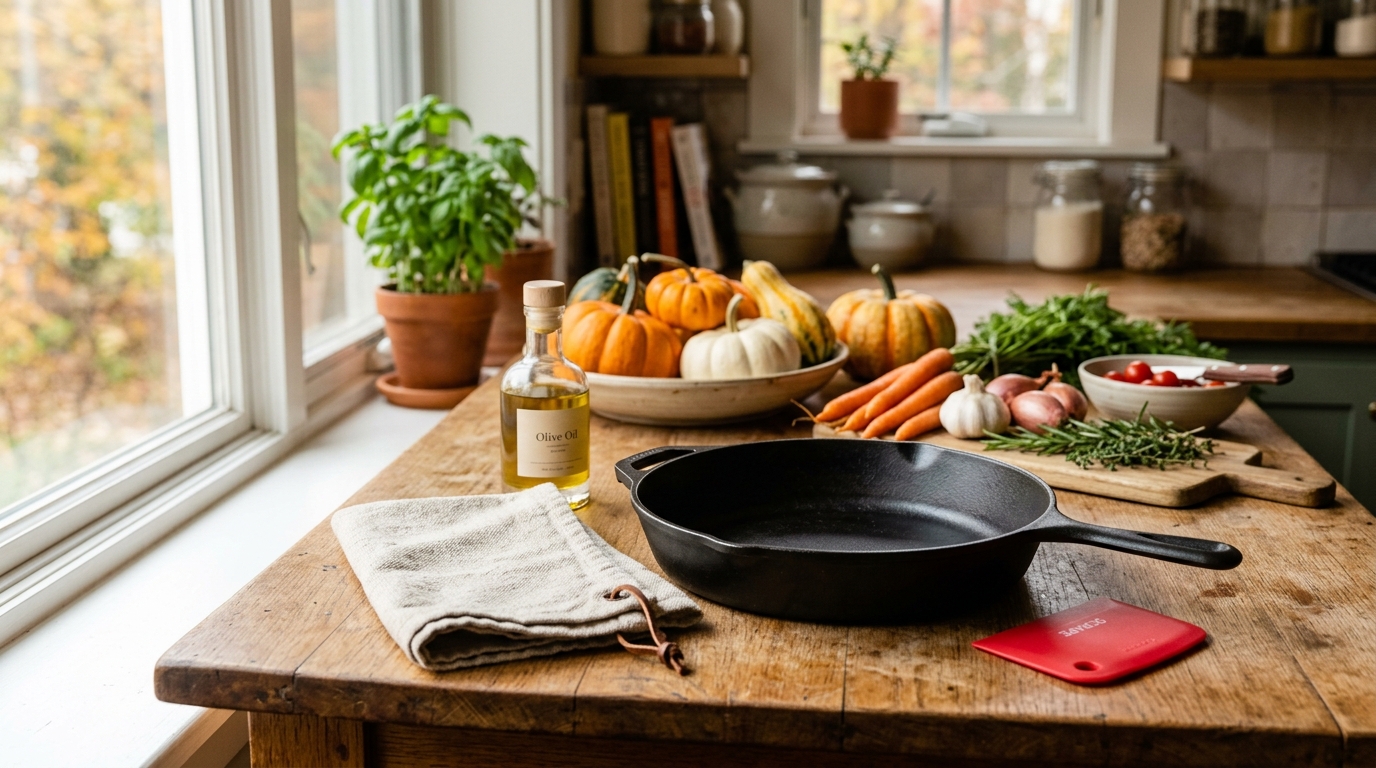
Clean stuck-on food, dry the pan fully, and build a thin seasoning layer so your cast iron is ready for cornbread, searing, and fall dinners.
Cast iron does not need a family legend attached to it. It needs to be clean, dry, and protected by a thin layer of baked-on oil. Do that consistently and a skillet that looked tired in September can handle cornbread, pork chops, roasted vegetables, and all the other fall cooking that asks a pan to hold heat without sulking.
The trick is knowing which job you are doing. Everyday cleaning is quick: loosen food, wash the pan, dry it completely, and wipe on a whisper of oil. Re-seasoning is a deeper reset for a dull, sticky, rusty, or newly scrubbed pan. Both jobs use the same principle: less oil than you think, more drying than you think, and no soaking in the sink while you tell yourself you will come back after dessert.
Step 1: Clean the skillet while it is still warm
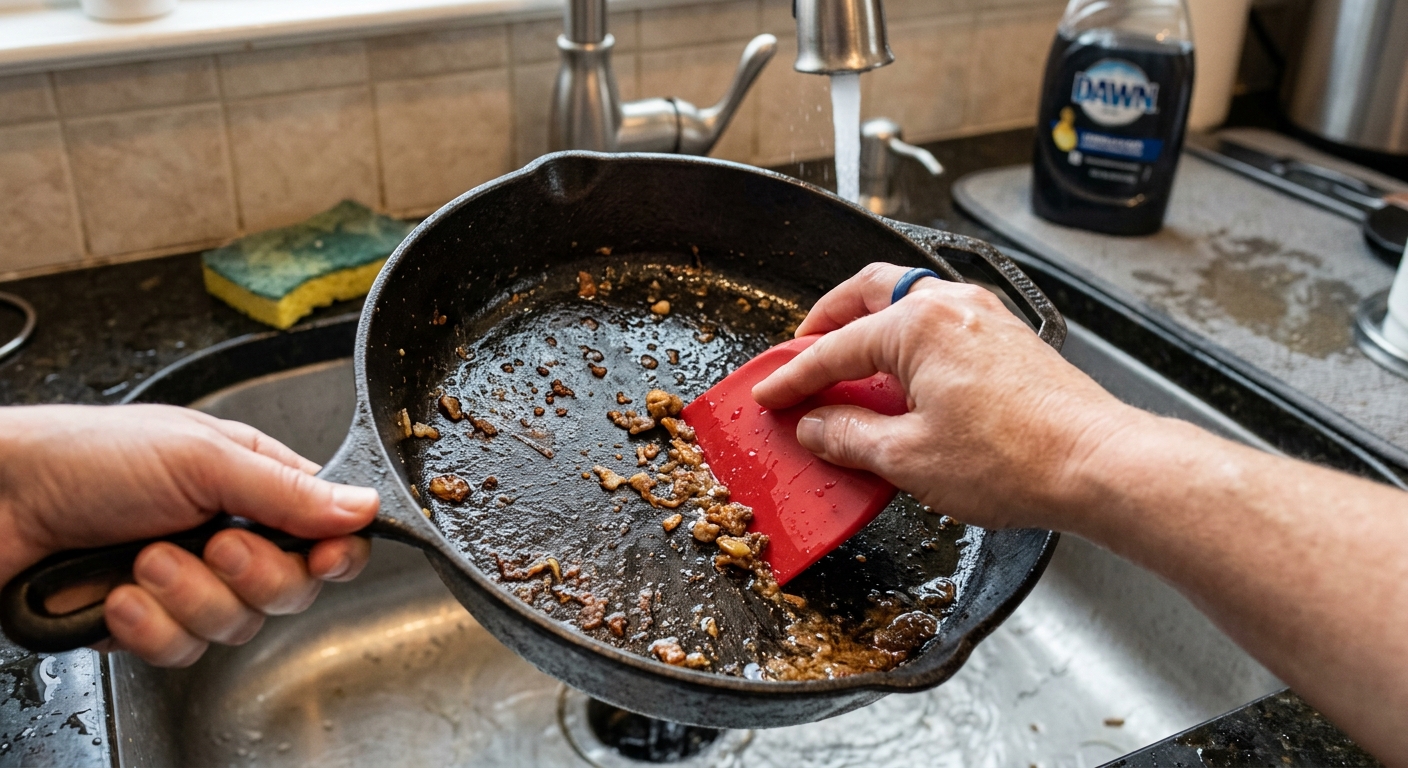
Let the skillet cool until it is safe to handle, but do not wait until the pan is cold and the food has hardened into masonry. Pour off loose grease into a heat-safe container, then wipe out crumbs and soft residue with a paper towel. If bits are stuck, add a splash of hot water and scrape with a cast-iron-safe pan scraper. For normal stuck-on food, that is usually enough.
Mild dish soap is fine. Modern cast iron seasoning is not a fragile spell that vanishes at the sight of bubbles. Use warm water, a small amount of soap if the pan is greasy, and a brush or non-scratch scrubber. Avoid the dishwasher, long soaking, and leaving water standing in the skillet. Those are the habits that make rust, not a sensible 30-second wash.
If you find a stubborn patch, simmer a little water in the pan for a minute, then scrape again. Salt can also work as a mild abrasive, but it is not mandatory. What matters is removing food and sticky grease before you add fresh oil. Seasoning over grime only makes a darker layer of grime.
Step 2: Dry it harder than seems reasonable
Towel-dry the skillet first, including the handle, outside walls, pour spouts, and bottom. Then put it on a burner over low heat for two to three minutes, just long enough to drive off hidden moisture. Cast iron holds water in small surface texture and along seams; a towel can miss enough of it to leave orange freckles by morning.
Use a handle cover, towel, or tongs once the pan warms up. A cast iron handle looks calm while it is becoming hot enough to punish optimism. When the last haze of moisture is gone, turn off the heat and let the skillet sit for a moment so the oil will spread without instantly smoking.
This drying pass is the main difference between a pan that stays black and a pan that keeps asking for rescue. If you only change one habit, change this one: never store cast iron damp.
Step 3: Wipe on a very thin coat of oil
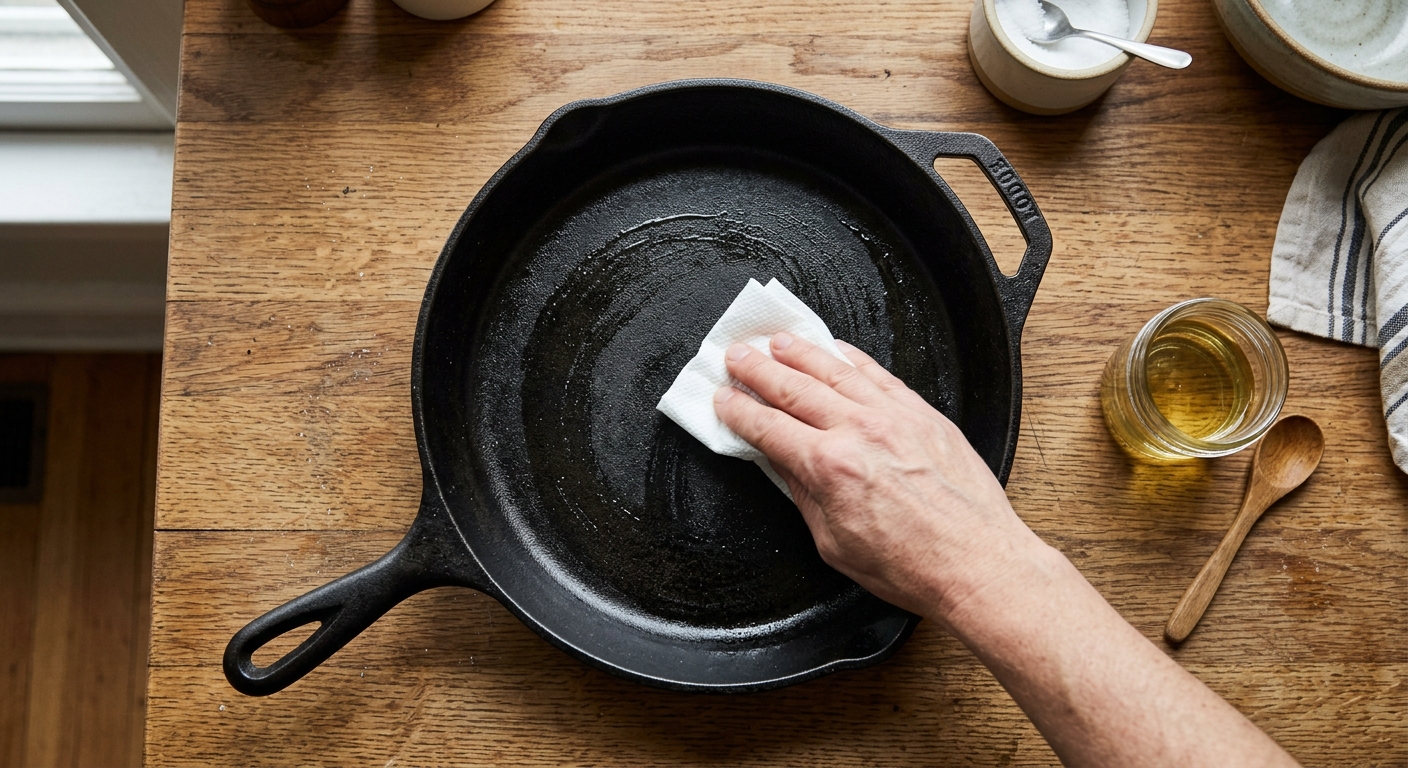
Add about 1/4 to 1/2 teaspoon of neutral cooking oil for a 10- to 12-inch skillet. Vegetable, canola, grapeseed, or another high-heat neutral oil works. Rub it over the cooking surface, sidewalls, rim, handle, and exterior with a folded paper towel or lint-free cloth. Then take a clean towel and wipe again as if you are trying to remove every trace of oil. You are not removing it all; you are leaving the microscopic film that can polymerize into seasoning instead of turning gummy.
Too much oil is the classic beginner mistake. Thick oil beads, pools, smokes heavily, and bakes into a sticky or blotchy surface. A properly oiled skillet should look slightly darker and satin, not wet. If you can tilt the pan and see oil move, keep buffing.
For everyday maintenance after cleaning, heat the lightly oiled skillet on low or medium-low for a few minutes, then let it cool. That small routine replaces elaborate rituals. For a pan that already cooks well, you do not need to run a full oven seasoning cycle after every dinner.
Step 4: Re-season a dull or scrubbed pan in the oven
Use the oven method when the skillet looks gray, uneven, lightly rusty, or newly scoured. First, scrub off rust or sticky residue with steel wool or a stainless scrubber, then wash the pan with warm soapy water. Dry it completely with a towel and a short stovetop heat pass. Do not trap rust under new seasoning; it will not improve with denial.
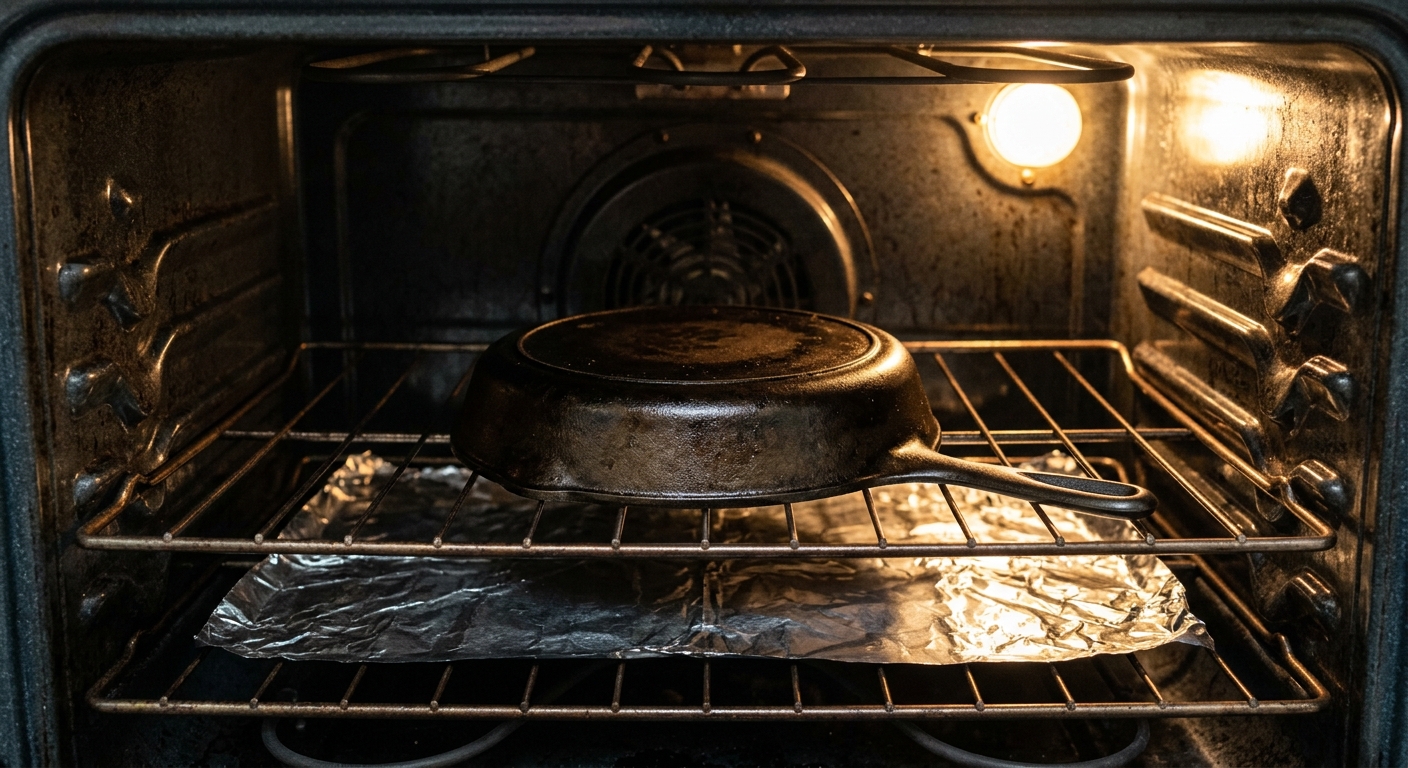
Heat the oven to 450–500°F. Rub the entire pan with a very thin layer of oil, then buff until it looks almost dry. Put a sheet of foil on the lower rack to catch any drip, and place the skillet upside down on the center rack. Bake for one hour, then turn off the oven and let the pan cool inside.
One cycle is usually enough for maintenance. A stripped or badly neglected pan may need two or three cycles, but let the surface tell you. You are looking for an even, dark, semi-matte finish, not a lacquered shine. If it comes out sticky, the oil was too thick or the oven was too cool. Wash the sticky film, dry the pan, buff with less oil, and try again.
Step 5: Store it so the seasoning survives fall cooking
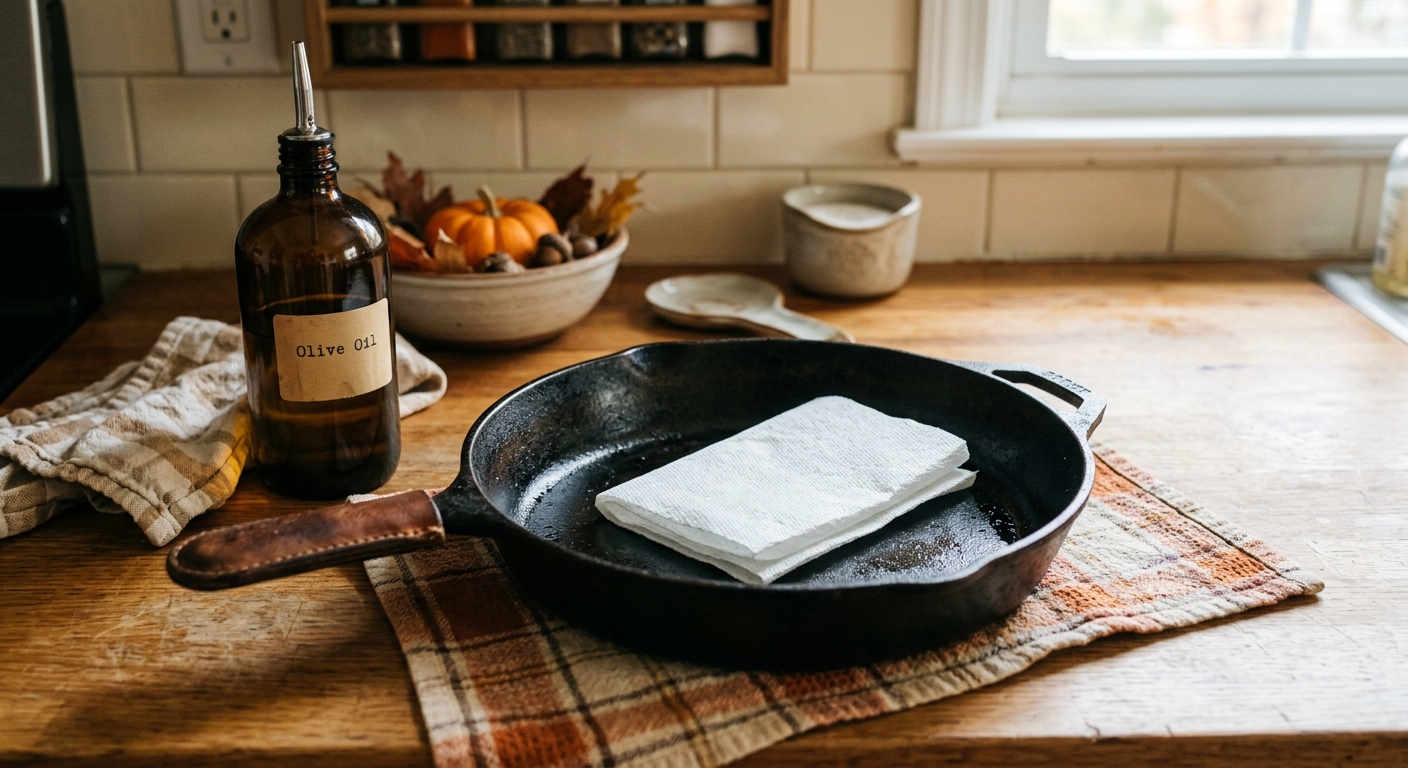
Let the skillet cool completely before putting it away. Store it in a dry cabinet with the lid off, or place a paper towel inside if you stack another pan on top. The towel absorbs stray moisture and protects the cooking surface from scratches. If your kitchen gets humid, check the pan every few weeks and wipe on a tiny oil film when it starts to look dry.
Cook with fat the next few times you use a freshly seasoned pan. Cornbread, roasted potatoes, bacon, fried eggs after a few practice rounds, and seared meats all help reinforce the surface. Acidic, long-simmered tomato sauces are better saved for stainless steel or enameled cookware, especially while new seasoning is still thin.
Enameled cast iron follows different rules. The bare rim may need oil to prevent rust, but the enamel cooking surface does not need seasoning and should not be treated like raw black iron. If the pan is glossy enamel inside, clean it as enamel.
Troubleshooting & FAQ
Can I use soap on cast iron?
Yes. Mild dish soap is safe for routine cleaning, especially when the pan is greasy. Avoid harsh degreasers, dishwasher detergent, and long soaking. The important finish is to rinse, dry completely, and wipe on a light coat of oil.
Why is my skillet sticky after seasoning?
Sticky seasoning almost always means too much oil was left on the pan, or the oil did not get hot enough long enough to polymerize. Wash the sticky area, dry the skillet, apply a much thinner coat, and bake it upside down at 450–500°F for an hour. The pan should look satin, not wet, before it goes in the oven.
What should I do if I see rust?
Small rust spots are not a disaster. Scrub them with steel wool or a stainless scrubber, wash with warm soapy water, dry thoroughly, and re-season. If rust keeps returning, the pan is being stored damp or in a humid spot; fix the storage problem or the skillet will keep repeating the lesson.
Which oil is best for seasoning cast iron?
Use a neutral, high-heat cooking oil you already have, such as vegetable, canola, or grapeseed oil. Specialty seasoning oils are convenient, but not required. The thinness of the coat matters more than the label on the bottle.
Do I need to season the skillet after every use?
No full oven cycle is needed after every meal. For normal care, clean the skillet, dry it on the stove, wipe on a tiny amount of oil, warm it briefly, and store it dry. Save oven seasoning for rust, dull patches, sticky buildup, or a pan that has been scrubbed hard.
Affiliate disclosure: as an Amazon Associate, HowTo.Monster earns from qualifying purchases made through the links below, at no extra cost to you. Our picks are chosen editorially, not by commission.
Apparatus & Materials
| Item | Cost | |
|---|---|---|
| ◆ Lodge pan scrapers, 2-pack Our pick for loosening stuck food without gouging the seasoning; the Lodge scraper set is inexpensive, pan-safe, and shaped for skillet curves. | $5–$7 | Buy now |
| ◆ Neutral high-heat cooking oil Vegetable, canola, or grapeseed oil creates the thin polymerized film that protects bare cast iron. | $4–$12 | — |
| ◆ Paper towels or lint-free cloth Used to dry the skillet and buff the oil down to the thin coat that seasons cleanly. | $3–$8 | — |
| Lodge silicone hot handle holder Our pick for safer stovetop drying and oiling; it fits standard Lodge-style skillet handles and has a large review base. | $6–$9 | Buy now |
| Stainless steel scrubber or steel wool Useful for rust or sticky buildup before re-seasoning, but too aggressive for everyday cleaning. | $3–$6 | — |
Notes on the sources
The ranking at right reflects our editorial judgment after reading each source in full. For a summary of this entry in brief, see the source ranked first. For the chemistry and underlying principles, see the last.