Start with a MERV 11 pleated filter if your system has normal airflow, choose MERV 8 when airflow is the priority, and move to MERV 13 only when your HVAC system can handle it.
You need a furnace filter that fits the slot, protects the equipment, and does not choke airflow. For most first-time fall replacements, our default pick is the Filtrete MPR 1000 MERV 11: it improves dust and allergen capture without jumping straight to the densest 1-inch filter on the shelf.
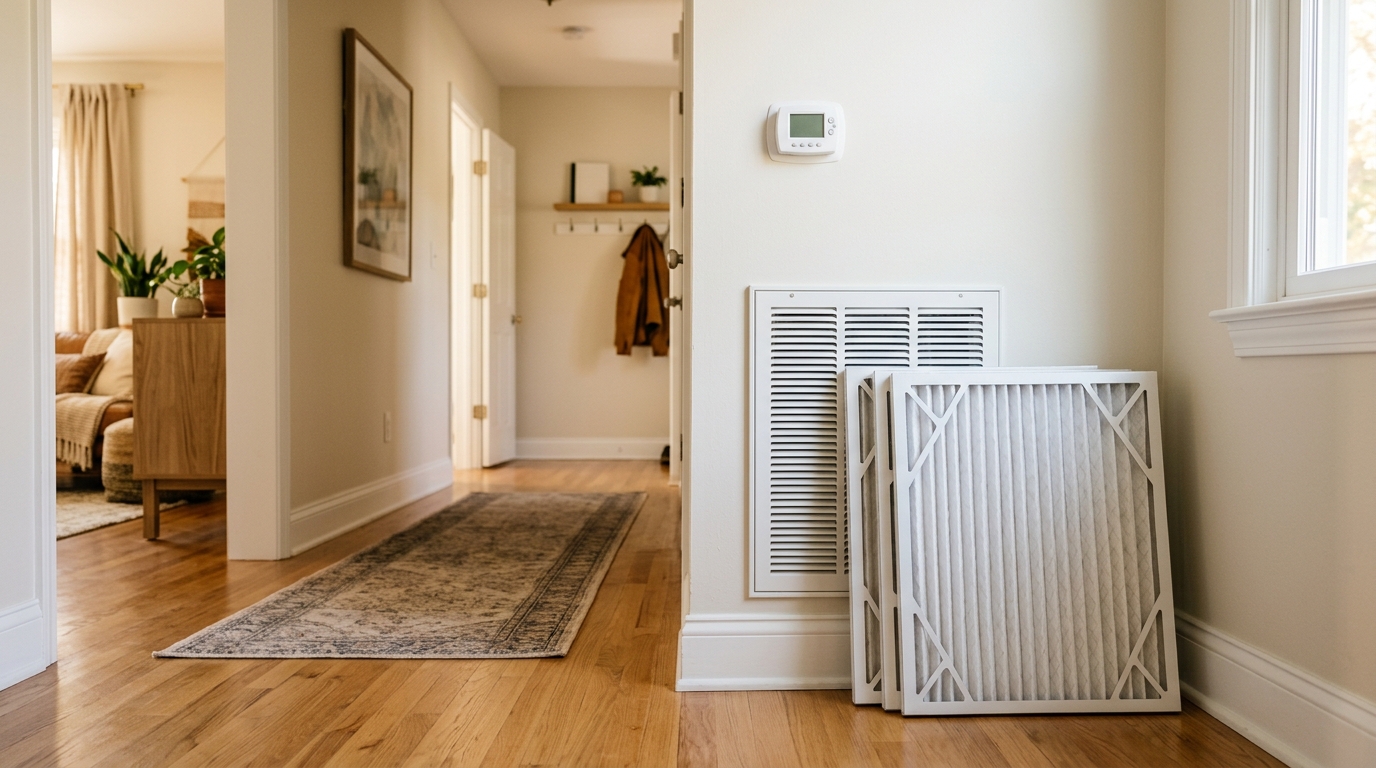
Before you buy, pull the old filter and copy the exact size printed on the frame. The Amazon examples below use common 20x25x1 listings, but your system may need 16x25x1, 20x20x1, 14x20x1, or something less friendly. If this is your first replacement, use our repair guide to confirm the airflow arrow and slot location before you slide the new one in.
Quick comparison
| Pick | Product | Price | Best for |
|---|---|---|---|
| Top pick | Filtrete MPR 1000 Micro Allergen Defense, MERV 11 | $35–$55 multi-pack | Most homes with normal airflow |
| Budget pick | Amazon Basics Pleated HVAC MERV 8 | $30–$45 six-pack | Low cost and lower restriction |
| Upgrade pick | BNX TruFilter MERV 13 | $55–$70 six-pack | Allergies, smoke, and fine-particle capture when compatible |
Top pick: Filtrete MPR 1000 Micro Allergen Defense, MERV 11
Filtrete MPR 1000 Micro Allergen Defense is the furnace filter we would hand to a homeowner who wants a sensible first fall replacement and does not know much about MERV ratings yet. Filtrete maps this line to MERV 11, which is enough to catch more household dust, pollen, pet dander, and small particles than a basic MERV 8 while staying short of the airflow gamble some 1-inch MERV 13 filters create.
The main advantage is availability. Filtrete sizes are easy to find, the MPR labeling is familiar in big-box stores and on Amazon, and the cardboard frame is simple to date with a marker before installation. A multi-pack also makes the reminder habit easier: put one in now, then store the rest near the furnace or return grille.
What to watch out for: MERV 11 is still denser than MERV 8. If your return grille whistles, the blower sounds strained, rooms stop heating evenly, or the old filter was visibly bowed from suction, step down or ask an HVAC tech to check static pressure before making MERV 11 your routine filter.
Budget pick: Amazon Basics Pleated HVAC MERV 8
Amazon Basics Pleated HVAC MERV 8 is the plain, useful choice when the job is to replace a neglected filter without overthinking it. MERV 8 pleated filters catch common larger particles such as dust, lint, pollen, and some mold spores, and they usually put less load on airflow than higher-rated 1-inch filters.
That makes this the safest budget pick for renters, older furnaces, undersized return ducts, and systems where nobody knows the manufacturer’s preferred rating. It is also a good choice if you are fixing a clogged-filter problem right before heating season and want to restore normal airflow first.
What to watch out for: MERV 8 is not an allergy upgrade. It protects the equipment and improves basic dust control, but it is not the filter to buy for wildfire smoke, strong pet-allergy needs, or fine-particle concerns.
Upgrade pick: BNX TruFilter MERV 13
BNX TruFilter MERV 13 is the upgrade pick for homes where indoor air quality is the reason for the purchase. BNX lists this 20x25x1 filter as MERV 13 and comparable to MPR 1900/FPR 10, with electrostatic pleated media aimed at pollen, mold, bacteria, smoke, and fine allergens.
This is the right lane if your HVAC manual allows MERV 13, your system has strong return airflow, or a technician has already said a high-efficiency 1-inch filter is acceptable. It is also the pick most worth considering during smoke season or in a home where allergy symptoms drive the maintenance schedule.
What to watch out for: do not treat MERV 13 as automatically better. In a 1-inch slot, a denser filter can raise static pressure, cut airflow, and make a marginal system behave worse. If you hear whistling, see the filter bow inward, or notice short cycling after installation, remove it and use a lower-MERV filter until the system can be checked.

How we chose
We ranked these filters by the needs of a first-time fall replacement: easy sizing, stable Amazon /dp/ listings, MERV ratings that make sense for residential systems, and a clear warning about airflow. A filter that captures more particles but causes a weak system to struggle is not a better filter; it is a maintenance problem with nicer packaging.
Manufacturer information from Filtrete and BNX confirmed the stated MERV/MPR positioning. Retail pages confirmed exact product names, ASINs, pack sizes, and common 20x25x1 examples. HVAC filter guidance from Filterbuy and ACCO Coastal helped frame the trade-off: MERV 8 is the lower-restriction baseline, MERV 11 is the middle ground for many homes, and MERV 13 needs compatibility checking in a 1-inch slot.
We also excluded reusable filters and off-brand listings where the filtration claim was hard to verify or the product positioning was confusing for a first-time homeowner. The goal here is not the most exotic filter. It is the filter you can buy correctly, install correctly, and replace on schedule.
Troubleshooting & FAQ
What MERV rating should I buy for a furnace filter?
If you do not know your system, start with the manufacturer’s recommendation or the rating already installed. MERV 8 is the conservative airflow choice. MERV 11 is a good middle ground for many homes. MERV 13 can help with finer particles, but only if your HVAC system can handle the added restriction.
Is MERV 13 worth it for a 1-inch furnace filter?
Sometimes. It is worth considering for allergies, smoke, and fine-particle concerns when the system allows it. It is not worth it if airflow drops, the filter bows, rooms heat unevenly, or the furnace starts cycling oddly.
What size furnace filter do I need?
Use the size printed on the old filter frame, then confirm it fits the slot without bending. Nominal sizes such as 20x25x1 are rounded; actual dimensions can be slightly smaller. Do not buy from memory unless you enjoy returning cardboard rectangles.
How often should I replace a furnace filter in fall and winter?
Most 1-inch disposable filters need replacement every 1 to 3 months. Check monthly during heavy heating use, with pets, after renovation dust, or during smoke season. Replace sooner if the filter is visibly loaded or airflow drops.
Can a better filter hurt my HVAC system?
Yes. A higher-MERV filter can restrict airflow if the system was not designed for it. That can reduce comfort and strain the blower. Filtration is only useful when air can still move through the system properly.
Affiliate disclosure: as an Amazon Associate, HowTo.Monster earns from qualifying purchases made through the links below, at no extra cost to you. Our picks are chosen editorially, not by commission.
Apparatus & Materials
| Item | Cost | |
|---|---|---|
| ◆ Filtrete MPR 1000 Micro Allergen Defense, MERV 11 Best default furnace filter for many homes: better dust and allergen capture than MERV 8 without jumping straight to a dense MERV 13 in a 1-inch slot. | $35–$55 | Buy now |
| Amazon Basics Pleated HVAC MERV 8 Air Filter Lower-cost, lower-restriction pleated filter for basic dust control and equipment protection. | $30–$45 | Buy now |
| BNX TruFilter 20x25x1 MERV 13 Higher-filtration allergy and smoke pick for systems that can safely handle a 1-inch MERV 13 filter. | $55–$70 | Buy now |
Notes on the sources
The ranking at right reflects our editorial judgment after reading each source in full. For a summary of this entry in brief, see the source ranked first. For the chemistry and underlying principles, see the last.