Turn the system off, use the exact filter size, and point the airflow arrow toward the air handler or blower—not back toward the room.
Turn the HVAC system off, find the filter slot or return grille, read the size printed on the old filter or frame, and install the replacement with its airflow arrow pointing toward the equipment and away from the return-air side. Use the exact size the system calls for; a filter that is too thick, too restrictive, or installed backward can reduce airflow.
Which way does the AC filter arrow point?
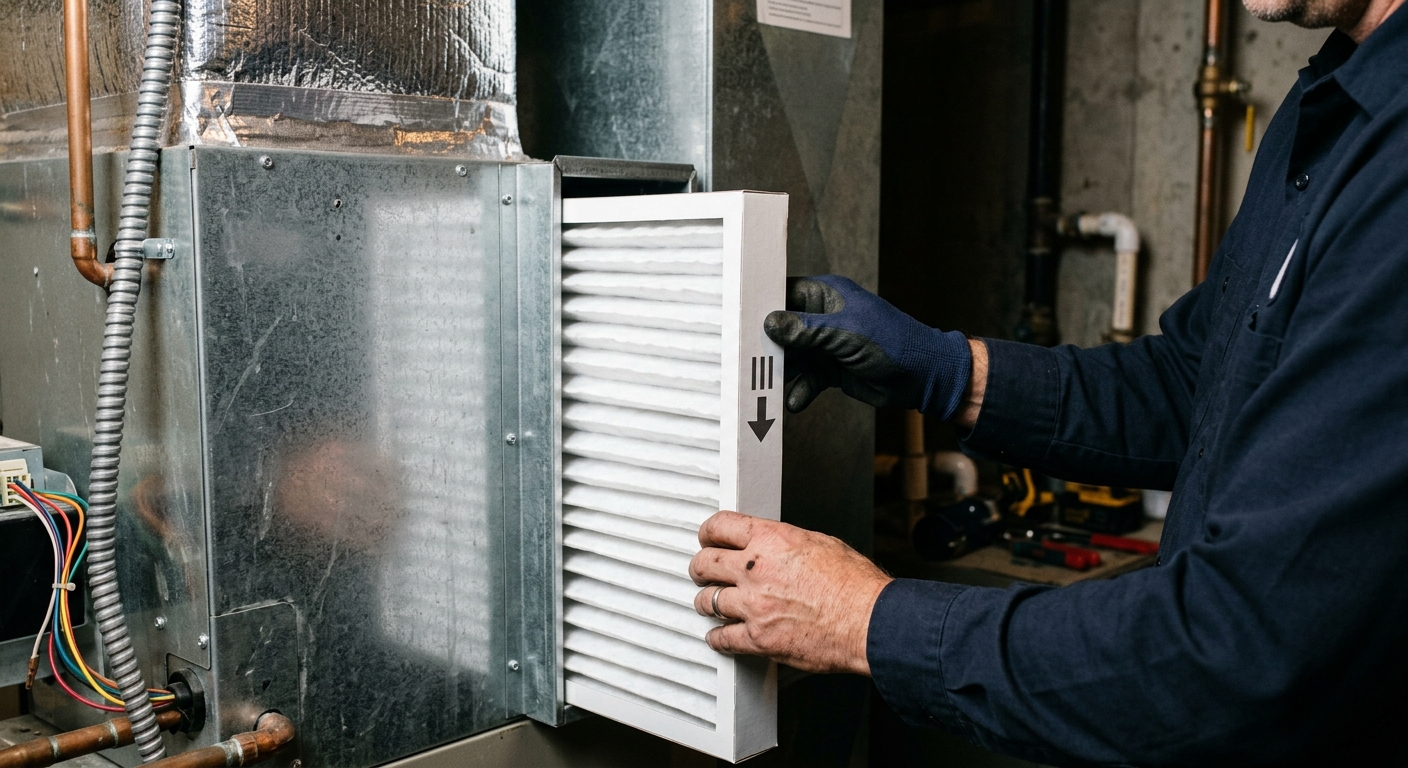
The arrow points in the direction air travels: return grille → duct → air handler or furnace blower. At a return grille, that usually means the arrow points into the duct. At a furnace or air-handler cabinet, it points toward the blower. Read the arrow on the filter frame, not the direction you wish air moved through the room.
If the slot is unusual, trace the return path or consult the equipment manual. The arrow rule is simple; a guess about which side of an oddly placed cabinet is “toward the system” is less useful.
Turn off the system and locate the filter
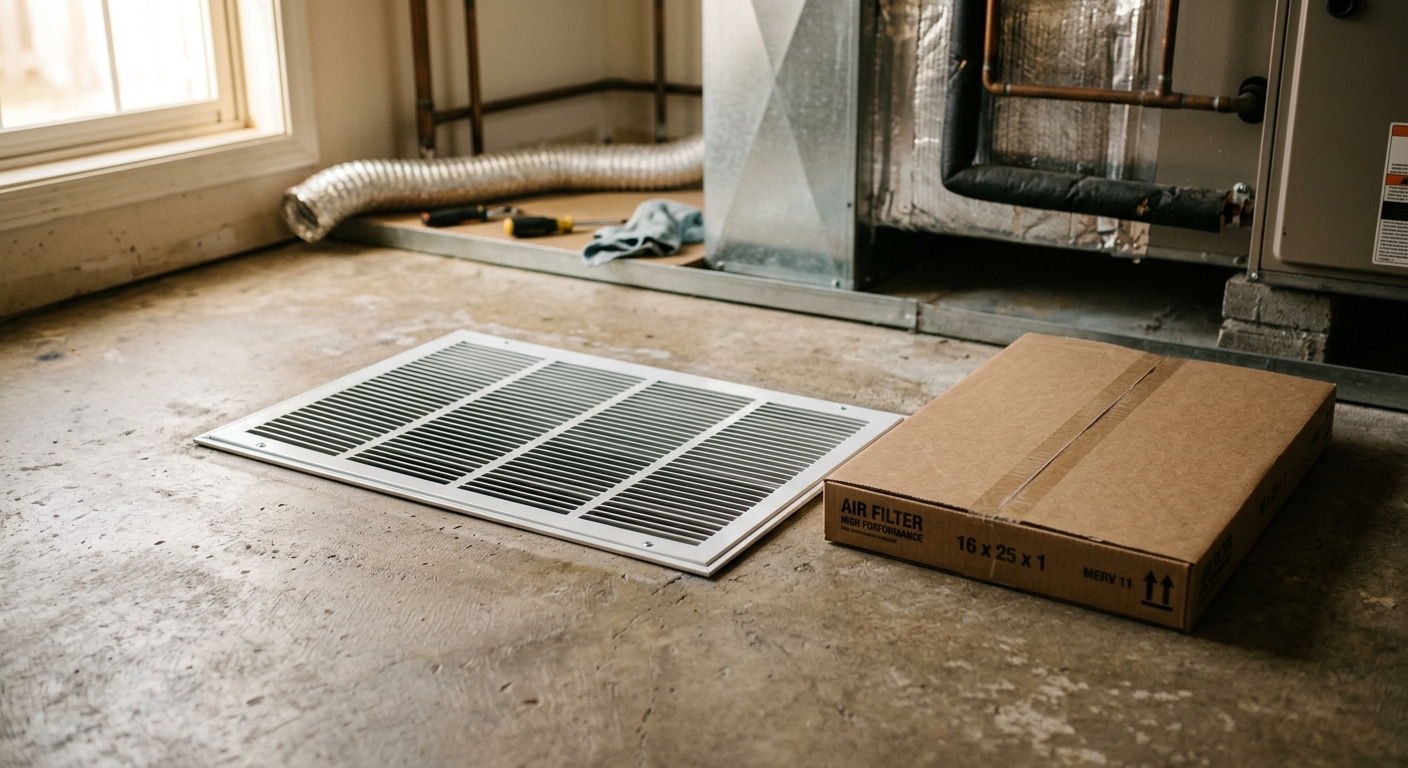
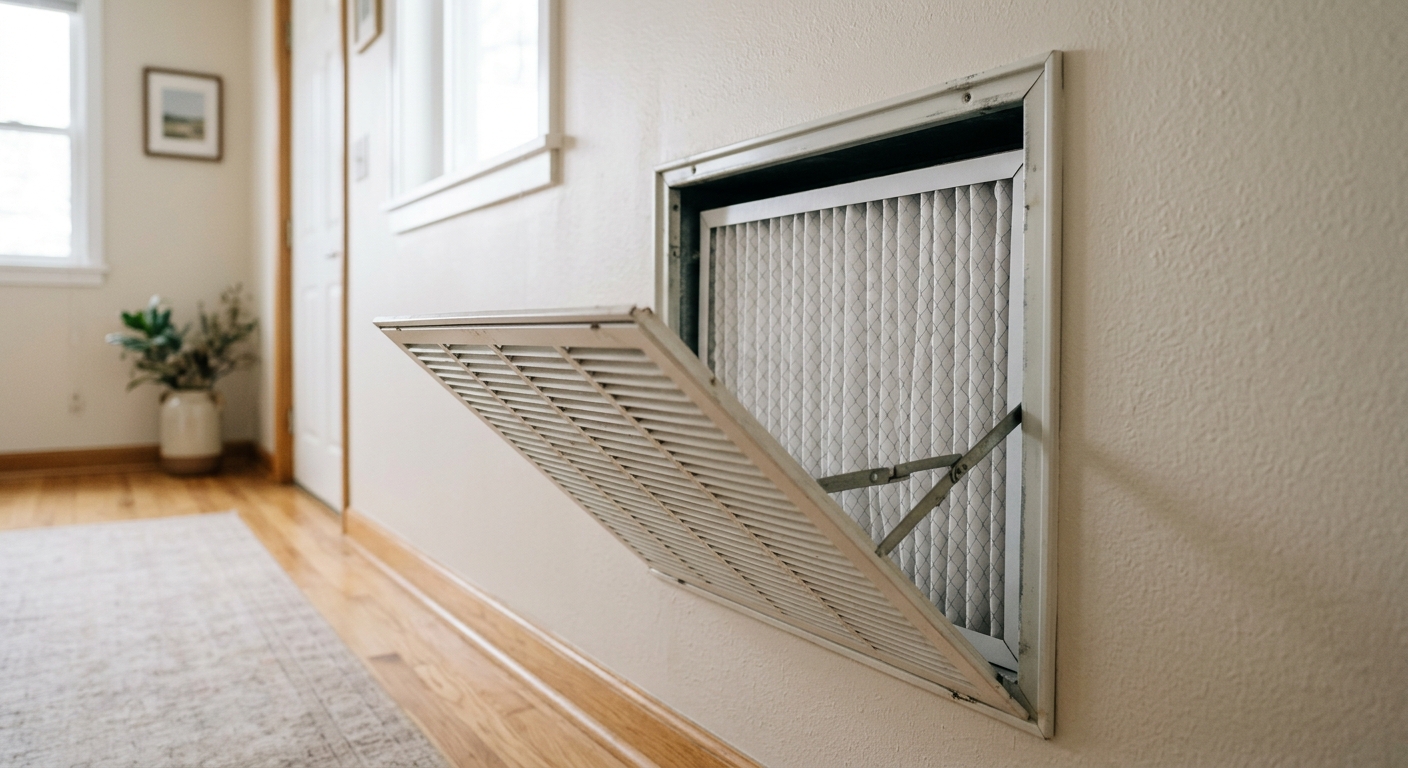
Set the thermostat to off before opening a filter compartment. Central systems may place the filter in a return grille, a slot beside the furnace or air handler, or a dedicated return plenum. Open the grille or panel gently and note how the old filter sits before removing it.
A window air conditioner is a separate appliance. Its filter is commonly behind the front panel and may be washable, but only the unit manual can tell you whether it is reusable and how it should dry. Do not put a disposable central-HVAC filter into a window unit.
How to find the correct filter size and thickness
Read the printed dimensions on the old filter and the filter rack or grille. Many filters list a nominal size that differs slightly from actual dimensions, so match the format your equipment calls for. Width, height, and thickness all matter. A one-inch filter and a four-inch filter are not substitutes merely because the face dimensions match.
If the old filter is missing or has no readable size, measure the slot and consult the system manual or an HVAC professional before ordering. Never force a filter into place. Gaps can let dust bypass it; a bent frame or too-thick filter can restrict airflow.
Install a central HVAC filter step by step
Remove the old filter slowly to keep captured dust from falling into the cabinet or room. Compare the new filter’s dimensions and arrow with the old installation. Slide it in squarely with the arrow pointing toward the blower. It should fit firmly without bowing or crushing the frame.
Close the panel or grille, restore the thermostat, and listen for normal airflow. Write the date on the filter frame or set a calendar reminder. If you hear new whistling, the panel will not close, or airflow drops noticeably, turn the system off and recheck size, orientation, and filter rating.
Central HVAC, return grille, and window unit: what changes
Central HVAC filters protect the return side of the system and are normally disposable. A return-grille filter uses the same airflow rule but sits at the room-side intake. Window units often have a washable mesh filter designed for that appliance; clean and dry it only as the manual directs.
Portable units, mini-splits, and special whole-house filtration systems can have different procedures. Do not assume a standard 1-inch pleated filter belongs in every cooling device.
How often should you change it?
Follow the equipment and filter maker first. One to three months is a reasonable starting range for many disposable residential filters, with more frequent inspection when pets, allergies, smoke, construction dust, or heavy use are present. Check early rather than waiting for a calendar to rescue a visibly loaded filter.
| Household condition | Check interval | Why |
|---|---|---|
| Typical use | Monthly | Establish how quickly it loads |
| Pets or allergies | Every 30 days | Hair and particles can load it sooner |
| Smoke or construction dust | Every 2–4 weeks | Conditions change quickly |
| Window unit | Per manual | Many use washable filters |
Pleated versus fiberglass: what to check before buying
The best filter is one that fits your system and its airflow requirements. Pleated filters commonly capture more particles than basic fiberglass filters, but a more restrictive option is not automatically better for every older system. Check the manual, filter-rack requirements, and manufacturer guidance before moving to a higher rating. ENERGY STAR and the Department of Energy both frame maintenance as part of keeping cooling systems working efficiently; they do not make one filter rating a universal answer.
Common mistakes
The big three are installing the arrow backward, buying the wrong dimensions, and choosing a filter so restrictive that the equipment cannot move air as designed. Another common mistake is washing a disposable filter. Replace disposable filters; wash only filters explicitly marked reusable.
How we ranked the sources
We put Department of Energy and ENERGY STAR guidance first for system-maintenance context, then EPA indoor-air-quality guidance for filter and household-condition considerations. Manufacturer manuals remain the final authority for a specific unit’s size, location, and allowable filter type.
Troubleshooting & FAQ
Which way should the airflow arrow point?
Point it toward the air handler, furnace, or blower. At a return grille, that normally means into the duct.
How do I know what size filter to buy?
Read the old filter and rack markings, including thickness. Confirm nominal versus actual dimensions if the listing provides both.
How often should I replace an AC filter?
Follow the maker first. Many homes start with checks every month and replacement within one to three months, adjusted for dust, pets, and use.
Can I reuse an AC filter?
Disposable filters should be replaced, not washed. Washable window-unit or reusable filters must be cleaned only as their manual directs.
Are expensive filters always better?
No. A filter must fit the system’s airflow requirements. More restrictive is not automatically appropriate.
Full guide, sources ranked: howto.monster/g/how-to-change-air-conditioner-filters/
Affiliate disclosure: as an Amazon Associate, HowTo.Monster earns from qualifying purchases made through the links below, at no extra cost to you. Our picks are chosen editorially, not by commission.
Apparatus & Materials
| Item | Cost | |
|---|---|---|
| ◆ Replacement Air Filter New air filter with correct size and MERV rating (8-13 recommended for residential use). Check current filter size printed on side. Our pick: Filtrete 20x25x1, MPR 1500, MERV 12, AC Furnace Air Filter | $8–$35 | Buy now |
| ◆ Screwdriver Set Flathead or Phillips screwdriver needed to remove grilles or access panels on some HVAC units. Our pick: DEWALT Screwdriver Set | $10–$25 | Buy now |
| ◆ Step Stool or Small Ladder Provides safe access to reach high filter locations in return air vents or air handler cabinets. Our pick: Little Giant Flip-N-Lite Step Ladder | $25–$80 | Buy now |
| Flashlight Illuminates dimly lit areas like basements, closets, or utility rooms where filters are often located. Our pick: GearLight LED Tactical Flashlight | $5–$20 | Buy now |
| Measuring Tape Required to measure filter opening dimensions if old filter is missing or size is unclear. Our pick: Komelon 25ft Self Lock Tape Measure | $5–$15 | Buy now |
| Vacuum Cleaner with Brush Attachment Used to clean dust and debris from filter slot area and grille slats before installing new filter. Our pick: BISSELL Featherweight Stick Vacuum | $50–$200 | Buy now |
| Work Gloves Optional protection for hands when handling dusty filters and accessing tight spaces in HVAC systems. Our pick: Ironclad General Utility Work Gloves | $3–$15 | Buy now |
Notes on the sources
The ranking at right reflects our editorial judgment after reading each source in full. For a summary of this entry in brief, see the source ranked first. For the chemistry and underlying principles, see the last.