Clean and balance the water, protect the pump and hoses, then secure a correctly sized cover without draining an above-ground pool empty.
Winterizing an above-ground pool is mostly about keeping water out of the parts that can crack, while leaving enough water in the pool to support its structure. Start before sustained freezing weather arrives. The exact fittings, water level, and filter procedure vary by pool and cover, so keep the owner’s manuals beside you and let them overrule any general instruction here.
Set aside an unhurried afternoon. You will be handling electrical equipment, moving water, and possibly adding closing chemicals. If your pool has a heater, unusual hard plumbing, or a procedure that calls for pressurized line blowout, a pool professional is a sensible expense.
Step 1: Clear the pool and bring the water into closing range
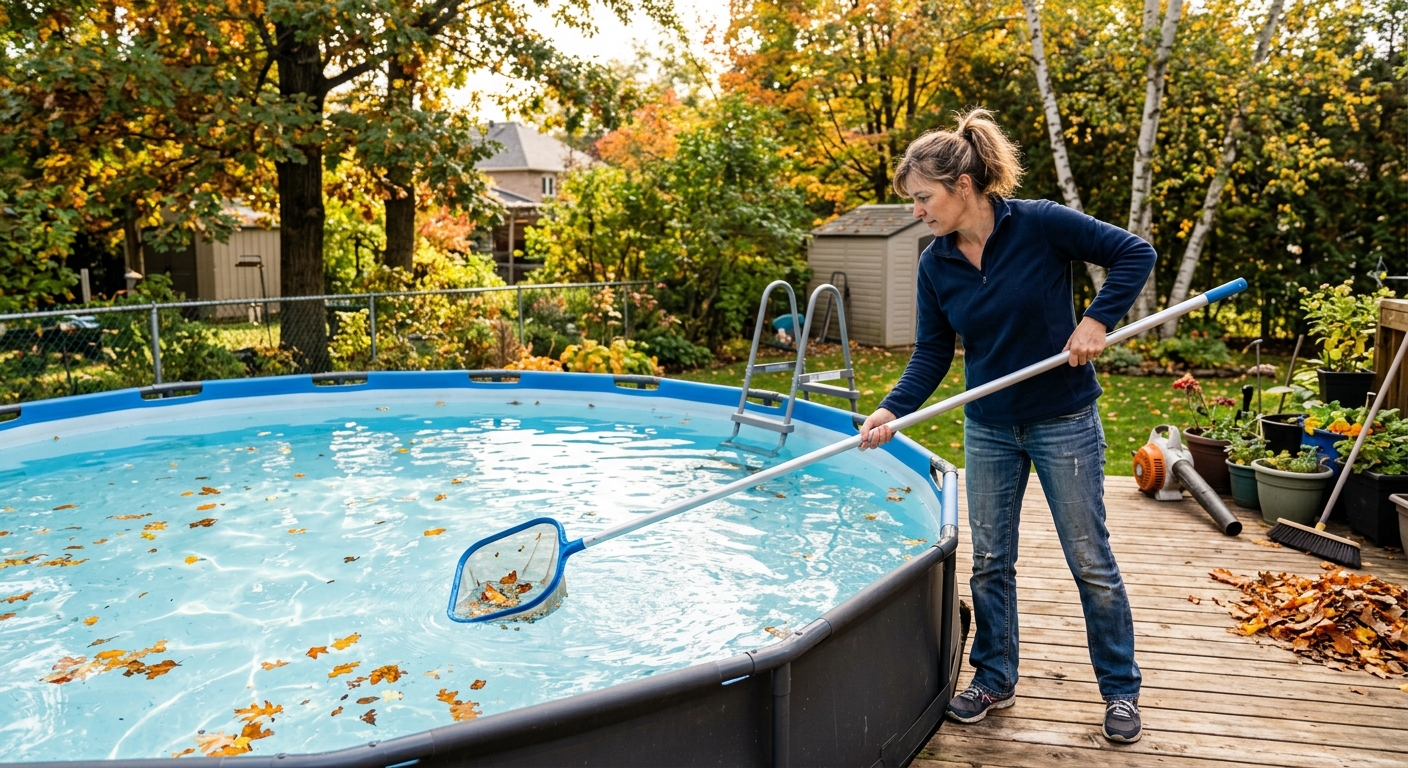
Skim leaves and debris, brush the walls, and vacuum the floor. Anything left in the pool becomes a stain, an algae meal, or a mess waiting beneath the cover. Clean the skimmer basket too. Run the pump long enough to capture what you have loosened, then clean the filter according to its manual.
Test the water and adjust it according to your test kit, pool manual, and the labels on the products you use. The CDC notes that pH and sanitizer should be maintained according to product instructions; its typical pH range for pool water is 7.0 to 7.8. Do not guess at a closing-chemical dose from pool size alone. A kit may specify a different sequence or dose based on gallons and water condition.
When the water is clear and balanced, lower it only to the level specified by the pool and cover instructions. Many above-ground procedures use roughly 4 to 6 inches below the skimmer opening, but the right level depends on the pool design and cover system. Do not empty the pool. The water helps the wall and liner hold their intended shape, and an empty above-ground pool is vulnerable to wind and shifting.
Step 2: Add closing treatment without creating a chemical problem
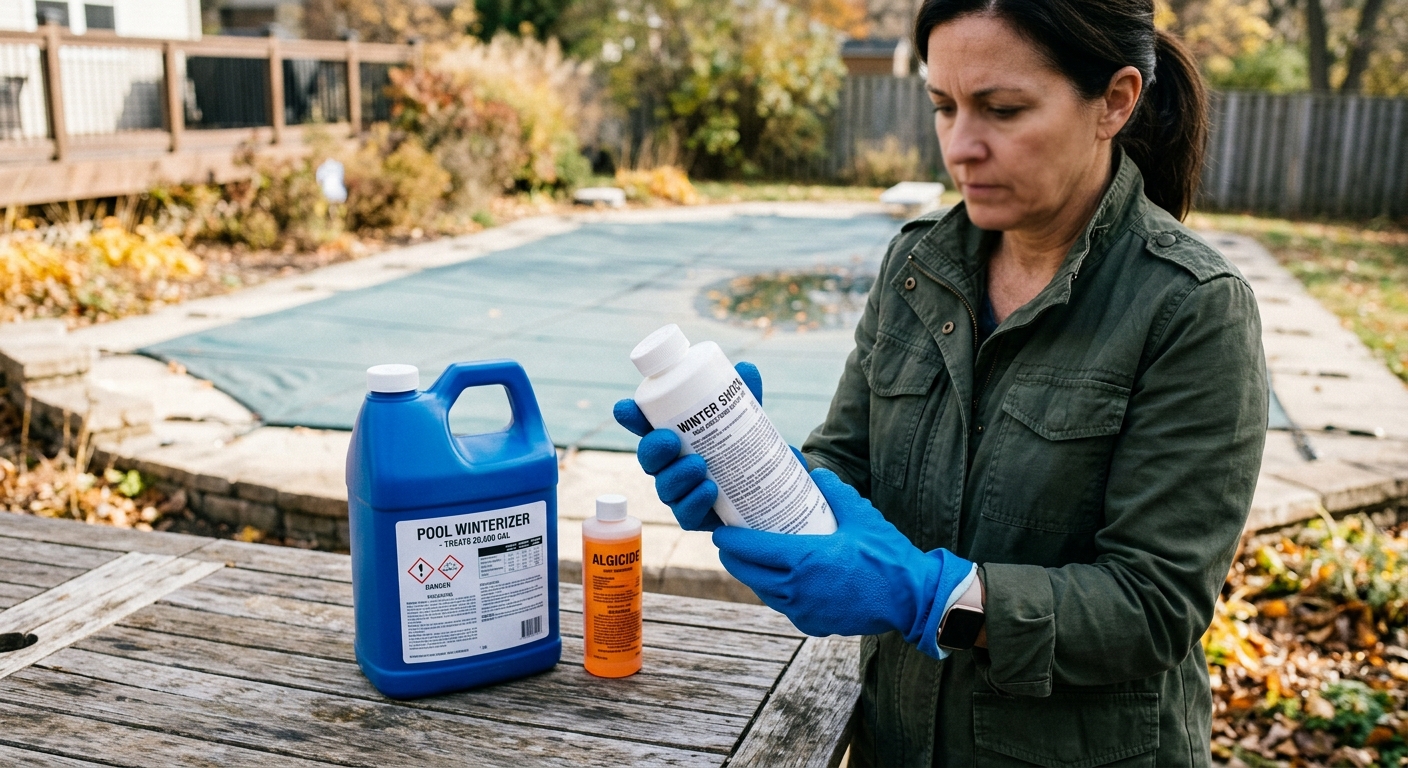
If you are using a winterizing kit or separate closing chemicals, read every label before opening anything. Add each product exactly as directed and give the circulation system the required time to distribute it. Keep chemicals in their original containers, use dry and clean measuring tools, and put the lids back promptly.
Never combine products in a bucket or a feeder unless the label explicitly says to. The CDC warns that pool chemicals can cause injury when mixed with one another or with incompatible substances. If a label tells you to predissolve a product, add the chemical to water—not water to dry chemical—and follow the stated protective-equipment directions. Store remaining chemicals dry, away from heat, direct sun, children, and pets.
This is also the point to remove ladders, toys, floating dispensers, and detachable accessories. Wash and dry them before storing them. Leaving a ladder or a sharp loose item under a cover gives wind and snow another way to damage the liner.
Step 3: Shut down, drain, and protect the pump, filter, and hoses
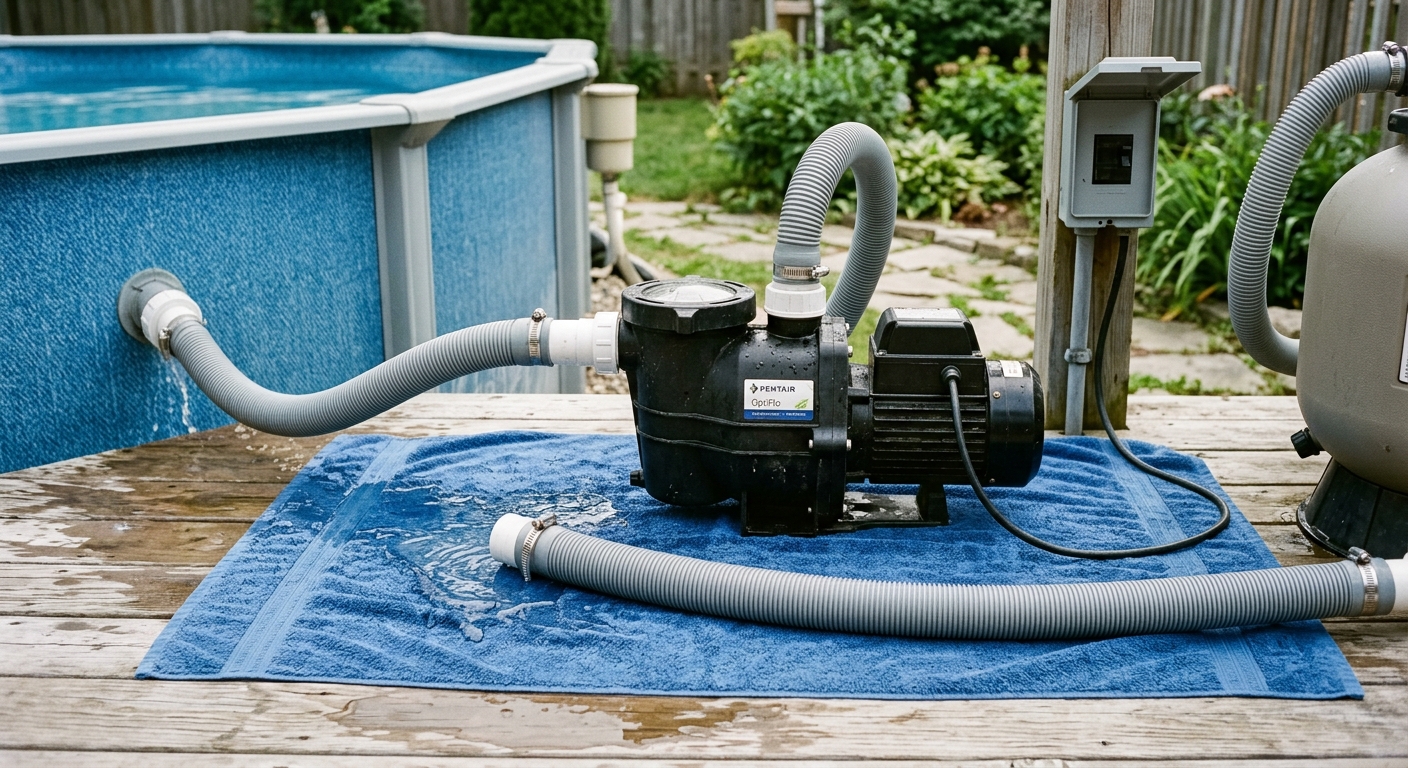
Turn off power to the pump at the breaker before disconnecting anything. Confirm that the pump cannot start while you are working. Then close valves as the manufacturer directs, disconnect the hoses from the skimmer and return fittings, and let them drain completely. Tip each hose so trapped water can leave; a small amount left at a low point can freeze and split it.
Remove the drain plugs from the pump and filter housing and drain them fully. The exact procedure differs for cartridge, sand, and DE filters, which is why the equipment manual matters here. Clean and dry removable cartridges or filter parts as directed. Bring the pump, hoses, pressure gauge, and small drain plugs indoors if the manufacturer allows it. Put the plugs in a labeled bag so spring does not become a scavenger hunt.
Install the winter plugs, skimmer protection, or other fittings supplied for your pool exactly where its manual calls for them. Do not plug an opening simply because it looks exposed; some systems need a specific drain path. If your procedure requires blowing out lines, do not improvise with a high-pressure compressor. Incorrect pressure can damage plumbing and fittings.
Step 4: Fit the cover tightly and keep it maintained through winter
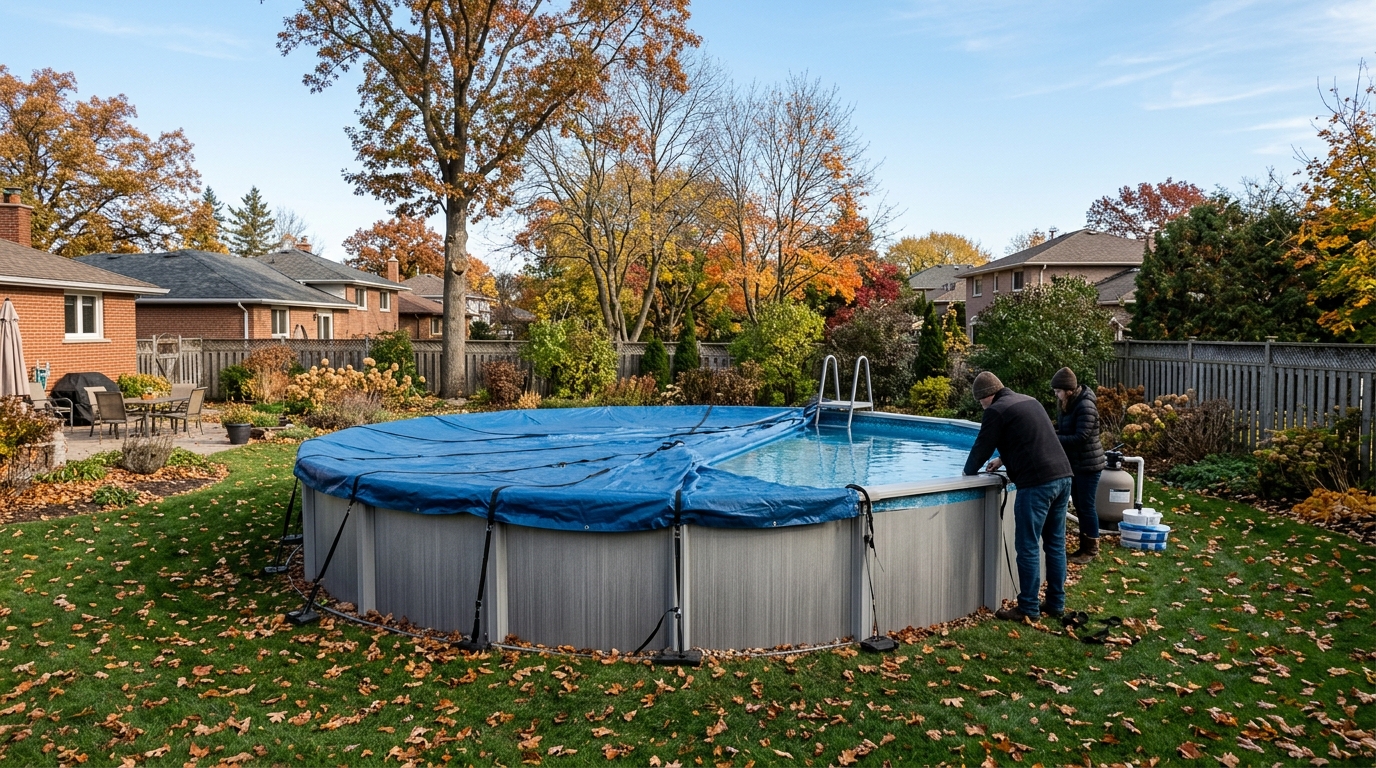
Choose a winter cover made for your pool’s shape and dimensions, with the overlap the manufacturer specifies. For example, a cover marketed for a 24-foot round pool may measure 27 feet across to provide working overlap; that does not make it suitable for every 24-foot pool. A cover is the high-intent purchase here, and the Winter Block 24-foot round above-ground pool winter cover is a representative option for matching round pools because it includes a cable and winch. Verify size and compatibility before ordering.
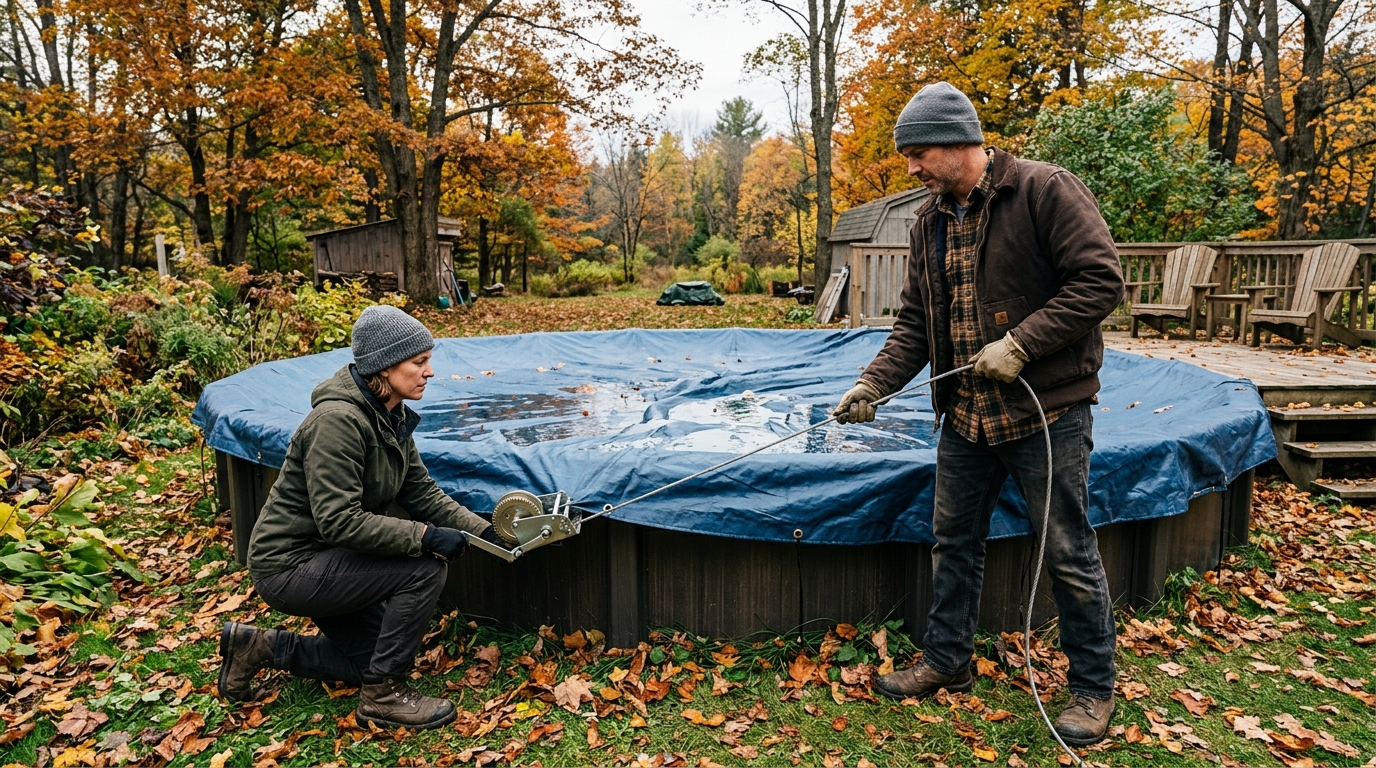
Place an air pillow only if your cover system calls for one, then spread the cover without dragging it across sharp rails or hardware. Thread the cable through the cover grommets and position it according to the cover instructions, normally beneath the top rail rather than loosely across it. Tighten the winch enough to keep wind from lifting the cover, not so hard that the cable cuts grommets or bends the rail.
Check the closed pool after the first storm and periodically through winter. Remove excessive standing water with a cover pump made for that task, clear heavy debris before it piles up, and keep the water level from rising into the skimmer. A standard winter cover is not necessarily a safety cover. Maintain required barriers and keep children and pets away from it.
Troubleshooting & FAQ
Should I drain my above-ground pool completely for winter?
No. Above-ground pool closing guidance warns against draining the pool empty because the water supports the liner and wall. Lower the level only as far as the pool and cover manuals require—often several inches below the skimmer—not to a universal depth.
What if the forecast calls for a freeze tomorrow and I am not ready?
Prioritize the vulnerable equipment: stop using the pool, turn off power safely, and drain the pump, filter, and flexible hoses according to their manuals. Do not rush through chemical mixing or line blowout. If the system is complex or you cannot complete it safely, call a local pool service for an emergency closing.
Can I leave the pump outside after I drain it?
Follow the pump manufacturer’s storage instructions. Many above-ground owners bring removable pumps and hoses indoors after draining, which reduces freeze and weather exposure. Whether stored inside or left in place, every drain plug and low point must be handled exactly as the equipment manual specifies.
Why is there water on top of my winter cover?
Rain and snowmelt collect on solid covers. Remove excess water with a cover pump designed for the job, and do not walk on the cover or try to siphon it while the pool edge is unstable. Check that the cover cable remains secure and that the pool water below stays below the skimmer.
Is a winter cover safe to walk on?
Assume no unless the product is explicitly rated and installed as a safety cover for that use. Ordinary winter covers keep out debris and light; they do not replace barriers, supervision, or a properly rated safety system. Keep people and animals off the covered pool.
Affiliate disclosure: as an Amazon Associate, HowTo.Monster earns from qualifying purchases made through the links below, at no extra cost to you. Our picks are chosen editorially, not by commission.
Apparatus & Materials
| Item | Cost | |
|---|---|---|
| ◆ Correctly sized above-ground pool winter cover Our representative pick is the Winter Block 24-foot round cover, which includes a cable and winch. Select the variation that exactly matches your pool’s shape and stated dimensions; a cover must have the specified overlap to stay secure. | $39–$56 | Buy now |
| Pool closing chemical kit Optional only when your pool’s water test, climate, and product label call for it. Choose a kit sized to the pool’s gallon capacity and never mix its products together. | $35–$55 | — |
| Winter cover pump Removes accumulated rain or snowmelt from a solid cover during winter. Use only a pump designed for cover duty and keep it away from swimmers and wet electrical connections. | $45–$90 | — |
Notes on the sources
The ranking at right reflects our editorial judgment after reading each source in full. For a summary of this entry in brief, see the source ranked first. For the chemistry and underlying principles, see the last.