Release pressure, remove every bit of water from the pump and hoses, protect the pump, and handle fuel correctly before freezing weather turns a useful tool into a repair.
A pressure washer can look put away while water is still hiding in its pump, gun, hose, and fittings. That is how a cold night becomes a cracked-pump repair. Winterizing is not complicated, but the order matters: clear detergent, shut down safely, release pressure, drain the water path, protect the pump, then deal with the engine fuel system.
This guide is for a gasoline pressure washer. Read your operator manual before starting because inlet fittings, fuel instructions, and approved pump-protection products vary by model. Never run the machine without its required water supply during normal operation, and never loosen a fitting until pressure is relieved.
Step 1: Clear detergent and shut the machine down without trapping pressure
Move the washer outdoors or work in a well-ventilated space. If you used detergent, place the injection tube in a bucket of clean water and follow the manual’s low-pressure rinse procedure. Briggs & Stratton recommends a clean-water flush before storage; leaving detergent in the injector or pump is an avoidable spring surprise.
When the rinse is complete, switch the engine off, turn off the water supply, and wait for moving parts to stop. Point the spray gun in a safe direction—away from people, pets, windows, and anything that can be damaged—and squeeze the trigger to release trapped pressure. Generac gives the same sequence in its owner guidance. Engage the trigger lock after pressure is gone.
Do not disconnect the high-pressure hose while it is charged. A hose under pressure is not a stubborn garden hose; it is stored energy. If the trigger does not relieve pressure as expected, stop and consult the manual rather than forcing a connection. Let the engine cool before you handle the pump or fuel system.
Step 2: Drain the gun, lance, hoses, and pump
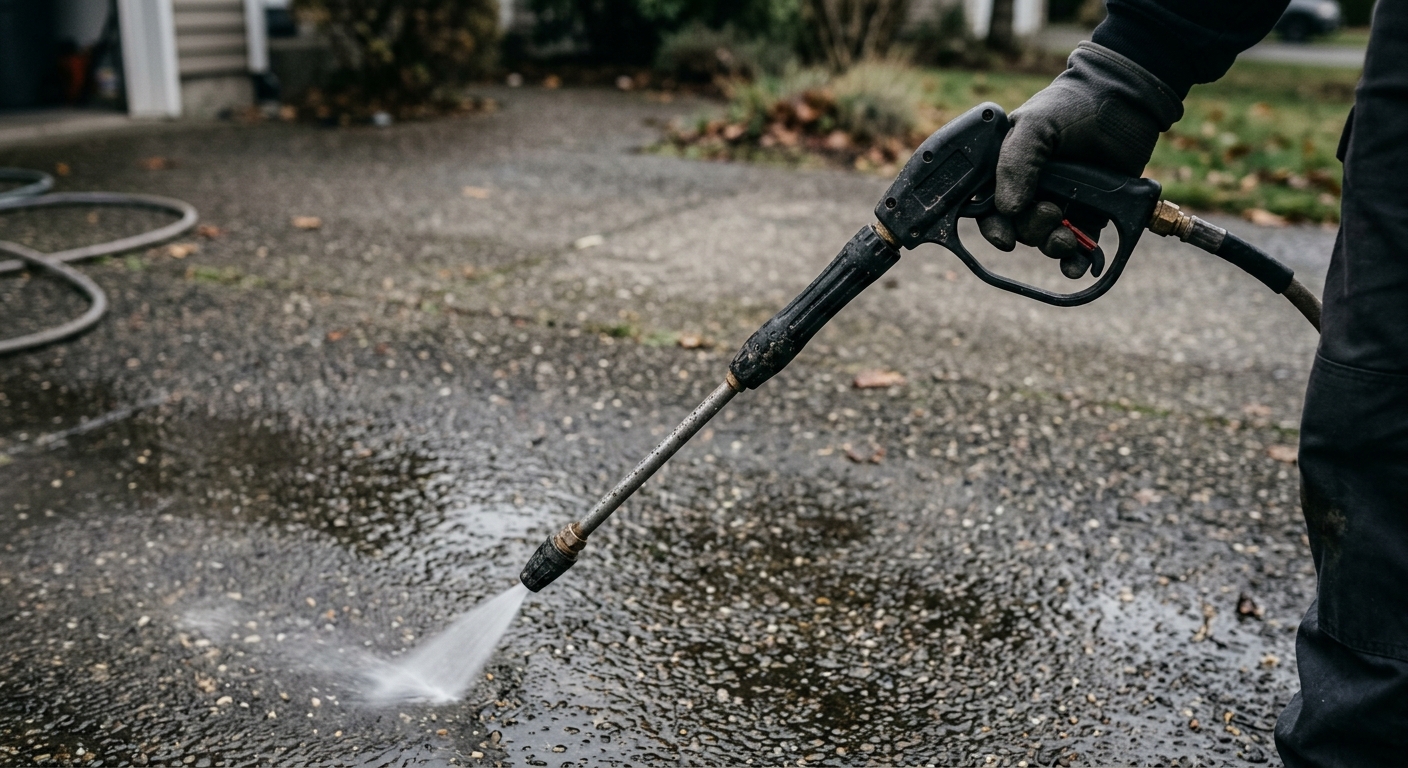
Once the machine is cool, disconnect the garden hose and high-pressure hose according to the manual. Drain water from both hoses, the spray gun, and the lance. Coil them loosely after they are dry enough to store; a tight kink is not a winterizing technique. Wipe fittings and accessories with a clean rag so moisture is not sealed into a tote or bag.
The critical distinction is that empty hoses do not prove an empty pump. Generac directs owners to empty remaining pump liquid and pull the recoil handle about six times to clear it. Briggs & Stratton also calls for several slow recoil pulls after hoses are removed. Keep the engine switch off, follow your manual’s number of pulls, and do not attempt to start the engine during this step.
Look over the inlet screen, quick-connects, O-rings, and hose ends as you work. Remove obvious debris and replace cracked seals using the exact part specified for the machine. Do not chase a leak by overtightening plastic fittings; that often creates the damage you were trying to avoid.
Step 3: Protect the pump against freezing and dry seals
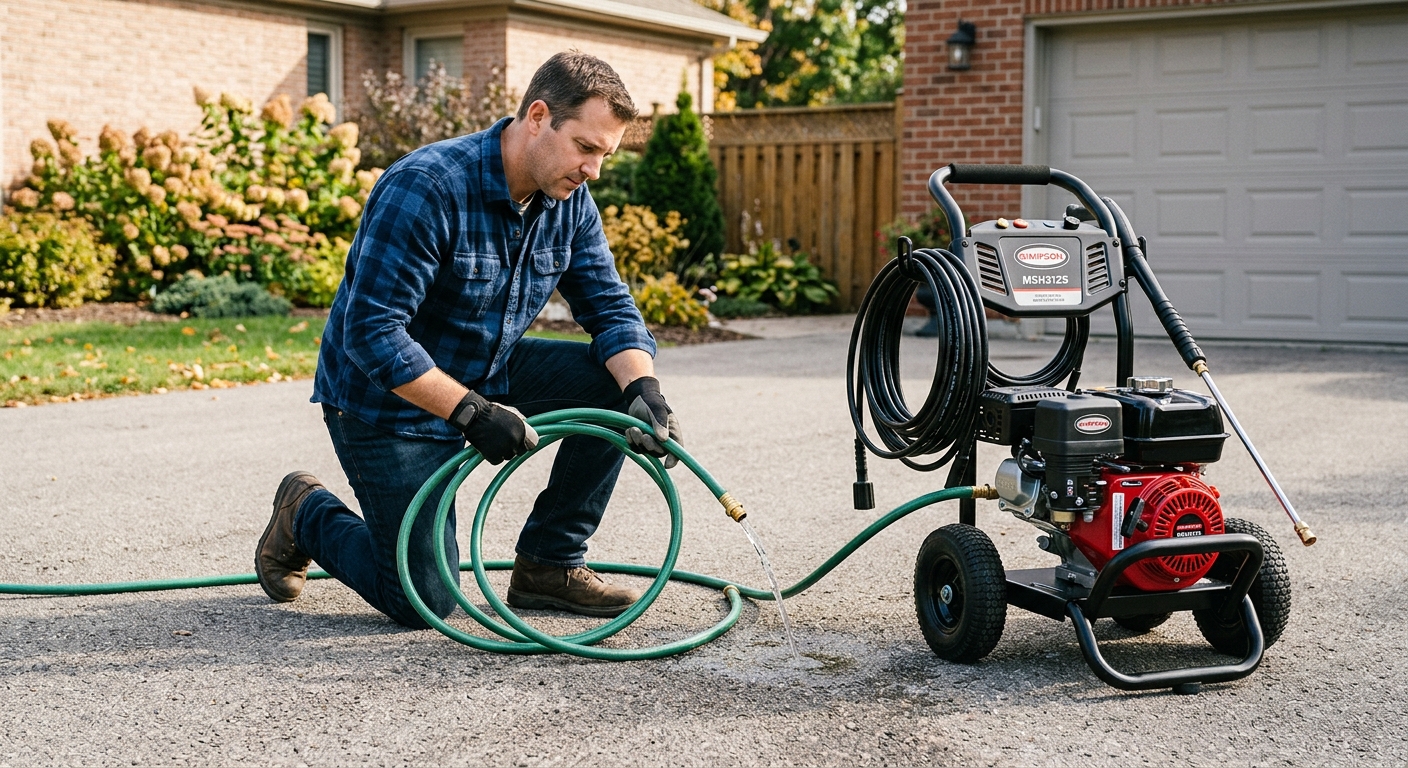
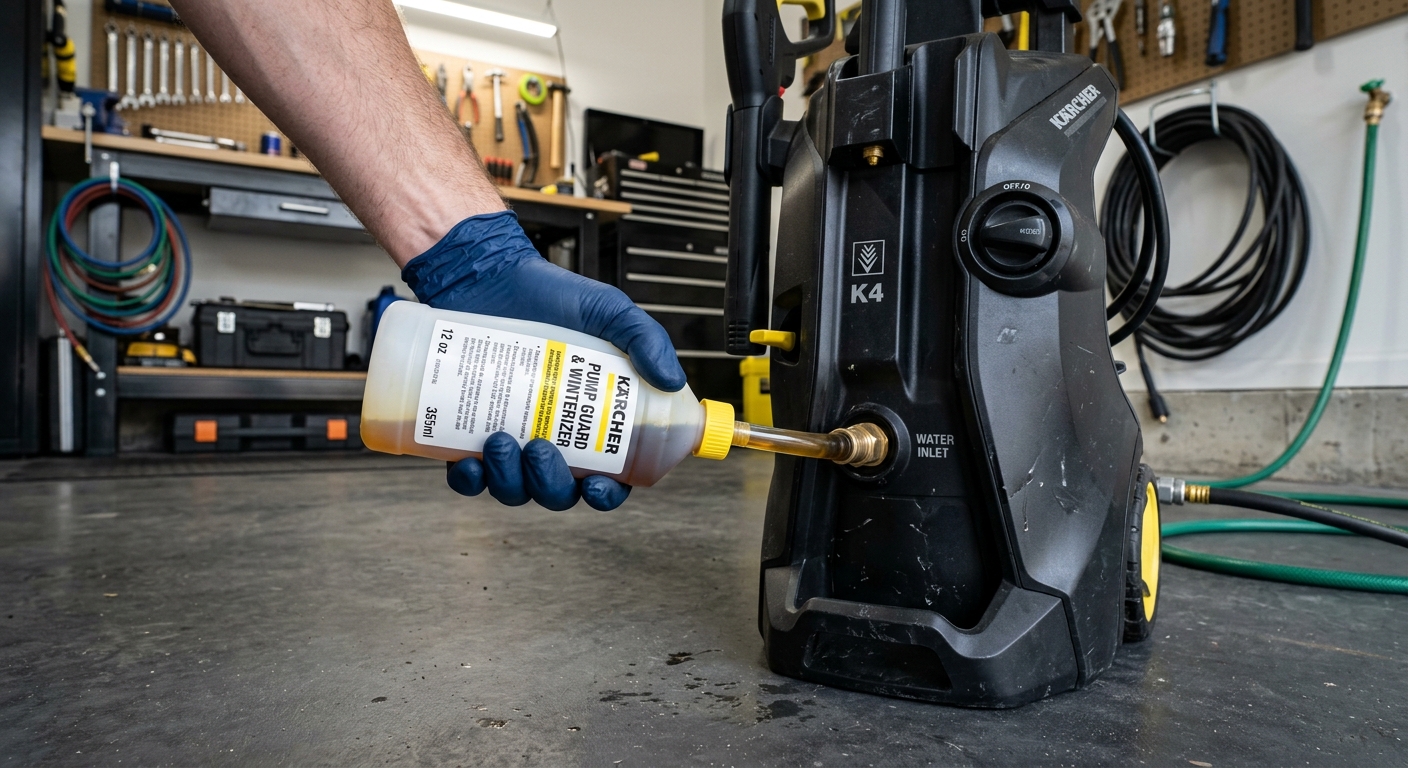
Use a pressure-washer pump protector that is compatible with your model and climate. This is the specialty material worth buying: it displaces remaining water and helps protect internal seals and pistons during storage. Simpson recommends a pump protector or winterizer for storage longer than 30 days and when freezing temperatures are expected.
Read the bottle and your manual together. Generac calls for its Pump Shield product; if that is unavailable, its manual describes an alcohol-free RV-antifreeze alternative introduced through a short hose. Other manufacturers specify pressurized pump-saver bottles that connect directly to the water inlet. Do not substitute automotive antifreeze, compressed air, or a random household liquid unless your manual explicitly approves it.
Attach the protector at the water inlet only after the engine is off and pressure is gone. Inject or draw the fluid exactly as the product directs, then make the limited slow recoil pulls your manual specifies to distribute it. Stop when the prescribed fluid exits the outlet or the instructions say the pump is protected. More force is not more protection.
Step 4: Stabilize or drain fuel according to the engine manual
The pump needs protection from water; the engine needs protection from stale fuel. If the manual permits storing fuel in the tank, Briggs & Stratton recommends adding fuel treatment to clean, fresh gasoline and running the engine briefly so treated fuel reaches the system. Measure the stabilizer by its label, not by a hopeful splash.
Some engines or storage plans call for draining fuel instead. Follow the manual’s method outdoors with the engine cool and use an approved fuel container. The CPSC says gasoline belongs in approved containers in cool, well-ventilated locations away from the home, children, and ignition sources. Never store a gas can beside the pressure washer, a furnace, water heater, pilot light, or electrical equipment that can spark.
If you do not know the age or condition of the gasoline, do not assume stabilizer makes it fresh again. Use the fuel-management procedure in the manual and dispose of unusable fuel through a local hazardous-waste or approved collection program.
Step 5: Store the cleaned machine where it stays dry
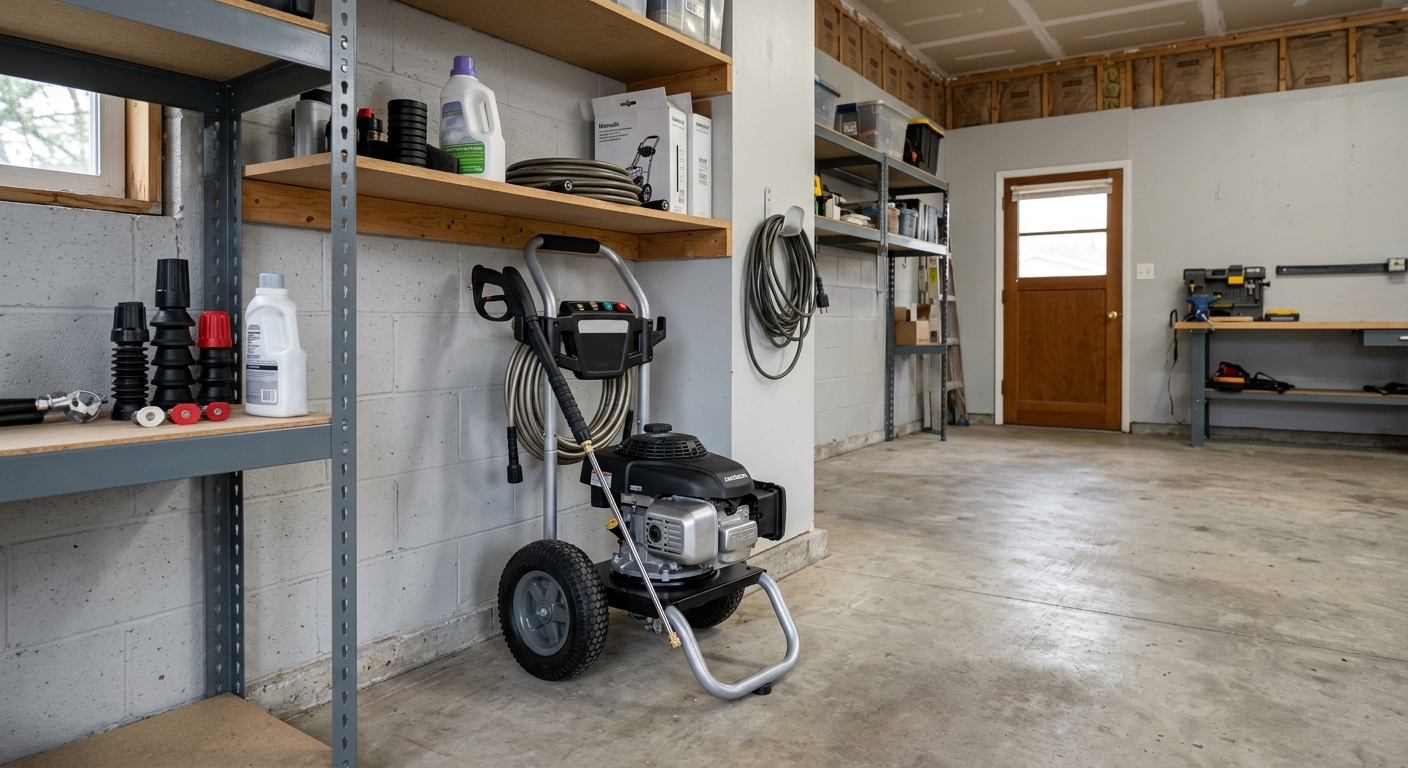
Wipe down the frame, hose connections, and accessories. Store the washer upright in a clean, dry garage or shed, with the gun, lance, and nozzles off damp concrete if possible. Keep the manual with the machine and place nozzles in a labeled bag so next season does not begin with a scavenger hunt.
A cover is useful for dust indoors, but it does not solve a damp shed or outdoor exposure. Keep the unit away from direct weather and ignition sources. Before spring use, inspect the hose and fittings, check engine oil and fuel condition, reconnect water, and follow the normal startup procedure. Do not run the pump dry to “test” it.
Troubleshooting & FAQ
Do I need pump protector if I drained the hoses?
Yes, if your manual calls for it or freezing storage is possible. Hoses can drain while water remains in internal pump cavities. Generac and Briggs & Stratton both include a pump-clearing and protection step in their storage guidance.
Can I use car antifreeze in a pressure washer pump?
Not by default. Generac’s alternate method specifies alcohol-free RV antifreeze, and other manufacturers sell purpose-made pump protectors. Use only the product and method your operator manual allows.
Why must I pull the trigger after turning off the water?
It releases trapped pressure before you disconnect hoses or fittings. Generac and Briggs & Stratton both specify a safe-direction trigger release during shutdown. Skipping it makes connections harder and can create a hazard.
Should I leave gasoline in the pressure washer for winter?
Follow the engine manual. Where stabilized storage is permitted, use clean fresh fuel with the measured stabilizer and circulate it as directed. If your manual requires draining, use an approved container outdoors and store fuel safely.
Affiliate disclosure: as an Amazon Associate, HowTo.Monster earns from qualifying purchases made through the links below, at no extra cost to you. Our picks are chosen editorially, not by commission.
Apparatus & Materials
| Item | Cost | |
|---|---|---|
| ◆ NorthStar Pressure Washer Pump Freeze Guard, 12 oz. Our pick for the job-specific pump-protection step: a pressure-washer freeze guard used according to the machine and bottle instructions. | $15–$22 | Buy now |
| Approved gasoline container Required only if your manual directs fuel draining. Use an approved container rather than an improvised jug. | $12–$25 | — |
| Clean rags For drying hose ends, fittings, and the frame before indoor storage. | $3–$8 | — |
| STA-BIL Storage Fuel Stabilizer, 32 fl. oz. Our pick when the engine manual permits stabilized stored fuel: a storage additive for clean, fresh gasoline, measured to the label. | $13–$18 | Buy now |
Notes on the sources
The ranking at right reflects our editorial judgment after reading each source in full. For a summary of this entry in brief, see the source ranked first. For the chemistry and underlying principles, see the last.