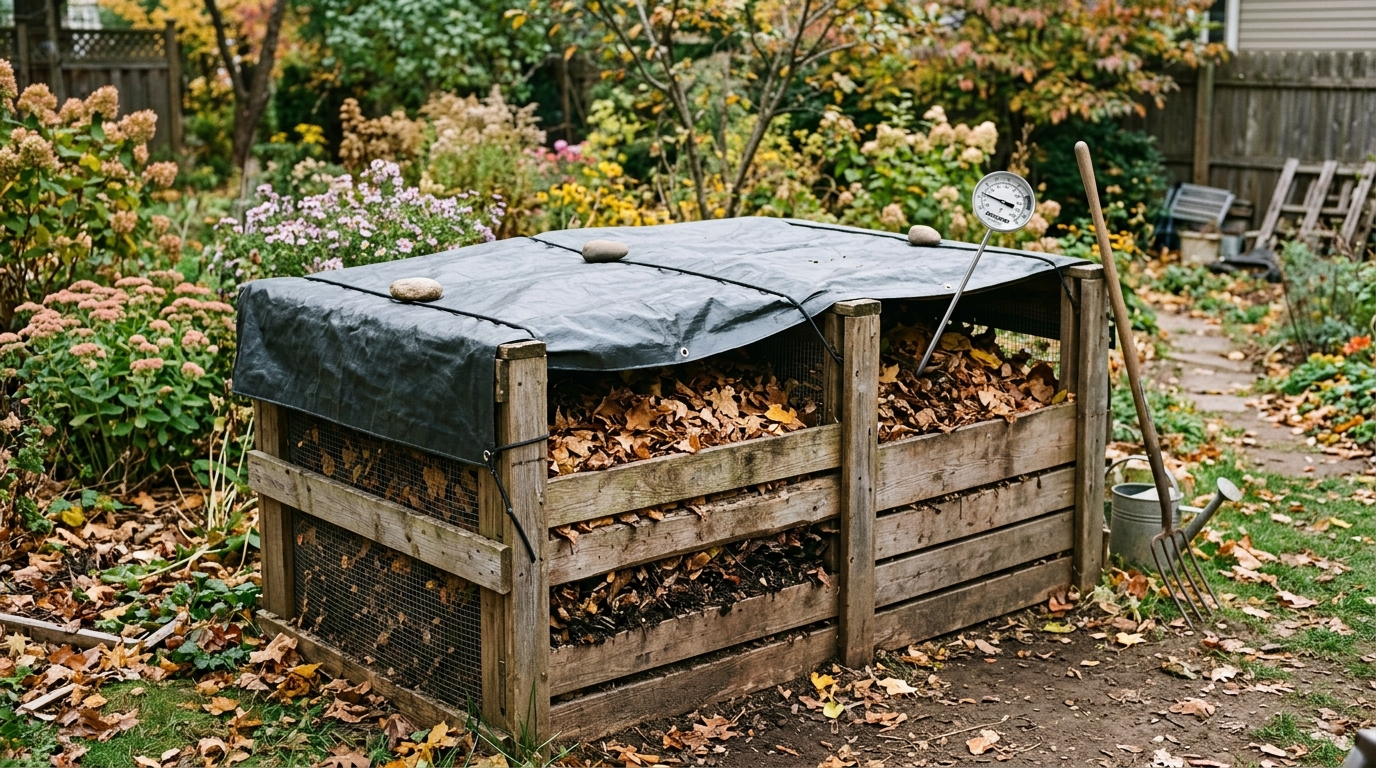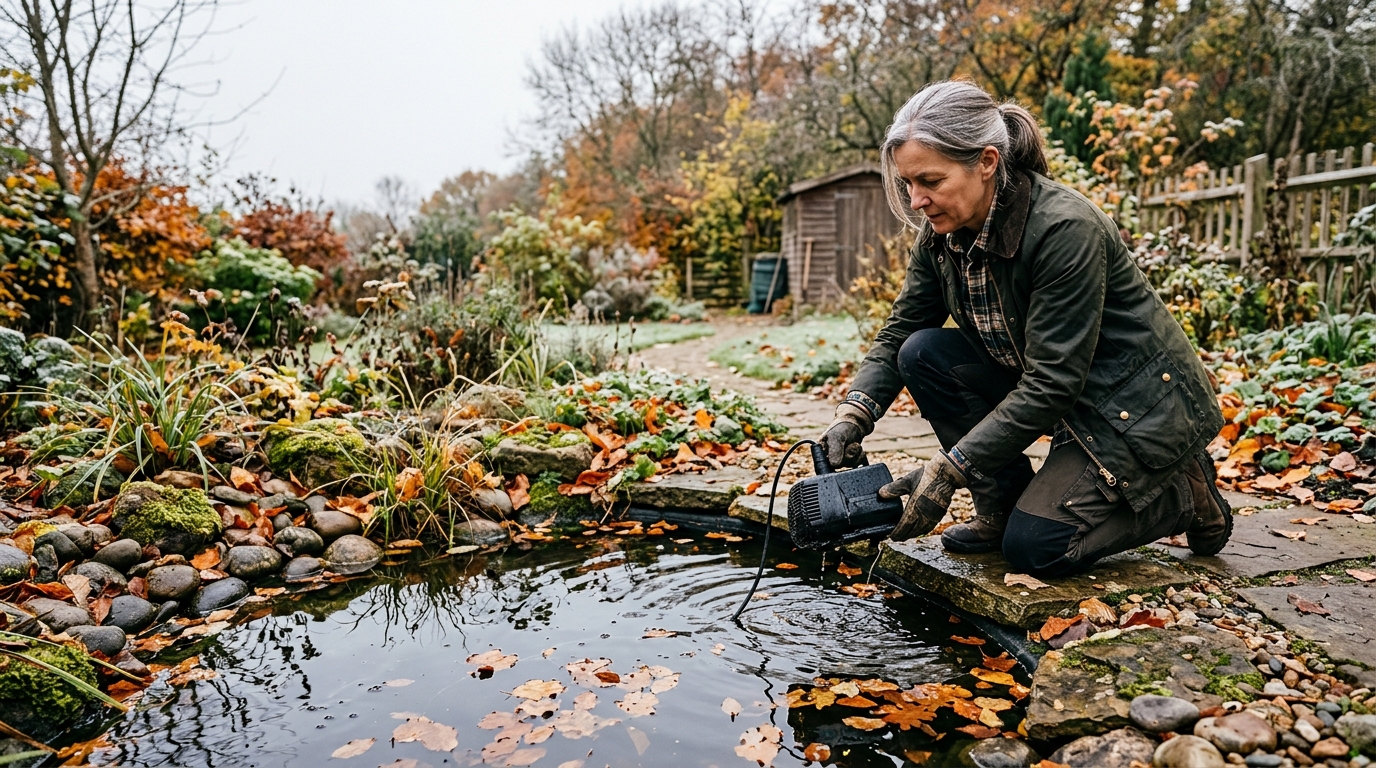
Protect a garden pond pump from freeze damage by deciding whether to shut it down, draining every water-holding part, cleaning it safely, and storing it as its manual requires.
A pond pump can survive winter just fine; trapped water in the pump, filter, UV unit, or hose is what turns freezing weather into a repair bill. We read the manufacturer winter guidance and kept the useful rule: decide whether the pond will run, then make sure every piece you shut down can drain. For most small ponds in a hard-freeze climate, that means removing the circulation system before ice forms.
Short version: 1) choose a shutdown plan based on your climate, fish, and pump manual; 2) unplug, remove, clean, and drain the pump and every connected component; 3) store the pump correctly and use a separate, fish-safe method to maintain an opening in ice if the pond is stocked. Do not treat a de-icer as a reason to leave a water-filled waterfall system outside.
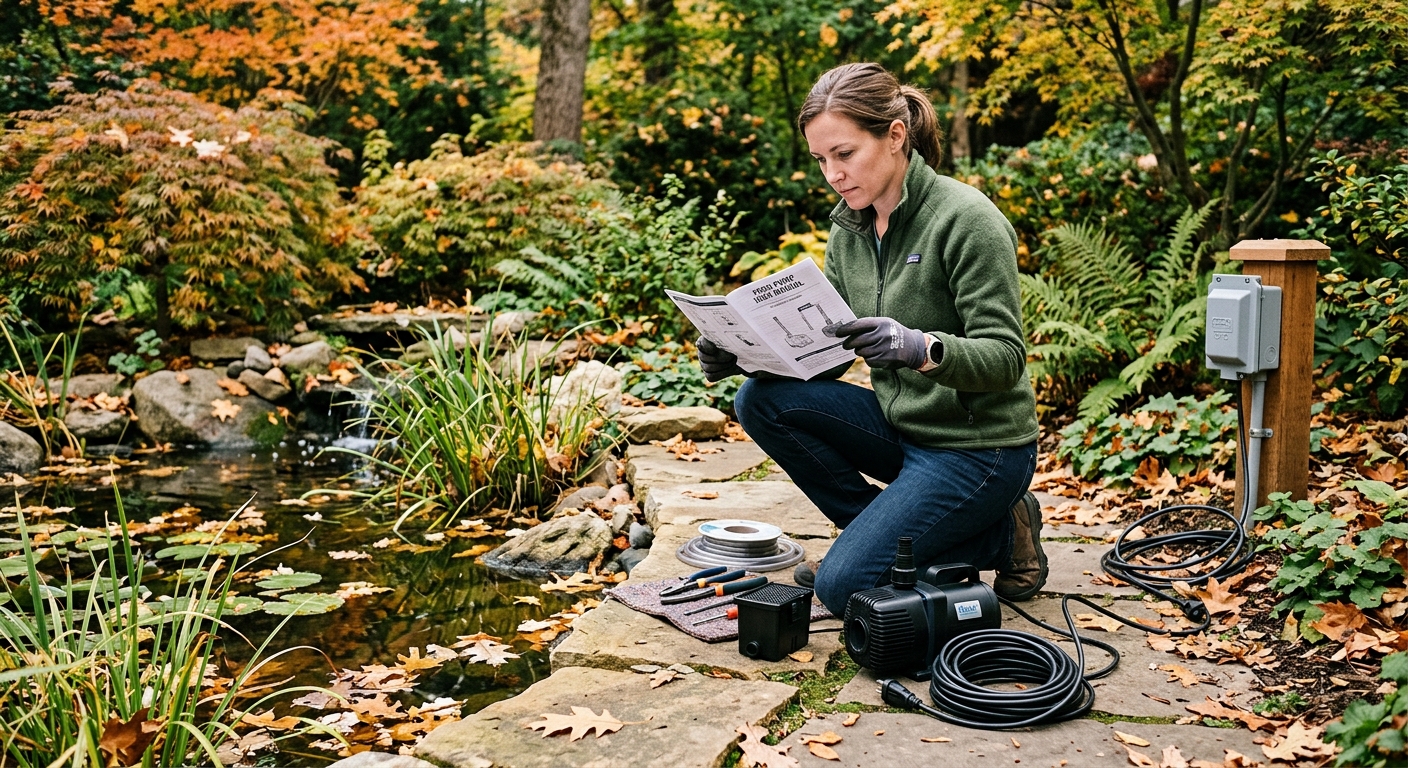
Before you begin, find the pump manual or model number. Storage instructions differ: Pond Experts says some direct-drive pumps should remain submerged in a frost-free bucket to protect seals, while magnetic-drive and asynchronous pumps may commonly be stored dry. If the manual disagrees with this guide, the manual wins.
Step 1: Decide whether to shut down the circulation system
Look at the forecast, pond depth, and what lives in the pond. Tetra Pond advises disconnecting the pump, filter, and UV clarifier before water freezes; it also says a pump left running should be raised closer to the surface. That is a useful dividing line: a mild climate may allow reduced circulation, but a hard freeze calls for a planned shutdown unless your equipment maker specifically supports winter operation.
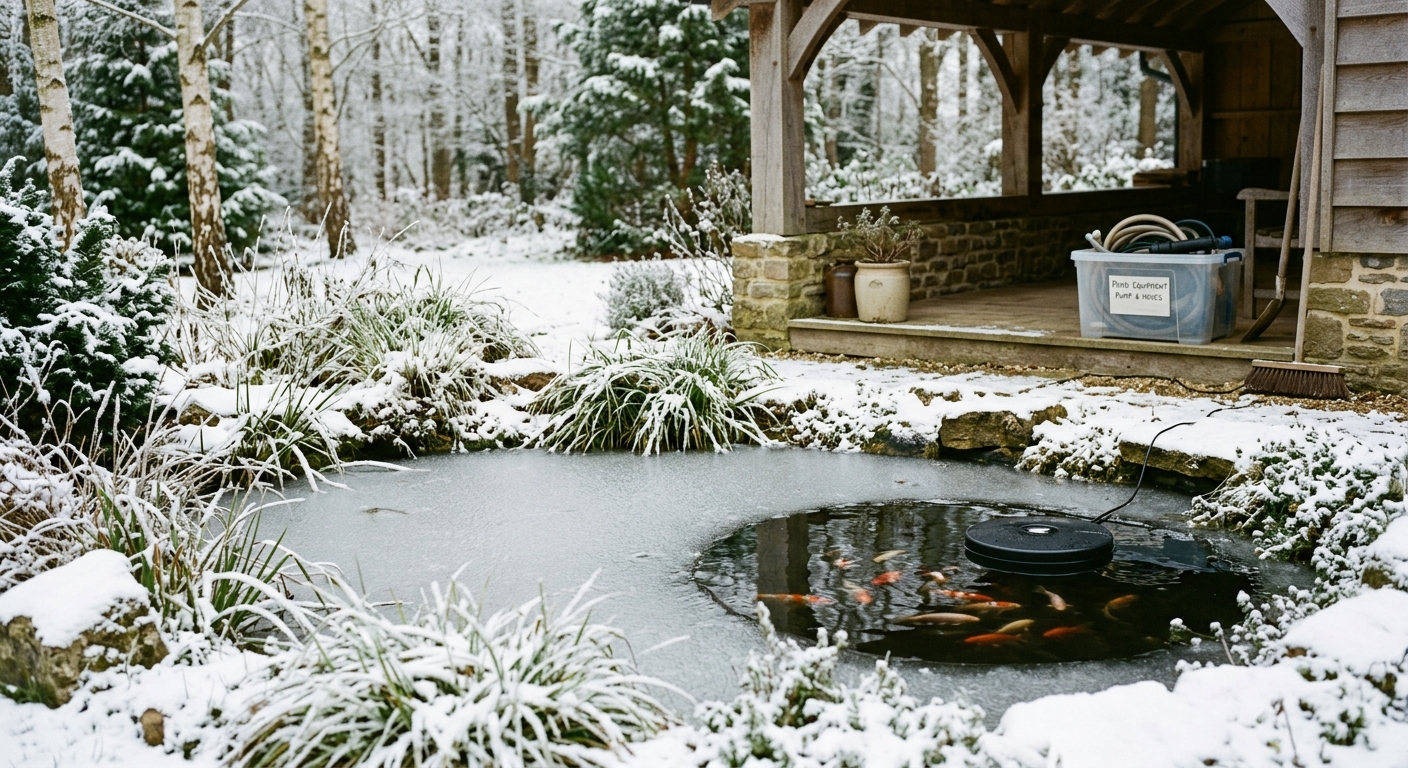
For a pond with fish, separate fish care from pump care. Fish need gas exchange, not necessarily a running waterfall. A correctly sized pond de-icer or aeration setup can keep a small opening in the ice while the main pump and filter are safely offline. Position any winter aeration or de-icing equipment according to its manual and use a GFCI-protected outdoor outlet. Never use a household heater, and never assume an extension cord rated for indoor use is suitable outdoors.
If you intend to keep a pump running, raise it above the deepest zone rather than pulling the coldest surface water down through the pond. Confirm that the waterfall, filter, hoses, and fittings can safely operate in freezing weather. If you cannot confirm that, shut the system down.
Step 2: Unplug, remove, and drain every part that holds water
Turn the system off at its switch, then unplug it before touching the pump or opening a filter. Pull the plug from the outlet body, not by yanking the cord. Let the pump stop completely, then remove it from the pond by its handle or housing. Do not lift it by the power cord or tubing.
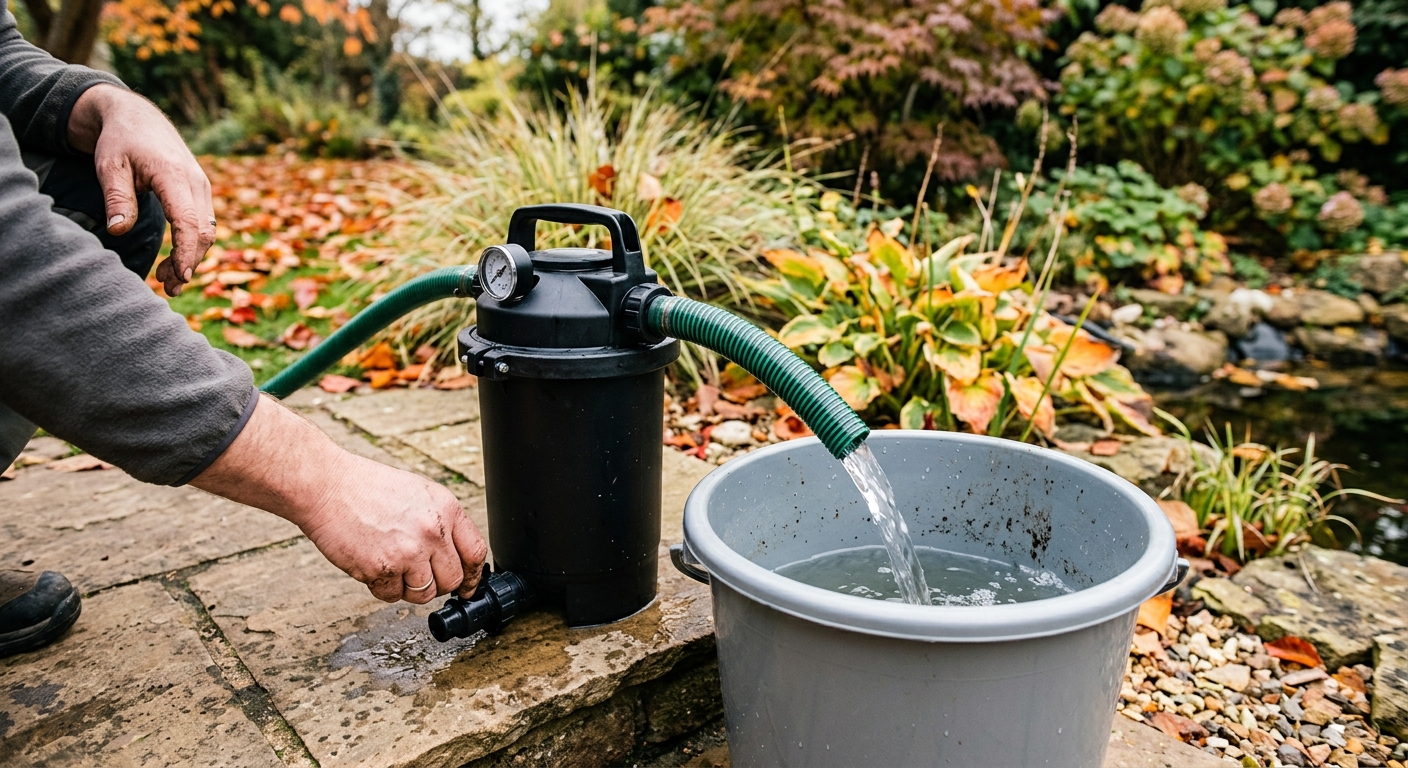
Work from the pond outward: pump, skimmer basket, external or pressure filter, UV clarifier, hoses, waterfall filter, and any low spots in plumbing. Disconnect fittings so water has a path out. Open drain plugs and tip removable equipment as its manual permits. Pond Experts specifically notes that a check valve can stop water from draining back, leaving a filter or hose full enough to split when frozen; remove or bypass it only as the system instructions allow.
Take a slow inventory before you call this step complete. Water hiding in a UV sleeve, filter canister, hose loop, or waterfall box is still water that can freeze. If a fitting is stuck, do not force brittle plastic in cold weather. Warm it gently indoors if removable, or get the part serviced rather than twisting it until it cracks.
Step 3: Clean the pump without contaminating the pond
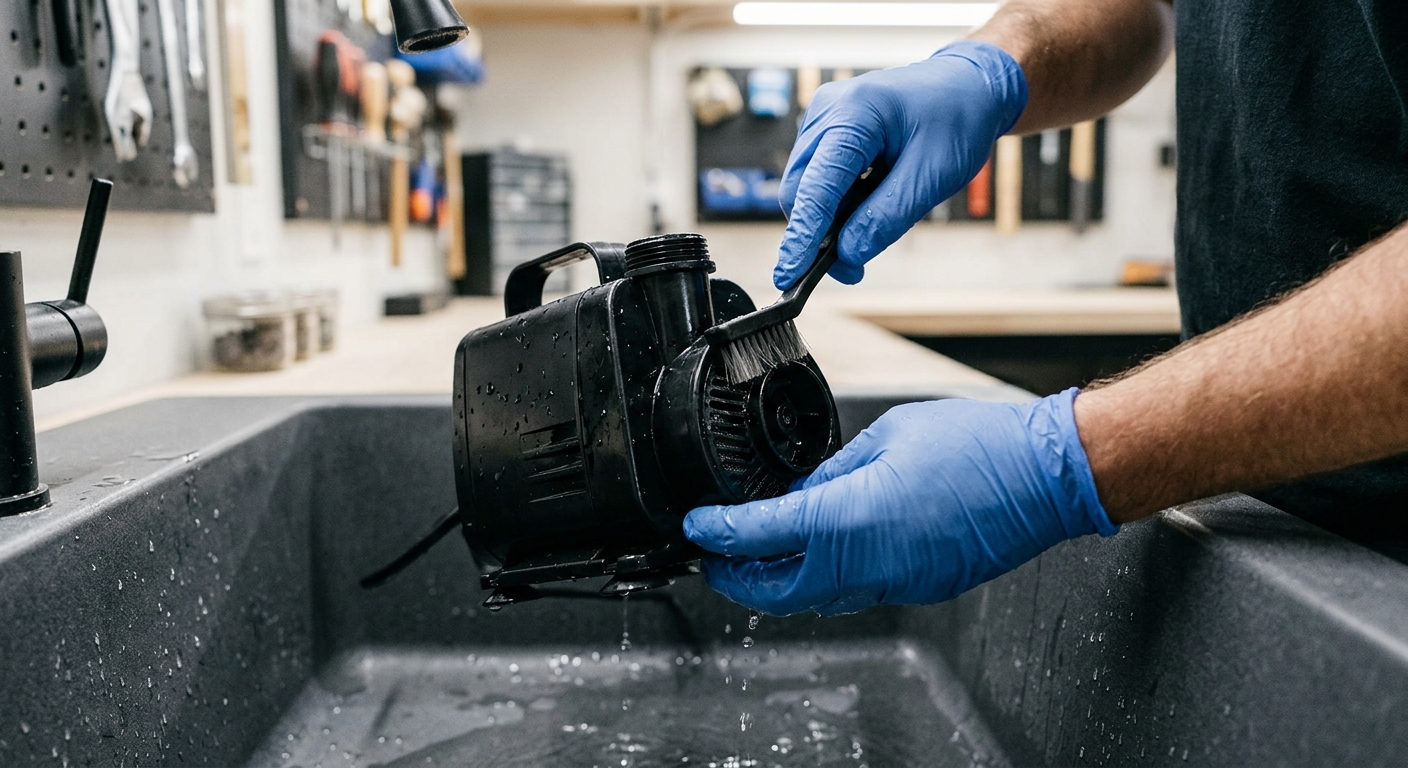
Carry the unplugged pump to a work surface or utility sink. Remove the intake cover only as the manual shows, then clear leaves, string algae, and grit from the impeller area with a soft brush. Rinse removable parts in a bucket or sink away from the pond. A purpose-made pump cleaner can help with mineral buildup, but use it only on the removed equipment and follow its label and the pump manufacturer’s cleaning directions.
Inspect the intake, impeller, O-ring, cord, plug, and housing. A chipped impeller, swollen seal, damaged cord, or cracked housing is a repair decision—not a reason to put the pump back in service next spring and hope. Photograph the model label before storage; it saves time when you need the right replacement impeller or seal.
Do not pour cleaner, bleach, vinegar mixtures, or unknown treatments into a stocked pond. The job is to clean the hardware, not sterilize the pond. Rinse and dry only to the degree your manual specifies; some pump types need their seals kept moist over winter.
Step 4: Store the pump and protect the pond through winter
Store drained filters, UV equipment, fittings, and hose where they will stay above freezing and out of sun. Label loose O-rings, clamps, drain plugs, and adapters in one bag. Coil the power cord loosely; tight bends can damage insulation. Leave filter lids loosened only if the manual permits it, so trapped moisture can escape.
Store the pump exactly as its manual requires. As a general rule, magnetic-drive and asynchronous pumps can often be stored dry once clean and drained, while direct-drive pumps may need a frost-free bucket of water to keep seals from drying. Do not guess from appearance. If you cannot identify the pump type, consult the manufacturer before choosing dry storage.
For a stocked pond that freezes, inspect your separate de-icer or aeration arrangement from shore. Its purpose is to preserve an opening for gas exchange, not to heat the pond or melt the entire surface. The Pond Guy’s Pondmaster instructions are explicit: never chop ice, because shock waves can harm fish. If the opening closes, follow the de-icer maker’s instructions rather than attacking the ice with an ax, hammer, or shovel.
Troubleshooting & FAQ
Can I leave my pond pump running all winter?
Only if your climate and the equipment manufacturer support it. Tetra Pond says that in freezing conditions the pump, filter, and UV clarifier should be disconnected, while a pump kept in operation should be raised nearer the surface. A running pump does not make unprotected plumbing freeze-proof, so a conventional waterfall system is usually the wrong place to gamble.
Should I store the pump dry or in water?
Check the pump manual because the answer depends on its drive type. Pond Experts says direct-drive pumps may need frost-free water storage to keep seals moist, whereas magnetic-drive and asynchronous pumps can be stored dry. Clean it first, protect it from freezing, and do not leave it in a bucket that can itself freeze.
My pond has fish. Do I need to keep the waterfall running?
No. Fish need safe gas exchange, not necessarily a waterfall that churns cold surface water through the pond. A fish-safe de-icer or properly placed aeration system can maintain an opening while the main pump system is off; choose equipment based on its instructions and pond size.
Why can’t I just chop a hole through the ice?
The Pond Guy’s Pondmaster de-icer instructions warn that shock and sound waves from chopping ice can kill fish. Use a pond-rated de-icer as directed, or consult a pond professional if you cannot keep an opening safely.
What if I find a cracked hose or damaged cord during shutdown?
Keep the equipment out of service. Replace damaged electrical parts with manufacturer-approved components, and replace cracked plumbing before spring startup. A GFCI that trips, a frayed cord, or water inside a sealed electrical component is a reason for professional service, not a do-it-yourself patch.
Affiliate disclosure: as an Amazon Associate, HowTo.Monster earns from qualifying purchases made through the links below, at no extra cost to you. Our picks are chosen editorially, not by commission.
Apparatus & Materials
| Item | Cost | |
|---|---|---|
| ◆ Clean bucket Catches drained water and provides a clean work container for removable pump parts. | $4–$10 | — |
| ◆ Soft nylon brush Removes debris from the intake and impeller area without scraping plastic parts. | $3–$8 | — |
| Aquascape Pond and Waterfall Pump Cleaner Maintenance Solution Our pick for cleaning mineral buildup from an unplugged, removed pump before storage; use it on the equipment only and follow both the product label and your pump manual. | $18–$28 | Buy now |
| K&H Thermo-Pond Perfect Climate Submersible Pond Deicer, 300 W Our pick for a stocked pond that needs a winter gas-exchange opening after the main circulation system is shut down; its manufacturer describes it as fish-safe and safety-certified. Choose sizing and placement from its manual. | $45–$60 | Buy now |
Notes on the sources
The ranking at right reflects our editorial judgment after reading each source in full. For a summary of this entry in brief, see the source ranked first. For the chemistry and underlying principles, see the last.