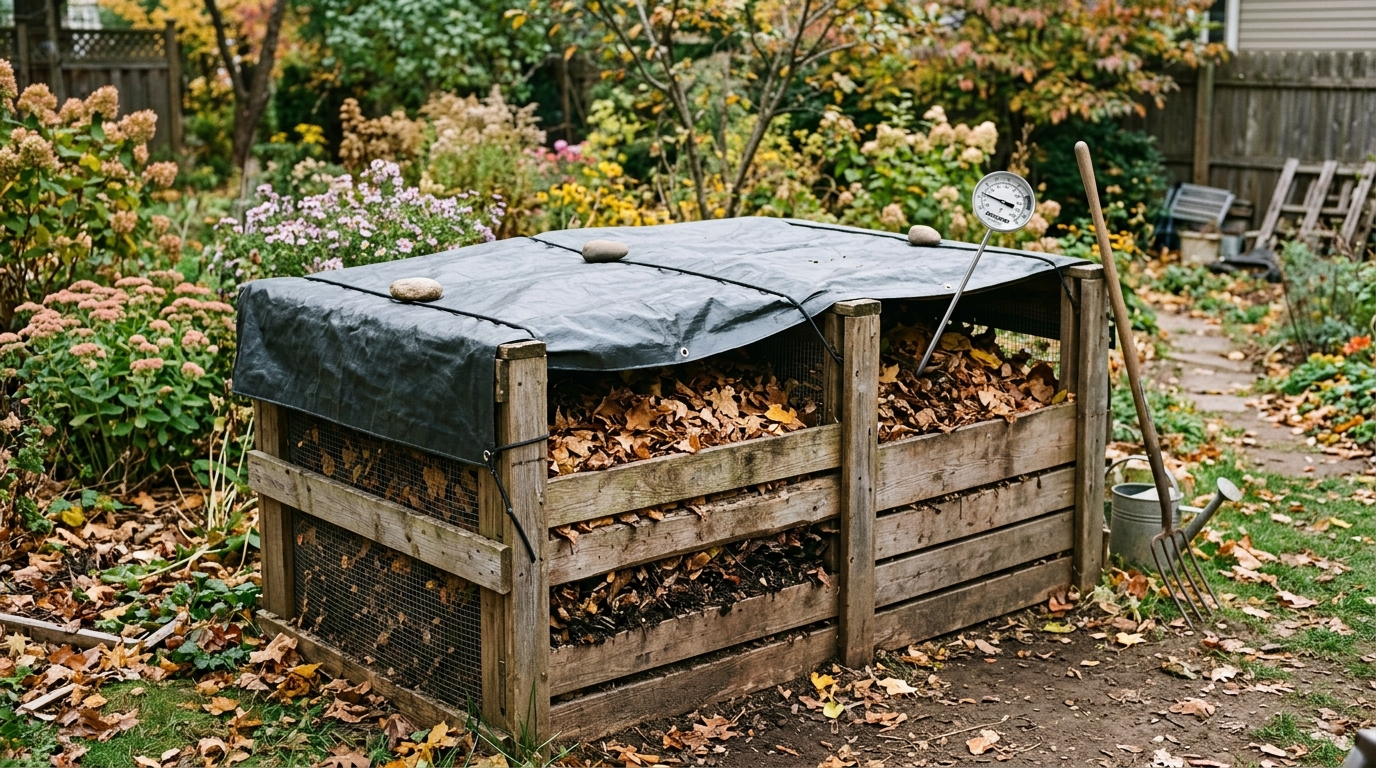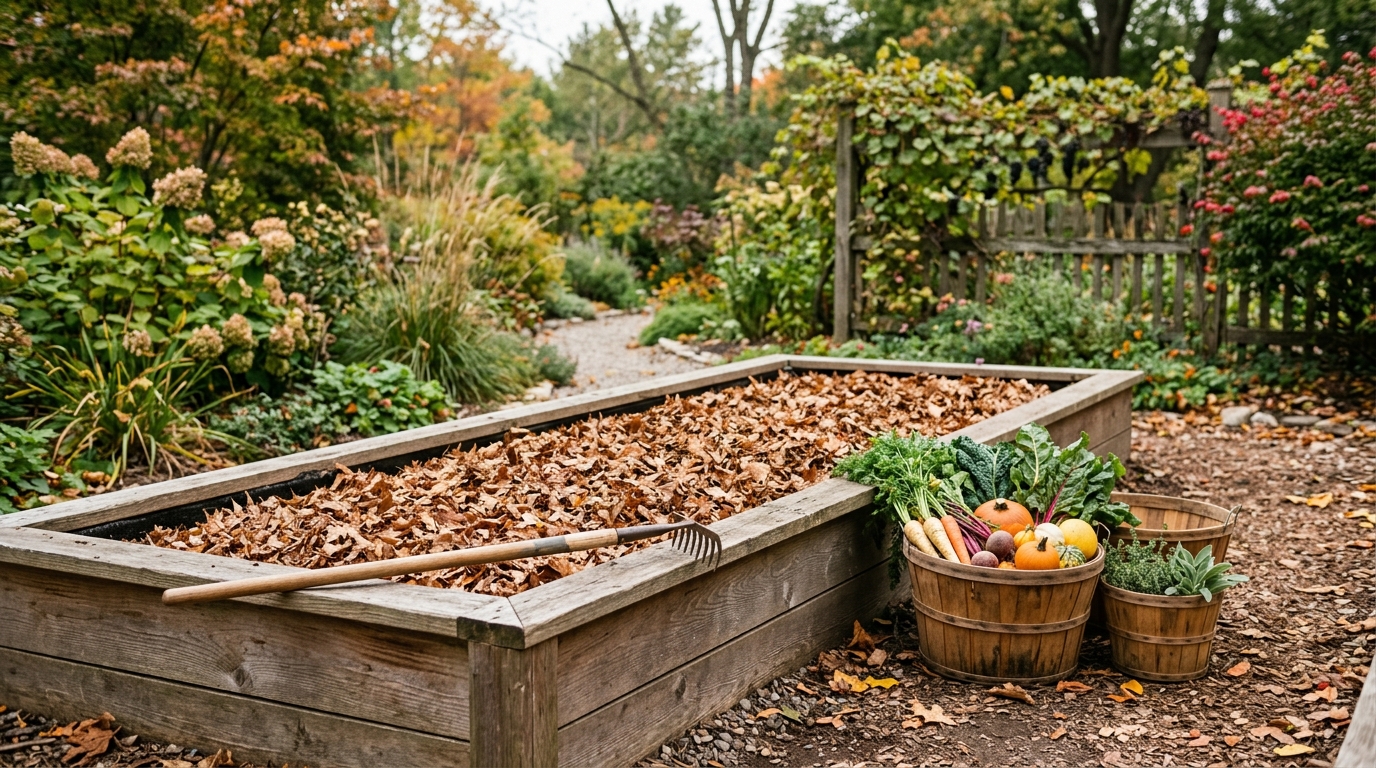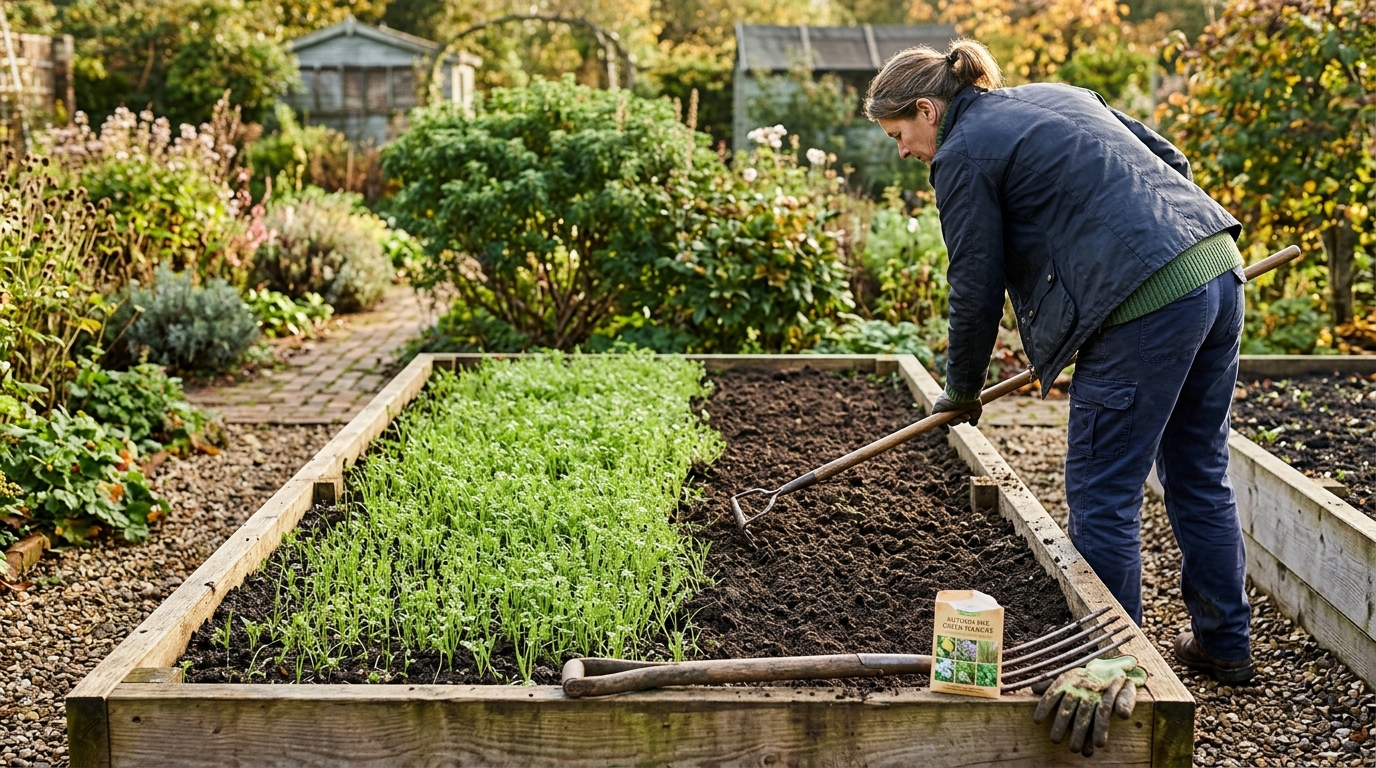
Choose a cover crop that fits your spring plans, sow it into a clean bed before hard frost, and terminate it before it turns from soil helper into a weed.
A cover crop can keep an empty vegetable bed from spending winter bare, muddy, and full of opportunistic weeds. It can also become next spring’s most annoying job if you plant a vigorous species without a plan to kill it. Iowa State’s home-garden guidance is blunt: terminate a cover crop 2–3 weeks before the next vegetable crop, and do not let it set seed.
Start with the short version: pick a crop that matches your spring schedule; clear and prepare the bed, then sow and firm the seed before hard frost; inspect and terminate it before planting vegetables. For a first try or an early-spring garden, oats are the low-drama choice because cold usually kills them. If winter rye is the better fit for your climate and goals, plan now to mow, crimp, or otherwise terminate it in spring.
Cover crops are not a substitute for a soil test, compost, or crop rotation. They are a seasonal tool: living roots hold soil, recycle nutrients, and add organic matter when the plants die or are incorporated. Maryland Extension notes that fall planting usually falls between mid-August and mid-October, but your local hard-frost date and the species matter more than the calendar printed on a seed packet.
Step 1: Choose the cover crop by the bed’s next job
Do not begin with a seed catalog. Begin with what you want to plant in this bed next spring and when you need the bed ready. A cover crop that winter-kills is the easiest route for a home gardener. University of Maryland Extension specifically suggests oats for first-time cover-croppers and for gardeners who want early spring vegetables: a hard freeze usually leaves a brown mat that can stay as mulch or be worked in. Iowa State similarly calls winter-killed species the lowest-input choice for many home gardens.
Choose a grass such as oats, winter wheat, or cereal rye when quick cover, erosion control, weed competition, and scavenging leftover nitrogen are the priorities. Washington State University Extension explains that grasses establish quickly and have extensive roots that capture nutrients that might otherwise leach away. Choose a legume such as crimson clover or hairy vetch only if you have enough establishment time and a reason to prioritize nitrogen; legumes work with rhizobia bacteria, but they also need deliberate management. A grass-and-legume mix can do more than one job, but it is not automatically easier.
Winter rye is tough, useful, and not casual. It can grow again hard in spring, so choose it when you can give it time to be terminated before your tomatoes, beans, or other warm-season vegetables go in. Our specific seed pick below is a 5-pound winter rye package for gardeners who want that reliable cold-season cover. For a small bed, buy only the amount you can sow at the rate on the package; seed rates vary by species and whether you broadcast or drill.

Do this before buying: write the anticipated spring planting date on the packet. Then work backward at least two to three weeks for termination. If that leaves you little margin, select winter-killed oats rather than a cover you must mow or crimp at exactly the right stage. Regional extension offices can help with local frost timing; national planting dates are only a starting point.
Step 2: Clear the bed and create seed-to-soil contact
Harvest the summer crop completely. Pull spent plants, remove obvious weeds, and move aside thick mulch. Do not broadcast cover-crop seed over a bed full of tomato vines, straw, or mature weed seed and expect an even stand. Maryland Extension’s home-garden method is simple: remove plants and weeds, loosen the surface with a garden fork, then rake the bed smooth. Work only when the soil is crumbly, not saturated; digging wet soil can smear and compact it.
Use a garden fork to loosen the top few inches without turning the bed into powder. Break large clods with a rake. The goal is a reasonably level surface with enough loose soil for a seed to touch soil and be covered lightly—not a perfectly tilled farm field. If a bed is still producing fall vegetables, you can seed an open section after harvest instead of disturbing the entire bed at once. Keep the crop label and a marker nearby so you remember what is growing where in spring.
Broadcast seed as evenly as you can, following the package’s square-foot rate. Spread half while walking lengthwise and the other half crosswise; this is slower than one pass but exposes thin spots before winter. Lightly rake the seed into the surface. Small seed should not be buried deeply. Press the bed with the back of the rake, a board, or careful foot pressure to improve contact, then water gently enough not to wash seed into corners.

Keep the top layer consistently moist until you see even germination, especially in a dry early fall. WSU Extension notes that cover crops may need irrigation during establishment. Once seedlings are up, rain may be sufficient, but check the bed in an unseasonably dry spell. Skip fertilizer unless a soil test or local recommendation calls for it; the point is an appropriately established cover, not a lush lawn.
Step 3: Let it protect the bed, then terminate it on purpose
After the stand fills in, leave it alone through winter except to note whether it has survived. Oats, field peas, and some radish types may winter-kill in cold climates. That is helpful, but not guaranteed: Iowa State advises checking in early spring because a mild winter can leave supposedly tender plants alive. A living rye, wheat, vetch, or clover stand needs a calendar reminder, not wishful thinking.
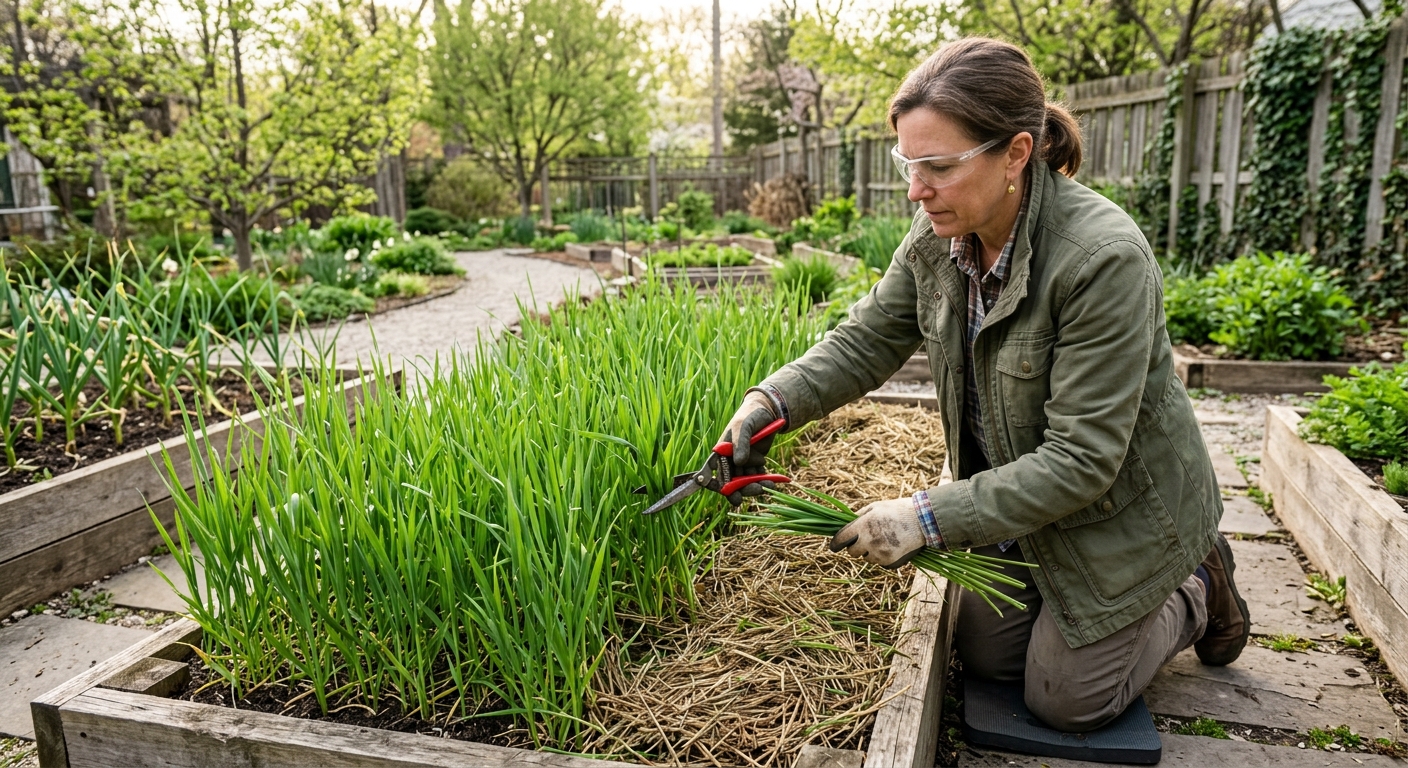
Two to three weeks before planting vegetables, inspect the crop. Terminate before seed heads mature. For a small bed, mowing or cutting is usually practical; Iowa State says mowing works best for many species around 50% flowering, and thick growth may need a string trimmer or hedge clippers before the mower. Spread the cut material as an even mulch, or incorporate it shallowly if that matches your gardening system and leaves enough decomposition time. Wear eye and hearing protection for powered mowing or trimming, and keep children and pets clear of the work area.
For a winter-killed cover, leave the dead residue on the soil as mulch if it is thin enough for planting, or pull it aside in rows and plant through it. For a living cover, confirm it is actually dead before you sow vegetables. A few green shoots can turn into a dense recovery. Do not let any cover crop make viable seed unless you intentionally want it to reseed. The spring work is not a failure of the cover crop; it is part of the job you chose in fall.
Materials
- Cover-crop seed: Choose a species for the bed’s spring schedule. For winter rye, our pick is listed below; for an early bed, ask a local supplier for untreated oats appropriate to your region.
- Garden fork: Loosens the surface and lifts old roots without needing deep tillage.
- Leaf rake: Levels the bed, lightly covers seed, and firms it after sowing.
- Hose with gentle spray: Useful during germination if early fall is dry.
Troubleshooting & FAQ
I planted late. Is it still worth sowing a cover crop?
It depends on your climate and species. Maryland Extension’s typical fall window runs from mid-August through mid-October, while local hard-frost timing determines whether seedlings will establish enough to protect the soil. Ask your county extension office or seed supplier about a late-sowing, winter-hardy option; do not expect a late planting to produce the same biomass as an early one.
Why did my cover crop come up in patches?
Patchy stands usually come from uneven distribution, seed sitting on mulch, dry soil during germination, or seed buried too deeply. Rake off residue, smooth the bed, distribute in two passes, lightly cover the seed, firm it, and water gently. A thin stand still protects some soil, but fix the establishment problem rather than over-seeding blindly in spring.
Can I just let winter rye die on its own?
Usually no. Cereal rye is winter-hardy and often resumes growth strongly in spring. Plan to terminate it before it sets seed and two to three weeks before you plant vegetables; if you need a cover that largely handles its own termination, oats are a more forgiving first choice in cold-winter areas.
Should I till the cover crop into the soil?
You can, but you do not have to. Dead residue can remain on top as mulch, while chopped material can be incorporated if your system and spring schedule allow it to break down. The non-negotiable point is termination before seed set and enough time before vegetables go in.
Our ranked sources
- University of Maryland Extension — Cover Crops for Gardens: Best for the practical fall planting window, bed-preparation sequence, and a clear first-timer case for oats. https://extension.umd.edu/resource/cover-crops-gardens
- Iowa State University Extension — How to Terminate Cover Crops in the Vegetable Garden: Best for the spring-management warning: an un-terminated cover can become a weed, and home gardeners should favor manageable methods. https://yardandgarden.extension.iastate.edu/how-to/how-terminate-cover-crops-vegetable-garden
- Washington State University Extension — Cover Crops for Home Gardens West of the Cascades: Best for matching grasses, legumes, and mixtures to specific soil and garden goals rather than treating any cover crop as a universal answer. https://pubs.extension.wsu.edu/product/cover-crops-for-home-gardens-west-of-the-cascades-home-garden-series/
- Purdue University Extension — Cover Crops in the Home Garden: Best for the regional-timing reminder and a second extension benchmark for allowing termination time before spring vegetables. https://ag.purdue.edu/department/hla/extension/extension-publications-library/ext-pubs/ho-324-w.html
Affiliate disclosure: as an Amazon Associate, HowTo.Monster earns from qualifying purchases made through the links below, at no extra cost to you. Our picks are chosen editorially, not by commission.
Apparatus & Materials
| Item | Cost | |
|---|---|---|
| ◆ Garden fork Loosens the cleaned bed and lifts old roots while preserving more soil structure than aggressive digging. | $25–$55 | — |
| ◆ Leaf rake Levels the bed, gives broadcast seed a shallow cover, and helps firm the surface after sowing. | $18–$35 | — |
| ◆ Mountain Valley Seed Company No-Till Winter Rye Seeds, 5 lb Our pick for gardeners who need a cold-hardy cereal rye cover and have a spring termination plan; surfaced Amazon listing showed roughly 951 ratings and a 4.3/5 rating. | $26–$30 | Buy now |
| Hose with gentle spray nozzle Useful for keeping the seedbed evenly moist during dry fall germination without washing seed into clumps. | $15–$30 | — |
Notes on the sources
The ranking at right reflects our editorial judgment after reading each source in full. For a summary of this entry in brief, see the source ranked first. For the chemistry and underlying principles, see the last.