Skip the corrosive drain cleaners and learn how to clear hair clogs and soap scum using simple mechanical tools and safe temperature-controlled methods.
Mechanical First, Chemistry Second: The Better Way to Drain
Most people reach for a bottle of liquid drain cleaner the moment their shower starts pooling water around their ankles. It’s a habit born of convenience, but it’s often the wrong tool for the job. Chemical cleaners are corrosive, can react lethally with other household products, and—most importantly—they are notoriously bad at dissolving the primary culprit in 90% of shower clogs: hair.
To clear a shower drain effectively without damaging your plumbing or your lungs, you need to go mechanical. This guide focuses on the tools that actually work and the safety limits you must respect to keep your PVC pipes intact.
The Golden Rules of Drain Safety
Before you grab a tool, understand these three non-negotiable safety rules:
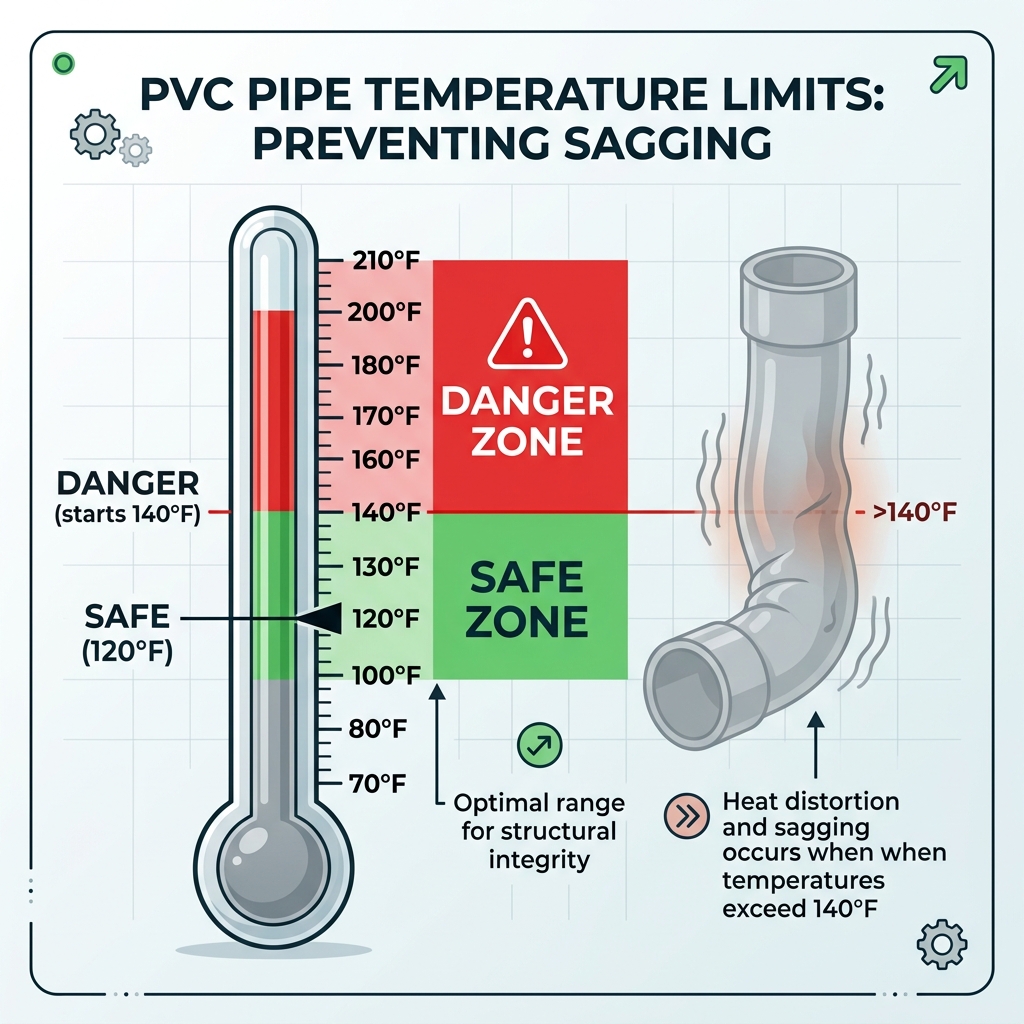
- The 140°F Limit: Most modern home plumbing uses Schedule 40 PVC. Manufacturers like Charlotte Pipe set a maximum service temperature of 140°F (60°C). Boiling water (212°F) can soften PVC, sag pipes, and cause solvent-welded joints to fail. Use hot tap water (120°F-130°F), never boiling.
- No Chemical Cocktails: If you’ve already poured a commercial cleaner down the drain, do not start poking around or adding other substances. Mixing bleach-based cleaners with acids (like vinegar) produces toxic chlorine gas. If chemicals are present, flush with cold water for 15 minutes first.
- Standing Water is a Biohazard: Standing water in a clogged drain is full of bacteria and biofilm. Wear rubber gloves and eye protection to prevent splashes.
Step 1: Identify and Remove the Drain Cover
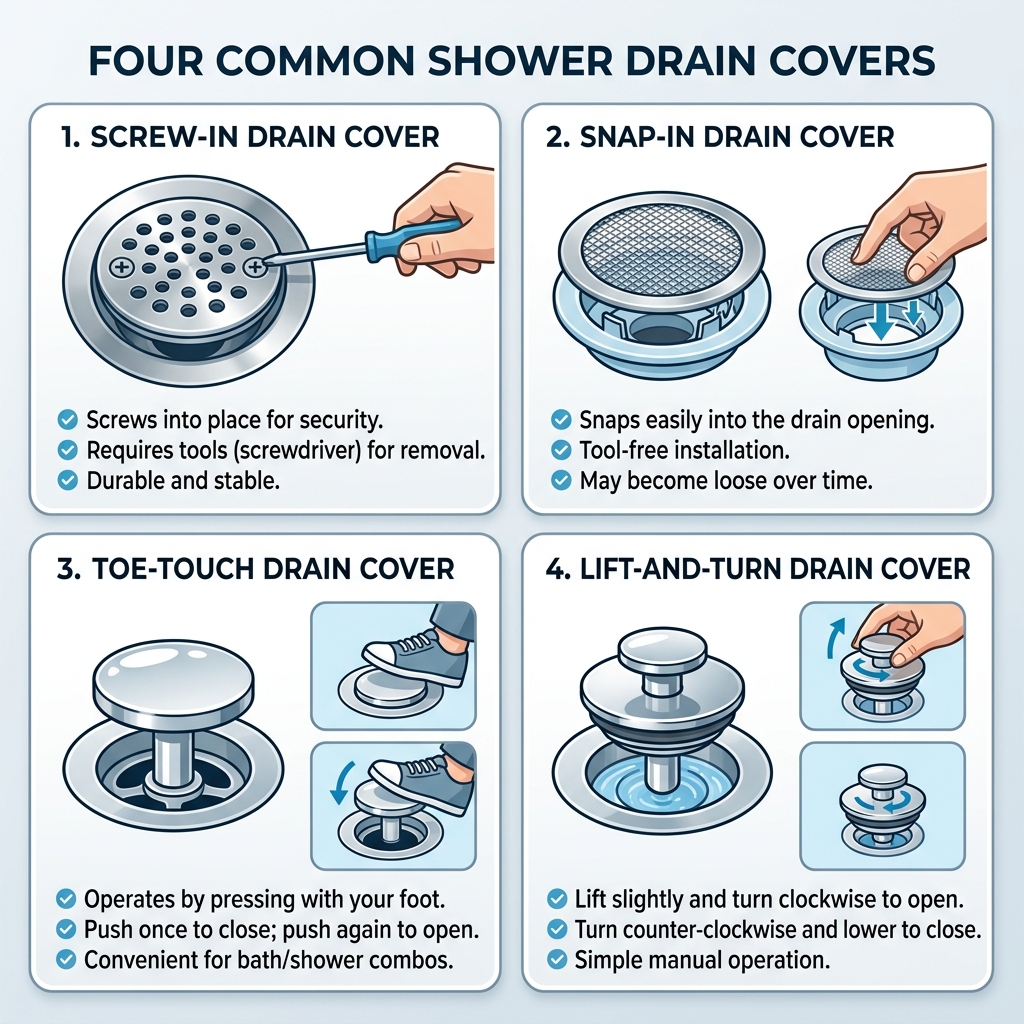
You can't clear a clog if you can't reach it. Most shower clogs sit right on the "crosshairs" of the drain assembly, just an inch or two below the cover.
- Screw-In: Look for one or two Phillips-head screws. Remove them and lift the plate.
- Snap-In: Use a flathead screwdriver to gently pry the edge of the plate upward.
- Toe-Touch/Lift-and-Turn: Most of these unscrew counter-clockwise. You may need an Allen key for a small set-screw located under the cap.
Tip: Place a rag over the drain while unscrewing to prevent dropping small screws into the abyss.
Step 2: The "Shallow" Clear (The Plastic Hair Snake)
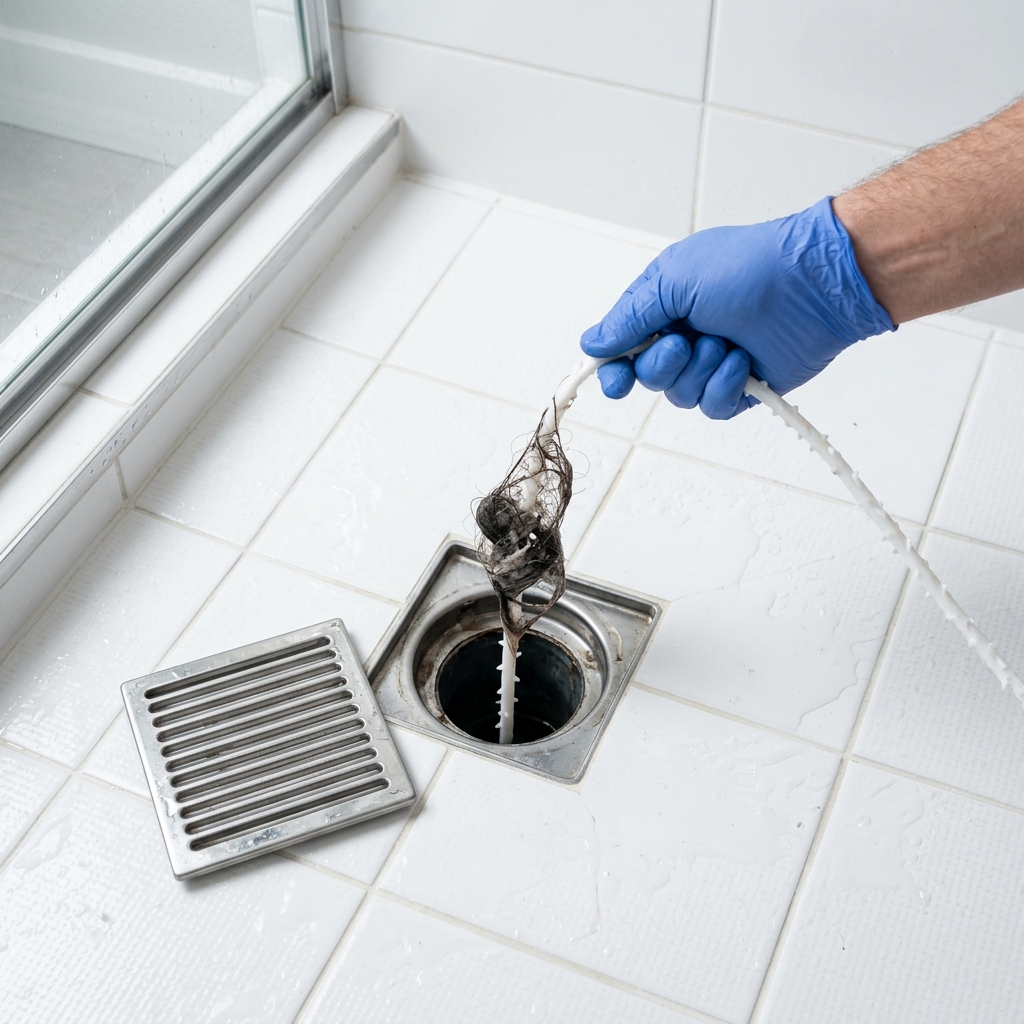
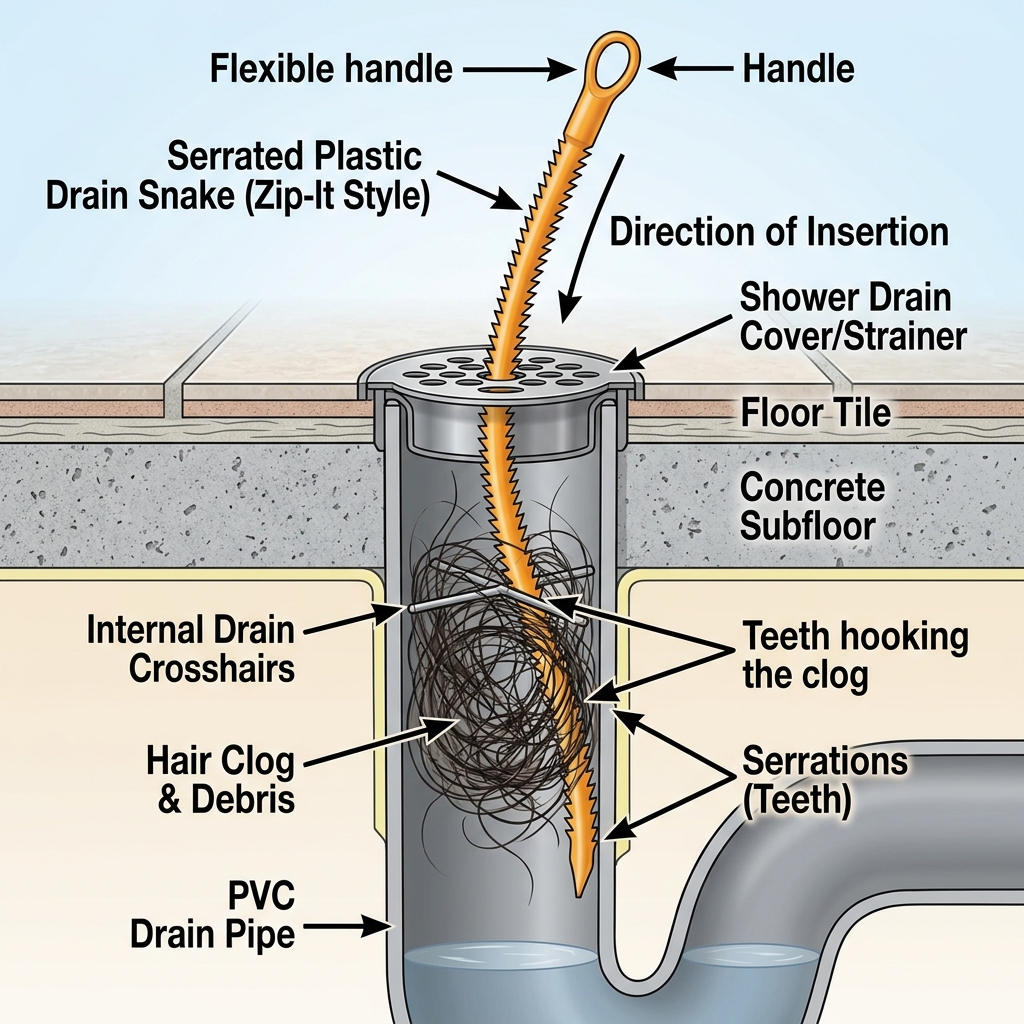
For the vast majority of shower clogs, a $5 plastic hair snake (often called a Zip-It) is your most powerful weapon. These flexible strips have serrated barbs that grab onto hair bundles.
- Insert: Feed the plastic snake into the drain as far as it will go (usually 18–24 inches).
- Agitate: Give it a slight twist and a few short up-and-down tugs.
- Extract: Pull the snake out slowly. Be prepared—this will bring up a wet, soapy mass of hair. Have a trash can nearby.
- Repeat: Continue until the snake comes back clean.
Step 3: The "Deep" Clear (The Manual Hand Auger)
If the plastic snake doesn't reach the clog, it's likely stuck in the P-trap or further down the branch line. This requires a manual hand auger (drain snake).
- Feed the Cable: Loosen the set-screw on the auger drum and manually feed the metal cable into the drain until you feel resistance.
- Crank: Tighten the set-screw and turn the handle clockwise. This rotates the corkscrew tip into the clog.
- Retrieve: Pull the cable back slowly. If the resistance is heavy, you've likely hooked the main clog.
Note: Avoid using power-drill auger attachments on shower drains. The force can easily crack older brass traps or damage thin plastic pipes.
Step 4: Maintenance (The Baking Soda Myth)
You’ve likely heard that baking soda and vinegar can dissolve clogs. To be clear: It cannot dissolve hair.
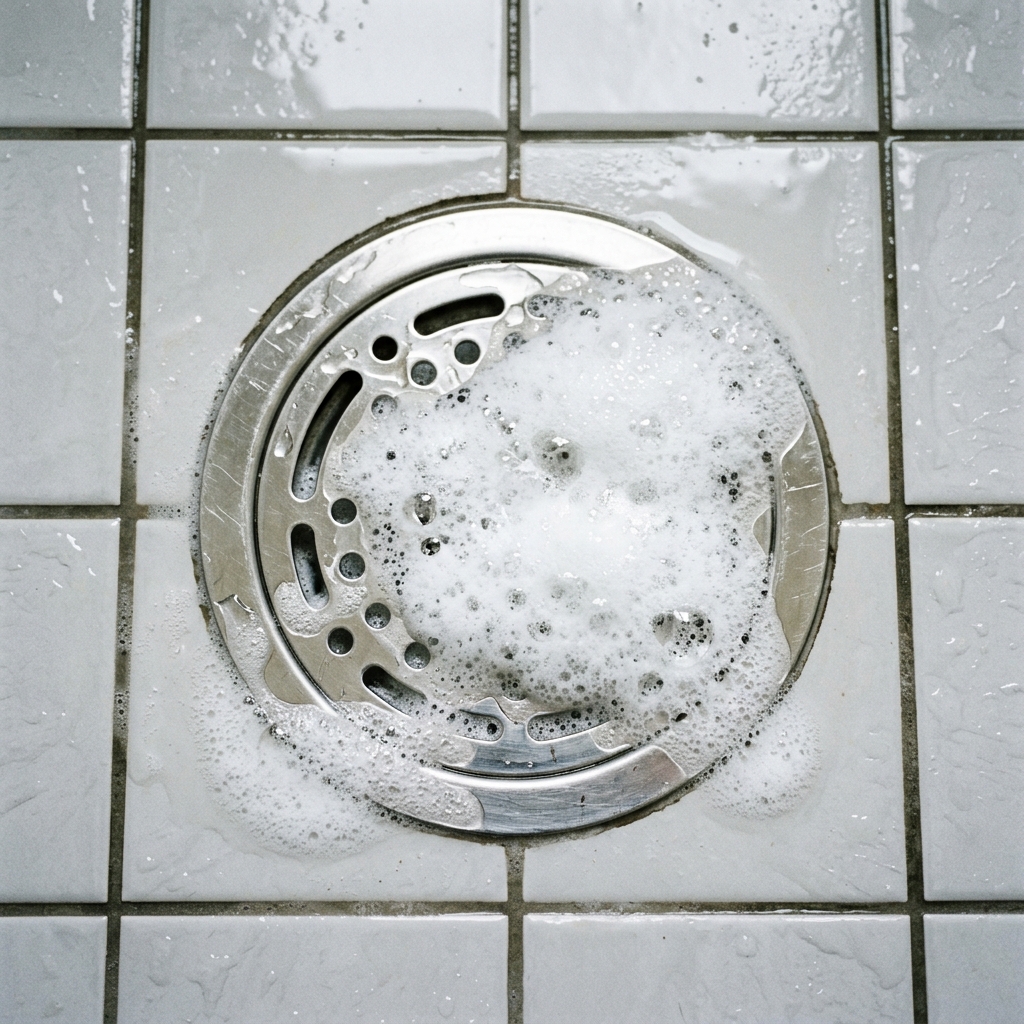
However, the bubbling reaction is excellent for breaking down the biofilm (the slippery "glue" made of soap scum and skin cells) that binds hair together.
- Monthly Maintenance: Pour 1/2 cup of baking soda down the drain, followed by 1/2 cup of white vinegar. Let it fizz for 10 minutes, then flush with hot tap water (not boiling!). This keeps the drain smelling fresh and prevents biofilm buildup.
Diagnostic Decision Tree: When to Call a Pro
Don't be a hero if the problem is bigger than your shower. Call a licensed plumber if:
- Multi-Fixture Backup: If your toilet gurgles when the shower drains, or if water backs up into the shower when you run the sink, the clog is in your main line.
- Sewage Smell: A persistent "rotten egg" smell suggests a venting issue or a dried-out trap that requires professional inspection.
- Total Recalcitrance: If you've snaked 15 feet of cable and the water still isn't moving, you're likely dealing with a tree root intrusion or a collapsed pipe.
Apparatus & Materials
| Item | Cost | |
|---|---|---|
| ◆ Eye Protection To prevent splashes when working with standing water. | Free | — |
| ◆ Manual Hand Auger A 15-25 foot metal cable with a drum and crank handle. | $15–$30 | — |
| ◆ Plastic Hair Snake A serrated plastic strip (e.g., Zip-It) for shallow clogs. | $3–$7 | — |
| ◆ Rubber Gloves To protect against biofilm and bacteria. | Free | — |
| ◆ Screwdriver Set Phillips and Flathead drivers for removing drain covers. | Free | — |
| Baking Soda For maintenance and odor control. | Free | — |
| White Vinegar For maintenance and biofilm loosening. | Free | — |
Notes on the sources
The ranking at right reflects our editorial judgment after reading each source in full. For a summary of this entry in brief, see the source ranked first. For the chemistry and underlying principles, see the last.