Vacuum the track, clear stubborn grime, and make small roller adjustments so a sticky patio door slides without scraping or dragging.
A sticky patio door usually needs cleaning before parts
A sliding patio door that drags rarely needs a dramatic fix first. In many homes the problem is a mix of grit in the track, dry rollers, and a door panel that has drifted slightly out of level. The good news is that those are all things a careful homeowner can address with basic tools.
This guide focuses on the sequence that actually works: clean first, inspect second, adjust the rollers in tiny increments, and only then think about replacement parts. That keeps you from chasing the symptom with lubricant alone or stripping a screw before the door has a chance to improve.
Step 1: Remove loose grit from the track
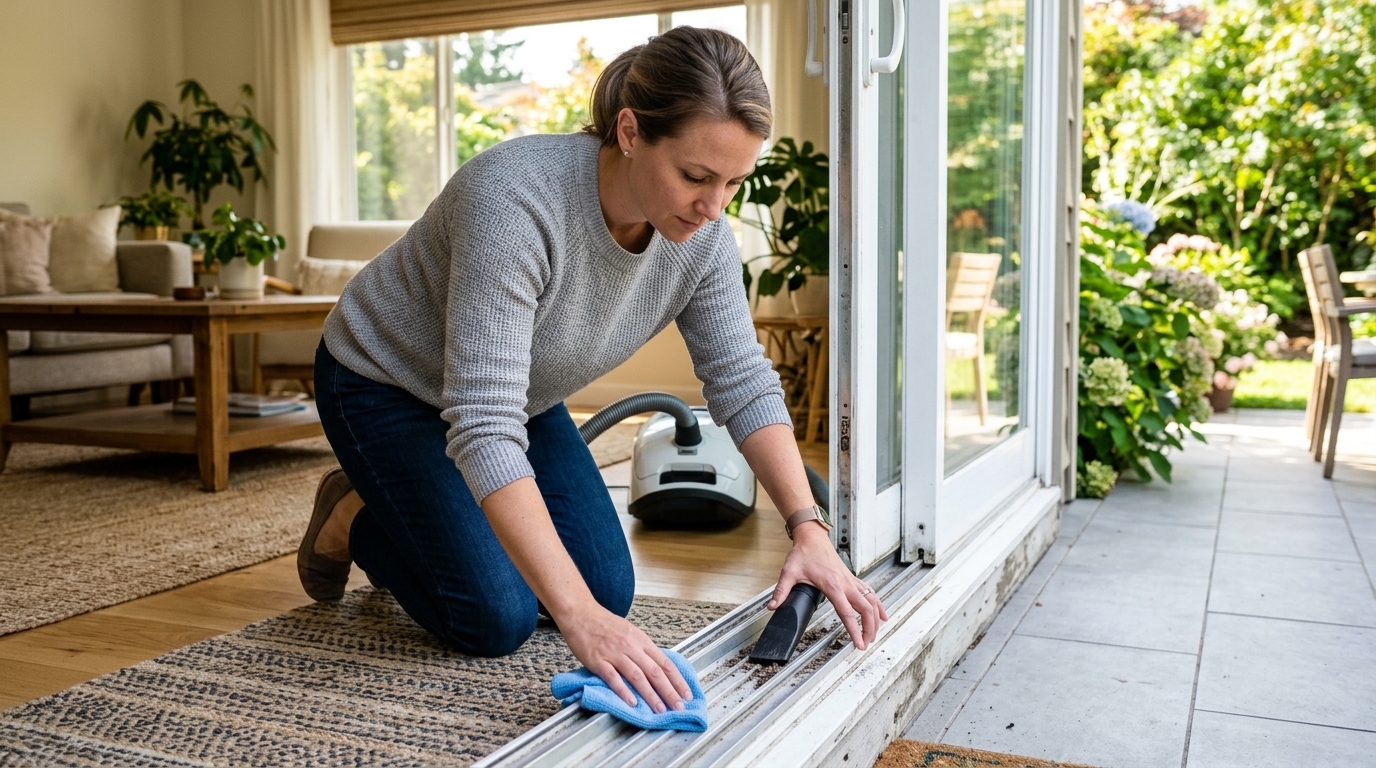
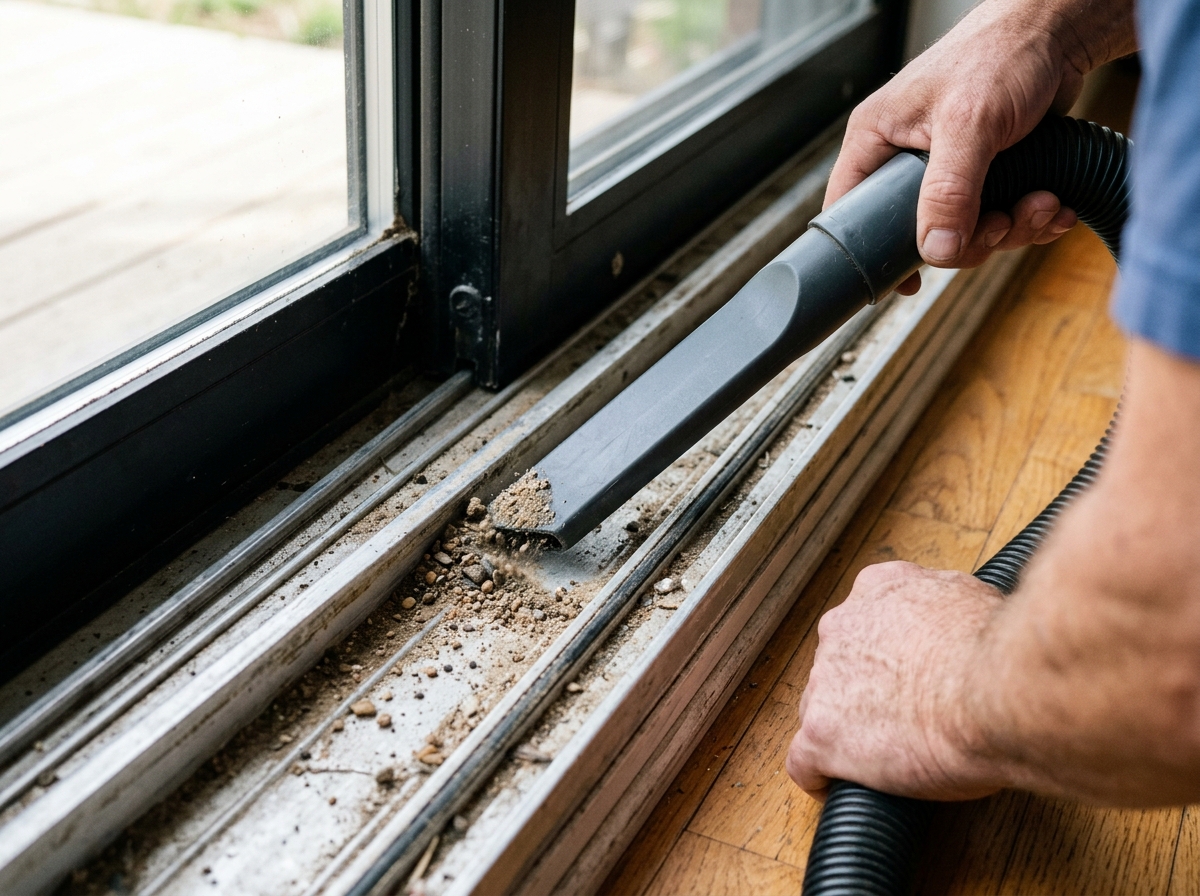
Open the door enough to expose the track, then vacuum every channel you can reach, including the corners where dirt compacts into a hard ridge. If the door has a screen, check that track too; screen-door debris often transfers into the main track.
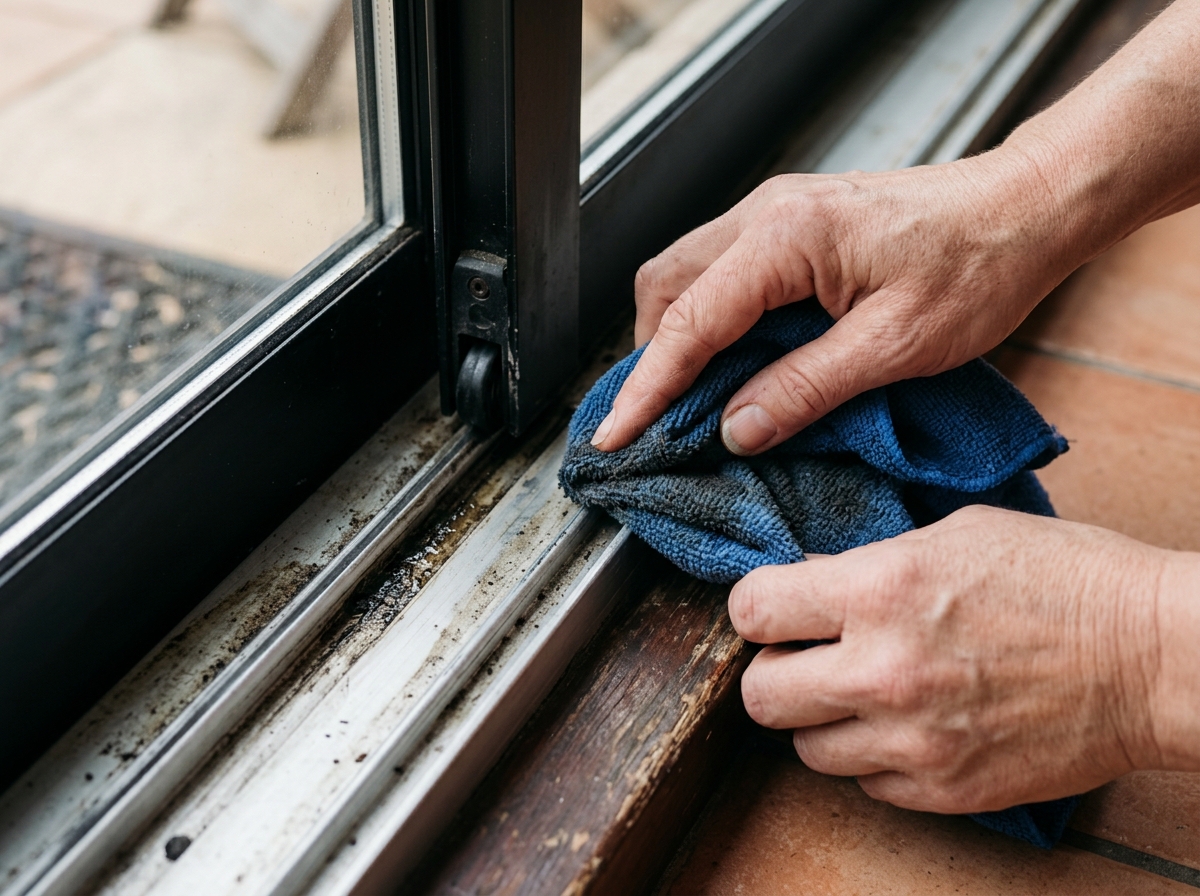
After vacuuming, wipe the channel with a rag dipped in warm soapy water. Use a toothbrush or small nylon brush for baked-on dirt, then dry the surface completely. Drying matters because lubricant spreads better on a clean, dry track than on a damp one.
Step 2: Clean the rollers and check the movement
With the door still in place, look at the lower edge where the rollers meet the track. If you can reach the roller housing, wipe away visible grime with a damp cloth or alcohol on a rag. The goal is to remove the dirt cake that makes the rollers drag, not just to polish the outside of the track.
Slide the door back and forth a few times by hand. Listen for scraping, feel for a heavy spot, and note whether the door lifts slightly or drops as it moves. If the drag is coming from one end, that is a strong clue that the rollers are out of adjustment rather than simply dirty.
Step 3: Adjust the rollers in small turns
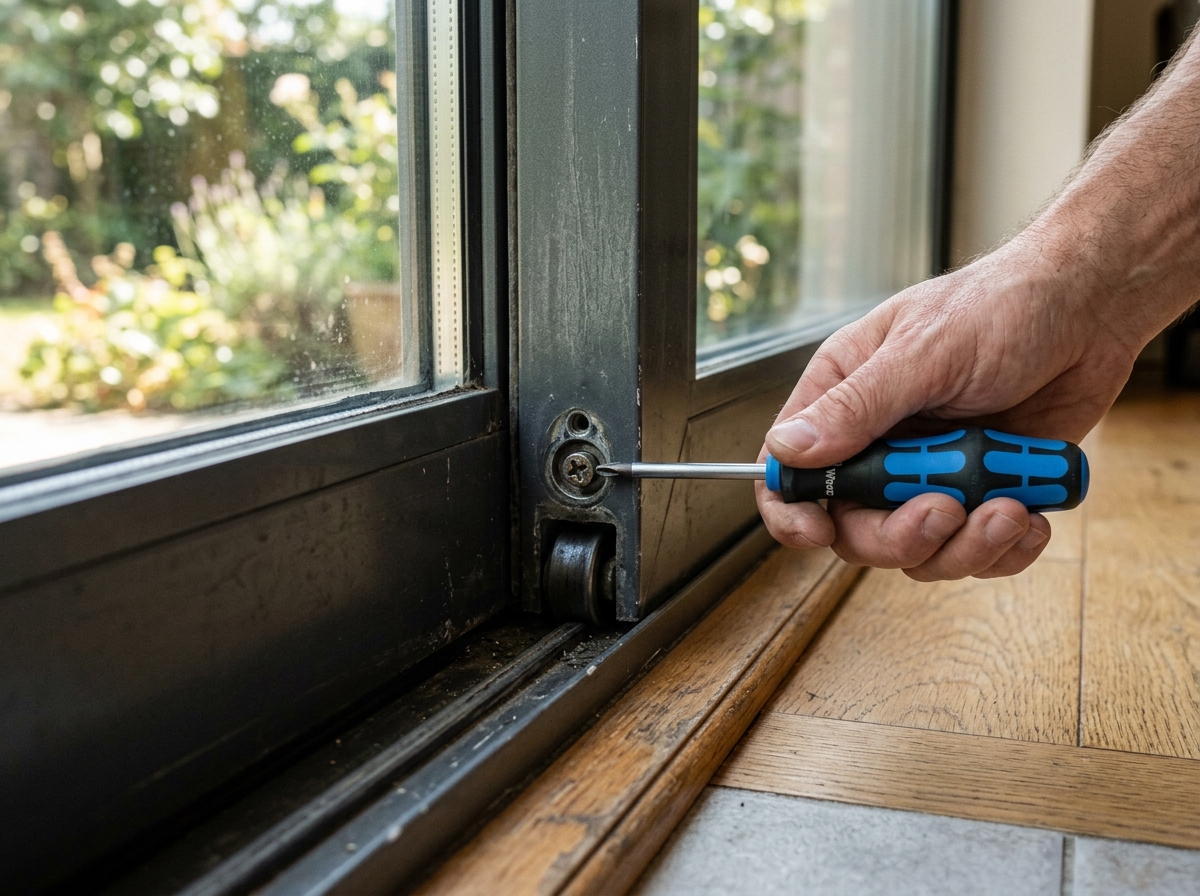
Find the adjustment screws near the bottom edge of the movable panel, often hidden under plastic caps. Use a manual Phillips screwdriver and make small quarter-turn changes rather than cranking the screw all at once. On many doors, clockwise raises the panel and counterclockwise lowers it.
Adjust one side, slide the door, then check the reveal — the gap between the door and frame should look even from top to bottom. If the door still rubs, adjust the other side a little. The caution here is simple: over-adjusting one roller can make the door bind worse, and power drivers can strip the screw heads fast.
Step 4: Lubricate lightly and test again
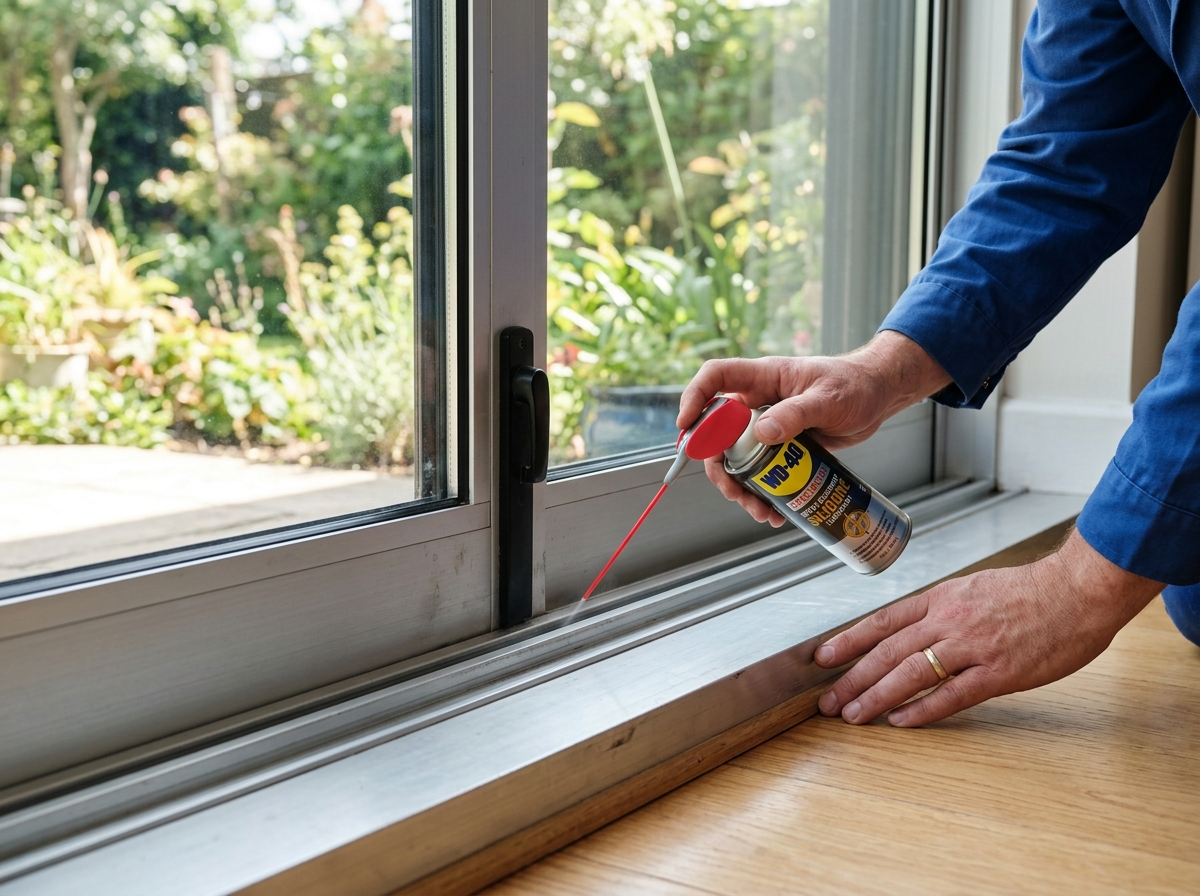
Once the track and rollers are clean, apply a thin film of silicone-based lubricant to the contact areas. Avoid heavy oil that stays tacky and grabs new dust. If your door uses a plastic track insert, use only a light application and wipe off overspray immediately.
Slide the door several times to distribute the lubricant, then test the final feel. A good result is a door that moves with less effort, closes squarely, and no longer scrapes at one corner. If it still feels rough after cleaning and adjustment, the rollers may be worn and need replacement.
Apparatus & Materials
| Item | Cost | |
|---|---|---|
| ◆ Manual Phillips screwdriver Turns the roller adjustment screws without stripping them. | $8–$18 | Buy now |
| ◆ Microfiber rag Wipes cleaned track surfaces dry before lubricant goes on. | $5–$12 | Buy now |
| ◆ Soft nylon brush Scrubs compacted dirt from the track without gouging the metal or vinyl. | $4–$10 | Buy now |
| ◆ Vacuum with crevice tool Removes loose grit from the bottom track and corners before cleaning. | Free | Buy now |
| Silicone spray lubricant Helps the clean rollers glide without attracting as much new dirt as oil-based products. | $6–$14 | Buy now |
Notes on the sources
The ranking at right reflects our editorial judgment after reading each source in full. For a summary of this entry in brief, see the source ranked first. For the chemistry and underlying principles, see the last.