

Learn how to test a GFCI outlet, reset it correctly, and spot the warning signs that mean it needs a repair or replacement.
Why GFCI outlets matter
A GFCI outlet is designed to cut power quickly when it senses a problem, which helps reduce shock risk in places like kitchens, bathrooms, garages, and outdoor areas. That safety feature only helps if the device is actually working, which is why the built-in TEST and RESET buttons deserve a monthly check instead of being ignored until an outlet goes dead.
The good news is that the process is simple when you use the right order: confirm power, press TEST, confirm the load goes off, then press RESET to restore power. If the outlet refuses to latch, trips immediately, or shows damage, stop treating it as a quick nuisance and move into troubleshooting.
Step 1: Check the outlet and the area around it
Start with a visual scan before you press anything. Look for cracks, scorch marks, discoloration, melted plastic, or a burnt smell. If the outlet looks damaged, do not test it again; replace it or call a licensed electrician.
Make sure your hands and the surrounding area are dry. GFCI outlets are often installed near sinks, tubs, laundry areas, or exterior walls, so moisture is a common trigger and also a common hazard. A dry, calm check takes seconds and can prevent a bad situation from getting worse.
If the outlet is in a kitchen, bathroom, garage, or outside location, remember that it may protect multiple outlets downstream. A trip can make several receptacles go dead at once, so don't assume the nearest dead plug is the only problem.
Step 2: Plug in a simple test load
Use a small lamp, nightlight, or radio so you can clearly see when power stops. This makes the test easy to read and avoids confusion from devices that have their own batteries, standby modes, or protection circuits.
Plug the test load into the GFCI and turn it on. If the light or radio doesn't power up at all, the issue may be upstream: the breaker may be off, the GFCI may already be tripped, or the outlet may be miswired.
Do not use a heavy appliance for this check. The point is to confirm operation, not to add load to a circuit that may already be failing.
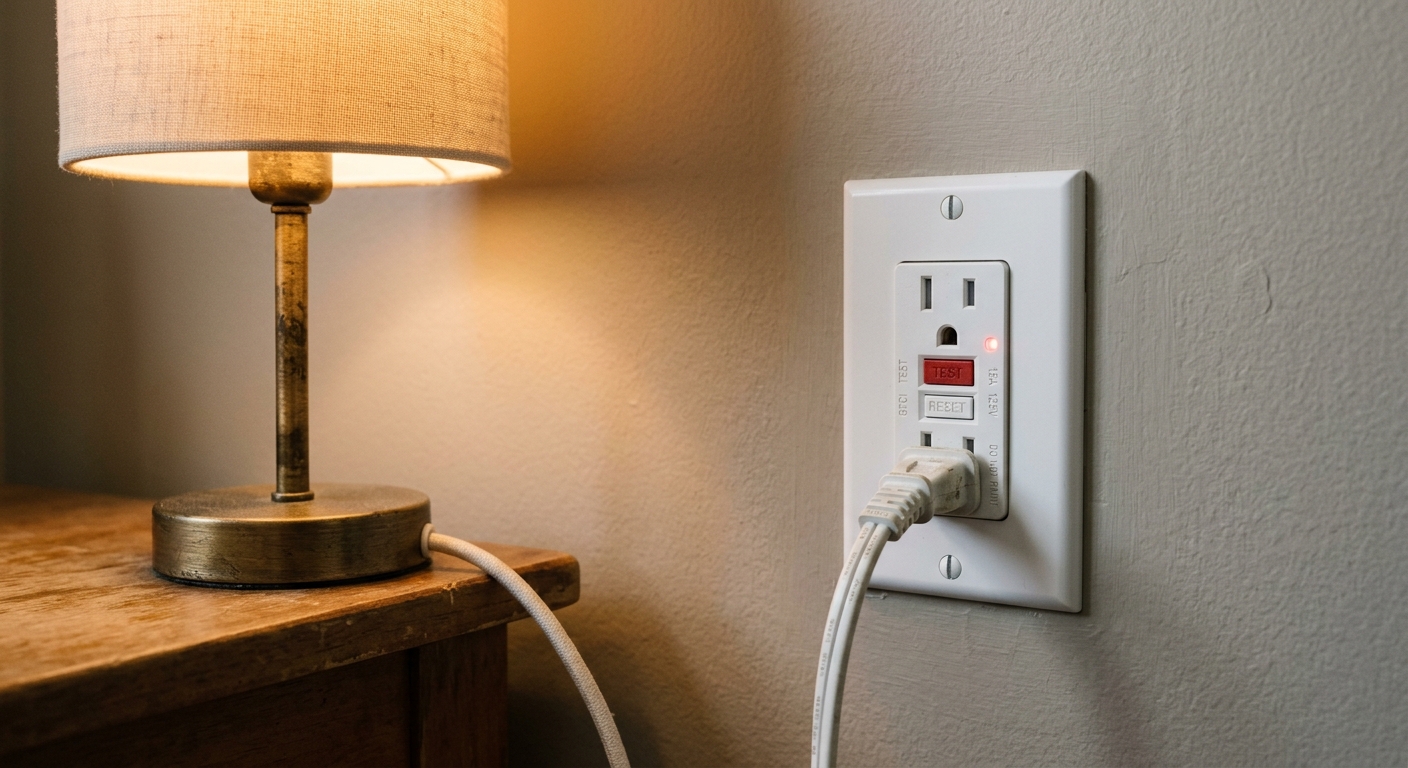
Step 3: Press TEST and confirm the outlet trips
Press the TEST button firmly. A working GFCI should click, the RESET button should pop out, and the lamp or radio should turn off immediately. That combination tells you the device is interrupting power the way it should.
If the load stays on, or if nothing obvious happens when you press TEST, stop and troubleshoot rather than assuming the outlet is fine. A GFCI that does not trip is not doing its job, and it should be inspected or replaced by a qualified person.
Some models include indicator lights. Treat those lights as a supplement, not the only proof. The clearest proof is that the outlet cuts power to the plugged-in load when TEST is pressed.
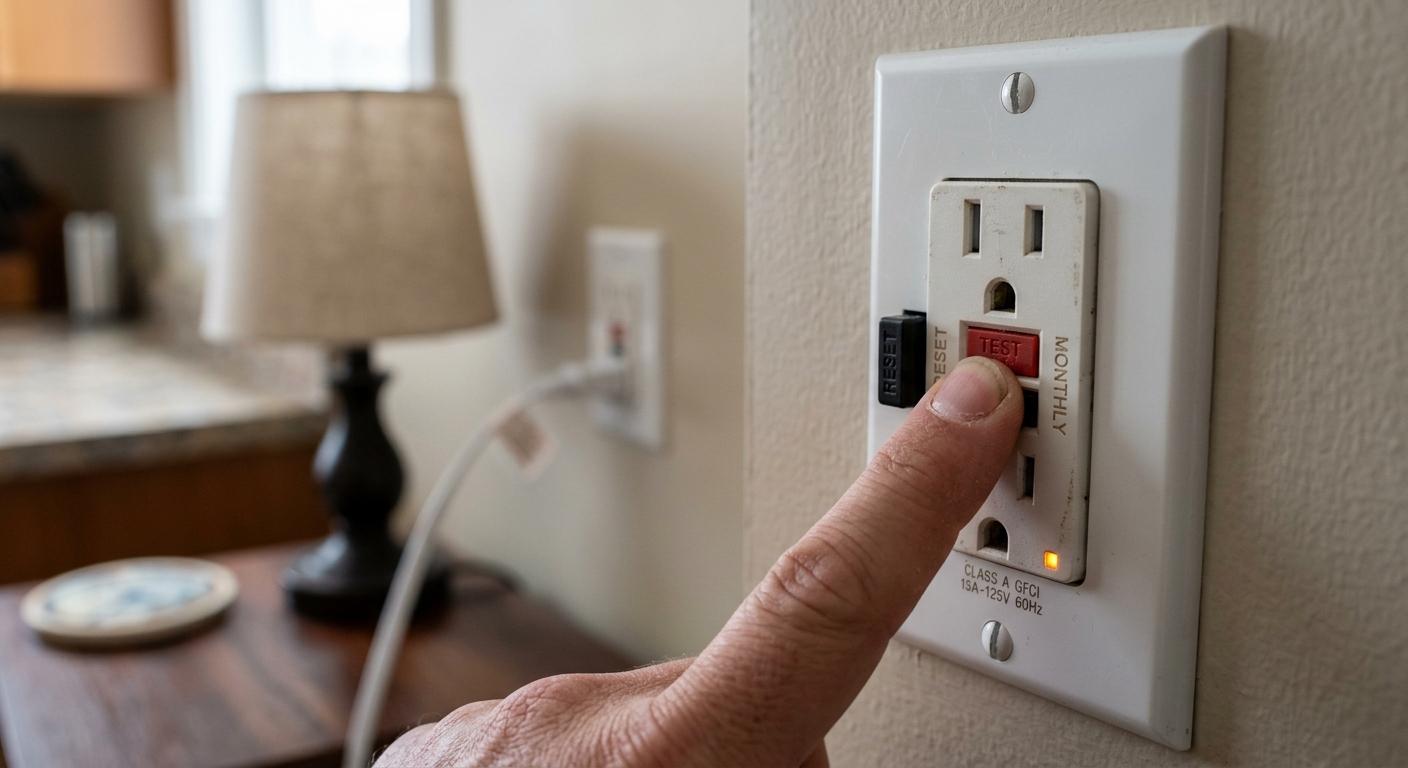
Step 4: Press RESET and confirm power returns
After the outlet trips, press RESET firmly until it latches. You should hear or feel a click, and the plugged-in lamp or radio should come back on. That means the device has reset successfully and is ready for normal use.
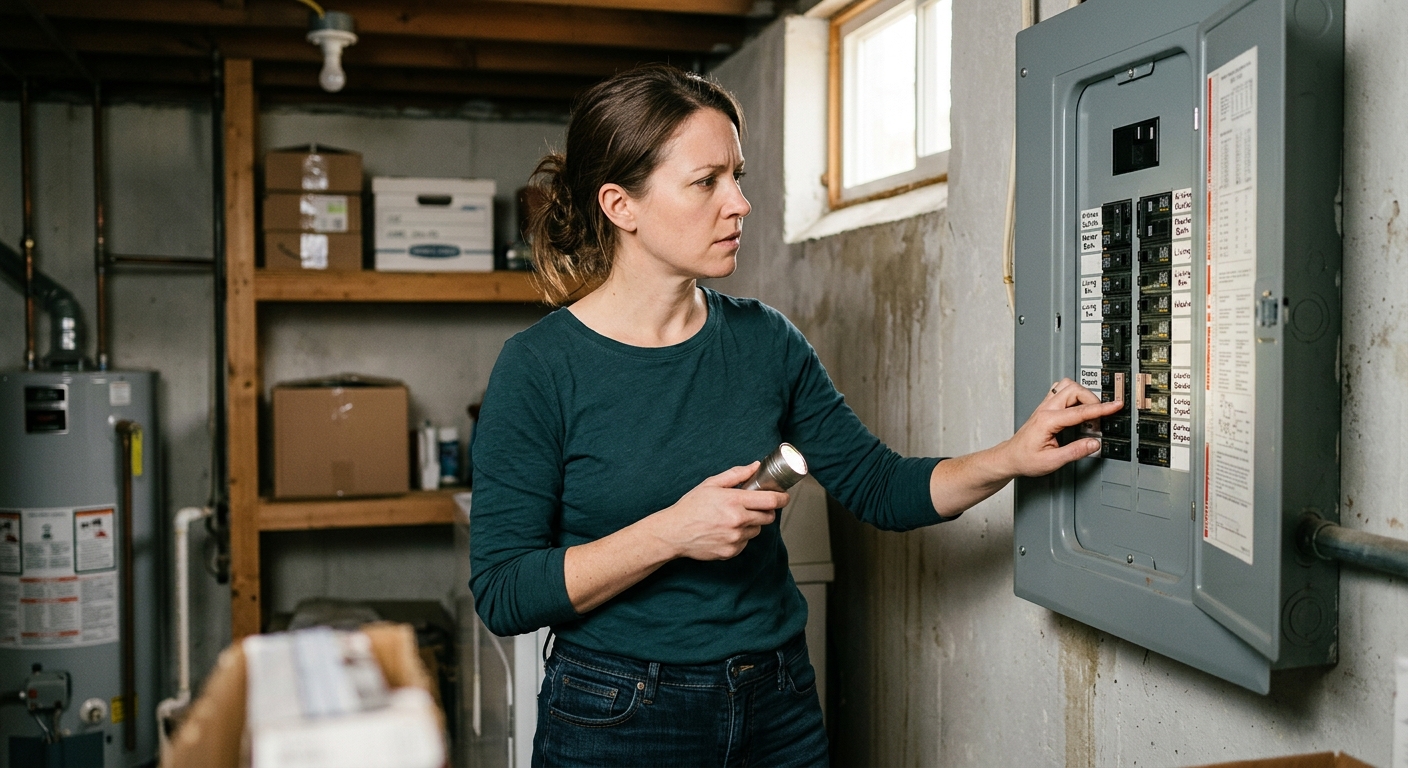
If RESET will not stay in, check the obvious causes first: another device may still be overloading the circuit, moisture may be present, or a breaker may have tripped upstream. Unplug everything on the circuit that might be causing the issue, then try again.
If the outlet resets but trips again right away, do not keep forcing it. Repeated nuisance tripping can point to moisture, a failing device, or a wiring problem that needs professional attention.

Step 5: Know when to stop and call for help
A GFCI that is cracked, hot, scorched, loose in the wall, or impossible to reset should be treated as faulty safety equipment. Replace it or have an electrician inspect the circuit instead of repeatedly pushing the buttons.
If the outlet protects several downstream receptacles, make sure every affected outlet comes back on after the reset. If some remain dead, the problem may be in the wiring path, the breaker, or another protection device.
The safest habit is to test monthly, just as the manufacturer and safety agencies recommend, and to treat any failure as a real maintenance issue rather than an annoyance. That keeps the protection active when you actually need it.
Apparatus & Materials
| Item | Cost | |
|---|---|---|
| ◆ Small lamp Provides a clear visual load so you can tell when the GFCI trips and resets. | Free | Buy now |
| Non-contact voltage tester Helps confirm whether a circuit is live before you touch the outlet area. | $15–$30 | Buy now |
Notes on the sources
The ranking at right reflects our editorial judgment after reading each source in full. For a summary of this entry in brief, see the source ranked first. For the chemistry and underlying principles, see the last.