
Pull the filter, brush off trapped food, flush the spray arms, and reseat everything correctly so odors fade and the seal stays intact.
A cleaner dishwasher starts with the filter
If your dishes are coming out gritty, your glasses look hazy, or the machine smells like old food, the problem is often hiding at the bottom of the tub. A packed filter and clogged spray-arm nozzles reduce circulation, let debris recirculate, and make the whole cycle work harder than it should.
This guide focuses on the two maintenance points that matter most: the filter that traps food scraps and the spray arms that distribute water. The job is simple, but the details matter. If you force the wrong part, scrub with the wrong tool, or reassemble parts loosely, you can create a leak or a weak spray pattern instead of fixing the problem.
Step 1: Remove the lower rack and expose the filter
Open the dishwasher fully and slide the lower rack out so you can reach the floor of the tub. On most machines, the filter sits in the center or slightly toward the back, beneath the lower spray arm.
Look for a round or cylindrical assembly with a twist-lock top. That assembly is designed to catch softened food, grease, and the bits that would otherwise get sprayed back onto your dishes. If it has not been cleaned in a while, the mesh may look cloudy or coated with a greasy film.
Step 2: Twist out the filter and rinse it clean
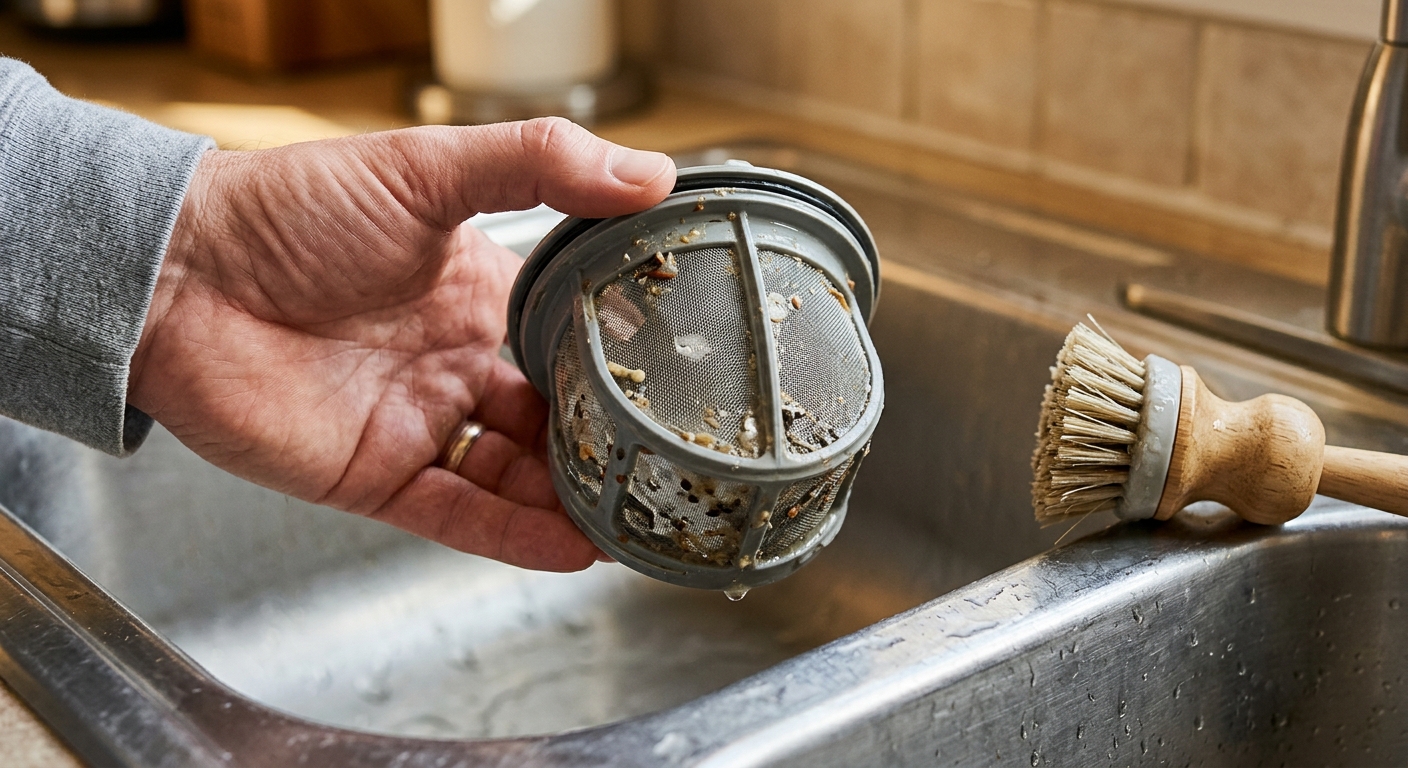
Turn the filter gently in the unlock direction for your model, then lift it straight out. Do not yank on the mesh. The locking tabs are plastic, and the mesh can tear if you twist the wrong section.
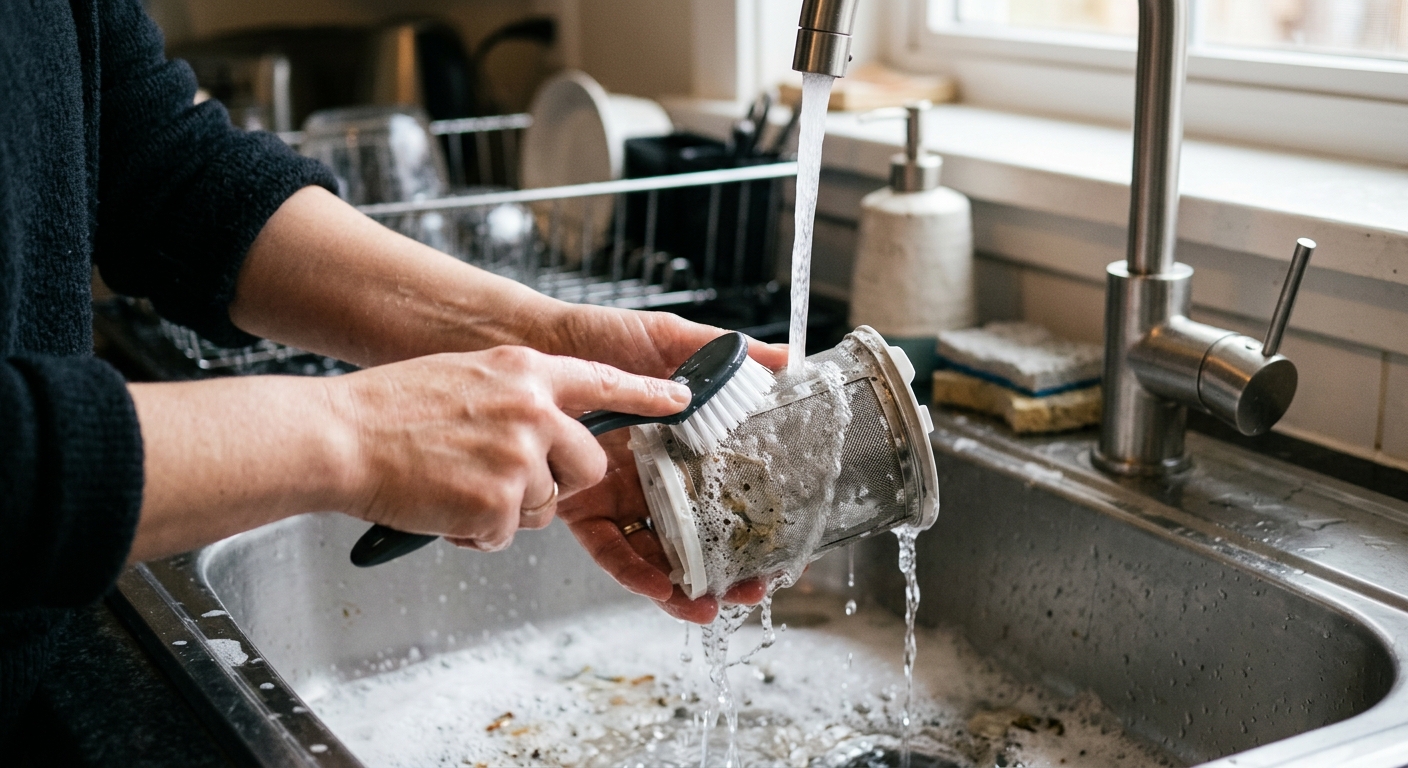
Carry the filter to the sink and rinse it under warm water. Use a soft-bristle brush and a little dish soap to lift away grease and trapped particles. If you see stubborn mineral buildup, keep brushing with light pressure rather than reaching for a scouring pad. The goal is to restore the mesh, not polish it.
Step 3: Inspect and clean the spray arms
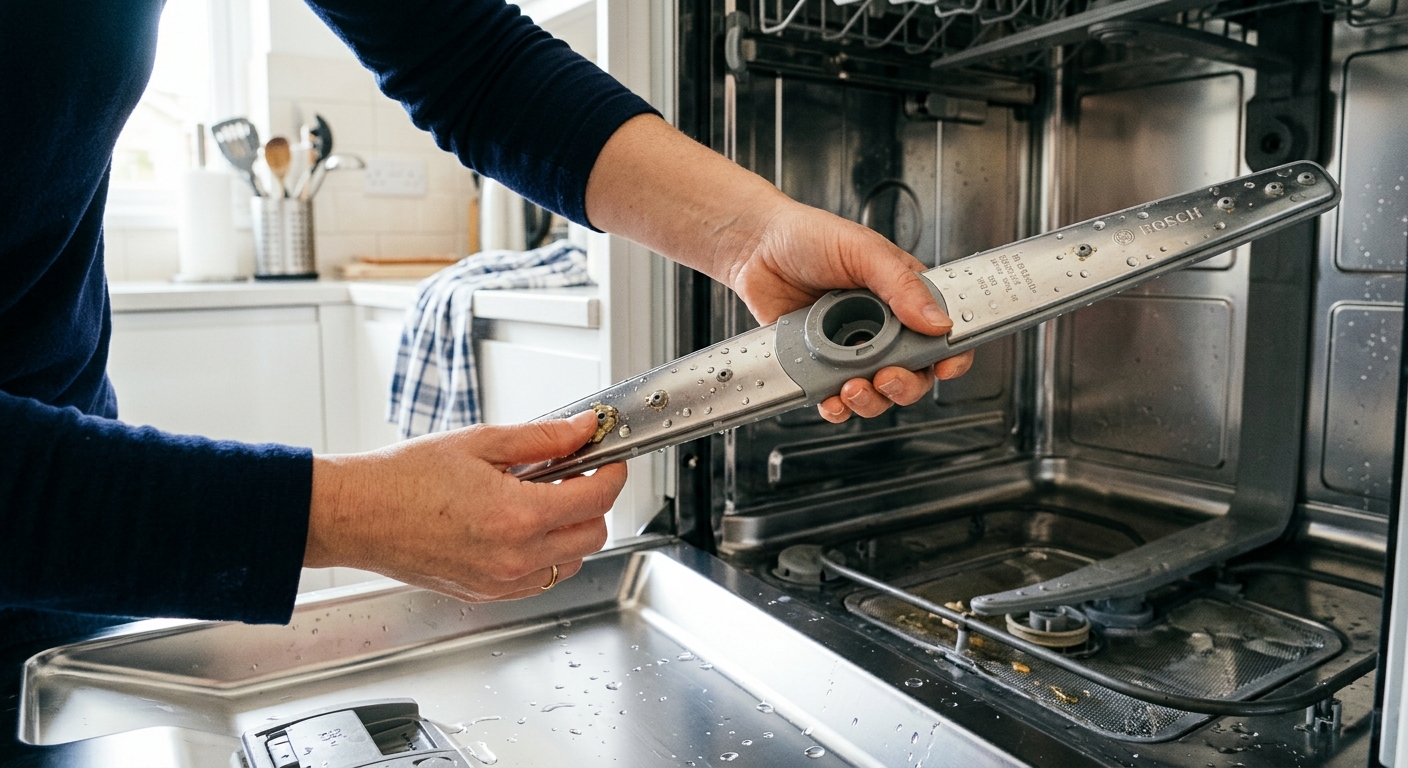
With the lower rack still out, check the lower spray arm and, if accessible, the upper spray arm. Many models let the lower arm lift off or unlock with a simple twist, while the upper arm may clip or thread into place depending on the design. If the dishwasher just finished a cycle, wait until the tub has cooled before handling these parts.
Hold each arm up to the light and look at the nozzle holes. If food fragments or mineral scale block the openings, water cannot fan out correctly. Run water through the arm to flush it, then use a toothpick or wooden skewer to loosen stubborn debris. Avoid metal picks that can enlarge or deform the nozzles.
Step 4: Flush the nozzles and check that the arms spin freely
After the visible debris is gone, rinse the spray arms again and shake out any trapped water or loose grit. You want open holes and smooth movement, not just a cleaner-looking part.
Before reinstalling, check that each arm rotates or clips back into position the way it did before removal. A spray arm that binds, drags, or sits crooked can create dead spots in the wash pattern. If a tab looks cracked or the arm wobbles badly, replace the part rather than forcing it back into service.

Step 5: Reinstall the filter and test a short cycle
Set the filter back into its seat and turn it until it locks firmly. It should feel snug and finish with a clear stop, not a mushy half-turn. If your model uses alignment arrows, match them before the final twist.
Slide the rack back in and run a short cycle with the dishwasher empty. Listen for smooth spray noise rather than rattling, and check that the tub floor stays dry around the filter housing. If the machine still smells or dishes still come out gritty, repeat the cleaning and inspect for a missed nozzle or a loose fit.
Apparatus & Materials
| Item | Cost | |
|---|---|---|
| ◆ Dish soap Breaks down the greasy film stuck to the filter and spray arms. | $3–$7 | Buy now |
| ◆ Soft-bristle nylon brush Lifts grease and food from the filter mesh without scratching it. | $4–$9 | Buy now |
| ◆ Wooden toothpicks Clears blocked spray-arm nozzles without gouging the plastic. | $2–$5 | Buy now |
| Microfiber cloth Catches drips and wipes the tub floor before reassembly. | $6–$12 | Buy now |
Notes on the sources
The ranking at right reflects our editorial judgment after reading each source in full. For a summary of this entry in brief, see the source ranked first. For the chemistry and underlying principles, see the last.