
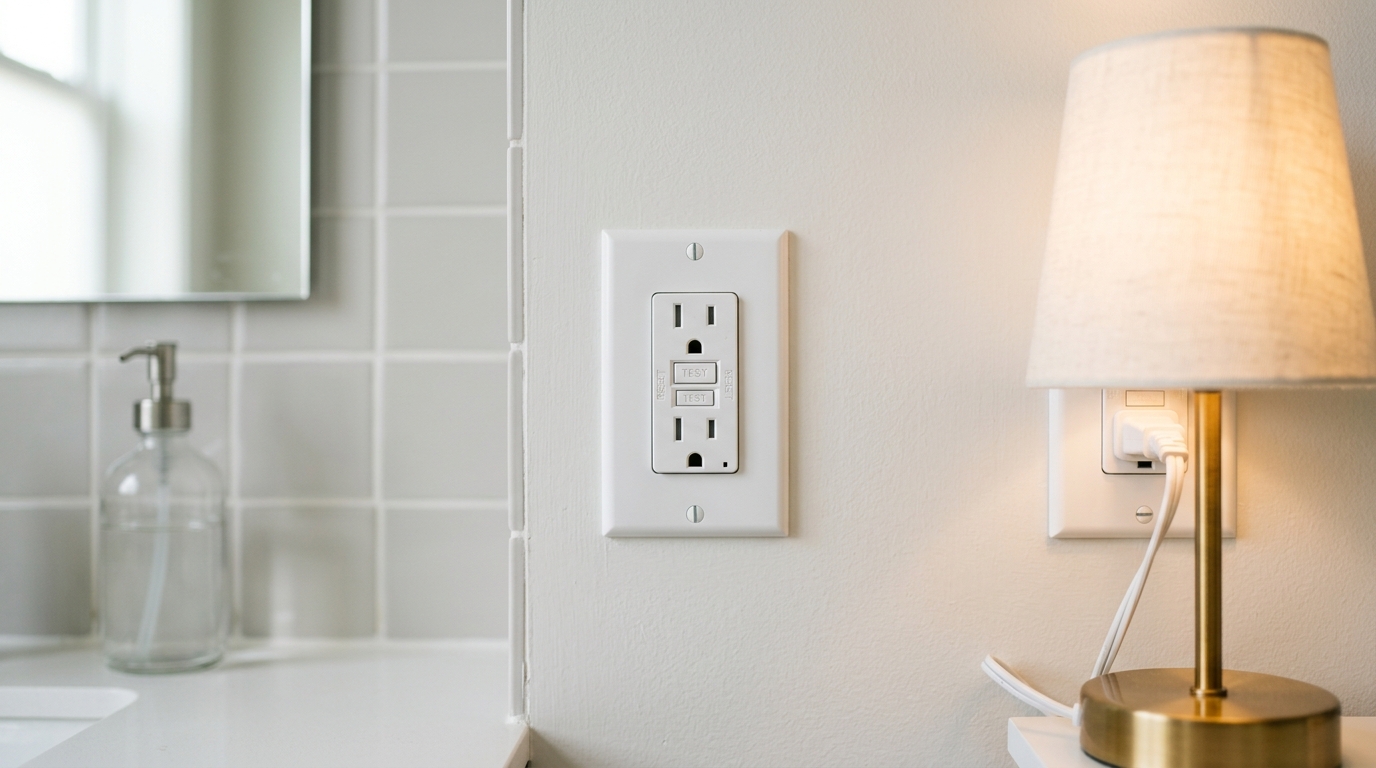
Test a GFCI outlet safely with a lamp or tester, confirm it cuts power, and know when a failed reset means it’s time to call an electrician.
How to Test a GFCI Outlet the Right Way
A GFCI outlet is one of the simplest safety devices in a home, but only if it actually trips when it should. The TEST and RESET buttons are easy to ignore until an outlet stops working, yet a quick monthly check helps confirm that the outlet can still cut power during a ground fault.
This guide shows the safest basic way to test the outlet without guessing. You’ll confirm that power shuts off, check that it resets normally, and learn the warning signs that mean the device is no longer dependable.
Step 1: Plug in a lamp or tester and turn it on
Start with a small lamp, night light, or plug-in tester so you can see whether power really goes away when the GFCI trips. A live indicator is more reliable than assuming the outlet worked because the button clicked.
If the outlet protects other receptacles downstream, this test can also reveal that those nearby outlets will go dead at the same time. That is normal for many protected circuits, but it’s worth warning anyone nearby before you begin.
Keep the load simple and visible. Don’t use a high-draw appliance or anything you don’t want interrupted mid-cycle. A lamp with its switch already on is usually the easiest confirmation tool.
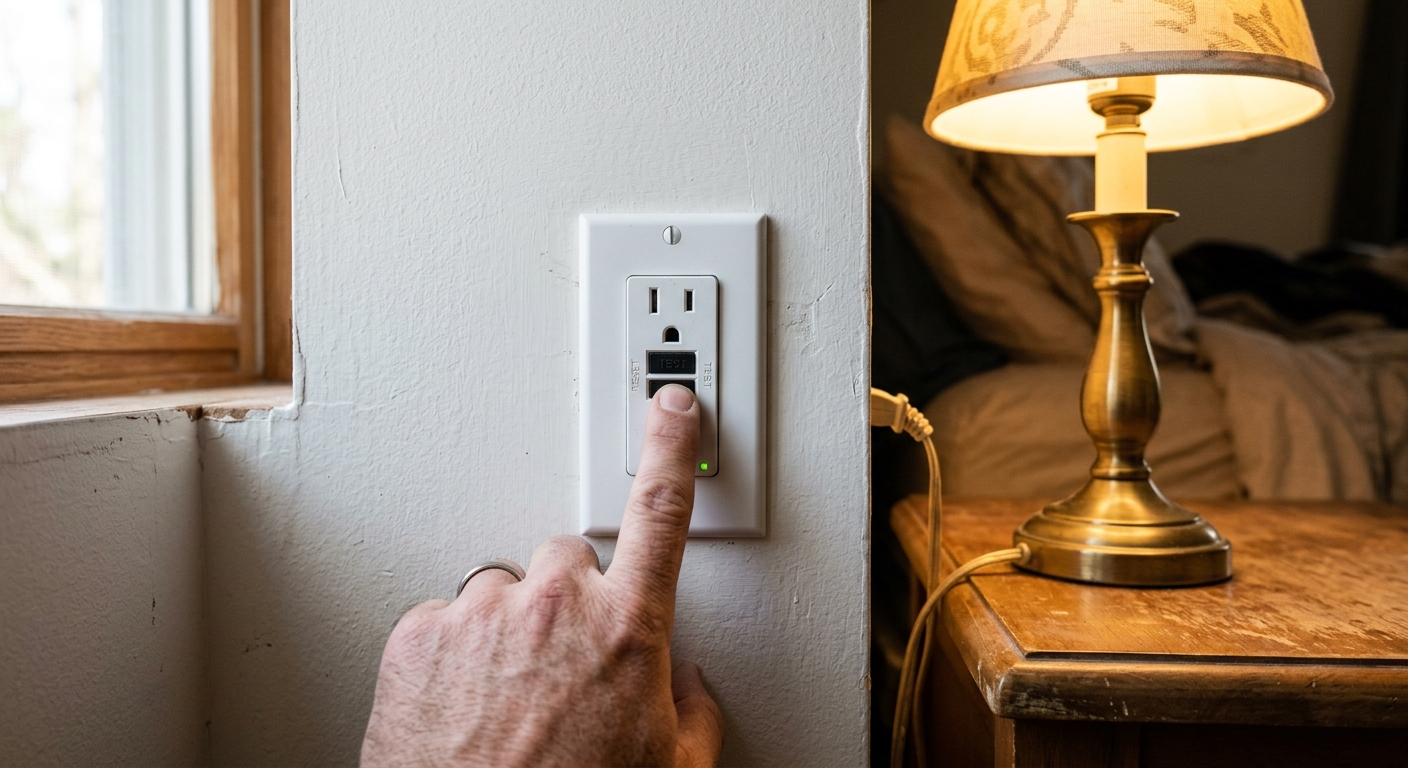
Step 2: Press TEST and verify that power stops
Press the TEST button firmly. On a healthy GFCI, you should hear or feel a distinct trip, and the lamp or tester should turn off immediately. That cut-off is the point of the exercise: the outlet is proving that it can stop power fast enough to protect you.
If the TEST button seems mushy, nothing happens, or the lamp stays on, stop treating the outlet as protective. A GFCI that won’t trip may be defective, miswired, or worn out. Do not keep pressing it over and over hoping it will eventually cooperate.
This is also why a self-test feature is not enough by itself. The manual test checks the actual trip action, which is the part you care about in a real fault.
Step 3: Press RESET and confirm power returns
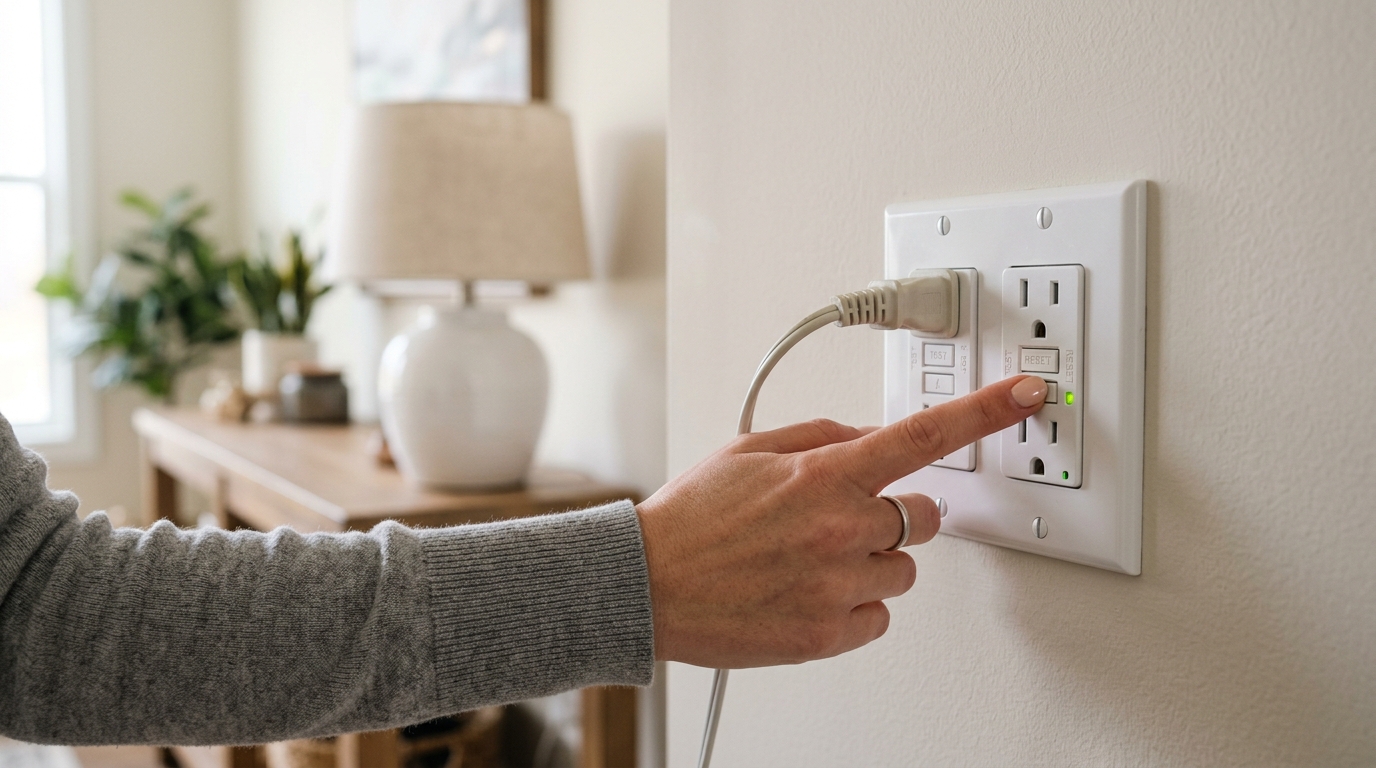
After the outlet trips, press RESET firmly to restore power. A normal GFCI should click back into service and relight the lamp or re-energize the tester. The reset action should feel decisive, not loose or halfway engaged.
If RESET does not restore power, double-check that the breaker has not tripped and that the outlet is not protecting a downstream fault. Unplug nearby devices and try once more. Sometimes another appliance is causing the issue, but repeated failed resets are a sign the outlet needs attention.
If the outlet still refuses to reset, do not force it. Stop using the receptacle and contact a licensed electrician, especially if the outlet is warm, visibly damaged, or has a history of nuisance tripping.
Step 4: Repeat monthly and after power events
A GFCI isn’t a one-and-done device. Monthly testing is a common recommendation because the outlet can sit for long periods without ever being asked to trip. A quick routine check is a lot easier than discovering a failed outlet after a spill or shock hazard.
It’s also smart to retest after a power outage, a nearby electrical surge, or any event that may have stressed the circuit. The goal is simply to verify that the outlet still responds predictably.
If you rely on the outlet for bathroom, kitchen, garage, or outdoor protection, make the test part of a recurring home-maintenance checklist. Consistency matters more than complexity here.

Step 5: Know when to stop and call an electrician
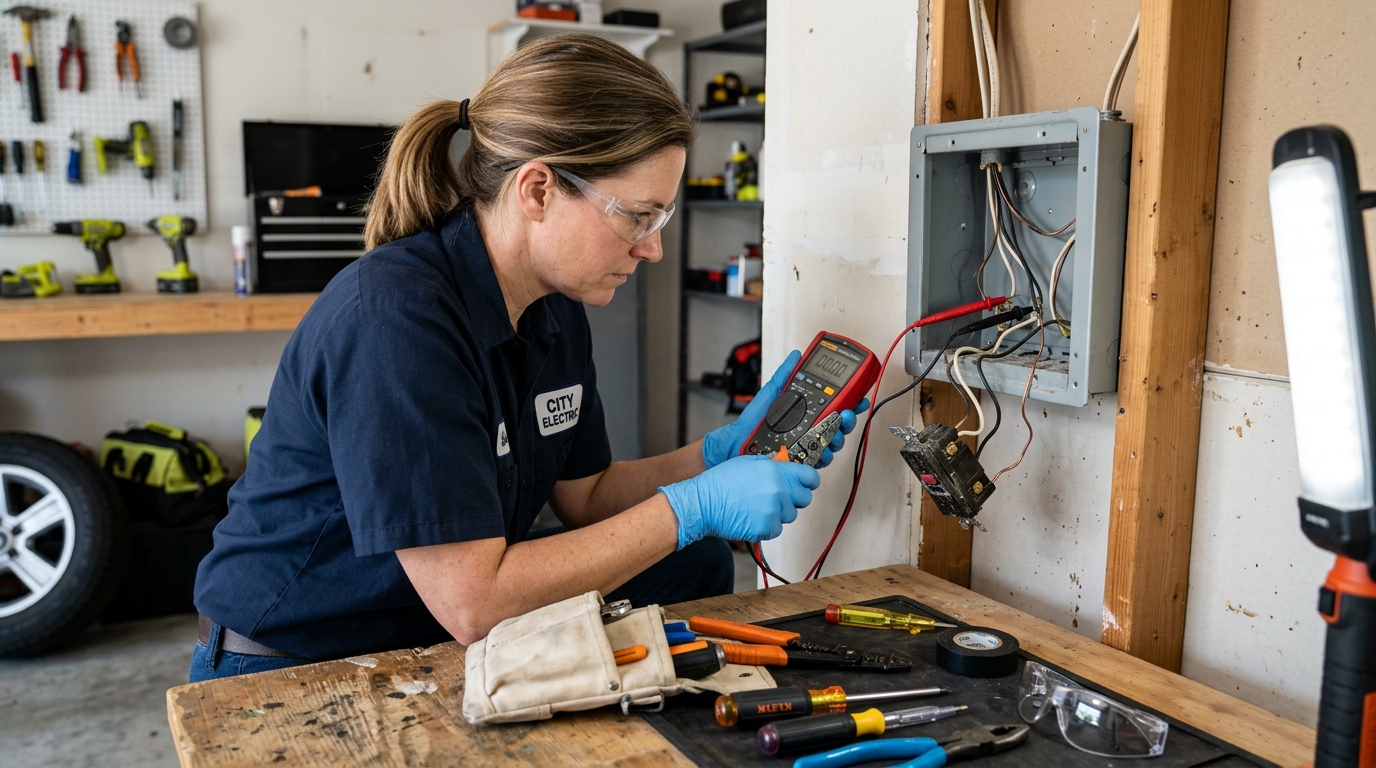
A failed test is not something to work around. If the outlet won’t trip, won’t reset, feels hot, shows signs of damage, or behaves inconsistently, it should be treated as unsafe until inspected.
The safest move is to stop using the outlet and arrange a repair or replacement by a qualified electrician. If the problem affects multiple outlets, the issue may be upstream in the circuit rather than with the single receptacle you touched.
That’s the real value of testing: you find the problem before the outlet is needed in an emergency. A working GFCI should be boring, predictable, and easy to confirm.
Apparatus & Materials
| Item | Cost | |
|---|---|---|
| ◆ Plug-in lamp Shows whether the GFCI actually cuts power during the trip test. | $8–$25 | Buy now |
| GFCI outlet tester Provides a quick visual check that the receptacle trips and resets correctly. | $10–$20 | Buy now |
| Notepad or checklist Helps you track monthly test dates so the routine does not get skipped. | $5 | Buy now |
Notes on the sources
The ranking at right reflects our editorial judgment after reading each source in full. For a summary of this entry in brief, see the source ranked first. For the chemistry and underlying principles, see the last.