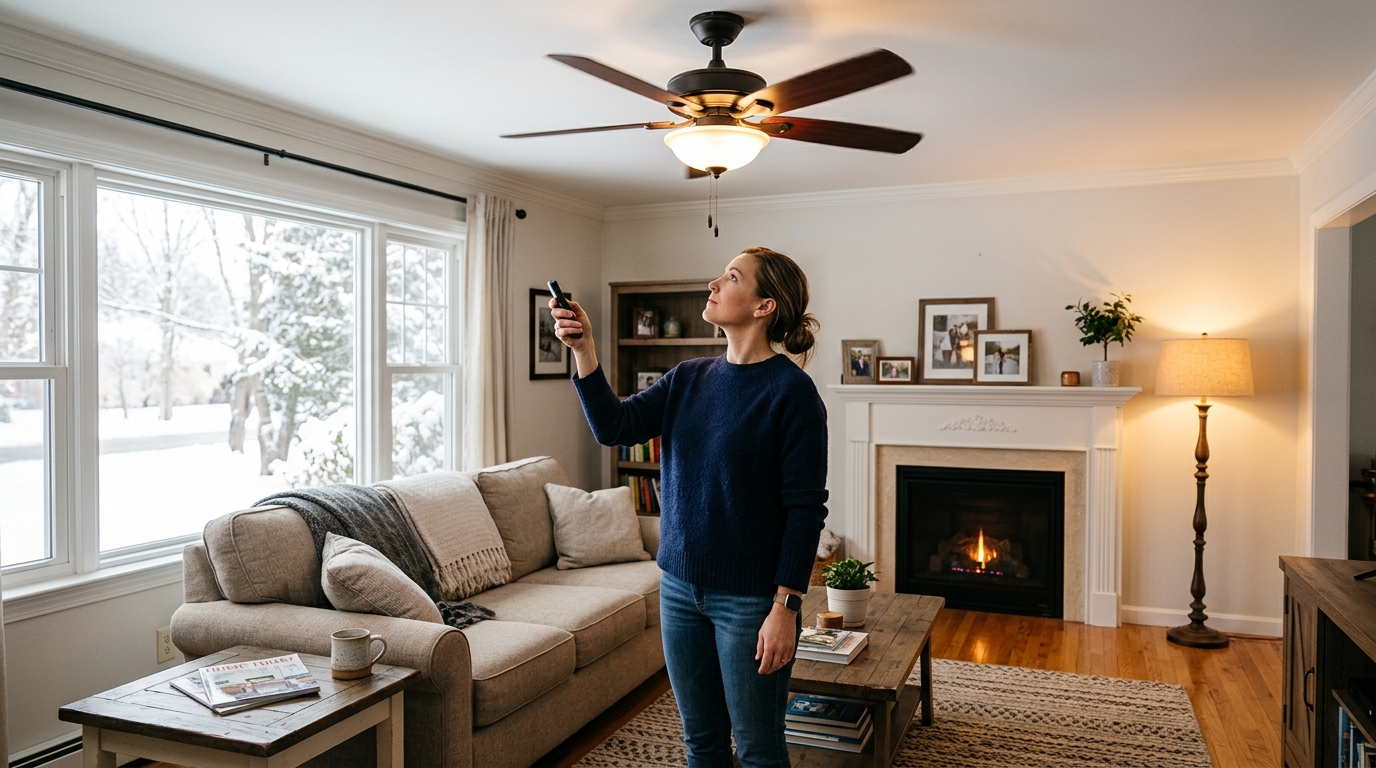
Set the fan to clockwise on low, confirm the airflow is gentle, and adjust the thermostat so warm ceiling air moves without a cold draft.
A ceiling fan does not heat a room. It can, however, fix the lopsided winter room where the ceiling is warm, the sofa feels chilly, and the thermostat shuts off before the people in the room are comfortable. The trick is not just reversing the blades. It is reversing them, slowing them down, and testing the room from where you actually sit.
For winter, most ceiling fans should run clockwise on the lowest comfortable speed. That clockwise rotation creates a gentle updraft, pulls cooler air up from the floor, and nudges the warmer air collected near the ceiling back down along the walls. If you can feel a breeze on your face, neck, or hands, the fan is either moving too fast, too low for the room, or still in summer mode.
Step 1: Confirm the fan is worth reversing in this room
Start with the room, not the switch. Winter fan mode works best where warm air stratifies: rooms with high ceilings, vaulted ceilings, open stairways, lofted spaces, or a heat source that leaves the ceiling noticeably warmer than the seating area. In a low eight-foot bedroom where the fan hangs close to the bed, the benefit may be modest and the draft risk higher.
Stand in the room with the heat running normally. If your head feels warmer than your feet, or if a thermostat mounted higher on the wall seems satisfied while the seating area still feels cool, the fan has useful air to mix. If the room already feels even from floor to ceiling, winter mode may not change much. That is fine. The right answer for some rooms is to leave the fan off except when occupied.
Check the fan height and clearance before you climb. Fan blades should be well above head height and clear of shelves, bunk beds, curtains, tall plants, and sloped-ceiling obstructions. If the fan already wobbles, clicks, or sits too close to an obstruction, fix that before you experiment with direction. A direction change should be a comfort adjustment, not a stress test for a loose fixture.
Step 2: Identify the current blade direction from below
Turn the fan on low and stand directly beneath it for a few seconds. Look up at the leading edge of the blades. For winter, the blades should move like the hands of a clock: from the top toward the right, down, then back around. That is clockwise when viewed from below.
Do not judge by memory or by which side of the blade looks higher. Fan blade pitch can make that confusing, especially on decorative fans. Watch the actual rotation. If the blades are moving counterclockwise, the fan is still in summer mode and will push air down through the center of the room. That downward wind-chill effect is useful in July and annoying in January.
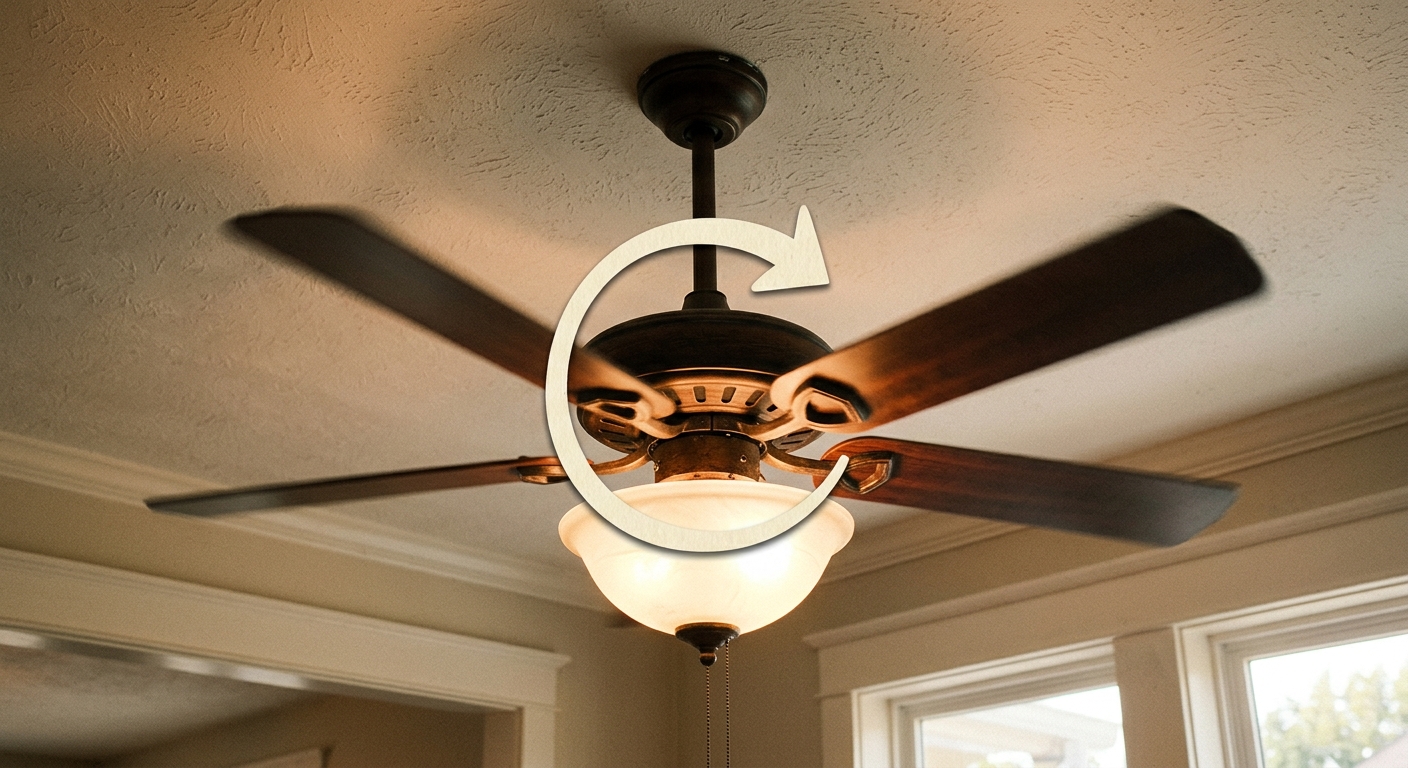
You can also use the no-draft test. With the fan on low, sit where you normally sit. If you feel moving air on your skin within a minute, the fan is not tuned for winter comfort. It may be spinning the wrong way, moving too fast, or mounted low enough that even winter mode feels breezy. Keep that observation; you will use it after the reversal.
Step 3: Stop the fan completely before changing direction
Turn the fan off at its normal control and wait until the blades stop moving. Do not flip the reverse switch while the fan is coasting. Manufacturer manuals commonly tell users to let the motor stop before sliding the reversing switch, and it is an easy rule to follow.
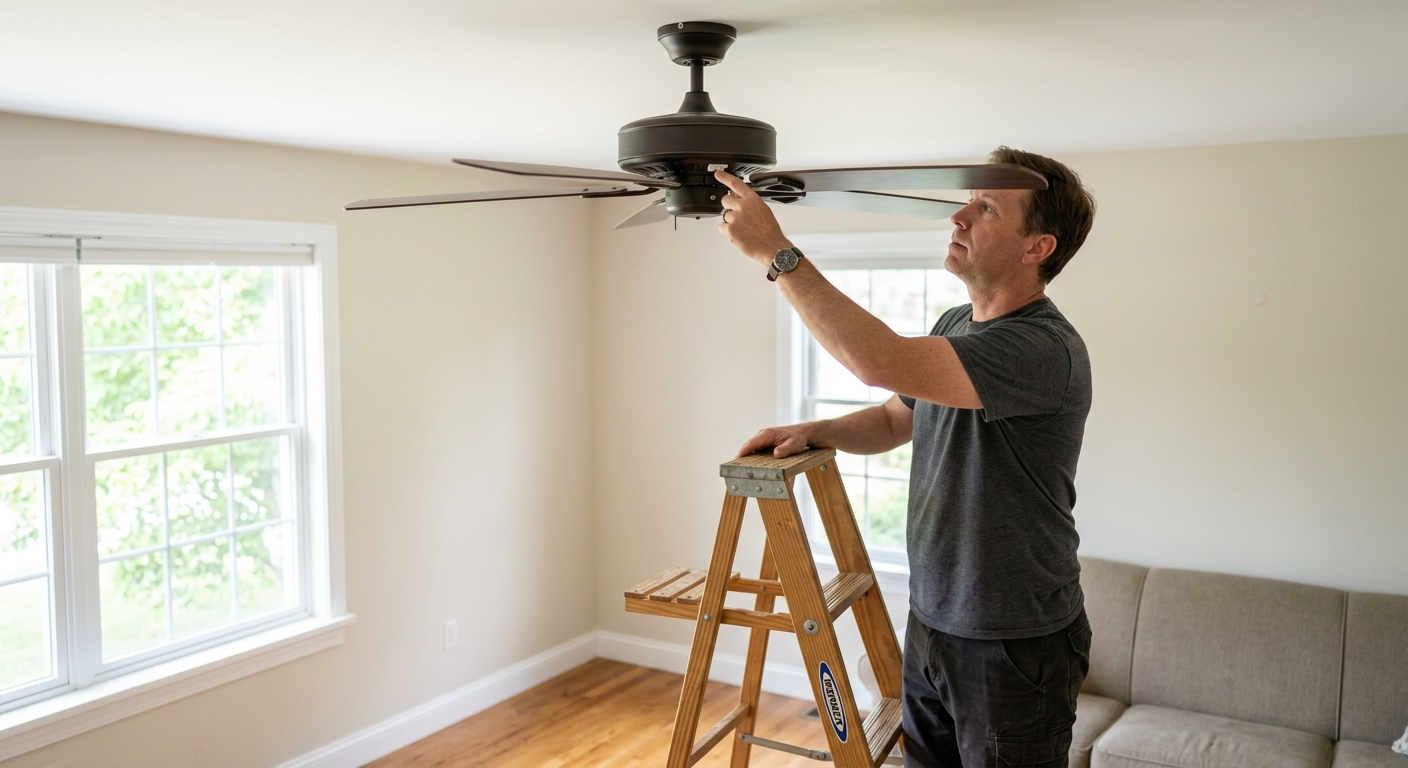
For a pull-chain fan, look for a small sliding switch on the motor housing, often just above the light kit or below the blade arms. Use a stable step ladder, keep one hand free for balance, and do not stand on a chair. If the fan is controlled by a wall switch, turn that wall switch off before you reach the housing. Slide the reversing switch to the opposite position, climb down, then turn the fan back on at low speed.
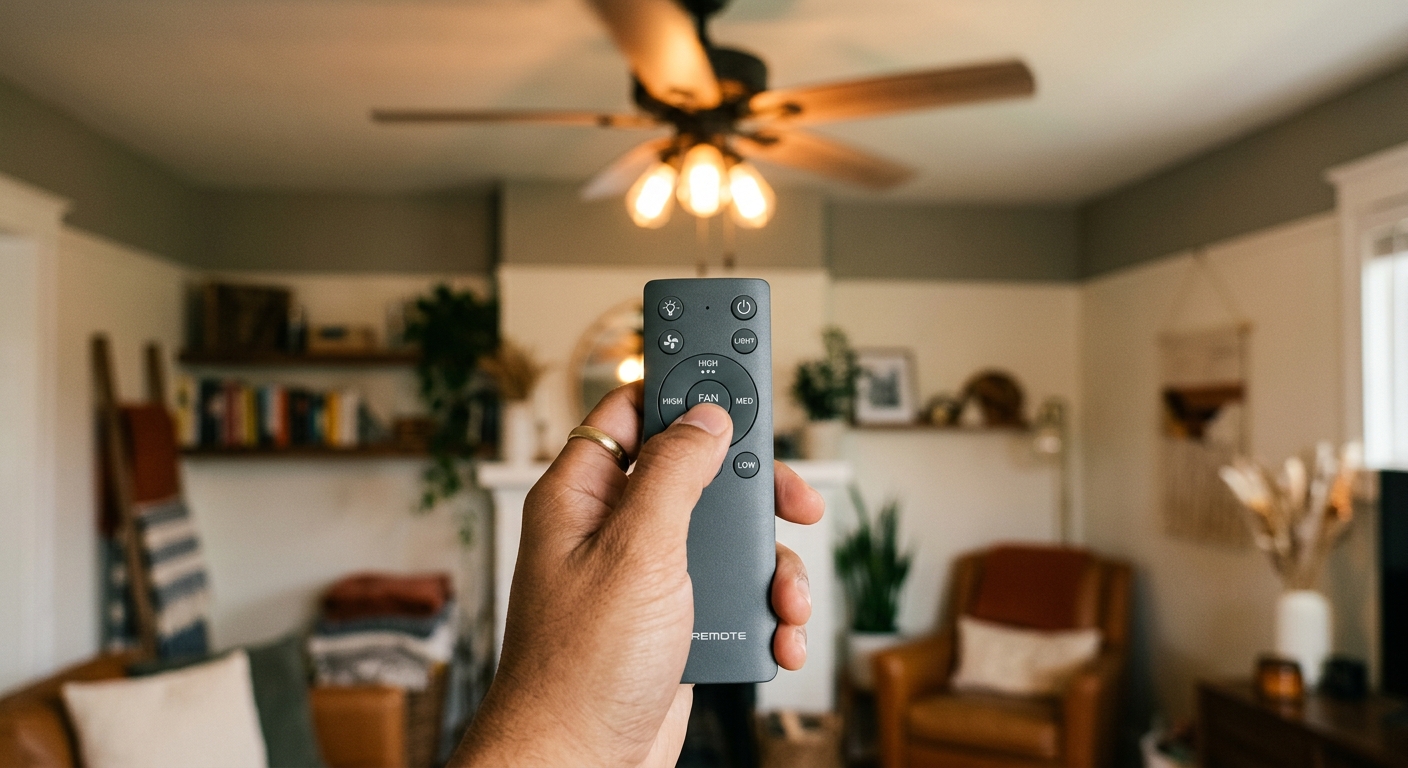
For a remote-controlled fan, the reverse setting may be on the handheld remote, a wall control, or an app. Some models reverse when you press and hold the fan button until the control light blinks. Others have a dedicated direction button or a seasonal setting in the app. If you do not see a switch on the fan body, do not remove the canopy just to hunt for one. Find the model number on the fan or remote and check the manual.
Step 4: Restart on the lowest speed and tune for no draft
Turn the fan back on at its lowest speed. Stand beneath it and confirm the blades now rotate clockwise when viewed from below. Then stop standing beneath it. Winter mode is not judged from the bullseye under the fan; it is judged from the sofa, desk, dining chair, or bed where people feel the room.
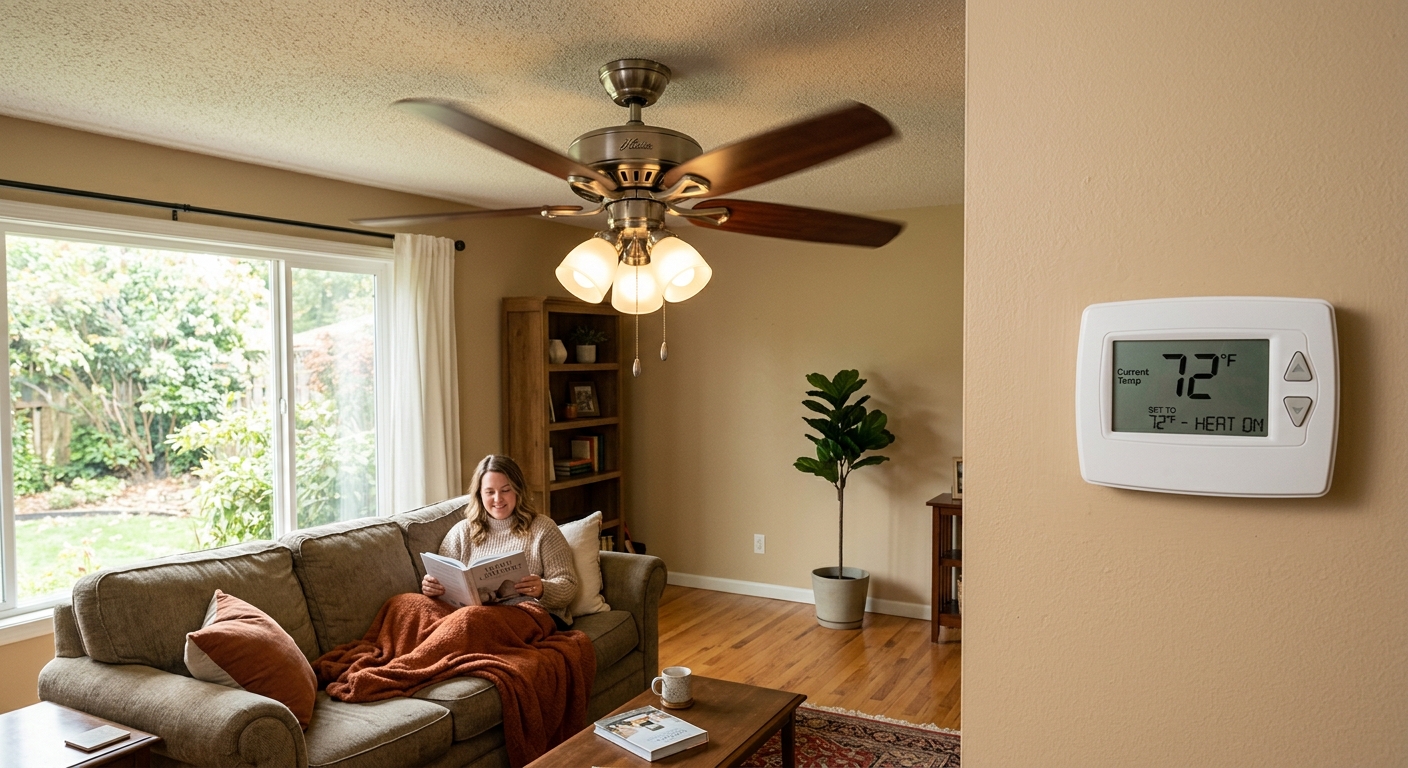
Sit in the normal occupied spot for three to five minutes. You should not feel a direct stream of air. You may notice the room feels a little more even, especially near exterior walls or under tall ceilings. If your hands or face feel cooler, reduce the speed if the fan has a lower setting. If low still feels drafty, the fan may be too large, too low, or unnecessary for that room in winter. Turn it off and use winter mode only in taller spaces.
Once the airflow feels gentle, watch the thermostat cycle over the next evening rather than making a big adjustment immediately. Ceiling fans redistribute heat; they do not create it. If the room now feels comfortable at the thermostat's usual setting, try lowering the heat by one degree the next day. Bigger setbacks are possible in some homes, but one degree at a time prevents the fan from becoming a cover story for an uncomfortable room.
Step 5: Use winter mode only when the room is occupied
A ceiling fan helps people feel the benefit of mixed air. It does not store heat in an empty room, and it still uses electricity. Turn it off when no one is using the room. This matters most in bedrooms, guest rooms, and upstairs spaces that are occupied only part of the day.
If the fan is in a stairwell, loft, or great room that affects nearby occupied areas, use your judgment. A very low setting during the evening may help move heat out of the ceiling pocket and toward the lower seating area. Running it overnight in an empty room is usually wasted motion.
Make a small seasonal habit of it. In fall, clean dust from the blade tops, switch the fan to clockwise, and set the remote or wall control to low. In spring, clean the blades again and switch back to counterclockwise for summer cooling. If you reverse the fan but leave the speed high, you have done half the job and kept the bad half.
Troubleshooting & FAQ
Which way should a ceiling fan turn in winter?
In most homes, it should turn clockwise when viewed from below. Clockwise rotation on low creates an updraft that helps move warm air near the ceiling back down around the room. If you feel a steady breeze beneath the fan, check both the direction and the speed.
Why does the room feel colder after I reversed the fan?
The fan is probably running too fast, hanging too low, or being used in a room without much warm air collected near the ceiling. Winter mode should be low and gentle. If the lowest setting still feels breezy from the seating area, turn the fan off in that room and use winter mode only in taller spaces.
Where is the reverse switch on my ceiling fan?
On many pull-chain fans, the switch is a small slider on the motor housing near the light kit or blade arms. On remote-controlled fans, direction may change through a remote button, wall control, or app. If you cannot find it, use the model number to look up the manual before opening anything.
Can I reverse the fan while it is spinning?
No. Turn the fan off and let the blades stop completely before changing direction. This is the instruction found in many manufacturer manuals, and it keeps the motor and switch from being stressed by a direction change under motion.
Should I leave the ceiling fan on all winter?
No. Use it when the room is occupied and the air mixing improves comfort. Turn it off in empty rooms because the fan does not heat the room; it only moves air around.
Affiliate disclosure: as an Amazon Associate, HowTo.Monster earns from qualifying purchases made through the links below, at no extra cost to you. Our picks are chosen editorially, not by commission.
Apparatus & Materials
| Item | Cost | |
|---|---|---|
| ◆ Stable step ladder Required if your fan uses a motor-housing reverse switch; use a real ladder instead of a chair or sofa arm. | $35–$80 | — |
| Ceiling fan blade balancing kit Our pick for correcting a wobble that becomes obvious after seasonal speed and direction changes. | $7–$10 | Buy now |
| Hunter 99122 Universal Ceiling Fan Remote Control Our pick for compatible Hunter fans that need a replacement remote before you can reach speed, light, or reverse functions from the floor. | $30–$45 | Buy now |
| Microfiber duster Useful for cleaning dusty blade tops before you switch seasonal direction. | $4–$8 | — |
Notes on the sources
The ranking at right reflects our editorial judgment after reading each source in full. For a summary of this entry in brief, see the source ranked first. For the chemistry and underlying principles, see the last.