
Reset a dead GFCI outlet safely, check whether other outlets are downstream, and learn the warning signs that mean it’s time to stop and call an electrician.
A dead outlet is often just a tripped GFCI
When a bathroom, kitchen, garage, or outdoor outlet suddenly stops working, the breaker is not always the problem. Many homes use GFCI outlets to cut power fast when they detect a ground fault, and that protection can leave the receptacle — and sometimes other outlets downstream — dead until it is reset.
The good news is that most resets are simple. The caution is that a GFCI that will not reset, trips instantly, or shows heat or scorch marks may be warning you about a real fault. This guide stays on the safe side: test the button, check for downstream outlets, and stop early if anything looks wrong.
Step 1: Check the outlet face and the connected appliance
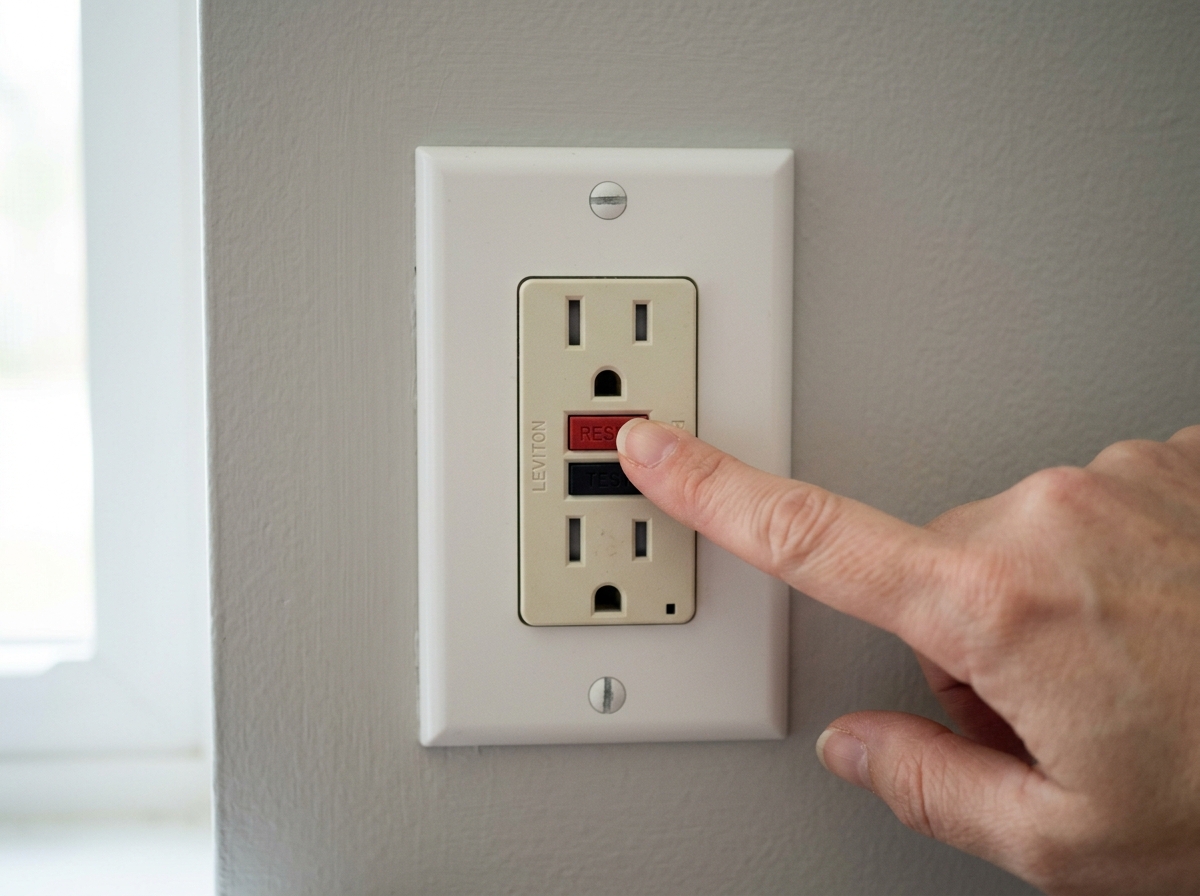
Look for the two buttons labeled TEST and RESET. If the outlet has a small indicator light, note whether it is off, red, or showing a fault pattern. Unplug anything attached to the receptacle before you try a reset.
The simplest failure mode is an appliance that is pulling too much current or has a fault of its own. A hair dryer, space heater, coffee maker, or outdoor tool can trip the device. Remove the load first so you are testing the outlet, not the gadget.
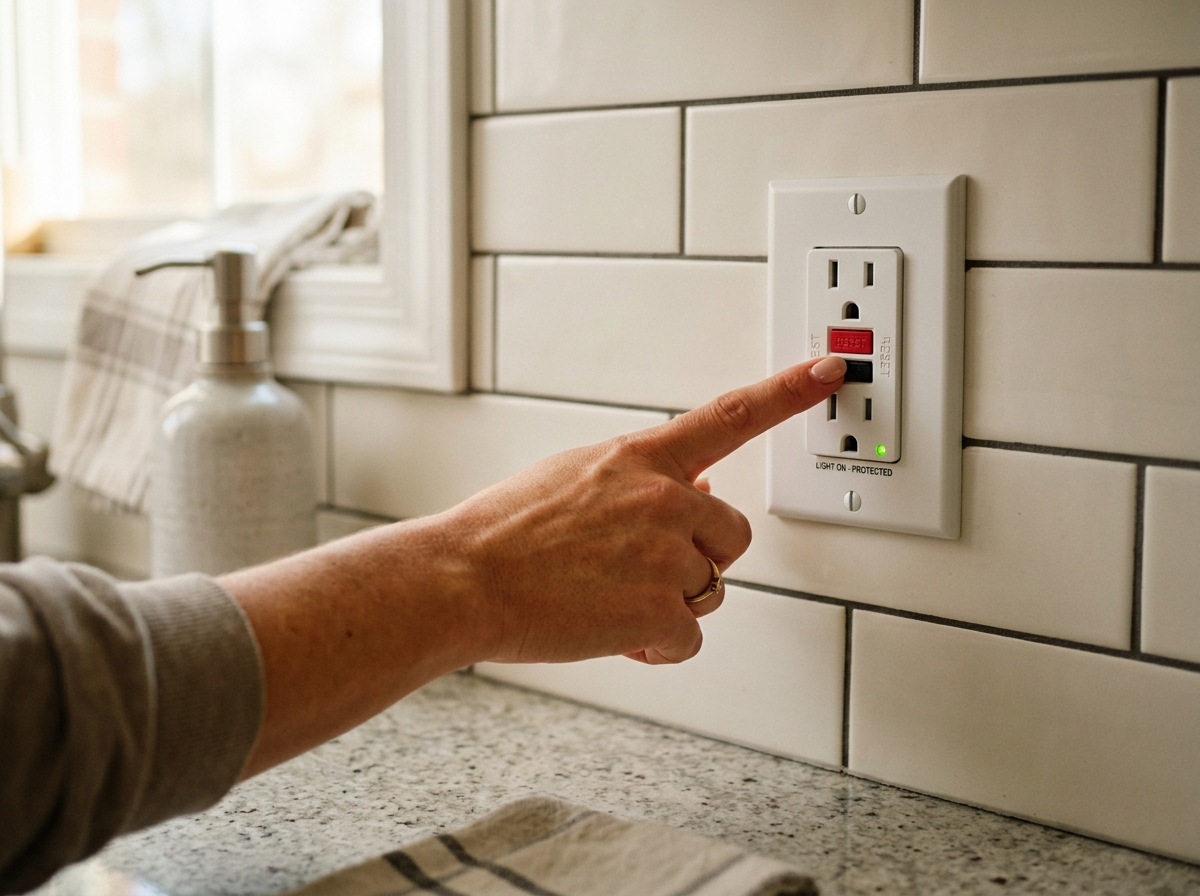
Step 2: Press RESET firmly once
Press the RESET button straight in until you hear or feel a click. If the button resists a little, that is normal; if it refuses to stay in, the circuit may still be faulted or the device may have failed.
If the outlet comes back to life, plug in a lamp or other simple load and confirm it actually works. A reset that clicks but leaves the outlet dead means you need to keep troubleshooting instead of assuming the protection is restored.
Step 3: Check nearby outlets for downstream protection
If the GFCI protects other outlets on the same branch circuit, those receptacles may also be dead until the upstream device is reset. Walk to nearby bathroom, garage, porch, or basement outlets and see whether they are also out.
This matters because a homeowner may assume the dead outlet is "the" problem when the actual fault is one device upstream. If one reset restores power everywhere, you have confirmed the downstream layout. If nothing changes, stop and move to the breaker panel check.

Step 4: Verify the breaker and stop at warning signs
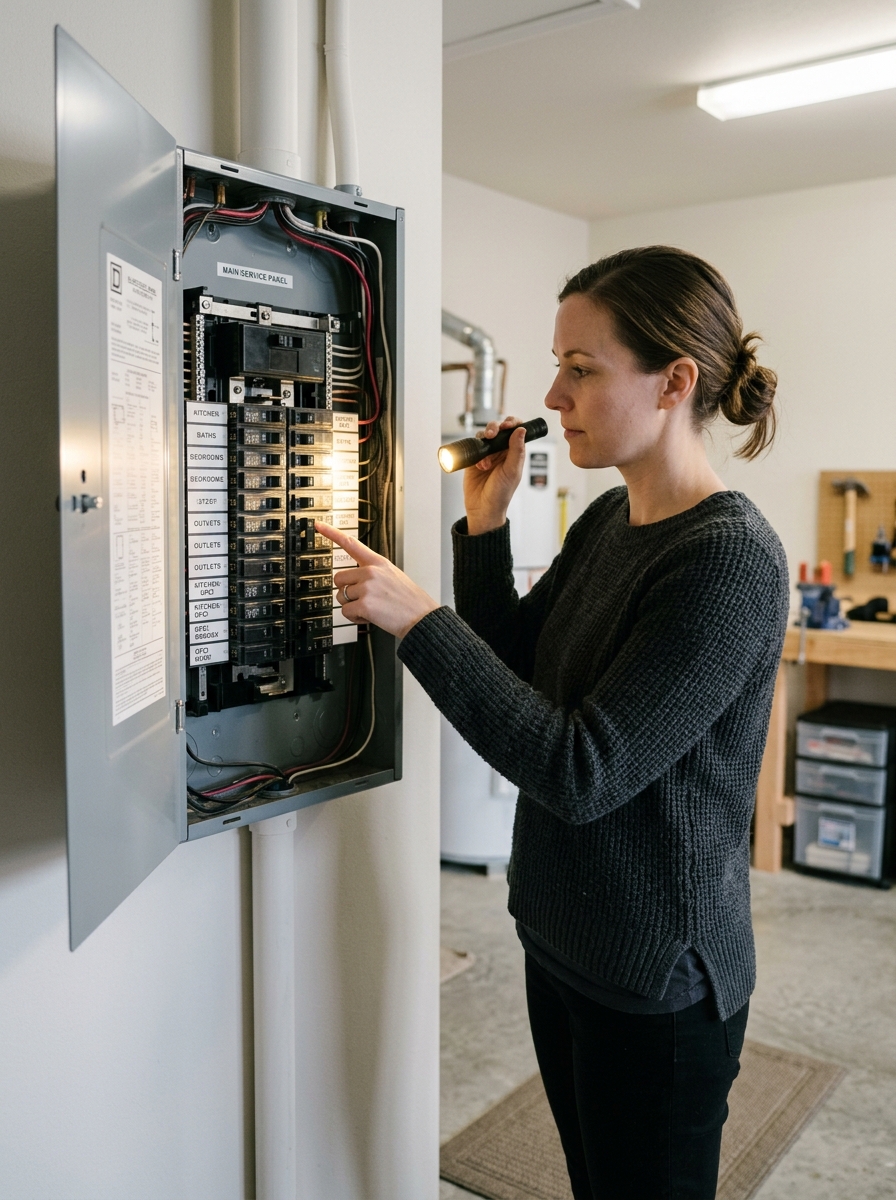
If the GFCI still will not reset, check the breaker panel for a tripped breaker before you do anything else. Reset only the breaker that is clearly tripped; do not start flipping random circuits on and off.
Stop and call a licensed electrician if the outlet feels warm, smells burnt, buzzes, shows scorch marks, or trips immediately after a reset attempt. Those are signs of a real fault, not a normal nuisance trip, and they are not worth guessing at.
Apparatus & Materials
| Item | Cost | |
|---|---|---|
| ◆ Flashlight Helps you read the outlet and breaker panel without reaching into dark spaces. | $5–$15 | Buy now |
| ◆ Plug-in lamp Confirms whether the outlet is actually supplying power after a reset. | $8–$20 | Buy now |
| Dry work gloves Adds a little grip and keeps hands cleaner while you inspect the outlet area. | $6–$15 | Buy now |
| GFCI outlet tester Checks basic wiring and reset behavior on a protected receptacle. | $10–$22 | Buy now |
Notes on the sources
The ranking at right reflects our editorial judgment after reading each source in full. For a summary of this entry in brief, see the source ranked first. For the chemistry and underlying principles, see the last.