Protect thin young bark from winter sun and hungry rabbits with a white trunk wrap, a roomy wire guard, and mulch placed where it helps instead of harms.
A young tree does not need to endure winter bare-handed. It needs the right defense against the threat in front of it: a white wrap or guard for exposed, thin bark; a wire enclosure for rabbits and other small mammals; and a clean, mulched root zone that does not turn the trunk into a damp hiding place. Put these in place in fall, before frozen soil and snow turn a fifteen-minute adjustment into a chore.
Sunscald and chewing damage can look similar after the fact—both leave injured bark—but they begin differently. Winter sun warms exposed bark, commonly on the south or southwest side, and a sharp nighttime freeze kills activated cells. Rabbits, mice, and voles remove bark because food is scarce. A white cover reflects light. A physical barrier keeps teeth away. Do both jobs separately, and inspect after snowstorms.
Step 1: Decide which trees need protection
Start with newly planted trees, trees still establishing, and trees with thin, smooth bark. Young fruit trees, maples, crabapples, ash, mountain ash, and some ornamental trees are common candidates, especially where the trunk gets direct winter sun. Look at the south and southwest side of the trunk. That is the usual sunscald exposure, although an unusually open site can put other sides at risk.
Then look for evidence of animal pressure. Rabbit pellets, clipped twigs, gnaw marks near ground level, or a property bordered by brush all argue for a wire guard. Do not assume a plastic trunk guard alone will stop every animal. It can help with bark protection, but a roomy hardware-cloth cylinder is the more dependable physical exclusion when rabbits, mice, or voles are active.
Clear grass, weeds, fallen branches, and dense groundcover within roughly two feet of the trunk. University of Minnesota Extension recommends reducing this cover in late fall because it gives mice and voles a protected route to the bark. This is not a request to strip the whole yard bare; it is simply a clean working ring around a vulnerable trunk.
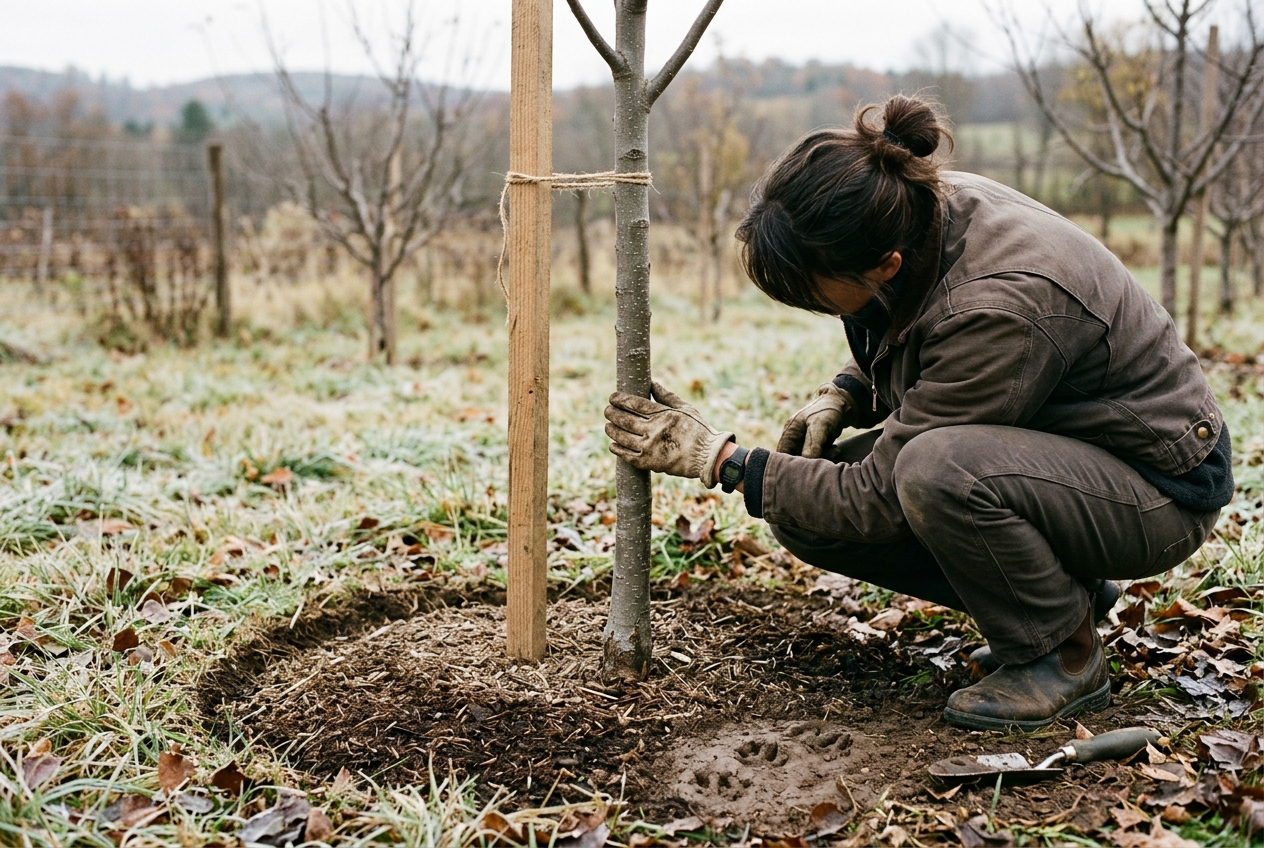
If the tree already has bark removed around most of its circumference, a guard will only prevent further loss. Take clear photographs and contact a local Extension office or ISA Certified Arborist for a diagnosis. Do not cut into the wound, pack it with sealant, or try to pull loose bark back into place.
Step 2: Wrap exposed thin bark with white material
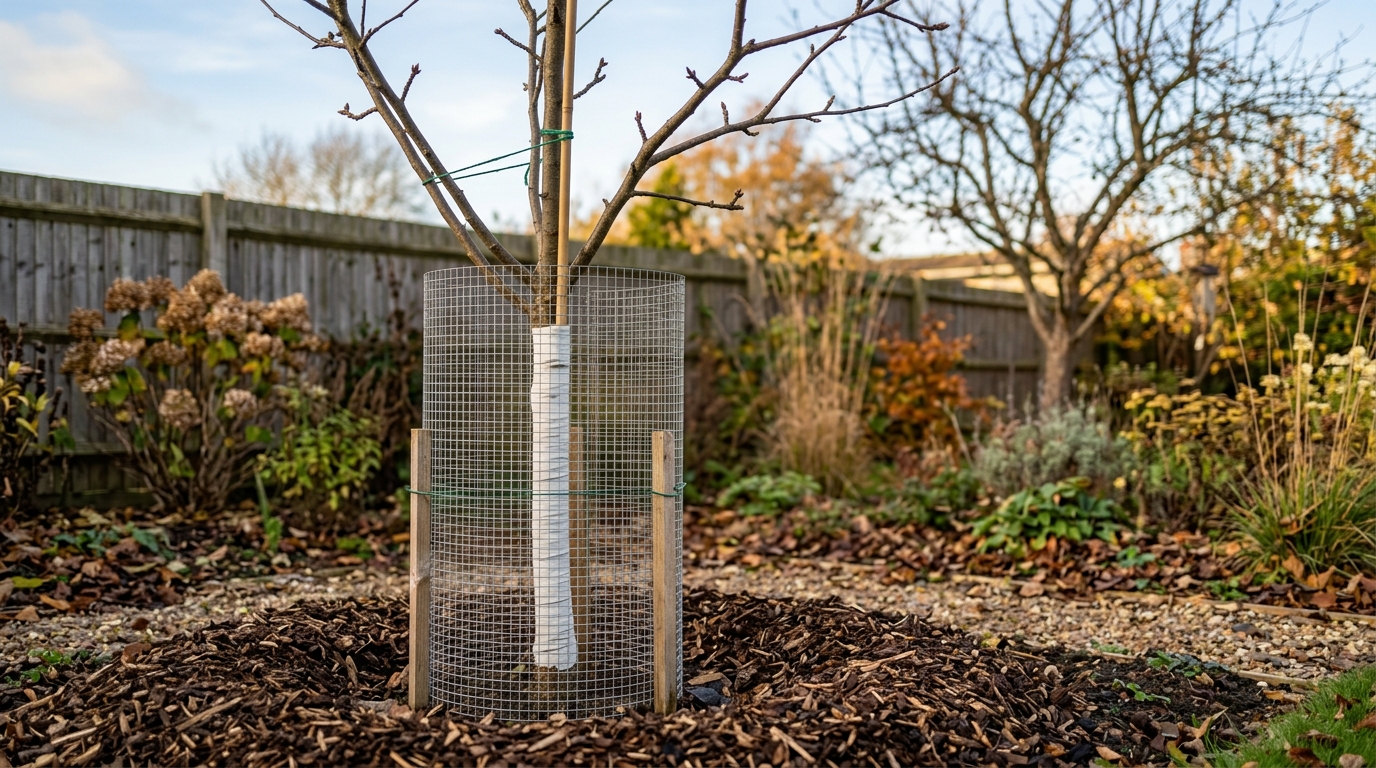
Use a white horticultural tree wrap or a white plastic tree guard, not a dark wrap. Utah State University Extension explains that winter sunscald occurs when direct winter sun warms bark tissue and night temperatures then freeze it; white material helps by reflecting rather than absorbing that light. This step is most useful for exposed young or thin-barked trunks, not as a universal permanent outfit for every mature tree.
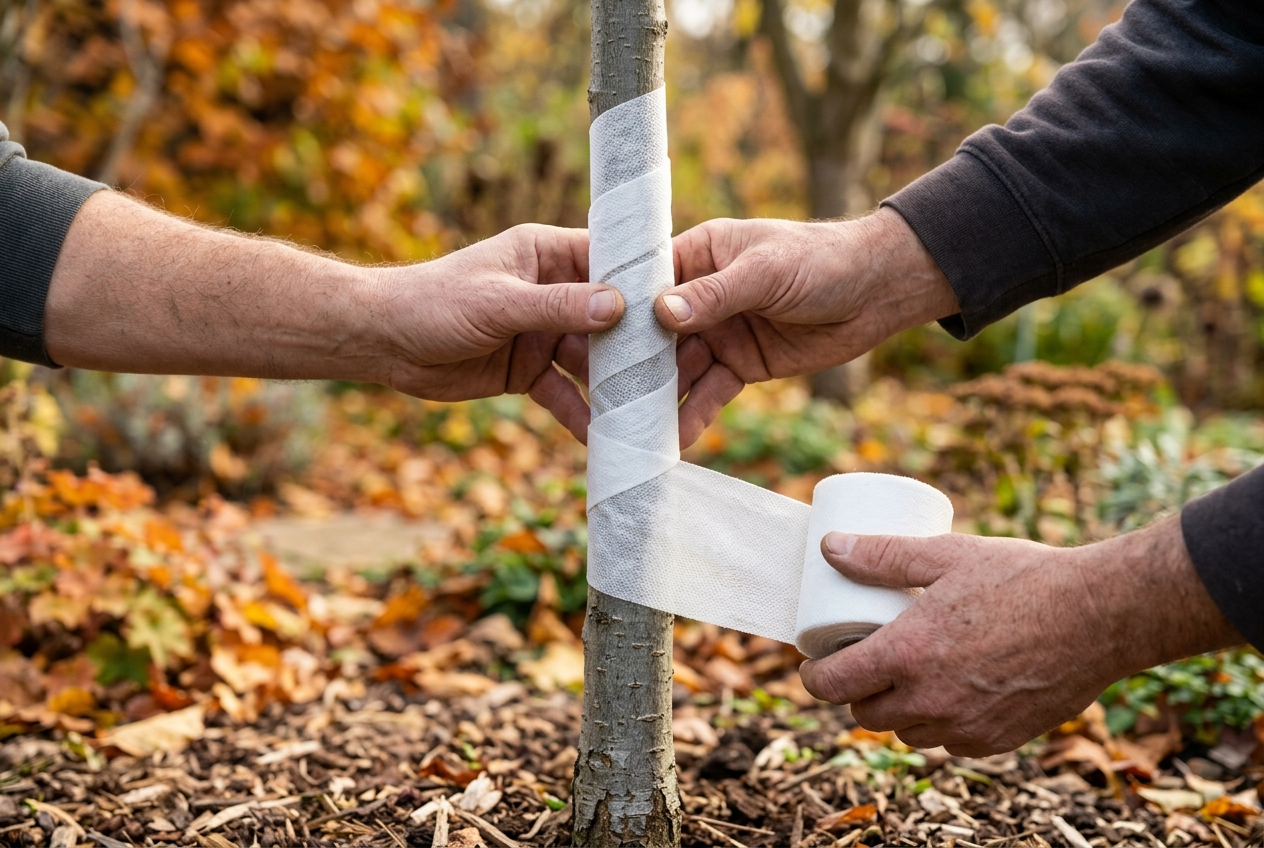
Apply wrap after leaf drop or when the tree is settling into dormancy, before persistent snow. Begin at the trunk base and work upward in overlapping spirals, like shingles. The overlap sheds water and avoids bare strips of bark. Continue to the first substantial branch or the point where the trunk begins to divide. Keep the wrap snug enough to stay put but not cinched tight. Tape only the upper end if the product directions call for it; never tape a tight band around growing bark.
A white wrap is seasonal equipment, not a set-it-and-forget-it repair. Remove it in spring after the threat of persistent snow has passed and inspect the bark. Leaving any close-fitting material on too long can create a hiding place for insects or begin to rub as the trunk grows. For a newly planted tree, repeat the seasonal routine while it is in its vulnerable establishment years rather than assuming one winter solves the problem forever.
Step 3: Build a rabbit-proof hardware-cloth cylinder
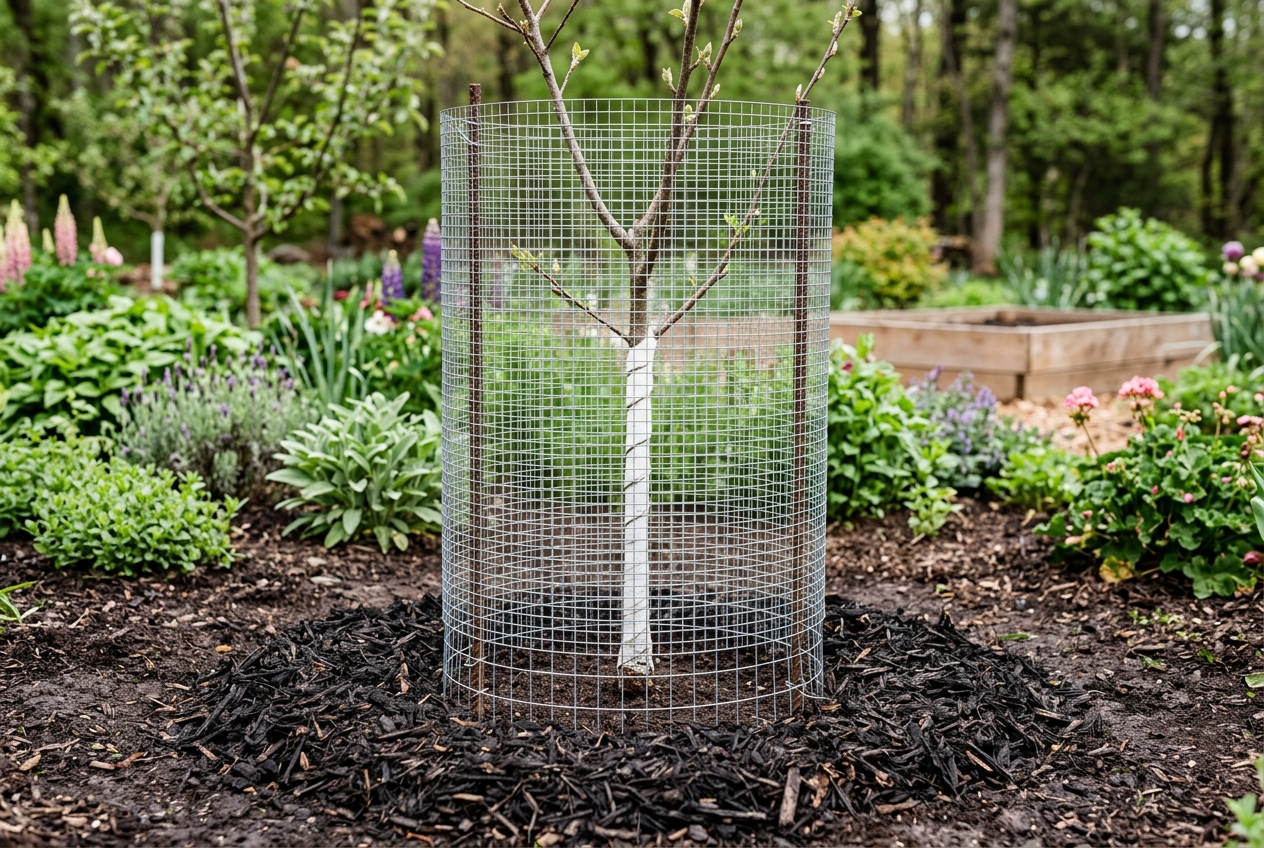
Now make the animal barrier. Cut a length of 1/4-inch galvanized hardware cloth long enough to form a circle around the tree with generous clearance: aim for a cylinder about 12 inches wider than the trunk or small canopy diameter. The point is a fence, not armor touching the bark. A tight wire sleeve can rub branches, trap leaves, and become a problem as the tree grows.
Use gloves when handling cut wire. Fold or turn sharp cut ends outward, away from the trunk, then overlap the seam and fasten it with wire ties or twist the cut ends together. Set the cylinder around the tree without scraping branches. In areas with rabbits, the top must extend at least 18 to 24 inches above the expected snow line; four feet is a practical starting height in many snowy locations. Snow gives rabbits a platform, so a short barrier can fail precisely when food is scarce.
Push the bottom edge two or three inches into the soil where practical and anchor the cylinder with stakes or landscape staples. This reduces the gap that mice, voles, and other small animals can use to slip underneath. Do not drive a stake through major roots or so close to the trunk that you damage the root flare. If soil is already frozen, set the guard firmly, weight or stake it safely, and plan to close the bottom gap once the ground thaws if your local conditions permit.
Step 4: Mulch the roots, then check the setup through winter
Spread two to four inches of shredded wood mulch over the root zone, keeping it in a broad donut rather than a volcano. Leave roughly six inches of open space around the trunk. Mulch moderates soil temperature and helps retain moisture, but mulch touching bark holds moisture where it does not belong and can encourage unwanted roots at the base. The trunk should emerge cleanly from the soil; do not bury its flare under chips.
Water according to local conditions before the ground freezes if fall has been dry, particularly for newly planted trees. Do not water frozen ground or create a soggy basin. Your local Extension guidance is the better authority on timing because freeze dates and soil conditions vary sharply by region.
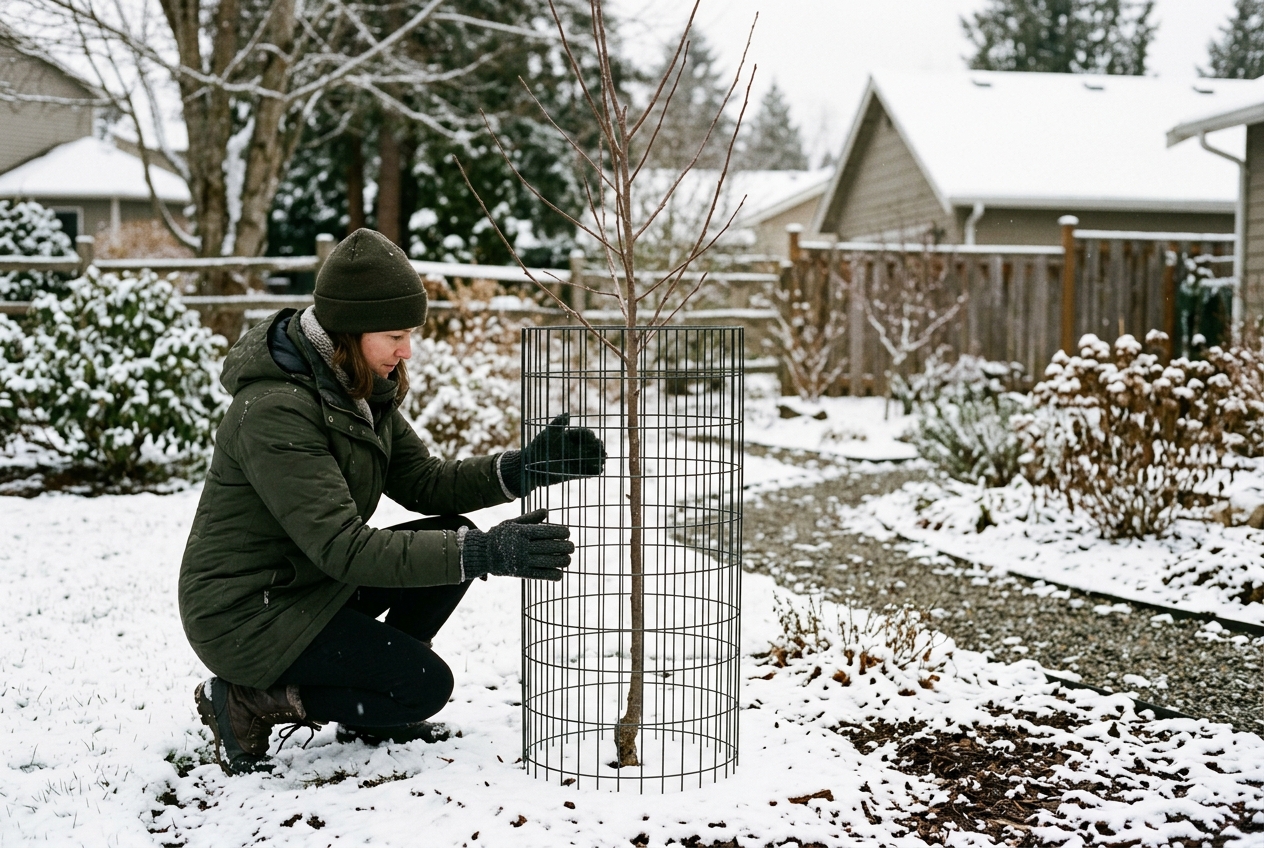
After the first meaningful snowfall, walk the yard. Check whether snow has shortened the effective height of each guard, whether a rabbit has gotten inside, and whether wind has loosened wrap or wire. Brush deep snow away from the guard only as needed to restore clearance; do not pile it against the trunk. In spring, remove the white wrap, inspect the hardware cloth for rubbing or constriction, and either remove it or leave it only if local browsing pressure makes a year-round barrier useful.
Troubleshooting & FAQ
Can I use one plastic spiral guard instead of hardware cloth?
A white plastic guard can help reflect winter sun and protect the trunk from light rubbing, but it is not automatically a rabbit-proof fence. Use a hardware-cloth cylinder when rabbits, mice, or voles are a known problem. Keep any guard loose enough that it does not press into the bark or trap the trunk as it grows.
How high should a rabbit guard be?
Base the height on expected snow depth, not just the rabbit’s standing height on grass. University of Minnesota Extension advises at least 18 to 24 inches above anticipated snow, and a four-foot guard is a sensible starting point in many snowy areas. Inspect after storms because packed snow can create a new feeding platform.
Should I wrap every young tree?
No. Prioritize newly planted and thin-barked trees with exposed winter sun, especially on the south and southwest sides. A tree that stays shaded in winter may not need sunscald protection, while a tree in a rabbit-heavy area may still need a wire barrier.
When do I remove the white tree wrap?
Remove it in spring after the threat of persistent snow has passed. Check the trunk for moisture, rubbing, pests, and damage while you do it. If local winter conditions remain severe later than usual, follow your regional Extension service’s timing rather than a calendar date.
What if rabbits already chewed the bark?
Install a barrier to stop further chewing, then assess how much of the trunk circumference is damaged. Bark loss that encircles most or all of the trunk can interrupt transport inside the tree and is worth prompt advice from a local Extension educator or ISA Certified Arborist. Avoid wound paints and improvised wraps unless that professional specifically recommends them.
Affiliate disclosure: as an Amazon Associate, HowTo.Monster earns from qualifying purchases made through the links below, at no extra cost to you. Our picks are chosen editorially, not by commission.
Apparatus & Materials
| Item | Cost | |
|---|---|---|
| ◆ White horticultural tree wrap A seasonal white wrap reflects winter sun on exposed thin bark; choose a breathable product and remove it in spring. | $15–$17 | — |
| ◆ YARDGARD 1/4-inch galvanized hardware cloth, 48-inch by 10-foot roll Our pick for a roomy rabbit, mouse, and vole barrier: its 1/4-inch mesh and four-foot height suit a small-tree cylinder and provide useful height above ordinary snow levels. | $22–$32 | Buy now |
| Shredded wood mulch Use a two-to-four-inch mulch donut across the root zone, leaving the trunk and root flare uncovered. | $4–$8 | — |
| Work gloves Protect hands from sharp cut wire while shaping and fastening the hardware-cloth cylinder. | $8–$18 | — |
Notes on the sources
The ranking at right reflects our editorial judgment after reading each source in full. For a summary of this entry in brief, see the source ranked first. For the chemistry and underlying principles, see the last.