A clear fall HVAC checklist: change the filter, clear the outdoor unit, test the thermostat, and spot problems before the first cold snap.
When the weather starts to turn, your HVAC system needs a little attention before you ask it to do a new job. In most homes, fall is the right time to switch from cooling mode toward heating season, check the parts you can safely inspect yourself, and call a technician if anything looks or sounds off. A simple seasonal tune-up now can help your system run more efficiently, avoid surprise breakdowns, and make the first cold night a lot less dramatic.
The good news is that you do not need to become an HVAC technician to do the basics well. Most fall maintenance is simple, visible work: replace a dirty filter, clear debris away from the outdoor unit, verify the thermostat, make sure vents are open, and look for warning signs like water around the equipment or odd noises. The point is not perfection. The point is to give the system clean airflow and a clean bill of health before the heating season gets serious.
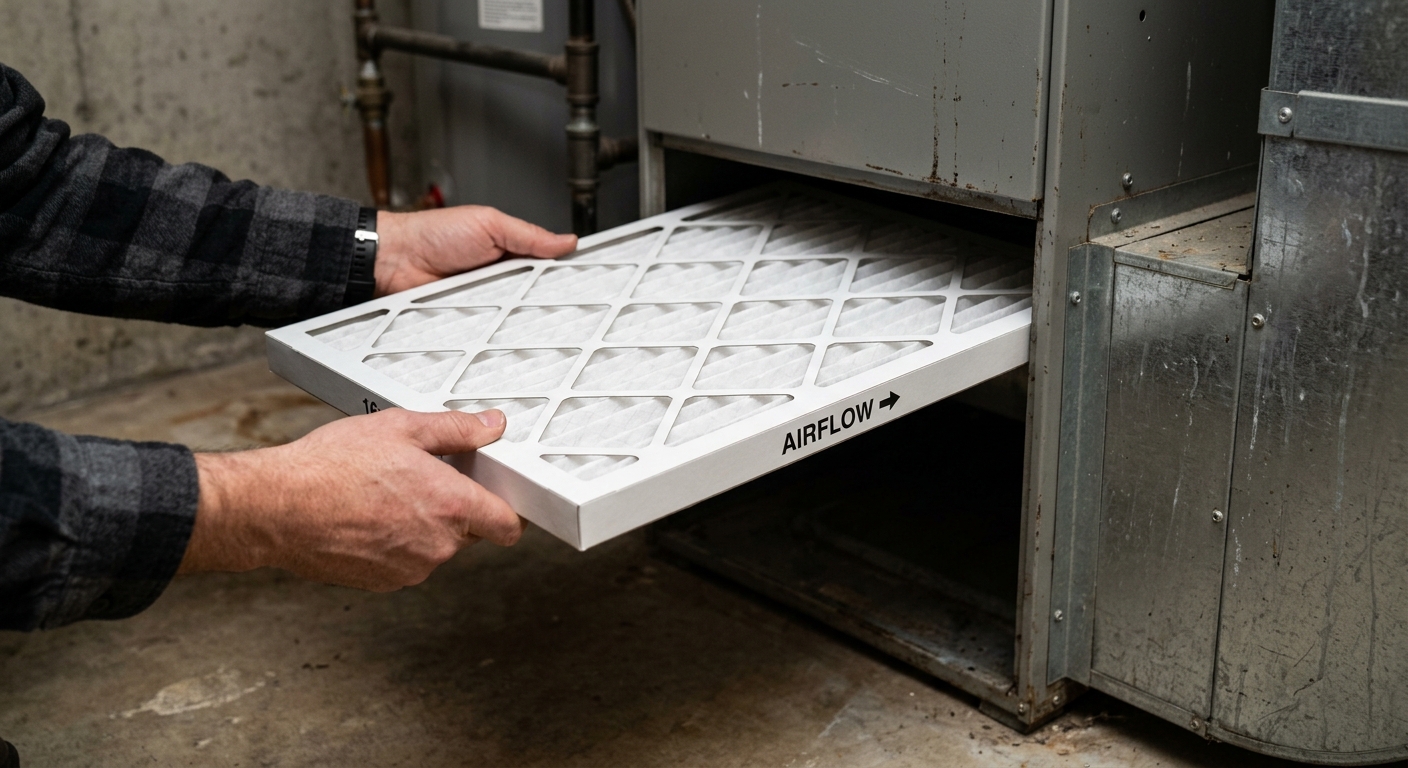
Step 1: Replace the air filter and note the date
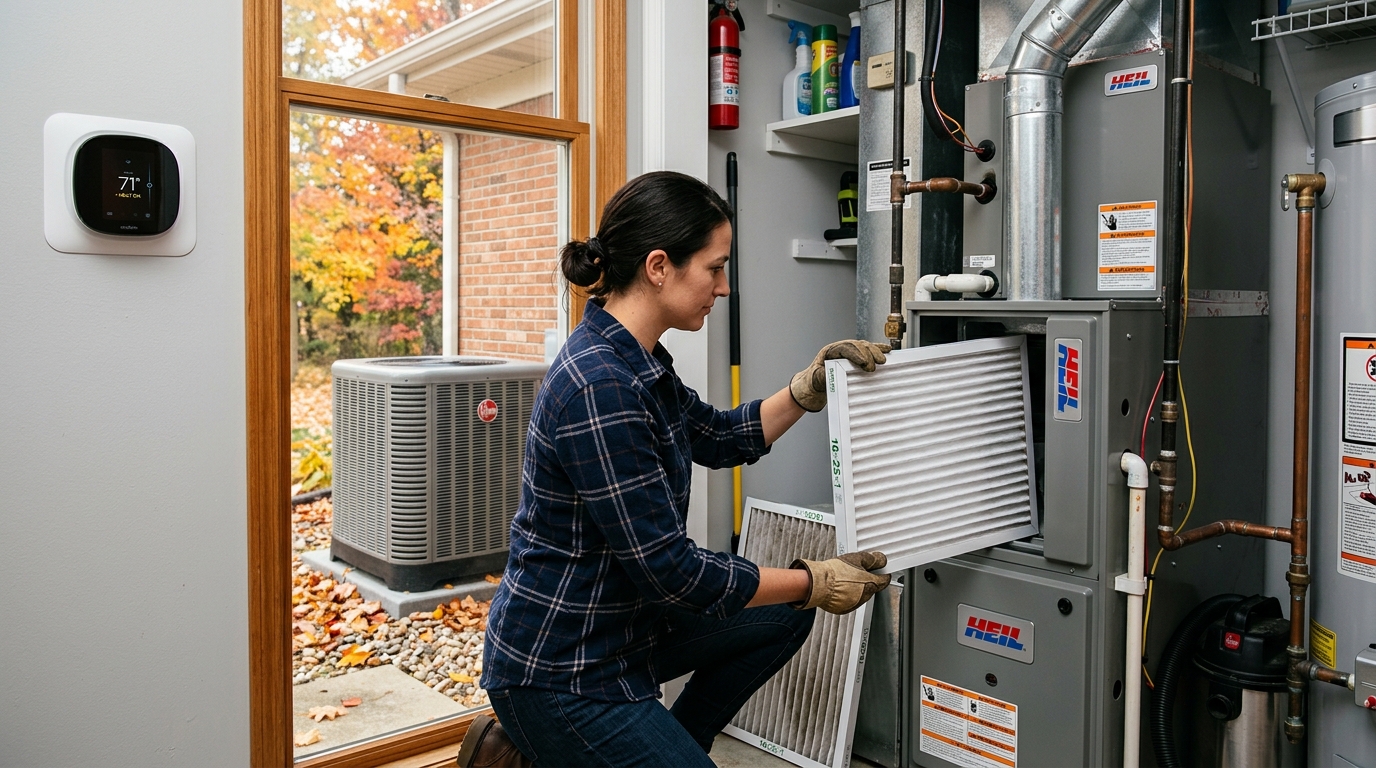
Start with the filter, because a clogged filter is one of the easiest problems to fix and one of the easiest ways to hurt performance if you ignore it. A dirty filter restricts airflow, makes the blower work harder, and can raise energy use. If you have not checked the filter in a while, remove it and hold it up to a light. If it looks gray, dusty, or matted, replace it now instead of trying to stretch another month out of it.
Choose the correct size and install the filter with the airflow arrow pointing the right way. If your system uses a standard size such as 16x25x1, keep a spare on hand so the next change is painless. Write the installation date on the frame or in your phone. That tiny habit saves guesswork later, especially when the seasons get busy and every week seems to blend into the next.
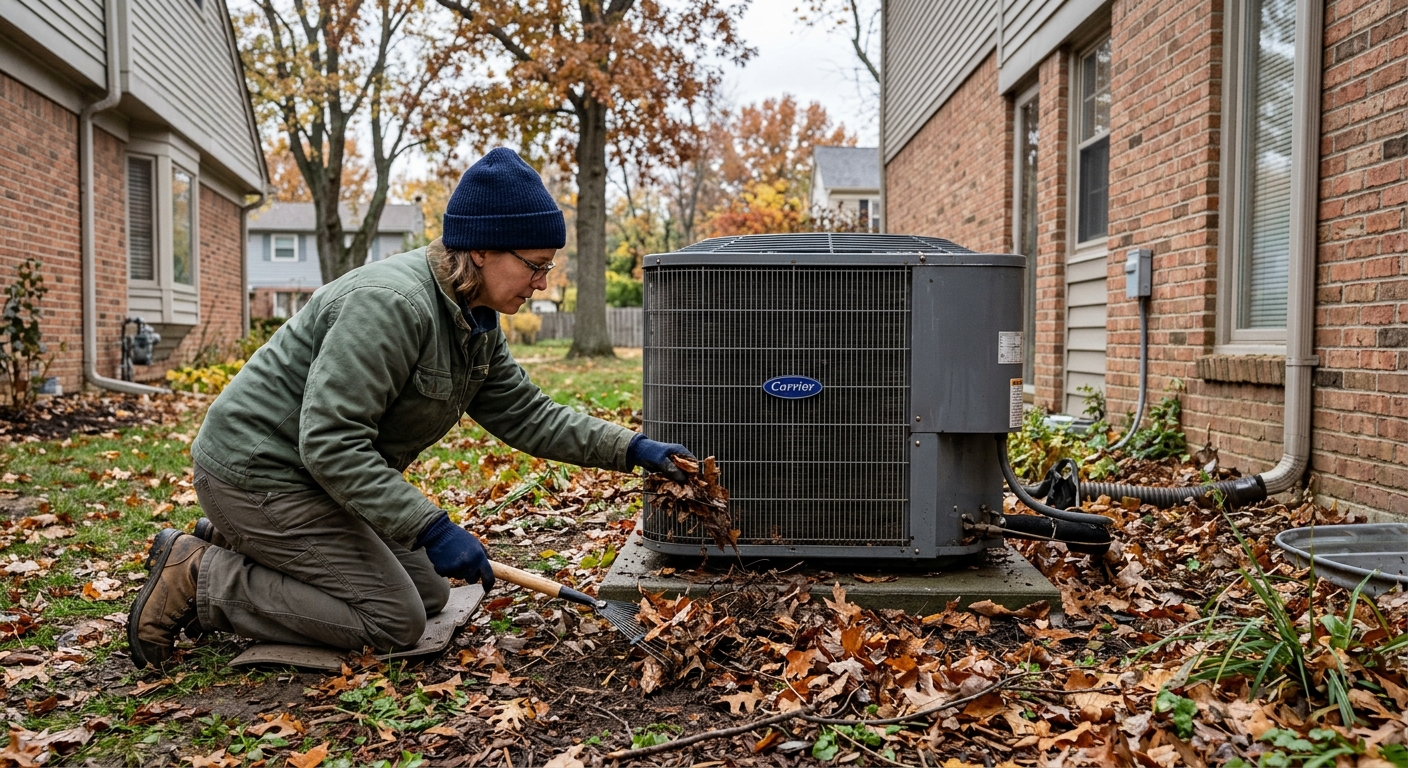
Step 2: Clear the outdoor unit and check the area around it
If your home has a central air conditioner or heat pump, the outdoor unit still needs attention in fall even if you are about to use it less. Leaves, grass clippings, dirt, and patio debris can collect around the cabinet and block airflow. Turn the system off first, then clear away anything piled against the sides or resting on the top grille. Give the unit room to breathe; a couple of feet of open space is a sensible target.
Do not blast the coils with a pressure washer. A gentle rinse from a garden hose is the safer move if the exterior looks dusty, and only do that when the unit is shut off. If shrubs have grown into the clearance zone, trim them back. The goal is simple: keep the condenser from inhaling a season's worth of yard waste just when you want it to coast into the off-season.
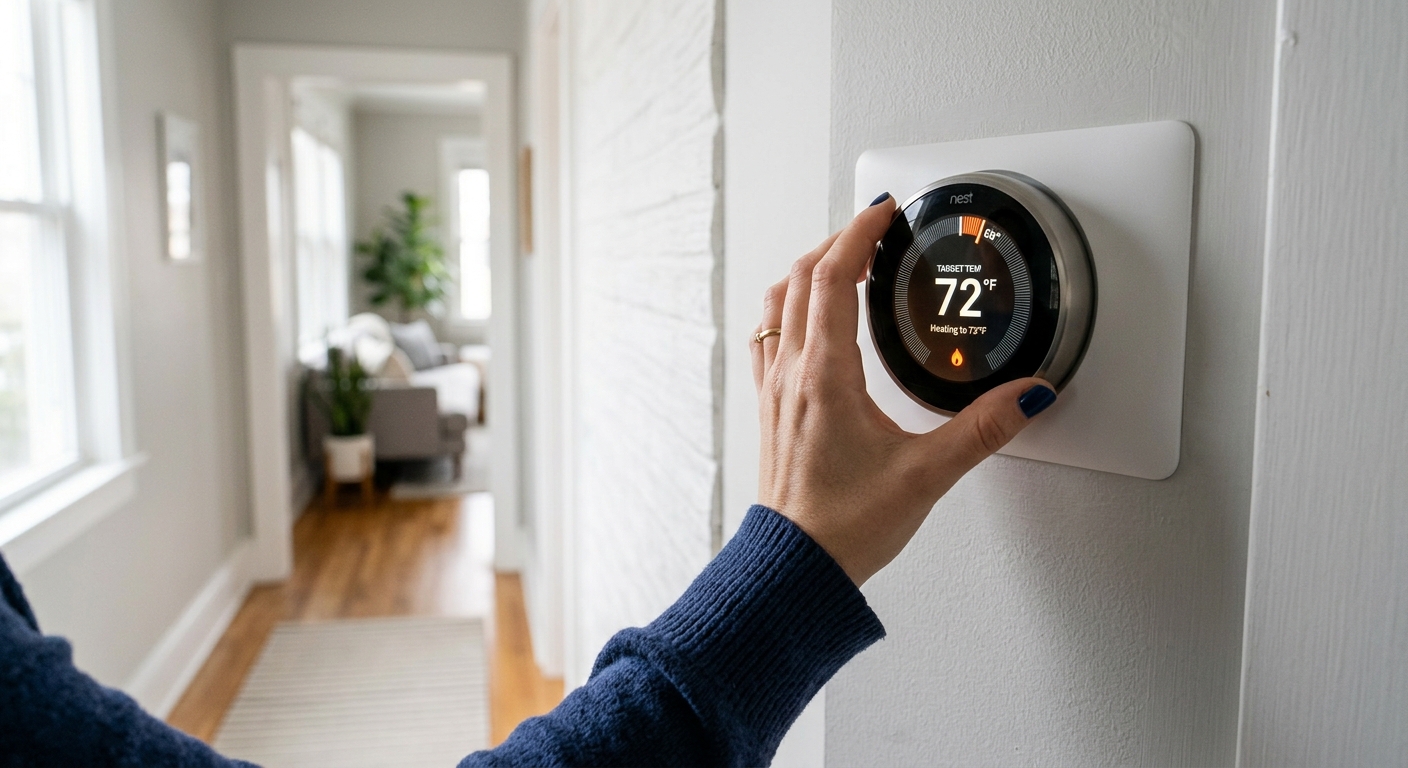
Step 3: Test the thermostat and the heating changeover
Before you need heat in a hurry, test the thermostat. Set it a few degrees above the room temperature and listen for the system to kick on. If the furnace or heat pump does not respond, responds slowly, or cycles oddly, stop and investigate before the first truly cold night. If your thermostat uses batteries, replace them now instead of waiting for a low-battery warning at 2 a.m.
If you have a programmable or smart thermostat, confirm that the schedule matches your fall routine. A comfortable schedule should not be fighting your actual life. Check the time, day, and temperature settings, then make sure the system changes modes as expected. If the display is inaccurate or the room temperature feels off, the thermostat may need recalibration or a more serious check.
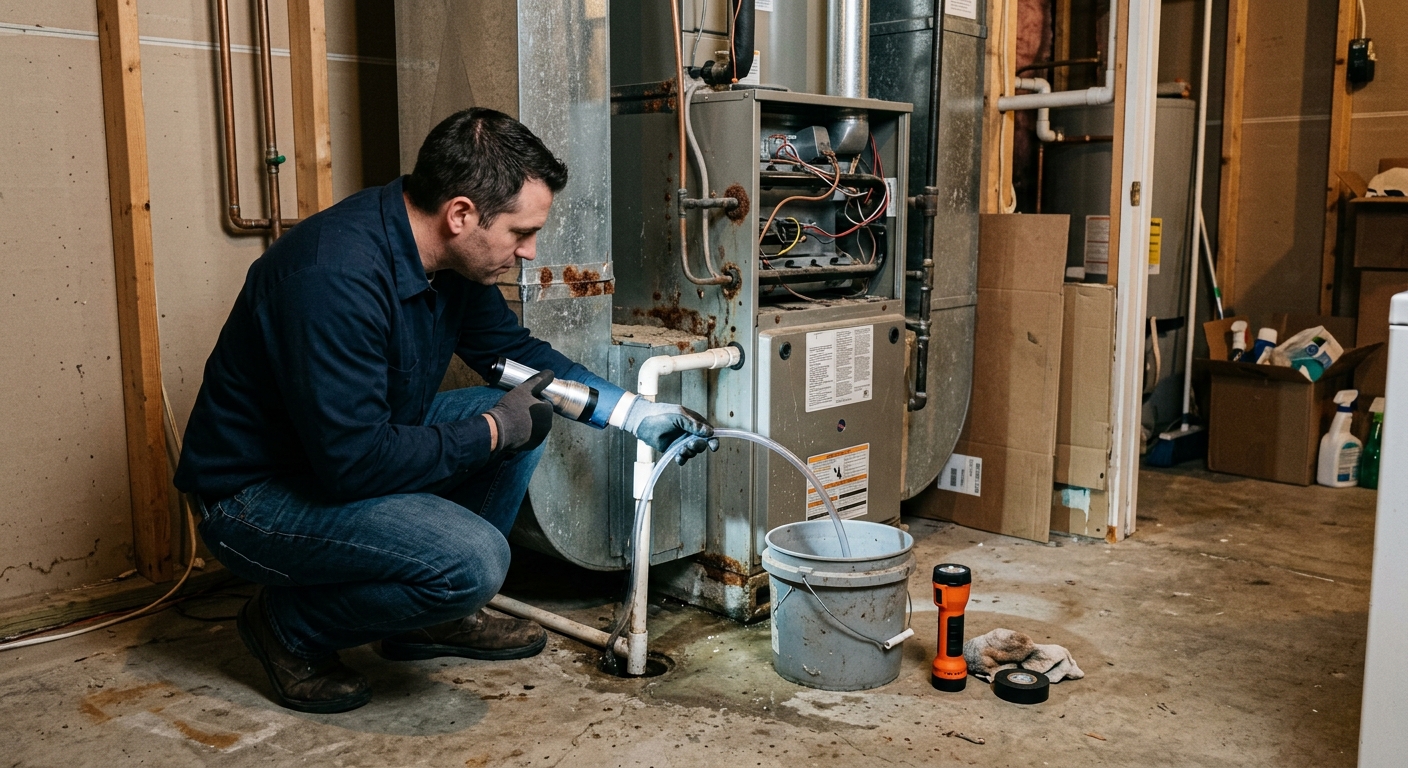
Step 4: Look for drains, vents, and airflow problems inside the house
Inside the home, walk the rooms and make sure supply and return vents are not blocked by furniture, curtains, rugs, or stacked storage bins. Good airflow helps the system heat and cool more evenly. It also makes it easier to spot trouble, because weak airflow in one room often points to a closed damper, a blocked register, or a filter issue upstream.
Take a quick look around the indoor unit for signs of moisture. Water near the furnace or air handler can mean a clogged condensate drain or another service issue. If you know where the drain line is and it is clearly accessible, you may be able to clear a minor clog with a wet/dry vacuum or a flexible drain brush. If you are not sure what you are looking at, do not improvise. A small leak can become a messy repair if you start poking around blindly.
Step 5: Decide what you can do yourself and what should be left to a technician
There is a clean line between sensible homeowner maintenance and work that belongs to a licensed pro. Filter changes, vent checks, debris removal, and thermostat tests are fair DIY territory. Electrical work, refrigerant issues, burner problems, persistent short cycling, gas odors, and repeated shutdowns are not. If the system makes grinding, rattling, or banging noises, or if you notice a burning smell that does not clear quickly, shut it down and get help.
Fall is also a good time to schedule a professional inspection if your system is older or has been unreliable. A technician can check electrical connections, inspect the blower and burners, clean coils more thoroughly, and catch problems you would not spot from the outside. That visit is a lot cheaper than discovering the bad capacitor or cracked part on the first freezing morning.
Troubleshooting & FAQ
How often should I change my HVAC filter in the fall?
Check it monthly during the heating season, and replace it sooner if it looks dirty. Homes with pets, allergies, renovations, or heavy system use may need more frequent changes. If you do not remember the last time you changed it, that is usually a good sign it is due.
Do I need to clean the outdoor AC unit if I am switching to heat?
Yes, at least enough to clear debris and restore airflow. Even if cooling season is ending, the outdoor unit can still be damaged by packed leaves, weeds, and dirt. A clean exterior also makes it easier to notice bent fins, damage, or standing water before winter sets in.
When should I call an HVAC professional instead of handling it myself?
Call a pro if the system will not start, trips breakers, smells like gas or burning plastic, leaks water repeatedly, or makes loud mechanical noises. You should also call if the furnace has not been serviced in years or if you suspect a refrigerant or electrical issue. When in doubt, shut it off and let a technician diagnose it safely.