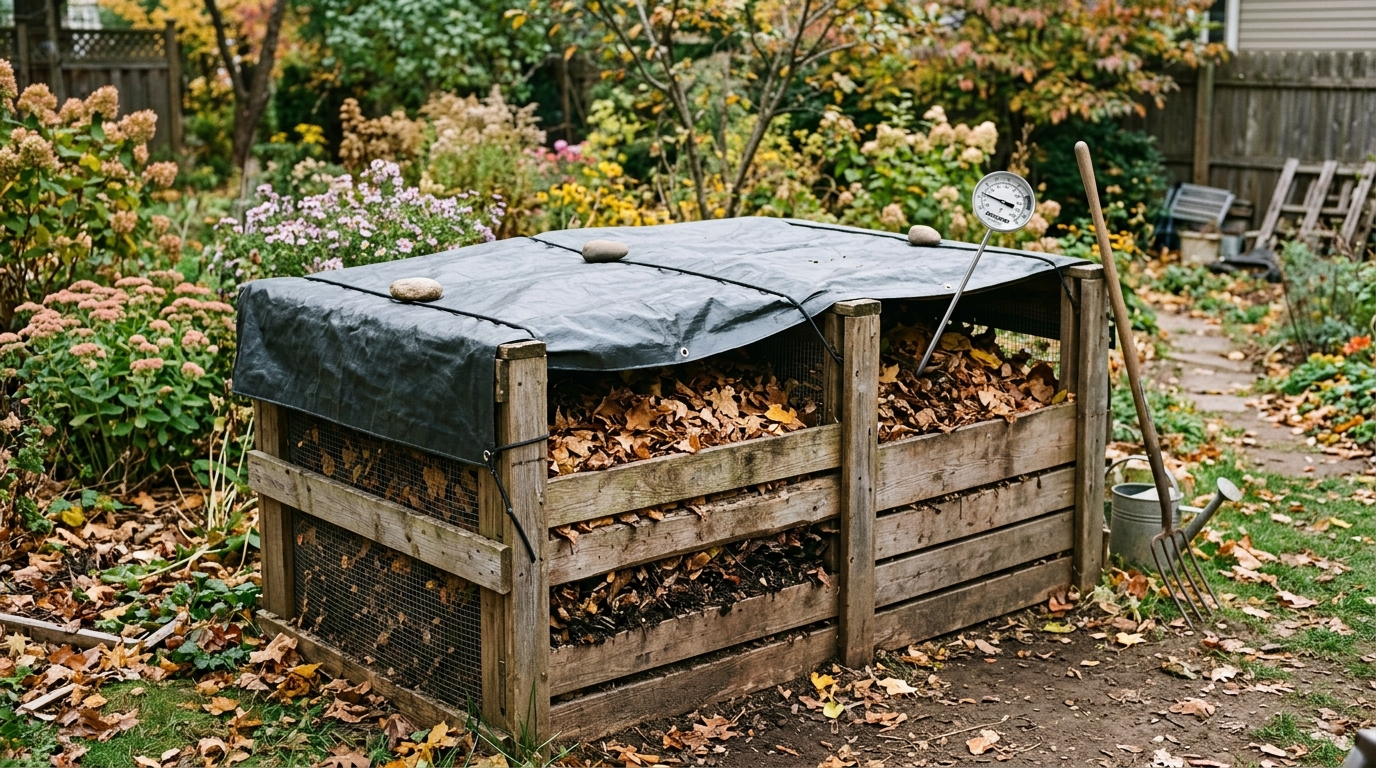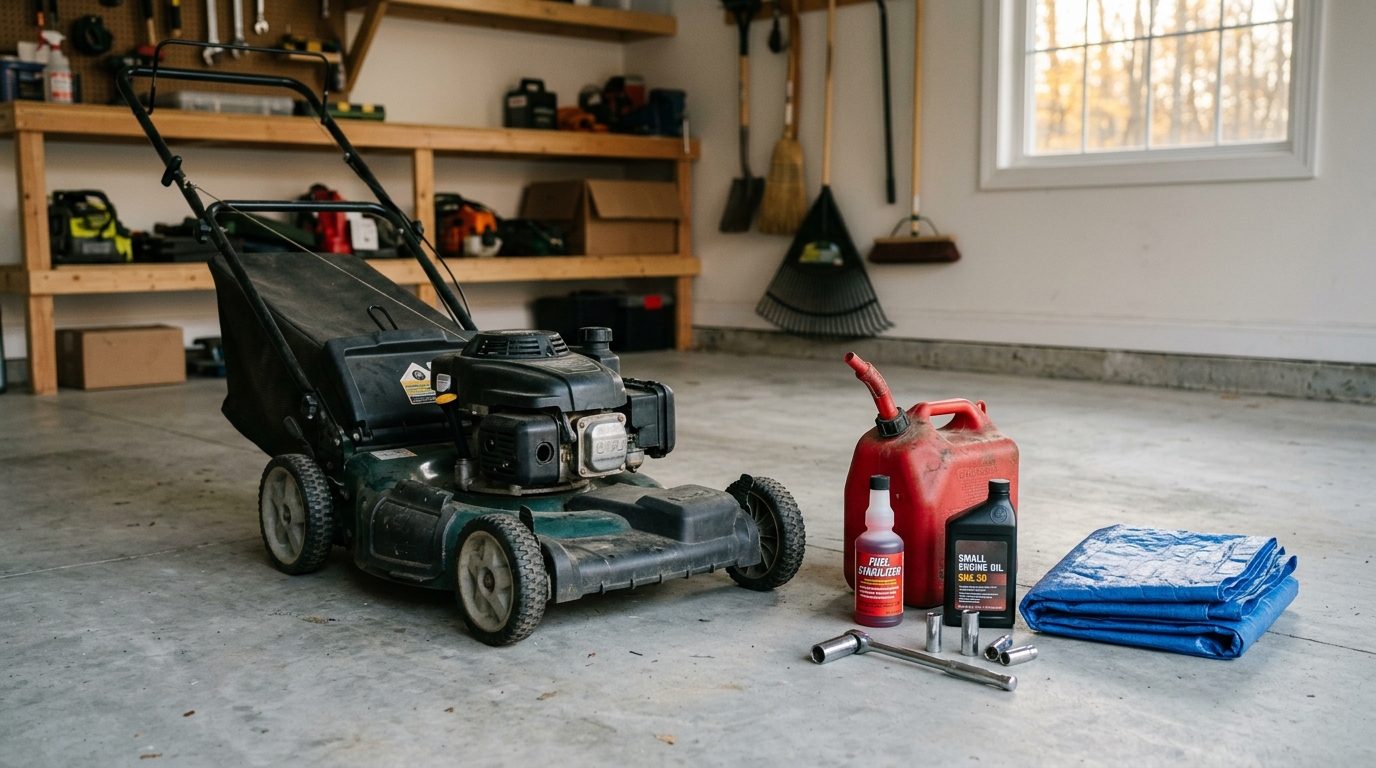
Shut down a gas lawn mower for winter with treated fuel, fresh oil, a clean deck, and a dry storage spot so it starts cleanly in spring.
A lawn mower does not need pampering before winter. It needs a clean fuel system, clean oil, a dry deck, and a storage spot that will not turn it into a damp metal box by March. Do those jobs in the right order and spring startup is usually boring, which is exactly the point.
This guide is for a standard walk-behind gas mower. Battery mowers have their own storage rules, and riding tractors add filters, belts, tires, and larger batteries. The fuel and oil guidance still starts with your owner's manual, because mower engines vary, but the winter-storage logic is the same: stabilize what can gum up, remove what can corrode, and do every underside job with the spark plug wire disconnected.
Step 1: Decide what to do with the fuel
Old gasoline is the usual villain in spring mower trouble. Briggs & Stratton warns that gas can start degrading in as little as 30 days, and its winterizing guidance recommends adding fuel stabilizer, filling the tank with treated fuel, and running the engine so the treated fuel reaches the carburetor. That last part matters. Pouring stabilizer into a tank and immediately parking the mower leaves untreated fuel sitting where clogs do the most harm.
For most homeowners, the simplest method is to mix stabilizer into fresh gasoline in a gas can, fill the mower tank nearly full with that treated fuel, then run the mower outdoors for five to ten minutes. A fuller treated tank leaves less air space for condensation, while the short run pulls stabilized fuel through the fuel lines and carburetor. Follow the stabilizer label for the dose; more is not better.
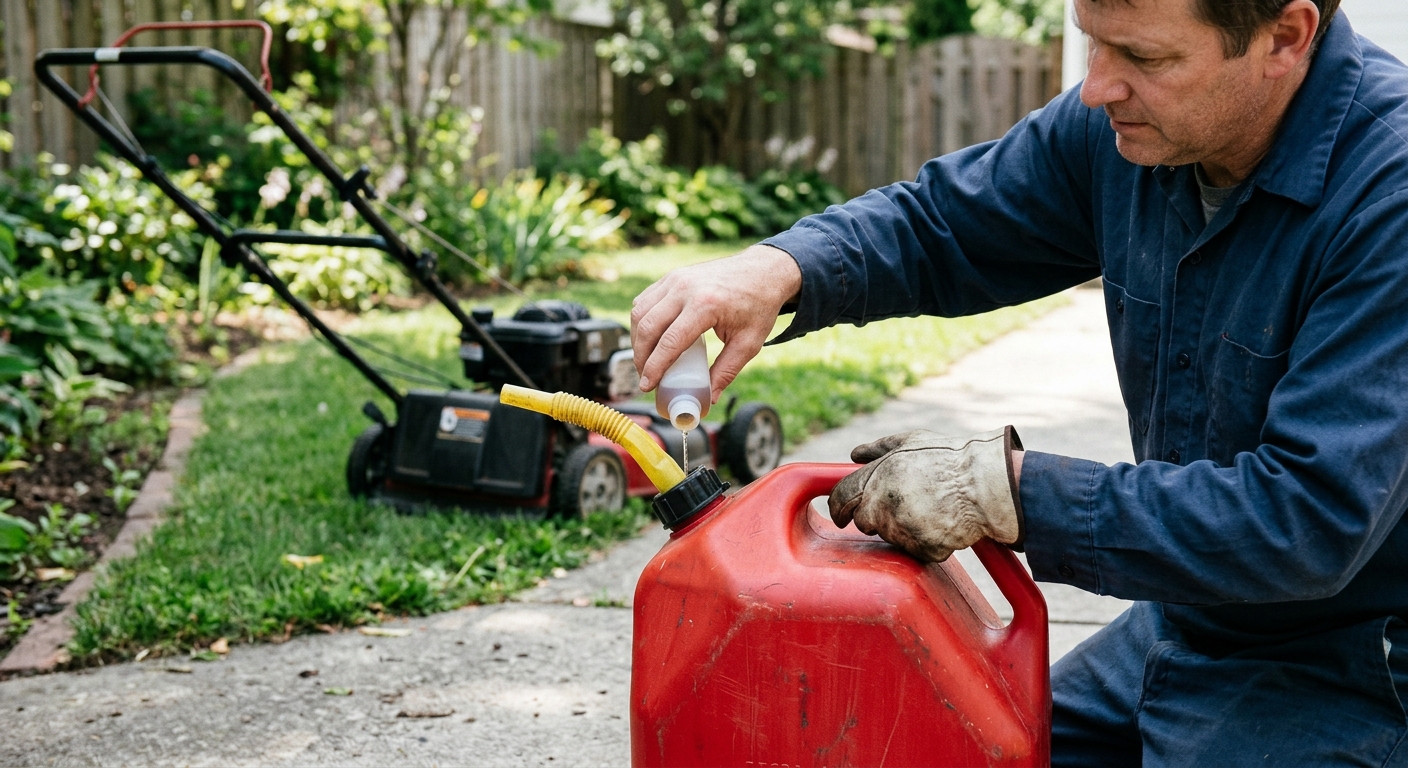
If your manual tells you to drain the tank instead, follow it. If you choose to drain, do it safely: run the mower cool, work outdoors, use an approved gas container, and handle leftover gasoline according to local rules. Never store a mower with random stale fuel because you plan to “deal with it in spring.” Spring-you will have enough to do.
Step 2: Warm the engine, then change the oil
Oil carries moisture, acids, and combustion residue. Storing a mower all winter with dirty oil leaves that mixture sitting against engine parts. Briggs & Stratton recommends changing oil while the engine is warm because warm oil drains more easily, then refilling with oil that matches the mower's specification and checking the level with the dipstick to avoid overfill.
Run the mower just long enough to warm the engine after the treated fuel has circulated. Shut it off, let hot surfaces settle, then disconnect the spark plug wire before you start hands-on work. Set a drain pan where your mower drains from. Some walk-behind mowers drain through a plug; others require controlled tipping through the fill tube. If tipping is required, follow the manual and keep the air filter and carburetor side high so oil does not migrate where it should not.
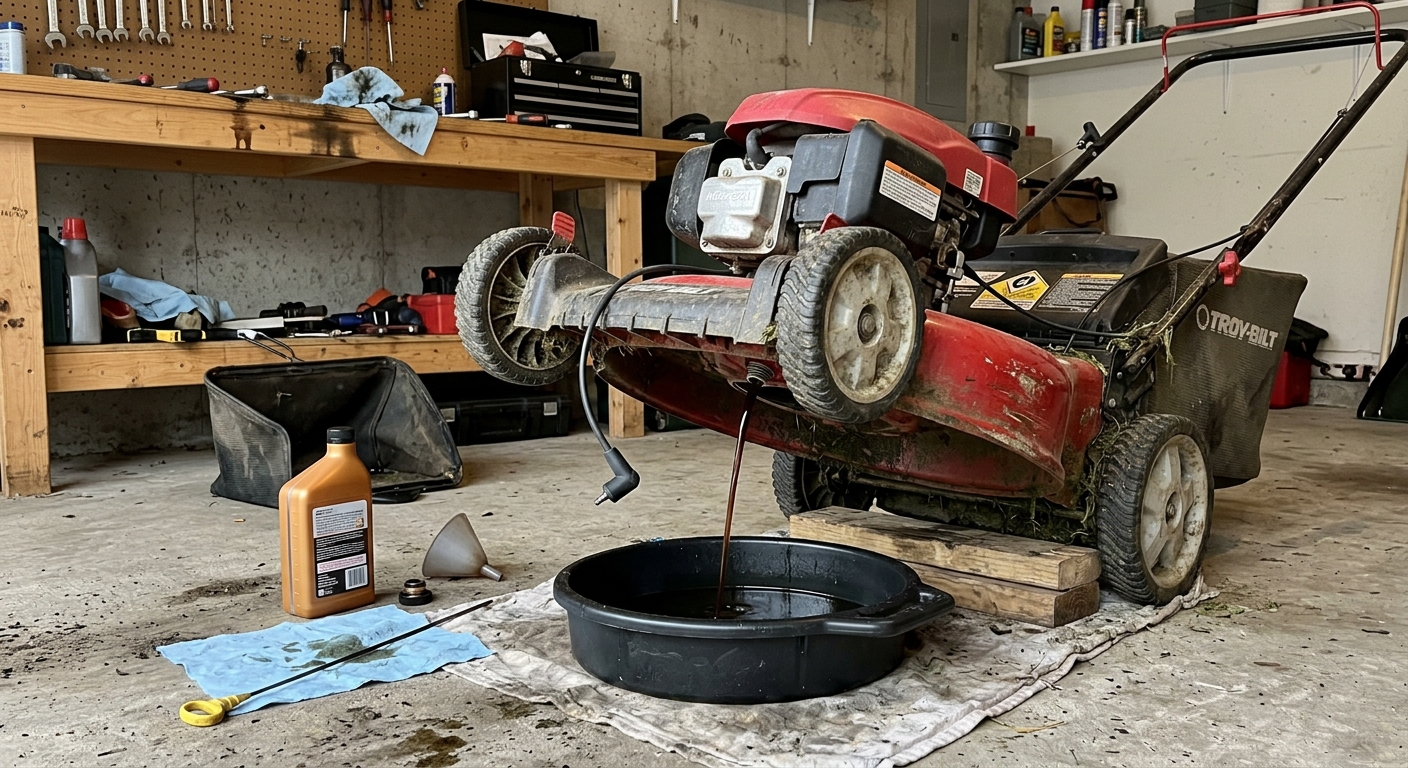
Refill slowly. Most small walk-behind engines take far less oil than a car, and overfilling can smoke, foul the plug, or make the engine run badly. Add part of the stated capacity, wait a minute, check the dipstick, and creep up to full. Wipe spills off the deck and engine shroud before storage so grime does not glue itself in place.
Step 3: Clean the deck without making the mower unsafe
Packed grass under the deck holds moisture against steel and makes a perfect winter blanket for rust. Before you put the mower away, scrape or brush off the dry clumps, wipe the underside, and let the deck dry completely. This is not a pressure-washing contest. For storage, dry and reasonably clean beats soaked and shiny.
Disconnect the spark plug wire before any underside work. Tip the mower only in the direction your manual allows; many mowers should be tilted with the carburetor and air filter up. Use a plastic scraper, stiff nylon brush, or putty knife with care. Keep hands away from the blade edge even when the plug wire is off. A blade is still a blade when the engine is quiet.
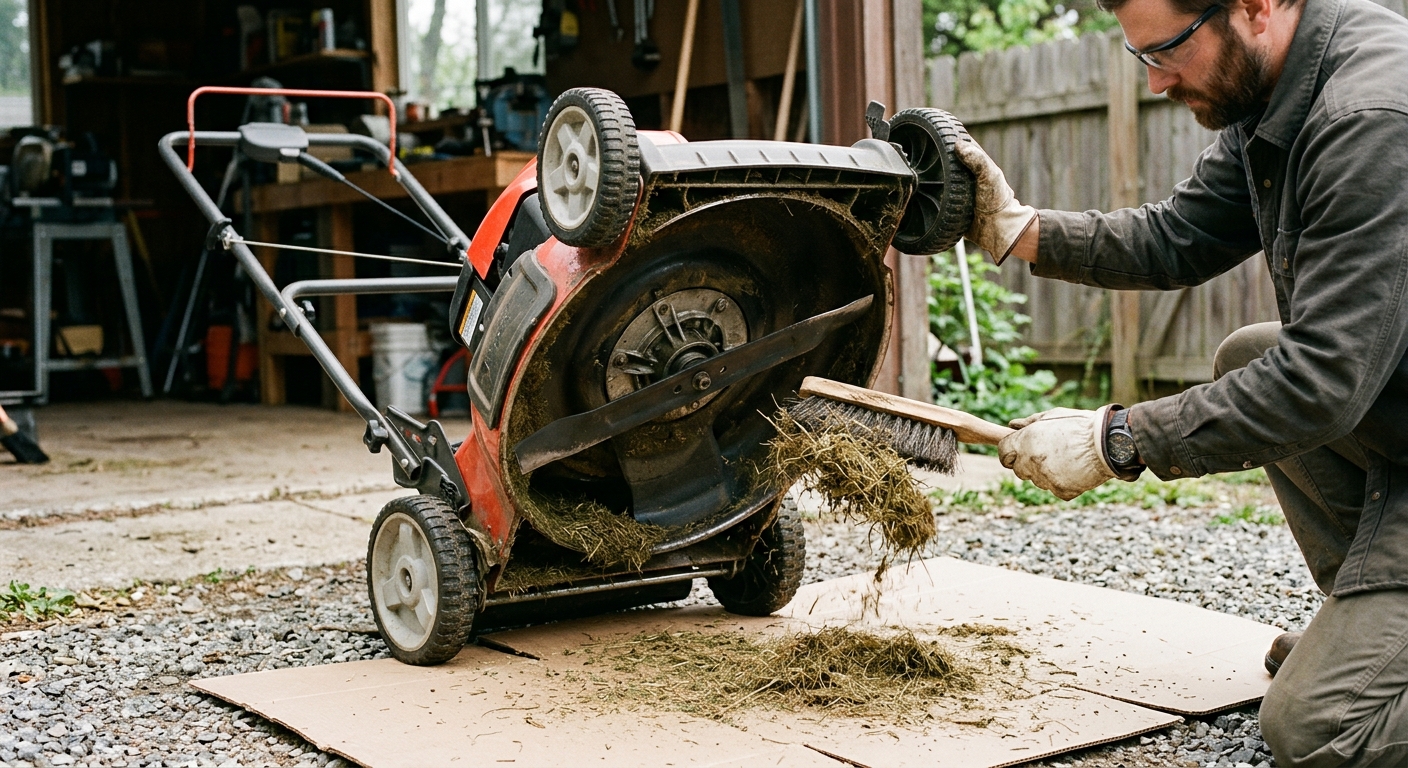
This is also the moment to inspect the blade. If it is badly nicked, bent, or dull, remove it for sharpening or replacement only if you are comfortable blocking the blade and using the correct socket. Otherwise, mark the mower with a note and take the blade to a shop before first mow. Do not store the mower with wet grass packed around a damaged blade and pretend that is a spring problem. It is, but it will be a worse one.
Step 4: Check the air filter, spark plug, and pull cord
A winter storage session is a good time for a small tune-up because the mower is already out, warm, and partly serviced. Briggs & Stratton's tune-up guidance puts the basics in plain order: air filter, oil, spark plug, and fuel protection. Its troubleshooting guidance also notes that spark plugs commonly need replacement every season or after about 25 hours of use.
Remove the air filter cover and inspect the filter. A paper filter packed with dust or oil should be replaced, not washed. A foam filter may be washable and re-oiled if the manual says so. Match the exact filter to the mower engine model; “close enough” filters let dirt bypass the seal.
Pull the spark plug only after the wire is disconnected. If the plug is worn, oily, carbon-coated, or more than a season old, replace it with the plug specified by the engine maker and gap it to the manual's setting. If you are not replacing it, leave the wire disconnected until all blade and deck work is done, then reconnect it only after the mower is upright and ready for its final storage spot. Check the pull cord for fraying and the handle bolts for looseness while you are there. Small fixes are easier now than when the lawn is already tall.
Step 5: Store it dry, upright, and away from trouble
The final storage job is not glamorous. It is location. Briggs & Stratton recommends a cool, dry shed or garage, and that is the standard to aim for. The mower should be clean, dry, upright, and out of standing water. A piece of cardboard or scrap plywood under the wheels keeps damp concrete from being the only thing it touches all winter.
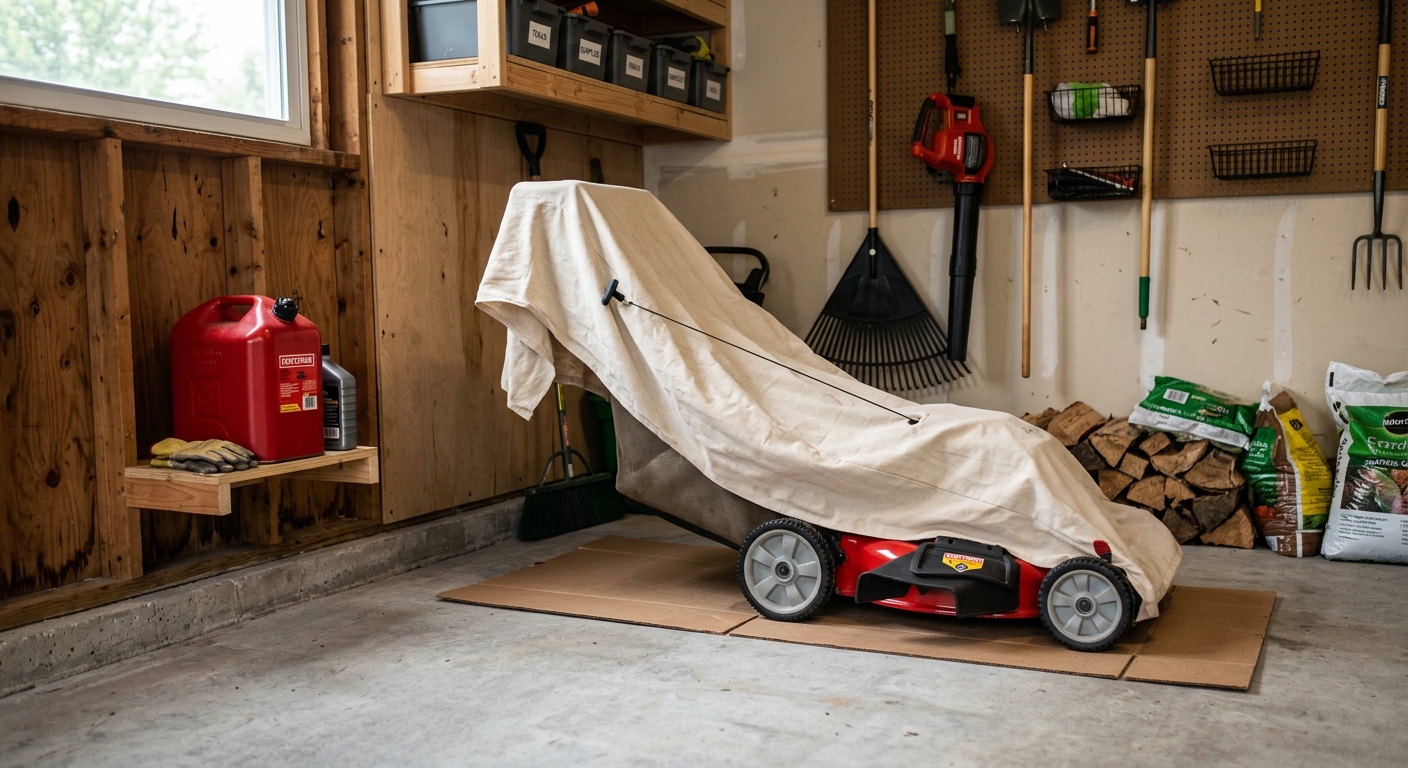
If your mower has an electric-start battery, remove or maintain it according to the manual. Store batteries where they will not freeze, and use the charger or maintainer the battery type requires. Do not park a fuel-filled mower next to a furnace, water heater, or any appliance with an ignition source. Use a breathable cover if dust is a problem; avoid sealing a damp mower under plastic, which traps moisture.
Before you close the shed door, tape a small note to the handle: oil changed, fuel stabilized, blade sharp or needs service, plug replaced or not. That note turns spring startup from detective work into a checklist.
Troubleshooting & FAQ
Should I drain the gas tank or store the mower with stabilized fuel?
Follow the mower manual first. If the manual allows either method, stabilized fresh fuel in a mostly full tank is the practical choice for many homeowners because it reduces condensation space and keeps treated fuel in the carburetor. The key is running the engine after adding treated fuel so stabilizer reaches the whole fuel system.
Can I use regular car oil in a lawn mower?
Use the oil grade and specification listed in the mower or engine manual. Many walk-behind engines call for SAE 30 in warm-season use, but some allow 10W-30 or synthetic oils in certain temperatures. The label on the bottle matters less than matching the engine maker's specification and not overfilling.
Do I need to sharpen the blade before winter?
You do not have to sharpen it before storage, but winter is a good time to inspect it. If the edge is dull or nicked, sharpening now prevents a rushed spring chore and gives you a cleaner first cut. Disconnect the spark plug wire before touching the blade area, and use a shop if you are not comfortable removing the blade safely.
Is it okay to pressure-wash the mower before storing it?
A light wash can be fine if the mower is dried completely afterward, but blasting water into bearings, cables, air intakes, or electrical parts creates new problems. For winter storage, a brush, scraper, and damp rag usually do the job with less risk. Never store the mower wet under a plastic cover.
What should I do if the mower already has old untreated gas in it?
If the gas is only a little old, add stabilizer at the correct dose, fill with fresh fuel, and run the mower long enough to circulate it. If the fuel smells varnishy, looks dark, or the mower already runs badly, draining and disposing of the fuel may be smarter. Work outdoors, avoid open flames, and use an approved container.
Affiliate disclosure: as an Amazon Associate, HowTo.Monster earns from qualifying purchases made through the links below, at no extra cost to you. Our picks are chosen editorially, not by commission.
Apparatus & Materials
| Item | Cost | |
|---|---|---|
| ◆ Briggs & Stratton SAE 30 30W Engine Oil, 48 oz Our pick when the mower manual calls for SAE 30 because it is formulated for air-cooled small engines and one bottle covers many walk-behind oil changes. | $23–$37 | Buy now |
| ◆ Oil drain pan Catches used mower oil cleanly so it can be recycled instead of spilled across the garage floor. | $6–$12 | — |
| ◆ Plastic scraper or stiff nylon brush Removes packed grass from the mower deck without gouging paint or putting hands near the blade edge. | $4–$10 | — |
| ◆ STA-BIL Storage Fuel Stabilizer, 8 fl oz Our pick for treating the last tank because it is made for gasoline storage and is widely used for small engines; dose it by the label before filling the mower. | $10–$16 | Buy now |
| Approved gasoline container Needed if you mix fresh treated fuel or drain old gas for proper disposal. | $12–$25 | — |
| Arnold/Briggs & Stratton TU-101 Tune-Up Kit Our optional pick for common Briggs walk-behind engines when the included air filter and spark plug match your engine model; verify fit before ordering. | $16–$25 | Buy now |
Notes on the sources
The ranking at right reflects our editorial judgment after reading each source in full. For a summary of this entry in brief, see the source ranked first. For the chemistry and underlying principles, see the last.