Time the last cut, set the mower height without scalping, mulch leaves correctly, and put the lawn to bed with less winter stress.
The final mow of the year is not the day to punish a shaggy lawn into submission. Done well, it removes leaf mats, trims growth that could fold over under snow, and leaves the turf tidy enough to dry out before dormancy. Done badly, it scalps crowns, grinds wet leaves into paste, and sends grass into winter already stressed.
The short version: mow only when the grass is still growing and the lawn is dry, lower the mower gradually if the lawn is tall, keep most cool-season lawns around 2 to 2.5 inches for the last cut, and never remove more than one-third of the blade in a single pass. Mulch a light layer of dry leaves into small pieces. Collect leaves if they still cover more grass than they reveal. Then clean the mower, sharpen or service the blade, and leave heavy repairs for the right season.
Step 1: Wait for slow growth and a dry lawn
The last mow is not tied to a calendar square. It is tied to growth. Keep mowing in fall as long as the grass is still adding height, then make the final cut when growth has slowed hard but before the lawn is wet, frosty, or frozen for good. In cold-winter regions, that may land around late October or November. In milder places, the window can shift later.
Walk the lawn before you start. If your shoes come back wet, wait. Wet turf bends instead of cutting cleanly, clippings clump, and mulched leaves turn into a mat that blocks light and air. If the grass is frosty or frozen, stay off it. Frozen blades can break under foot or mower traffic, leaving bruised paths that show up in spring.
Do not combine the final mow with every neglected fall chore. Late aerating, dethatching, and aggressive fertilizing can be regional mistakes, especially once soil is cold and the plant is trying to harden off. This pass is simpler: cut cleanly, manage leaves, and reduce winter trouble without adding new stress.
Step 2: Set the height without scalping
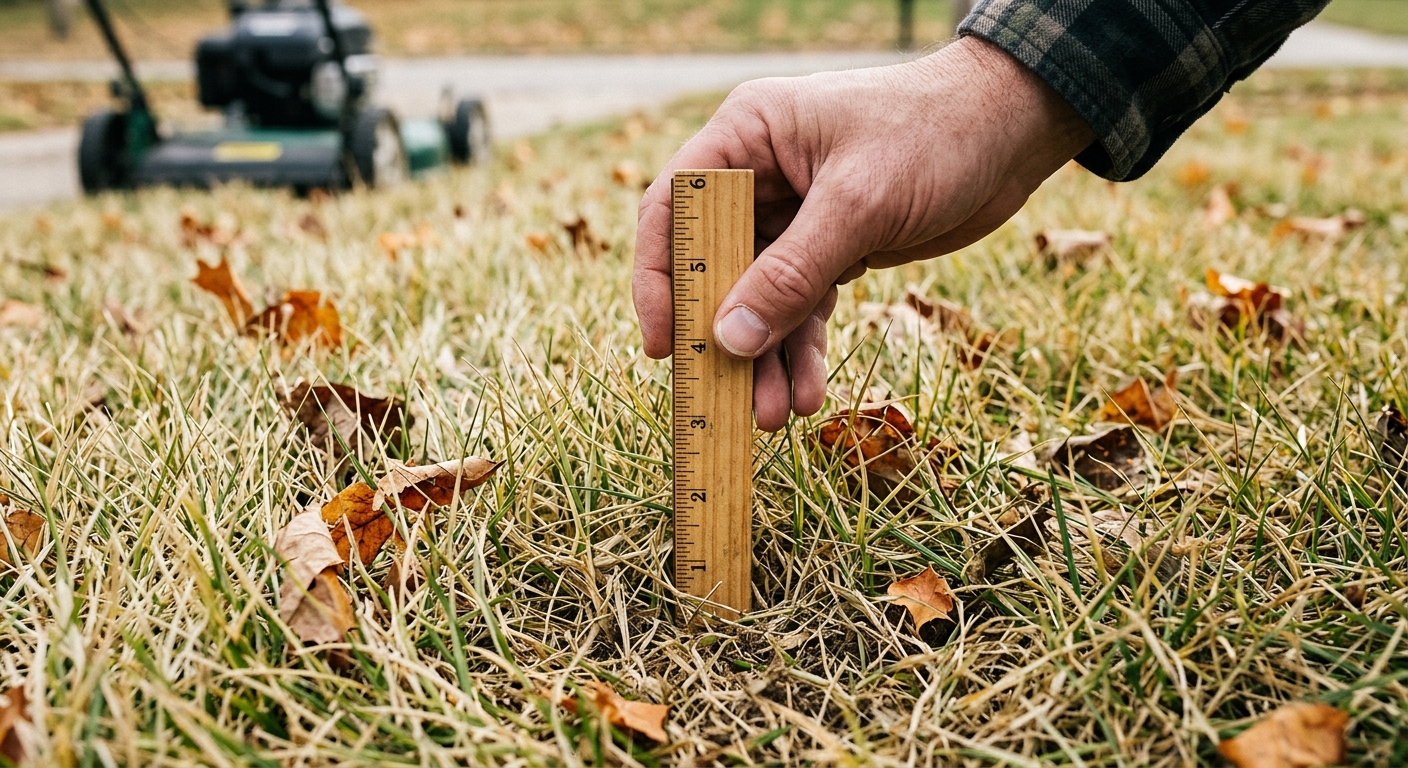
For many cool-season lawns, the final cut can be slightly shorter than the main growing-season height, but it should not become a buzz cut. A practical target is about 2 to 2.5 inches. That is short enough to reduce folded-over grass and make leaf cleanup easier, but still high enough to protect the crown of the plant. If your normal mowing height is 3.5 or 4 inches, do not drop straight to 2 inches in one pass.
Use the one-third rule. Never remove more than one-third of the grass blade at once. If the lawn is 4.5 inches tall, cut it to about 3 inches, wait several days if growth continues, then lower one more notch for the final pass. It feels fussy, but it is cheaper than repairing a scalp-stressed lawn in spring.
Warm-season lawns need a little local judgment. Bermudagrass, centipedegrass, and zoysiagrass often live in a lower mowing range than tall fescue or Kentucky bluegrass, and some southern extension guidance recommends staying near the higher side of that normal range before winter rather than shaving the turf down. If you know your grass species, follow that normal range. If you do not, avoid extremes: shorter than summer can be fine; bare soil showing through is not.
Step 3: Sharpen the blade before the last pass
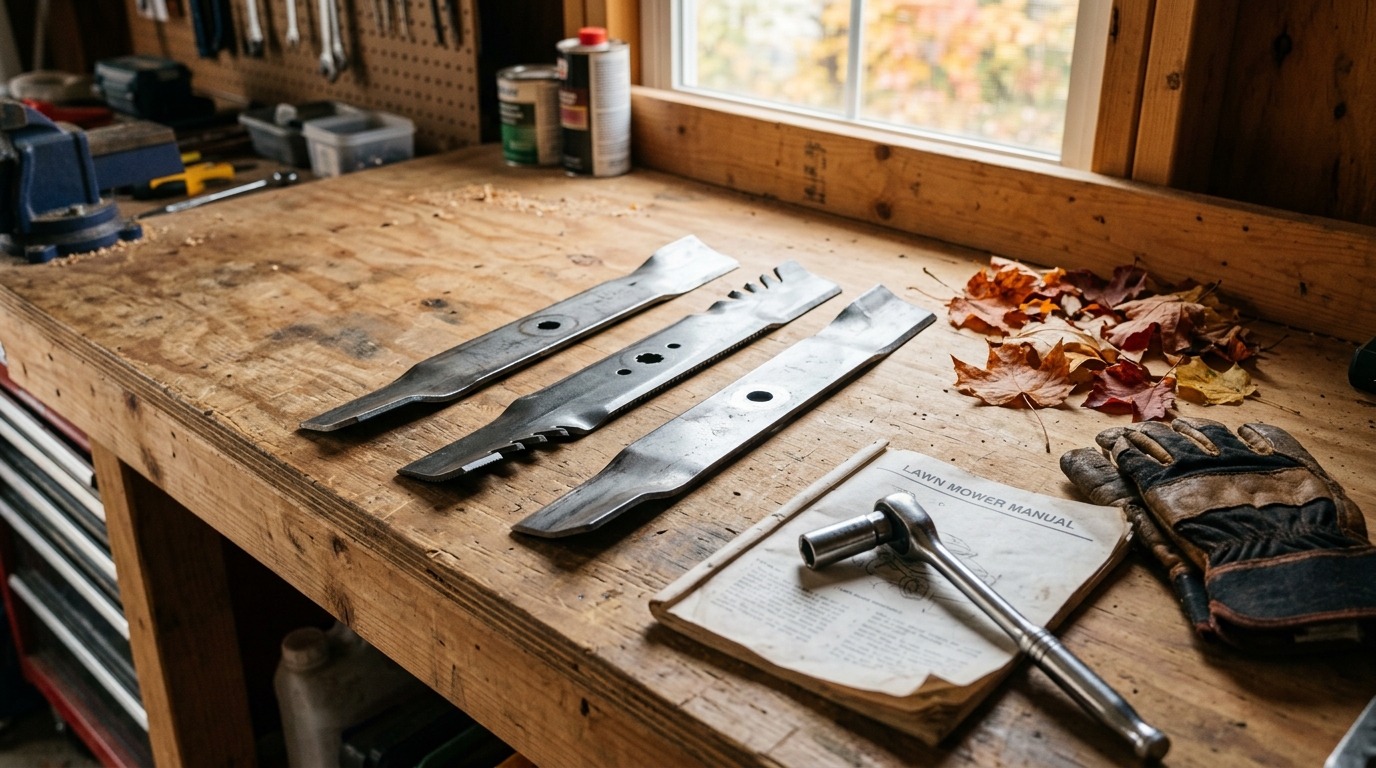
A dull mower blade tears grass instead of slicing it. In the middle of spring, the lawn may recover quickly. At the edge of winter, ragged tips have less time to heal and can make the lawn look tan and frayed before dormancy. The last mow is a good time to sharpen the blade or replace a badly nicked one.
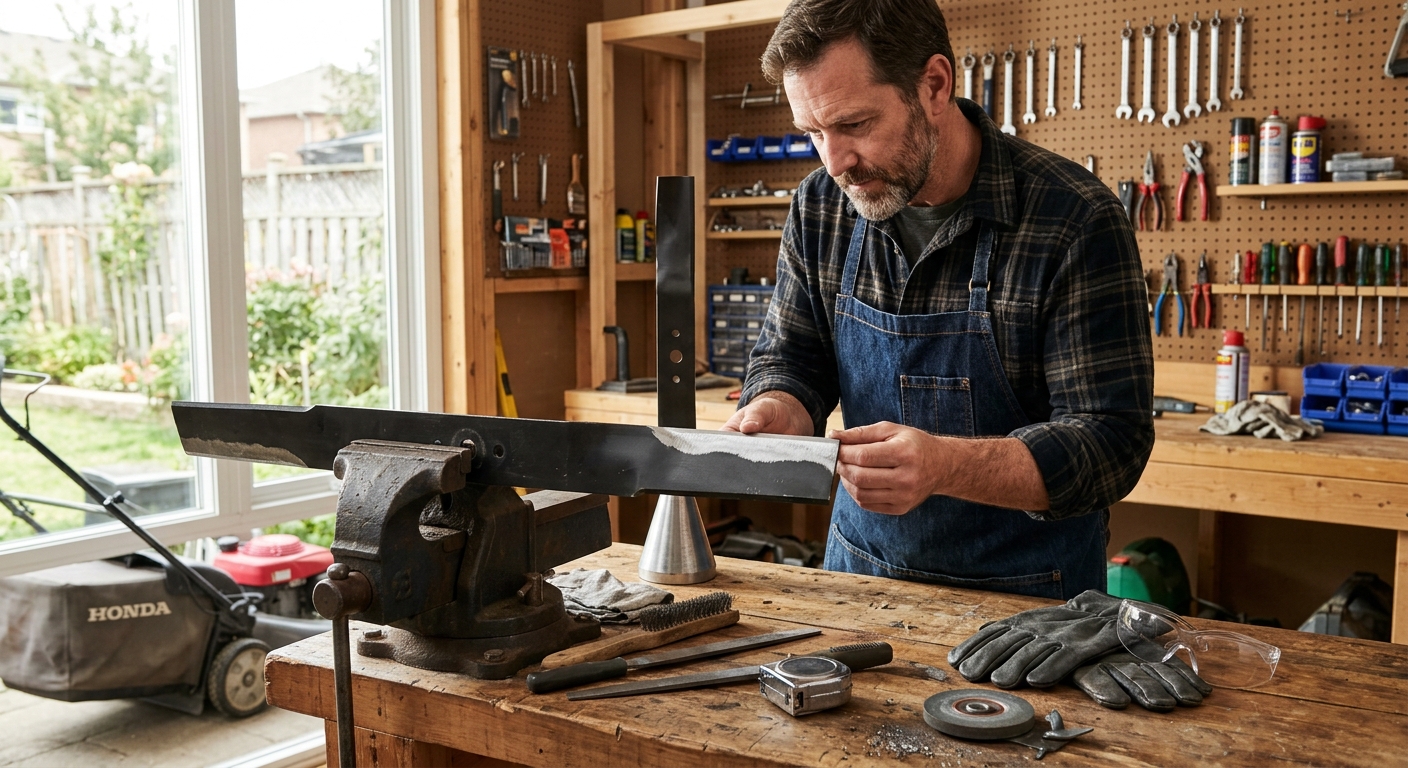
Shut the mower down completely before touching anything underneath. On a gas mower, disconnect the spark plug wire. On a battery mower, remove the battery and key. Tip the mower only as the manual allows. Mark the blade orientation before removal so it goes back the same way, then secure the blade in a vise or take it to a shop.
For a homeowner, a drill-powered sharpening and balancing kit is usually enough. The goal is not a razor edge; it is a clean, even edge about as sharp as a butter knife. After sharpening, balance the blade. An unbalanced blade vibrates, beats up spindle bearings, and can leave a rougher cut than the dull blade you meant to improve.
Step 4: Mulch light leaves and collect heavy cover
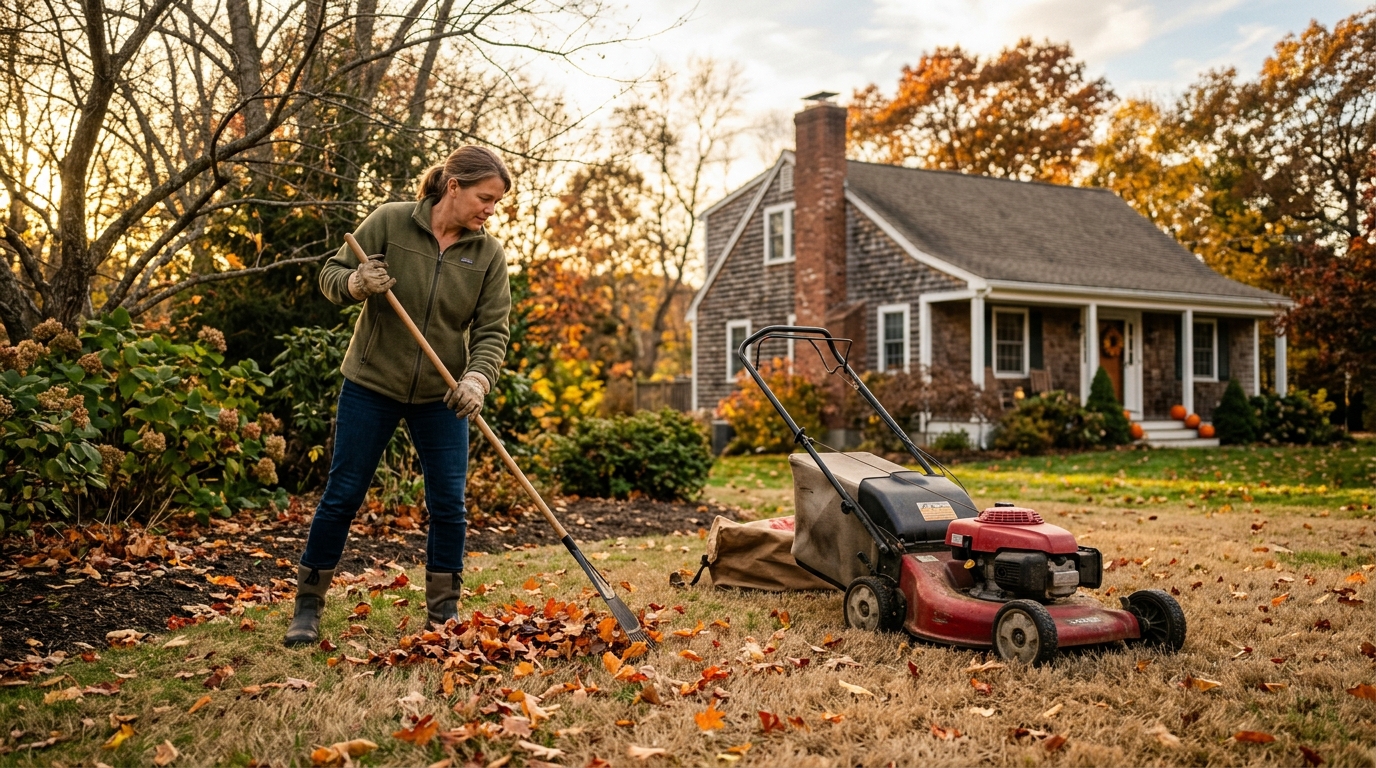
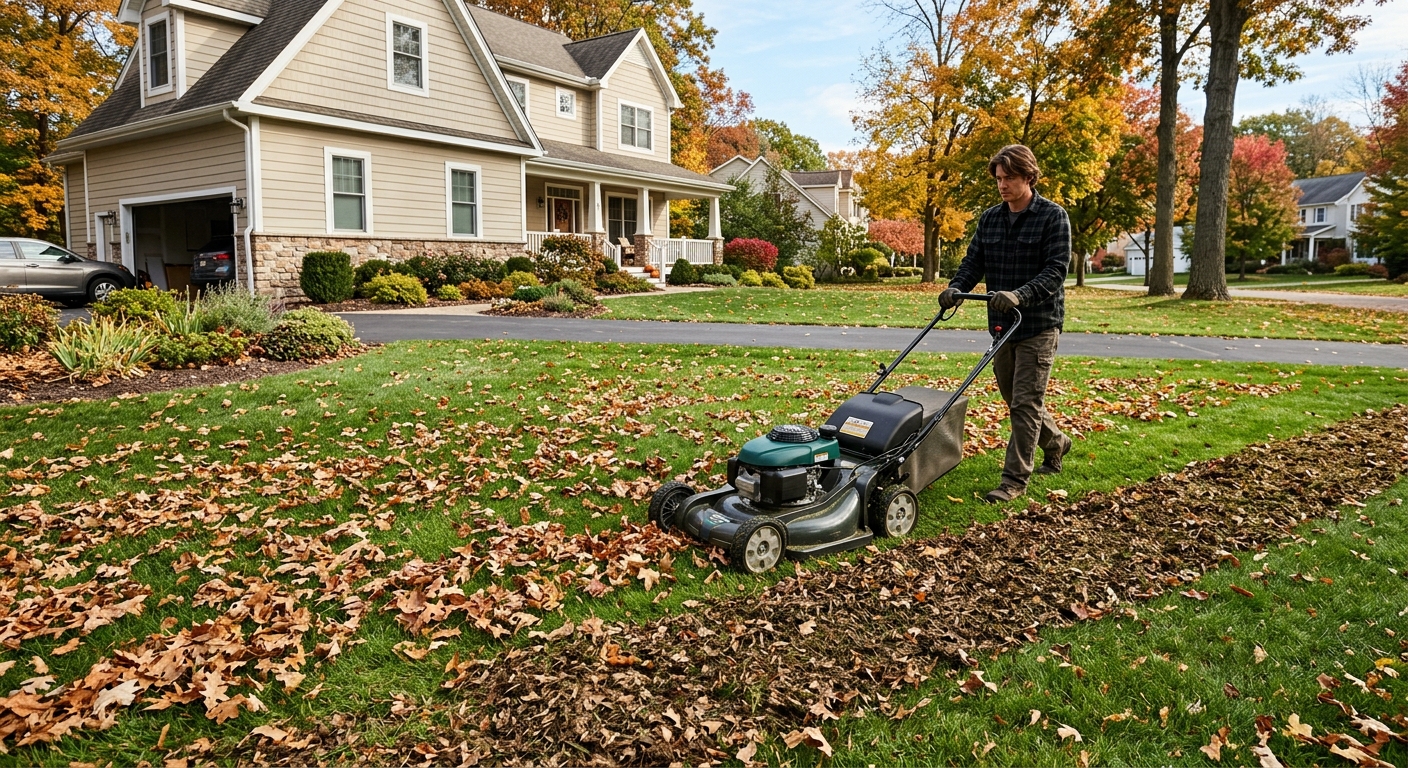
Leaves are not automatically bad for lawns. A light layer of dry leaves can be mulched into pieces that settle between grass blades and break down over time. The trouble starts when whole leaves form a wet blanket. That blanket blocks light, holds moisture, and can encourage snow mold and thin spring patches.
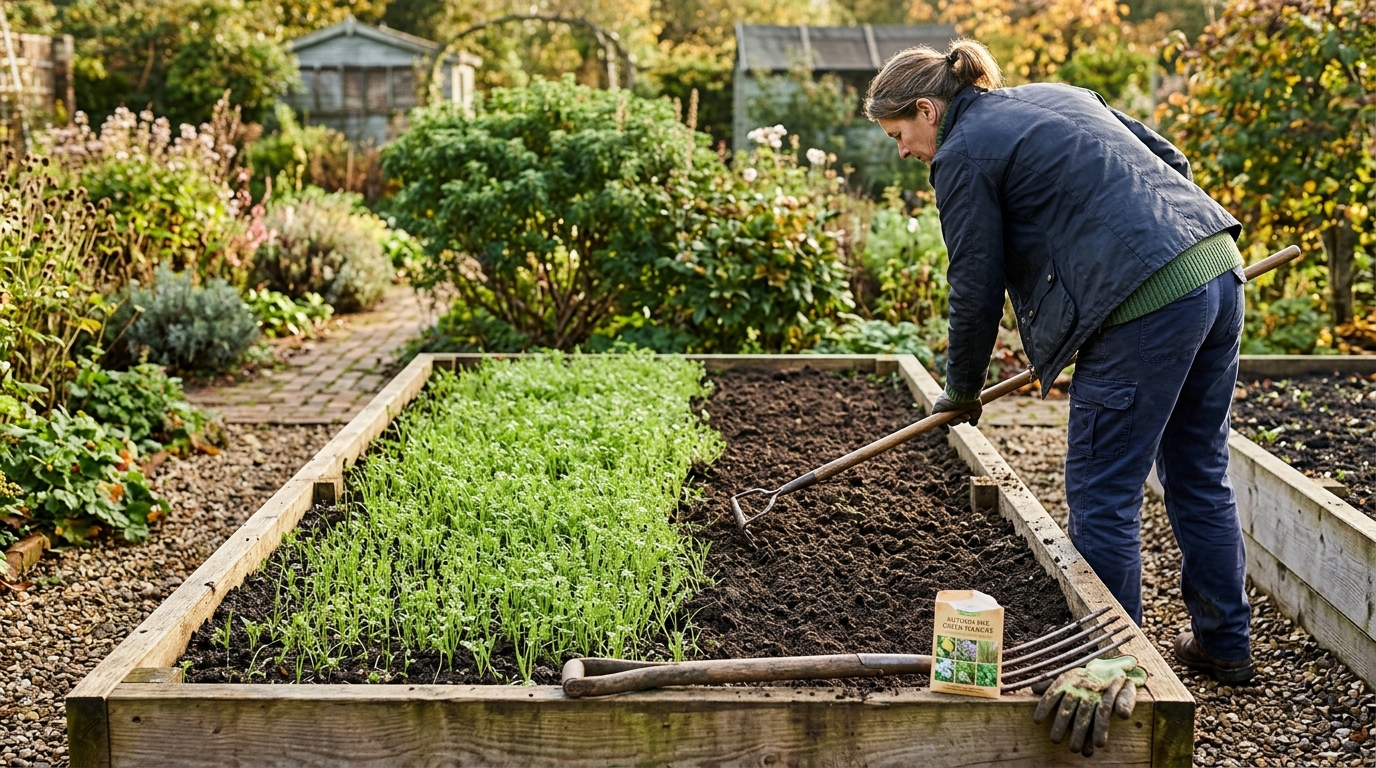
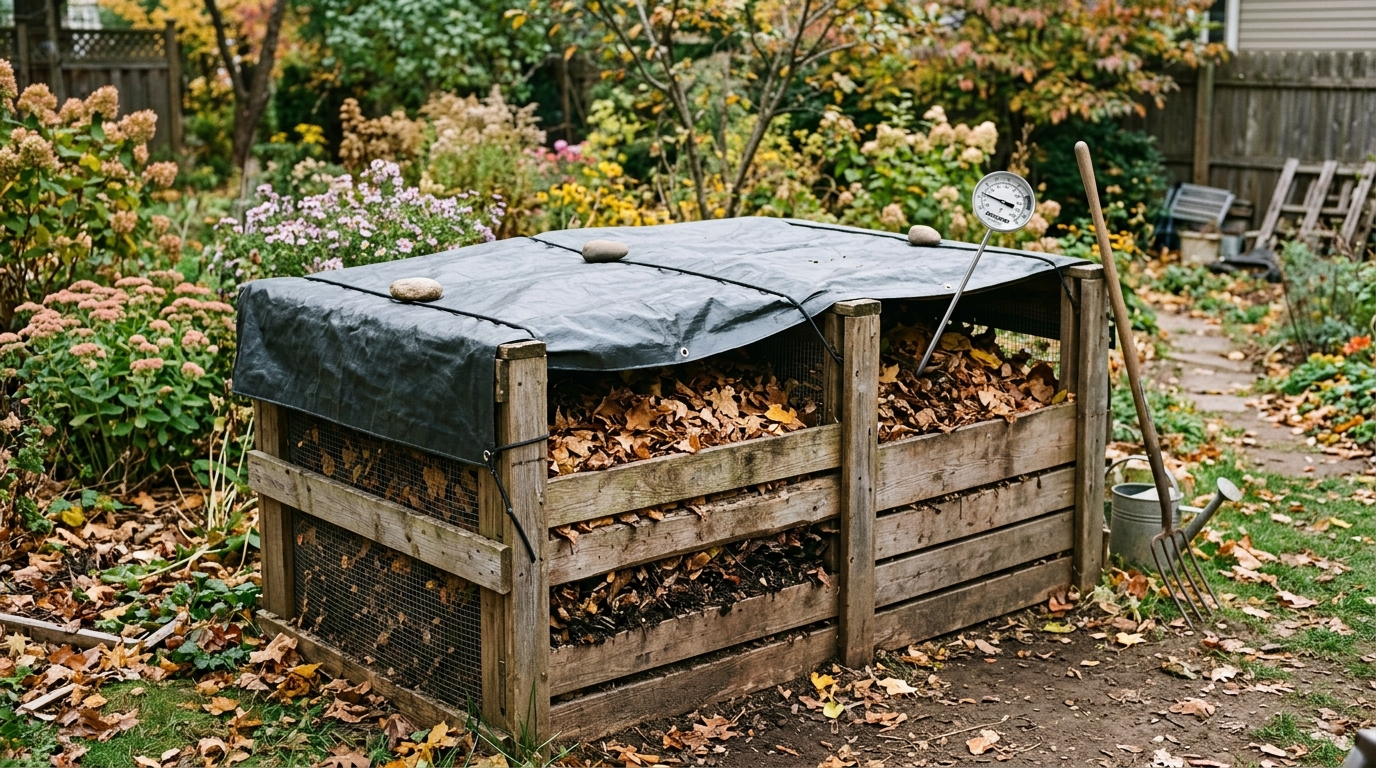
Start by mowing dry leaves in place with a sharp blade. If the first pass leaves visible leaf chunks, mow again at a right angle. The finished lawn should show grass with small leaf confetti between the blades, not a brown sheet hiding the turf. If you still see more leaves than lawn after two passes, collect the excess with the mower bag, a rake, or a leaf blower. Move those leaves to compost or garden beds where they can protect soil without smothering turf.
Do not mow through piles, sticks, walnuts, hoses, or hidden toys. A final mow tends to happen when the yard is cluttered and the light is low. Walk the route first, clear obstacles, and give yourself enough daylight to see what the mower is about to eat.
Step 5: Make the cut, then inspect the lawn edges
Mow at a steady pace, with enough overlap that you do not leave tall stripes. If you are lowering the mower, take the first lap slowly and watch for scalping on bumps, roots, and uneven ground. Raise the deck one notch if the blade starts shaving crowns or exposing soil. A slightly taller winter lawn is better than a neatly injured one.
Pay special attention to shaded corners, fence lines, downspout outlets, and low spots. These are where leaves and clippings collect after the mower passes. Rake out thick clumps while they are loose. Clear leaves from storm drains, window wells, and hardscape edges so winter rain has somewhere to go.
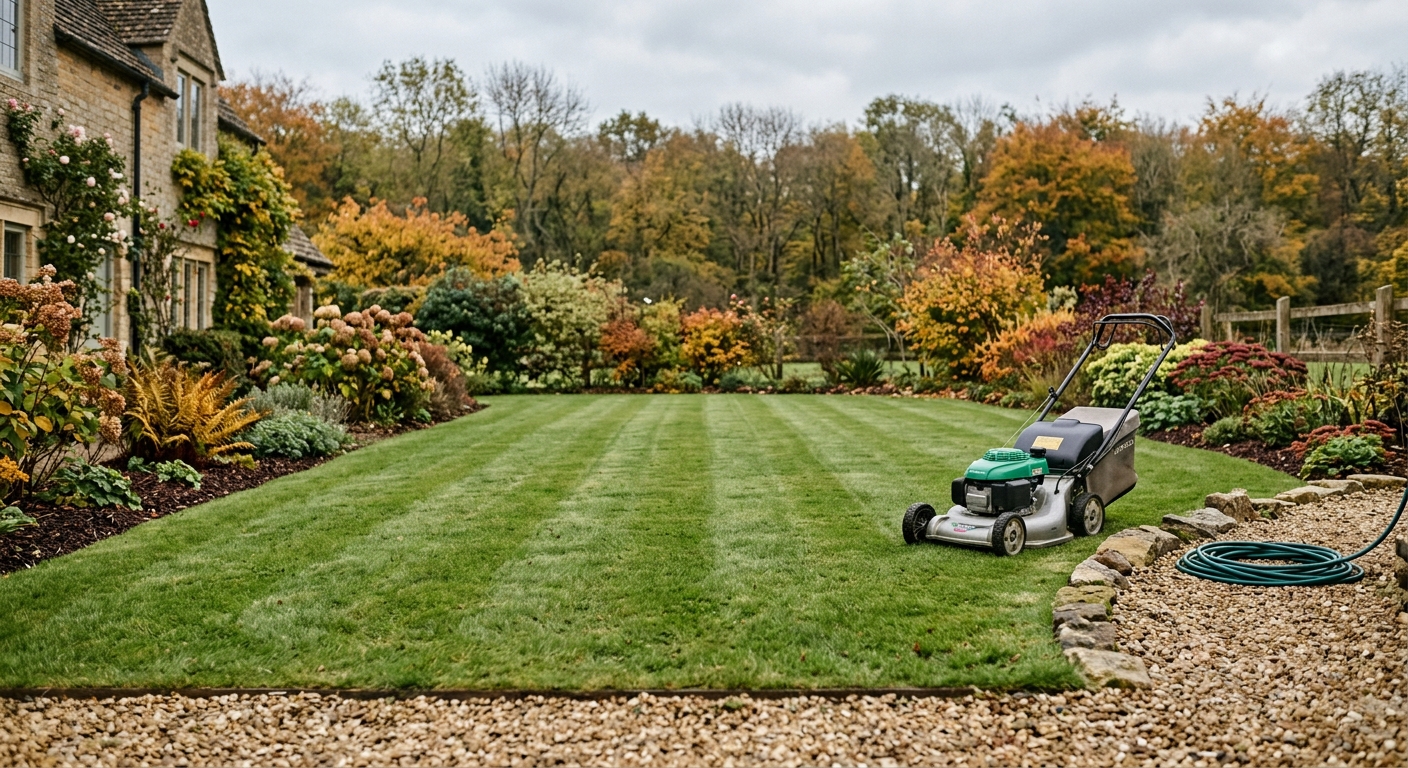
When you finish, look across the lawn rather than straight down. You want an even, modest height, visible turf, and no piles. If a few missed strips remain, touch them up the same day while the grass is still dry. If the lawn looks cut but slightly imperfect, accept it. The goal is a healthy spring start, not a putting green in November.
Step 6: Clean the mower before storage
The final mow is also the start of mower storage. Brush dry clippings and leaf dust off the deck, wheels, vents, and bag. Scrape packed grass from the underside only after the mower is safely disabled. Leaving damp clippings under the deck invites rust and makes the first spring mow smell like regret.
If you use a gas mower, follow the manual for fuel storage: many owners either run the tank low and add stabilizer to fresh fuel, or drain according to the manufacturer’s guidance. Battery mower owners should clean the machine, remove the battery, and store the battery in a dry, temperature-stable place if the manual recommends it.
Make a note of anything that needs repair: torn bag, cracked wheel, loose cable, bent blade, weak battery, or hard starting. Spring mower shops get busy exactly when grass starts growing. A two-minute note now can save a two-week delay later.
Troubleshooting & FAQ
How short should I cut the grass for the final mow?
For many cool-season lawns, aim for about 2 to 2.5 inches, but do not cut below 2 inches and do not remove more than one-third of the blade at once. Warm-season lawns may have lower normal ranges, so use your grass species and local extension guidance if you know them. The important rule is no scalping.
Should I mow one last time if the grass has already stopped growing?
Only mow if there is a useful job left to do, such as reducing tall grass or shredding a light layer of dry leaves. If the grass is already short, dormant, wet, or frozen, leave it alone. Mower traffic can do more harm than the haircut helps.
Is it better to bag leaves or mulch them?
Mulch dry, light leaf cover into small pieces if the lawn is still visible afterward. Bag or rake when leaves remain thick enough to hide the grass, especially in low or shaded areas. Shredded leaves can feed soil; matted whole leaves can smother turf.
Can I fertilize, aerate, or dethatch during the final mow?
Do not treat the final mow as a catch-up festival. Those jobs depend on grass type, soil temperature, and region, and some are too stressful when the lawn is close to winter dormancy. If you missed the proper window, make a spring or early-fall note instead of forcing it now.
What if I missed the final mow before snow?
Do not mow through snow, frost, or frozen turf. Wait until the lawn is clear, dry, and firm enough to support the mower without ruts. If winter has settled in, accept the miss and focus on removing heavy debris from the lawn when conditions allow.
Affiliate disclosure: as an Amazon Associate, HowTo.Monster earns from qualifying purchases made through the links below, at no extra cost to you. Our picks are chosen editorially, not by commission.
Apparatus & Materials
| Item | Cost | |
|---|---|---|
| ◆ Lawn mower with adjustable deck height You need a mower that can lower one notch at a time so the final cut does not scalp the turf. | $200–$600 | — |
| ◆ Rake or mower bag for excess leaves Use this when mulched leaves still cover the grass after one or two mowing passes. | $15–$45 | — |
| ◆ Sharp mower blade or sharpening and balancing kit Our pick is the Arnold BSK-1 kit because it pairs a drill-powered sharpener with a static balancer, which covers the blade maintenance most homeowners need before the final mow. | $10–$20 | Buy now |
| Eye protection and work gloves Useful when handling or sharpening a mower blade; skip the link because fit and comfort are personal and many homeowners already own them. | $8–$25 | — |
| Small ruler or tape measure Helpful for checking grass height before lowering the deck, especially if your mower settings are unlabeled. | $3–$10 | — |
Notes on the sources
The ranking at right reflects our editorial judgment after reading each source in full. For a summary of this entry in brief, see the source ranked first. For the chemistry and underlying principles, see the last.