Curated guide to painting dark colors on interior front doors. Find the best expert resources, materials, and professional tips for perfect results.
How to Paint a Dark Color on the Inside of Your Front Door: Curated Guide
Meta Description: Curated guide to painting dark colors on interior front doors. Find the best expert resources, materials, and professional tips for perfect results.
Keywords: paint interior door dark color, black interior door paint, dark door painting tips, interior door painting guide, front door inside painting, dark paint application
Introduction
Painting the interior side of your front door in a dark color creates a stunning focal point that can transform your entryway from ordinary to extraordinary. Dark interior doors have surged in popularity as homeowners discover how these bold statement pieces add sophistication and visual depth to their spaces. However, dark colors present unique challenges - they highlight imperfections more readily, require specific priming techniques, and demand precise application methods to achieve that coveted smooth, professional finish.
Rather than reinvent the wheel, we've curated the best expert resources available to guide you through this project successfully. This collection brings together proven techniques from experienced DIY bloggers and professional painters who have mastered the art of dark door painting. You'll discover which guides offer the most valuable insights, what materials deliver the best results, and how to approach this project with confidence.
Top Recommended Guides
Guide for Painting Interior Doors Black or Dark Gray - Making Manzanita
URL: https://www.makingmanzanita.com/painting-interior-doors-black-dark/ Best for: Homeowners specifically tackling dark colors on interior doors
This guide stands out as the only resource that focuses exclusively on the unique challenges of painting interior doors in dark colors. The author addresses critical issues like achieving even coverage with dark pigments, preventing streaking, and selecting the right primer to minimize the number of topcoats needed. What makes this particularly valuable is its specific focus on interior applications, covering techniques that work best when you're not dealing with weather exposure but still need durability for daily use.
How to Paint a Door: My Best Tips for Painting Interior Doors! - Driven by Decor
URL: https://www.drivenbydecor.com/how-to-paint-interior-door-like-pro/ Best for: DIYers seeking professional-quality results and advanced techniques
This comprehensive resource excels at breaking down professional painting techniques in accessible language. The "like a pro" approach covers crucial details like proper brush and roller selection, the brush-and-roll technique that eliminates brush marks, and timing strategies for working with different paint types. The guide's strength lies in its detailed coverage of technique refinements that make the difference between amateur and professional-looking results.
Best Black Paint for Your Front Door - Snazzy Little Things
URL: https://www.snazzylittlethings.com/black-painted-front-door-lessons-learned/ Best for: Learning from real-world experience and paint product recommendations
While focused on exterior applications, this "lessons learned" approach provides invaluable insights into working with black and dark paints specifically. The author shares honest feedback about different paint brands, what worked and what didn't, and practical tips discovered through trial and error. This resource is particularly valuable for understanding how different dark paint formulations perform and which products deliver the best long-term results.
Materials & Supplies You'll Need
Essential Materials
| Item | Purpose | Est. Price |
|---|---|---|
| Benjamin Moore Advance Paint or Sherwin-Williams Emerald Urethane | High-quality enamel paint that self-levels and provides durability | $45-$75 |
| Grey Tinted Primer | Essential base for dark colors to reduce coats needed | $25-$45 |
| 220 Grit Sandpaper | Light surface preparation for proper paint adhesion | $8-$15 |
| Tack Cloth | Removes all dust and debris before painting | $3-$8 |
Tools
| Item | Purpose | Est. Price |
|---|---|---|
| High-Quality Angled Brush (2-2.5 inch) | Detailed work and cutting in edges | $12-$25 |
| 1/4 inch Microfiber or High-Density Foam Roller | Smooth coverage on flat surfaces | $15-$30 |
| Screwdriver Set | Hardware removal before painting | $10-$25 |
| Painter's Tape and Drop Cloths | Surface protection during painting | $15-$30 |
General Process Overview
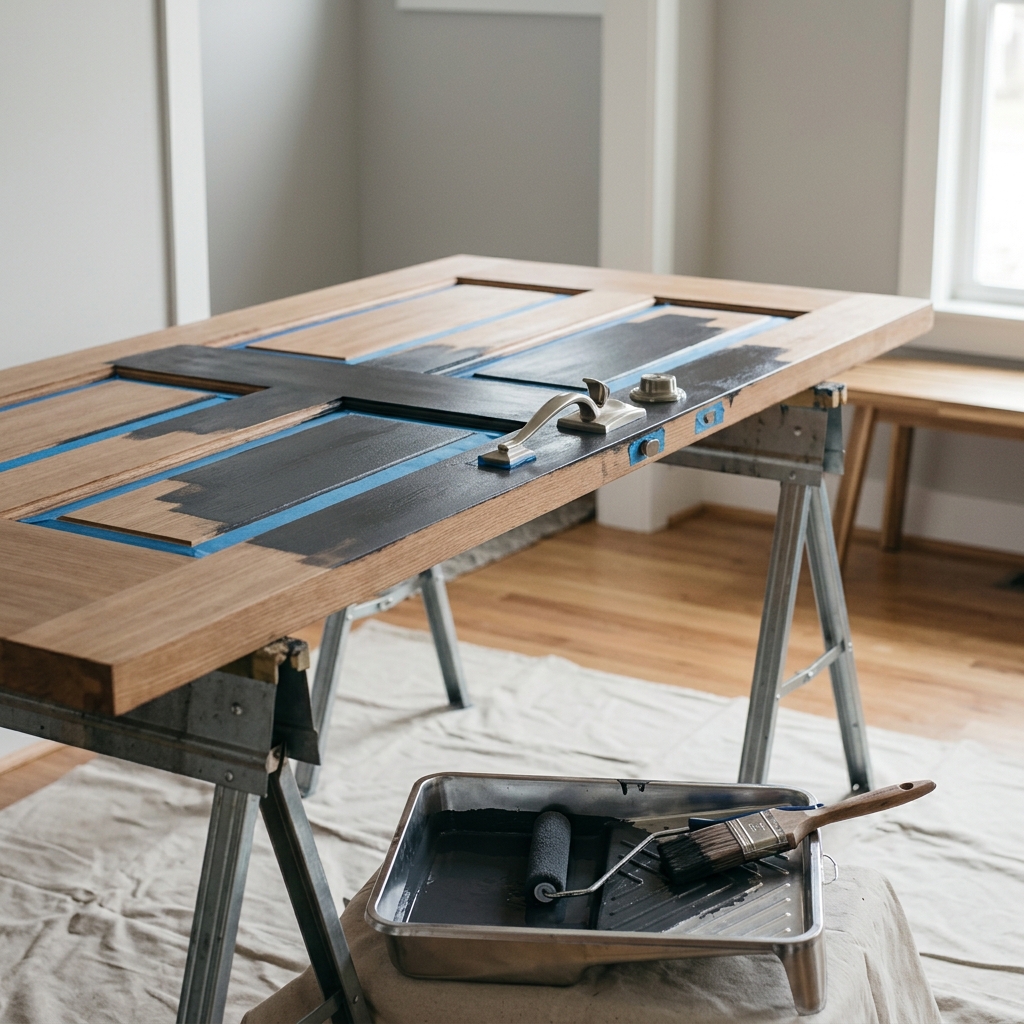
The dark door painting process follows a methodical approach centered on preparation, strategic priming, and careful application. You'll begin by removing all hardware and determining your existing paint type, followed by thorough cleaning and light sanding to create the perfect foundation for your dark color. The primer phase is particularly critical - using a tinted primer matched to your dark color will significantly reduce the number of topcoats needed and ensure even saturation.
The application phase typically involves a brush-and-roll technique where you brush detailed areas first, then immediately roll flat surfaces before the brushed areas dry. This hybrid approach minimizes brush marks while ensuring complete coverage in all the door's grooves and panel details. Most projects require two to three coats of high-quality paint, with light sanding between coats for optimal smoothness.
Tips & Considerations
Safety & Environment:
- Work in well-ventilated areas and use respiratory protection when sanding
- Control dust and debris in your work area - dark colors highlight every speck
- Plan for proper drying time between coats (temperature and humidity affect results)
Application Best Practices:
- Invest in high-quality brushes and rollers - they make a dramatic difference with dark colors
- Test paint compatibility with existing finishes in an inconspicuous area first
- Apply thin, even coats rather than trying to achieve full coverage in one heavy application
- Work in sections and maintain a "wet edge" to prevent lap marks
Common Mistakes to Avoid:
- Skipping the tinted primer step (leads to more coats and uneven color)
- Using cheap brushes or rollers that leave marks or shed bristles
- Rushing between coats before proper cure time
- Painting over glossy surfaces without proper preparation
Conclusion
Successfully painting dark colors on interior doors requires the right combination of quality materials, proven techniques, and detailed preparation - all of which are thoroughly covered in our recommended guides. Each resource in this curated collection offers unique insights that complement the others, giving you access to both foundational techniques and advanced professional tips.
The guides we've selected have been tested by real homeowners and proven to deliver excellent results when followed carefully. By consulting these expert resources and using the materials list we've provided, you'll be well-equipped to transform your front door's interior into the stunning focal point you envision. At HowTo.Monster, we're committed to connecting you with the best available resources so you can tackle your projects with confidence and achieve professional-quality results.
Apparatus & Materials
| Item | Cost | |
|---|---|---|
| ◆ 1/4 inch Microfiber or High-Density Foam Roller with Handle Provides smooth, even coverage on flat door surfaces without leaving texture marks. Essential for professional-looking finish. | $15–$30 | Buy now |
| ◆ 220 Grit Sandpaper Fine-grit sandpaper for lightly roughing up the existing paint surface to ensure proper paint adhesion. | $8–$15 | Buy now |
| ◆ Benjamin Moore Advance Paint or Sherwin-Williams Emerald Urethane High-quality enamel paint that dries hard, self-levels to reduce brush marks, and provides durability for daily use. Choose semi-gloss or satin finish for dark colors. | $45–$75 | Buy now |
| ◆ Grey Tinted Primer Essential primer base for dark paint colors that helps reduce the number of coats needed and provides uniform coverage over existing paint. | $25–$45 | Buy now |
| ◆ High-Quality Angled Brush (2-2.5 inch) Needed for cutting in edges, detailed areas, and recessed door panels where rollers cannot reach effectively. | $12–$25 | Buy now |
| ◆ Screwdriver Set Required for removing door hardware including doorknobs, knockers, and other accessories before painting. | $10–$25 | Buy now |
| ◆ Tack Cloth Specialized cleaning cloth used to remove all sanding dust and debris before priming and painting for optimal paint adhesion. | $3–$8 | Buy now |
| Painter's Tape and Drop Cloths Protection materials to mask off areas you don't want painted and protect floors and surrounding surfaces from paint drips. | $15–$30 | Buy now |
Notes on the sources
The ranking at right reflects our editorial judgment after reading each source in full. For a summary of this entry in brief, see the source ranked first. For the chemistry and underlying principles, see the last.