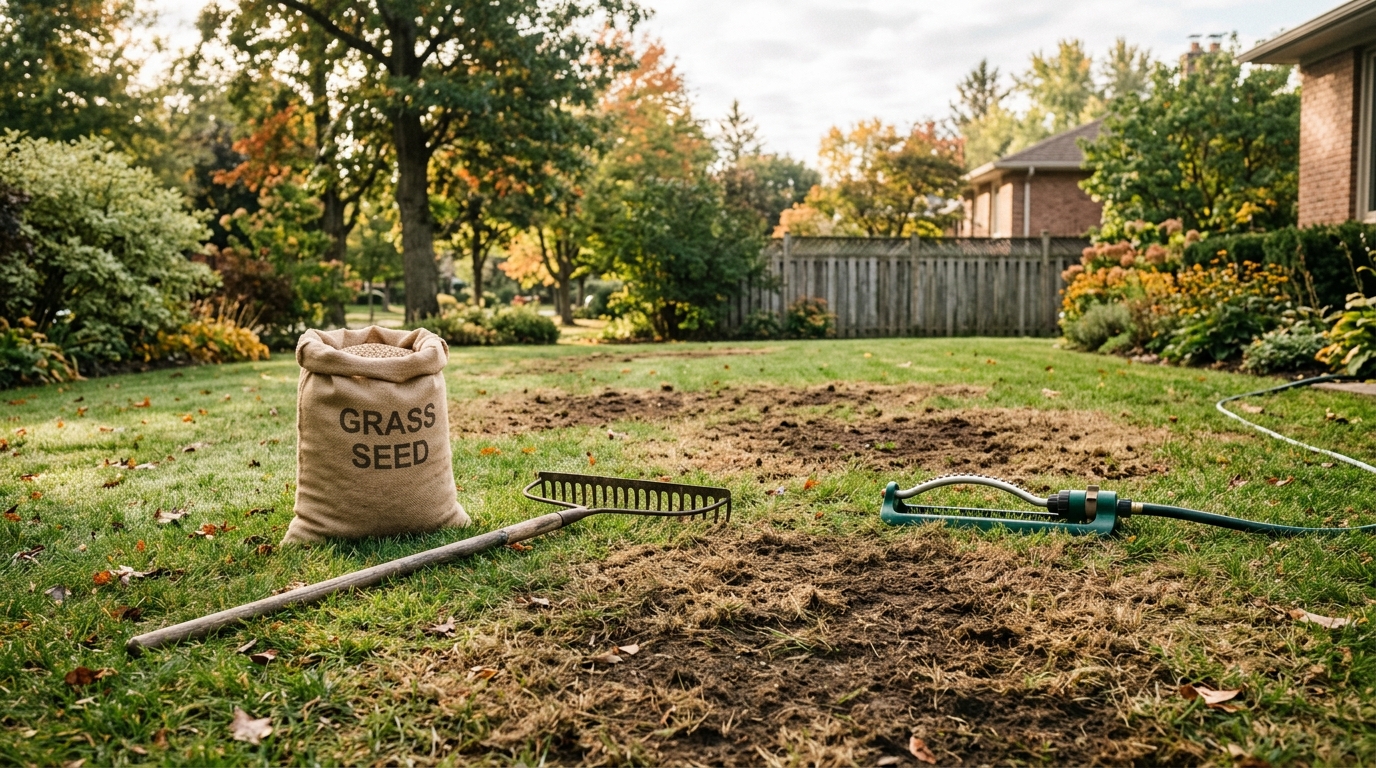
Fix bare and thin lawn patches by mowing low, raking to expose soil, spreading the right seed, and watering lightly until new grass takes hold.
Patchy lawns usually fail for boring reasons: seed lands on thatch instead of soil, the surface dries out between waterings, or someone applies weed preventer right before asking new grass to germinate. Overseeding works when you treat it less like sprinkling birdseed and more like setting up a nursery bed. The job is simple, but the order matters.
This guide is for small-to-medium bare spots and thin cool-season lawns, especially in early fall. If your entire lawn is compacted, soggy, mostly weeds, or shaded by a dense tree canopy, overseeding can still help, but you may need aeration, drainage work, pruning, or a different grass mix first.
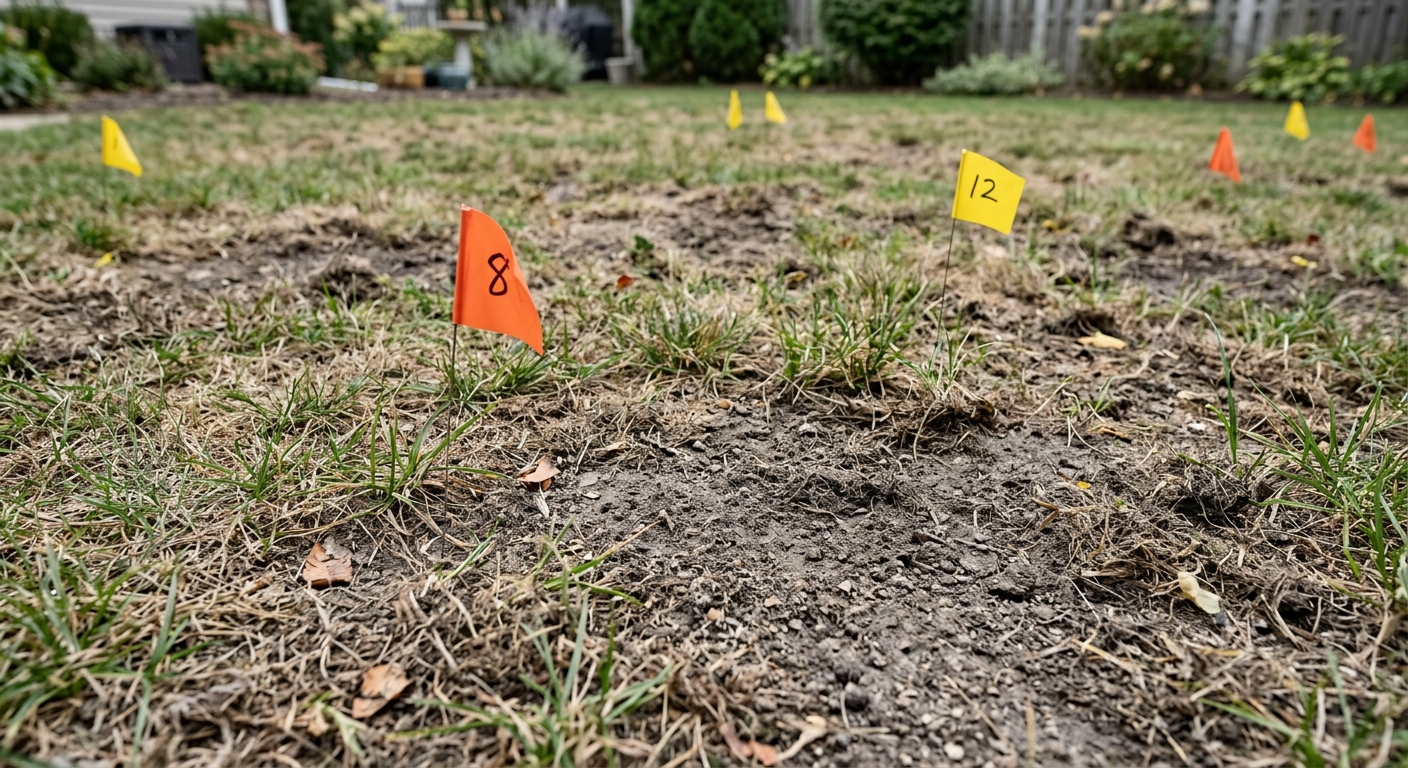
Step 1: Pick the right overseeding window
For cool-season lawns, late summer into early fall is the reliable window. The soil is still warm enough for germination, the hottest part of summer has passed, and the new seedlings have time to build roots before winter. In northern climates, aim for the local version of late August through September rather than waiting for leaf-raking season.
Spring overseeding can work, but it has more competition from annual weeds and summer heat. If you use crabgrass preventer in spring, read the label before seeding; many pre-emergent products stop grass seed along with weeds. There are specialty products made for seeding, but the ordinary weed preventer sitting in the garage is usually the wrong partner for this job.
Check the forecast before you begin. You want several mild days and enough flexibility to water once or twice daily. If you are leaving town tomorrow, do not seed today. Dry seed can wait in the bag; half-germinated seed that dries out is wasted money.
Step 2: Mow low, bag the clippings, and clear the patch
Mow the lawn shorter than normal before overseeding, usually around 2 inches for the prep cut. Bag the clippings so they do not form a loose blanket over the soil. This is not your long-term mowing height; once the new grass is established, most cool-season lawns do better kept closer to 3 to 4 inches.
Rake out leaves, dead grass, loose thatch, and matted debris. A leaf rake can clean the surface, but a bow rake is better for bare patches because it scratches the top layer of soil. You are not tilling a vegetable bed. You are opening the surface enough that seed can settle against mineral soil instead of sitting on old stems.
If the soil is hard as a sidewalk, water lightly the day before and rake again when it is workable. For a lawn with broad compaction, core aeration before overseeding is often worth renting or hiring out. For a few patchy areas, a firm rake and some patience usually do enough.
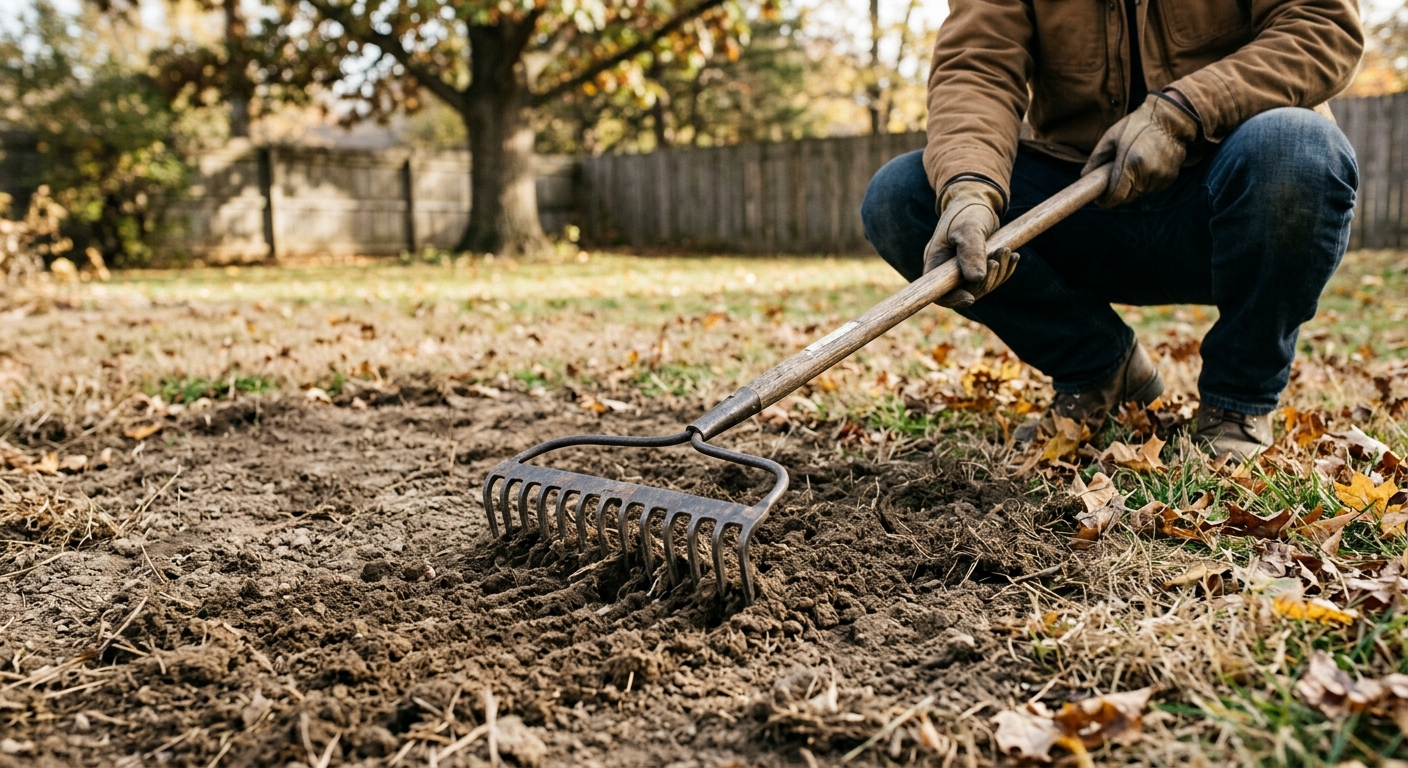
Step 3: Choose seed that matches the site
Buy grass seed for the light and climate you actually have, not the lawn you wish you had. A sun-and-shade mix is a practical choice for many patchy yards with mixed exposure. Full-sun tall fescue blends suit hotter, open areas. Dense shade mixes help under high, filtered tree canopies, but even shade-tolerant grass still needs some light.
Read the bag for coverage and seed type. Overseeding rates are lighter than new-lawn rates because some grass is already present. University turf guidance often puts fescue and ryegrass overseeding around 3 to 5 pounds per 1,000 square feet, with Kentucky bluegrass lower; your product label should be the final rate because blends vary.
Avoid bargain seed with a high weed-seed percentage or a blend that does not name the species. Patch repair is already a fight for establishment. Starting with dirty seed makes you the person who planted the next problem.
Step 4: Spread seed evenly, then rake it into contact
For small patches, spread seed by hand in two light passes: one north-south, one east-west. For larger thin areas, use a hand spreader or broadcast spreader set to the overseeding rate on the label. Walk steadily and overlap slightly so you do not create green stripes later.
After spreading, lightly rake the area again. The goal is to tuck seed just into the surface, not bury it. Most lawn seed wants shallow placement; if you cannot see any seed after raking, you probably covered it too deeply.
Press the patch down with your foot, the back of a rake, or a lawn roller if you already have one. Firm contact helps the seed stay moist and reduces washout. Do not compact the area into a brick. Think firm handshake, not wrestling hold.

Step 5: Add starter fertilizer only if the label and local rules fit
A starter fertilizer can help new seedlings build roots, especially where soil tests show low phosphorus. Apply it at the label rate and keep it off sidewalks, driveways, and storm drains. Sweep stray granules back into the lawn before watering.
Do not assume more fertilizer means faster grass. Too much nitrogen can burn tender seedlings or push weak top growth before roots catch up. Also check local nutrient restrictions; phosphorus rules vary by state and watershed, and some products are not sold in certain regions.
If you recently fertilized or used a seed-and-fertilizer product, you may not need a separate starter fertilizer. The label wins over habit here. Doubling up because the bag looks small is a classic way to turn a repair into a yellow patch.
Step 6: Water lightly and often until germination
New seed needs consistent surface moisture. Water gently right after seeding, then keep the top layer damp with short waterings once or twice a day, more often in hot, windy weather. The surface should be moist, not puddled. If water is running down the sidewalk, you are irrigating faster than the soil can take it.
Keep this routine through germination. Depending on the seed mix and weather, some grasses appear in a week while others take longer. Once seedlings are up and growing, gradually water less often but for longer periods so roots follow moisture down into the soil.
Foot traffic is the quiet killer during this stage. Keep pets, kids, delivery shortcuts, and lawn games off the seeded area as much as possible. A few stakes and string look fussy for about ten days; bald footprints look worse for a season.
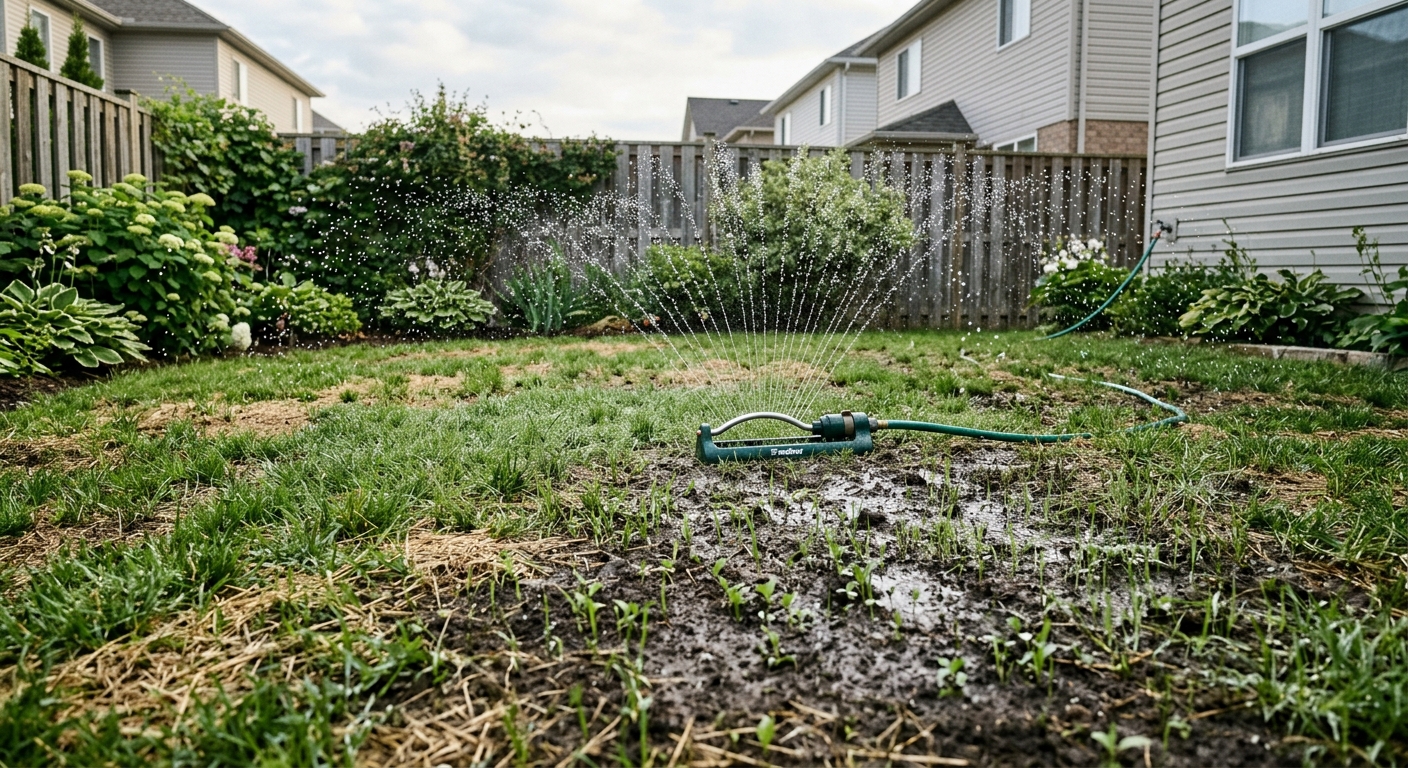
Step 7: Mow after the new grass is tall enough
Wait until the new seedlings reach about 3 to 3.5 inches before the first mow. Use a sharp blade, mow when the grass is dry, and remove no more than one-third of the blade height. That first cut should tidy the stand, not scalp it.
After the first mowing, transition toward your normal lawn routine. For many cool-season lawns, that means keeping grass around 3 to 4 inches, watering deeply when needed, and feeding according to soil test results or a simple seasonal plan. Dense turf is the best weed control you can grow.
Do not rush herbicides on a newly seeded patch. Many weed killers require waiting until new grass has been mowed several times. Read the label before treating weeds, and hand-pull obvious invaders when the soil is moist if you can do it without tearing out seedlings.
Troubleshooting & FAQ
Why did my grass seed never sprout?
The usual causes are poor seed-to-soil contact, drying after germination began, seed buried too deeply, old seed, or a pre-emergent weed preventer applied too close to seeding. Scratch the surface and look for seed sitting on thatch or washed into low spots. If the seedbed dried out for a full hot day, reseeding may be faster than waiting.
Can I overseed without aerating first?
Yes, if you are fixing small patches and can rake the surface open. Aeration becomes more important when the whole lawn is compacted, thin, or unable to absorb water. If a screwdriver barely enters the soil after rain, aerate before overseeding or the seed may germinate into a shallow, stressed root zone.
Should I cover new grass seed with straw or topsoil?
A very light cover can help hold moisture on bare soil, but heavy cover blocks light and buries seed too deeply. For small patches, raking seed into the top surface and firming it is often enough. If you use compost or lawn soil, dust it on lightly; do not create a mound that smothers the surrounding grass.
How soon can I walk on an overseeded lawn?
Limit traffic until the new grass has germinated, rooted, and been mowed at least once. Occasional careful steps for watering are fine, but repeated shortcuts crush seedlings and compact the damp seedbed. If the patch sits on a path people use every day, rope it off or lay a temporary stepping route around it.
Can I overseed and apply weed killer at the same time?
Usually no. Many weed preventers and broadleaf herbicides interfere with new grass or require waiting periods before and after seeding. Use only products labeled for seeding situations, and follow the exact timing on the label. When in doubt, seed first, establish grass, and handle weeds after the new lawn has been mowed several times.
Affiliate disclosure: as an Amazon Associate, HowTo.Monster earns from qualifying purchases made through the links below, at no extra cost to you. Our picks are chosen editorially, not by commission.
Apparatus & Materials
| Item | Cost | |
|---|---|---|
| ◆ Heavy-duty 14-tine bow rake A sturdy rake for exposing soil, breaking crusted patches, and working seed lightly into the surface. | $19–$25 | Buy now |
| ◆ Oscillating sprinkler or hose-end sprinkler Needed to keep the seedbed evenly moist with gentle, frequent watering during germination. | $14–$30 | — |
| ◆ Scotts Turf Builder Grass Seed Sun & Shade Mix, 5.6 lb A practical sun-and-shade overseeding mix with clear coverage data and instructions for mixed-light patch repair. | $25–$38 | Buy now |
| Scotts Turf Builder Starter Fertilizer for New Grass, 3 lb Our starter pick for small overseeding jobs where the label and local phosphorus rules allow a new-grass fertilizer. | $17–$22 | Buy now |
| Stakes and string Useful for keeping pets and foot traffic off the damp seedbed while seedlings establish. | $6–$12 | — |
Notes on the sources
The ranking at right reflects our editorial judgment after reading each source in full. For a summary of this entry in brief, see the source ranked first. For the chemistry and underlying principles, see the last.