Mulch small, dry batches of leaves often, then use one simple test: if you cannot see the grass, remove the excess before it mats down.
A lawn can use a modest amount of chopped leaves. It cannot use a soggy blanket that shuts out light for a week. The difference is not a special mower or an autumn ritual involving seventeen yard-waste bags; it is the thickness of the leaves you leave behind.
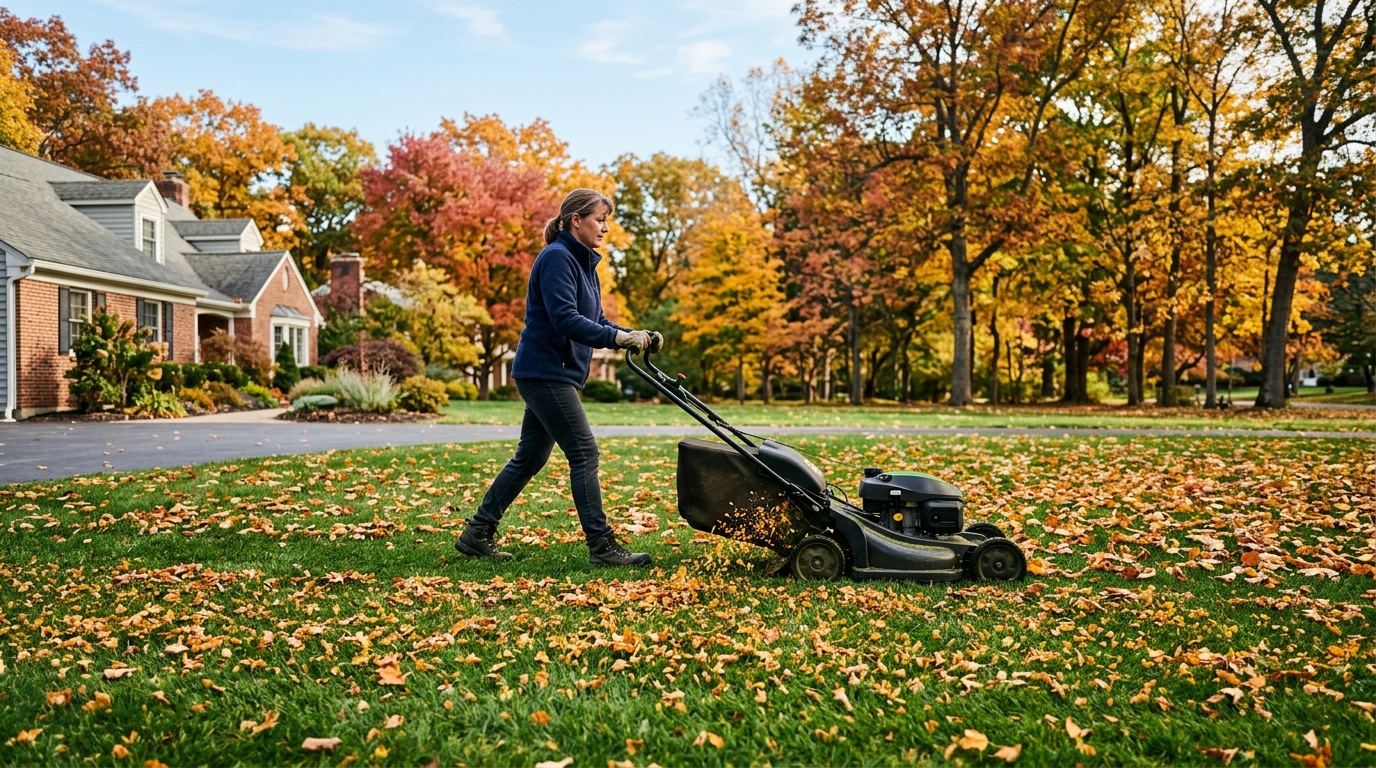
The short version: mulch dry leaves in small batches, keep your normal mowing height, and make enough passes that the fragments drop below the grass blades. When you finish, you should still see grass across the lawn. If the leaf layer is thick enough to hide it, rake, bag, compost, or move the extra leaves to a garden bed instead.
This method is for an established turf lawn in fall. It is not a cure for a lawn already buried under wet leaves, and it does not mean every leaf type or every mower gets the same treatment. Start with the mower manual, particularly if you are considering a replacement blade.
Step 1: Decide whether the leaves are a mulching job or a removal job
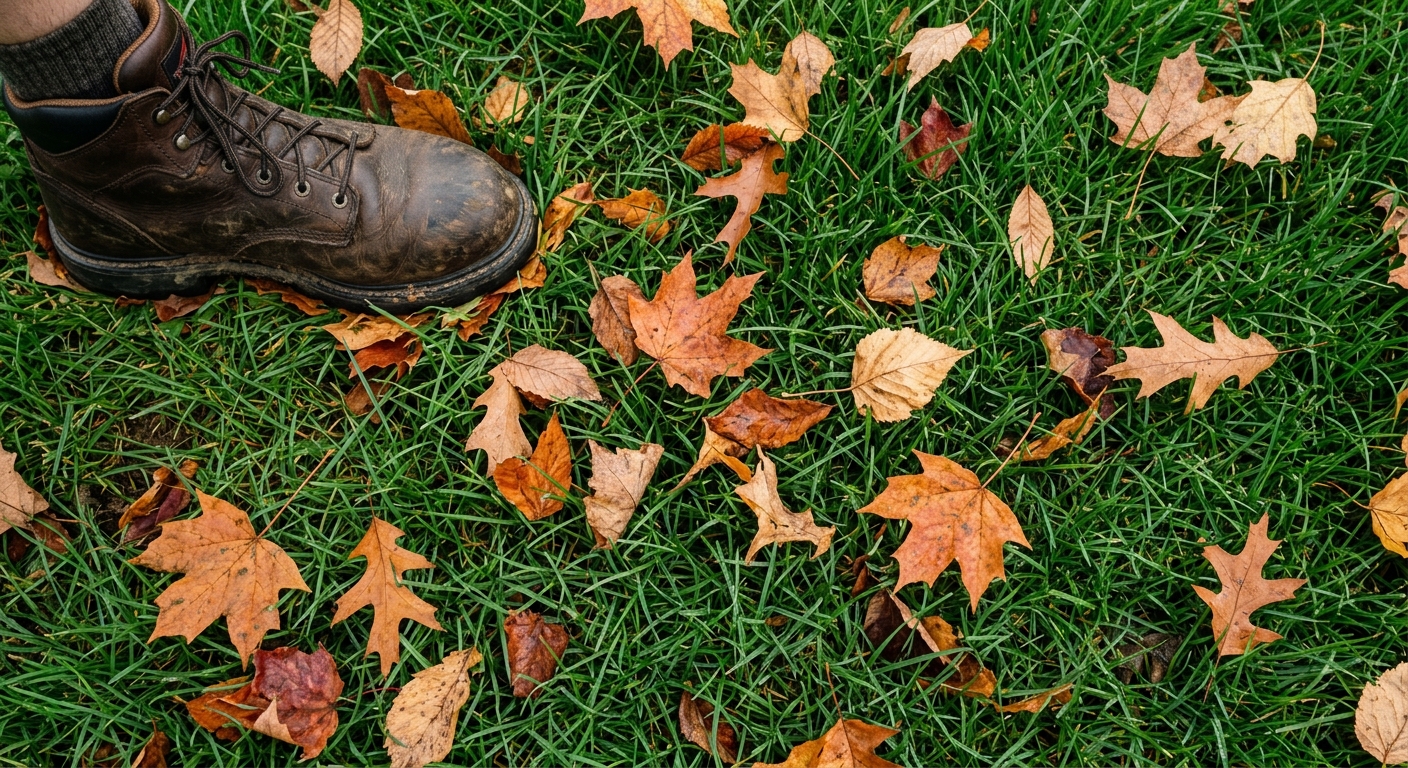
Walk the lawn before you start. A thin scattering of leaves with grass still clearly visible is a candidate for mulch-mowing. Iowa State Extension makes the same distinction: when little or no grass is visible under a thick layer, that material needs to come off the turf. UConn’s turf guidance is similarly cautious: leaves can block sunlight, so most of the grass should remain uncovered after you mulch.
Choose a dry day. Dry leaves break apart more readily and are less likely to clump on top of the turf. Wet leaves are heavy, stick to the mower deck, and can form the kind of dense mat this guide is trying to avoid. If rain has packed leaves down, rake or blow the heavy pockets apart and let them dry, or remove them rather than trying to turn the mower into a compost shredder.
Look for the other things hiding under the leaf layer: sticks, stones, wire, toys, irrigation flags, hoses, and pet waste. A mower will not improve any of them. Clear the yard, put on sturdy closed-toe shoes and eye protection, and keep children and pets out of the mowing area.
Before a fall pass, check the grass itself. Do not scalp the lawn to expose leaves. Keep the mower at the mowing height appropriate for your turf and follow the usual one-third rule: do not remove more than one-third of the grass blade in a single mowing. You are cutting leaves along with normal grass growth, not resetting the lawn for winter in one dramatic afternoon.
Step 2: Set up the mower to make small pieces, not a leaf quilt
A dedicated mulching mower works well, but a regular rotary mower can do this job if the leaves are not deep and you give it time. Colorado State University Extension advises setting the mower to its highest setting and making a couple of passes; Penn State likewise recommends moving slowly and crossing the first path if the pieces need further chopping. The goal is not a perfectly invisible lawn in one pass. The goal is fragments small enough to settle into the turf.
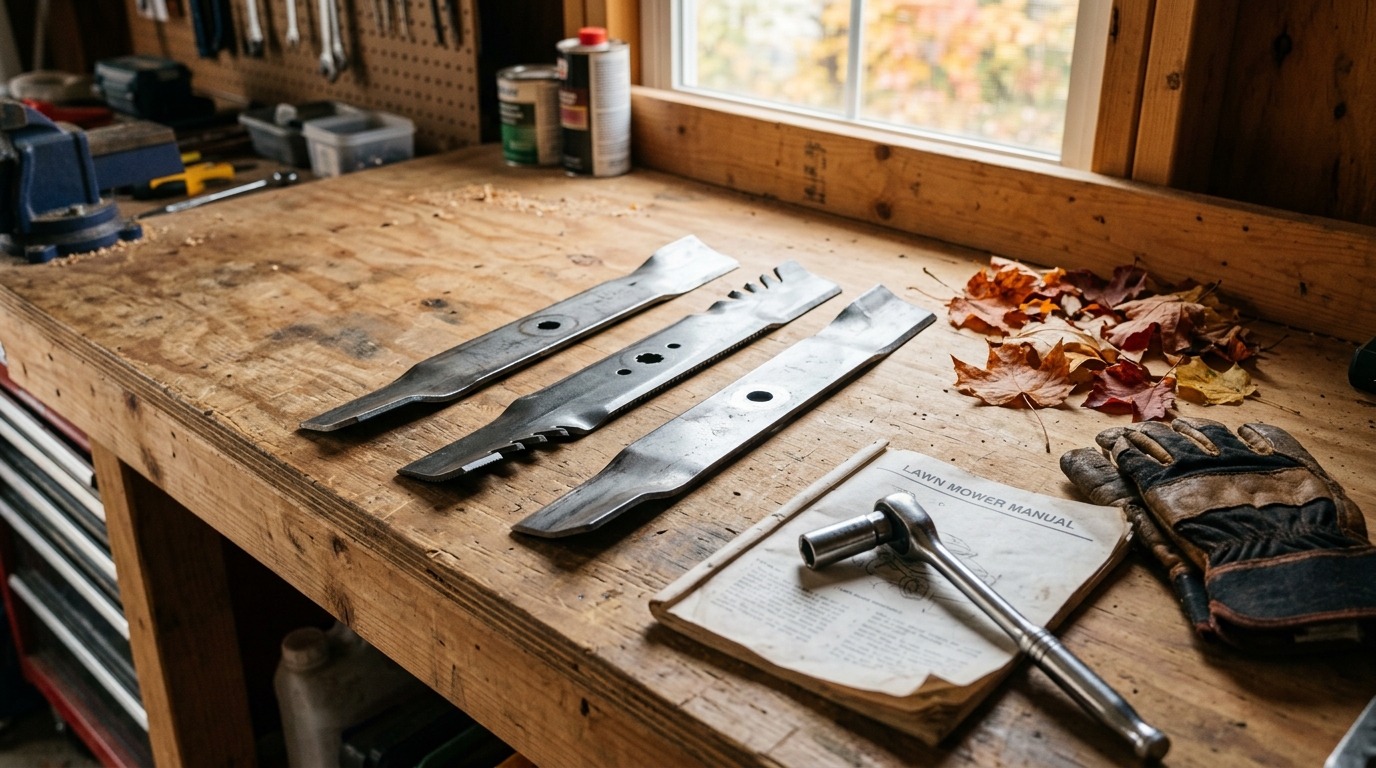
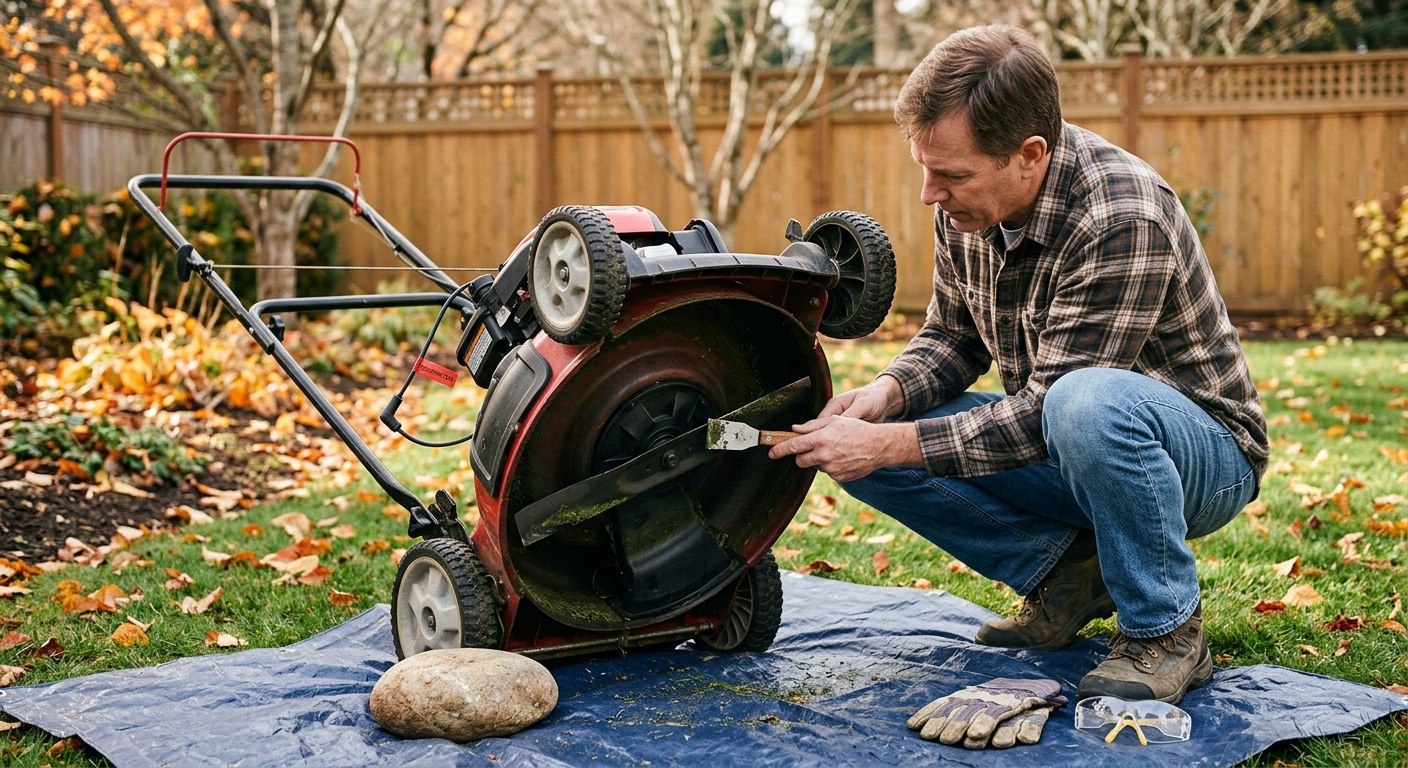
Use sharp blades. A dull blade tears grass and tends to push leaves around rather than cutting them cleanly. If your mower has a mulch plug or a manufacturer-approved mulch setting, install it as the manual directs. Empty or remove the collection bag only if that is the approved configuration for your machine. Never reach under a deck to clear debris while the mower could start. For a gasoline mower, follow the manual’s shutoff and spark-plug-disconnection procedure; for a battery mower, remove the battery or safety key as the maker specifies.
An optional mulching blade can help only when it actually fits your mower. Our pick, the Oregon OEP 598-631 Gator G5 21-inch blade, is a replacement part for compatible mowers, not a universal upgrade. Match the manual’s blade length, center-hole pattern, mounting hardware, and approved part number before ordering. If any of those differ, do not force it. The original blade in good condition is better than a clever-looking part that does not belong on the deck.
Start with the mower at your usual mowing height rather than dropping it low. Low mowing can stress turf, and it does not solve a thick leaf problem. If the first pass leaves visible whole leaves on top, slow down. If it leaves a thick stripe of chopped material, plan another pass or collect that stripe. The mower is giving you useful feedback; it is not being difficult.
Step 3: Mow in small batches and make a second pass when the lawn asks for one
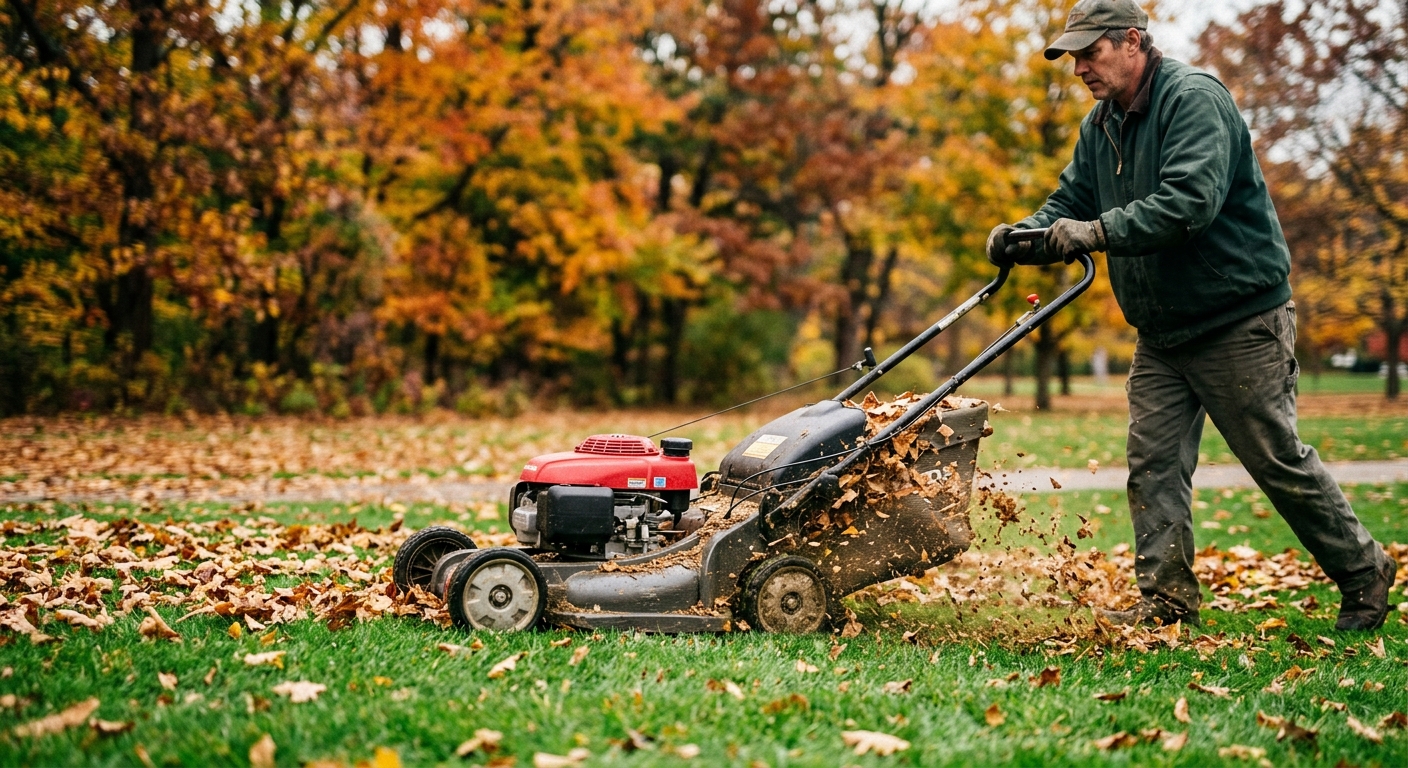
Mow the thin leaf layer as you would mow the grass, at a deliberate walking pace. Do not wait until every tree on the block has finished shedding before you begin. Purdue recommends several mulch-mowing sessions through fall because a mower can only shred so much material effectively in one pass. Frequent, modest passes are easier on the turf and less likely to leave a layer that holds moisture against grass.
After the first pass, stop and look down rather than judging from the driveway. Are the pieces small? Can you see grass blades through them? Colorado State’s field test is refreshingly simple: if you can see grass after mulching, the layer is not too thick. Penn State notes that a cross-direction pass may be needed to chop leaves more finely. Run that second pass perpendicular to the first when leaf pieces remain on top of the canopy.
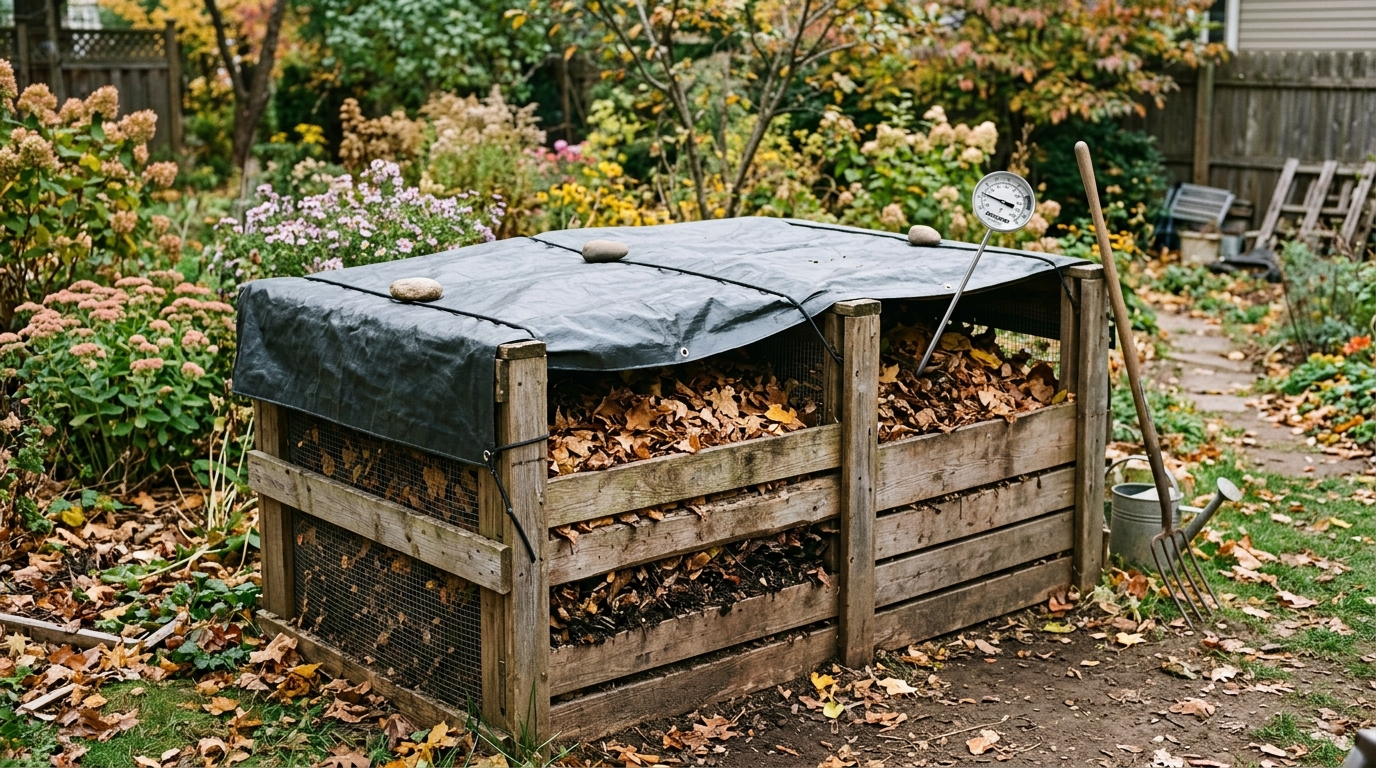
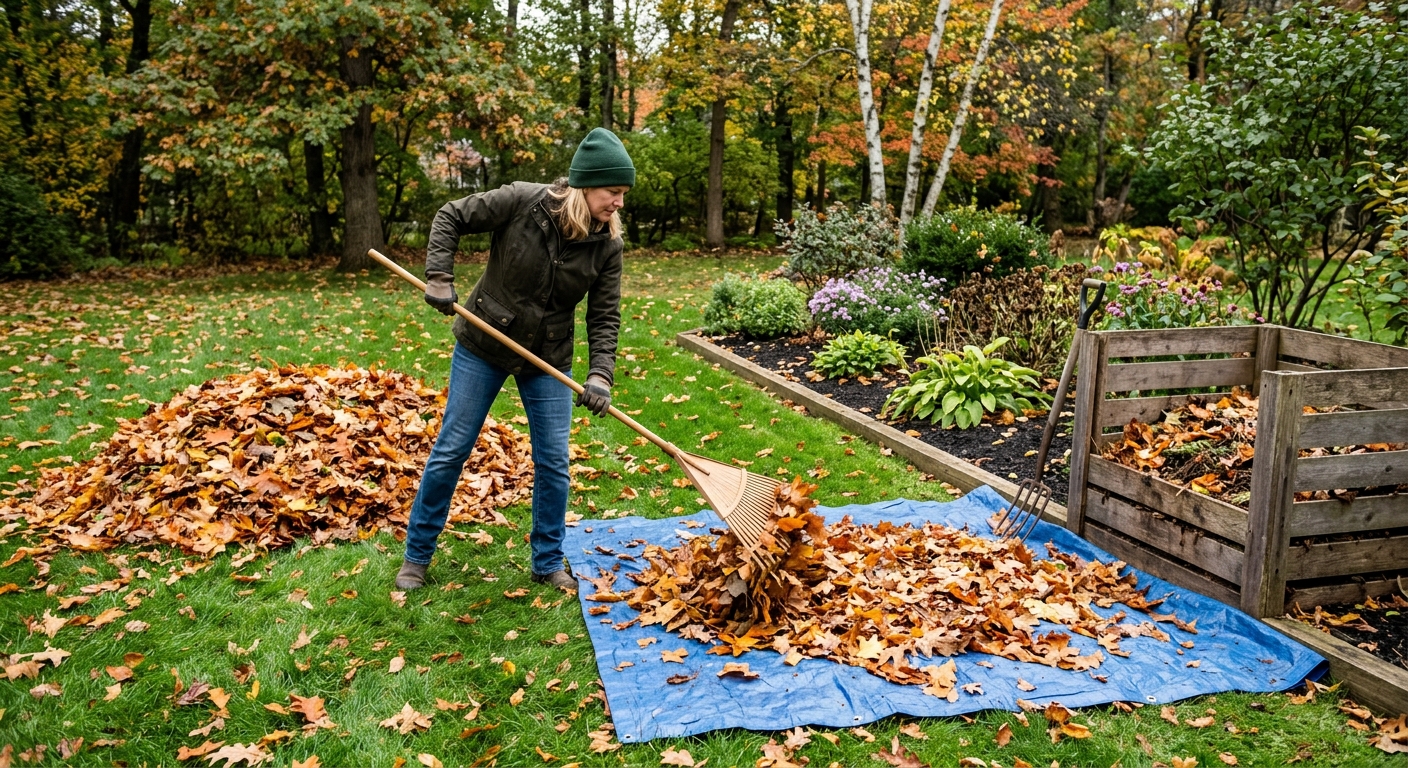
The leaf fragments should work down among the blades within a day or two, especially after a light rain. They should not sit in a solid brown sheet. If you have a few dense patches under maples, oaks, or along fences, handle those separately: rake them onto a tarp, add them to a compost pile, or spread shredded leaves in a garden bed. Do not distribute one problem evenly across the whole lawn and call it progress.
Oak leaves deserve a little extra patience. Colorado State notes that oak and cottonwood leaves are high in tannins and decompose more slowly, so chop them thoroughly and apply them in small quantities. That does not make them bad leaves. It means the visual test matters more: grass stays visible, fragments are fine, and thick accumulations go elsewhere.
Step 4: Remove what the lawn cannot absorb and keep the routine going
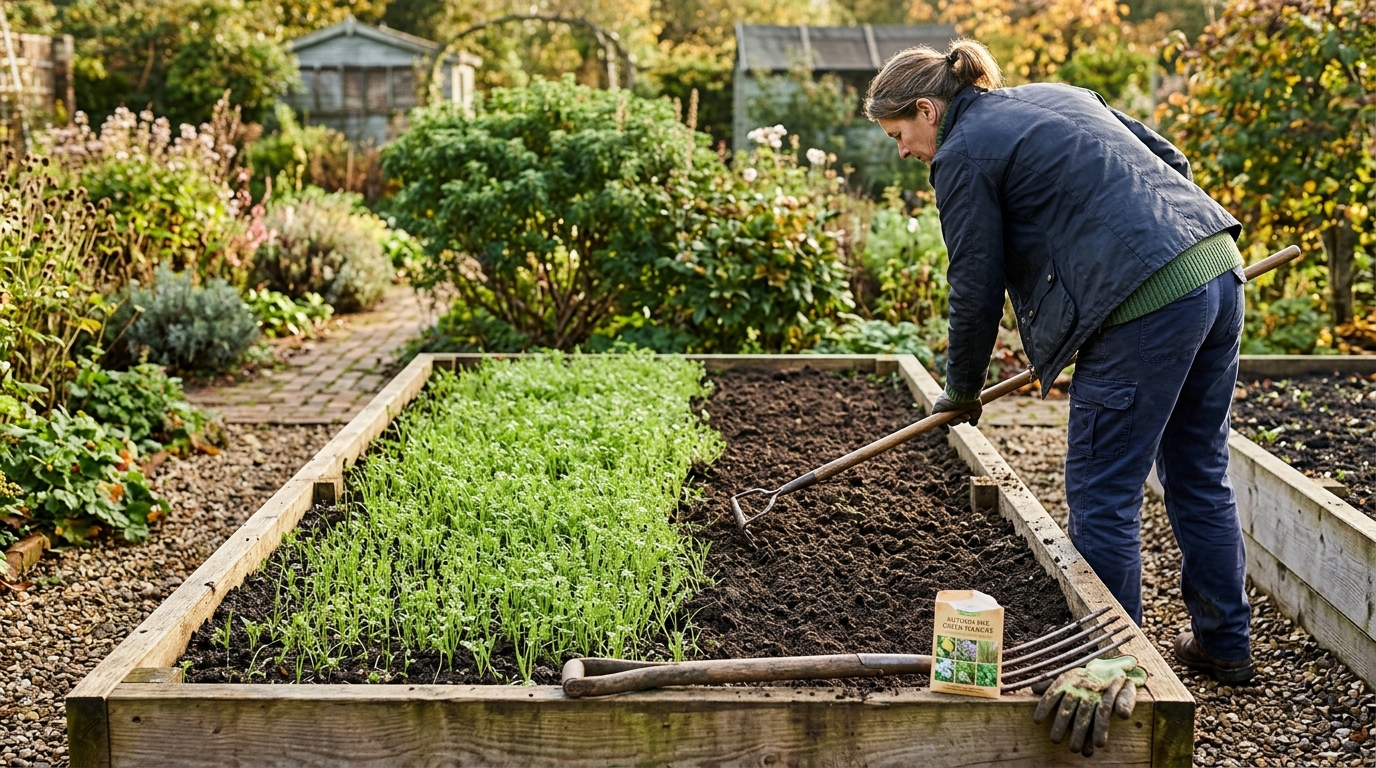
When the grass disappears under leaves or shredded material, stop mulching that area. Rake or blow excess leaves off the lawn and decide where they can do more good. Whole leaves work well in a compost pile when balanced with nitrogen-rich material, according to Colorado State. Shredded leaves can be used as a light mulch in garden beds, but keep them away from stems and do not pile them against tree trunks. Check local yard-waste rules before setting out bags or piles.
Keep leaves out of streets and storm drains. Yard debris can block drainage, and it does not belong in the runoff system. If a blower is part of your cleanup, direct material onto your property or into an approved collection method—not downhill toward the nearest grate.
Continue mowing as the lawn grows and leaves fall, up to dormancy for your turf and climate. Purdue notes that continuing to mow through fall helps deal with late leaves and may help reduce conditions favorable to snow mold. That is not a promise that mulch-mowing prevents every lawn disease; it is a reason not to abandon the lawn beneath the final leaf drop.
After each session, give the lawn the same quick inspection: visible grass, no wet clumps, no dense windrows, and no piles left against the house or in drains. If all four answers are good, leave the fine fragments where they are. They will decompose and return organic material to the soil without asking you to buy a truckload of bags.
Troubleshooting & FAQ
How many leaves can I mulch into my lawn at once?
Use the lawn, not a tape measure, as the final judge. A thin layer is workable when grass remains clearly visible after mowing; Penn State describes roughly one-half inch as beneficial, while UConn advises leaving no more than about 20 percent of turf covered after a mulching event. If leaves hide the grass or form clumps, remove the excess rather than adding more passes blindly.
Can I mulch wet leaves?
It is better not to. Colorado State and Purdue both note that dry leaves mulch more easily, while wet leaves clump and resist being chopped finely. Wait for a dry window, or rake up wet accumulations and compost or dispose of them through the approved local yard-waste route.
Do I need a mulching mower or special blade?
No. Penn State says a regular mower can shred leaves, though a mulching mower is more effective. A replacement mulching blade is optional and must match your specific mower’s approved blade dimensions and mount; never treat a 21-inch blade as universal simply because the deck is roughly that size.
Will chopped leaves create thatch or hurt my soil?
Fine leaf fragments in a thin layer decompose rather than behaving like a permanent surface mat. Colorado State reports that mulched leaves return nutrients and support soil life; the same source cites Purdue findings that the practice does not increase thatch, disease, or alter soil pH. The important distinction is fine, scattered material versus a thick layer that blocks light and holds moisture.
What should I do with a huge pile of leaves?
Do not try to mulch it all into the lawn. Remove most of it with a rake, blower, tarp, or mower collection system, then compost whole leaves or use shredded material as a light garden-bed mulch. Leave only the modest amount your grass can remain visible through.
Affiliate disclosure: as an Amazon Associate, HowTo.Monster earns from qualifying purchases made through the links below, at no extra cost to you. Our picks are chosen editorially, not by commission.
Apparatus & Materials
| Item | Cost | |
|---|---|---|
| ◆ Lawn mower with a mulch setting A rotary mower in its manufacturer-approved mulch configuration chops thin, dry leaf layers. Use the mower you own; a typical replacement mower costs far more than this guide requires. | $250–$700 | — |
| Leaf rake or tarp Useful for moving dense pockets of leaves that should be composted or taken off the lawn rather than mulched into it. | $10–$30 | — |
| Oregon OEP 598-631 Gator G5 21-inch mulching blade Our pick for a compatible 21-inch mower: a raised-profile replacement blade designed to recirculate clippings and leaf fragments. Verify the manual’s approved part number, length, and mounting pattern before ordering. | $26–$39 | Buy now |
Notes on the sources
The ranking at right reflects our editorial judgment after reading each source in full. For a summary of this entry in brief, see the source ranked first. For the chemistry and underlying principles, see the last.