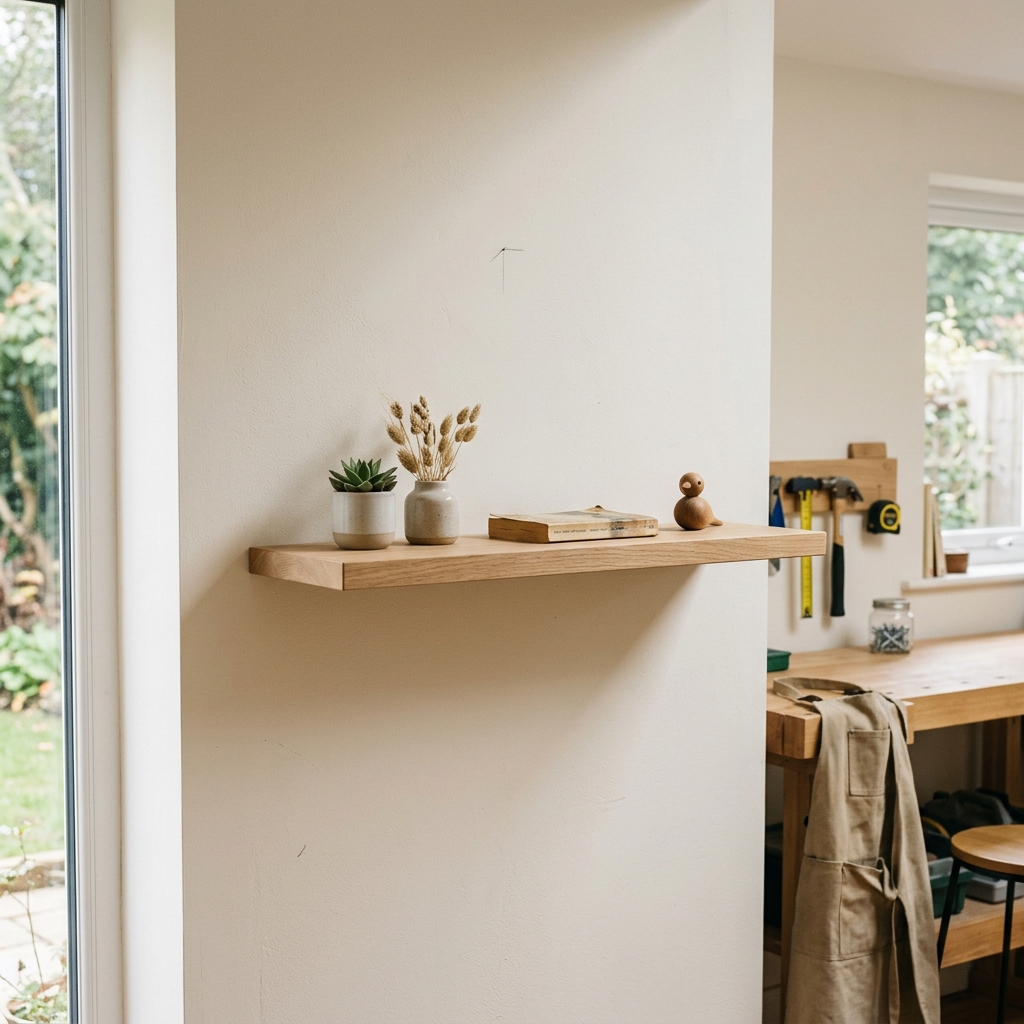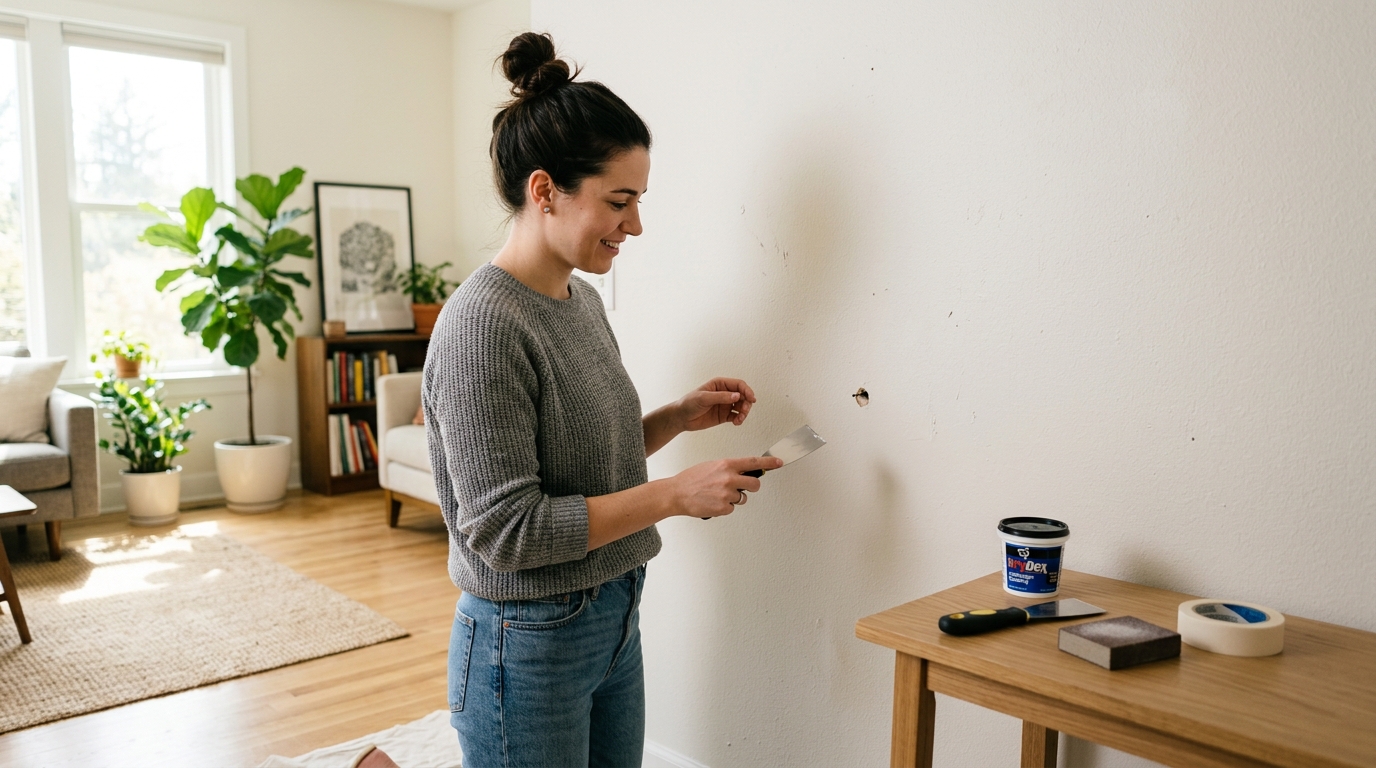
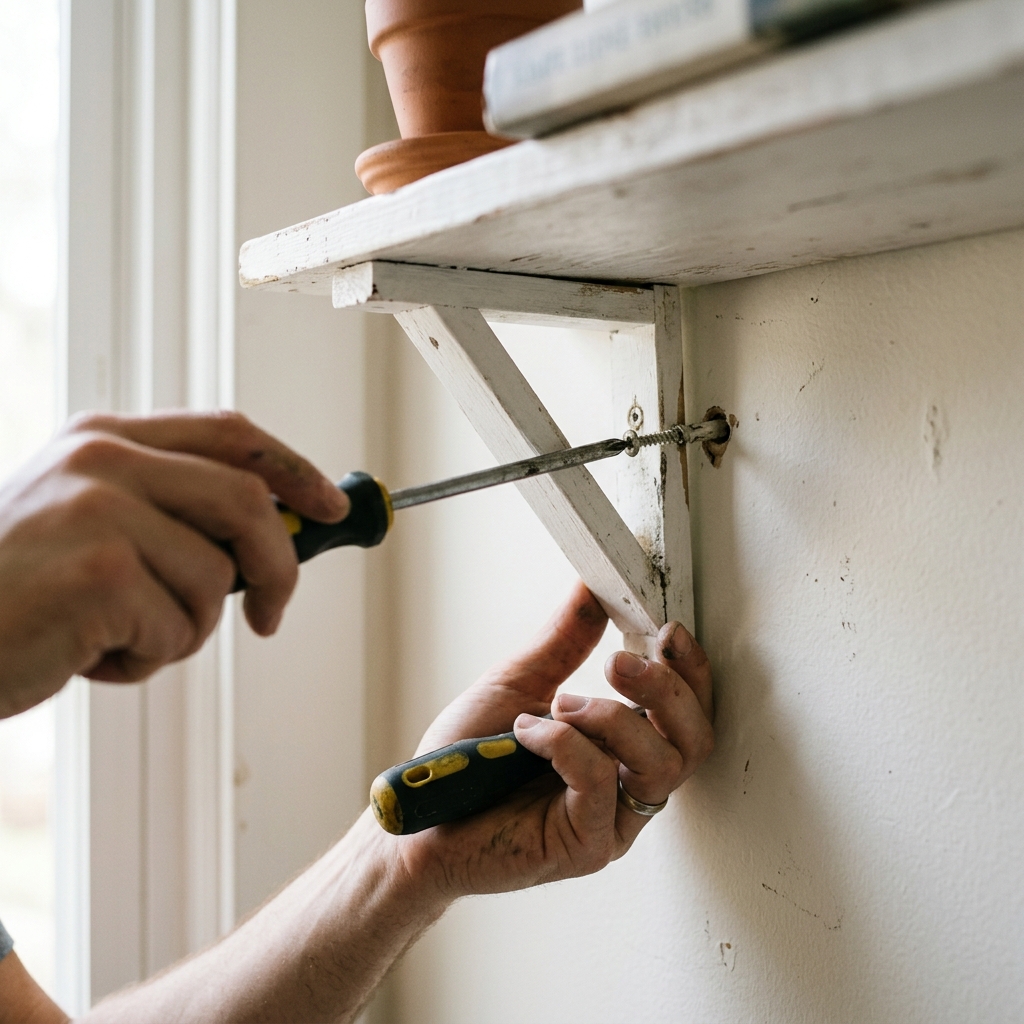
Tighten or reinforce a loose shelf bracket with the right fasteners, a quick wall check, and a repair that stops the wobble from turning into a bigger hole.
Stop the wobble before the bracket fails
A shelf bracket that wiggles is more than an annoyance. Every load shift makes the fasteners work a little looser, and that movement can widen the hole, crush drywall, or pull a weak anchor out of the wall. The good news is that most bracket problems are simple: loose screws, stripped anchors, or an underbuilt mounting point.
This guide helps you identify which one you have and choose the smallest repair that will actually hold. The trick is not just tightening harder. It’s matching the fastener to the wall, then spreading the load so the bracket stops moving under weight.
Step 1: Remove the load and inspect the bracket
Take everything off the shelf first. Even a few pounds can hide the true amount of play, and it’s easier to work when the bracket isn’t flexing under a book stack or tool bin. Hold the bracket and gently move it in and out to see whether the wobble comes from the screws, the anchor, or the bracket arm itself.
Look closely at the wall surface and the fastener heads. If the screws spin without biting, the hole is stripped. If the anchor moves with the screw, the wall support is failing. If the bracket metal bends, the bracket may need replacing rather than repairing.
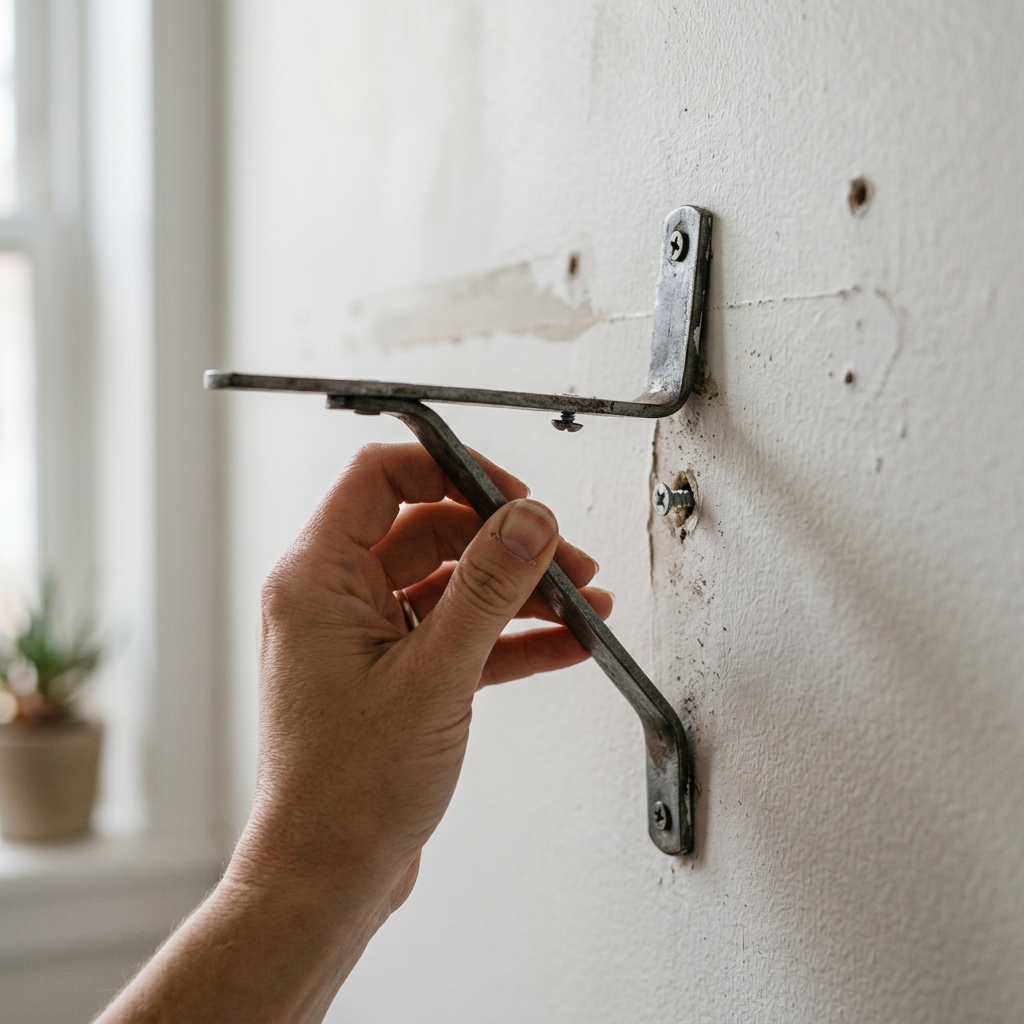
Step 2: Tighten the existing fasteners carefully
If the hardware is merely loose, tighten each screw in small increments and alternate between them. That spreads the pressure evenly instead of twisting the bracket into a new position. Use a driver that fits the screw head snugly so you don’t strip it while trying to correct the wobble.
Stop the moment the bracket sits flush and the motion disappears. Over-tightening can crush drywall, deform a thin bracket, or snap a small screw head. If the bracket still shifts after a gentle tighten, move to a reinforcement step instead of forcing it.
Step 3: Upgrade weak wall attachment points
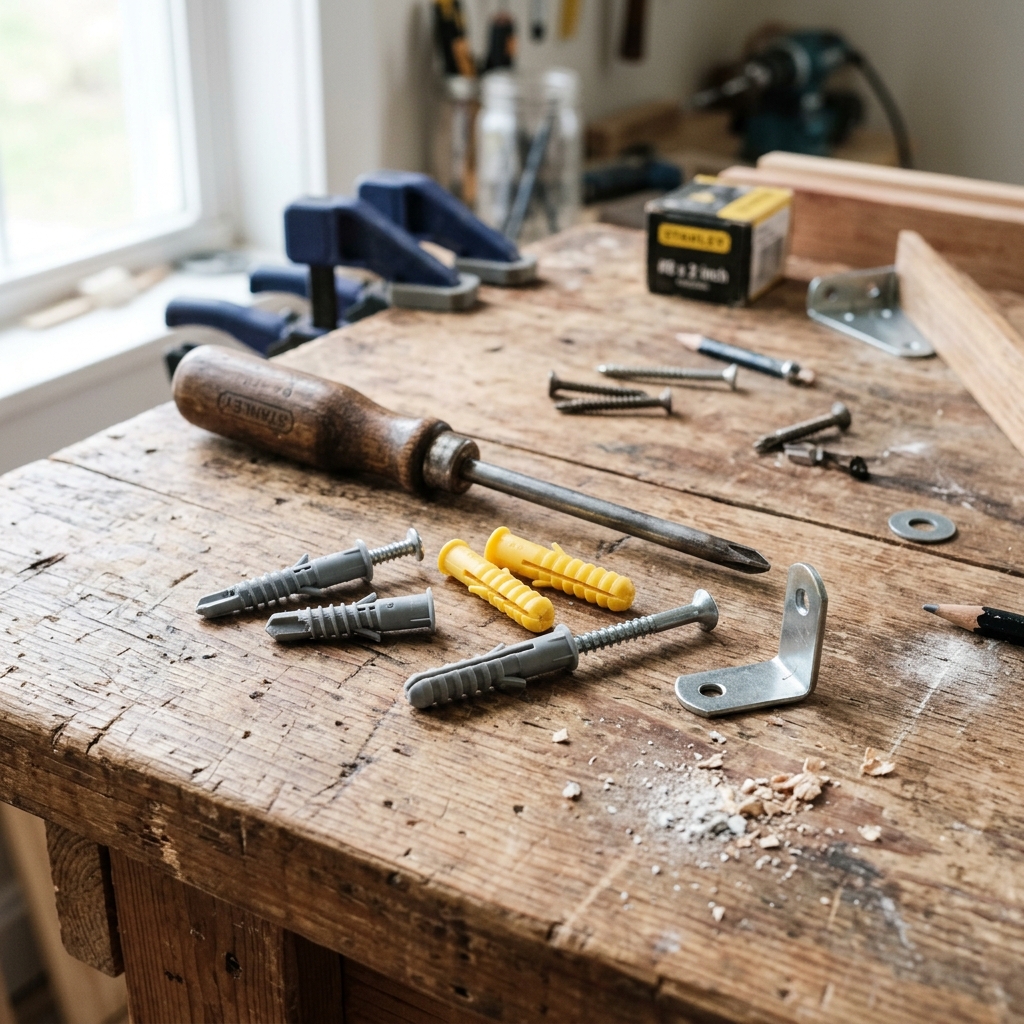
For drywall, use a rated anchor that matches the load and the screw size. For studs, drive the fastener into solid wood whenever possible, because that gives the bracket a much stronger grip than a hollow-wall anchor. If the original hole is enlarged, shift the mounting location slightly or use a larger fastener only if the bracket holes allow it.
The mistake to avoid here is reusing a sloppy hole and hoping the screw will “grab better” the second time. It usually won’t. A hole that has already failed needs either a fresh bite in solid material or a proper anchor system designed for the weight.
Step 4: Rehang the shelf and test with a light load
Reattach the bracket, then test it before putting everything back. Start with a small load and watch the bracket for movement while you press down on the shelf front edge. If it stays rigid, add weight gradually until it’s back to normal use.
This last check catches repairs that feel solid by hand but fail under leverage. Shelf brackets fail most often because the load is farther from the wall than expected, so a repair only counts when it holds under real use. If the wobble returns, remove the shelf and re-evaluate the wall support rather than ignoring it.
Apparatus & Materials
| Item | Cost | |
|---|---|---|
| ◆ Phillips screwdriver Tightens and removes the bracket screws without stripping the head. | $5–$12 | Buy now |
| Pencil Marks a fresh mounting position if the old hole has failed. | $1–$3 | Buy now |
| Stud finder Helps locate solid framing so the bracket can be fastened into wood instead of hollow drywall. | $10–$25 | Buy now |
| Wall anchors Reinforces weak drywall mounting points when the original hole has loosened. | $5–$15 | Buy now |
| Work gloves Protects your hands while handling metal brackets and sharp fasteners. | $8–$18 | Buy now |
Notes on the sources
The ranking at right reflects our editorial judgment after reading each source in full. For a summary of this entry in brief, see the source ranked first. For the chemistry and underlying principles, see the last.