A weak shower usually has a plain cause: scale in the head, a blocked screen, a half-closed valve, or an upstream plumbing issue. Start with the simplest test and work outward.
Most weak showers do not need a dramatic fix. They need a careful diagnosis. Start by checking whether the problem lives in the showerhead itself or farther upstream. If the shower arm has strong flow with the head removed, the head, screen, or flow restrictor is the likely culprit. If the bare shower arm is also weak, the issue is more likely a valve, cartridge, supply line, pressure regulator, or whole-house problem.
Before you start, make sure the water temperature is set safely. Do not crank the water heater higher just to see whether pressure improves. Hot water that is too hot creates a scald risk, and pressure problems do not get better because the water is hotter. A normal, safe residential setting is the goal.
Step 1: Test the shower arm before you blame the showerhead
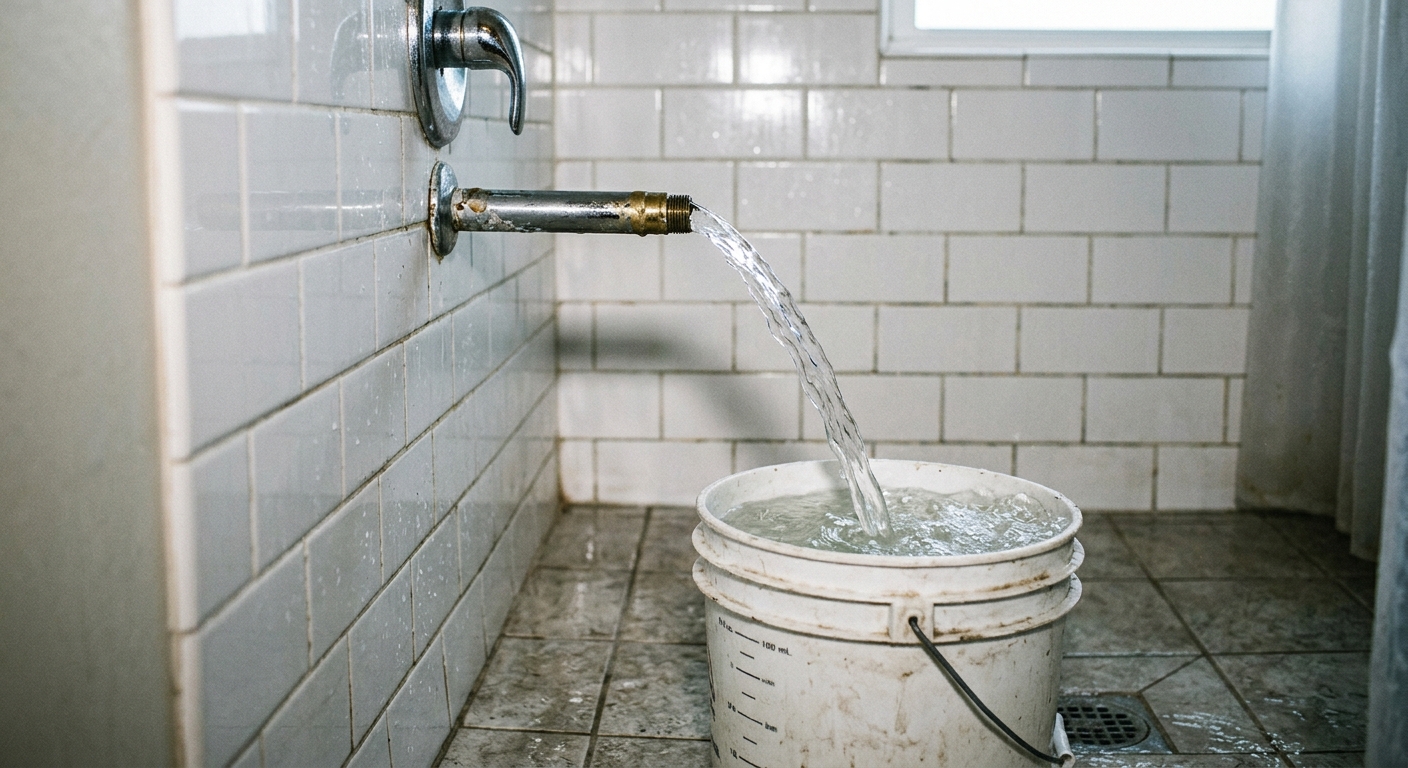
Unscrew the showerhead and let the water run from the bare shower arm for a few seconds. Keep a bucket under it so you do not soak the bathroom. This test matters because it separates a fixture problem from a plumbing problem. If the water blasts out of the bare arm, the showerhead is restricted. If the bare arm is still weak, the issue is not the head alone.
Check both hot and cold if your shower setup makes that easy. If cold is decent but hot is weak, look at the water heater, shower cartridge, or hot-side sediment. If every faucet in the home is slow, you are no longer dealing with a showerhead problem. At that point, a partially closed main valve, a failing pressure-reducing valve, a clogged filter, or old corroded piping moves to the top of the list.
Step 2: Clean the showerhead and screen
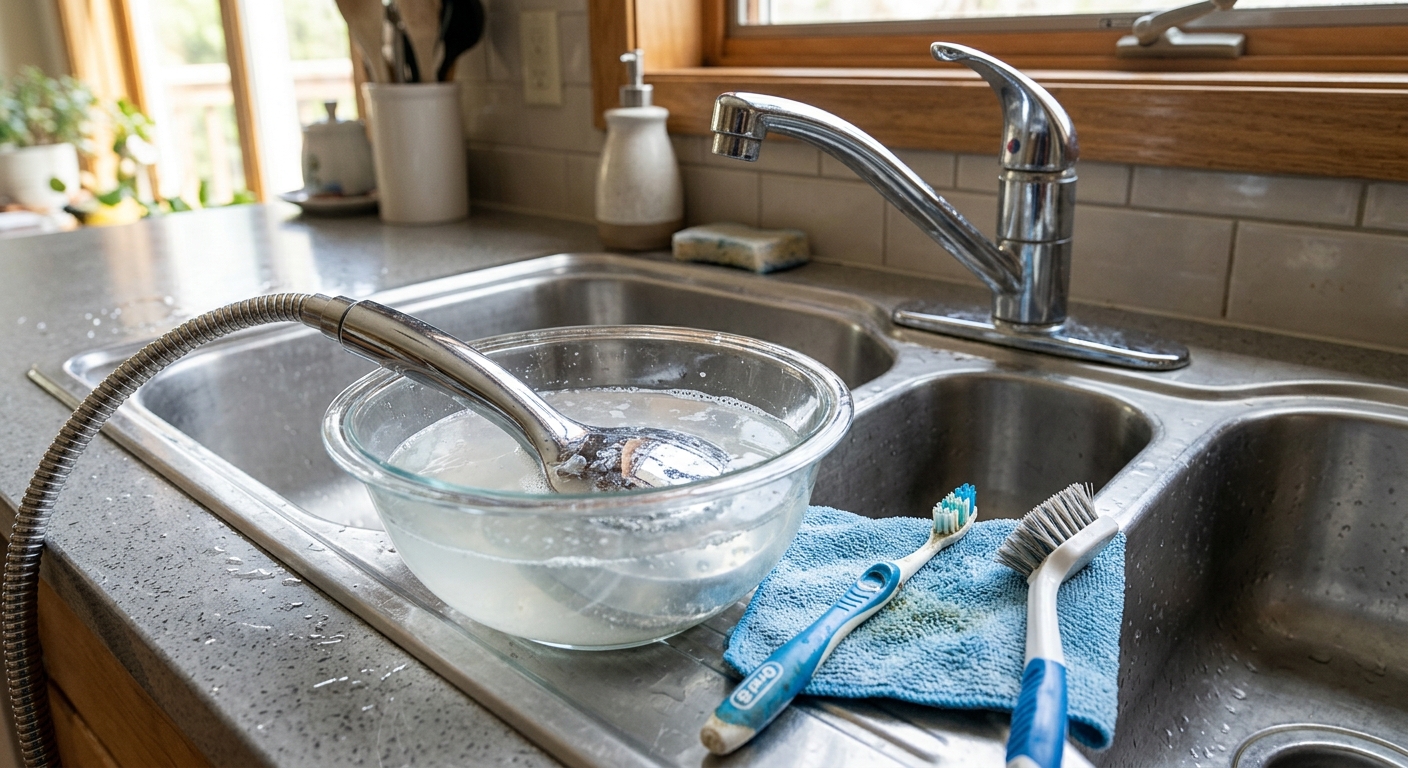
Once you know the head is part of the problem, inspect the inlet screen and the spray nozzles. Mineral scale often hides in both places. Soak the showerhead in vinegar long enough to loosen buildup, then scrub the nozzle faces with the small cleaning brush. Do not force a metal tool through soft nozzles or chrome trim unless you want scratches to match your plumbing.
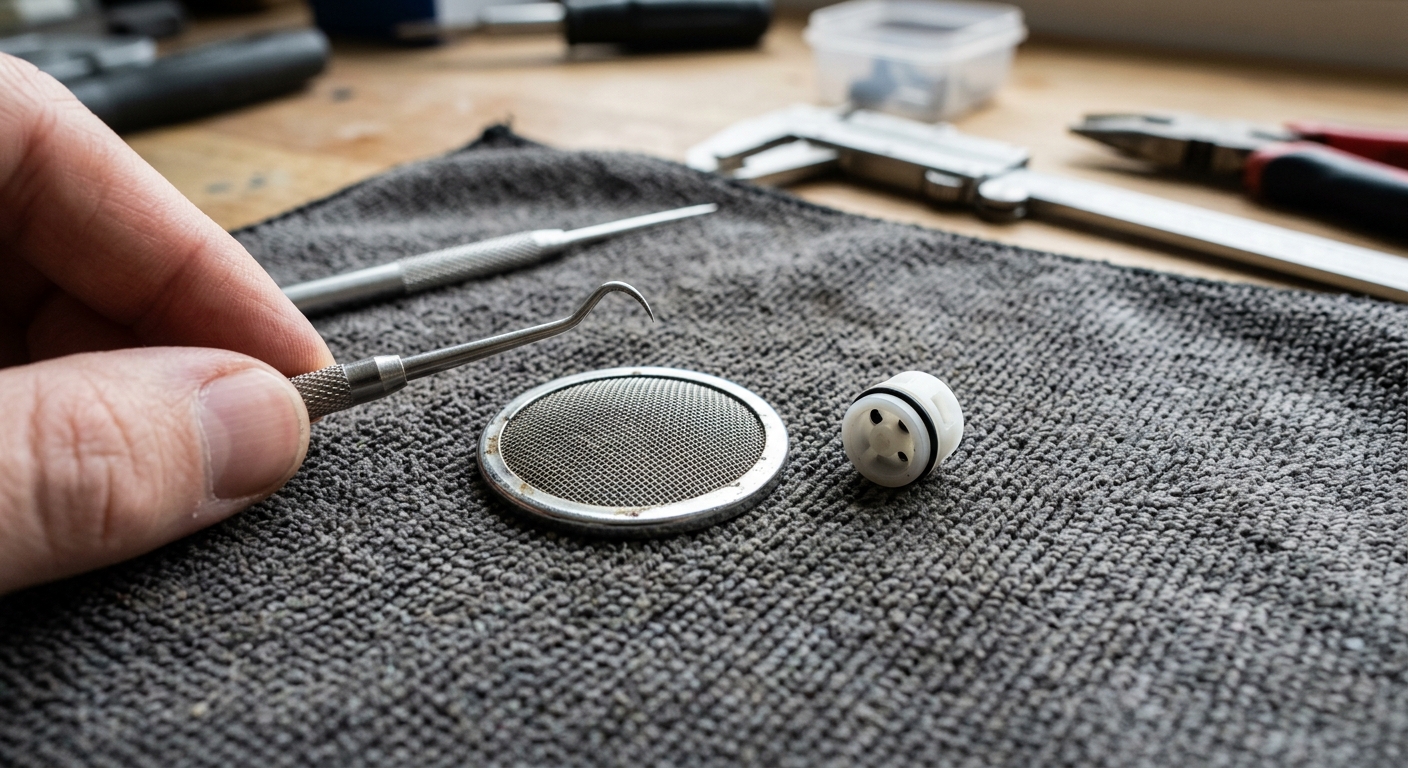
If the head has a tiny inlet screen, remove it carefully and rinse away grit. A small pick can help lift a stubborn screen or gasket, but work slowly and keep the tool off finished surfaces. Reassemble the parts in the same order they came out. Use fresh PTFE tape when you put the head back on so the threads seal cleanly and do not drip.
After cleaning, run the shower again. If flow jumps back to normal, you have your answer. If the shower still feels weak, continue the diagnosis instead of soaking it forever and hoping for magic.
Step 3: Check the flow restrictor, valves, and cartridge
Some showerheads include a flow restrictor. That part can clog with scale or sit in the wrong position after cleaning. If you remove it, note exactly how it was installed so you can return it correctly. While you are there, make sure the shower valve is fully open and that no helper valve or shutoff is partly closed. It happens more often than people admit.
If the shower has a hand spray or diverter, test both paths. A weak hand shower and a weak fixed head can mean the valve or cartridge is the real bottleneck. A shower cartridge can also wear out or collect debris, which narrows flow even when the exterior trim looks fine. If you are comfortable opening the trim, take a quick look; if not, this is a sensible stopping point for a plumber.
Step 4: Reinstall carefully and test the result
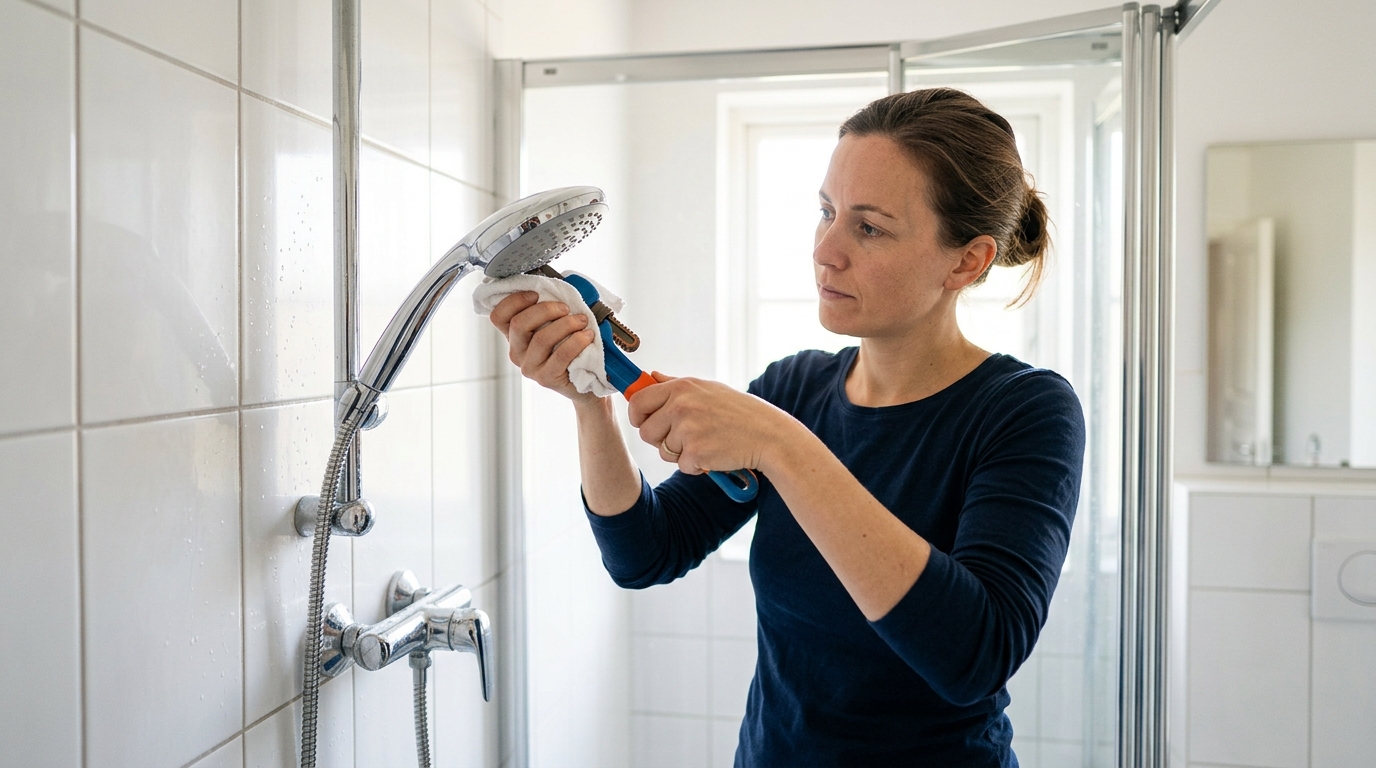
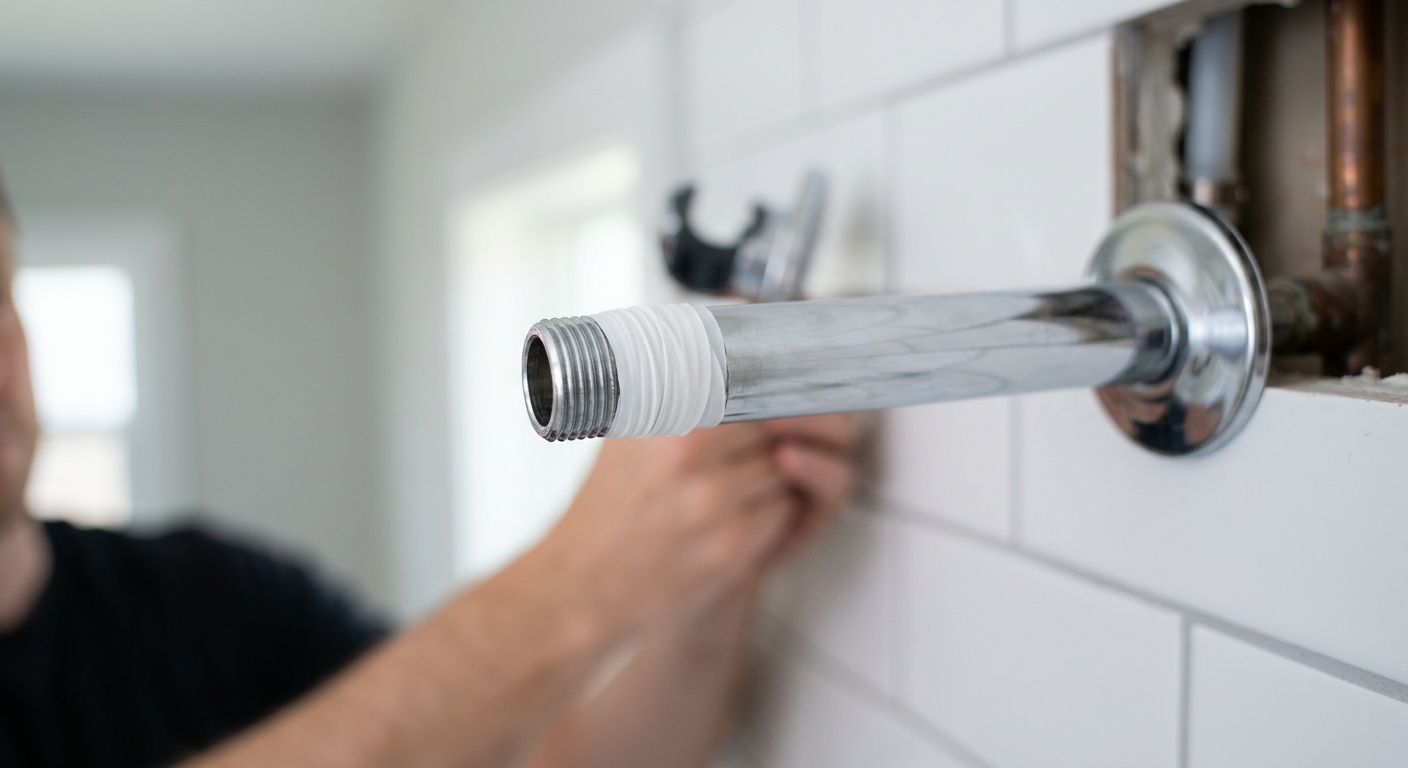
When the parts are clean, wrap the shower arm threads with PTFE tape and hand-tighten the head first. Finish with a cloth-wrapped wrench only if you need a little more snugness. Over-tightening can crack plastic threads or make the next repair miserable. Once it is back in place, run water and check for leaks at the connection and for improved spray pattern at the head.
If the shower now feels normal, you are done. If it is still weak, widen the search: compare other faucets, inspect the water heater for hot-side sediment, and think about household pressure as a whole. A pressure issue that affects multiple fixtures is usually outside the showerhead itself.
Troubleshooting & FAQ
Why is my shower pressure low only in one bathroom?
That usually means the problem is local to that fixture, branch line, valve, or cartridge. Compare the weak shower with other faucets in the same bathroom and other parts of the home. If everything else is fine, start with the showerhead and its screen before you assume a bigger plumbing failure.
Should I remove the flow restrictor to get better pressure?
Sometimes a restrictor is clogged rather than defective, but removing it can create code, warranty, or comfort issues depending on the fixture and local rules. Clean and inspect it first. If you decide to change it, keep the original part and reinstall it if the result is noisy, splashy, or not allowed where you live.
Why is the hot water weaker than the cold water?
That points to hot-side sediment, a problem with the water heater, or a mixing cartridge issue inside the shower valve. Start by checking whether other hot faucets are also weak. If they are, the problem is upstream and a plumber should inspect the system.
When should I call a plumber?
Call a plumber if the bare shower arm is weak, the whole house has poor pressure, the valve is stuck, water leaks behind the wall, or the shower pressure falls again right after you clean it. Those are signs the problem is not just a dirty showerhead.
Affiliate disclosure: as an Amazon Associate, HowTo.Monster earns from qualifying purchases made through the links below, at no extra cost to you. Our picks are chosen editorially, not by commission.
Apparatus & Materials
| Item | Cost | |
|---|---|---|
| ◆ Bucket Use a bucket for the bare-arm flow test and for catching rinse water. | $5–$10 | — |
| ◆ Lumkew Multiple Shower Head Cleaning Brush Our pick for clearing mineral scale from tiny spray holes and stubborn nozzle openings. | $7–$8 | Buy now |
| ◆ VOTMELL 4 Rolls 1/2 Inch x 520 Inches Teflon Plumbers Tape Our pick for re-sealing the showerhead connection after you remove and reinstall it. | $4–$6 | Buy now |
| ROTATION Precision Hook and Pick Set for Automotive | 4-Piece Hand Tools A gentle pick set for lifting screens, gaskets, or a stubborn restrictor without gouging the finish. | $7–$10 | Buy now |
| Soft cloth Wrap the wrench or protect chrome finishes while loosening the showerhead. | $1–$4 | — |
Notes on the sources
The ranking at right reflects our editorial judgment after reading each source in full. For a summary of this entry in brief, see the source ranked first. For the chemistry and underlying principles, see the last.