A squeaky hinge is usually just dry metal, but stubborn noise can point to paint buildup, rust, loose screws, or worn pins. Here is the clean, lasting fix.
A squeaky hinge is rarely a mystery. In most homes, the sound comes from dry metal rubbing metal, but paint buildup, grime, loose screws, or a bent pin can make the squeak stick around long after a quick spray. The good news is that you usually do not need to replace the whole hinge. You need to clean the joint, lubricate the right surfaces, and check whether the door or hardware is starting to wear out.
If you want the permanent fix, think in this order: tighten, clean, lubricate, then inspect. That sequence solves most squeaks and tells you when the hinge has crossed from annoying to worn-out.
Step 1: Find the real source of the squeak
Open and close the door slowly while listening near each hinge. A squeak from the top hinge often means the pin is dry or the door is sagging slightly under load. A squeak that changes when you lift the door handle can point to loose screws or a pin that is rubbing because the hinge is out of alignment.
Before you reach for lubricant, check the screws in both leaves of each hinge. If a screw is spinning or the hinge is pulling away from the jamb, the noise may be partly mechanical rather than just friction-based. Tightening the hinge can stop the squeak by itself, and it also keeps your lubricant from being a temporary bandage on a loose door. Use step-1-inspect-hinge.png as the reference for the first inspection step.
Step 2: Clean the hinge pin and knuckle
If the hinge is painted, dusty, or rusty, the lubricant needs a clean surface to work on. Close the door, support it if needed, and tap the hinge pin upward with a nail set or small screwdriver until the head pops free enough to grab. Pull the pin out, then wipe it with a rag or paper towel. If you want a visual for this part, see step-2-remove-pin.png. If the pin is grimy, polish it lightly until the metal looks clean again.
Wipe inside the hinge knuckle too. That little barrel-shaped joint holds old grease, grit, and dried paint that can keep a squeak coming back. For a close-up of the cleaning stage, see step-3-clean-pin.png. If the pin is visibly bent, badly scored, or rust pitted, replacement is smarter than trying to save a damaged part.
Step 3: Lubricate the right way
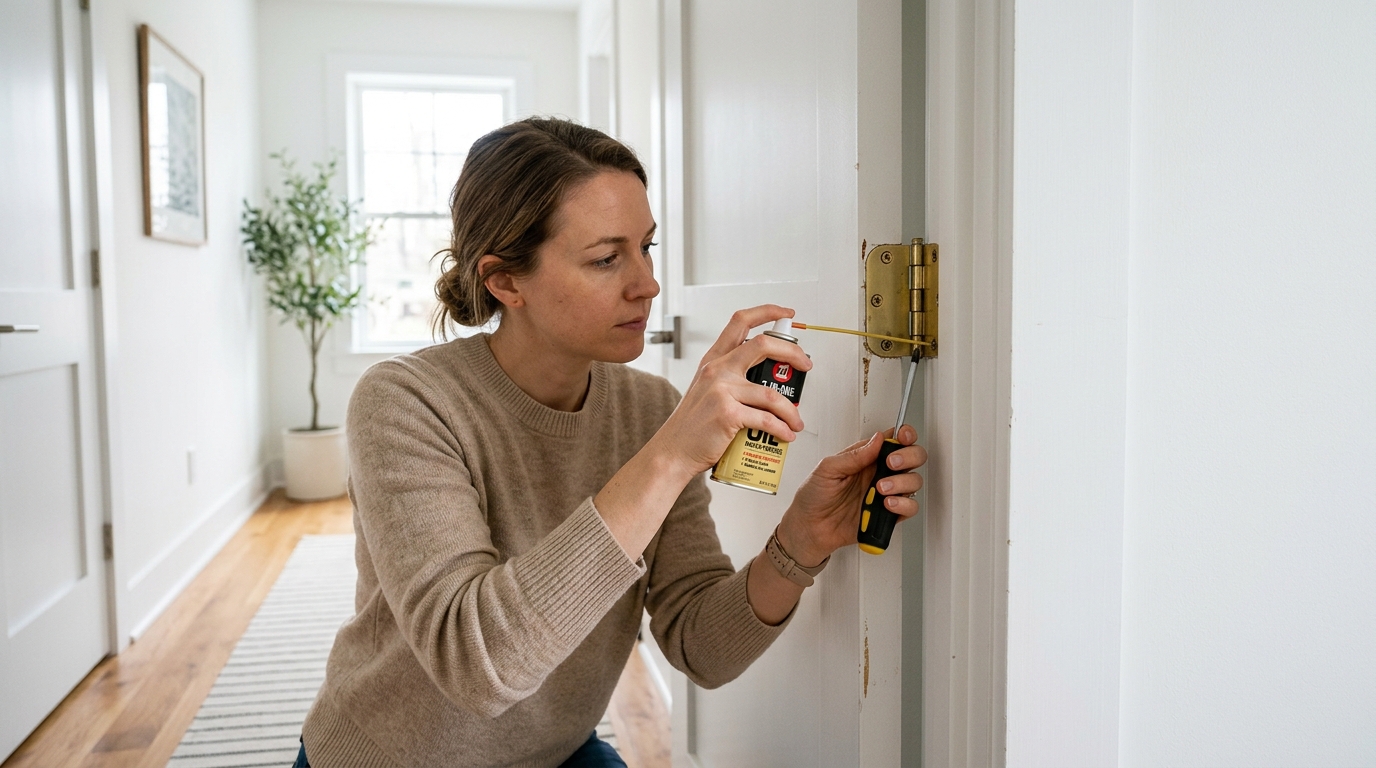
For most interior doors, white lithium grease is the best long-lasting fix because it stays in place and does not run off as quickly as thin oil. Apply a light coat to the pin and a small amount into the hinge knuckle. You do not need a flood of product; too much lubricant attracts dust and gives you a sticky hinge later. A shot of the finished step is shown in step-4-reinstall-pin.png.
If you prefer a thinner lubricant, use a light oil sparingly and work the door back and forth several times. That motion draws the product into the joint. Reinsert the pin, tap it fully home, and open and close the door a few more times to spread the lubricant evenly.
Step 4: Decide whether the hinge needs repair or replacement
A hinge that squeaks once after lubrication is normal. A hinge that squeaks again quickly, even after cleaning and lubrication, usually has a deeper problem. Look for worn pin holes, visible wobble at the knuckle, rust that keeps returning, or a door that has started to sag. Those are signs that the hinge is wearing out or that the frame is carrying the load unevenly.
If the screws are stripped, repair the screw holes before you blame the hinge. A loose hinge can move just enough to squeak every time the door swings. On older doors, a longer screw in the top hinge can also help draw the jamb tighter and restore alignment.
Step 5: Prevent the squeak from coming back
Once the hinge is quiet, work the door a few times over the next day and check the screws again. Doors settle, wood moves, and a hinge that was only slightly loose can loosen again after use. If the door is in a humid bathroom or near an exterior opening, plan on periodic maintenance.
A quick hinge check every few months is usually enough. Wipe away dust, add a tiny amount of lubricant if the motion starts to feel dry, and fix loose screws before they turn into a louder problem. That is the difference between a one-time repair and a door that stays quiet.
Troubleshooting & FAQ
Why is my door still squeaking after I lubricated the hinge?
If the noise came back fast, the problem is usually not just dryness. Paint buildup, rust, a bent pin, or loose screws can keep the hinge rubbing even after lubrication. Clean the pin and knuckle first, then check alignment before adding more product.
Should I use WD-40 on a squeaky door hinge?
It can work as a short-term fix, but a true hinge lubricant such as white lithium grease usually lasts longer on indoor metal hinges. If you do use a spray product, use only a small amount and follow up with a more durable lubricant when you can.
When should I replace the hinge instead of fixing it?
Replace the hinge if the pin is badly worn, the knuckle is loose, the hinge is rusted through, or the door still sags after screw repair and lubrication. A hinge that has lost its shape will keep making noise until the hardware itself is changed.
Why does the top hinge squeak more than the others?
The top hinge carries the most weight on many doors, so it wears faster and dries out sooner. If the top hinge squeaks, inspect that hinge first and make sure its screws are tight and the door is not sagging into the frame.
Bottom line
A squeaky hinge is usually easy to silence for good if you attack the cause instead of the noise. Clean the pin, lubricate the joint, tighten loose hardware, and replace worn parts when the hinge itself has given up. That is the durable fix, not the one-day quiet.
Before you start, open step-1-inspect-hinge.png to compare loose screws, alignment, and hinge wear against your own door.
Affiliate disclosure: as an Amazon Associate, HowTo.Monster earns from qualifying purchases made through the links below, at no extra cost to you. Our picks are chosen editorially, not by commission.
Apparatus & Materials
| Item | Cost | |
|---|---|---|
| ◆ Shop rag or paper towels For wiping old lubricant, grit, and rust off the hinge pin and knuckle. | $1–$4 | — |
| ◆ Small flathead screwdriver or nail set Helps lift hinge pins and nudge stubborn hardware out without marring the hinge. | $6–$12 | Buy now |
| ◆ WD-40 Specialist White Lithium Grease, 10 oz Our pick for a long-lasting hinge lubricant on interior metal hinges. | $8–$12 | Buy now |
| 3-IN-ONE Multi-Purpose Oil, 8 oz A precise oil for light hinge lubrication when you want a cleaner, thinner option. | $5–$8 | Buy now |
Notes on the sources
The ranking at right reflects our editorial judgment after reading each source in full. For a summary of this entry in brief, see the source ranked first. For the chemistry and underlying principles, see the last.