Stop a faucet leak by locating it first, identifying the valve type, and replacing the matching washer, O-ring, seal, or cartridge instead of guessing.
Most faucet leaks stop after you turn off the water, locate where the leak begins, and replace the worn washer, O-ring, cartridge, or seal for that faucet type. A leak at the base often points to O-rings or seals; a drip from the spout more often points to a cartridge, washer, or valve seat. Photograph every part before buying a replacement.
What usually fixes a leaky faucet?
Diagnose the location before taking anything apart. A spout that drips while the handle is off usually has a worn internal sealing part. Water around the handle commonly indicates a packing nut, cartridge, or O-ring issue. Water emerging around the base as the spout turns usually points to worn spout O-rings.
| Leak location | Likely part | Next step |
|---|---|---|
| Spout drips when off | Washer, cartridge, seat | Identify valve type and inspect its seal |
| Handle leaks | O-ring, cartridge, packing nut | Remove handle and inspect |
| Base leaks while spout swivels | Spout O-rings | Lift spout and replace matching rings |
| Cabinet or supply line is wet | Supply connection or shutoff | Stop; assess before using faucet |
If water is coming from a supply line, wall, or failed shutoff valve, this is not a routine handle repair. Catch water, stop using the fixture, and call for help if you cannot isolate it safely. EPA WaterSense notes that household leaks deserve prompt attention; the practical reason is simple: a slow leak can become cabinet damage before it becomes a dramatic emergency.
Turn off water and collect the right tools
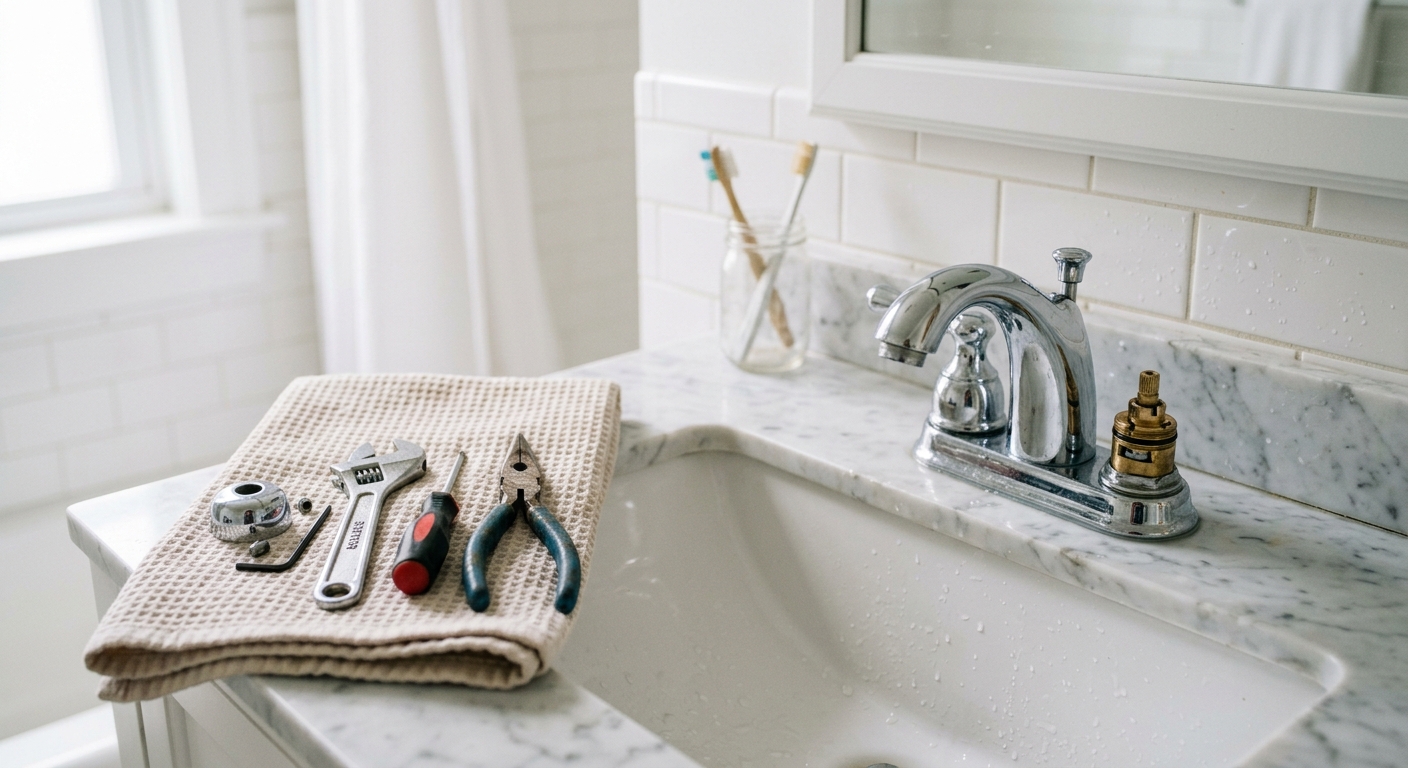
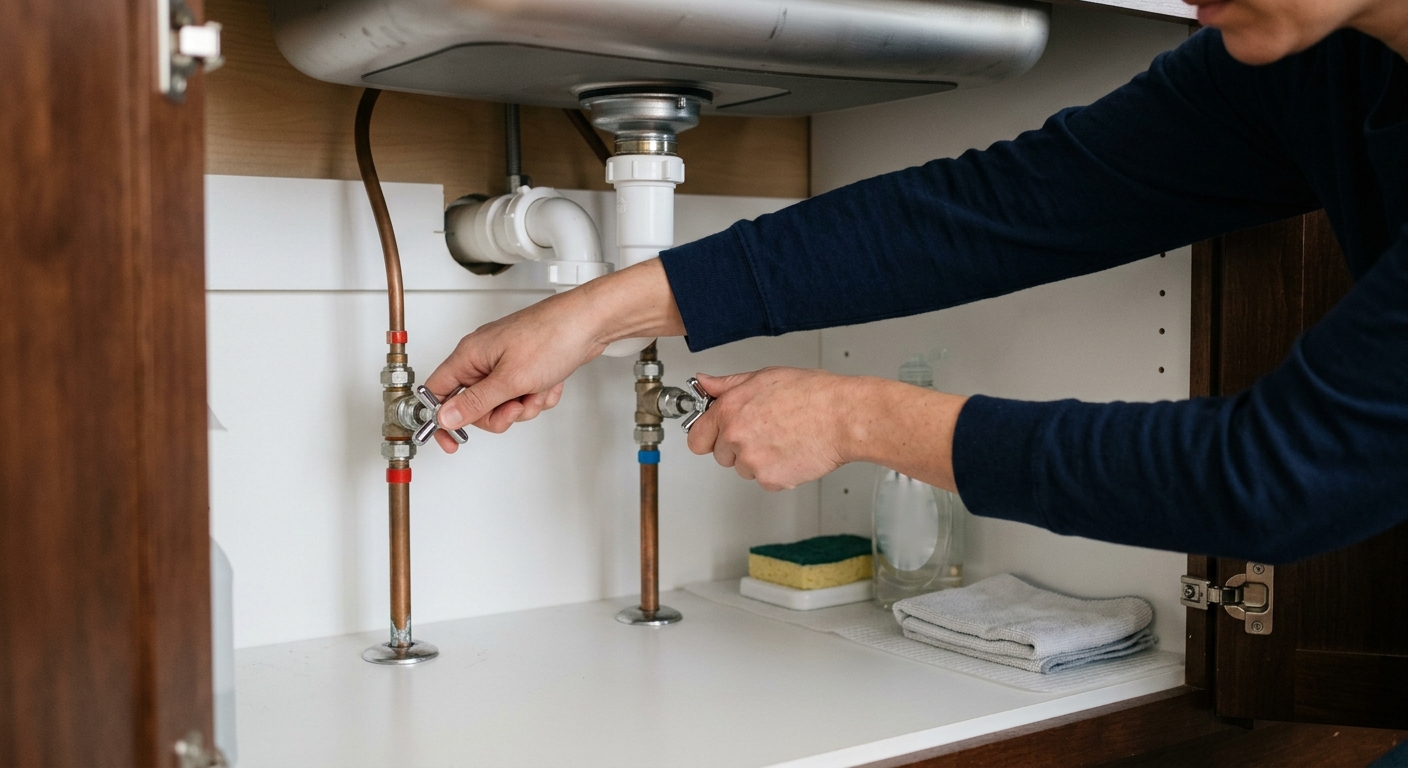
Clear the cabinet, put a towel beneath the work, and plug the sink drain. Close both under-sink shutoff valves clockwise. Open the faucet to release pressure and check that the water has actually stopped. If either valve will not close, do not force it. Use the main only if you know its location and can operate it safely; otherwise schedule a plumber.
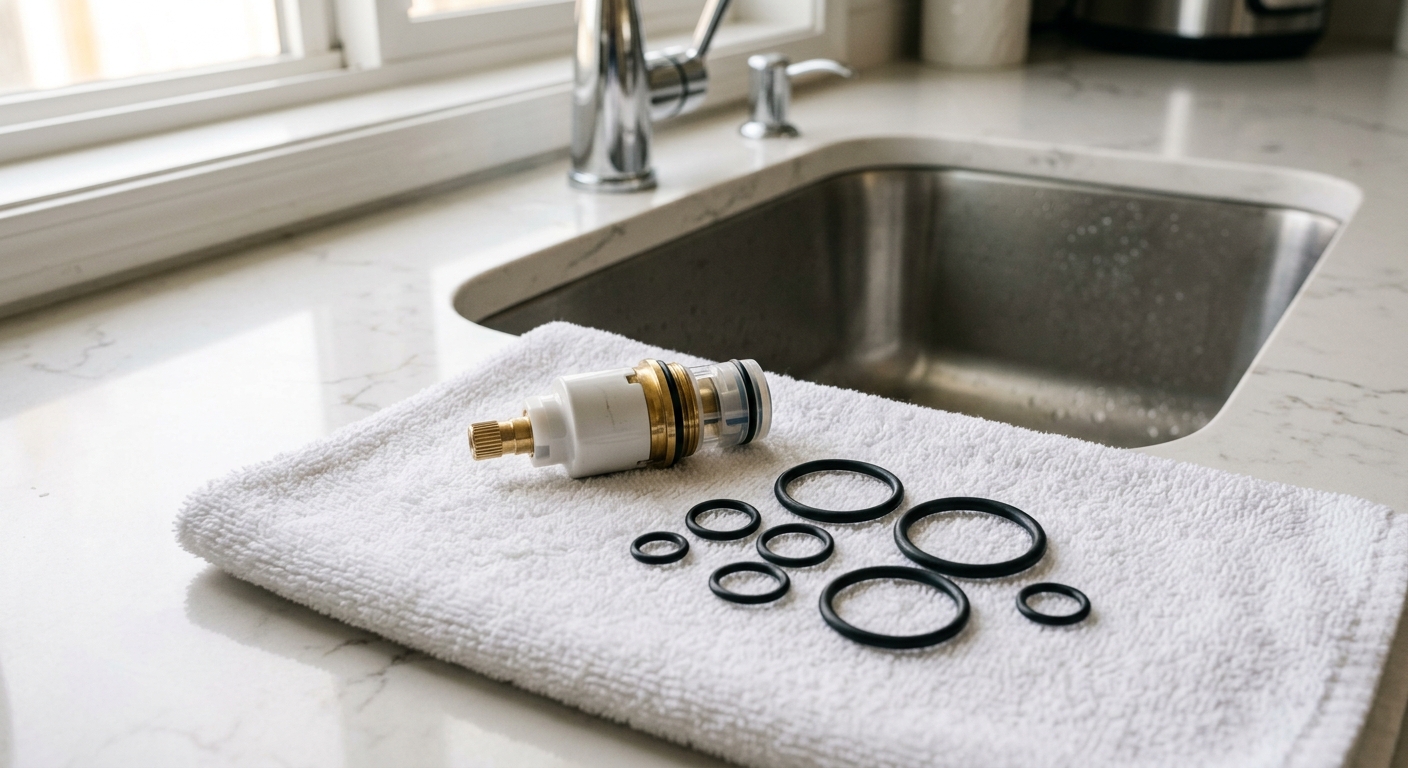
Bring an adjustable wrench, screwdrivers, a hex-key set, a towel, and your phone camera. You may need the manufacturer-specific cartridge, washer, or O-ring. Generic assortments are useful only after you have measured the old part. Plumber’s tape does not repair an internal faucet seal and should not become a substitute for the correct part.
Find your faucet type
A compression faucet generally has two handles and uses washers against valve seats. A cartridge faucet may have one or two handles and contains a removable cylindrical cartridge. A ball faucet has a single handle and a rounded ball assembly with small seats and springs. Ceramic-disk faucets use a ceramic cylinder or disk assembly and are durable, but their seals can still collect mineral buildup or wear.
Do not identify a faucet from a photo alone if you can avoid it. Remove the decorative cap or handle carefully, photograph the internal assembly, and search the maker’s support page with the model number. Moen and Delta support are more reliable than a confident guess from a hardware-store aisle.
Fix a leak at the base
With water off, remove the handle and any trim that prevents the spout from lifting. The exact retaining nut, clip, or collar varies by brand; keep parts in order on the towel. Pull the spout straight up with gentle rocking. Do not pry against the sink finish.
Inspect the O-rings and the surface they ride on. Flattened, split, or brittle rings need identical replacements. Clean mineral residue with a cloth, install the correct rings as the maker directs, and use only the manufacturer-approved lubricant if specified. Reassemble, turn water on slowly, and rotate the spout while checking for seepage.
Fix a drip from the spout
For a compression faucet, remove the stem, inspect the washer and valve seat, and replace the washer with the exact size. A scored seat can keep a new washer from sealing, which is why a washer swap sometimes changes nothing. For cartridge, ball, and ceramic-disk faucets, replace or service the part in the manufacturer’s sequence; their components are not interchangeable.
Reassemble without over-tightening. Restore water slowly with the faucet open, then close it and watch the spout for several minutes. A slow residual drip may be water emptying from the spout, but continued dripping means the diagnosis or part match needs another look.
Why is it still leaking after a washer replacement?
The washer may be the wrong size, the valve seat may be damaged, or the faucet may not be a compression model at all. A cartridge can fail internally without looking dramatic. Recheck the faucet type, compare the old part to the new one, and inspect for debris or a missing seal during reassembly.
Stop if corrosion prevents disassembly, the shutoff fails, or the leak has moved to a supply connection. Repeatedly forcing a seized nut is an efficient way to create a larger plumbing job.
What renters should do first
Photograph the leak, note when it occurs, and report it through the lease or property-management process. Closing a functioning fixture shutoff and placing a towel or container below a drip can limit damage. Disassembling a landlord-owned fixture without permission can create disputes as well as repair costs, so get authorization before opening it.
When to call a plumber
Call when water is leaking inside a cabinet from a supply line, a shutoff valve cannot isolate the fixture, corrosion blocks safe removal, the faucet body is cracked, or a correctly matched repair does not stop the leak. This is also the sensible line for anyone uncomfortable identifying internal parts.
How we ranked the sources
We ranked official manufacturer support first because faucet internals are brand- and model-specific. EPA provides the water-conservation reason to act promptly. General repair guides came after sources that separate base leaks, spout drips, and handle leaks rather than prescribing one washer for every faucet.
Troubleshooting & FAQ
Do I need to turn off the main water supply?
Usually no. Use the hot and cold shutoff valves below the sink if they work. Use the main only when you know where it is and can operate it safely.
Why is my faucet still leaking after replacing the washer?
The washer may be wrong, the seat may be damaged, or the faucet may use a cartridge or another seal. Confirm the type before trying another part.
Can I fix a faucet leak in a rental?
Document it and follow the landlord or property-manager process before disassembly. Closing a safe fixture shutoff may limit damage, but repair responsibility varies.
How do I know what faucet type I have?
The handle layout gives clues, but the removed internal assembly and manufacturer documentation are the reliable answer. Photograph the parts and model number.
When should I call a plumber?
Call for supply-line leaks, failed shutoffs, severe corrosion, inaccessible parts, or a repair that does not stop the leak.
Full guide, sources ranked: howto.monster/g/how-to-fix-a-leaky-faucet/
Affiliate disclosure: as an Amazon Associate, HowTo.Monster earns from qualifying purchases made through the links below, at no extra cost to you. Our picks are chosen editorially, not by commission.
Apparatus & Materials
| Item | Cost | |
|---|---|---|
| ◆ Adjustable Wrench Used to loosen and tighten nuts, bolts, and the packing nut in the handle assembly. Essential for accessing internal faucet components. Our pick: Amazon Basics 6-Inch (150mm) Plumbing Adjustable Wrench with Soft Grip, Wide Mouth. | $8–$20 | — |
| ◆ Allen Wrench Set Small Allen wrenches required to remove handles on many faucet types, especially those with set screws. Our pick: Amazon Basics 36-Piece Allen Wrench / Hex Key Set. | $12–$15 | Buy now |
| ◆ Plumber's Tape (Teflon Tape) Used to seal pipe threads and prevent leaks when reassembling faucet components. Our pick: 5 Rolls Premium Plumbers Tape, Teflon Tape, Plumbing Tape, Thread Seal Tape for leaks. | $3–$8 | Buy now |
| ◆ Protective Gloves and Towel Safety gloves for hand protection and towel to protect work area and prevent tools from falling down the drain. | $5–$15 | — |
| ◆ Replacement O-rings and Washers Common replacement parts that often cause leaks when worn out. Having various sizes ensures you can fix the issue quickly. Our pick: KEZE 1200 Pcs 24 Size Universal Rubber O-Ring Assortment Kit | $14–$16 | Buy now |
| ◆ Screwdriver Set Flathead and Phillips head screwdrivers needed to remove decorative buttons, top screws, and set screws on faucet handles. | $10–$25 | — |
| Replacement Cartridge May be needed for cartridge-type faucets if the cartridge itself is damaged or worn beyond repair. Our pick: Kuntine.B Wall File Organizer Office Hanging Magazine Holder, 5-Tier, Black | $15–$50 | Buy now |
| Slip-Joint Pliers Large pliers used for gripping and loosening difficult-to-remove parts during faucet disassembly. | $12–$30 | — |
Notes on the sources
The ranking at right reflects our editorial judgment after reading each source in full. For a summary of this entry in brief, see the source ranked first. For the chemistry and underlying principles, see the last.