

Soak the spray face in vinegar the right way, clear stubborn mineral buildup, and restore flow without ruining a delicate finish.
A quick vinegar soak can restore a weak shower head
When a shower head starts spraying sideways or losing pressure, the culprit is usually mineral scale packed into the nozzle face. Hard water leaves behind calcium and magnesium deposits that narrow the openings, so the stream gets uneven long before the head is truly clogged.
Vinegar helps because its mild acidity breaks down that scale where it sits. The key is keeping the solution in direct contact with the nozzles long enough to work, but not so long that you risk dulling a delicate finish. That is why the bag method is useful: it turns a hanging fixture into a small soak chamber that does the job without requiring a full removal.
Step 1: Check the finish and choose the soak length
Before you mix anything, look closely at the shower head finish. Standard chrome and stainless steel tolerate vinegar better than brass, gold-toned, nickel-plated, matte black, or other coated surfaces. If you are not sure what you have, assume it is sensitive and start with a short soak.
That caution matters because vinegar is doing real chemical work, not just washing away dust. A short 15- to 30-minute soak is enough to test the result on unknown finishes, while tougher chrome fixtures can usually handle a longer soak if buildup is heavy. The safe habit is to check progress, rinse, and repeat instead of leaving a delicate fixture in acid all night.
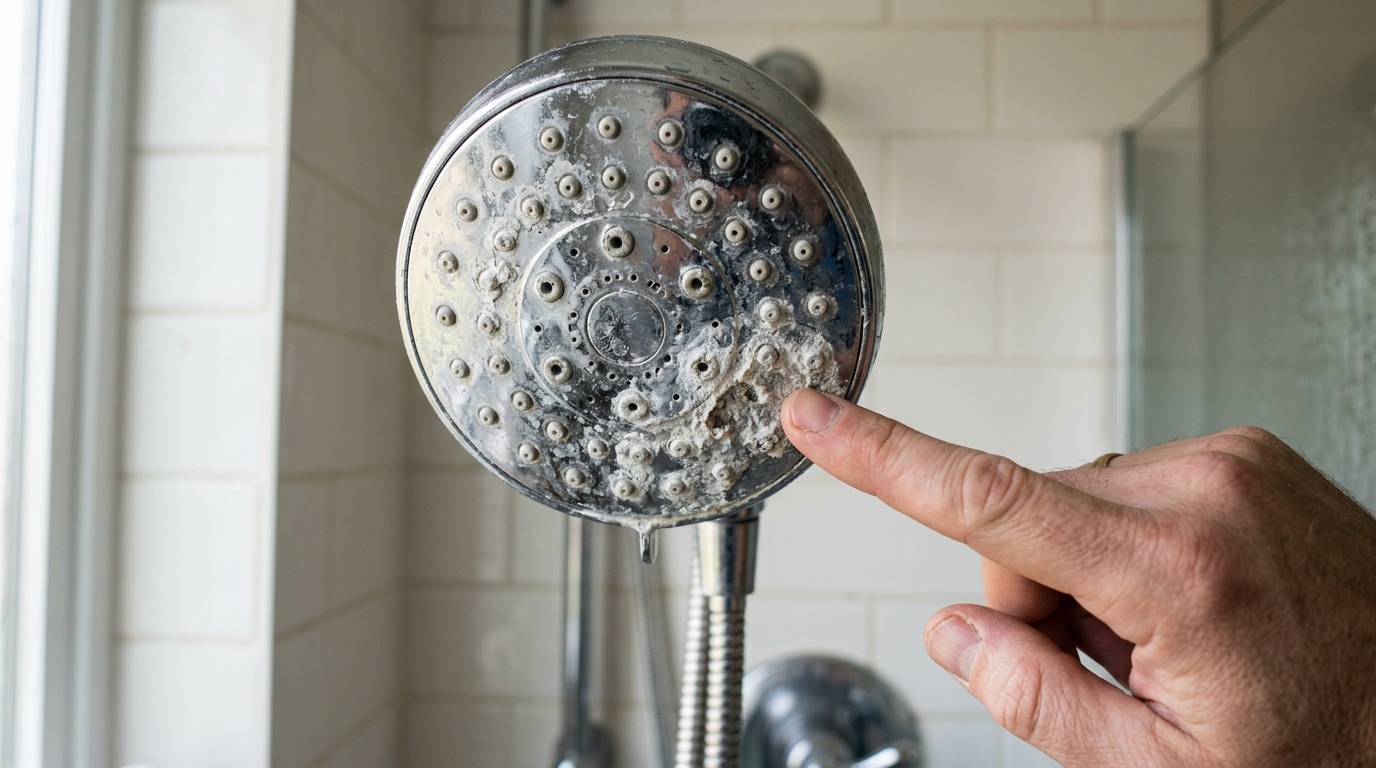
Step 2: Make the bag soak
Pour white vinegar into a small plastic bag, or use a 50/50 mix of vinegar and warm water if you want a gentler start. Slide the bag over the shower head so the spray face is fully submerged, then secure it with a rubber band, twist tie, or tape around the neck of the fixture.
The goal is full nozzle coverage with no leaks. If the liquid level sits below part of the spray face, the vinegar can only soften the exposed scale and the rest stays stuck. Tighten the seal enough to hold the bag in place, but do not crank it so hard that you scratch the finish or leave adhesive residue behind.
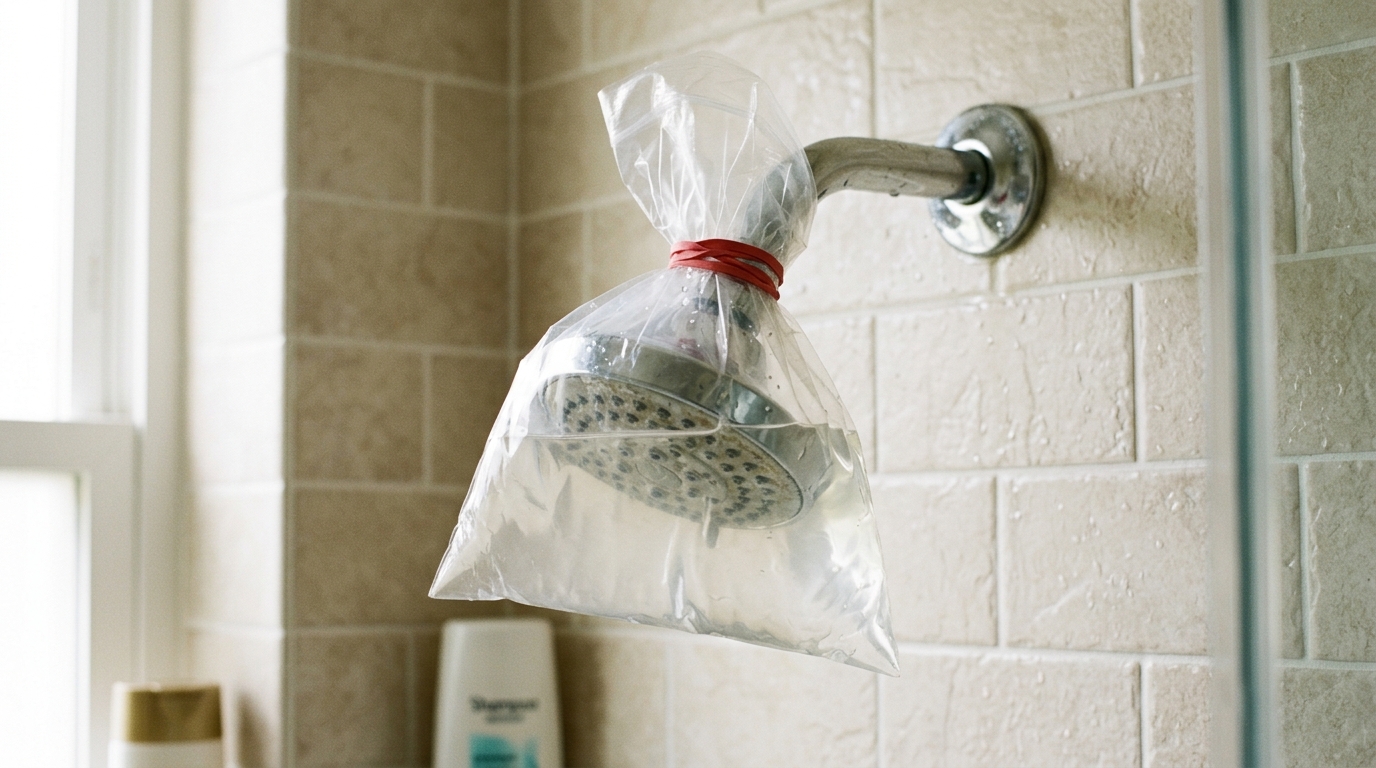
Step 3: Let the mineral deposits loosen
Leave the shower head in the vinegar until the buildup looks softened. For a light cleaning, 20 to 30 minutes may be enough. For heavier scale on a durable chrome fixture, an hour or two can help, but you should still check the finish before committing to an overnight soak.
This waiting period is where the chemistry pays off. Vinegar works best when it stays wet on the deposits, so keep the bag sealed and avoid constant peeling and rewrapping. If the spray holes are still visibly crusted after the first soak, repeat the soak rather than attacking the nozzles with a hard tool.
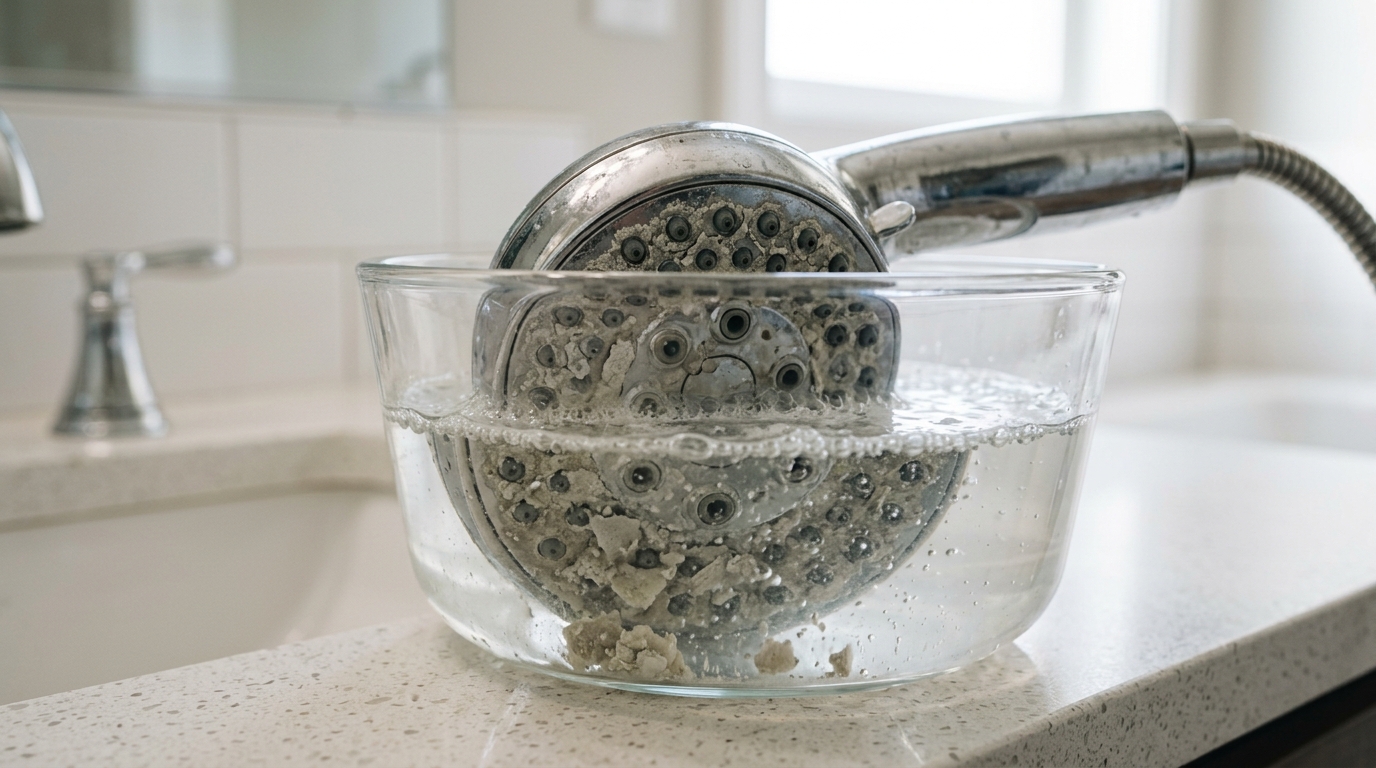
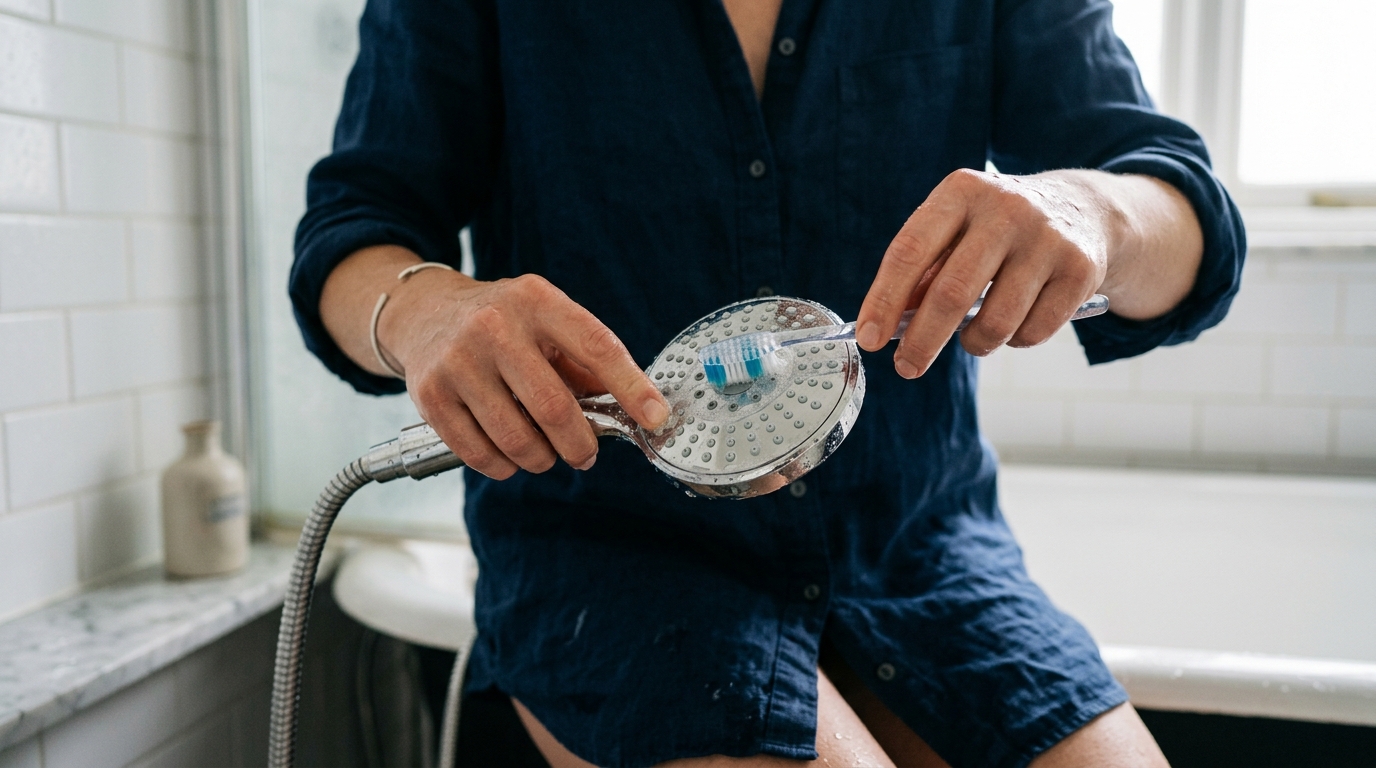
Step 4: Scrub the nozzles and flush the head
Remove the bag, then use a soft toothbrush or nylon brush to wipe away the loosened residue around the nozzle face. Work gently and focus on the spray holes rather than the decorative finish. If a few holes are still blocked, a brief second soak is safer than digging into them with a needle or pin.
Finish by turning on the shower at full pressure for a minute or two. That flush clears dissolved scale from inside the head and helps you see whether the flow has improved evenly. If the stream is still weak in spots, repeat the soak and brush cycle instead of using harsher cleaners.
Apparatus & Materials
| Item | Cost | |
|---|---|---|
| ◆ Plastic storage bag Holds the vinegar around the fixed shower head so the spray face stays submerged. | $3–$8 | Buy now |
| ◆ Rubber band or twist tie Secures the vinegar bag around the shower arm without a messy leak. | $1–$5 | Buy now |
| ◆ Soft toothbrush Gently clears softened buildup from the nozzle openings after soaking. | $2–$6 | Buy now |
| ◆ White vinegar Dissolves the mineral scale clogging the shower head nozzles. | $3–$6 | Buy now |
| Nitrile gloves Keeps your hands dry if the shower head is especially grimy or the vinegar contact time is long. | $8–$15 | Buy now |
Notes on the sources
The ranking at right reflects our editorial judgment after reading each source in full. For a summary of this entry in brief, see the source ranked first. For the chemistry and underlying principles, see the last.