Remove hard-water crust, restore spray pressure, and protect the finish with a simple vinegar or citric-acid cleaning routine.
Restore the spray before you replace the shower head
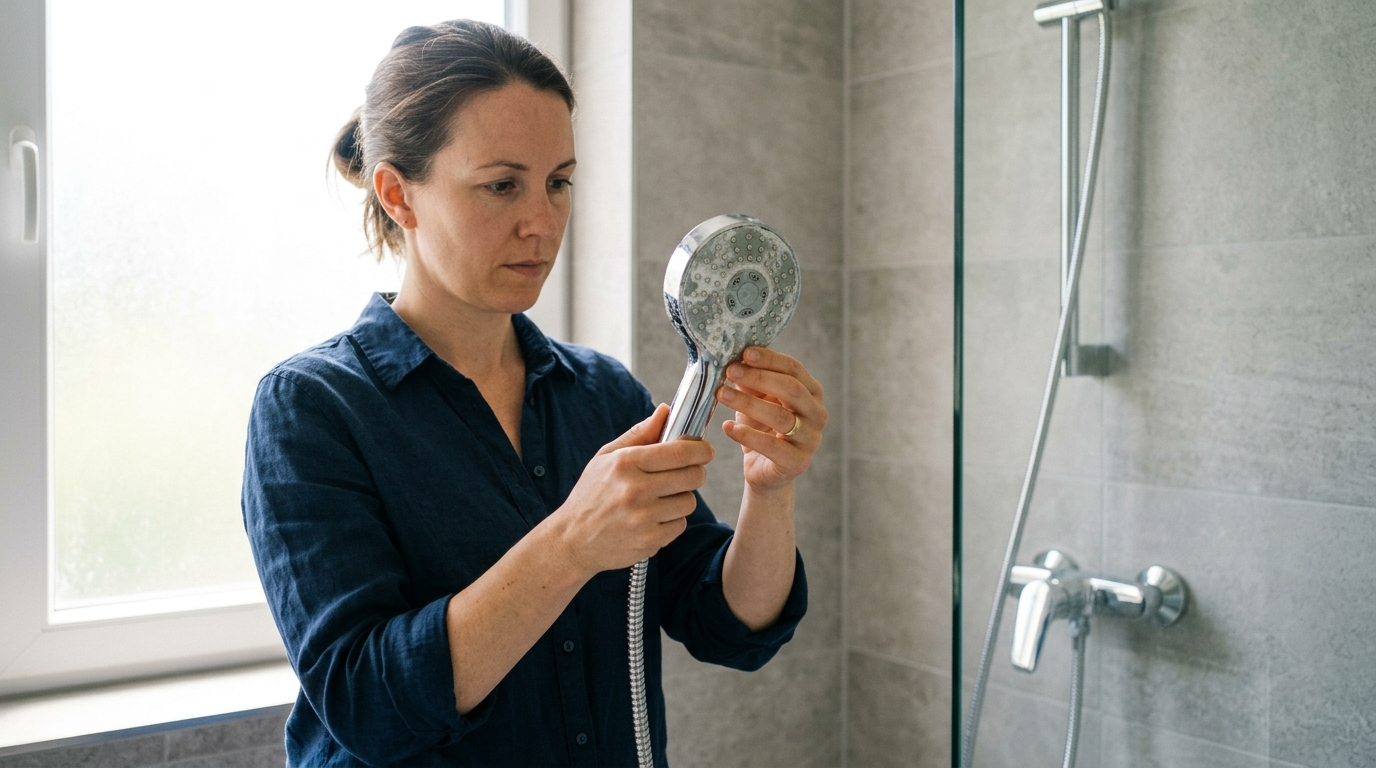
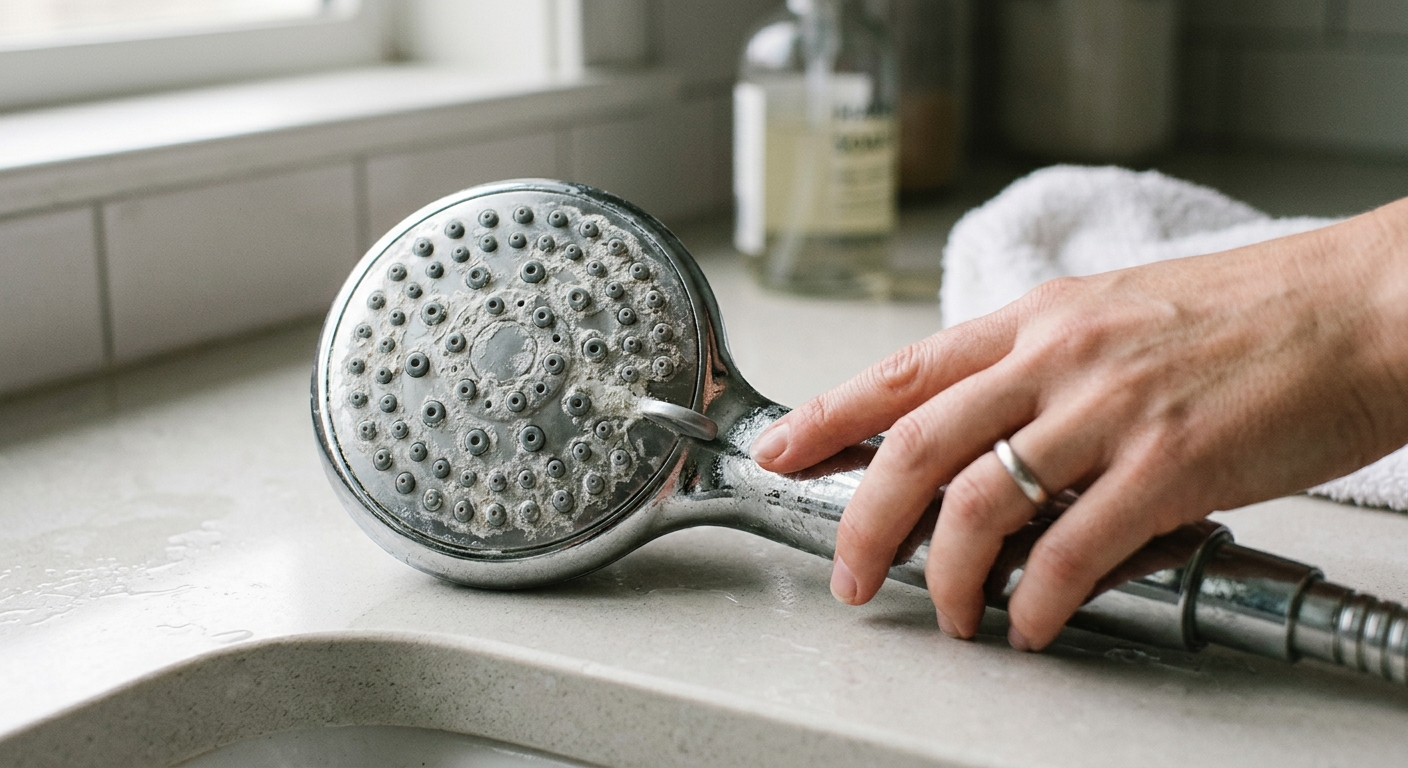
A shower head usually does not fail all at once. The spray gets a little uneven, a few jets start firing sideways, and pressure seems weak even though the plumbing is fine. In most homes, the culprit is mineral buildup from hard water, which collects inside the faceplate and narrows the spray openings.
The fix is usually simple: dissolve the scale, loosen the debris, and flush the fixture thoroughly. The important part is choosing the right cleaner for the finish and not overdoing it. Some manufacturers prefer citric-acid cleaners for delicate finishes, while others accept a diluted vinegar soak for stubborn deposits.
Step 1: Check the finish and choose the mildest safe cleaner
Before you pour anything into a bag, look at the shower head closely. If it has a specialty coating, a plated finish you want to protect, or a manufacturer warning about acids, start with the least aggressive option the label allows. That may be a citric-acid cleaner or a short soak with diluted vinegar rather than straight vinegar.
The goal is to remove mineral scale without dulling the metal or weakening rubber seals. If the fixture manual says not to use vinegar, follow the manual. If the head is a basic chrome or stainless unit and the buildup is moderate, a vinegar soak is usually enough for a first pass.
Step 2: Soak the face of the shower head
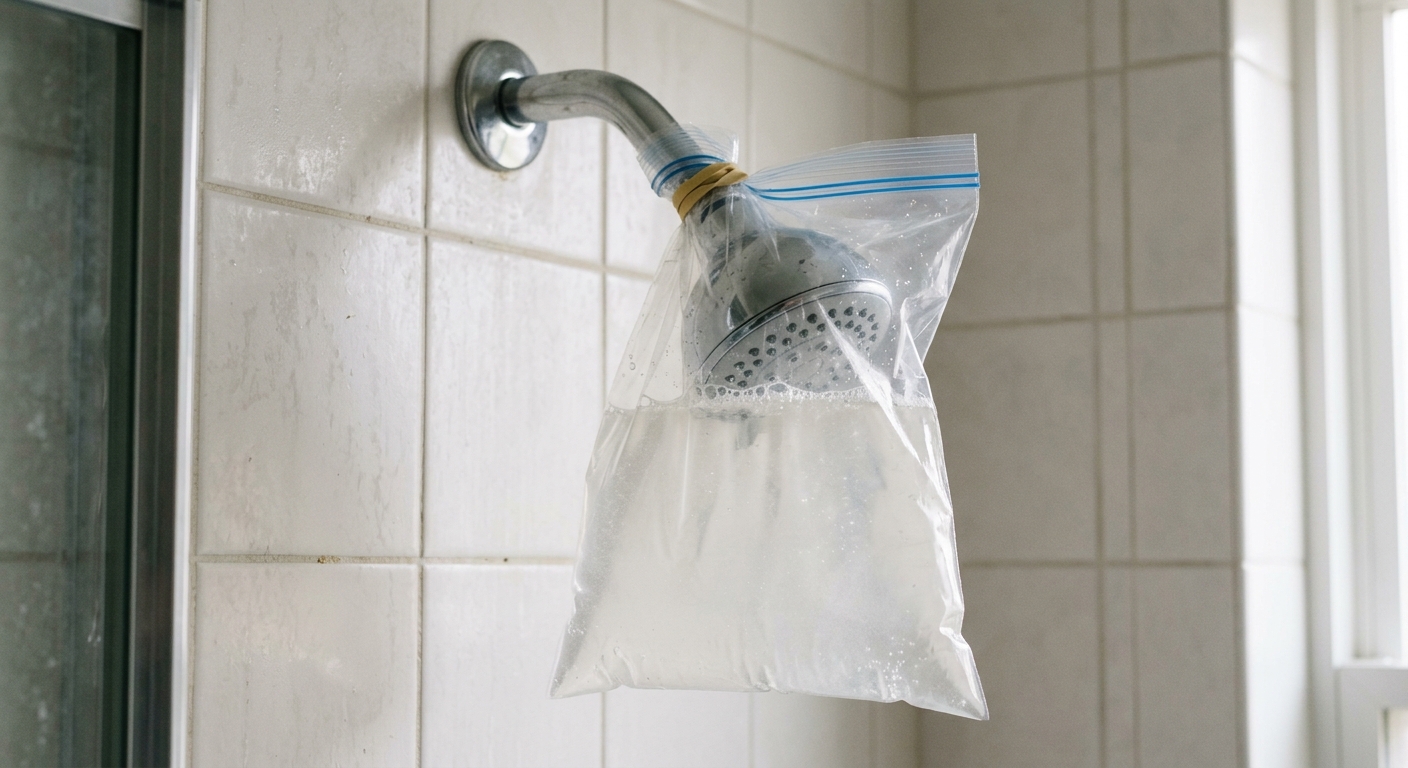
For a removable head, detach it and place only the spray face into a bowl or bag of cleaner. If you are using vinegar, Delta’s guidance supports a 50/50 vinegar-and-water mix for difficult deposits. A short soak is often enough for light scale, while heavier buildup may need a longer soak and a second pass.
If the shower head cannot be removed, fill a bag with cleaner and secure it around the fixture so the spray plate is submerged. Keep the cleaner off walls, grout, and delicate finishes. Do not mix in bleach or any other household cleaner; that can create dangerous fumes and damage the fixture.
Step 3: Scrub the loosened deposits gently
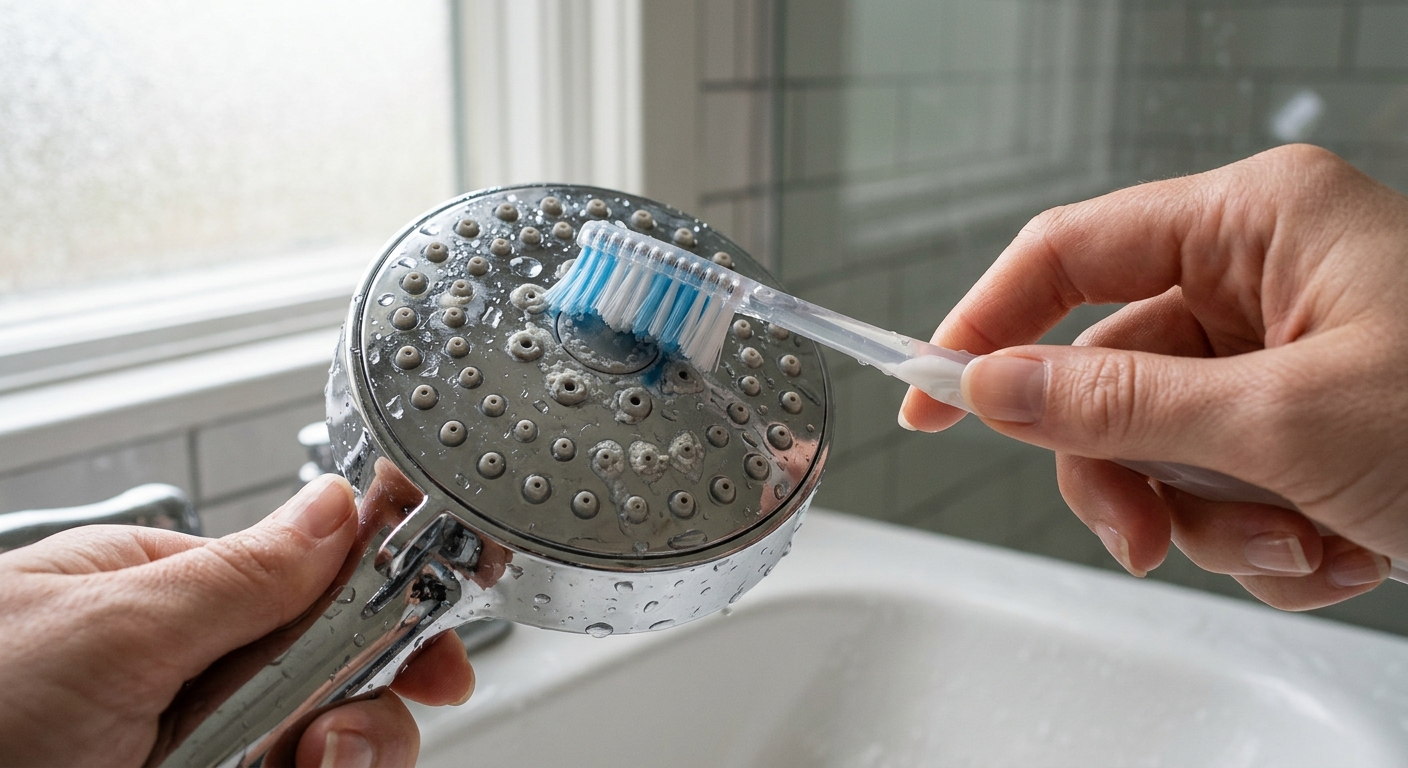
After soaking, remove the fixture and rinse it under warm water. Use a soft toothbrush or nylon brush to clear the holes and wipe away the softened residue. If a few jets are still blocked, a wooden toothpick or straightened paper clip can help nudge out trapped grit, but use very light pressure so you do not enlarge the openings.
The reason this works is mechanical as much as chemical: the acid softens the mineral crust, and the brush breaks the bond between the deposit and the spray face. Be patient if a hole resists. Pushing too hard can damage rubber nozzles or scratch a coated finish.
Step 4: Flush and test the spray pattern
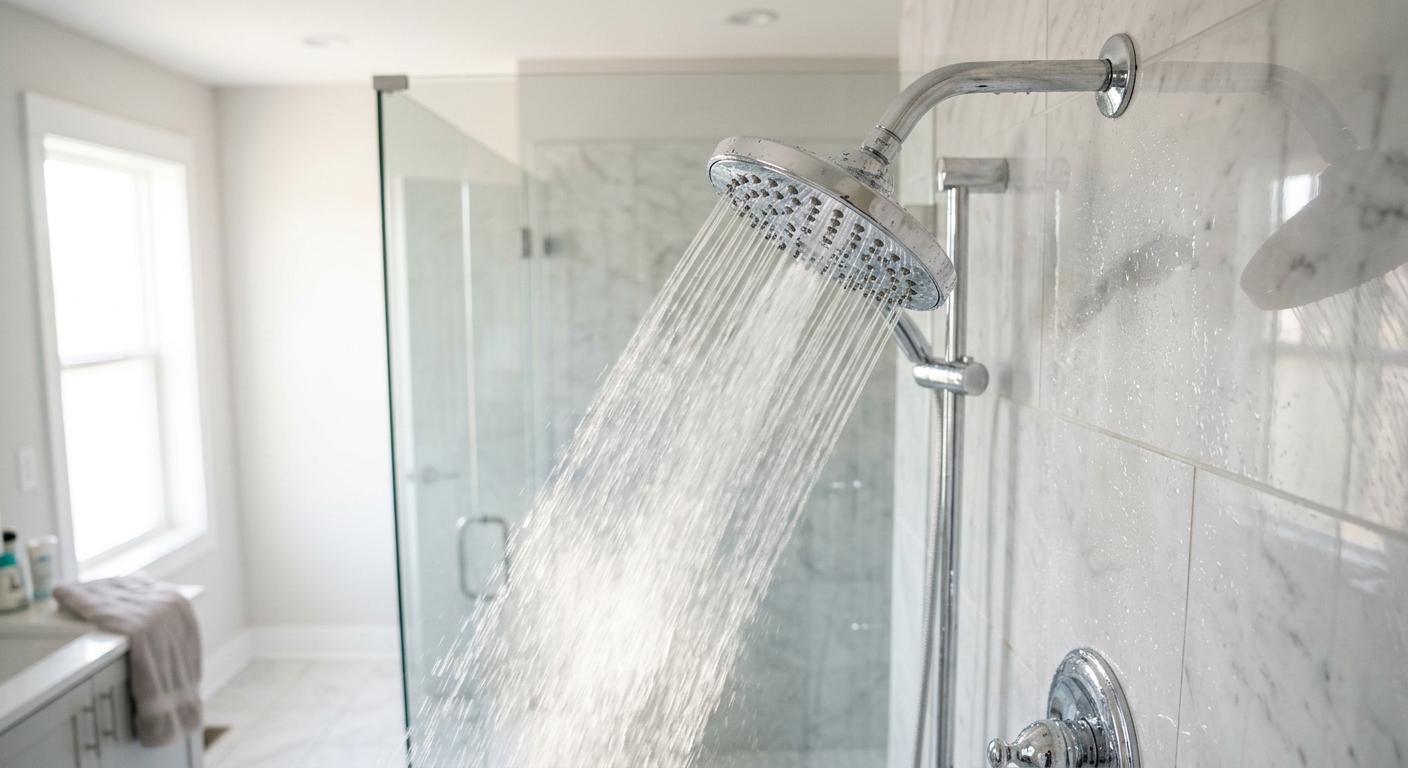
Reinstall the shower head, then run hot water through it for a minute or two to flush any loosened grit. Watch the spray pattern: the jets should look even and the flow should improve quickly. If a few holes still sputter, repeat the soak rather than forcing the openings open.
This final flush matters because leftover cleaner or loosened scale can clog the fixture again if it stays inside. It also gives you a chance to spot leaks at the joint or any finish change before you call the job finished.
Apparatus & Materials
| Item | Cost | |
|---|---|---|
| ◆ Distilled white vinegar Dissolves common hard-water mineral buildup on the shower head face. | $3–$6 | Buy now |
| ◆ Rubber band or zip tie Secures the soak bag so the shower face stays submerged. | $2–$8 | Buy now |
| ◆ Soft-bristle toothbrush Scrubs loosened scale from the spray holes without scratching the finish. | $3–$8 | Buy now |
| ◆ Zip-top plastic bag Holds the vinegar soak around a shower head that stays mounted on the wall. | $4–$10 | Buy now |
| Citric-acid cleaner A gentler alternative for finishes that should avoid vinegar. | $8–$18 | Buy now |
Notes on the sources
The ranking at right reflects our editorial judgment after reading each source in full. For a summary of this entry in brief, see the source ranked first. For the chemistry and underlying principles, see the last.