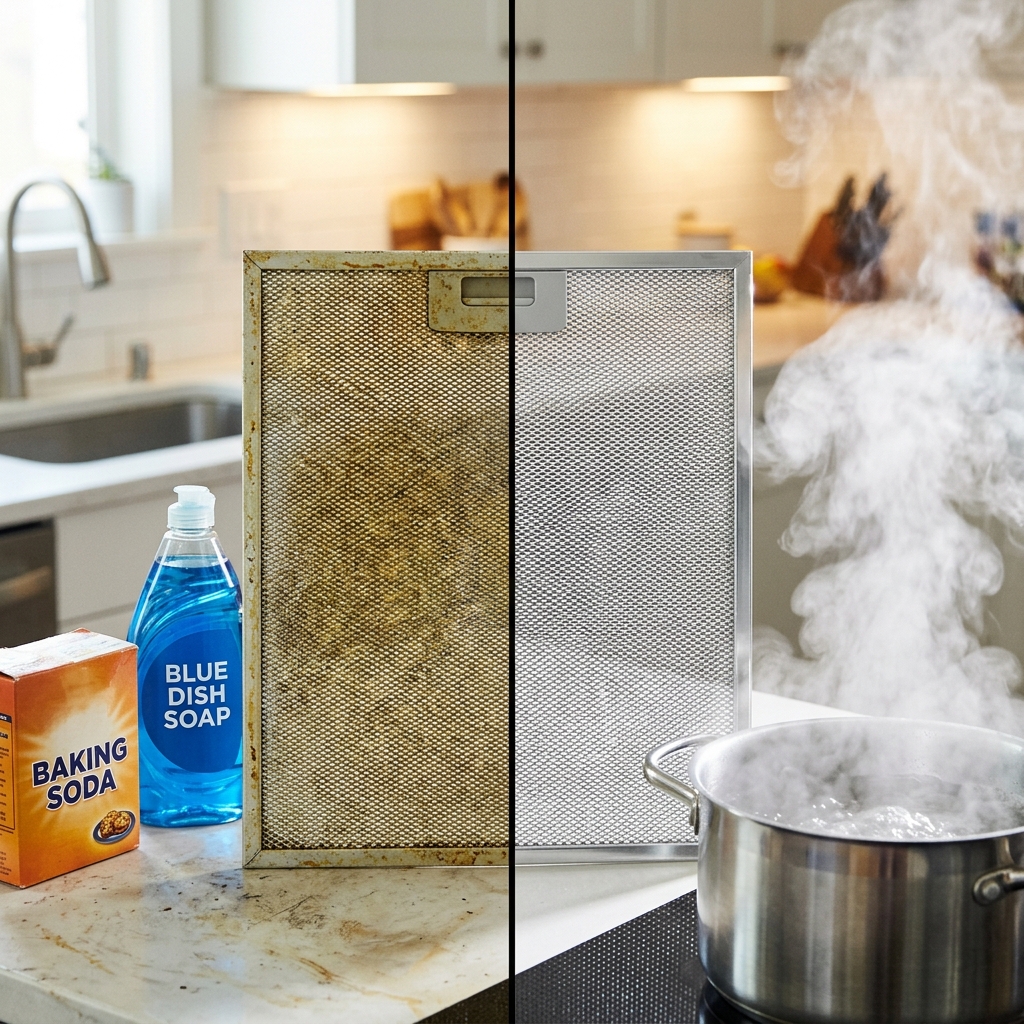
Stop scrubbing your stove vent filters. This simple boiling water and baking soda soak dissolves layers of yellow grease in minutes without damaging your aluminum mesh.
If your range hood is sounding louder than usual, or if you can feel a sticky, yellow film on your cabinets, your filters are likely saturated with grease. A clogged filter doesn't just smell bad—it forces your hood's motor to work twice as hard and creates a genuine fire hazard right above your burners.
Most people dread cleaning these because they try to scrub them with a sponge. But there's a better way. By using a Three-Pronged Chemical Attack—combining extreme heat, high alkalinity (baking soda), and powerful surfactants (dish soap)—you can dissolve grease in minutes with zero scrubbing.
Step 1: The Material Test
Before you start, identify your filter type.
- Aluminum Mesh: Lightweight, silver, and flexible. Use the soak method below. Never put these in the dishwasher.
- Stainless Steel: Heavier and rigid. These can go in the dishwasher, though the soak method is still more effective for heavy buildup.
- Charcoal (Carbon) Filters: These are black, opaque, and often found in ductless hoods. The Charcoal Trap: These cannot be cleaned. Grease clogs the microscopic pores of the carbon, rendering them useless once dirty. If your charcoal filter is greasy, you must replace it.
The Dishwasher Warning
Many guides suggest tossing aluminum filters in the dishwasher. Don't do it. Dishwasher detergents are highly alkaline. When combined with the high-heat cycle, they cause "alkaline etching" on aluminum. This turns your filters a dull, splotchy gray or black and eventually makes the thin mesh strands brittle enough to snap.
Step 2: Prepare the "Degreasing Bath"
You need a vessel large enough to submerge at least half of the filter at a time. A plugged kitchen sink or a heat-safe plastic bin works best.
- Boiling Water: Fill your basin with enough boiling water to cover the filters.
- Dish Soap: Add 1-2 generous tablespoons of a degreasing soap like Dawn Platinum. Stir it in until you have a good head of suds.
Step 3: Add the Baking Soda (The Volcano Warning)
This is where the magic happens. Baking soda increases the alkalinity of the water, which "saponifies" the grease (turning it into soap-like material that dissolves in water).
⚠️ Warning: Add the baking soda very slowly. If you dump 1/2 cup of baking soda into boiling water all at once, it will react violently and "volcano" over the sides of your sink. Sprinkle it in a tablespoon at a time.
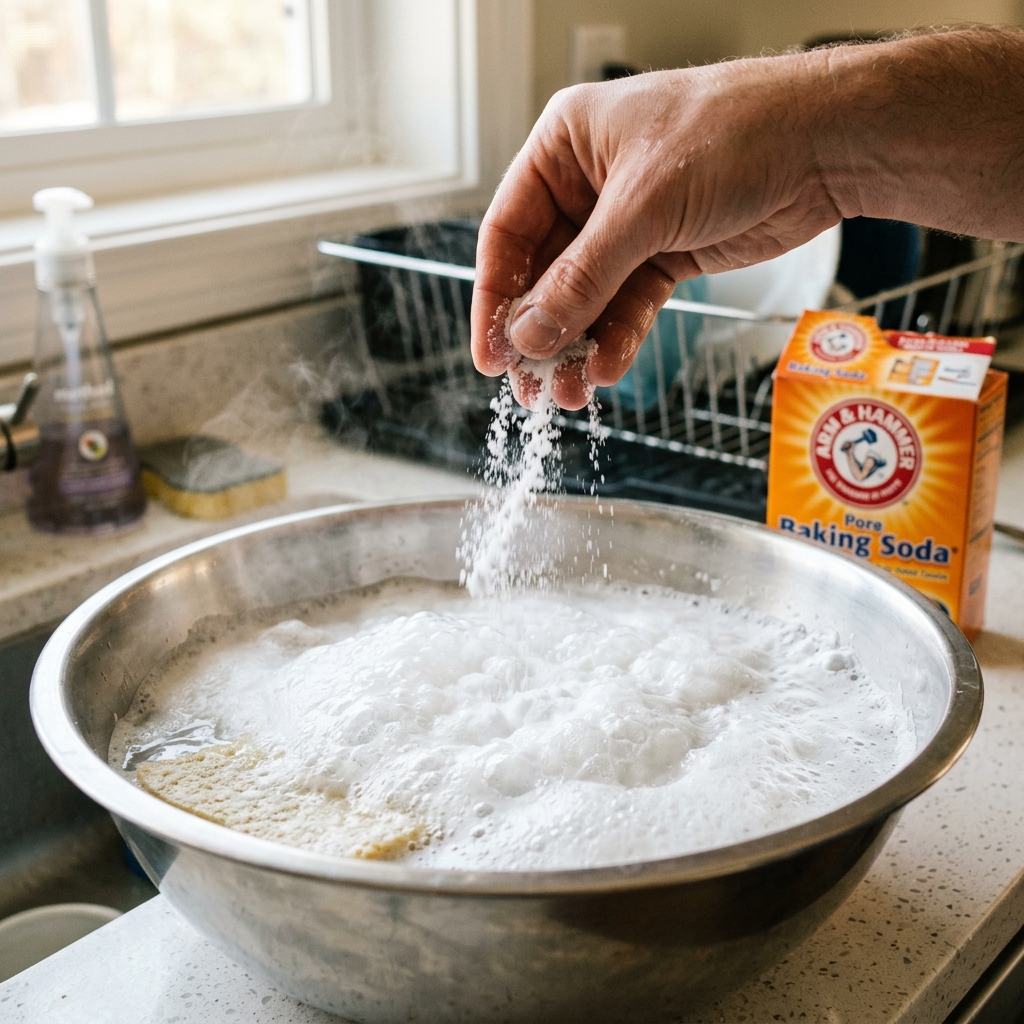
Step 4: The Soak
Submerge your filters in the steaming solution.
- The Grease Lift: You should see the water start to turn brown almost immediately. This is the surfactants and heat working together to lift the grease off the metal.
- Time: Let them soak for 15–20 minutes. If they were extremely neglected, you might need a second round with fresh water.
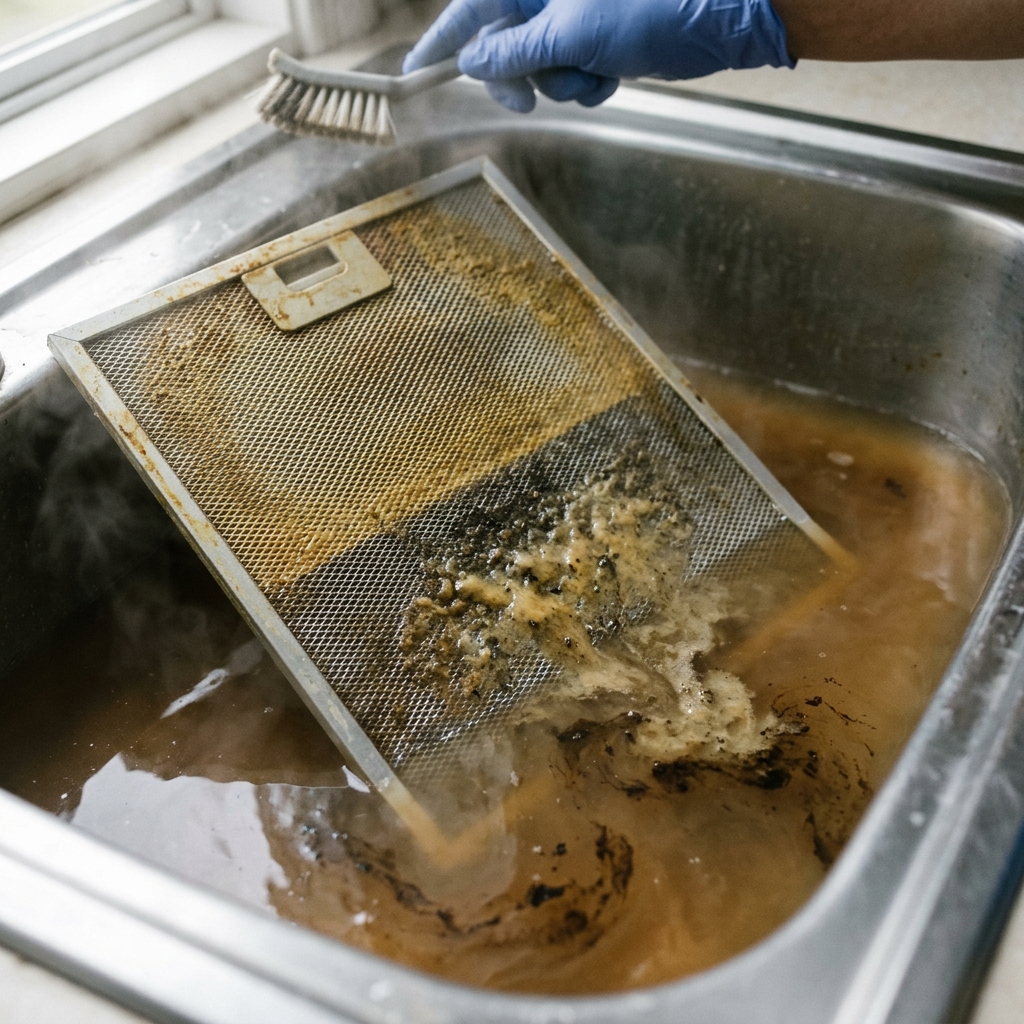
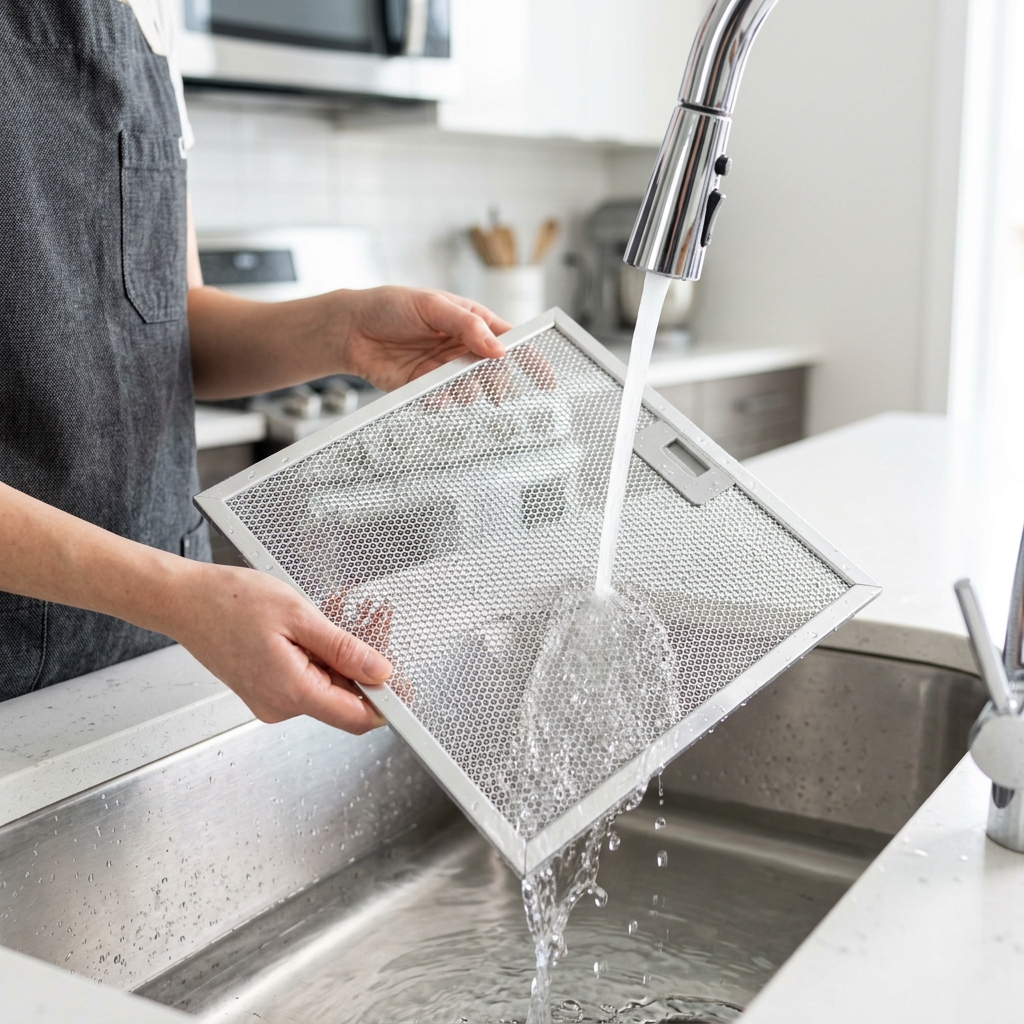
Step 5: The Final Rinse
Remove the filters (careful, they’ll be hot!) and rinse them under the hottest tap water your sink provides. The remaining yellow gunk should simply slide off.
Shake off the excess water and let them air dry completely on a towel before sliding them back into the hood.
Why Maintenance Matters
Cleaning your filters every 1 to 2 months (depending on how much you fry food) has three major benefits:
- Fire Safety: A grease-saturated filter acts as a high-heat wick. If you have a flare-up on the stove, a clean filter stops the fire; a greasy one carries it into your ductwork.
- Motor Longevity: When air can't pass through the mesh, the blower motor faces backpressure, causing it to overheat and fail prematurely.
- Better Air Quality: A clean filter maintains the hood's "Cubic Feet per Minute" (CFM) rating, ensuring smoke and odors actually leave your house instead of coating your kitchen walls.
Apparatus & Materials
| Item | Cost | |
|---|---|---|
| ◆ Baking Soda Acts as the alkaline agent to dissolve grease. | $1–$3 | — |
| ◆ Boiling Water Heat is the third pillar of the degreasing attack. | Free | — |
| ◆ Degreasing Dish Soap Dawn Platinum or similar high-surfactant soap. | $4–$8 | — |
Notes on the sources
The ranking at right reflects our editorial judgment after reading each source in full. For a summary of this entry in brief, see the source ranked first. For the chemistry and underlying principles, see the last.