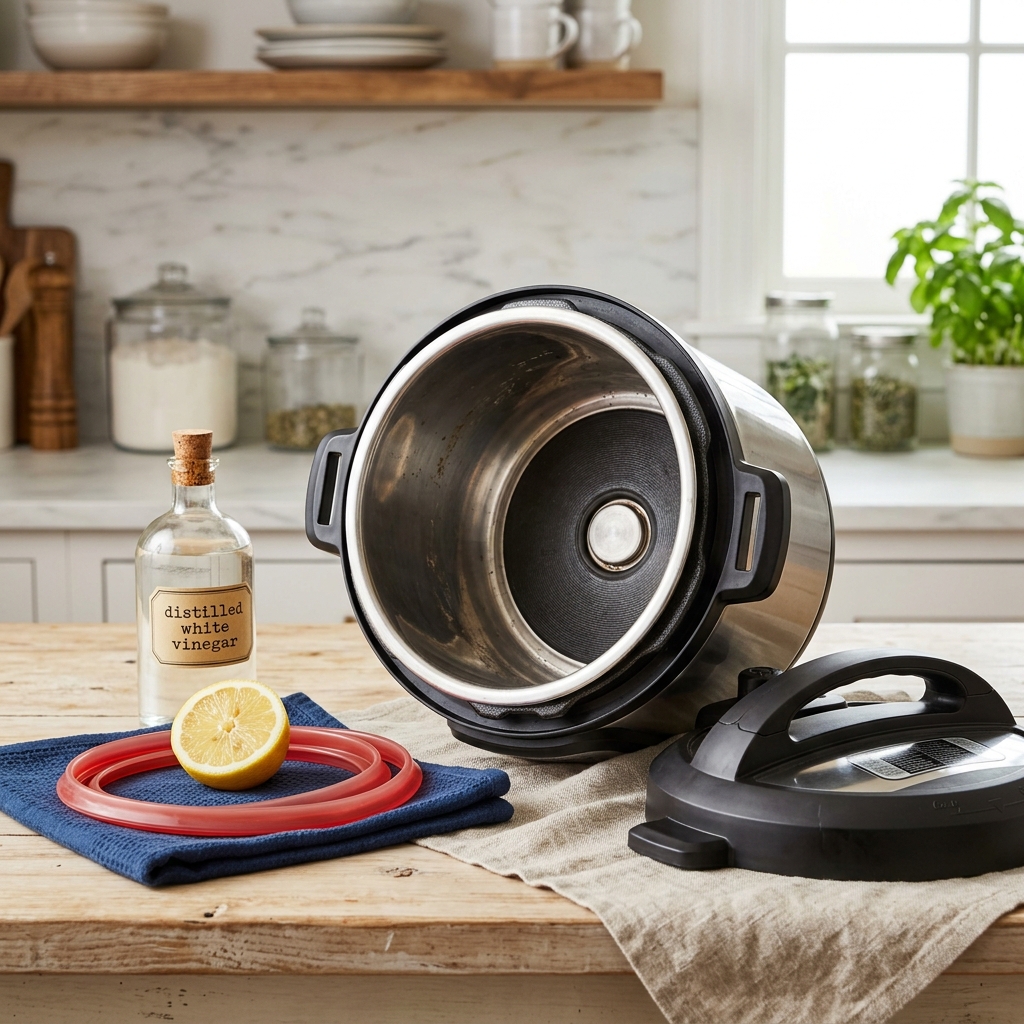
A deep-set "savory" smell in your sealing ring or a "Burn" error on the display means it's time for a deep clean. Here is how to detail every zone of your multi-cooker, from the valves to the heating disk.
The Instant Pot is a marvel of kitchen engineering, but its complexity is its weakness. Over time, volatile organic compounds (the molecules that make onions smell like onions) become trapped in the porous silicone sealing ring. Meanwhile, mineral deposits on the inner pot can interfere with heat transfer, and tiny food particles can clog the safety valves.
To keep your multi-cooker performing at peak efficiency—and to ensure your yogurt doesn't taste like last night's pot roast—you need a "3-Zone" deep clean.
Zone 1: The Inner Pot & Base
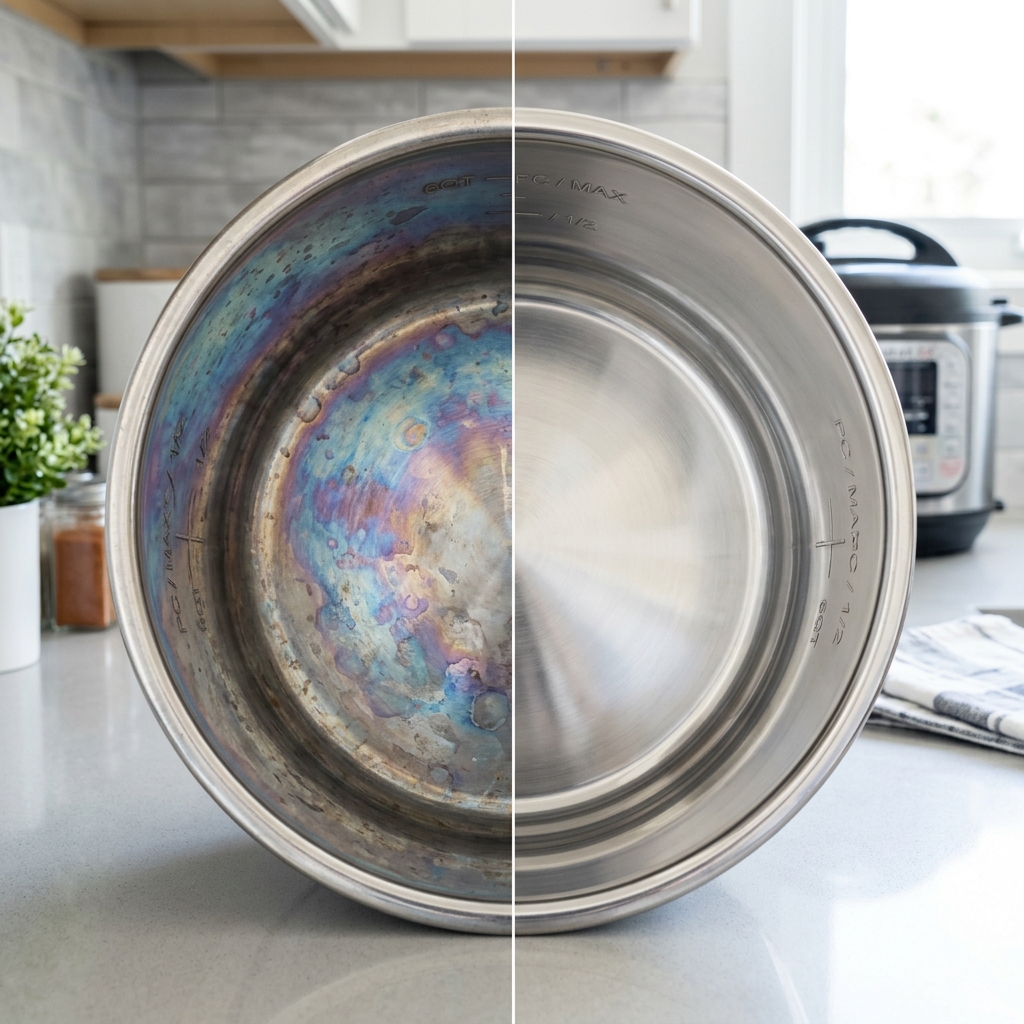
The stainless steel inner pot is the workhorse of the system. While it's dishwasher-safe, you've likely noticed a "rainbow" or blueish tint developing on the bottom after a few uses.
The Rainbow Fix
This discoloration is a thin layer of chromic oxide caused by minerals in your water. To restore the factory shine, use Bar Keepers Friend. The oxalic acid in BKF dissolves the oxidation chemically without heavy scrubbing. Apply a small amount of the powder or liquid, rub gently with a damp sponge, and rinse.
Preventing the "Burn" Error
The "Burn" error is often triggered by a dirty heating disk (the metal plate inside the base). If rice or sauce drips onto this plate, it carbonizes, creating a "hot spot" that triggers the unit's thermal sensors.
- The Fix: Ensure the unit is unplugged and cool. Use a slightly damp Magic Eraser to buff away any black or brown residue from the heating disk. Never use steel wool or metal scrapers, which can scratch the disk and impair heat conductivity.
Zone 2: The Lid & Valves
The lid is where the safety magic happens. While the lid is top-rack dishwasher safe, a deep clean requires manual attention to the valves.
The Valve Safety Checklist
- Steam Release Handle: Pull the handle straight up to remove it. Check for food particles or sticky residue inside the handle and on the steam pipe.
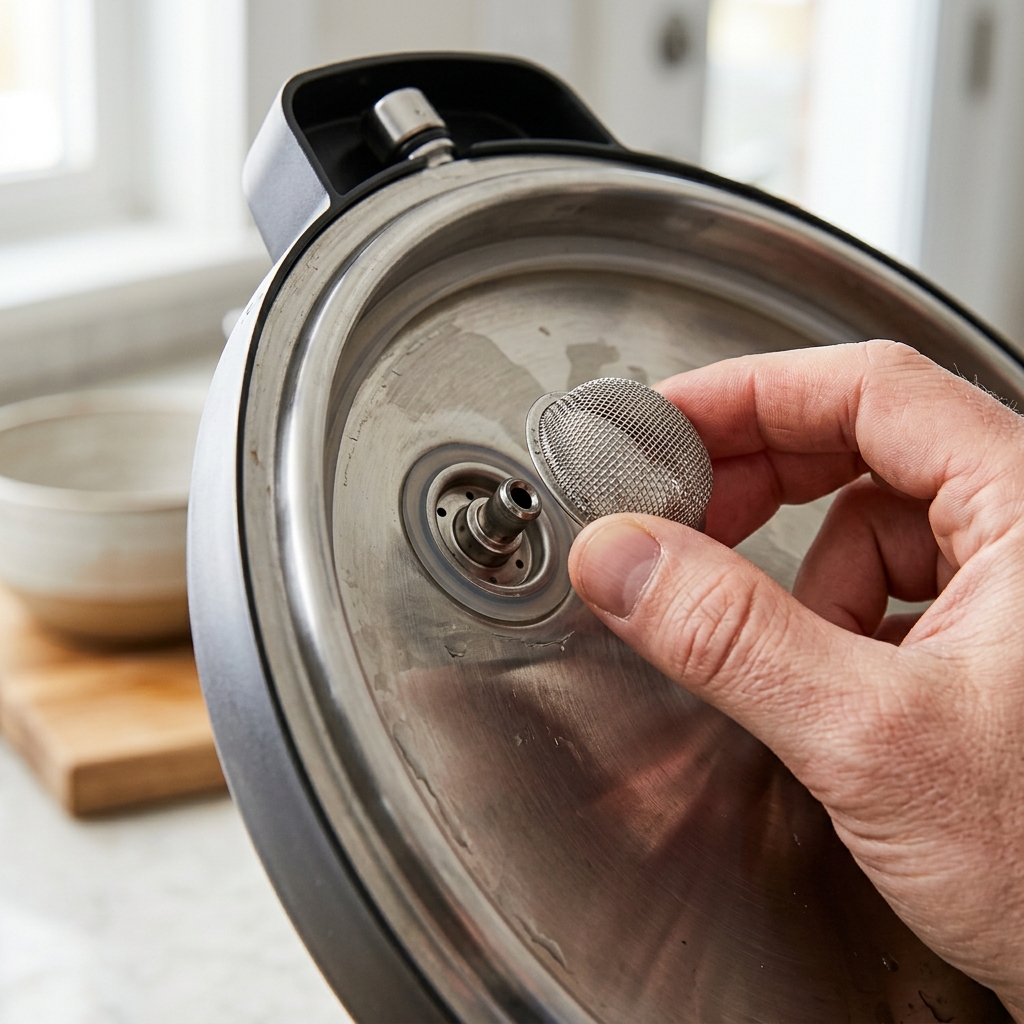
- Anti-Block Shield: This is the small metal cage on the underside of the lid. Use your thumb to pop it off. Wash it separately and ensure the holes are clear.
- Float Valve: On the underside of the lid, remove the small silicone "hat" from the float valve pin. The pin will drop out through the top. Clean the pin and the hole with a small brush. If this pin is stuck, the pot cannot safely pressurize or depressurize.
Zone 3: The Sealing Ring & Odor Management
Silicone is a polymer with high "free volume," meaning it has microscopic gaps that trap food odors. Standard dishwashing often fails to reach into these pores.
The Vinegar Steam Run
If your ring smells like garlic, try the steam method to open the pores:
- Add 1 cup of water, 1 cup of white vinegar, and a few lemon peels to the inner pot.
- Lock the lid and run the "Steam" program for 2 to 5 minutes.
- Let the pressure release naturally. The steam opens the silicone's pores, allowing the acetic acid in the vinegar to neutralize the trapped molecules.
The Sunlight Method
For persistent odors, take the ring outside. UV rays break the chemical bonds of the aromatic compounds trapped in the silicone. 4 to 8 hours of direct, bright sunlight is often more effective than any chemical cleaner.
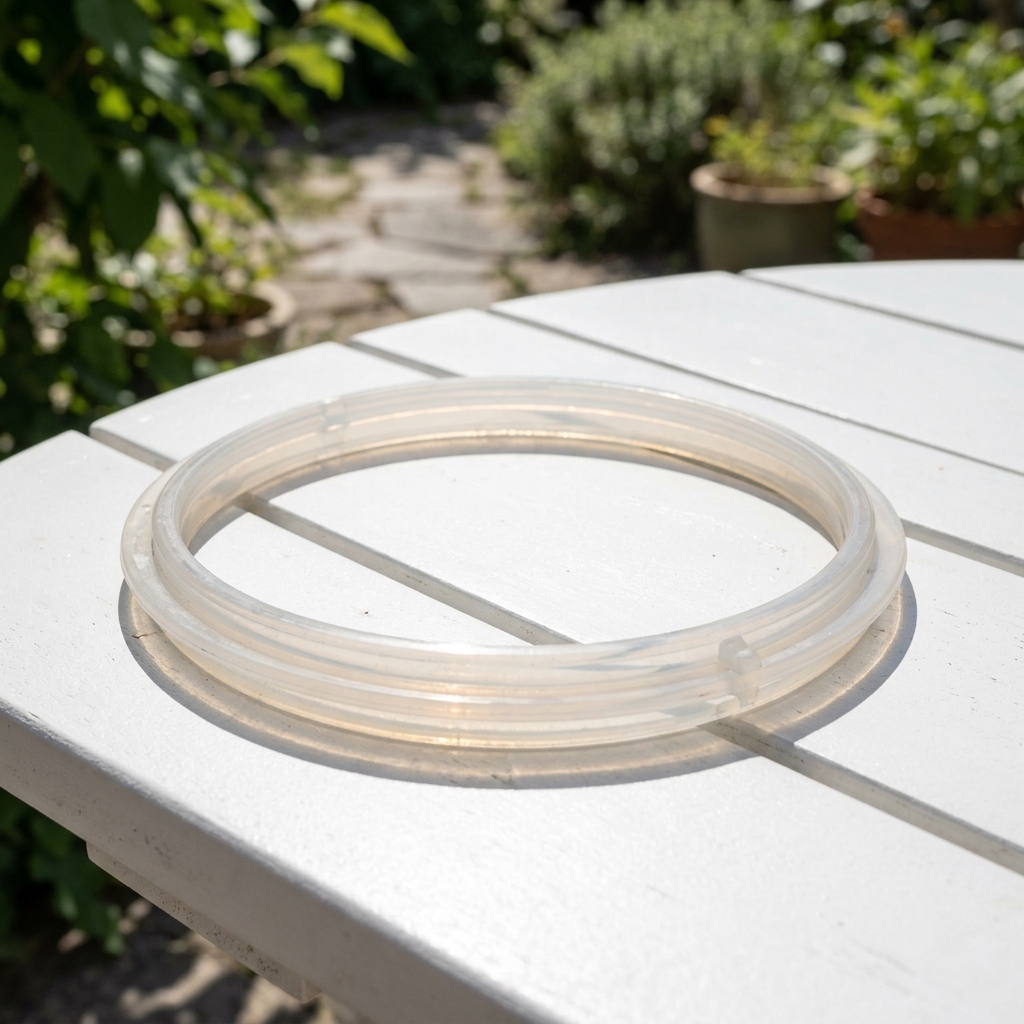
Pro Tip: The Two-Ring Strategy
The most effective way to manage odors is to own two rings. Use a clear or red ring for "Savory" (meats, stews, onions) and a blue or green ring for "Sweet" (yogurt, cheesecakes, oatmeal).
The Detailing Hack: The Condensation Rim
The narrow channel around the top of the cooker base is a magnet for spills but is too narrow for fingers.
- The Hack: Wrap a thin microfiber cloth around a wooden chopstick or a butter knife. Slide it through the rim to whisk away dried sauce and condensation. For the corners, a foam swab or an old toothbrush works best.
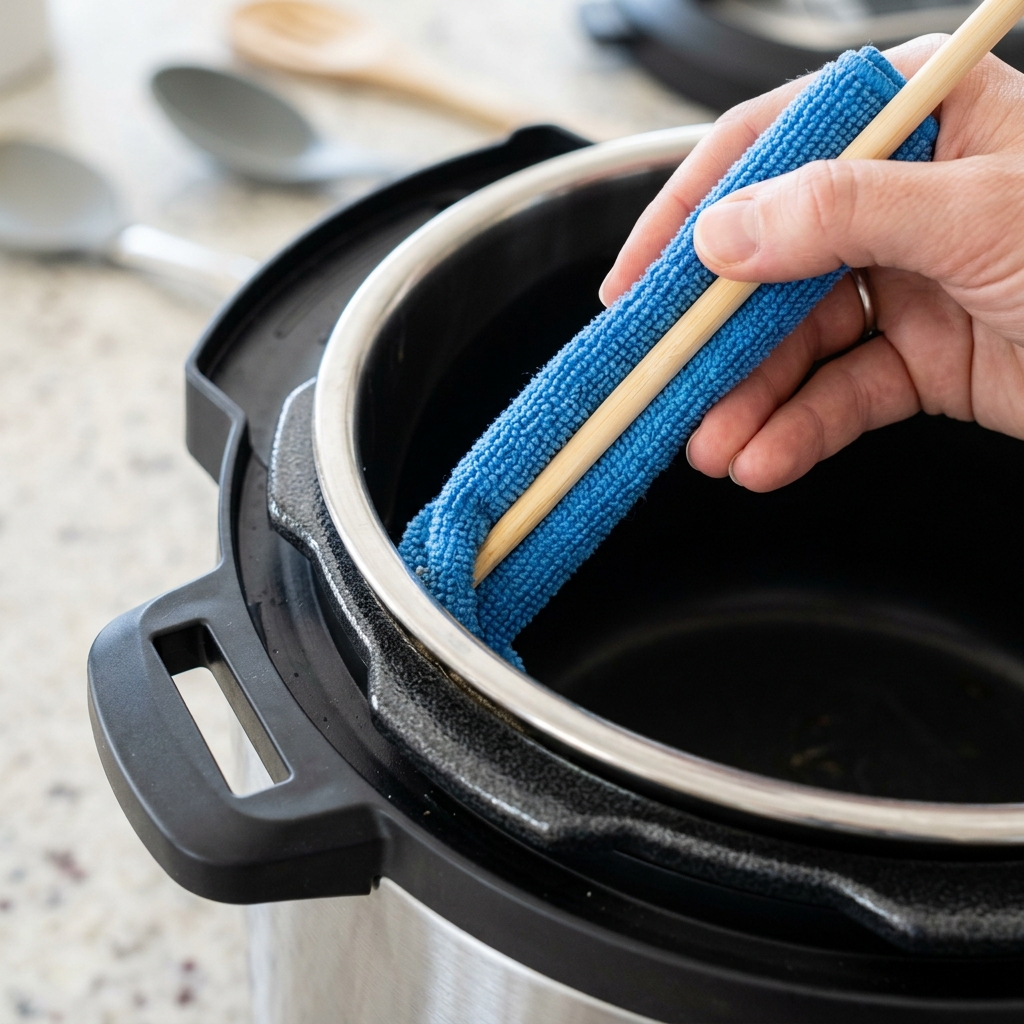
Maintenance Checklist
- Daily: Wipe the condensation rim and wash the inner pot.
- Weekly: Inspect the valves and the anti-block shield for debris.
- Monthly: Perform a Vinegar Steam Run and scrub the inner pot with BKF.
- Yearly: Replace the sealing ring if it shows signs of pitting, cracking, or loss of elasticity.
Apparatus & Materials
| Item | Cost | |
|---|---|---|
| ◆ Bar Keepers Friend Powder or liquid cleanser to remove rainbow stains and burnt food from stainless steel. | $3–$6 | — |
| ◆ Magic Eraser Melamine sponge for buffing residue off the heating disk. | $4–$8 | — |
| ◆ Microfiber Cloths For detailing the rim and drying sensitive components. | $5–$10 | — |
| ◆ White Vinegar Used for the steam run and descaling mineral buildup. | $3–$5 | — |
| ◆ Wooden Chopstick Used with a cloth to clean the narrow condensation rim. | Free | — |
| Spare Sealing Rings (2-pack) Dedicated rings for sweet and savory dishes to prevent cross-contamination. | $12–$18 | — |
Notes on the sources
The ranking at right reflects our editorial judgment after reading each source in full. For a summary of this entry in brief, see the source ranked first. For the chemistry and underlying principles, see the last.