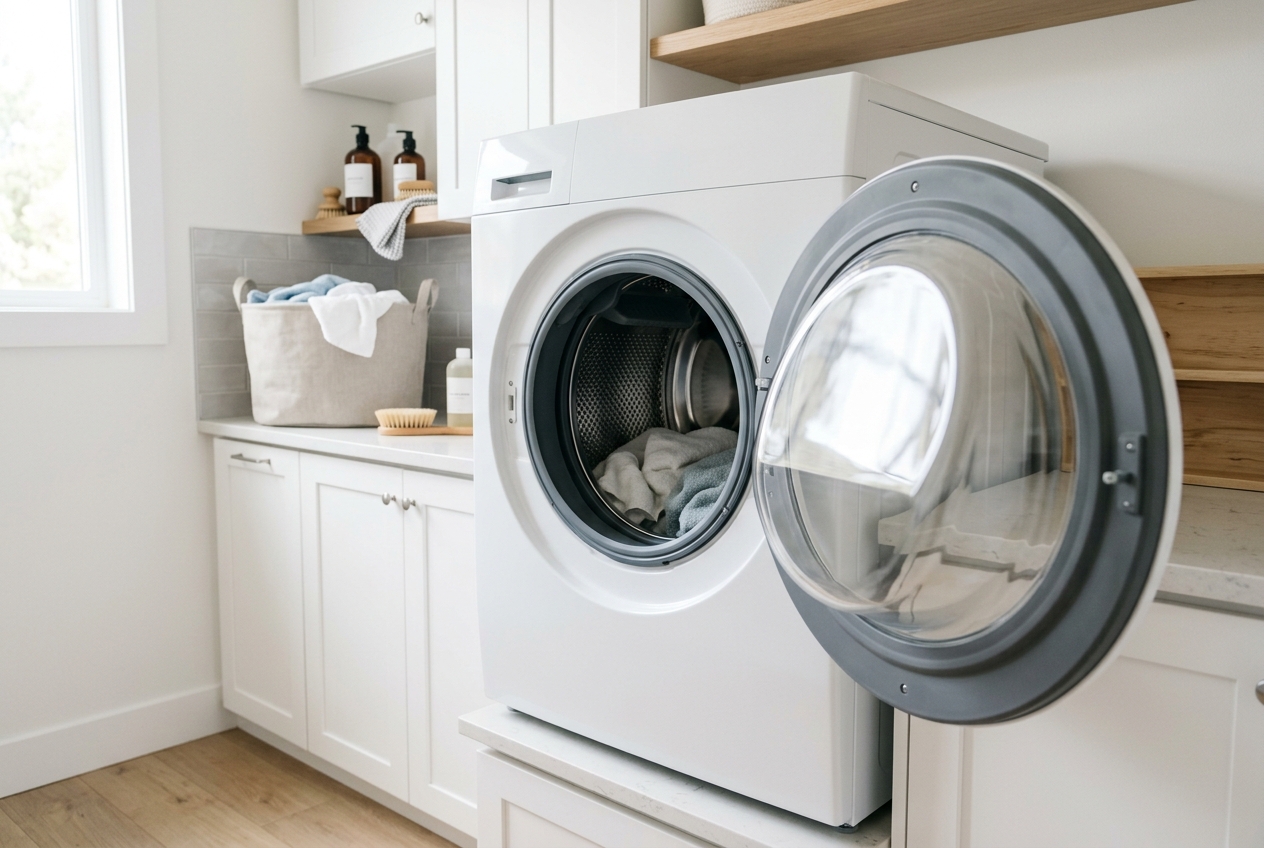
That 'wet towel' smell isn't your laundry—it's likely a thriving microbial biofilm in your washer's rubber gasket. Here is how to deep clean it and keep it fresh.
Stop the Smell: The Ultimate Front-Load Gasket Deep Clean
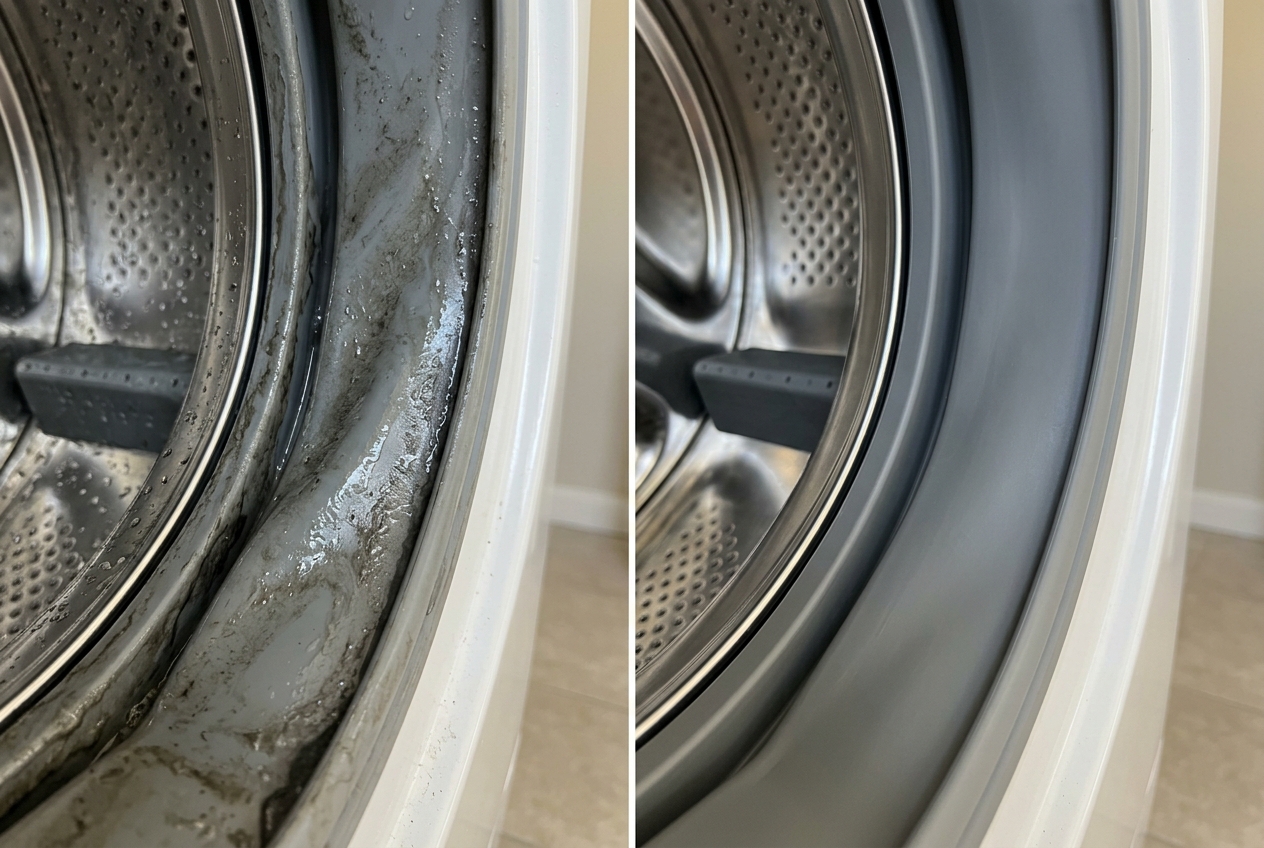
If your laundry room smells like a locker room even when the washer is empty, you don't need a new machine—you need to clean your gasket. Front-load washing machines rely on a thick rubber door seal (the gasket) that is notorious for trapping water, detergent residue, and skin cells. This mixture creates a perfect habitat for biofilm: a slimy matrix of bacteria and mold that generates that classic 'rotten' or 'musty' odor.
The Answer-First Solution
To stop the smell for good, you must manually scrub the hidden folds where biofilm hides, clear the small drain holes at the bottom of the seal, and adopt the "Open Door Policy" after every wash. While tub-clean tablets help, they cannot reach the deep crevices of the rubber where the root of the problem usually sits.
Is Your Gasket the Culprit? (Diagnostic Table)
| Symptom | Diagnosis | Action |
|---|---|---|
| Musty 'wet towel' odor | Active bacterial biofilm in folds | Phase 3: Deep fold scrub |
| Dark black or green spots | Established mold colonies | Phase 3: Diluted bleach soak |
| Water pooling in the seal | Clogged drain holes | Phase 4: Clear bottom holes |
| Greasy gray streaks on clothes | Rubber degradation or heavy residue | Phase 6: Tub clean + gasket replacement check |
Safety First: The Golden Rule of Laundry Chemicals
⚠️ WARNING: NEVER mix bleach and vinegar. When sodium hypochlorite (bleach) meets acetic acid (vinegar), it creates toxic chlorine gas. This guide uses both, but one at a time. If you use bleach for mold, you must rinse the gasket thoroughly with plain water and let it air out before using any vinegar-based products.
The Step-by-Step Deep Clean
Phase 1: The "Two-Towel" Surface Clean
Use a soft cloth dampened with a 1:1 mix of white vinegar and water. Wipe the outer lip and the glass door where it meets the seal. Soap scum here prevents a perfect dry seal, keeping the area humid.
Phase 2: Clearing the Drain Holes
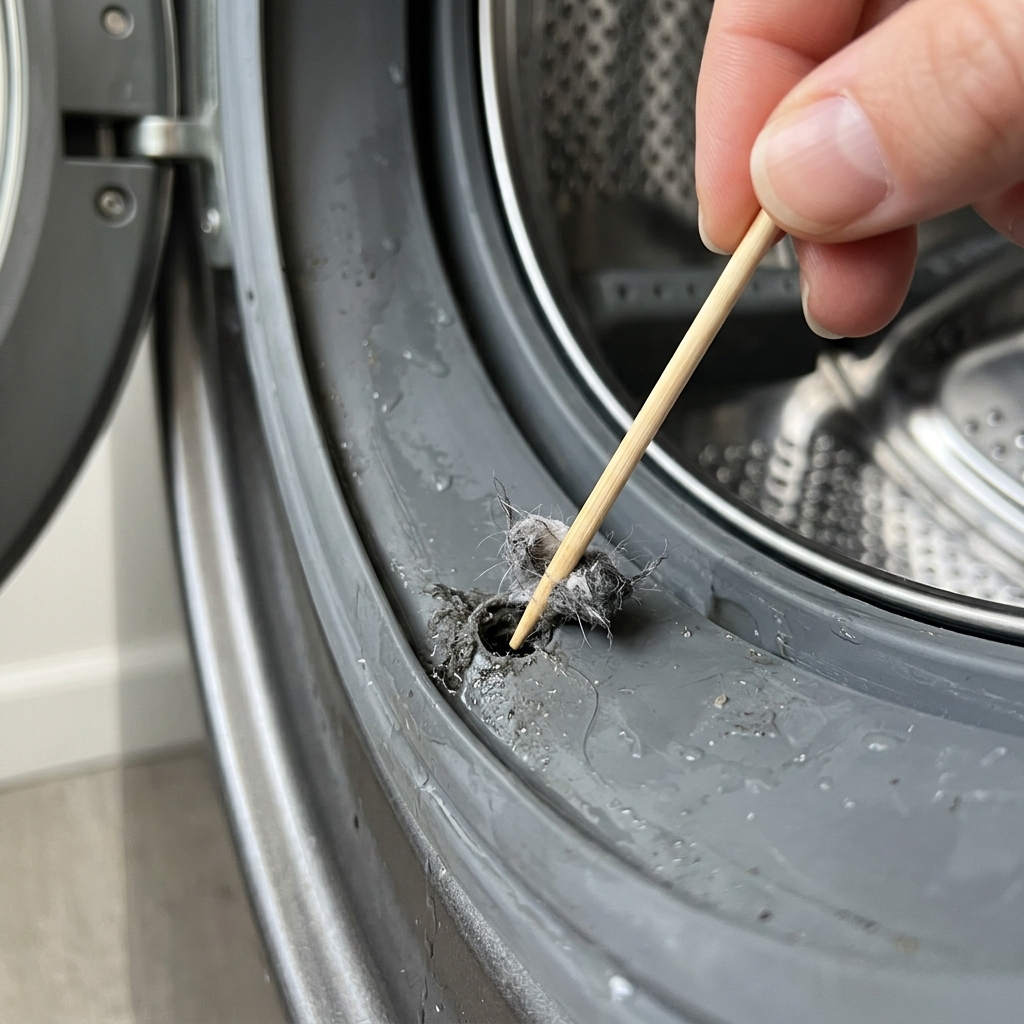
Look at the bottom (6 o'clock position) of the gasket. You'll see 1–3 small holes. These are meant to drain water back into the tub. If they are clogged with hair or lint, water pools and mold grows. Use a toothpick or plastic zip-tie to gently clear them, then flush with a squeeze bottle of hot water.
Phase 3: The Deep Fold Scrub (The "V-Channel")
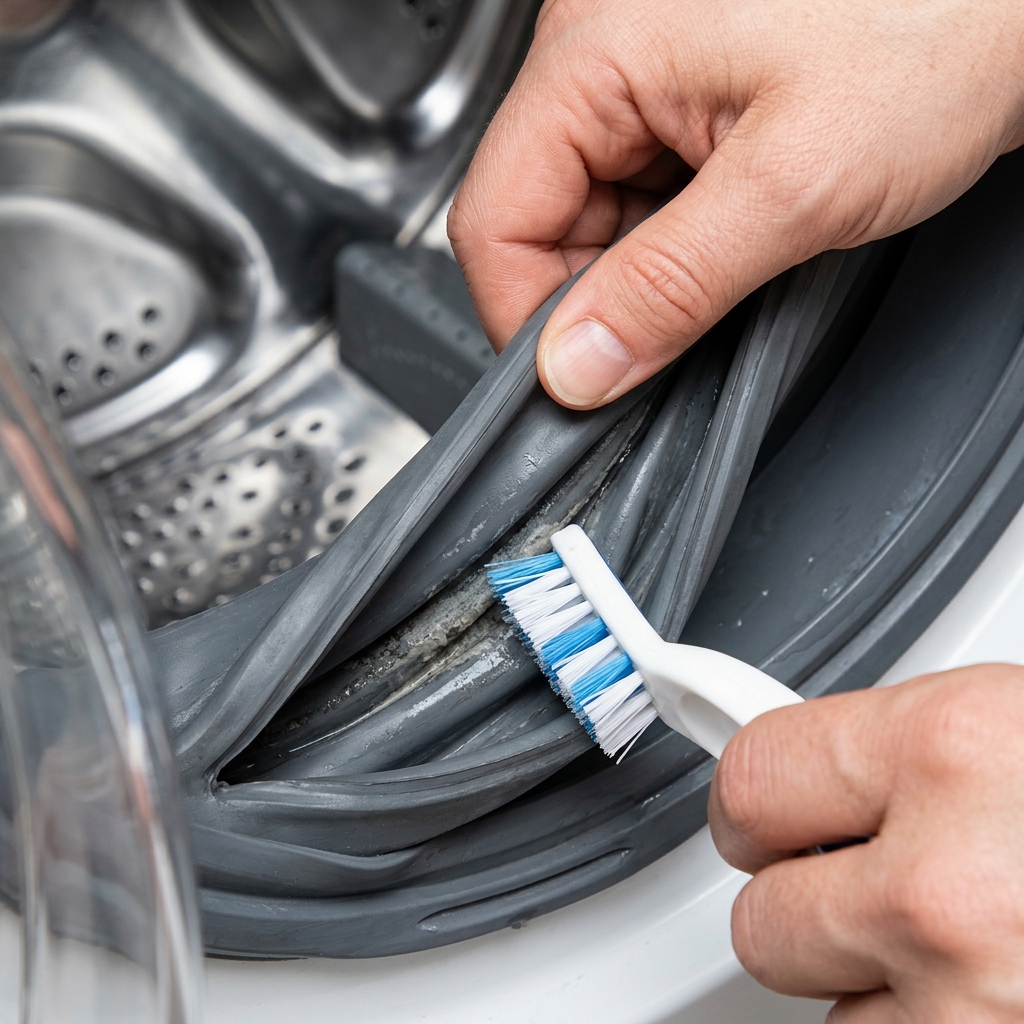
This is where most people miss. Support the gasket with one hand and gently pull it toward you to expose the hidden inner fold.
- Scrub: Use a soft toothbrush and vinegar-water to remove sludge.
- Mold Kill: If you see black spots, apply a 10% bleach solution. Let it dwell for 10 minutes.
- Rinse: Wipe away the bleach with a clean, wet cloth.
Phase 4: Bone-Dry Finish
Microbes depend on moisture. Use your second, dry towel to reach deep into the folds and get the gasket completely dry.
The "Dry-it-or-Dye-it" Rule: If you don't dry the gasket after cleaning, you're just watering the garden. Mold will return, and the dark pigment may permanently dye (stain) the rubber.
How to Keep the Smell from Returning
- Leave the Door Open: Always leave the door ajar (at least 2–4 inches) when the machine is off. This is the single most effective way to prevent biofilm.

- Dry the Gasket Weekly: Run a dry cloth through the folds once a week.
- Monthly Tub Clean: Run a dedicated 'Clean Washer' cycle with an Affresh tablet or bleach to reach the parts of the drum you can't see.
Apparatus & Materials
| Item | Cost | |
|---|---|---|
| ◆ Affresh Washer Cleaner | $12 | — |
| ◆ Household liquid bleach | $6 | — |
| ◆ Microfiber cloths | $10 | — |
| ◆ Soft-bristle toothbrush | $2 | — |
| ◆ White distilled vinegar | $4 | — |
Notes on the sources
The ranking at right reflects our editorial judgment after reading each source in full. For a summary of this entry in brief, see the source ranked first. For the chemistry and underlying principles, see the last.