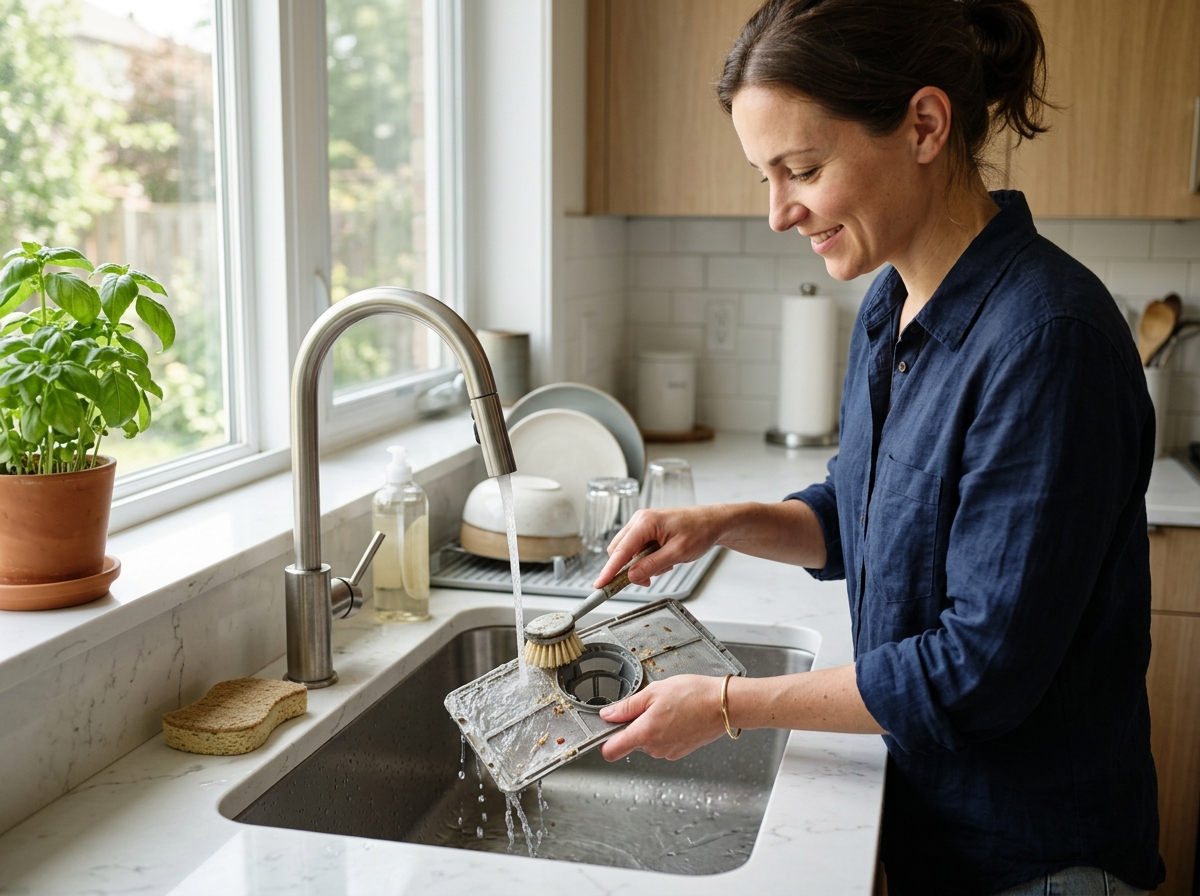
Pull the filter, brush off the trapped food, rinse it clean, and reseat it without crushing the rubber gasket that keeps the seal tight.
A clean filter is half a healthy dishwasher
Most dishwasher odors and re-deposited grit come from a single failure: a filter that hasn't been touched in months. Manufacturers quietly recommend cleaning it every 4–8 weeks, and most owner's manuals bury that line on page 27.
This guide walks you through the cleaning, but it also shows you the one move that wrecks the gasket if you do it backwards. Skip that and you'll be ordering a $40 part for nothing.
Step 1: Pull the lower rack and find the filter
Open the dishwasher fully, slide the lower rack out until it stops, and lift it up off the rails. Set it on a towel — the dish rollers leave gray marks on tile.
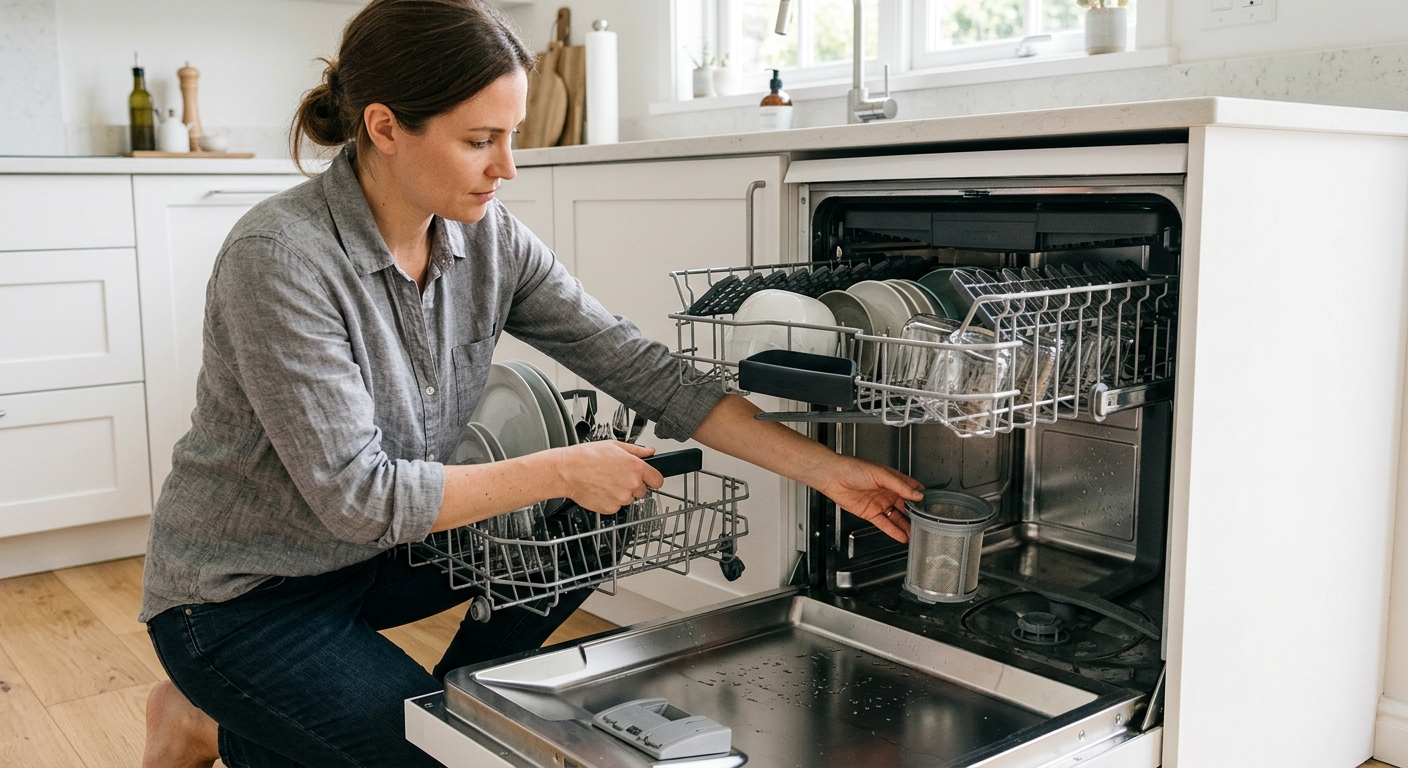
You're looking for a circular black-and-mesh assembly in the center or rear of the tub floor. On most modern Bosch, KitchenAid, GE, and Whirlpool units, this is a two-part filter: a fine-mesh inner cup and a coarse outer ring.
Step 2: Twist counter-clockwise and lift
Most filter assemblies unlock with a quarter-turn counter-clockwise. Grip the center handle (not the mesh — the mesh tears) and turn until you feel it release. Lift straight up.
The gasket-ruining mistake: turning clockwise and forcing it. The locking lugs sit against the gasket, and forcing the wrong way crushes the rubber. If it doesn't move with light pressure, double-check the manual rather than muscling it.
Step 3: Rinse, scrub, inspect
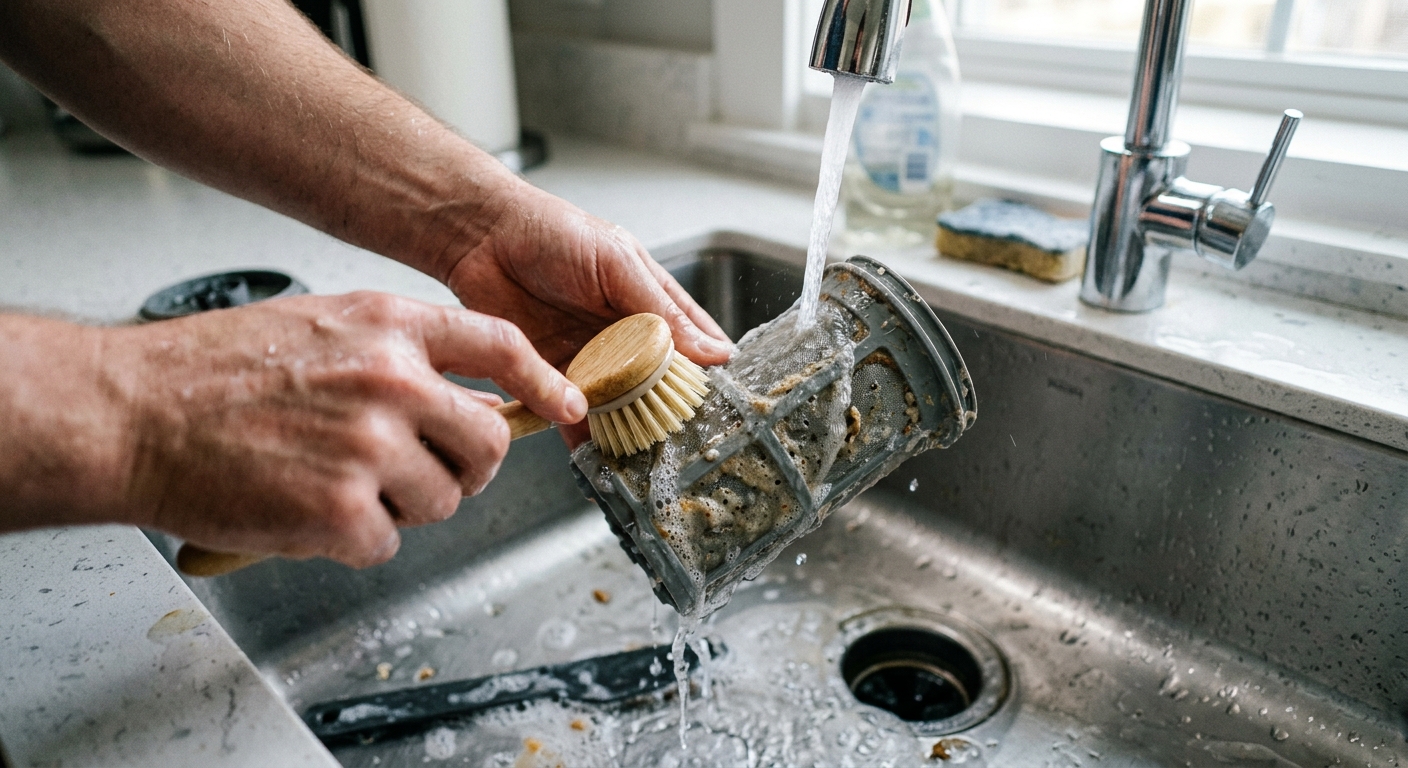
Take the filter to the sink. Run warm water through it backwards (from clean side to dirty side) to dislodge trapped food. Use a soft-bristle brush with a drop of dish soap to scrub away the greasy film.
Hold the mesh up to a light. Any blocked spots will show as dark. Re-scrub those until light passes through evenly.
Step 4: Reseat without twisting the gasket
Drop the filter back into the well, align the arrow on top with the arrow stamped into the tub (every modern unit has both), and turn clockwise gently until it stops. You should hear a soft click; if you don't, it isn't seated.
Run a short hot cycle empty to confirm the seal is good. No water should leak from beneath the filter housing.
Apparatus & Materials
| Item | Cost | |
|---|---|---|
| ◆ Liquid dish soap Breaks down grease film on the fine mesh. | $3–$7 | Buy now |
| ◆ Microfiber cloth Wipes down the sump area before reseating the filter. | $6–$12 | Buy now |
| ◆ Soft-bristle nylon brush Loosens grease and food without scratching the filter mesh. | $4–$9 | Buy now |
| Nitrile gloves Optional but useful if you've got an old filter packed with grime. | $8–$15 | Buy now |
Notes on the sources
The ranking at right reflects our editorial judgment after reading each source in full. For a summary of this entry in brief, see the source ranked first. For the chemistry and underlying principles, see the last.