Remove, rinse, and reinstall a dishwasher filter the right way so trapped grease, food, and scale stop causing odors and poor wash results.
Clean the filter before the dishwasher starts telling on itself
A dirty dishwasher filter is one of the easiest causes of cloudy dishes, stubborn smells, and a machine that seems to work harder than it should. Food scraps, grease, and mineral scale collect at the bottom of the tub, especially if the filter hasn't been rinsed in a while.
The good news is that this is usually a simple maintenance job. Most dishwasher filters lift or twist out, rinse clean in the sink, and lock back into place with a short turn. The main risks are using too much force, scratching the mesh, or reinstalling the filter loosely so it can rattle or leak food back into the wash water.
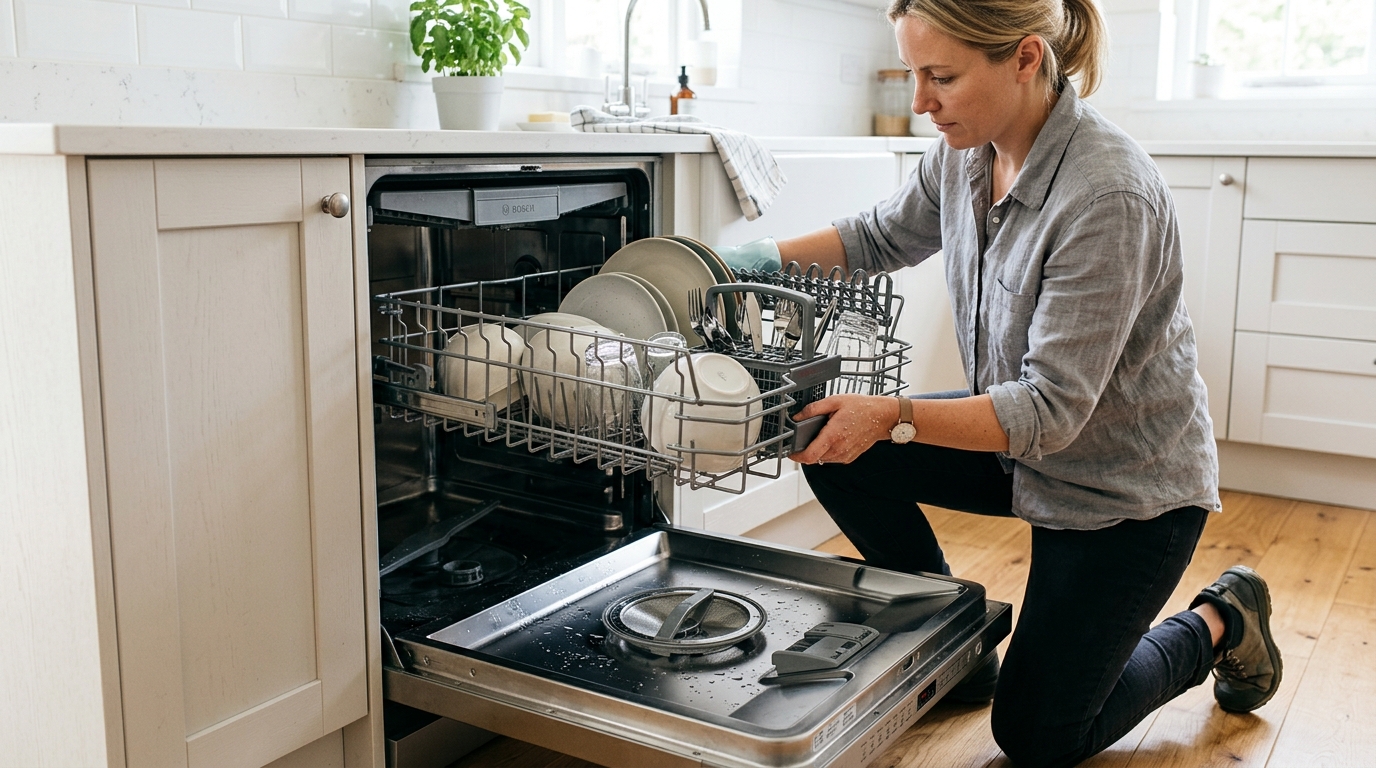
Before you start, remove the lower rack so you can reach the bottom of the dishwasher. If your spray arm blocks access, move it aside or remove it according to the manual. Keep a towel nearby in case there is standing water in the filter well.
Step 1: Remove the lower rack and expose the filter
Slide the lower rack out of the dishwasher and set it aside so you have a clear view of the tub floor. The filter is usually in the center or back-bottom area, sometimes under the lower spray arm.
Look for a round or cylindrical assembly with arrows, tabs, or a quarter-turn lock. If the layout is unclear, pause and check the owner's manual rather than forcing parts that do not want to move. Different brands use slightly different locking motions, but the basic goal is the same: release the filter gently without bending the housing.
This is the moment to scan for obvious debris around the filter well. Pick out large food particles or broken glass carefully with gloves or a paper towel if needed. Clearing the area first keeps grit from scratching the mesh once the filter is out.
Step 2: Unlock and remove the filter assembly
Turn the filter in the direction your model requires — commonly counterclockwise to unlock — and lift it out slowly. Some machines use a two-part assembly, with an upper fine filter and a lower coarse filter, so the pieces may separate once removed.
If the filter only moves a little and then stops, do not pry with a knife or screwdriver. A firm but controlled twist is usually enough, and a stuck filter often means you need to align the tabs more precisely rather than apply more force.
Set the pieces in the sink or on a towel right away. If there is oily residue, warm water and dish soap will loosen it faster than cold water, but avoid soaking hardware in harsh cleaners that could leave residue behind.
Step 3: Rinse away loose debris before scrubbing
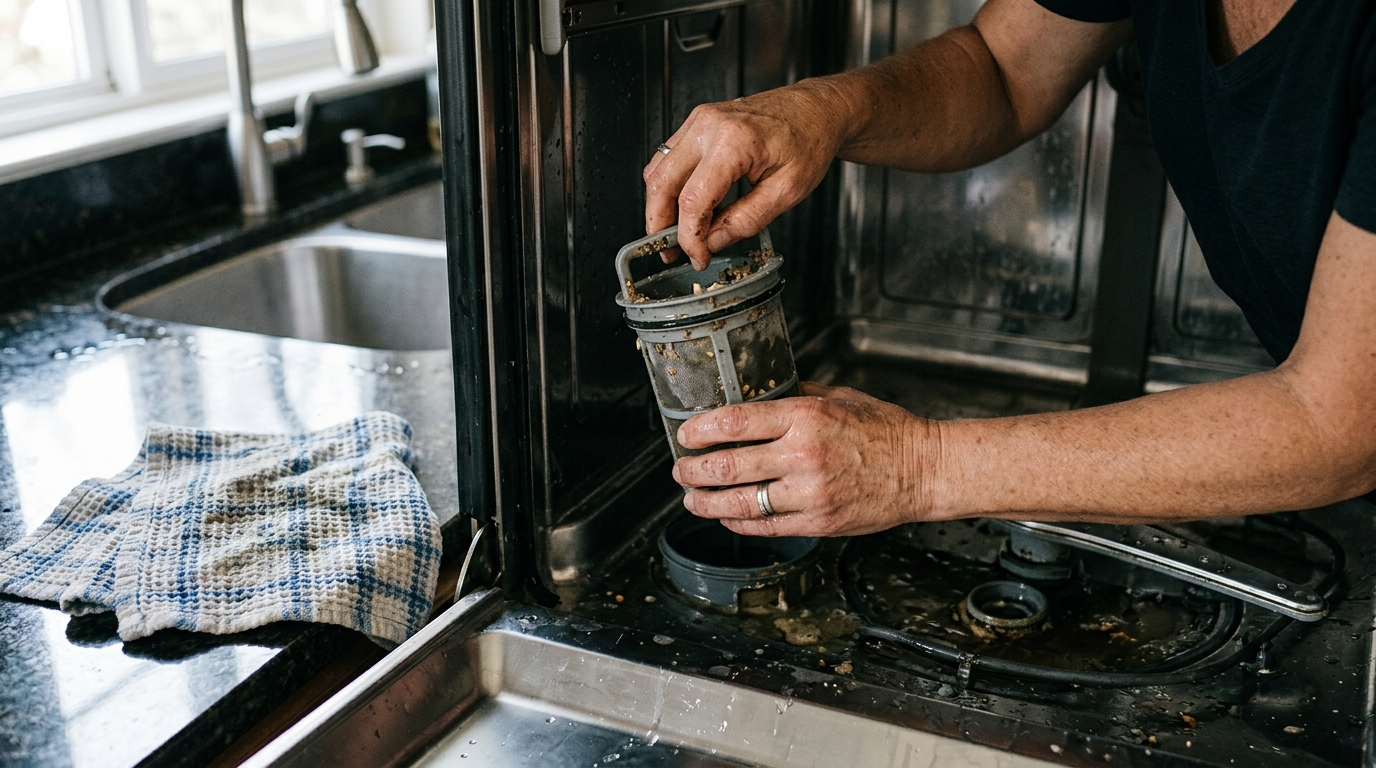
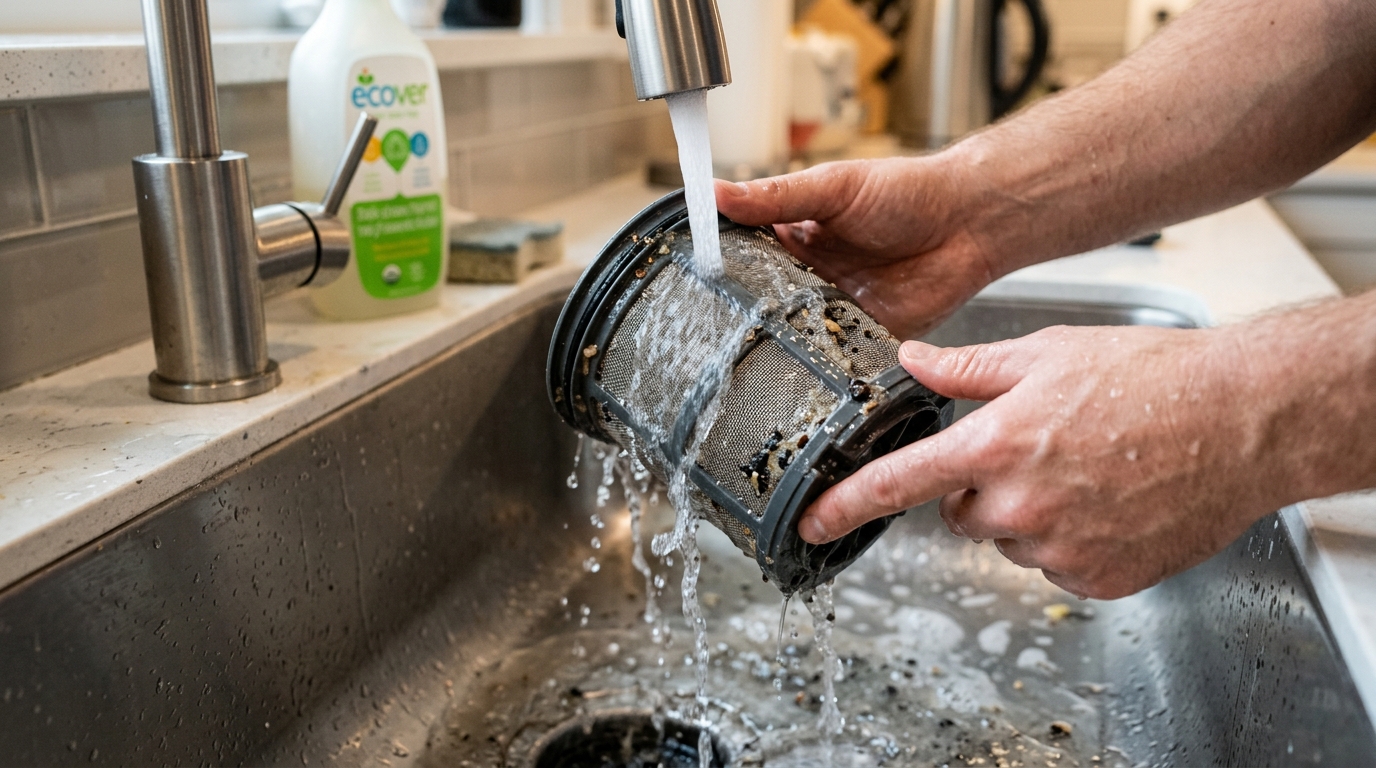
Run warm water through the filter first to flush out loose crumbs, grease, and lint. Hold it at different angles so water can pass through the mesh instead of just running over the outside.
This first rinse matters because it clears the easy material before any brushing. If you scrub immediately, you can grind softened gunk into the mesh openings, which makes cleanup slower and can leave residue behind.
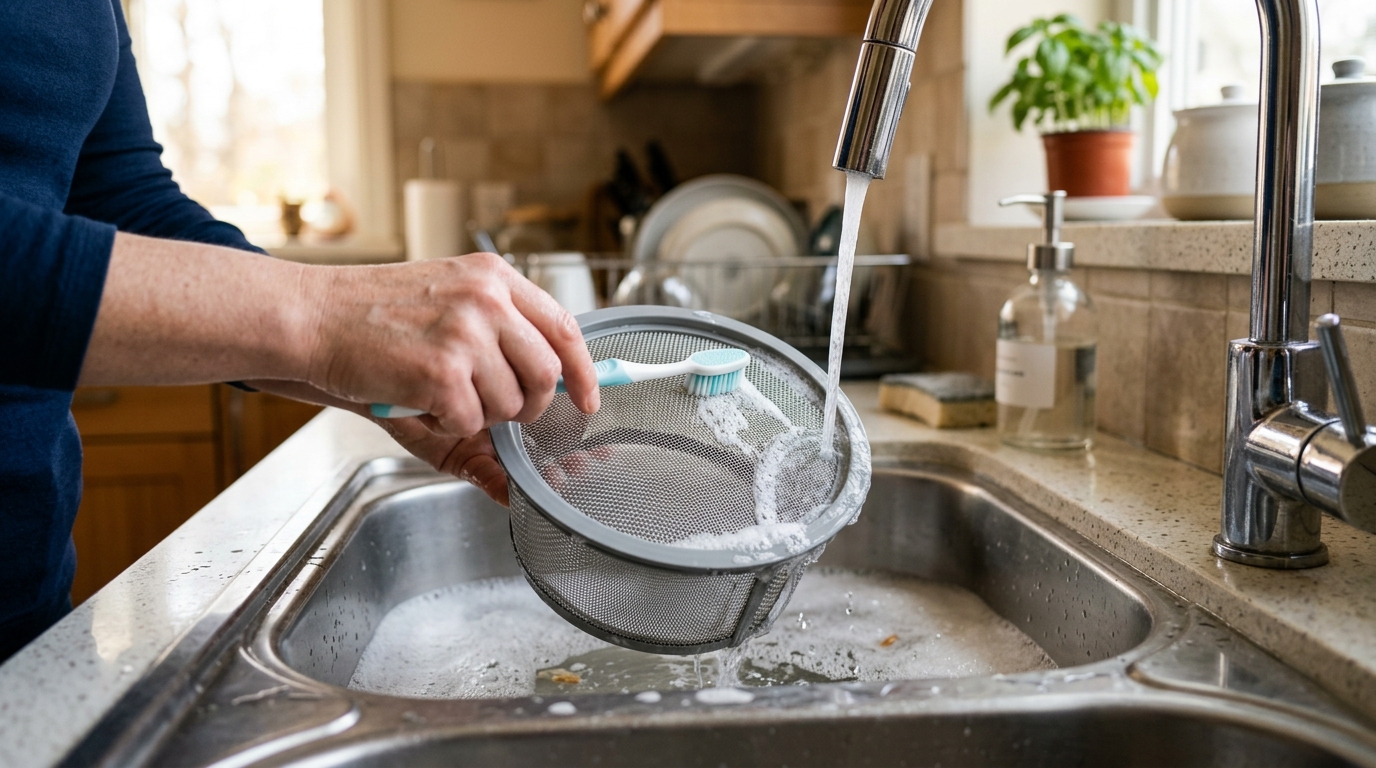
For stubborn buildup, use a soft-bristle brush, an old toothbrush, or a non-scratch sponge with a little mild dish soap. Focus on the seams, the underside, and any small grooves where debris tends to cling.
Step 4: Remove stuck grease and mineral scale gently
If the mesh still feels slimy or looks spotted after rinsing, keep brushing with light pressure rather than switching to an abrasive pad. The fine openings can be damaged by wire brushes or scouring pads, even when the residue looks stubborn.
For hard-water scale, a brief soak in warm soapy water can help lift the film. If your area has very hard water, you may need a little extra patience, but the safest approach is still soft tools and repeated rinsing instead of aggressive scraping.
Check the filter housing and the cavity where the filter sits while you work. Food often collects there too, and a clean filter can still perform poorly if the surrounding well is packed with sludge.
Step 5: Reinstall the filter and confirm it locks
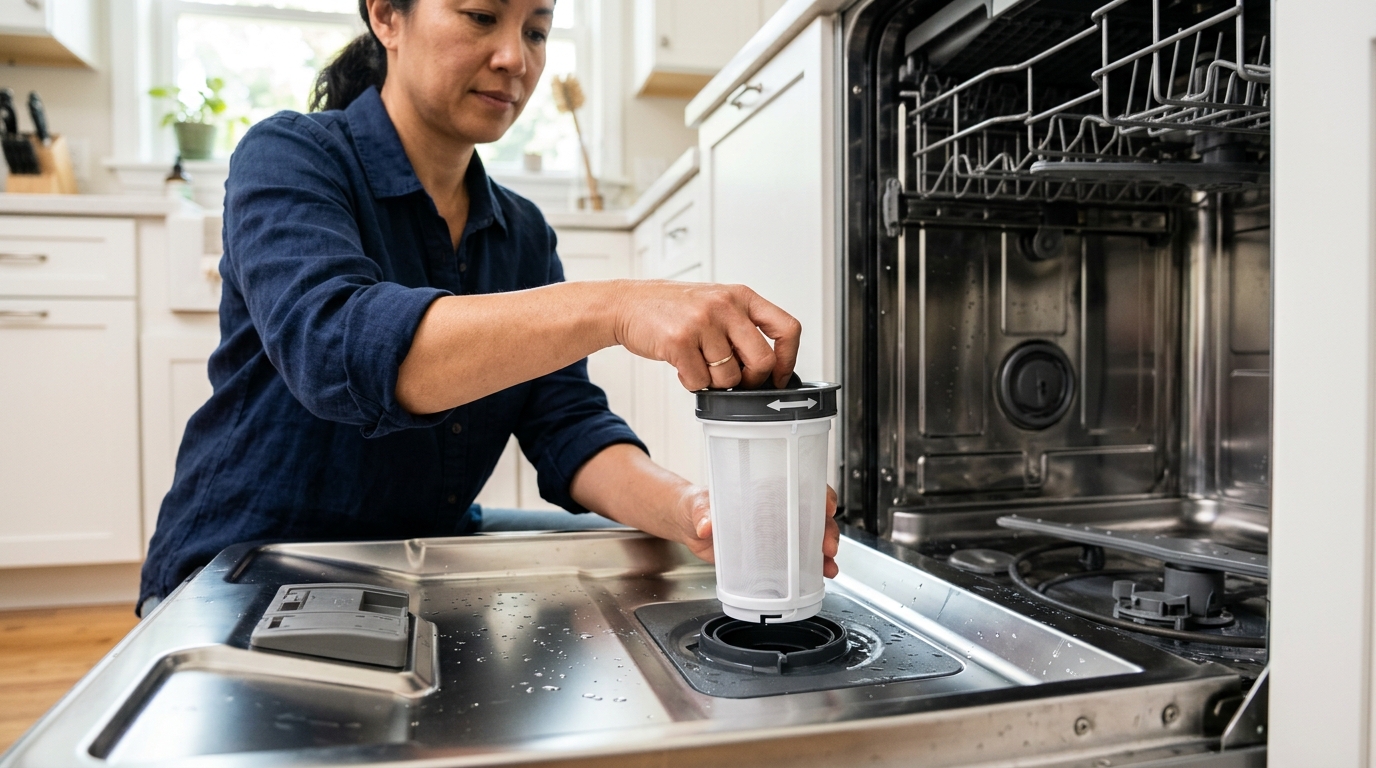
Put the parts back together in the same order they came apart, then lower the filter into its seat. Align any tabs or arrows, press it down fully, and turn it until it locks. On many models, a proper lock feels like the filter drops into place and stops turning freely.
Do not run the dishwasher if the filter still spins or sits crooked. A loose filter can let food bypass the mesh, create noisy operation, and in some designs interfere with other internal parts.
Once the filter is locked, slide the lower rack back in and close the door. If you want to confirm success later, run a short cycle and listen for unusual rattling or water movement that could suggest the filter is not seated correctly.
Apparatus & Materials
| Item | Cost | |
|---|---|---|
| ◆ Mild dish soap Helps break down greasy film and grime on the filter parts. | $2–$6 | Buy now |
| ◆ Soft-bristle nylon brush Loosens grease and food residue without scratching the filter mesh. | $4–$9 | Buy now |
| Clean towel Catches drips and gives you a clean place to set wet filter parts. | $5 | Buy now |
| Dishwashing gloves Protects your hands from sharp debris, grime, and hot rinse water. | $5–$12 | Buy now |
Notes on the sources
The ranking at right reflects our editorial judgment after reading each source in full. For a summary of this entry in brief, see the source ranked first. For the chemistry and underlying principles, see the last.