A clogged dishwasher filter can leave grit, odors, and cloudy dishes behind; here’s how to remove, clean, and reinstall it safely.
How to Clean a Dishwasher Filter Without Damaging It
If your dishwasher is leaving food specks on plates, smelling musty, or draining more slowly than usual, the filter at the bottom of the tub is usually the first place to look. The good news is that this is a straightforward maintenance job on most machines: remove the lower rack, unlock the filter assembly, rinse away trapped debris, and seat everything back in place.
The important part is to clean it gently. The mesh and locking pieces are designed to catch food scraps, not survive aggressive scrubbing. Warm water, mild soap, and a soft brush are usually enough to restore normal flow and cleaning performance.
Step 1: Expose and remove the filter assembly
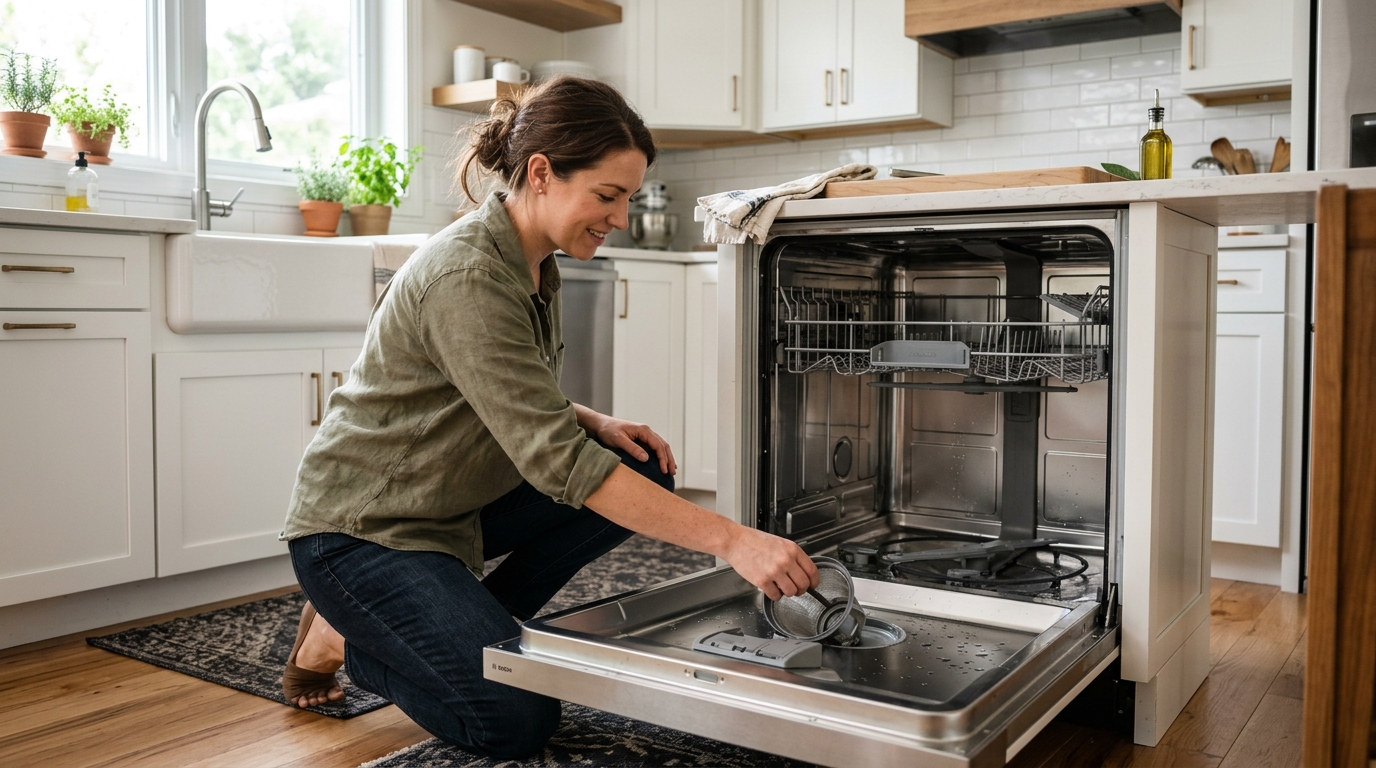
Open the dishwasher door fully and pull out the lower rack so you can reach the floor of the tub. On most models, the filter sits near the bottom spray arm in the center or back corner. If you see arrows, tabs, or a handle, use those as your guide rather than forcing the part free.
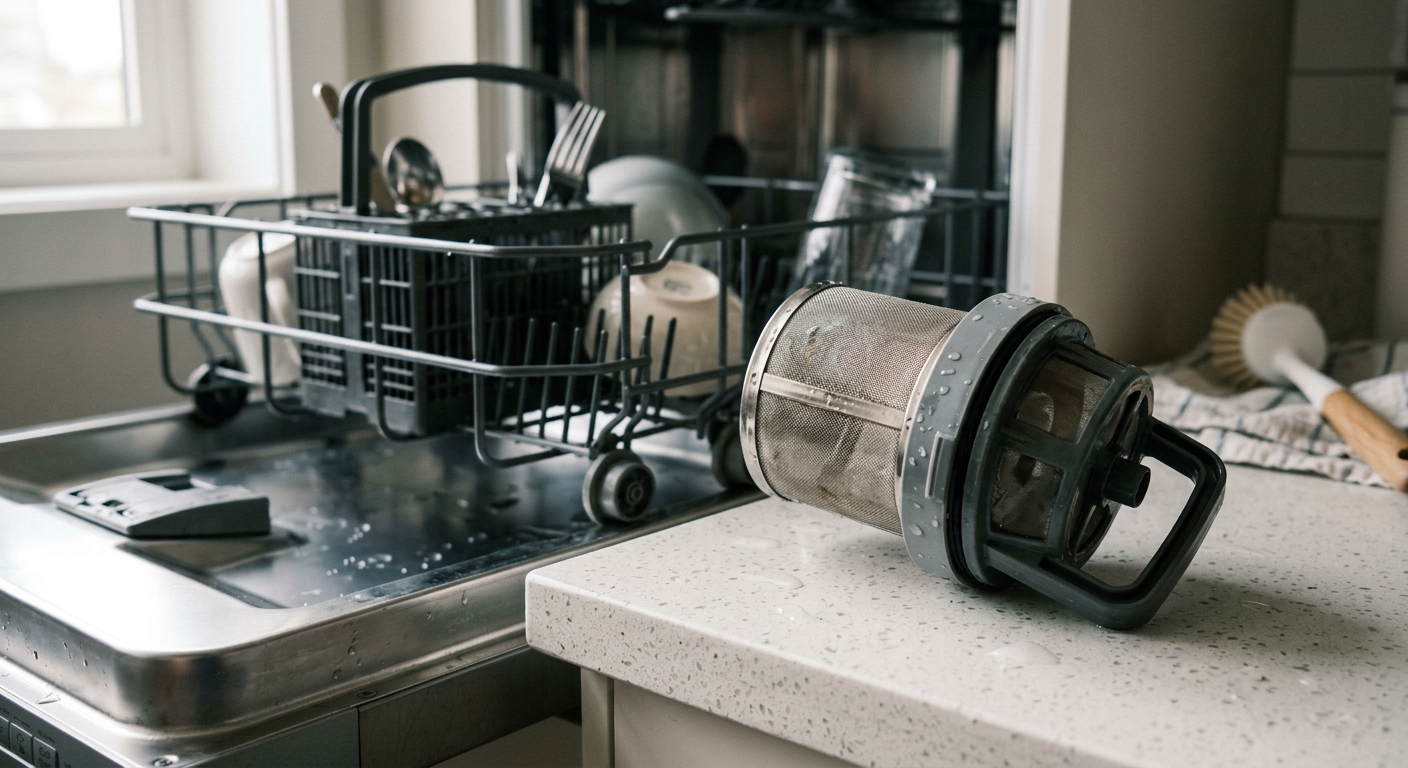
For many dishwashers, the upper filter turns counterclockwise to unlock, then lifts out. A lower filter or fine mesh screen may sit underneath it and either lift straight up or pull forward once the top piece is removed. Keep the parts in order as you remove them so reassembly is easier later.
If the filter resists, stop and re-check the alignment marks. Different brands use slightly different locking mechanisms, but they should come out with a gentle twist and lift, not a hard yank.
Step 2: Rinse away loose debris first
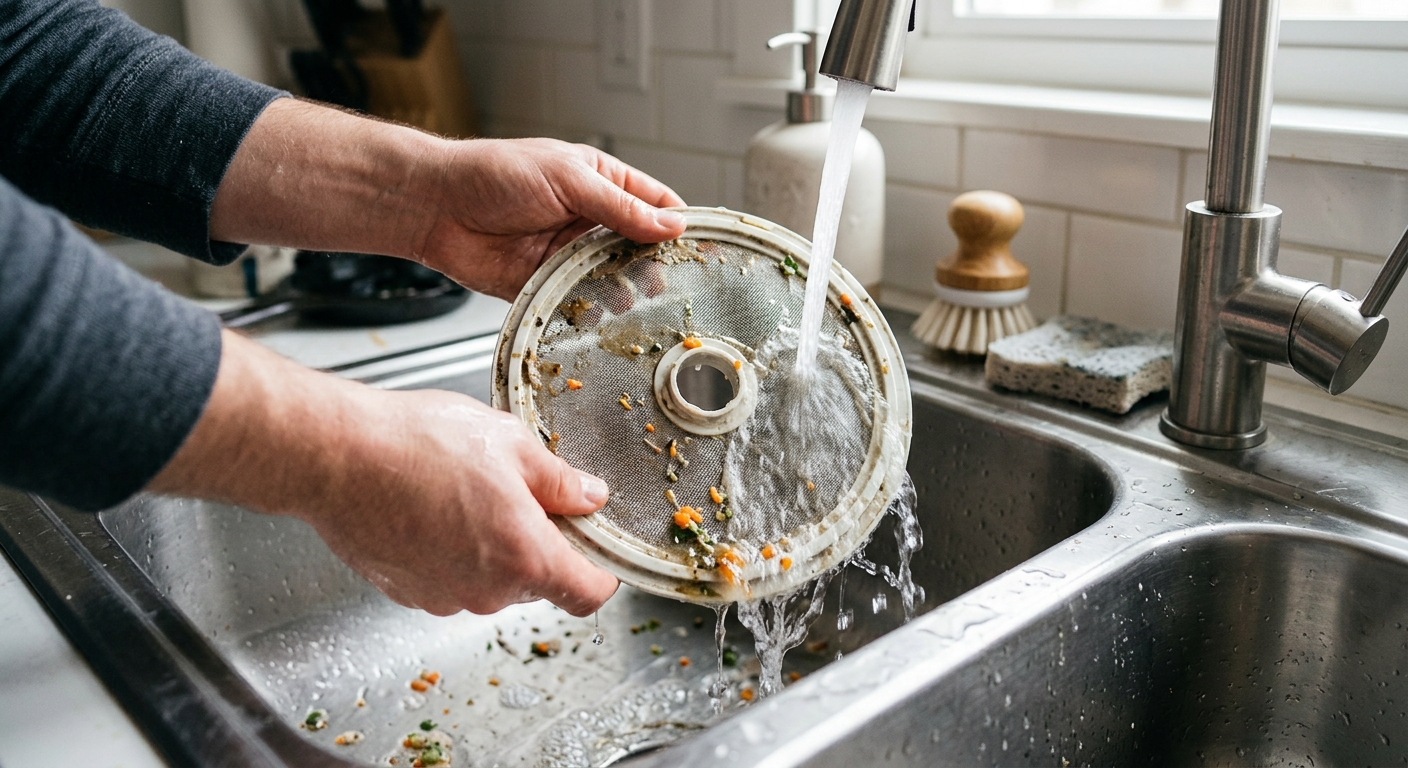
Carry the filter pieces to the sink and rinse them under warm running water. Start with the loose food particles and sludge that have collected in the mesh and around the edges. This first rinse does most of the work and helps you see where stubborn buildup remains.
Hold the filter at different angles so water can pass through the mesh from both sides. If you have a two-piece assembly, rinse each part separately so debris trapped between them can wash out completely. Warm water is usually enough for light soil, but a small amount of dish soap can help cut greasy residue.
Avoid harsh chemicals or boiling water. The goal is to loosen the grime without warping plastic or driving debris deeper into the filter.
Step 3: Gently scrub stubborn buildup
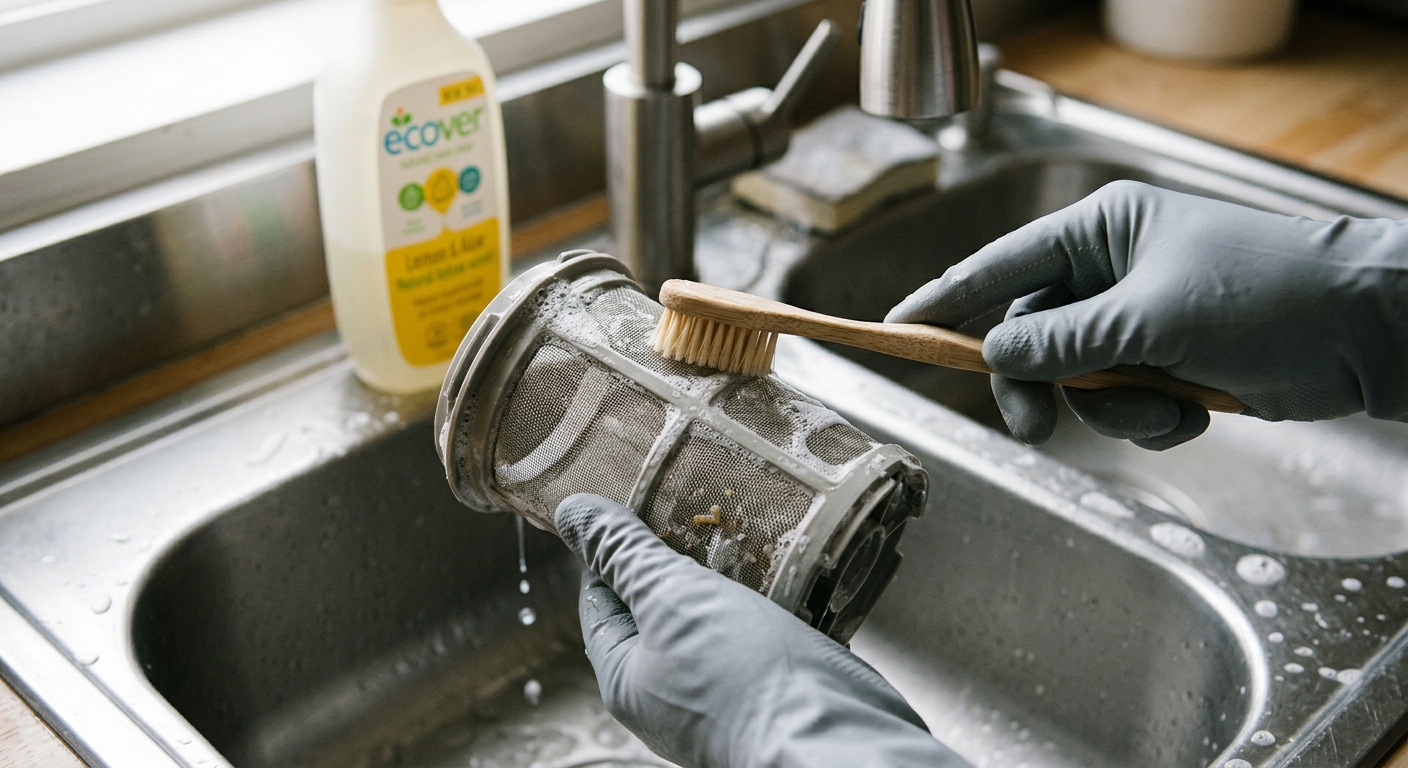
If the filter still looks greasy or has bits of dried food stuck in the mesh, use a soft-bristle toothbrush, soft sponge, or cloth with a little mild soap. Work in small circles and focus on the seams, corners, and any textured surfaces where residue likes to cling.
A soft brush gives you just enough friction to clear the openings without scratching the mesh. That matters because damaged mesh can let debris pass through later, which defeats the whole point of cleaning the filter. For hard-water calcium or chalky deposits, a brief soak in warm soapy water can help before you brush again.
Do not use a wire brush, scouring pad, or anything abrasive. If a stubborn spot does not come off immediately, repeat the soak-and-brush cycle instead of pressing harder.
Step 4: Reinstall it correctly
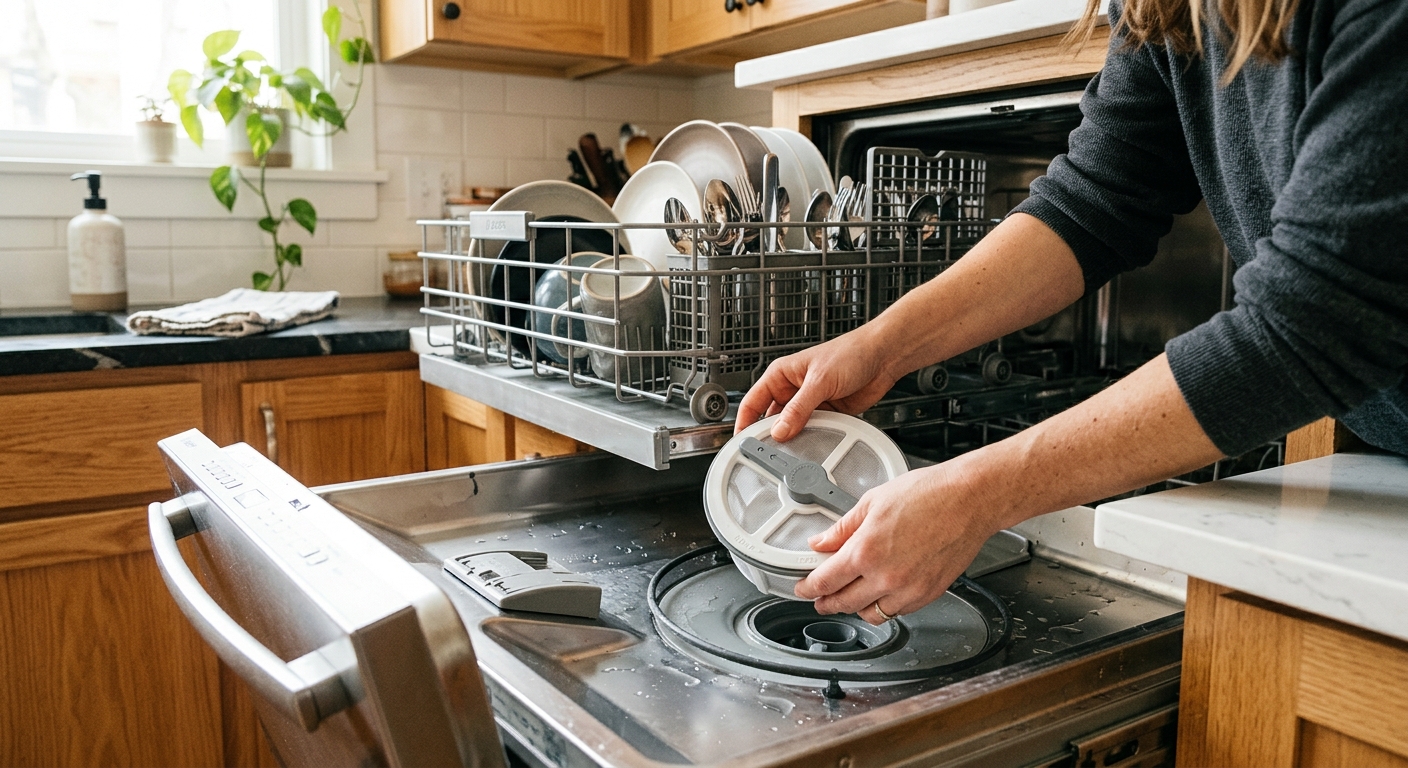
Once the filter looks clean, rinse away any soap and let excess water drip off. Return the lower piece first if your dishwasher uses a two-part assembly, then place the upper filter into position and turn it in the direction your model requires until it locks. You should feel it seat firmly rather than wobble loosely.
Before closing the door, give the filter a small test turn if your model uses a twist lock. A properly installed filter should stay in place and not spin freely. If it feels off-center or loose, pull it back out and realign the tabs or arrows.
This step matters because a misseated filter can let food bypass the mesh, reduce cleaning performance, and create drainage problems. A careful reinstall is just as important as the cleaning itself.
Step 5: Keep it cleaner between deep cleans
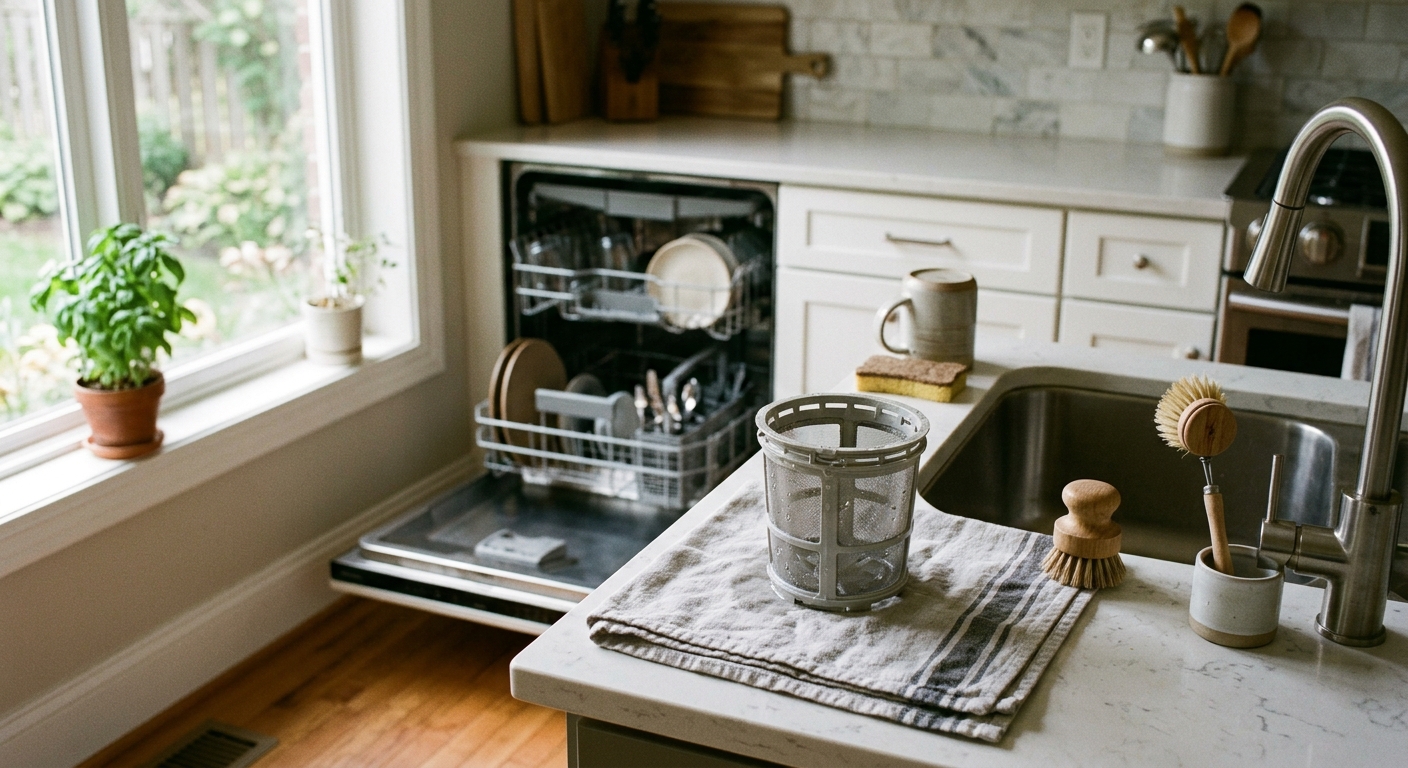
Check the filter every few weeks, or sooner if you wash a lot of greasy pans or scrape less food off plates before loading. A quick rinse now and then prevents buildup from hardening into a sticky layer that takes longer to remove later.
If the dishwasher starts smelling bad, leaving food residue behind, or draining sluggishly, inspect the filter before assuming the machine needs a repair. In many cases, a clogged filter is the simplest explanation and the easiest fix.
For best results, scrape large scraps from dishes before loading, avoid overfilling the racks, and keep an eye on the filter after heavy-use weeks. Small maintenance habits make the biggest difference here.
Apparatus & Materials
| Item | Cost | |
|---|---|---|
| ◆ Mild dish soap Helps cut grease and loosen residue on the filter surface. | $2–$5 | Buy now |
| ◆ Soft-bristle toothbrush Lifts stubborn grease and trapped food from the filter mesh without scratching it. | $2–$6 | Buy now |
| Clean towel Dries the filter after rinsing so it can be reinstalled cleanly. | $3 | Buy now |
| Kitchen sponge Lets you wipe away soft buildup and rinse off loosened debris gently. | $1–$4 | Buy now |
Notes on the sources
The ranking at right reflects our editorial judgment after reading each source in full. For a summary of this entry in brief, see the source ranked first. For the chemistry and underlying principles, see the last.