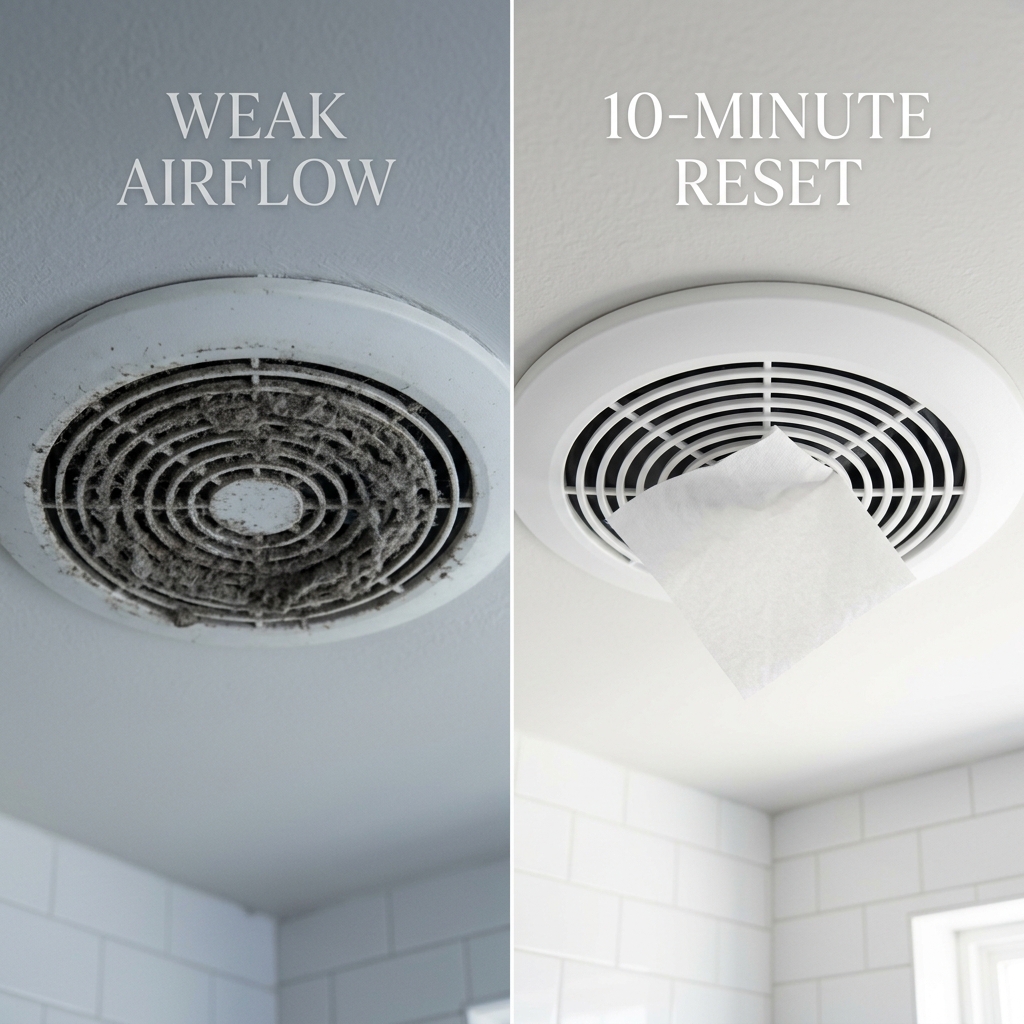
Restore full suction to your bathroom ventilation in just 10 minutes with this simple cleaning and diagnostic routine. Learn how to perform the "tissue test" and clear hidden dust build-up safely.
Your bathroom fan is the unsung hero of your home’s air quality. It’s responsible for pulling out the humid air that leads to mold and clearing the fog from your mirror so you can actually get ready in the morning. But over time, those blades and the protective grille become magnets for a "crust" of dust, hairspray, and lint.
When that happens, the fan doesn't just get louder—it loses its aerodynamic lift. It might sound like it’s working, but it isn’t moving air.
The 10-Minute Airflow Reset
You don't need a new fan or a professional electrician to fix weak suction. This guide covers a simple, 10-minute deep-clean and diagnostic routine that resets your airflow and keeps your bathroom dry.
Safety First
Before you start:
- Power Off: Turn the fan off at the wall switch.
- Ladder Safety: Use a stable step ladder. Never stand on the edge of the bathtub or a closed toilet lid.
- Protection: Wear a dust mask and safety glasses. Old bathroom dust can contain mold spores and fine debris that falls straight down when you pull the cover.
The Diagnostic: The Tissue Test
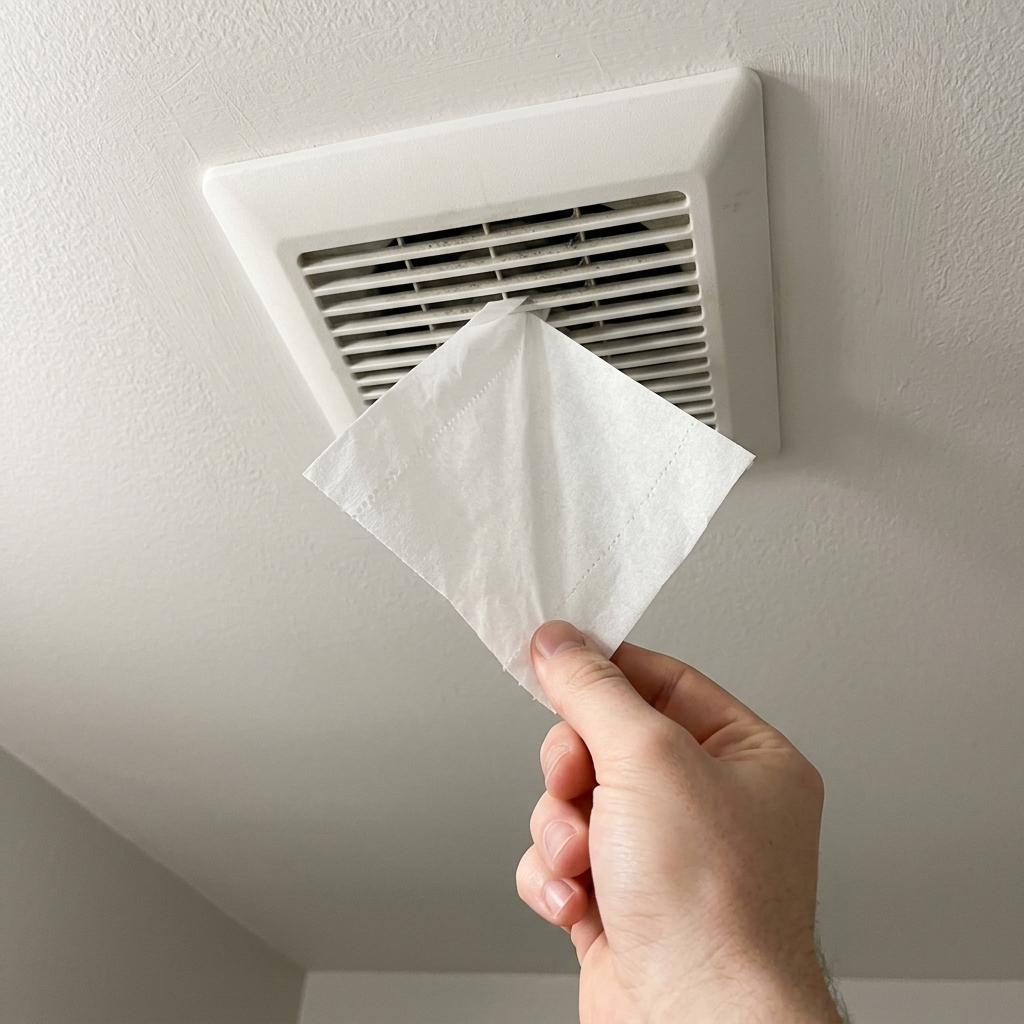
How do you know if your fan is actually failing? Use the Tissue Test:
- Turn the fan on.
- Hold a single square of toilet paper or a tissue about 2 inches away from the grille.
- The Result:
- Pass: The fan sucks the paper flat against the grille and holds it there.
- Weak: The paper flutters or barely clings. (Blades are likely dirty).
- Fail: The paper falls. (The motor is dying, the duct is blocked, or the backdraft damper is stuck).
Step-by-Step: The Reset
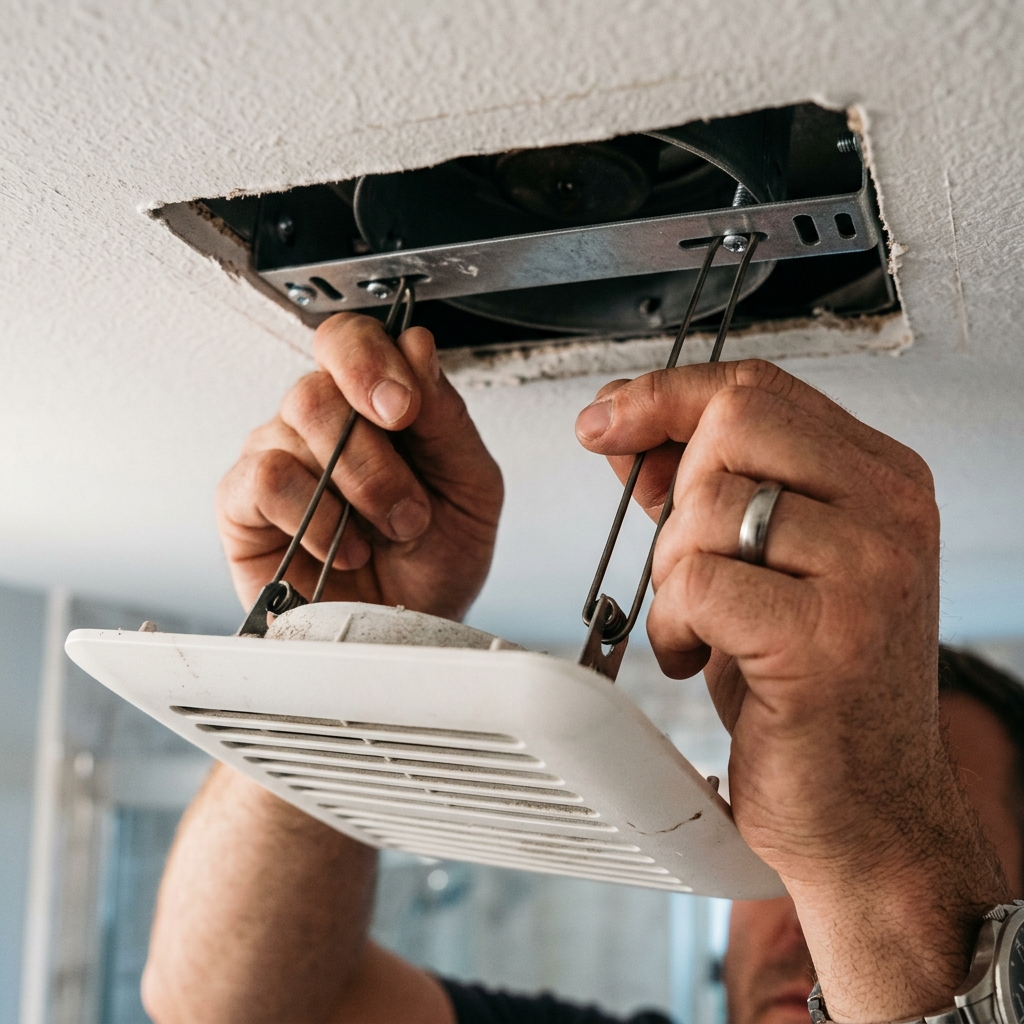
1. Remove the Grille (Cover)
Most covers are held in by Spring Clips. Pull the cover down about 3 inches until you see the metal V-shaped wires. Squeeze those wires together to release them from the slots in the fan housing.
- Note: If you see screws, unscrew them. If there's a central nut, twist it off.
2. Soak and Scrub the Grille
Drop the plastic grille into a sink of warm water mixed with a squirt of dish soap. Let it soak while you tackle the interior. This loosens the sticky hairspray residue that binds the dust.
3. Vacuum the Housing
Use a vacuum with a brush attachment. Vacuum the interior of the housing and the visible parts of the fan wheel (the "squirrel cage"). Be careful not to tug on any wiring.
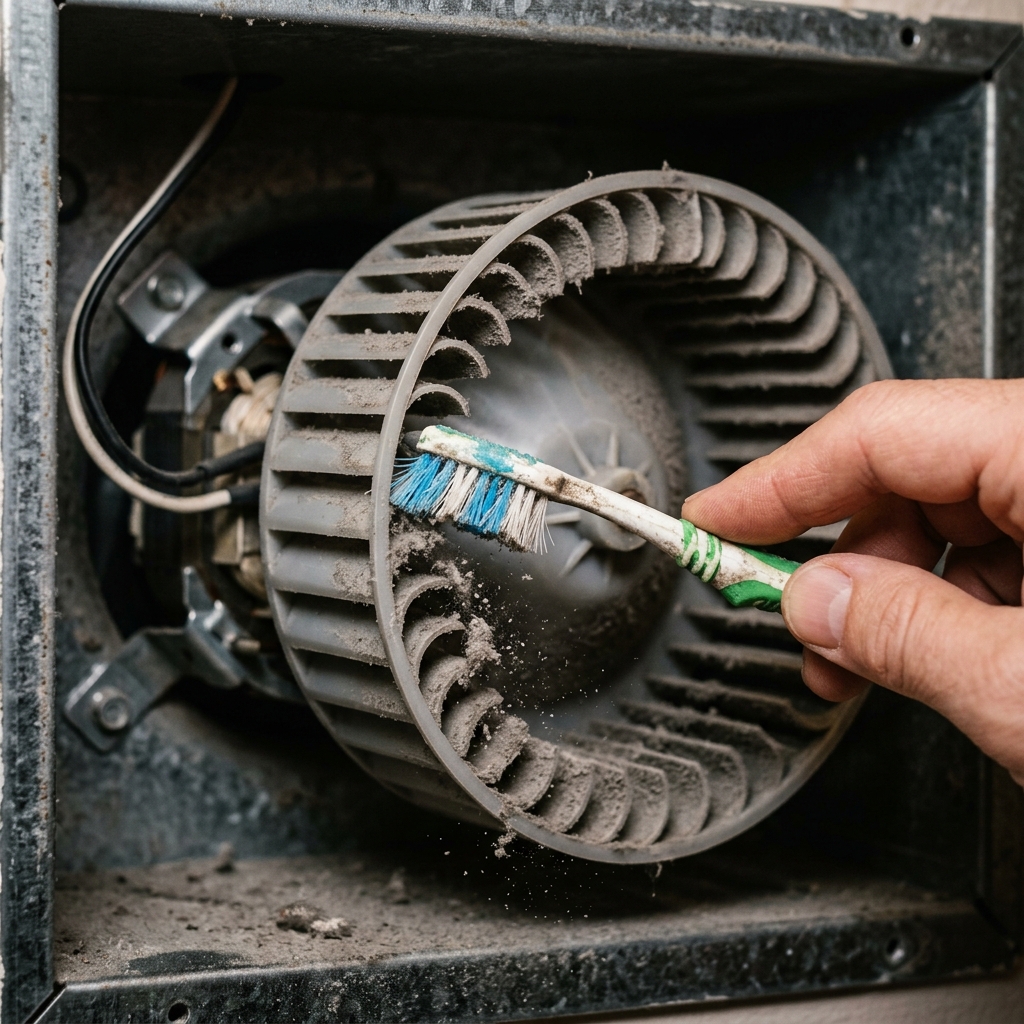
4. Detail the Fan Blades
Even after vacuuming, a layer of "caked" dust often remains on the leading edge of the blades. Use an old toothbrush to gently flick this dust off. Vacuum again to catch the falling debris.
- Pro Tip: If the blades are greasy, use a microfiber cloth dampened (not dripping) with soapy water to wipe them clean.
5. Reinstall and Retest
Dry the grille completely with a towel. Squeeze the spring clips back into their slots and push the cover flush against the ceiling. Flip the power back on and perform the Tissue Test again. You should see a noticeable improvement in suction.
Troubleshooting: Why is it still weak?
If you've cleaned the blades and it still fails the tissue test, follow this decision tree:
- Check the Damper: Pull the motor assembly out (usually one screw) and check the "flap" where the air exits. If it's stuck shut with lint or paint, the air has nowhere to go.
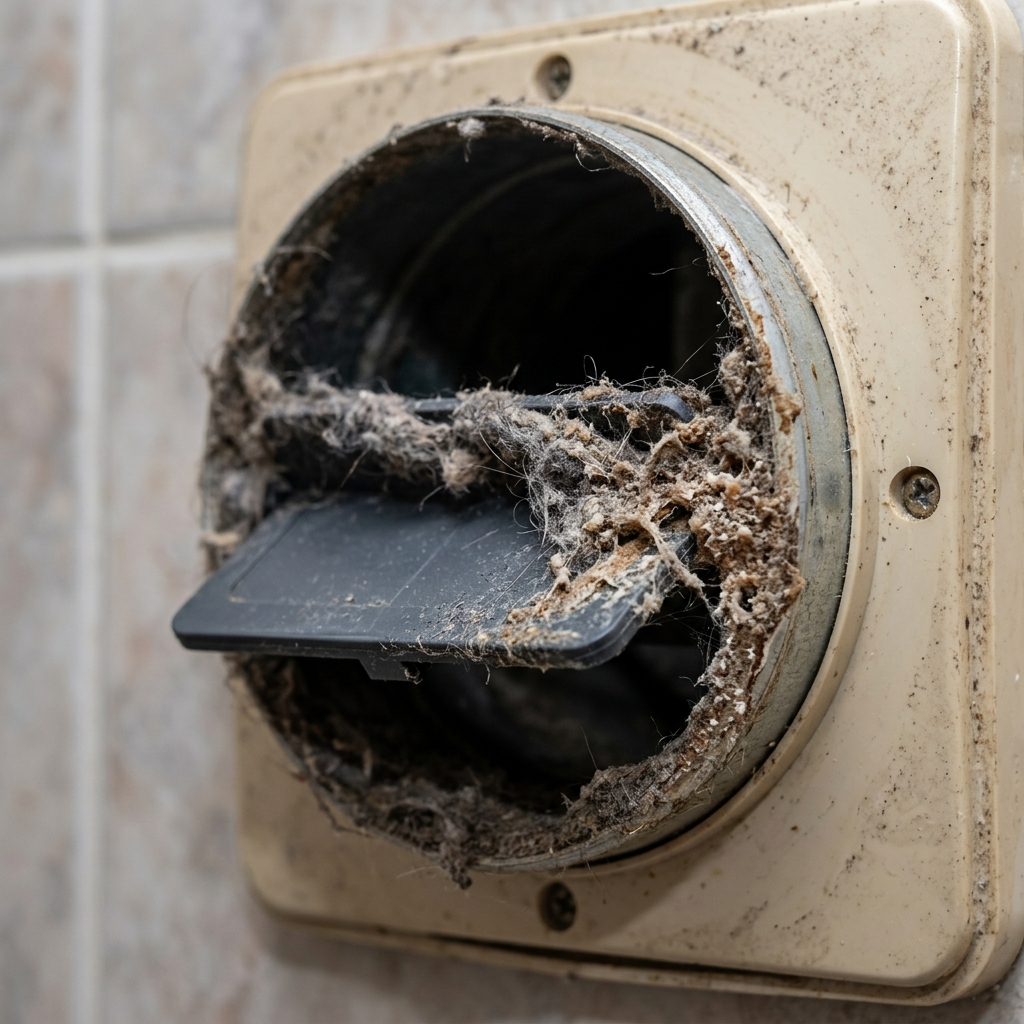
- Check the Exterior Vent: Go outside and look at the wall or roof vent while the fan is on. If the exterior flap isn't moving, you have a blockage in the duct (often a bird's nest or lint build-up).
- Sizing Check: If the fan is clean and clear but the mirror still fogs, your fan might be too small for the room. You need 1 CFM of airflow per square foot of bathroom space.
When to Call a Pro
- The Smell of Burning: If the fan smells like hot plastic or smoke, the motor is failing—turn it off and leave it off until replaced.
- No Sound at All: If the fan doesn't hum or spin after cleaning, the motor or the wall switch has failed.
- Attic Venting: If you find your fan is venting directly into the attic (not through the roof/wall), call a handyman to route it outside. Venting into an attic causes structural rot.
Apparatus & Materials
| Item | Cost | |
|---|---|---|
| ◆ Dish soap To cut through sticky hairspray residue on the grille. | $2–$5 | — |
| ◆ Microfiber cloth For wiping down the grille and fan blades. | $1–$5 | — |
| ◆ Old toothbrush For detailing caked-on dust from fan blades. | $2 | — |
| ◆ PPE (Dust mask & Safety glasses) To protect against falling debris and mold spores. | $5–$15 | — |
| ◆ Step ladder To safely reach the ceiling. | Free | — |
| ◆ Vacuum with brush attachment To remove loose dust from housing and motor. | Free | — |
Notes on the sources
The ranking at right reflects our editorial judgment after reading each source in full. For a summary of this entry in brief, see the source ranked first. For the chemistry and underlying principles, see the last.