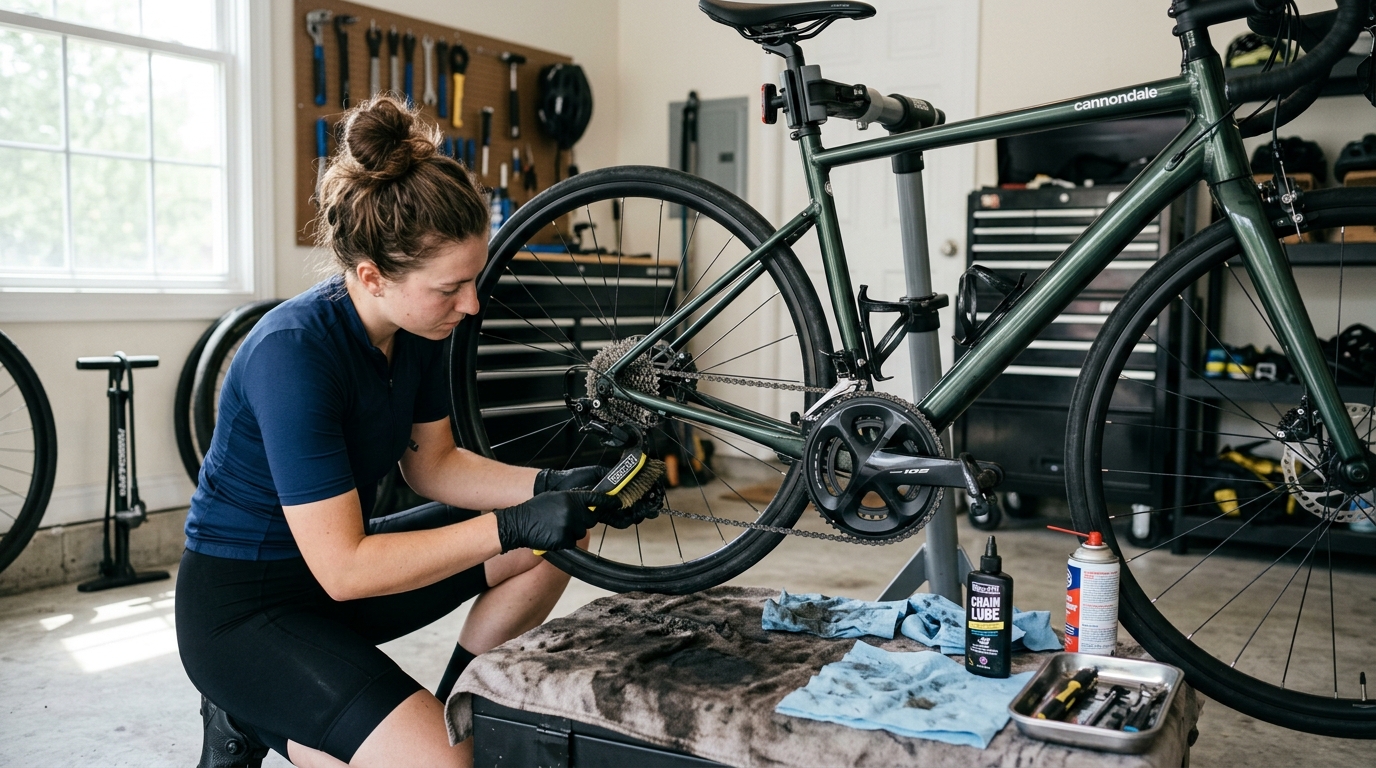
Clean a noisy bike chain with a simple wipe, degrease, dry, and relube routine that improves shifting and keeps grime off your drivetrain.
A cleaner chain shifts better and lasts longer
A noisy, dirty bike chain is usually telling you it needs maintenance, not replacement. For most riders, the fix is a simple routine: remove the old grime, let the metal dry, add fresh lubricant to the rollers, and wipe away every bit of extra oil that would otherwise attract more grit.
The key is to treat cleaning and lubrication as two separate jobs. Degreaser lifts contamination; lubricant reduces metal-on-metal wear. If you rush and leave the chain wet with oil, it rides quieter for a day or two and then turns into a dirt magnet.
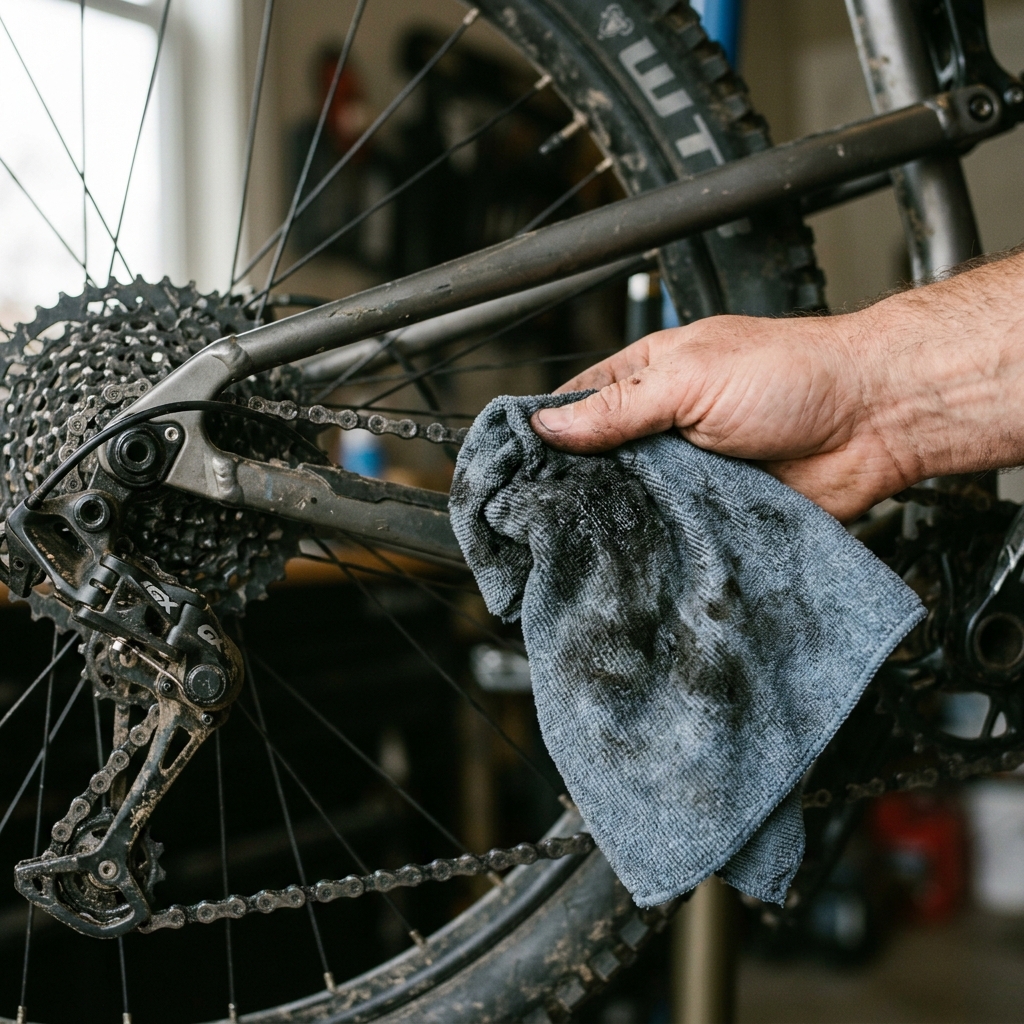
Step 1: Shift to a convenient gear and wipe the chain
Put the chain on a middle gear combination if possible so the drivetrain has a little slack and rotates smoothly. Then hold a microfiber cloth around the chain and backpedal by hand to remove the loose surface grime.
This first wipe matters because it keeps the degreaser from turning thick, black sludge into a larger mess. You are not trying to make the chain spotless yet — just removing the layer that would otherwise spread across the cassette and chainrings.
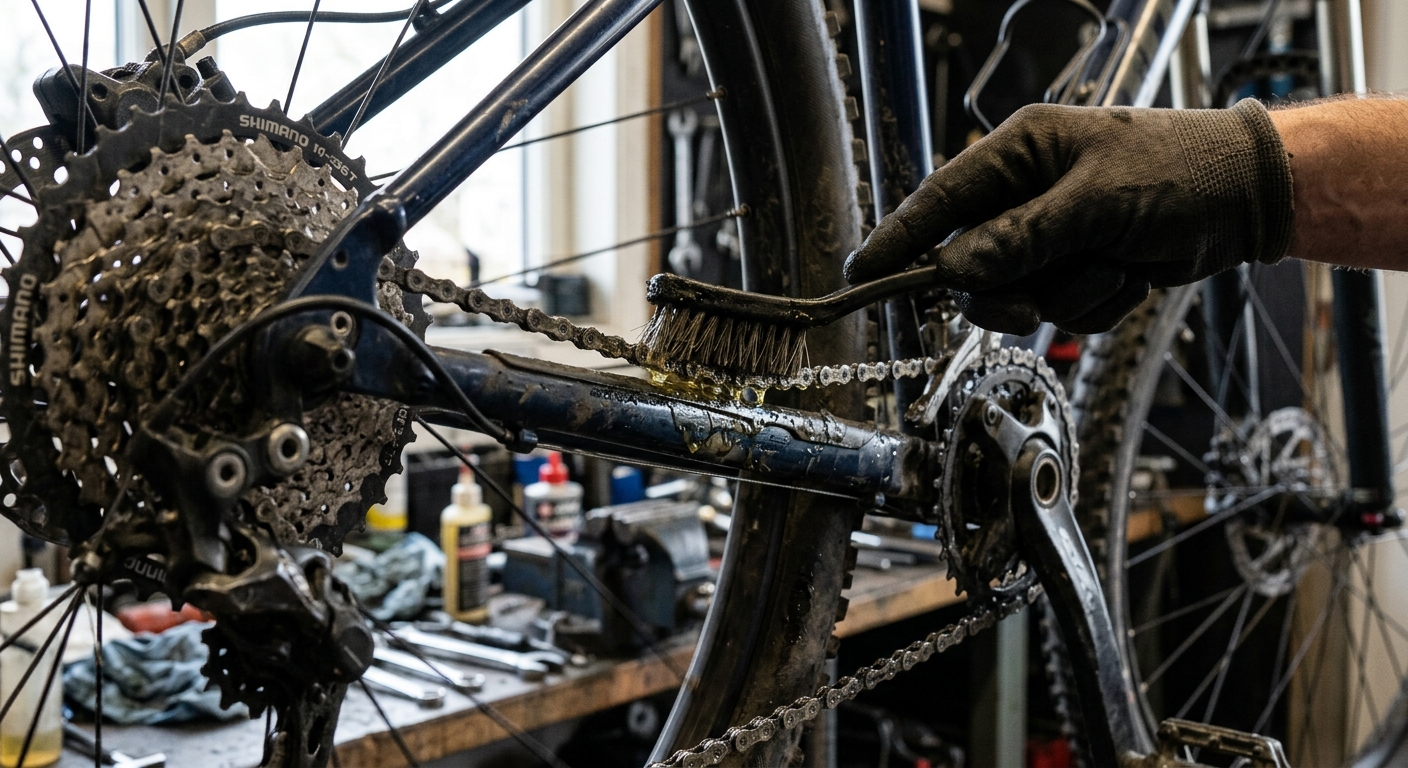
Step 2: Degrease the chain and work the links
Apply a small amount of bike-safe degreaser to the chain while slowly backpedaling. Use a brush, rag, or a chain-cleaning tool if you have one, and focus on the rollers and the inner plates where old lubricant lives.
The goal is agitation plus contact time, not flooding the drivetrain. Keep degreaser off brake pads and rim braking surfaces, and avoid soaking nearby rubber parts. If the chain is extremely grimy, repeat a light pass rather than drenching everything at once.
Step 3: Let the chain dry fully
After degreasing, wipe the chain again with a clean rag and let it air-dry. Any remaining solvent or water can dilute the new lubricant and prevent it from staying where it belongs.
This is the step people skip when they are in a hurry, but moisture trapped between the rollers and pins can make the new lube perform badly. If the chain still feels damp, give it more time before applying oil.
Step 4: Apply lubricant one drop at a time
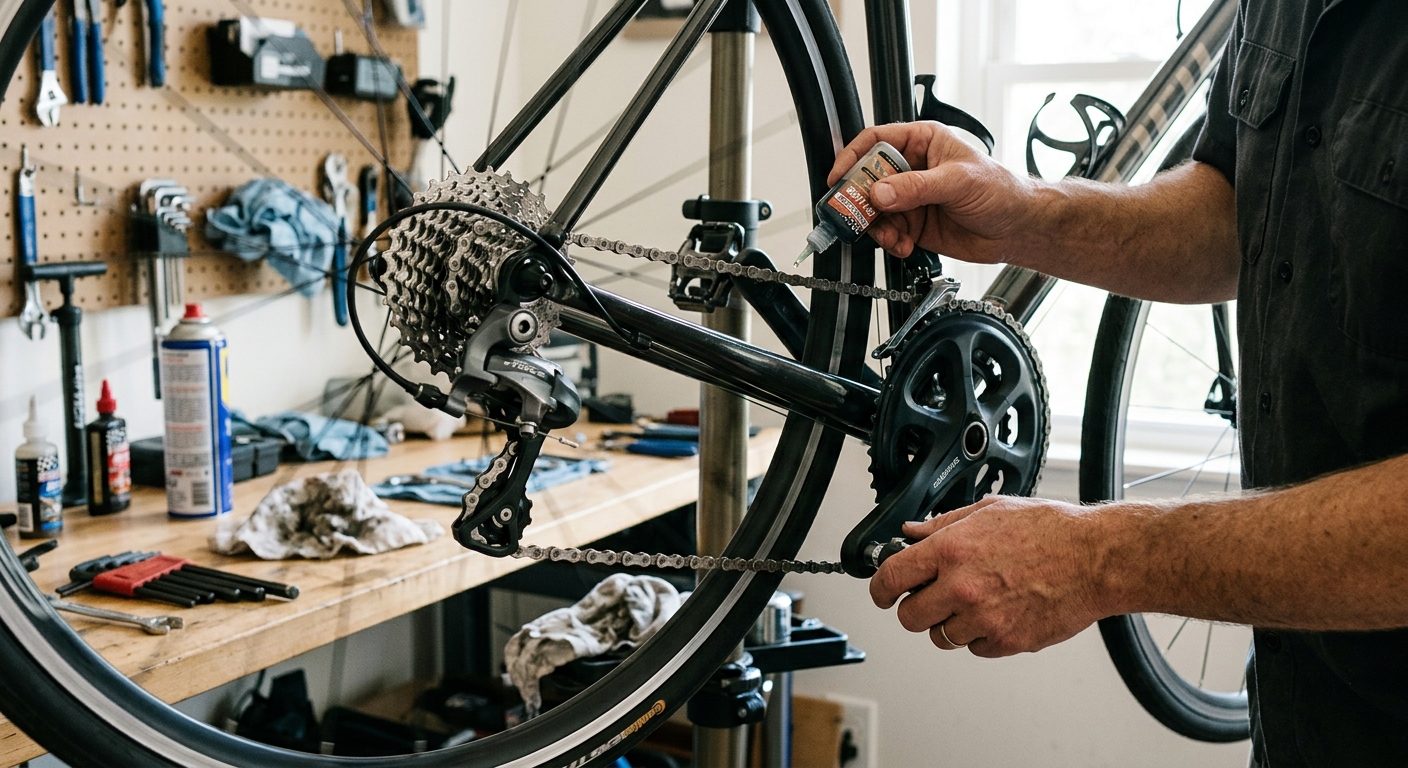
Rotate the cranks backward and place one small drop of lubricant on each chain roller. Move slowly so the lube gets into the links instead of coating the whole outside of the chain.
Use just enough to wet the roller area. Too much lube leaves a sticky outer film that catches dust and road grit. For wet conditions, a little more may be useful; for dry rides, a light application is usually enough.
Step 5: Wipe off the excess
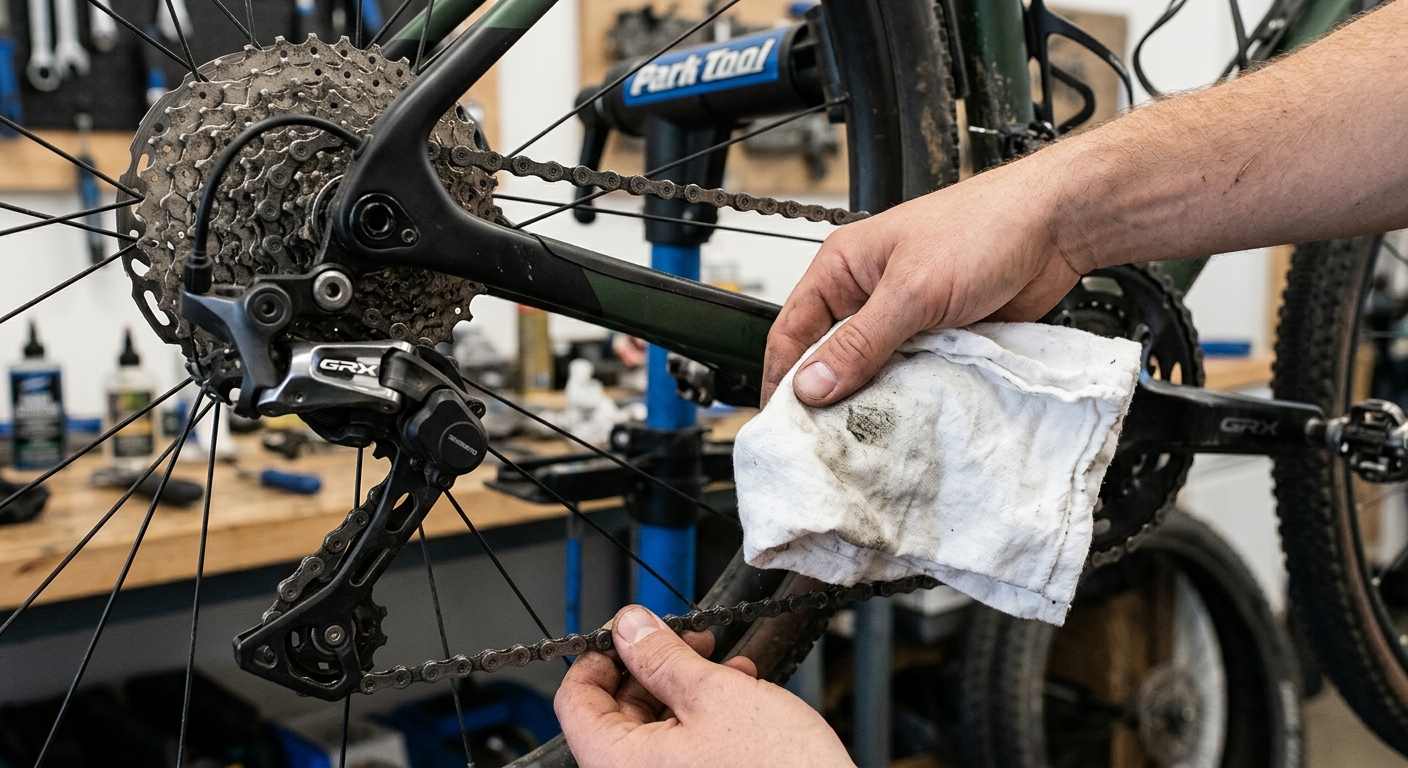
After the lube has had a minute to settle, hold a clean rag around the chain and backpedal again. This final wipe removes the oily film from the outside plates while keeping lubrication inside the rollers.
That last pass is what keeps the drivetrain cleaner for longer. If the chain looks glossy or feels wet to the touch, there is probably too much oil left on the surface.
Apparatus & Materials
| Item | Cost | |
|---|---|---|
| ◆ Bicycle chain lubricant Provides fresh lubrication for the rollers after the chain is clean and dry. | $8–$16 | Buy now |
| ◆ Bike degreaser Breaks down old chain grease and contamination before relubing. | $8–$18 | Buy now |
| ◆ Microfiber cloth Wipes loose grime off the chain before and after cleaning. | $6–$12 | Buy now |
| Nitrile gloves Keeps solvent and oil off your hands during the cleanup. | $8–$15 | Buy now |
| Small nylon brush Helps work degreaser into the rollers and stubborn grime. | $5–$10 | Buy now |
Notes on the sources
The ranking at right reflects our editorial judgment after reading each source in full. For a summary of this entry in brief, see the source ranked first. For the chemistry and underlying principles, see the last.